

How to Choose the Best Memory Foam Mattress for Back Pain Relief


Waking up with an aching back shouldn't be your normal. If you're constantly fighting stiffness and pain, your mattress is the first place to look. For many people, the right memory foam mattress—one that perfectly balances body-hugging support with a medium-firm feel—can be the tool you need to win the day. It’s all about empowering your body to maintain spinal alignment and easing pressure on sensitive spots.
Finding Relief From Back Pain Starts Tonight
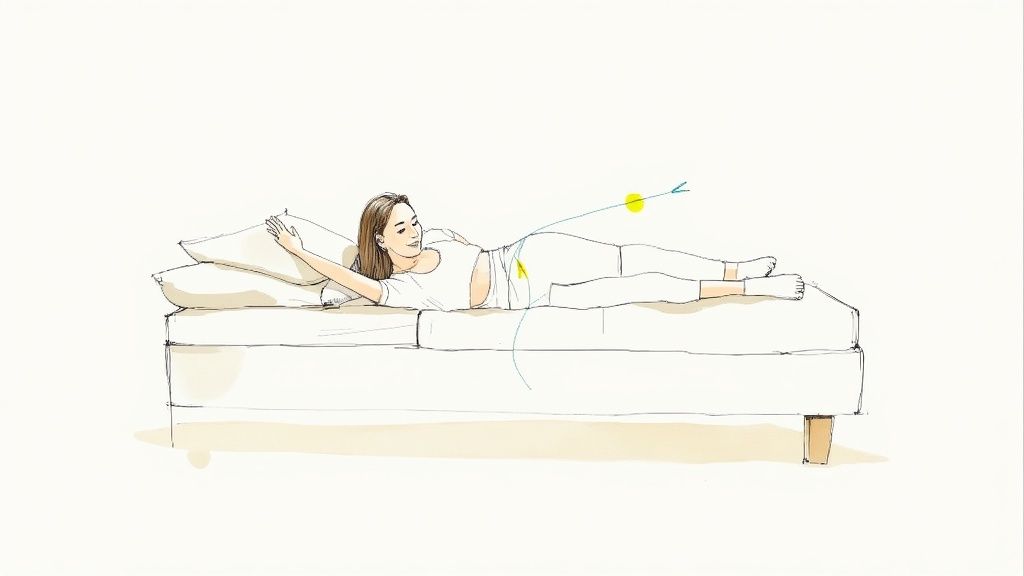
When you're dealing with chronic discomfort, bedtime can feel more like a chore than a welcome retreat. The truth is, your mattress is the foundation of your sleep health. It directly influences your spinal alignment and how well your muscles recover overnight. Choosing wisely is the first real step toward turning sleep from a source of pain into a time for true restoration.
This guide will empower you with the knowledge to select a memory foam mattress that works to soothe persistent back issues. We’ll go deep on the specific features that deliver superior spinal support so you can feel confident in your decision to conquer back pain.
How Memory Foam Becomes Your Ally Against Back Pain
Memory foam has a unique ability to contour to your body, which is why it's such an effective tool for people with back pain. Old-school spring mattresses often push back against your body, creating pressure points. Memory foam, on the other hand, distributes your weight evenly. This responsive, cradling effect helps keep your spine in a neutral position—and that’s key to reducing strain on your back, hips, and shoulders all night long.
The science backs this up. A peer-reviewed study confirmed that memory foam mattresses consistently reduce body pressure and improve comfort for those with chronic back pain. In fact, the results showed a significant 35% reduction in pressure points, which led to better sleep and less stiffness in the morning. You can find more on these sleep science findings at Kanemansleep.com.
Choosing a mattress isn't just about comfort—it's about equipping your body with the ergonomic support it needs to heal and recover each night. The goal is to align your spine, not just soften your landing.
To learn more about what truly makes the best mattress for back pain and how to see past common marketing myths, it helps to get additional expert perspectives.
Ready to find the mattress that will help you win back your mornings? Explore our curated selection of memory foam mattresses and let our Sleep Experts guide you to a pain-free start to your day.
Understanding the Technology That Delivers Superior Back Support
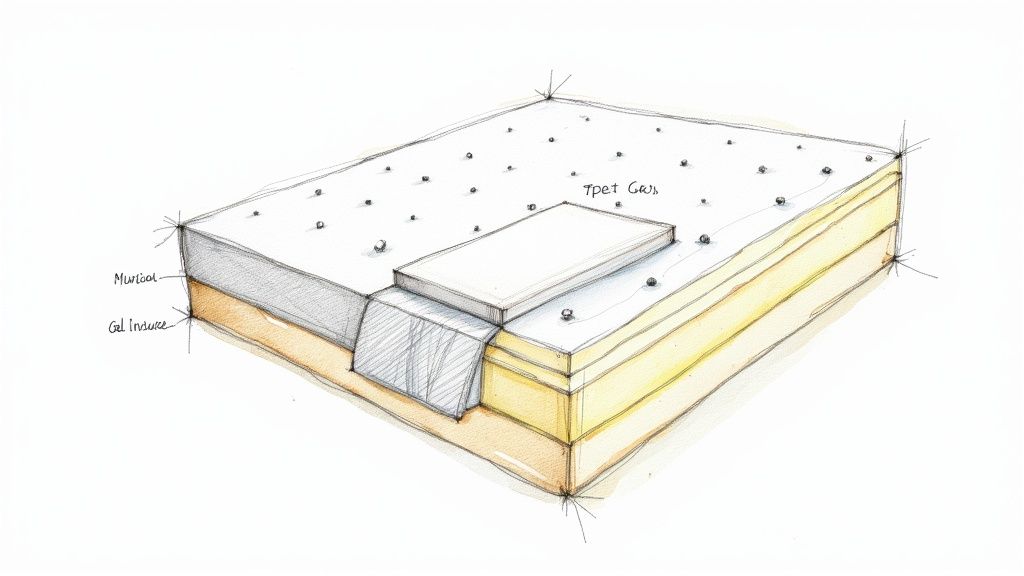
When you're hunting for a memory foam mattress to solve your back pain problem, you have to look past the marketing fluff. What really matters is the technology inside the mattress. Not all foams are the same, and the specific features are what make the difference between a restless night and waking up feeling refreshed. Knowing a little about the inner workings will help you pick a mattress that genuinely supports your spine.
It really starts with understanding the different kinds of memory foam on the market. Each type has its own way of handling comfort, support, and temperature—three things that are absolutely critical for a good night's sleep when your back is aching.
Decoding the Different Foam Technologies
You'll generally come across three main types of memory foam. Each one brings something unique to the table, and your choice here will have a big impact on how the mattress performs night after night.
- Traditional Memory Foam: This is the original stuff—the classic viscoelastic foam famous for its deep contouring and pressure relief. It uses your body heat and weight to create a perfect cradle for your body. The only real downside is that its dense structure can sometimes trap heat.
- Open-Cell Memory Foam: Engineers came up with this version to solve the heat problem. It has a more porous internal structure, almost like a sponge. These "open cells" let air flow through the mattress, wicking away heat and helping you stay much cooler.
- Gel-Infused Memory Foam: This has become the go-to for many people with back pain. The foam itself still adapts perfectly to your body for targeted lumbar support, but it’s also mixed with cooling gel beads. These beads work to pull heat away from your body, which is a big help since excess heat can make inflammation feel worse.
The real trick is finding a material that cushions your pressure points without letting your spine sag. A mattress that’s too soft can be just as bad for your back as one that feels like a plank of wood.
Why Density and Firmness Are Your Keys to Success
Beyond the type of foam, there are two numbers that will tell you almost everything you need to know about how a mattress will feel and how long it will last: density and ILD.
Foam density is measured in pounds per cubic foot (lbs/ft³), and it's the best indicator of durability. Mattresses with higher-density foams—usually 4.0 lbs/ft³ or more—are built to last. They provide more substantial support and are much less likely to develop the dreaded sags that can throw your spine completely out of alignment.
Indentation Load Deflection (ILD), on the other hand, is all about firmness. This rating tells you how much weight it takes to make a dent in the foam. A lower ILD (say, 10-14) means a softer, more plush feel. A higher ILD (like 30-40) means you're getting a much firmer surface. For most people with back pain, a medium-firm feel strikes that perfect balance between supportive and comfortable.
And if you love the idea of foam's contouring but miss the bouncy support of traditional springs, it might be worth looking into what is a hybrid mattress, which cleverly combines both.
Now that you're armed with this knowledge, you can shop with confidence and find a mattress that offers lasting relief.
How to Match Firmness to Your Sleep Style for a Victorious Night's Sleep
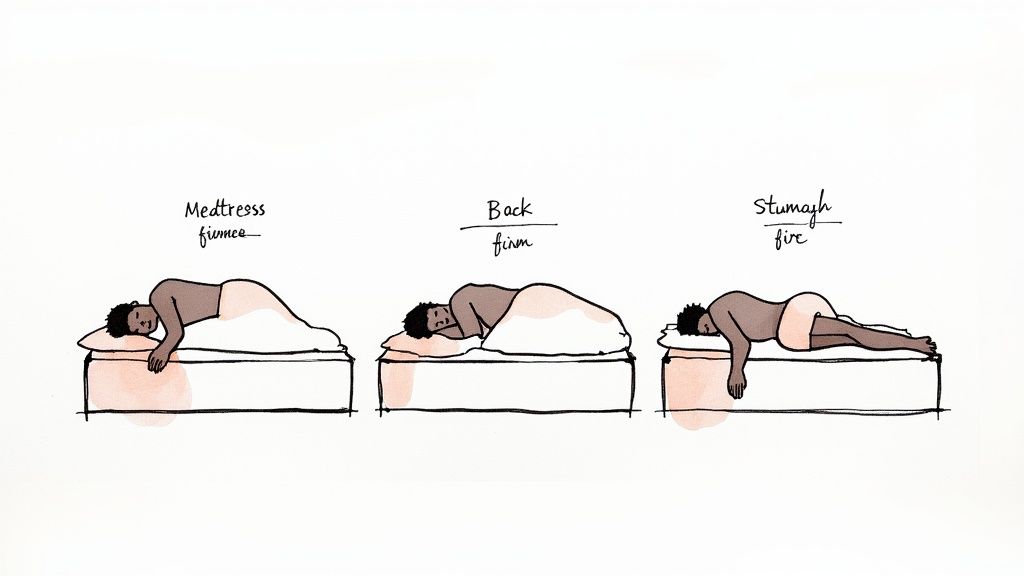
Choosing the right memory foam mattress for back pain isn’t as simple as picking the most popular model. What feels like a supportive cloud to one person can feel like a concrete slab to another. The secret is finding the firmness that fits your body, and that all comes down to how you sleep and your body weight.
When you match the firmness to your personal needs, the mattress starts working with you, not against you. This is how you can achieve a healthy, neutral spinal alignment all night long—the foundation for waking up refreshed and pain-free.
Side Sleepers: Finding the Sweet Spot
If you're a side sleeper, your hips and shoulders are doing all the heavy lifting, pressing down into the mattress. A bed that’s too firm will just push back, creating sharp pressure points. But if it's too soft, your spine will sag into a hammock-like curve. This is why a medium to medium-firm mattress is typically the gold standard for side sleepers.
This firmness level has enough give to gently cradle those high-pressure areas while still being supportive enough to keep your spine straight. It fills in the gaps, preventing the unnatural bend that so often leads to morning aches.
Back Sleepers: The Need for Solid Support
For back sleepers, the name of the game is maintaining the spine's natural S-curve. You need to support your lower back without letting your hips sink too far into the bed, which throws everything out of whack. This is why a medium-firm to firm mattress is usually the best bet.
This range provides a stable, even surface that keeps your hips and shoulders aligned. It distributes your weight properly from head to toe, preventing that dreaded lower back strain. For a deeper dive, our guide to finding the right mattress for a back sleeper has even more specific advice.
Stomach Sleepers: A Firm Foundation is Key
Let's be honest: stomach sleeping is notoriously tough on the back. It can flatten your spine's natural curve and often causes your midsection to sink, creating a painful arch in your lower back. To counteract this, stomach sleepers absolutely need a firm mattress.
A truly firm surface is the only thing that will keep your hips and spine on a level plane. It stops your torso from dipping down, which is the number one cause of back pain for people who prefer this position.
To make this even clearer, here’s a quick-reference table to help you find your ideal starting point.
Your Guide to Memory Foam Firmness for Different Sleepers
| Sleeper Profile | Recommended Firmness | Why It Works for Your Back Pain |
|---|---|---|
| Side Sleeper (under 230 lbs) | Medium-Soft to Medium | Cradles hips and shoulders to relieve pressure points while keeping the spine aligned. |
| Side Sleeper (over 230 lbs) | Medium to Medium-Firm | Offers more robust support to prevent excessive sinking and maintain spinal alignment. |
| Back Sleeper (under 230 lbs) | Medium to Medium-Firm | Provides a balance of contouring and support to maintain the spine's natural curve. |
| Back Sleeper (over 230 lbs) | Medium-Firm to Firm | Prevents the hips from sinking too low, ensuring proper lumbar support. |
| Stomach Sleeper (any weight) | Firm | Keeps the midsection elevated, preventing the lower back from arching unnaturally. |
| Combination Sleeper | Medium to Medium-Firm | Versatile enough to support multiple positions without causing pressure or misalignment. |
This table is a great guide, but remember that personal preference still plays a huge role.
Choosing the right mattress firmness is an active step toward better health. It’s about giving your body the specific tool it needs to rest, recover, and heal while you sleep.
And the data backs this up. A 2025 study found that people who switched to a properly-fitted medium-firm mattress reported a 63% reduction in chronic back pain and a 58% decrease in stiffness. This isn't just about comfort; it's about real, measurable relief.
Ready to find the firmness that will finally give you a good night's sleep? Stop by one of our showrooms. A Miller Waldrop Sleep Expert can use our bed matching system to custom-fit you to the perfect mattress for your body and sleep style.
How to Choose Your Champion: A Mattress Showdown for Pain Relief
Now that you’ve mastered the fundamentals—foam density, firmness, and your sleep style—let's put that knowledge to work. The truth is, finding the best memory foam mattress for back pain isn't about some single "perfect" bed. It’s about finding the perfect bed for you. That means really digging into how specific mattress features solve the problems keeping you up at night.
Here’s a comparison of three popular types of memory foam mattresses, all known for helping with back pain. Instead of just rattling off features, you’ll learn how each one actually performs in real-world scenarios. This will help you see the subtle but important differences so you can make a choice that truly helps your health.
The Zoned Support Specialist
Think of this mattress as being engineered with a specific mission: to provide targeted support right where you need it most. It's an incredible tool for anyone dealing with localized pain, like sciatica or a nagging lower back strain.
-
How It Empowers You: The magic is in the design. These mattresses are built to be firmer in the center third, right under your hips and lower back, while being a bit softer at the head and feet. This structure is all about promoting a straight, healthy spinal alignment by keeping your heavier torso from sinking in too deep.
-
Ideal User Scenario: Imagine a side sleeper who deals with sharp sciatic pain running down one leg. The zoned support system is a game-changer for them. It props up their lower back while the softer shoulder area allows for proper pressure relief, preventing new aches and pains from developing.
The Advanced Cooling Contender
For a lot of people, back pain gets worse when they're constantly tossing and turning because they're too hot. An advanced cooling mattress tackles this problem head-on, blending fantastic pressure relief with serious temperature control.
These beds use smart materials like copper or graphite infusions mixed right into the foam, along with gel-infused layers. These materials are conductive, meaning they actively pull heat away from your body. The result is a sleep surface that feels noticeably cooler. We also know from sleep science that keeping your body at a cooler temperature can help reduce inflammation and lead to the deep, restorative sleep your body craves.
A mattress that sleeps hot will absolutely disrupt your sleep. When you're waking up frequently, your back muscles never get the chance to fully relax and recover. The goal is uninterrupted rest, and cooling tech is a huge part of that puzzle.
- Ideal User Scenario: Picture a back sleeper who naturally runs hot. A traditional memory foam mattress would likely feel like an oven, trapping their body heat and causing discomfort. A cooling model, like our popular Serta iComfortECO F20GL Firm Mattress, gives them the firm support they need while its gel memory foam works all night to keep them cool and comfortable.
The High-Density Hero
If you're a heavier person (over 230 lbs), you need a mattress that can handle more pressure without giving up on support. This is where high-density foam isn't just a nice-to-have; it's a must.
-
How It Empowers You: These mattresses are built with layers of foam that have a density of 4.0 lbs/ft³ or higher. This incredibly robust construction is what prevents the mattress from sagging prematurely, ensuring it holds its shape and supportive qualities for years to come.
-
Ideal User Scenario: A stomach sleeper who weighs over 250 lbs absolutely needs a firm, high-density surface to keep their spine from dipping into an unhealthy arch. A lower-density foam would quickly develop a crater right in the middle, making their back pain even worse. The high-density hero provides that durable, level surface that's critical for proper alignment.
Ultimately, making the right call comes down to pinpointing your main challenge—whether it’s targeted pain, overheating, or needing long-lasting, heavy-duty support.
Ready to feel the difference for yourself? Come on down to a Miller Waldrop showroom. Our Sleep Experts can use our advanced bed matching system to find the perfect mattress that targets your unique back pain needs. Your journey to waking up without pain starts with the right support.
Setting Up Your New Mattress for Success
So, your new mattress has arrived. The final, and most important, step to getting that pain-free sleep you've been dreaming of is setting it up correctly. This initial phase is what really determines whether you get the spinal alignment and comfort you paid for.
Don't be surprised if your new bed feels a little stiff at first. Just like a new pair of boots, a memory foam mattress has a "break-in period." This is completely normal. The foam needs time to soften and start contouring to your specific body shape and weight.
The Adjustment Phase and Your Foundation
Give it about 30 days. During this initial period, two things are happening: the foam's cells are fully opening up, and your body is learning to accept a new, more supportive sleeping surface. If you've spent years on a saggy old mattress, your spine has gotten used to being out of alignment. Shifting to a healthier posture can feel a little strange at first as your muscles adjust.
It’s a two-way street—the mattress is adjusting to you, and you're adjusting to it. A little patience now pays off with years of proper spinal support and less back pain.
Speaking of support, the foundation you put your mattress on is absolutely critical. Tossing a brand-new memory foam mattress on an old, worn-out box spring or a weak frame is a recipe for disaster. It won't just feel bad; it can cause the mattress to break down faster and even void your warranty.
- Solid Foundation: Look for a solid or slatted base. If it's slatted, make sure the slats are no more than 3 inches apart to prevent the foam from sagging through the gaps.
- Platform Beds: These are usually a great match for memory foam because they provide that flat, solid surface the mattress needs.
- Adjustable Bases: If you really want to take pressure off your lower back, an adjustable base is a fantastic investment. It lets you elevate your head or feet to find the perfect zero-gravity position.
This handy decision tree can give you a visual on how your specific sleep habits might guide your choice.
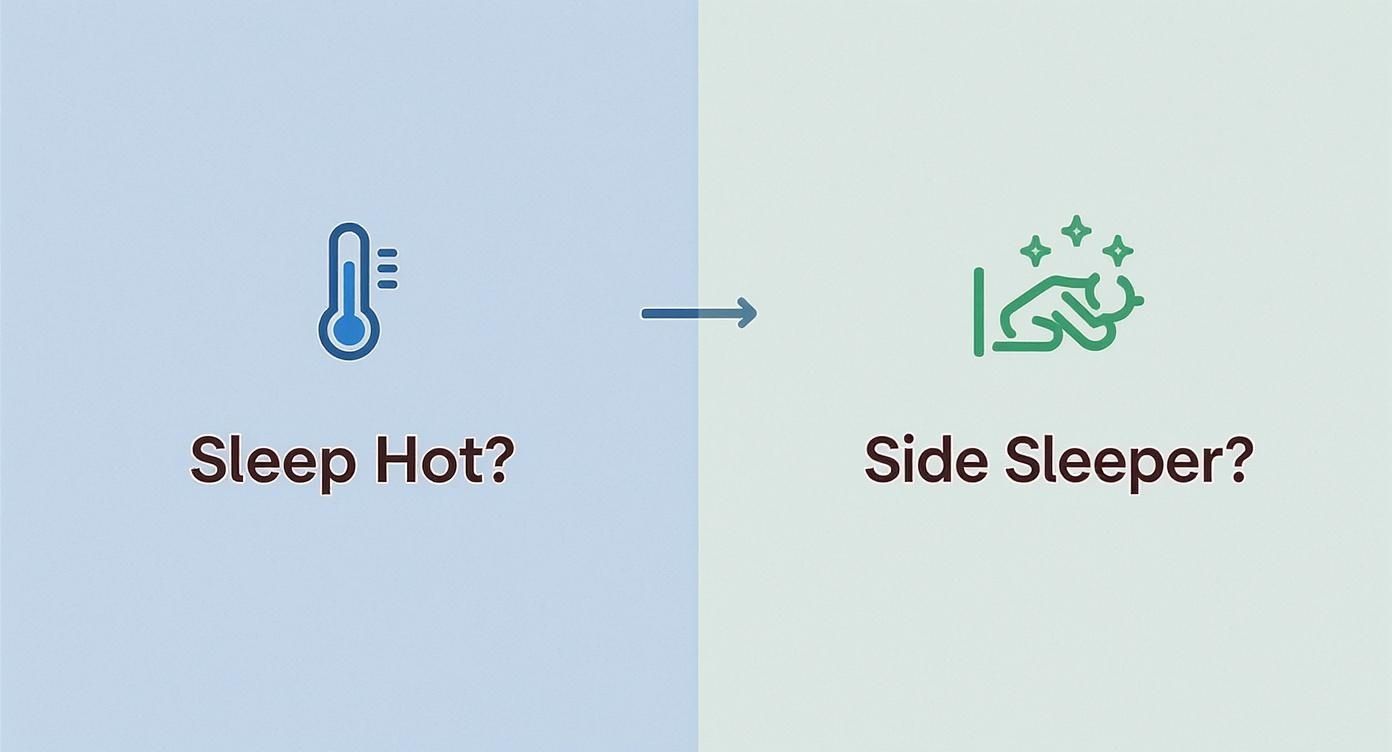
As you can see, things like whether you sleep hot or on your side play a huge role in finding the right fit for back pain relief.
Finally, a little bit of care goes a long way. A good waterproof mattress protector is your best defense against spills and allergens, which can slowly break down the foam. For tips on keeping it in top shape, check out our guide on how to clean memory foam.
Need help finding the right foundation? Our Sleep Experts at Miller Waldrop know exactly what your new mattress needs to perform its best and last for years to come.
Your Next Step Towards a Pain-Free Morning
You've done the research, and now you have the knowledge to choose a memory foam mattress that will help you conquer your back pain. This isn't just about buying a new bed; it's a real investment in your health and how you feel every single day. Knowing how firmness, the specific type of foam, and your own sleeping style all play a part puts you firmly in the driver's seat.
Don't let another night of tossing and turning decide your next day's mood. The right mattress isn't a luxury—it's the tool you need to get your comfort back and reclaim your mornings from pain.
The next move is yours. Take a look at our handpicked collection of memory foam mattresses, each chosen for its ability to provide excellent spinal support. Our Sleep Experts are here to guide you, showing you exactly how the right choice can completely change your sleep and finally break that cycle of back pain. Your journey to waking up feeling refreshed and ready for the day is just one good decision away.
Frequently Asked Questions
Even after doing all the research, you might still have a few lingering questions. That's perfectly normal. Let's tackle some of the most common ones so you can move forward with total confidence.
How Long Until a New Mattress Actually Helps My Back Pain?
This is the big question, isn't it? While some lucky folks feel relief on the very first night, don't be discouraged if that's not you. Think of it like breaking in a new pair of shoes—your body needs time to get used to a better, more supportive surface.
Most people find it takes about two to four weeks to fully adjust. During this "break-in" period, two things are happening: the memory foam is softening just enough to perfectly mold to your unique shape, and your spine is realigning itself after years of sleeping on a less-than-ideal mattress. A little patience now will pay off with years of comfort.
Aren't Memory Foam Mattresses Hot?
That's a reputation that older memory foam definitely earned, but mattress technology has come a long way. The idea that you have to choose between support and sleeping cool is a thing of the past. Today's best models are specifically designed to keep you comfortable.
If you're constantly waking up hot and sweaty, your muscles can't fully relax and repair. A cool sleeping environment is a non-negotiable part of the back pain solution.
So, what should you look for? Modern cooling features are a game-changer. Keep an eye out for mattresses with:
- Gel-Infused Foam: Tiny gel beads are swirled into the foam, working to pull heat away from your body.
- Open-Cell Structure: This isn't just a solid block of foam. It's designed with tiny air pockets that promote airflow, letting heat escape naturally.
- Copper or Graphite Infusions: These materials are fantastic conductors, actively drawing heat away from you and dispersing it.
What's the Best Firmness for Lower Back Pain?
For the vast majority of people struggling with lower back pain, medium-firm is the sweet spot. It truly offers the best of both worlds—cushioning and support.
A medium-firm mattress is gentle enough to contour to your hips and shoulders while still filling the gap in your lumbar curve. At the same time, it’s sturdy enough to keep your hips from sinking too far, which is a major cause of that morning ache. Going too firm can create new pressure points, but going too soft will leave your spine without the support it desperately needs.
You now have the insights to choose a mattress that can genuinely help you fight back pain and finally get the rest you deserve. At Miller Waldrop Furniture & Decor, our Sleep Experts are here to help you take that final step. We even have an advanced bed matching system to pinpoint the memory foam mattress that provides the exact support your body needs.
Ready for a pain-free morning? Start by exploring our collection of supportive memory foam mattresses today.