

Finding Your Best Mattress Type for Back Pain


If you've ever felt like the quest for a pain-free morning is never-ending, you're not alone. But when it comes to back pain, clinical research gives you a fantastic starting point: a medium-firm mattress. For most people, this specific firmness level hits the sweet spot, providing the right blend of support and comfort to keep your spine properly aligned all night long.
Your Path to a Pain-Free Morning Starts Tonight
Waking up with an aching back shouldn't be your new normal. Finding the right mattress is the first, most important tool you can use to reclaim your comfort and start your day feeling great. There's no single "best" mattress for everyone—it’s about discovering the personal tool that’s built to support your specific body and the way you sleep. This guide is designed to empower you to do just that, turning those restless nights into truly restorative sleep.
Of course, a great mattress is just one piece of the wellness puzzle. There are also many simple tips for relieving lower back pain at home that can work together with your new bed to improve comfort and mobility.
Why Medium-Firm Is Often the Answer
The old wisdom that a rock-hard mattress is the cure for back pain has been thoroughly debunked. A mattress that’s too firm doesn't give an inch, creating painful pressure points at your shoulders and hips and pushing your spine out of its natural curve.
On the flip side, a mattress that’s way too soft is just as bad. It lets your hips and midsection sink in too far, creating a hammock effect that puts a ton of strain on your lower back.
A medium-firm mattress is the perfect compromise. It’s solid enough to hold up your heaviest areas—like your torso and hips—but it also has enough give to gently cushion your shoulders and let your spine settle into a neutral, relaxed position.
This isn't just a hunch; it's backed by solid research. One groundbreaking study from 2003 found that people sleeping on a medium-firm mattress reported a 48% reduction in pain intensity compared to those on a very firm mattress. This shows that finding the right firmness isn’t just about feeling cozy; it’s about giving you real, measurable relief.
Your First Step Toward Better Sleep
Realizing how much your mattress impacts your daily well-being is a game-changer. The right surface is your best ally in the fight against back pain, giving your body the support it needs to heal and recharge every single night. As you explore the different mattress types, keep that goal in mind: finding the perfect fit for your body.
Ready to take control of your comfort? Our sleep experts are here to guide you. Visit a Miller Waldrop showroom to use our personalized bed-matching system and find the mattress that will help you wake up feeling refreshed and pain-free.
Understanding Spinal Alignment and Pressure Relief
To conquer back pain, you need to become fluent in the two languages your body speaks at night: spinal alignment and pressure relief. These aren't just mattress-store buzzwords; they're the core principles that dictate whether you wake up feeling great or feeling stiff and sore. Mastering them is like getting the key to a better night's sleep.
Picture your spine as a long, gently curving line. When you lie down, your goal is to keep that natural curve intact, from your neck all the way down to your tailbone. This is what experts call neutral spinal alignment.
If your mattress is too soft, your heavier parts, like your hips and shoulders, will sink in way too far. This creates a "hammock" effect, bowing your spine into an unnatural position and putting a ton of strain on your lower back muscles. It might feel nice for a few minutes, but by morning, you'll feel the consequences of that lack of support.
The Problem with Too Much Firmness
On the flip side, a mattress that’s rock-hard creates a whole different kind of trouble. Instead of cradling your body, it pushes back aggressively, creating sharp pressure points on your shoulders, hips, and even your knees.
This forces your spine into an awkwardly straight line and often leaves a gap between the mattress and the small of your back. Your muscles end up working all night trying to stabilize your spine, which is why you might wake up feeling sore and achy. You want to feel like the mattress is holding you, not that you're just lying on top of it.
The perfect mattress works with your body. It fills in the gaps and cushions your curves, all while providing a solid, supportive base that lets your spine rest in a straight, neutral line.
Finding Your Body's Perfect Balance
Hitting that sweet spot between supportive and soft is the secret to waking up without pain. The right mattress for back pain is responsive—firm enough to keep you from sinking, but pliable enough to contour to your body’s unique shape. This is what takes the pressure off and lets your muscles truly rest and repair overnight.
So, how do you know when you've found it?
- For Side Sleepers: Your shoulders and hips should sink in just enough for your spine to form a straight, horizontal line. No digging, no pinching.
- For Back Sleepers: The mattress should fill the space under your lower back, offering consistent support without letting your hips sink too low.
- For Stomach Sleepers: You need a firm surface that prevents your midsection from dipping, which would otherwise force your back into a painful arch.
Of course, what you do during the day matters, too. Building a strong core gives your spine a natural support system. Incorporating specific exercises, like Pilates exercises for core strength, can make a huge difference in complementing the support you get from your mattress.
Ultimately, finding the right mattress starts with listening to what your body is telling you. Once you understand the concepts of alignment and pressure relief, you’re much better equipped to make a smart choice.
Comparing The Four Main Mattress Types
Navigating the world of mattresses can feel like learning a new language. You'll hear terms like memory foam, latex, innerspring, and hybrid, with each one promising the best night's sleep. But to really find the right mattress for your back pain, you need to understand what each of these "tools" does best.
Think of them less as competitors and more as specialists. Your goal is to find the one that gives you rock-solid support while also gently contouring to your body's curves. It's this perfect balance that keeps your spine aligned and prevents those morning aches and pains.
This diagram shows exactly what we're talking about—how a mattress that's too soft or too firm can throw your spine out of whack.
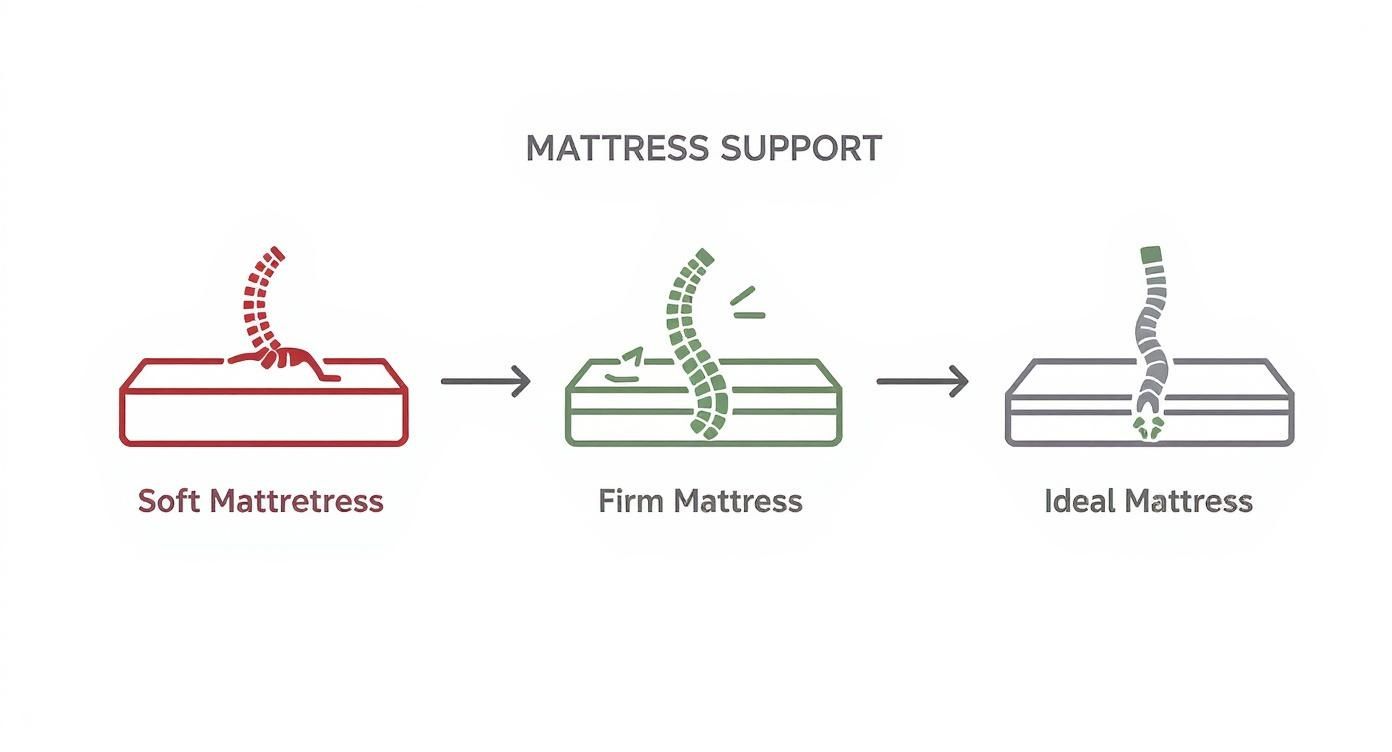
As you can see, the sweet spot is a mattress that supports the natural S-curve of your spine, letting your muscles truly relax and recover overnight.
Memory Foam: The Body-Hugging Contourer
Memory foam is the absolute champion of pressure relief. Made from viscoelastic foam, it uses your own body heat and weight to soften and mold to your exact shape. This creates that signature "hugging" sensation that so many people love.
If you have sharp pressure points—especially side sleepers whose hips and shoulders really dig into the mattress—this deep contouring is a game-changer. It spreads your weight out evenly, which means less tossing and turning.
But there's a catch. For some people with serious back pain, traditional memory foam can be too soft. If your hips sink in too far, it creates a "hammock effect" that puts your lower back in a strained position. Thankfully, modern memory foams often have gel infusions or open-cell designs to keep you from sinking too deep and to solve the old problem of trapping heat.
Latex: The Responsive And Natural Supporter
Latex offers a totally different feel. Instead of sinking into the mattress like you do with memory foam, you feel like you're sleeping on top of it. It’s buoyant and responsive.
This natural springiness is fantastic for keeping your spine aligned. It contours to your body to relieve pressure, but it bounces back instantly, so you never feel "stuck." Changing positions is effortless.
Latex is also incredibly durable, breathable, and naturally resists dust mites and mold, making it a top pick for allergy sufferers. Its unique blend of cushioning and push-back support makes it a leading contender for back and combination sleepers.
Innerspring: The Classic Supporter
Innerspring mattresses are the ones most of us grew up with. They're built on a core of steel coils, which provides a firm, supportive base with that familiar bouncy feel.
For many back and stomach sleepers, that sturdy support is exactly what they need. It prevents the midsection from sagging, which is a primary cause of lower back pain.
The downside? Older, simpler innerspring models don't offer much in the way of pressure relief. The top comfort layer is often thin, which can be tough on a side sleeper's shoulders and hips.
The secret to finding a great innerspring mattress for back pain lies in the details. You can equip yourself with models that have a high coil count and a thicker, more substantial comfort layer. That way, you get the deep-down support you need without sacrificing comfort.
Hybrid: The Best Of Both Worlds
So, what if you want the pressure relief of foam but the sturdy support of coils? A hybrid mattress is the tool designed to give you exactly that.
Hybrids are designed to give you the best of both worlds. They start with a support core of innerspring coils—often individually wrapped to isolate motion—and top it with thick comfort layers of memory foam, latex, or both.
This clever combination gives you the contouring relief you want without letting you sink in too far. It's an ideal balance for relieving back pain and a fantastic choice for couples with different sleep preferences. If you're curious, you can dig deeper into what makes a hybrid mattress a great option for both comfort and support. For example, a quality hybrid mattress can deliver the targeted support and pressure relief that helps you wake up feeling restored.
To help you see how these materials stack up, here’s a quick comparison of their key features for back pain relief.
Mattress Type Feature Comparison for Back Pain Sufferers
| Feature | Memory Foam | Latex | Innerspring | Hybrid |
|---|---|---|---|---|
| Spinal Alignment | Good, but can be poor if too soft | Excellent | Good to Very Good | Excellent |
| Pressure Relief | Excellent | Very Good | Fair to Good | Excellent |
| Responsiveness | Slow (sinking feel) | Fast (buoyant feel) | Bouncy | Balanced (bouncy & contouring) |
| Motion Isolation | Excellent | Good | Poor to Fair | Very Good |
| Durability | Good to Very Good | Excellent | Fair to Good | Very Good |
| Best For | Side sleepers & those with sharp pressure points | Back & combination sleepers; allergy sufferers | Back & stomach sleepers who prefer a firm, bouncy feel | All sleeper types; couples with different preferences |
Each type has its own strengths, and the best one for you ultimately depends on your body and how you sleep. By understanding these core differences, you’re already on the right track to making a confident choice.
Matching Your Mattress to Your Sleep Position
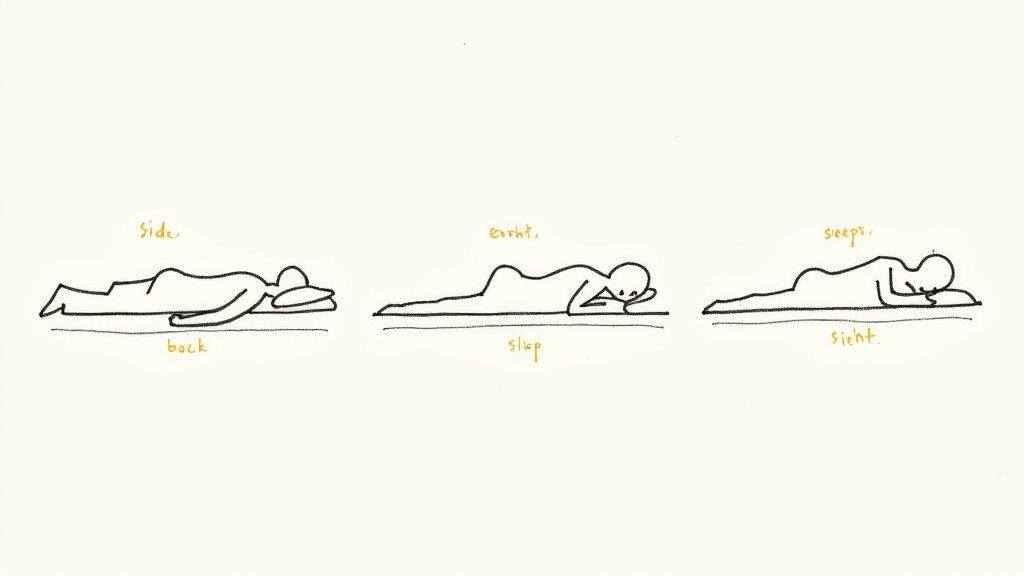
Choosing the right mattress for back pain goes way beyond just the materials. It's really about how those materials support your body in the position you spend most of your night in. After firmness, your go-to sleep position is the single biggest factor that will help you decide if a mattress will become your best friend or your worst enemy.
Think about it like this: your mattress has one job, and that's to keep your spine in a perfectly neutral, strain-free line all night. But the support a back sleeper needs is completely different from what a side sleeper requires. Once you identify your own sleep style, you can find a surface that works with your body instead of fighting against it.
The Needs of the Side Sleeper
Most of us are side sleepers, but this position also creates the biggest pressure points. When you're on your side, all of your body weight gets concentrated on the relatively small surfaces of your shoulders and hips.
A mattress that’s too firm will just shove right back at those points, forcing your spine to curve unnaturally. What you really need is a surface with enough "give" to let your shoulders and hips sink in just a bit. That cushioning is what allows your spine to straighten out into a nice horizontal line, melting away all that tension.
- Best Mattress Types: Memory foam and hybrid mattresses are fantastic tools for side sleepers because their comfort layers are pros at contouring and pressure relief.
- Ideal Firmness: A medium-soft to medium-firm feel usually hits the sweet spot between soft cushioning and solid support.
The Needs of the Back Sleeper
Sleeping on your back can be amazing for spinal alignment—but only if you've got the right support. The biggest challenge for back sleepers is keeping the spine's natural, gentle S-curve intact, especially in the lower back.
If your mattress is too soft, your hips will sink in deeper than your shoulders, creating a "hammock effect" that puts a ton of strain on your lower spine. On the flip side, a rock-hard mattress won't let your hips sink at all, which can leave an unsupported gap right under your lower back.
For back sleepers, the goal is a mattress that's supportive enough to keep the hips lifted but just soft enough to contour to the lower back. This perfect combo lets your muscles finally relax.
The Needs of the Stomach Sleeper
Stomach sleeping is often the trickiest position when it comes to back pain. Lying face-down lets gravity pull your midsection toward the mattress, forcing your spine into an unnatural arch. This can put a serious amount of strain on both your lower back and your neck.
The only way to fight this is with a firm, supportive surface. A firmer mattress is crucial for preventing your pelvis from sinking, which is the key to keeping your spine as neutral as possible. For a stomach sleeper, a soft, plushy mattress is a recipe for a sore back.
- Best Mattress Types: Firmer innerspring, latex, or hybrid models provide the robust push-back that stomach sleepers need.
- Ideal Firmness: A medium-firm to firm mattress is almost always the right call to avoid spinal strain.
Finding that perfect balance of firmness and support for your sleep style is the secret to waking up pain-free. If you're still not sure where you fall on the firmness scale, our guide on how to choose mattress firmness can help you pinpoint your ideal match.
With this knowledge in hand, you can walk into a showroom and confidently judge any mattress based on your body's specific needs. The next step is to put it to the test! Visit us in-store, and our Sleep Experts can help you try different options until you find the one that feels like it was made just for you.
How to Test a Mattress for Back Pain Relief
You’ve done the homework and have a good idea of what makes a mattress work for back pain. Now it's time to put that knowledge to the test in the real world. Testing a mattress in a showroom is more than just a quick sit-down; it’s about discovering how your body truly reacts to a new sleep surface.
Think of this as your fact-finding mission. The goal is to move past marketing hype and focus entirely on what feels right for your spine.
The 15-Minute Rule
If you only remember one thing, make it this: you have to give it time. A quick, two-minute flop on a mattress tells you almost nothing. You need to spend at least 15 minutes on any mattress you’re seriously considering.
That’s how long it takes for your body to relax and settle in, allowing you to really feel how the support layers and comfort foams are working. It’s the difference between a fleeting first impression and a genuine assessment.
Replicate Your Sleep Position
How you test a mattress should look exactly like how you sleep at night. Don't just lie flat on your back if you’re a lifelong side sleeper. Get into your go-to sleep position and stay there.
- Side Sleepers: Pay attention to your shoulders and hips. Do they feel cushioned, or are they getting jammed up? Is your spine straight, or is it curving uncomfortably?
- Back Sleepers: Feel for that space in your lower back. Does the mattress fill it in, supporting the natural curve? Or is there a gap?
- Stomach Sleepers: Notice your midsection. Does it feel properly supported, or is your back arching into a painful "U" shape?
Listen to your body. It will tell you right away if pressure is building or if an area feels unsupported.
The right mattress will feel like a natural extension of your body. You shouldn't feel like you’re fighting it—it should feel like it's working with you.
The Value of Expert Guidance
Trying to navigate a showroom full of mattresses can be overwhelming. This is where having a knowledgeable guide can change everything. Our in-store Sleep Experts are trained to be your trusted advisors, using tools like our high-tech bed-matching system to map out your unique pressure points.
This system gives us a scientific starting point, helping us recommend the specific mattress types and firmness levels most likely to give you real relief. Combining this technology with our hands-on experience helps you zero in on the best options right from the start.
We also look at the entire sleep system. Pairing a great mattress with the right foundation can amplify its benefits. For example, exploring what an adjustable base bed is and how it helps can open up a new level of customized comfort and relief, especially for those with chronic back pain.
Finding the perfect mattress also means knowing when it's time for a change. Research indicates a clear connection between mattress age and back pain, suggesting that mattresses used for over seven to eight years are often linked to increased discomfort. To see the data for yourself, you can learn more about mattress usage duration and back pain.
Ultimately, the final decision is always yours. Your comfort is the only thing that matters. Ready to find your perfect match? We invite you to visit one of our showrooms to experience this personalized process firsthand and find the mattress that will help you wake up feeling refreshed and pain-free.
Answering Your Lingering Questions About Mattresses and Back Pain
Even with all this information, you probably still have a few questions rolling around in your head. That’s perfectly normal. Choosing a new mattress is a big deal, and getting it right can completely change how you feel every morning. Let's tackle some of the most common questions we hear so you can feel totally confident in your decision.
Is a Firm Mattress Always the Best for Back Pain?
This is probably the biggest myth in the entire mattress industry. For years, the go-to advice was to get something as hard as a board to fix an aching back. We now know that’s just not true, and that advice has probably caused more pain than it’s solved.
Sure, your mattress needs to be supportive, but one that’s overly firm can make things much worse. A rock-hard surface doesn't give an inch, meaning your shoulders and hips can't sink in naturally. This forces your spine into a weird, unnatural position and creates some seriously painful pressure points.
In reality, sleep experts and clinical studies point to a medium-firm mattress as the sweet spot for most people struggling with back pain. It’s the best of both worlds: you get the solid support needed to keep your spine straight, plus enough cushioning to gently cradle your body and take the pressure off.
How Long Does It Take to Adjust to a New Mattress?
Bringing home a new mattress is a great feeling, but don't panic if it doesn't feel like a miracle on night one. Think about it—your body has likely spent years twisting itself into odd positions to compensate for your old, worn-out mattress. It needs some time to unlearn those bad habits and adjust to what proper support feels like.
This break-in period usually takes somewhere between 30 and 90 days. During this window, two things are happening. First, the new materials in the mattress are settling in and softening up to their true feel. Second, and more importantly, your body is learning to relax into a healthy, aligned sleeping posture.
This is exactly why sleep trials are a non-negotiable. A trial period gives you the time you actually need to go through this adjustment phase and figure out if a mattress is a true long-term solution for your back, without any pressure.
Can a Mattress Topper Help with My Back Pain?
A mattress topper can look like a quick and easy fix, and sometimes, it can be. If your current mattress is just a little too firm, for instance, a soft memory foam or latex topper can add a welcome layer of pressure-relieving cushion.
But it’s really important to know what a topper can't do. A topper cannot fix an old, sagging mattress. If the support core of your bed has given up, a topper is just going to follow the same dips and sags. It’s like putting a new coat of paint on a crumbling wall—it might look a bit better, but it does nothing to fix the broken foundation.
How Important Is My Pillow for Back Pain?
Your pillow is every bit as important as your mattress. They’re a team, and if they aren't working together, your whole body pays the price. The wrong pillow can put a ton of strain on your neck and upper back, which can easily trigger a domino effect of pain all the way down your spine.
A pillow’s one job is to keep your head in a "neutral" position, perfectly aligned with the rest of your spine.
- Side sleepers usually need a thicker, firmer pillow to bridge that big gap between their ear and shoulder.
- Back sleepers do best with a thinner, medium-loft pillow that supports the neck's natural curve without pushing the head too far forward.
- Stomach sleepers should go for the thinnest pillow they can find—or maybe no pillow at all—to keep their neck from being cranked at a harsh angle all night.
Ultimately, finding the right mattress is a personal journey. By arming yourself with this knowledge, you’re ready to make a smart decision that can lead to years of restorative, pain-free sleep. You now have what you need to pick the right tools for your body, and the perfect mattress is out there waiting to help you win back your mornings.
Your journey to better sleep starts with the right support. At Miller Waldrop Furniture & Decor, our Sleep Experts are dedicated to helping you find the perfect mattress for your unique needs. We combine decades of experience with advanced bed-matching technology to provide a personalized fitting, ensuring you find lasting relief. Explore our curated selection of top-quality mattresses online or visit one of our showrooms to begin your path to a pain-free morning. Find your perfect match at Miller Waldrop Furniture & Decor.