

A Practical Guide to Clean Polyester Furniture and Keep It Looking New

Before we jump into the "how-to" of cleaning, it's worth taking a moment to appreciate why polyester furniture is such a powerful tool for your busy home. When you're trying to balance a beautiful home with the realities of daily life—kids, pets, and the occasional spilled drink—you need furniture that can keep up. That's where you can rely on polyester to win the day.
It’s more than just a good-looking fabric; it’s a practical, long-term solution. Think of it as the foundation of a low-maintenance, high-style living space. This choice empowers you to spend more time actually living in your rooms instead of worrying about every little mishap.
Built for Real Life: Durability and Resistance
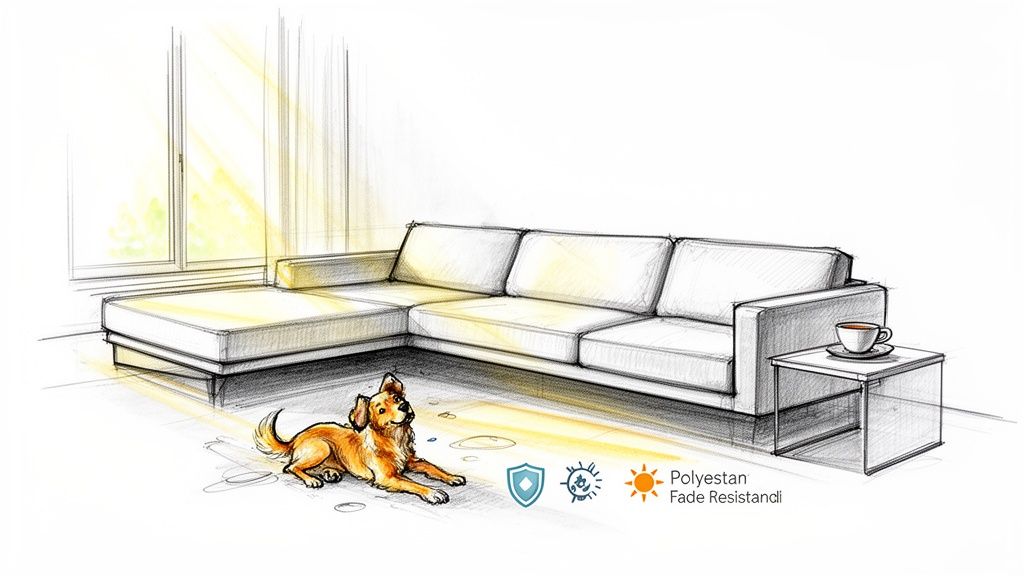
Let's be honest, life happens. That’s why one of polyester's biggest strengths is its incredible durability. The synthetic fibers are specifically engineered to handle the wear and tear of a bustling household. Unlike a lot of natural fibers, polyester is great at resisting stretching and shrinking, which means your furniture keeps its shape and structure for years to come.
This toughness is a major reason why the global furniture market, valued at a staggering $568.60 billion in 2024, leans so heavily on this fabric. In fact, industry tests consistently show that polyester holds up 30-50% better against common stains than cotton. That translates directly to lower stress and fewer replacement costs for you.
On top of that, polyester is a champion when it comes to fighting fade. The fibers lock in dye incredibly well, so that vibrant sofa you fell in love with will stay bright, even if it’s sitting right in a sunny spot. This makes it a smart choice for pieces that are meant to be the centerpiece of a room, standing up to spills, sunlight, and everyday use without a fuss.
Style That Doesn't Sacrifice Practicality
Versatility is another area where polyester really delivers. Modern manufacturing allows it to be woven to feel and look like much more expensive or high-maintenance materials—think silk, suede, or even velvet. You get that luxurious appearance without the hefty price tag or the delicate care routine.
By choosing polyester, you're not just buying a sofa; you're equipping your home with a dependable, stylish, and stress-free foundation for family life.
This adaptability means you never have to choose between your design vision and a piece that's actually family-friendly. You can find polyester furniture in a massive range of colors, textures, and styles to perfectly suit your home's decor. Here’s how you can explore other options with our complete guide to upholstery materials.
Ultimately, when you bring polyester furniture into your home, you’re choosing peace of mind. Its low-maintenance nature, combined with its strength and beauty, makes it the unsung hero your busy home deserves.
How to Read Your Furniture’s Care Tag Correctly
Before you grab a single cleaning product, your first move should always be to find the care tag on your polyester furniture. Think of this little label as the manufacturer's instruction manual, tucked away under a cushion or along a seam. Taking a minute to find and understand it is the single best thing you can do to avoid a cleaning disaster.
This tag is your roadmap to success. It tells you exactly what’s safe to use on your specific fabric, taking all the guesswork out of the process. Ignoring it is like flying blind—you might get lucky, but you also risk permanent water rings, discoloration, or fabric damage.
Decoding the Upholstery Cleaning Codes
Once you've located the tag, you'll see a single letter code. This isn't jargon; it's a straightforward system that tells you exactly how to proceed. Most quality polyester furniture, like the pieces you'll find from Ashley or Flexsteel, will have one of these four codes clearly printed.
This quick reference table breaks down what each code means for you.
Polyester Upholstery Cleaning Codes Explained
| Cleaning Code | What It Means | Recommended Cleaning Method |
|---|---|---|
| W | Water-Based Cleaning Only | This is the most common and easiest to clean. You can safely use water, mild soap, or water-based upholstery shampoos. |
| S | Solvent-Based Cleaning Only | Water is the enemy here. You must use a water-free dry-cleaning solvent. Any water can cause serious stains or damage. |
| W/S | Water or Solvent | This versatile code gives you options. You can use either water-based cleaners or dry-cleaning solvents. |
| X | Vacuum or Brush Only | The most delicate of them all. Do not use any liquid cleaners, water, or solvents. Light vacuuming or brushing is the only safe method. |
As you can see, these codes are your first and most important line of defense. They put you in control and ensure your efforts to clean polyester furniture actually help, not harm.
Once you know the code, you can confidently choose the right products and techniques for any spill that comes your way. It really is that simple.
Of course, if you're ever looking at a tough stain and feel out of your depth, don't hesitate to reach out. The design and service teams at Miller Waldrop have seen it all and are always ready to equip you with the right advice.
Your Guide to Spot Cleaning Common Stains
Life on a sofa means spills are inevitable. A morning coffee mishap, a tipped-over glass of wine, or a toddler’s creative pen work can feel like a disaster. But on polyester upholstery, these are just minor interruptions, not permanent blemishes. With the right technique and a few simple tools, you can conquer most common stains and get your furniture looking great again in minutes.
The most important thing to remember is to act quickly but calmly. Your first instinct might be to scrub, but that’s the worst thing you can do. Frantic rubbing just pushes the stain deeper into the fibers and can make it spread. The golden rule is to blot, not rub. Always use a clean, white cloth and work from the outside edge of the stain toward the center. This simple trick helps you prevent that dreaded "ring" from forming around the spill.
This quick guide is a great visual reminder of how to approach cleaning based on your furniture's care tag.
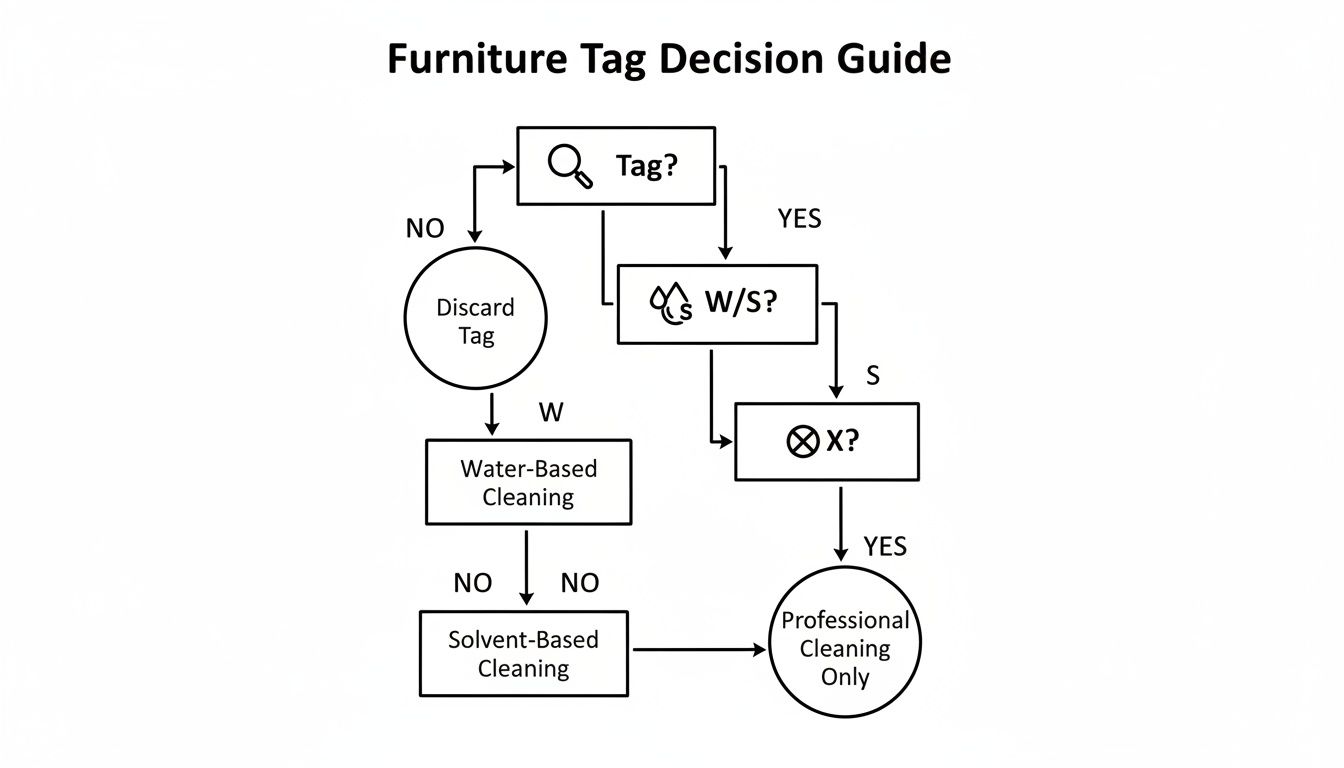
It’s a simple flowchart that reinforces the first, most critical step: check the tag. It’ll tell you right away if you can use water, a solvent, or if you need to call in the pros.
Tackling Specific Household Spills
Different messes call for slightly different game plans. The good news? You likely have everything you need right in your kitchen pantry. For most everyday spills on furniture tagged with a "W" or "W/S" code, a simple homemade solution works wonders.
- Coffee, Wine, or Juice: Grab a cup of lukewarm water and mix in a few drops of a mild, clear dish soap. Dip a clean cloth into the soapy water, wring it out, and gently blot the stain. Once the stain is gone, use a second cloth dampened with plain water to "rinse" the area by blotting again. Finally, blot it dry with a third, dry cloth.
- Greasy or Oily Stains (like pizza or butter): Time is of the essence here. Immediately cover the spot with a generous amount of cornstarch or baking soda to soak up the oil. Let it sit for at least 15-20 minutes before vacuuming it all up. If a mark remains, you can treat it with a tiny bit of dry-cleaning solvent (for "S" tags) or the same dish soap solution from above (for "W" tags), blotting carefully.
The durability of polyester is more than just skin-deep. The polyester polyols market is crucial for creating the high-quality, flexible foams inside your cushions. This modern foam resists 40% more abrasion than older materials and is a key reason why 67% of homeowners choose polyester for its fantastic stain resistance.
Dealing with Tougher Stains Like Ink and Pet Accidents
Some stains are just a bit more stubborn. Ink, for example, can be a real headache. For a fresh ballpoint pen mark, you can often lift the ink by dabbing it gently with a cotton swab dipped in rubbing alcohol. But always, always test this on a hidden spot first—like under a cushion—to make sure it doesn't affect the fabric's color.
Pet accidents are a two-part problem: you have to remove the stain and neutralize the odor so your furry friend doesn't return to the scene of the crime.
- First, blot up as much of the urine as you can with paper towels, pressing firmly.
- Next, mix up a solution of one part white vinegar to one part water in a spray bottle.
- Lightly spray the affected area and blot again. The vinegar is amazing at breaking down the uric acid that causes those lingering smells.
- Once the spot is completely dry, sprinkle baking soda over it. Let it sit for at least an hour to absorb any remaining odor, and then vacuum it thoroughly.
If you're interested in other natural cleaning remedies, you might find these articles on the uses of vinegar for cleaning helpful. For a more detailed look at tackling all sorts of spots, here's how you can master stain removal with our comprehensive guide on removing stains from upholstery. With these tools in your arsenal, you can feel confident that no stain stands a chance against you.
Got Removable Cushion Covers? Here's How to Deep Clean Them
Sometimes, a little spot cleaning just won't cut it. When your sofa has seen a lot of life and needs more than a quick fix, washing the removable cushion covers can feel like hitting the reset button. It’s your best tool for getting rid of that overall layer of grime and any lingering odors that have settled in, giving your whole piece a deep-down clean.
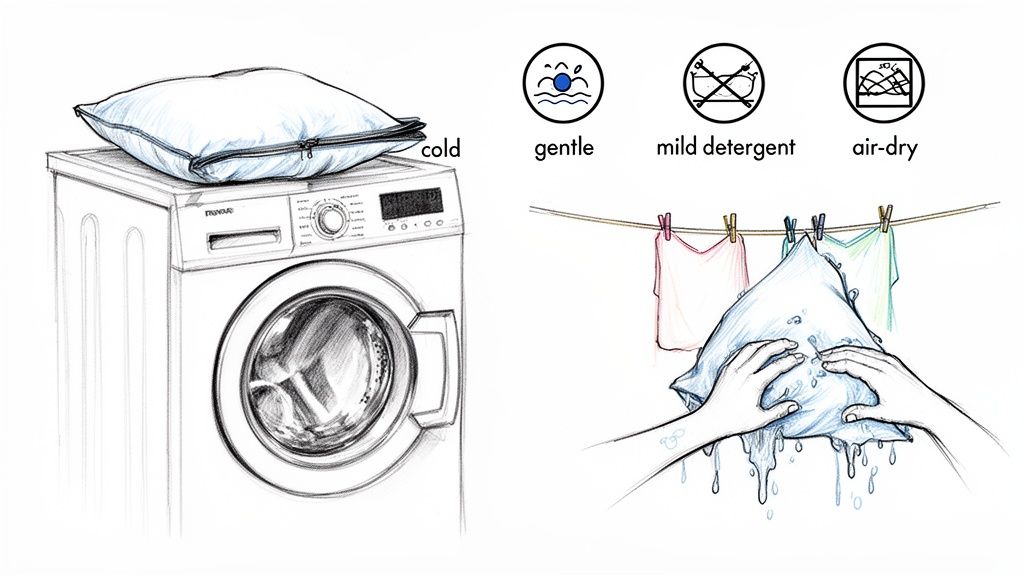
Before you start unzipping anything, find that care tag. If you see a "W" or "W/S" code, you have the green light to proceed. That's your confirmation that water-based cleaning is safe for your fabric.
Getting the Covers Ready for the Machine
A little prep work goes a long way here. Taking a few extra minutes now can save you from a major headache later, like a broken zipper or snagged fabric.
First, carefully work each cover off its foam insert. My advice? Wash all of them at the same time, even the ones that look clean. This is the only way to make sure they all wear and fade at the same rate, keeping the color consistent across the entire sofa.
Now for the most important part: zip every single cover completely shut. Trust me on this. Those metal zipper teeth can act like tiny saws in the wash, snagging and tearing your polyester fabric or the other covers in the load.
Choosing the Right Washer Settings
With your covers prepped, it's time for the wash. The key is to be gentle. You're trying to lift out dirt and oils, not beat the fabric into submission.
Dial in these settings on your machine for the best outcome:
- Cycle: Always go with the delicate or gentle cycle. The slower spin and minimal agitation are much kinder to the fabric's seams and structure.
- Water Temperature: Use cold water, no exceptions. Hot water is the number one enemy of polyester, causing it to shrink. That’s a disaster when you need the cover to fit back on the cushion perfectly.
- Detergent: Stick with a mild liquid detergent. Make sure it's bleach-free, as harsh chemicals can easily strip the color right out of the fibers.
The trick to successfully clean polyester furniture covers is to treat them like your favorite sweater. Don't cram them all in at once. If you have a big sectional, it’s much better to do two smaller loads so each cover has room to move and get properly cleaned without rubbing against the others too much.
The Make-or-Break Drying Process
How you dry your covers is just as critical as how you wash them. I'm going to say this clearly: never put polyester cushion covers in a machine dryer. The intense heat is almost guaranteed to shrink them, and you’ll find yourself wrestling with a cover that’s suddenly two sizes too small.
Air-drying is the only way to go. Hang the covers on a drying rack or a clothesline. If you can, keep them out of direct, harsh sunlight to prevent any fading while they dry.
Here's a pro tip: while the covers are still a bit damp, gently pull them back into shape. Tug the corners so they're square and straighten out the seams. This little step makes a huge difference in helping them maintain their original form, making it so much easier to get them back on the cushions once they're fully dry.
When you're ready to find the perfect low-maintenance furniture for your family's needs, here's how you can explore the durable and stylish options in our Flexsteel collection.
Keeping Your Furniture Looking New with Routine Care
The real secret to furniture that looks fantastic for years isn't just about how you handle spills—it's about consistent, simple care. Think of it as preventative medicine for your sofa. A few easy habits empower you to stop dirt from setting in and prevent the kind of wear and tear that ages furniture prematurely.
This doesn't mean you need to dedicate your Saturdays to deep cleaning. It’s the small things that make the biggest difference. One of the most effective moves you can make is giving your furniture a quick vacuum once a week using the upholstery attachment. This simple pass whisks away crumbs, dust, and pet hair before they have a chance to get ground into the fabric.
Simple Habits for a Lasting Sofa
Here's another easy one: fluff and rotate your cushions every week. It might sound trivial, but this single action ensures they wear evenly, so you don't end up with sad, saggy spots on one side. It’s a two-minute job that helps your furniture keep its shape and stay comfortable for much longer.
These little acts of upkeep are incredibly powerful. In fact, the furniture industry is leaning heavily into surface protection. New self-adhesive films and foils, often applied right over polyester, are projected to capture 47% of a $9.2 billion market by 2025. This technology makes surfaces a breeze to wipe down, cutting cleaning time by 60% compared to leather and showing 75% less fading after five years.
"Consistent, gentle maintenance is far more effective than occasional, aggressive cleaning. Think of it as protecting your investment one week at a time."
Even for minor repairs, having the right materials on hand is a game-changer. Using a high-quality, durable specific upholstery thread for a small seam repair, for instance, can make all the difference in its longevity. When you pair routine care with the right tools, you're truly extending the life of your furniture.
Of course, sometimes life gets messy and a vacuum just won't cut it. For those times when dirt and oils have built up, our guide on how to steam clean a couch safely can give you the extra cleaning power you need without damaging the fabric.
Ready to find furniture that’s as resilient as it is beautiful? The team at Miller Waldrop is here to help you choose the perfect pieces designed for real life.
When You Need to Call in the Pros
Look, even the most dedicated DIY hero has to know when to call for backup. Some stains are just in a different league, and tackling them yourself can sometimes do more harm than good. Recognizing when to bring in a professional is your best strategy for protecting your furniture and saving yourself a massive headache.
Think of it this way: professional cleaners have heavy-duty equipment and specialized chemical knowledge that just isn't available for home use. They’re the special forces of furniture care.
Signs It's Time for a Professional
Sometimes, the best move you can make is picking up the phone. Here are a few situations where it’s definitely time to let an expert handle your polyester furniture:
- Stubborn Dye Stains: We're talking about things like ink, red wine, or mustard that have had plenty of time to set. These dyes chemically bond with the fabric fibers, making them incredibly tough to remove without professional-grade solvents.
- Large Water Marks: If you've dealt with a big spill or a previous cleaning attempt left a giant, unsightly water ring, a pro can often even out the fabric's appearance with their extraction tools.
- Delicate Polyester Blends: Is your sofa a polyester-silk or polyester-rayon blend? These fabrics are far less forgiving. One wrong move with a DIY solution and you could have a permanent disaster on your hands.
- "S" or "X" Care Codes: This is non-negotiable. If your tag says "S" (Solvent only) or "X" (Vacuum only), using water is strictly off-limits. Professionals have the right water-free chemicals to clean these pieces safely and effectively.
You're never on your own when it comes to keeping your home beautiful. Think of our team as your personal resource for all things furniture and design.
Whether you're battling a stain that just won't quit or you're thinking about your next furniture investment, the team here at Miller Waldrop is always ready to help. Connect with our design experts for personalized advice you can trust.
Common Questions About Cleaning Polyester
Even with a solid plan, you're bound to run into a few specific questions when you start tackling your polyester furniture. Let's walk through some of the most common ones we get asked, so you can clean with total confidence.
Can I Use a Steam Cleaner on My Polyester Sofa?
This is a big one, and the answer is a definite "maybe." It all comes down to the care code on your furniture's tag.
If you see a "W" or a "W/S", you're likely in the clear to use a steam cleaner. The key is to use the lowest possible heat setting and an upholstery attachment—too much heat can melt or warp the synthetic fibers, causing permanent damage.
Before you go all in, always, always test it on a small, hidden spot first. If your tag says "S" or "X", then steam cleaning is completely off the table. Stick to solvent-based or no-clean methods for those fabrics.
How Do I Get Rid of Stubborn Pet Hair?
Polyester has a tendency to build up a bit of static, making it a magnet for pet hair. For a really thorough clean, you can use a two-part strategy. First, do a once-over with your vacuum's upholstery or pet hair attachment to get all the loose stuff.
Here's the trick for the rest: put on a damp rubber glove and simply wipe your hand across the fabric. You'll be amazed at how the rubber grips and clumps the embedded hair, making it easy to pick off. Of course, a good lint roller is always great for quick, daily touch-ups.
Your secret weapon against lingering odors is probably already in your pantry: baking soda. It's fantastic at absorbing smells right from the fabric fibers, rather than just masking them with a chemical spray.
What's the Best Way to Deodorize the Fabric?
If your furniture just smells a little stale or is holding onto a scent, baking soda is the perfect tool for the job. Lightly sprinkle it all over the upholstery and just let it sit. For minor odors, 30 minutes is plenty, but for more persistent smells, you might want to leave it for a few hours.
Afterward, just vacuum it up thoroughly. If you want to add a light, fresh scent, you can mix a few drops of your favorite essential oil with water in a spray bottle. Just be sure to test it on an inconspicuous area first to make sure it doesn't spot or stain the fabric.
At Miller Waldrop Furniture & Decor, we believe that a beautiful home should also be a livable one. Knowing how to care for your furniture is just as important as choosing the right piece. Here’s how you can find furniture that combines incredible style with real-world durability: explore our hand-picked La-Z-Boy collection today.