

How to Remove Stains From Upholstery Like a Pro


That heart-stopping moment when a glass of red wine topples or a pen goes flying doesn't have to spell the end for your beautiful furniture. Your immediate reaction is everything, and you have the power to win this battle. The golden rule? Blot immediately with a clean, dry cloth. Always work from the outside of the stain inward to keep it from spreading.
Your First Response to Any Upholstery Stain
When a spill happens, it's easy to panic. But a calm, quick response is your most powerful weapon against a permanent mark. Those first few minutes are absolutely critical, and you are in control.
Your biggest instinct might be to scrub furiously at the spot, but you have to resist! Scrubbing just grinds the stain deeper into the fabric fibers. A gentle blotting motion, on the other hand, lifts the liquid out. Mastering this one simple technique is often the difference between a minor cleanup and a lasting problem.
You don't need a huge arsenal of specialized cleaners to be ready. You can build your own first-response kit with tools you probably already have in your cupboards.
Assembling Your Stain Emergency Kit
Having your tools ready means you can spring into action without a second's delay. Think of this as your hero's first-aid kit for your furniture.
- Clean White Cloths or Paper Towels: You need these for blotting. Stick with white to completely avoid any risk of dye from a colored cloth bleeding onto your upholstery.
- Club Soda: The bubbles in club soda are surprisingly effective at lifting fresh food and drink spills from fabric, making them much easier for you to blot up.
- Spray Bottle with Cool Water: A light mist of water can help you dilute many water-based stains without soaking the fabric, which can cause its own set of problems.
- A Small Bowl: Perfect for mixing up a simple, gentle cleaning solution when you need to escalate your response.
When a fresh spill happens, every second counts. Before you reach for any cleaner, these initial steps are your universal game plan. They work for almost any stain on any fabric and are designed to contain the damage immediately.
The Universal Stain Emergency Plan
| Immediate Action | Why It's Critical | Essential Tool |
|---|---|---|
| Scoop Up Solids | Gently remove any solid residue (like food) to prevent it from being pressed into the fabric. | A dull knife or spoon |
| Blot, Don't Rub | Blotting absorbs the liquid. Rubbing grinds the stain deeper and can damage fabric fibers. | A clean, dry white cloth |
| Work Outside-In | Start blotting at the edge of the stain and move toward the center to stop it from spreading. | A fresh section of your cloth |
| Use Cool Water Sparingly | A light mist helps dilute the stain without over-saturating and creating a water ring. | A spray bottle |
Mastering these first few moves can dramatically improve your chances of getting the stain out completely, long before you even think about specific cleaning solutions.
Your immediate response is more important than any cleaning product you can buy. Acting fast with the right technique—blotting, not rubbing—is your secret to preventing a spill from becoming a stain.
Let's face it, spills are just part of life. In North America, which accounts for 31.7% of the colossal $24.98 billion global stain remover market, over 55% of households are tackling food and beverage stains on their furniture every single month. It’s no surprise that cleaning institute guidelines confirm that rubbing can actually spread a stain by as much as 40%. Immediate blotting is always the number one recommendation. You can explore the full research from Grand View Research to see just how big of a deal this is.
Facing a stubborn stain that won't budge, or just want to protect your new furniture from day one? The design experts at Miller Waldrop can guide you to beautiful, high-performance fabrics designed for your family's needs. Here’s how you can choose furniture that lets you live worry-free.
Know Your Fabric Before You Touch That Stain
Before you grab the first cleaner you see, stop. Using the wrong product on your upholstery can turn a small spot into a full-blown disaster. We're talking discoloration, shrinkage, or even permanently damaged fibers. You can avoid this by treating your furniture's tag like its instruction manual—it's the manufacturer telling you exactly how to care for it.
Somewhere on that tag, usually tucked under a cushion or on the frame, is a tiny but critical piece of information: the cleaning code. This one letter is your entire game plan, telling you precisely what kind of cleaner is safe for your fabric.
What Those Cleaning Codes Actually Mean
Learning these codes is like getting the keys to the kingdom. It gives you the power to pick the right tool for the job every single time, protecting your furniture and getting a much better result.
-
W is for Water: See a W? You can breathe a sigh of relief. This means you can use water and mild, water-based cleaners. These fabrics are often tough, man-made materials like polyester or nylon that can handle a good scrub.
-
S is for Solvent: This code means "Solvent-Based Cleaner" only. For these fabrics, water is the enemy. You're likely dealing with natural fibers like cotton, silk, or rayon that will get water rings or damage easily. You'll need a special dry-cleaning solvent.
-
W/S gives you options: This is the flexible one. You can safely use either a water-based cleaner or a solvent. The trick here is to match the cleaner to the stain—a water-based cleaner for juice, a solvent for grease.
-
X means hands off: This is the most delicate of all. The X stands for vacuum only. No water, no solvents, no exceptions. Trying to clean these fabrics with any kind of liquid will almost certainly cause shrinking or staining. Your only move is to gently brush or vacuum away dirt and debris.
This guide really drives home the importance of acting fast and acting right when a spill happens.
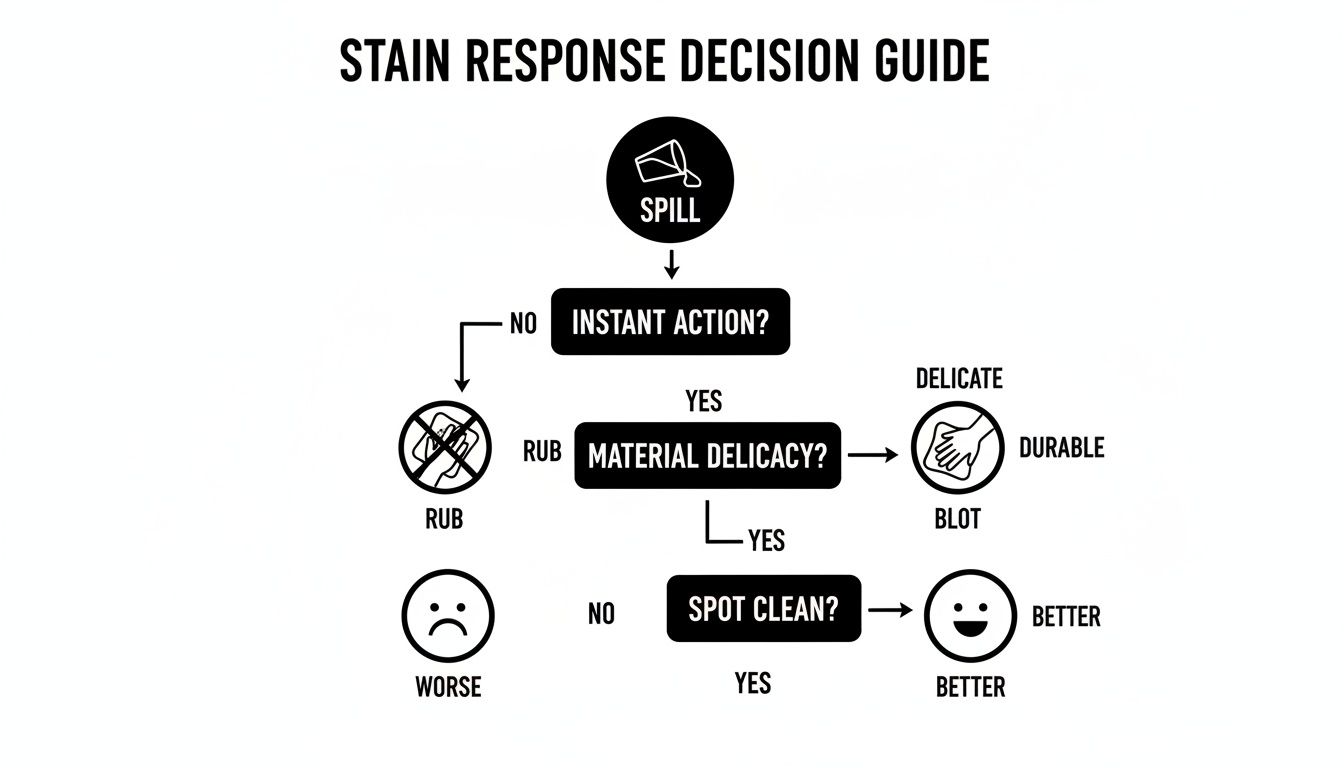
As you can see, blotting is your best friend. Rubbing a fresh spill just grinds it deeper into the fibers and makes the problem so much worse.
Why Every Fabric Needs a Different Approach
Those codes are a great starting point, but every material has its own quirks. Velvet, for example, can get crushed and marked if it gets too wet. Microfiber is pretty forgiving, but it can feel stiff and crunchy if you don't brush it out after it dries. And leather? That's a whole different ballgame. It needs special conditioners to keep it from drying out and cracking after you've treated a stain.
The first question you should always ask is, "What am I working with?" It's a principle that applies to more than just sofas; for instance, the best way to clean rugs: a DIY home guide also emphasizes how crucial it is to identify the material before you begin.
Knowing your fabric's cleaning code isn't just a friendly suggestion—it's the most important step in the entire process. It's what keeps you from turning a little "oops" into a costly mistake.
Getting familiar with your furniture's fabric is the secret to keeping it looking great for years. If you want to dive deeper into the pros and cons of different materials, here’s how you can learn everything you need to know about upholstery materials. A little knowledge here goes a long way.
DIY Solutions for Common Household Spills
Life happens, and often it happens right on your favorite armchair or sofa. A tipped coffee mug, a splash of red wine, or a dropped bite of greasy pizza doesn't have to mean a permanent mark. Before you reach for a harsh chemical cleaner, take a look in your pantry. Some of the most effective stain fighters are probably already in there.
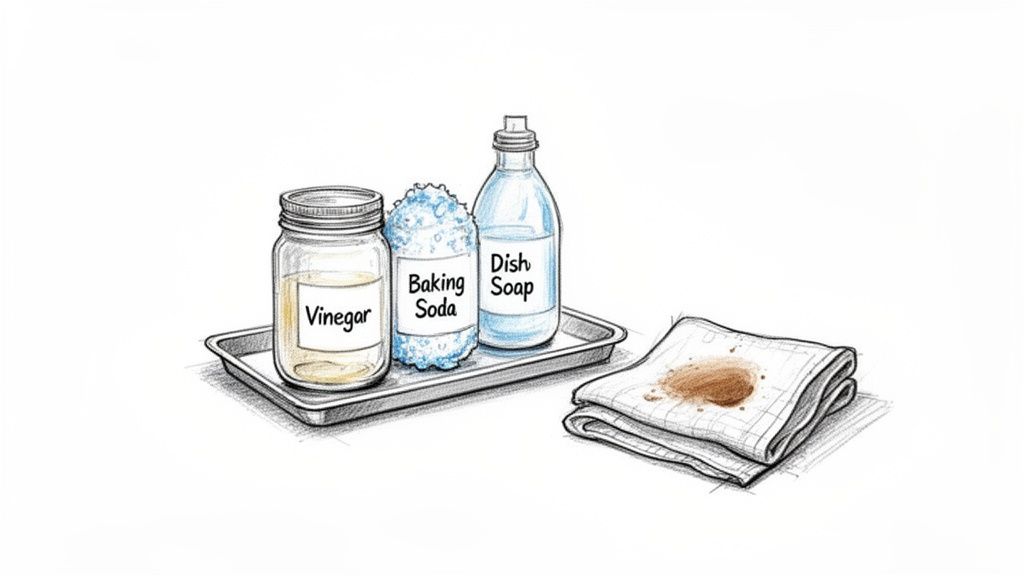
These simple household items work because of basic chemistry. They can break down stains at a molecular level, giving you the power to handle life’s little messes with confidence and without spending a fortune.
The Vinegar and Water Workhorse
For those acidic stains from things like coffee, tea, or juice, a simple mix of white vinegar and water can be your secret weapon. Vinegar is a mild acid, which makes it incredibly good at neutralizing and dissolving the compounds in these kinds of spills.
Just mix equal parts white vinegar and cool water in a spray bottle. Give the stain a light mist—you want it damp, not soaking wet. Let it sit for about 10-15 minutes to work its magic, then start blotting with a clean, dry cloth. Work from the outside of the stain inward to avoid spreading it, and you should see it start to lift away.
Harnessing the Power of Baking Soda
Baking soda is a go-to for absorbing greasy, oily, and organic stains like food or dirt. It acts as a gentle abrasive that can lift stain particles out of the fabric fibers, especially when it creates that familiar fizzing action.
If you're dealing with a greasy spot from a French fry, for instance, make a thick paste with baking soda and a little water. Apply it directly to the stain and just let it be. As the paste dries completely, it will pull the oil right out of the fabric. Once it’s hard, you can just scrape it off and vacuum up whatever is left. It’s a great way to avoid scrubbing grease deeper into your furniture.
The classic vinegar-and-baking-soda combination is a proven method for tackling a wide range of common household spills. It’s a cost-effective, powerful, and safe alternative to many commercial products you might find on the shelf.
Textile experts often recommend this dynamic duo. By spraying the stain with a vinegar-water solution and then sprinkling baking soda on top, you can boost your cleaning power by as much as 70%. This simple trick not only saves you money—cutting costs by 80% compared to many store-bought cleaners—but can also extend the life of your upholstery by an average of five years.
The Classic Red Wine Rescue
Seeing red wine hit a light-colored sofa can trigger a moment of panic, but you can save the day with a little table salt if you act quickly. The key is to move fast.
The second it happens, blot up as much of the wine as you can with a clean cloth. Don’t rub! Then, cover the entire stain with a generous layer of salt. The salt will immediately start to pull the wine out of the fabric through osmosis. Let it sit until the salt looks pink and damp, then just vacuum it all up. You’ll be shocked at how much of the stain comes out with it.
While these DIY methods are fantastic for spot treatments, sometimes your whole piece of furniture needs a refresh. For a deeper clean, here's our guide on how to clean your sofa with a steam cleaner. And if you're looking for more tips that can be adapted for home use, this detailed DIY guide on how to clean boat upholstery offers some excellent strategies for tackling tough stains on different fabrics.
How to Tackle Tough Stains Like Oil and Ink
When you’re staring down a truly intimidating stain—like oil, grease, or a rogue ink mark—it’s easy to feel like the battle is already lost. But these are the moments where a targeted strategy can save the day. With the right tools and a little know-how, you can conquer even the most notorious upholstery villains.
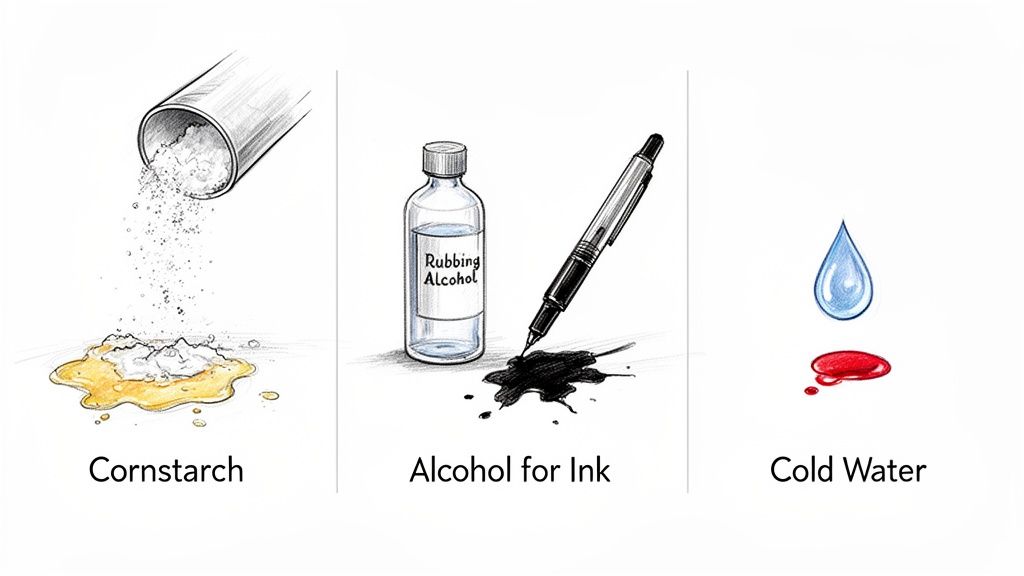
Unlike a simple coffee spill, these tougher stains won't budge with just soap and water. They have a unique chemical makeup, and that means you need a specific plan of attack for each one.
Defeating Grease and Oil Stains
Picture this: a greasy slice of pizza takes a tumble onto your favorite armchair. Your first instinct might be to grab a wet cloth, but hold on—water will only spread the oil and make things much worse. The real secret here is absorption.
Your first line of defense should be a dry, absorbent powder like cornstarch or baking soda. Don't be shy; cover the fresh grease stain completely with a thick layer. This powder acts like a magnet, pulling the oil up and out of the fabric fibers. Let it work its magic for at least 15-20 minutes, then vacuum it all up. This single step can often remove the bulk of the oil before you even think about a liquid cleaner.
Erasing Stubborn Ink Marks
A stray mark from a ballpoint pen can feel like a permanent scar on your furniture. For this particular challenge, you need a solvent that can break down the ink without damaging the fabric underneath. In most cases, rubbing alcohol is the perfect tool for the job.
Start by dabbing—never, ever rubbing—the ink stain with a clean cloth lightly dampened with isopropyl alcohol. You should see the ink start to transfer from the upholstery onto your cloth. It's crucial to keep switching to a fresh section of the cloth to avoid reapplying the very ink you’ve just lifted. Research has shown that for some tough ink stains, 90% isopropyl rubbing alcohol can dissolve an incredible 95% of the stain on durable fabrics. For more on this, you can find valuable insights on stain remover effectiveness from industry reports.
Handling Blood Stains with Care
Blood is a protein-based stain, which means it comes with one non-negotiable rule: always use cold water. Hot water will essentially "cook" the proteins, setting the stain permanently into the fabric and making it nearly impossible to remove.
For a fresh bloodstain, gently blot the spot with a cloth soaked in clean, cold water. If it needs a little more help, add a tiny drop of clear dish soap to the cloth and continue blotting carefully. Rinse by dabbing with a new cloth dampened with only cold water. It’s a delicate process, but your patience will pay off.
When facing a tough stain, your superpower is knowing its weakness. Oil fears absorption, ink dissolves with a solvent, and protein stains like blood can’t stand the cold.
Remember, it’s always a good idea to test any cleaning solution on an inconspicuous spot first. A small patch under a cushion or on the back of the furniture is the perfect place for a trial run to ensure it won’t cause discoloration or damage.
For those moments when a stain proves too stubborn or you're just not confident in how to proceed, don't risk damaging your beloved furniture. The knowledgeable team at Miller Waldrop is always here to offer guidance. We can equip you with the knowledge to understand your furniture's needs or even assist you in choosing a beautiful, durable piece with performance fabric for your next purchase, giving you ultimate peace of mind.
Proactive Care to Protect Your Furniture
Once you've gotten the hang of tackling tough stains, it's time to switch gears from reactive cleaning to proactive protection. The best way to deal with a stain is to stop it from happening in the first place. You can build a fortress around your beautiful upholstery to keep it looking its best for years.
This isn't about wrapping your sofas in plastic like a museum piece. It’s about smart, simple habits and using the right tools to create a protective shield. Little things, like always using coasters for drinks or serving snacks on a tray, can make a huge difference in preventing those "oops" moments. It's about making protection a natural part of how you live.
The Power of Fabric Protectors
One of the best weapons in your furniture-care arsenal is a good fabric protector. It creates an invisible barrier that makes liquids bead up instead of soaking in, giving you that critical window of time to blot a spill before it becomes a permanent problem. Most new furniture comes with a treatment from the factory, but it definitely wears off over time with normal use.
Making a point to reapply a protector every year or so is a real game-changer. For an easy, all-in-one tool, the Guardsman Fabric Care Kit is fantastic. It provides what you need to handle existing stains and apply a professional-grade shield against new ones. This one step is a powerful way to guard your investment.
Choosing Furniture Built for Real Life
If you have a busy home—especially one with kids and pets—the most effective strategy is choosing the right furniture from the very beginning. Performance fabrics have completely changed the game. They offer incredible durability and stain resistance without feeling stiff or looking bland. These materials are literally engineered for the chaos of daily life, which makes a spilled juice box or muddy paw print much less of a catastrophe.
When you're shopping for that next sofa or armchair, seriously consider how a performance fabric could give you invaluable peace of mind. This same idea applies to other materials, too. For instance, here’s how to protect leather furniture with the specific care needed to keep it looking great for the long haul.
Your furniture should be a source of comfort, not anxiety. By investing in proactive care and choosing materials designed for your lifestyle, you empower yourself to live worry-free in the home you love.
By weaving these simple habits, protective treatments, and smart furniture choices into your routine, you create a complete defense system. It’s the best way to ensure your furniture remains a point of pride, not a constant source of stress.
Stuck with a stain that just won't budge or feeling overwhelmed? Remember, your furniture is a significant investment. The experts at Miller Waldrop are always here to offer advice and help you find beautiful, durable pieces designed for the way you really live. Let us equip you with the tools and knowledge to choose furniture that lets you relax and enjoy your home.
Answering Your Top Stain Removal Questions
Even with a solid game plan, you're bound to have questions when a spill happens. It's only natural. We've been in the furniture business for a long time, and we've heard just about every question there is.
Here are the answers to the ones that pop up most often—the little details that make a huge difference in your success.
Can I Just Use a Hair Dryer to Dry the Spot Faster?
I know it’s tempting, but please, step away from the hair dryer. Using direct heat is one of the quickest ways to make a stain permanent.
Think of it like cooking: heat can literally bake a protein-based stain (like blood or egg) right into the fibers of your couch. Once that happens, it’s not coming out. It’s far better to let the spot air-dry on its own. If you want to speed things up, open a window or aim a fan at the area to get the air moving. A little patience now saves a lot of heartache later.
What’s the Single Biggest Mistake People Make?
Without a doubt, it’s rubbing the stain. It’s an almost universal instinct—you see a spill and you want to scrub it away. But all that does is grind the stain deeper into the fabric, damage the fibers, and make the spot bigger.
Blot, never rub. I can't say it enough. Gently press a clean cloth onto the spill to lift the liquid out. Always work from the outside edge of the stain toward the middle to keep it from spreading. This one small change in technique is often the difference between a stain that vanishes and one that sticks around for good.
At What Point Should I Give Up and Call a Pro?
Knowing when to call for backup is key. Sometimes, a DIY approach just isn't the right move. It’s time to call in a professional cleaner if you’re dealing with any of these situations:
- The fabric is extremely delicate, like silk or antique velvet.
- The cleaning code is 'X' (which means vacuum-only, no water!).
- Your efforts have made things worse, leaving behind a bigger stain or a water ring.
- The stain is old, huge, or you have no idea what caused it.
When it comes to a piece of furniture you truly love, a professional cleaning is always a smarter investment than a full reupholstery job. Don't risk it if you're not confident.
Is There Any Hope for Old, Set-In Stains?
Older stains are a whole different ballgame. They’ve had time to chemically bond with the fabric, so they’re much more stubborn. While the basic rules still apply (spot-test everything!), you’ll need more patience and probably a more targeted cleaner.
For old organic stains from food or pets, try an enzyme-based cleaner. These products are specifically designed to break down the proteins that make up the stain. You might have to repeat the process a few times, but don't give up. While some very old stains may never disappear 100%, you can often lighten them to the point where they’re barely noticeable.
At Miller Waldrop, we believe that a beautiful home should also be a livable one. If you’ve hit a wall with a tough stain or you’re looking for furniture that can handle the realities of everyday life, our team is here to help you find the perfect solution for your family. Come see what we have to offer and let's build a home you can truly relax in.