

How to Steam Clean a Couch and Revive Your Upholstery

Welcome to your ultimate resource for bringing a tired, stained couch back to life. Think of this as your personal playbook for tackling everything from stubborn spills and pet odors to the general grime of daily life. When you steam clean a couch, you're choosing a powerful, chemical-free method to deep clean, sanitize, and ultimately extend the life of your furniture.
Your Guide to a Fresh and Spotless Sofa
Feeling overwhelmed by a new stain or a lingering smell? Don't be. This guide is here to demystify the entire process, giving you the confidence and know-how to achieve a professional-level clean all on your own. Restoring your sofa's beauty yourself is incredibly empowering, and it makes your whole living space feel fresh and new again. After all, maintaining your furniture isn't just about cleaning—it's about preserving the heart of your living room.
You have the power to make your space feel vibrant, and we're here to show you exactly how.
Why Steam Cleaning is Your Secret Weapon
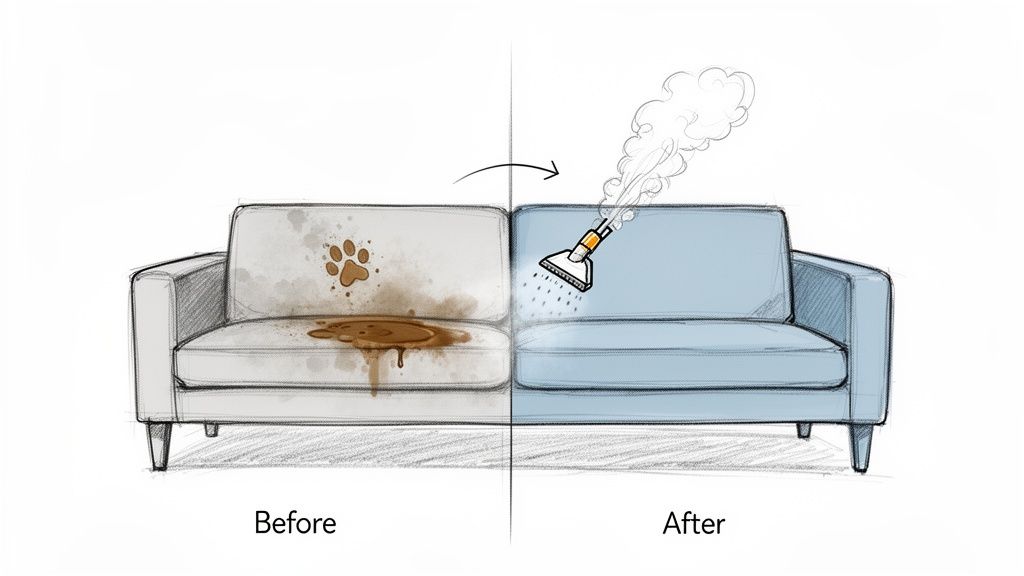
High-temperature steam is a game-changer for your upholstery care. Unlike surface-level sprays that just sit on top, steam gets deep into the fabric fibers to dissolve the dirt, grime, and allergens that even a good vacuum can't reach. The heat, often climbing over 200°F, does more than just clean—it completely sanitizes.
Here's why it's such an effective tool in your arsenal:
- It Neutralizes Odors. Steam actually breaks down the bacteria causing those lingering smells from pets, food, or just daily use. It doesn't just mask them.
- It Eliminates Allergens. Dust mites, pollen, and pet dander simply can't survive the high heat, which means you can create a healthier environment for your family.
- It's a Chemical-Free Clean. You can achieve an incredible deep clean using just plain water. This makes it one of the safest choices for homes with kids and pets.
Your couch is the centerpiece of your home—it's where you connect and relax. Keeping it clean with a method that’s both effective and safe protects not just the furniture, but the well-being of everyone who enjoys it.
Preserving Your Furniture Investment
Regular maintenance is the single best way to ensure your furniture lasts for years. When you've invested in a high-quality piece like a durable Flexsteel sofa, proper care is what preserves its look, feel, and value. Steam cleaning is that perfect balance of gentle yet powerful, capable of restoring the fabric's original texture and color without the harsh scrubbing or chemicals that cause wear and tear.
For a broader look at how this method works on different types of furniture, this practical guide to steam clean upholstery is a great resource for essential steps and things to watch out for. Once you master this skill, you become the hero of your home, ready to tackle life’s messes with total confidence.
Ready to take control and revitalize your living space? Our design experts at Miller Waldrop are always here to help you choose furniture with fabrics that can handle everyday life and to guide you on the best care practices.
Getting Ready for a Safe and Effective Clean
Any great cleaning project starts with a little prep work. Think of it as your pre-flight check—it’s what separates a flawless, professional-looking result from a frustrating, costly mistake. Don't dive right in without a plan and end up with a bigger mess than you started with.
Before you even think about plugging in that steam cleaner, you need to play detective. Your couch has a secret to tell, and you’ll find it on the cleaning code tag, usually tucked under a cushion or along the frame. This little tag is your roadmap. Ignore it at your own peril.
Decode Your Couch Fabric Tag
Honestly, this is non-negotiable. Getting this wrong can lead to irreversible water spots, shrinkage, or even color bleeding. The tag will have one of four letters on it, and each one tells you exactly how to proceed. It's also smart to get a broader feel for fabric care; you can find some great general advice on cleaning different upholstery materials that complements what you'll learn here.
Decoding Your Couch Fabric Cleaning Codes
Use this quick reference to understand the cleaning codes on your furniture's tag. Knowing this is the key to protecting your investment and ensuring a safe clean.
| Code | Meaning | Is Steam Cleaning Safe? |
|---|---|---|
| W | Water-Based Cleaners | Yes. This is the green light! It means your fabric is tough enough for water and steam. |
| S | Solvent-Based Cleaners Only | No. Water is the enemy here. Steam will likely damage these fabrics, so call a professional. |
| W/S | Water or Solvent Cleaners | Yes, with caution. These fabrics are a bit more flexible, but you absolutely must do a spot test first. |
| X | Vacuum Only | No. Absolutely no water or steam. Stick to vacuuming or light brushing only. |
Once you’ve confirmed your couch has a ‘W’ or ‘W/S’ code, you’re ready to gather your gear.
Assemble Your Cleaning Toolkit
Having everything you need within arm's reach makes the whole process go so much smoother. You don’t need a massive arsenal, but each tool has a specific job to help you win the day.
- A Quality Steam Cleaner: Get one that comes with dedicated upholstery attachments. They make a huge difference.
- Distilled Water: This is a pro tip. Tap water leaves mineral deposits in your machine and on your fabric. Always use distilled.
- Microfiber Cloths: Grab a few. You’ll need them for blotting and wiping down the steamer head as you work.
- Vacuum with Attachments: The crevice tool and upholstery brush are your best friends for getting all the initial dirt and crumbs out.
The last, and most critical, step before you start is the spot test. Find a hidden area—the back of the couch, under a skirt, or the underside of a cushion—and test your steamer there first. This simple five-minute check is your ultimate safety net. It confirms the fabric can handle the heat and moisture, letting you clean the rest of the couch with complete confidence.
Still feeling a bit lost about your fabric? Our guide on how to choose the perfect upholstery fabric is packed with info that can help you understand and care for your furniture like a pro.
Your Game Plan for Steam Cleaning
Alright, you've done the prep work. Now it's time to get down to business. This is where you bring your couch back to life, armed with the right plan to tackle dirt and grime. We'll break this down into a few manageable phases, turning a big job into a series of simple, satisfying steps.
This visual guide quickly sums up the critical prep work you need to do before a single drop of water hits the fabric.
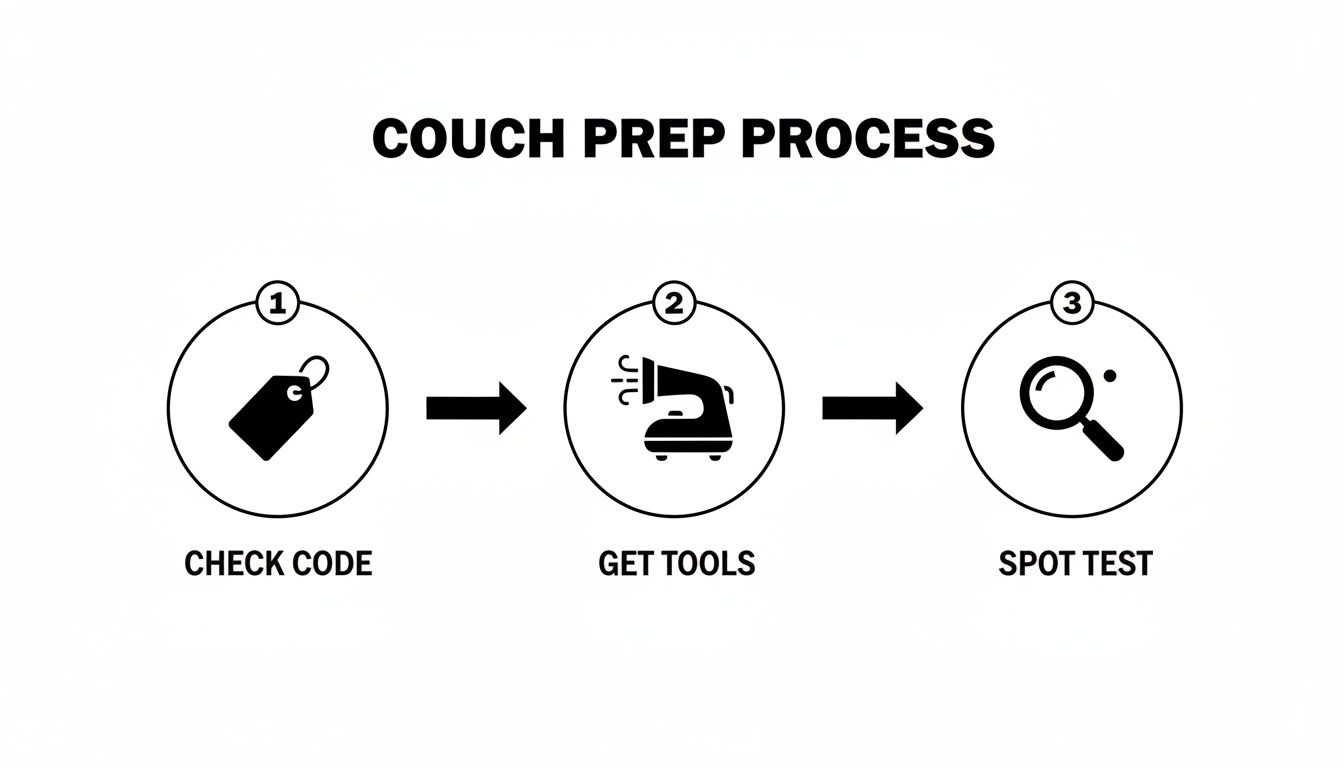
Seriously, don't skip this sequence. Checking the fabric code, grabbing your tools, and doing a spot test is your best insurance policy against accidental damage.
The Dry Prep Phase
First things first, let's talk about the 'Dry Prep.' Never underestimate the power of a really good vacuuming session. This step is all about getting rid of the loose stuff—dust, pet hair, cracker crumbs, you name it—before you add water. If you skip this, you'll just be making mud.
Grab your vacuum’s upholstery attachment for the big, flat surfaces. Then, switch to the crevice tool to get deep down into the seams, under the cushions, and all along the frame. A thorough vacuuming job right now makes the actual steam cleaning so much more effective.
Tackling Stains Head-On
With the loose debris gone, it's time to zero in on any stubborn spots. Those coffee rings, wine spills, or pet-related accidents need special attention before you steam the whole couch. Applying a small amount of a fabric-safe pre-treatment solution can be a game-changer.
Let the pre-treater work its magic for the recommended time, usually about 5-10 minutes. This gives it a chance to break down the stain so the steam can lift it out completely, rather than just smearing it around. For a deeper dive into specific spills, you might find our expert guide on how to remove stains from upholstery really helpful.
The Main Event: Steam Application
Now for the part you've been waiting for—the actual steam cleaning. This is where the magic happens. A quick tip: fill your machine with distilled water. It prevents mineral buildup in the machine and leaves your couch with a clean, residue-free finish.
Always start at the top of the couch and work your way down. This simple trick prevents you from dripping water onto the areas you just cleaned. Use long, slow, and slightly overlapping strokes for a consistent, even clean across every cushion and surface.
Pro Tip: Your speed is everything here. Go too fast, and the steam won't have enough time to really penetrate and sanitize the fabric. But go too slow, and you risk oversaturating the material, which can lead to water spots and a much longer drying time. The key is a steady, deliberate pace.
Think of it like painting a wall. You're aiming for smooth, even coverage without any streaks. This methodical approach is what separates an okay job from a professional-looking one when you steam clean your couch.
Mastering the Details
The attachments that came with your steamer are your secret weapons. Use a smaller nozzle to get into the nooks and crannies—armrests, corners, and the piping around the cushion edges. This focused work ensures no spot gets missed.
As you clean, you'll probably notice the steamer's cleaning head picking up a lot of grime. Keep a clean microfiber cloth nearby and give it a wipe every so often. This stops you from accidentally dragging that dirt back onto the fabric you just cleaned.
It's no surprise this method is getting more popular. The global upholstery cleaning machine market was valued at $1.5 billion in 2025 and is only expected to grow. For those of us who invest in quality furniture, it's become the go-to way to keep it looking great for years.
With these techniques in your back pocket, you have everything you need to give your couch a deep, revitalizing clean. And if you ever feel a piece needs a professional's touch, or you’re thinking about an upgrade, the team at Miller Waldrop is always here with expert advice.
Finishing Touches for Lasting Freshness
You’ve put in the hard work, and your couch is probably looking a whole lot better. But don't put the steamer away just yet—the job isn't quite done. This final stage is all about ensuring your couch is truly dry and feels as good as it looks.
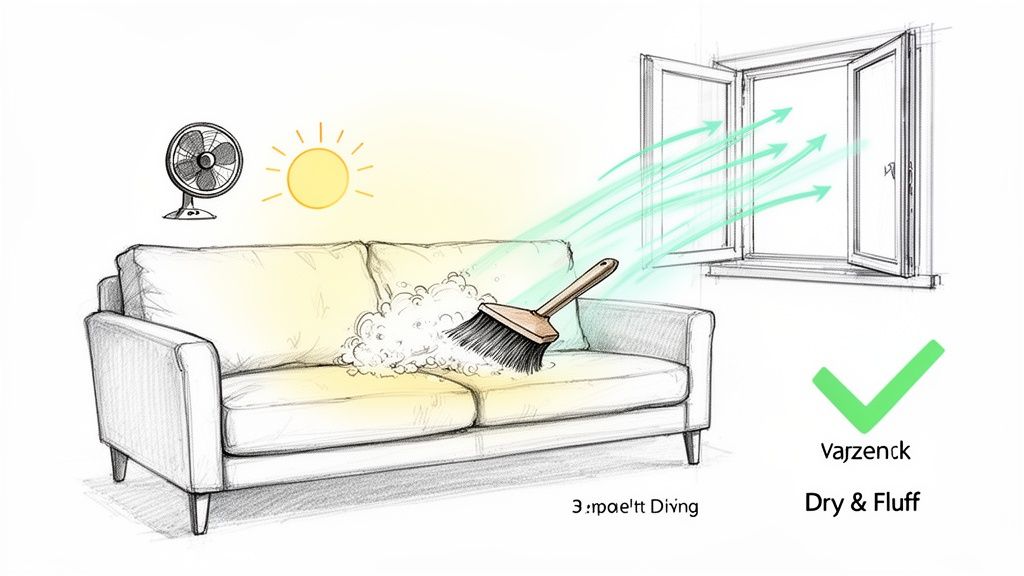
It’s tempting to skip these final steps, but trust me, this is what separates a decent DIY job from a great one. Proper aftercare is what locks in that deep-clean feeling and keeps your couch looking fantastic for longer.
The Crucial Drying Phase
Okay, this is the most important part of the whole process after the actual cleaning. Your couch will be damp, even though steam cleaning uses less water than other methods. If that moisture hangs around for too long, you're setting yourself up for mildew, musty smells, and potentially even fabric damage.
Your one and only goal right now is to get air moving over, under, and around every surface of that couch.
Here’s how you can make it happen:
- Open the Windows: If it’s a nice day, get a cross-breeze going. Fresh air is your best friend here.
- Set Up Fans: Point a few fans directly at the couch. The more air circulation, the faster it will dry.
- Use a Dehumidifier: Live somewhere humid? A dehumidifier is a game-changer. It will pull moisture right out of the air and, by extension, your couch fabric.
Your target is to get the couch completely dry within 24 hours. Any longer than that, and you're entering the mildew danger zone. Be patient! A little extra drying time now prevents a whole lot of frustration later.
Restoring Texture and Softness
Once your couch is completely bone-dry, you might find the fabric feels a bit stiff or flat. Don't worry, that's totally normal after a deep clean. The final touch is to bring back its original soft, inviting texture.
Grab a clean, soft-bristled upholstery brush. Gently go over the fabric with light, short strokes. I like to brush against the grain first to lift the fibers, then finish by brushing with the grain for a smooth look. It’s a simple trick that makes a world of difference.
This little bit of effort transforms your couch from just "clean" to looking and feeling professionally refreshed. It's easy to see why so many people are turning to this method. The global steam cleaner market is exploding and is projected to reach $8.7 billion by 2035. This huge growth reflects a real desire for effective, chemical-free cleaning that’s better for our homes and our furniture. You can explore more market insights on Business Research Insights to see what's driving the trend.
By taking a few extra minutes for these finishing touches, you’re doing more than just cleaning your couch—you’re preserving its comfort and value for years. And when the time eventually comes for a change, our team can help you find a beautiful replacement, like a durable Flexsteel sectional built to last.
When to Call in a Professional
Let's be honest, sometimes the best DIY move is knowing when not to do it yourself. While steam cleaning can work wonders, there are definitely situations where calling in a professional is the smartest, safest play for your furniture. This isn't about giving up; it's about making a calculated decision to avoid a costly, irreversible mistake.
Think of it this way: you have a great first-aid kit at home, but you wouldn't perform your own surgery. Some jobs just require an expert with specialized tools and experience.
Signs It's Time for an Expert's Touch
Certain red flags should make you pause and pick up the phone instead of the steamer. If you're facing any of these issues, you'll be glad you called a pro.
- Delicate or Unfamiliar Fabrics: If you're dealing with materials like silk, velvet, or any couch tagged with an 'S' (solvents only) or 'X' (vacuum only) cleaning code, step away from the steamer. A professional has the right chemistry and equipment to handle these sensitive textiles without causing shrinkage, water spots, or color bleeding. For other tricky materials like leather, check out our guide on how to clean leather furniture naturally.
- Old, Deep-Set Stains: That red wine stain from last year's holiday party has had a long time to become one with the fabric fibers. Professionals have access to powerful, commercial-grade treatments that can break down those stubborn bonds in ways that home remedies simply can't.
- Major Water Damage or Lingering Odors: If your couch was caught in a leak or has a deep, persistent smell (like pet odors that just won't quit), a surface steam clean might just be a temporary fix. Professionals use deep extraction and sanitizing methods that pull moisture and odor-causing bacteria from the core of the cushions.
Recognizing your limits is a sign of a smart homeowner. Trying to tackle a major problem without the right gear can turn a solvable issue into a permanent one, costing you a whole lot more in the end.
When a Fresh Start Is the Better Option
There are times when even a professional cleaning might just be a temporary fix for a bigger problem. If your couch has served your family well for years but is now showing significant wear, persistent stains, or just doesn't fit your lifestyle anymore, putting more money into cleaning it might not be the best investment.
This is where you can take control of your home's style and function. Our team at Miller Waldrop is here to help you find the perfect long-term fit for your space. Maybe it's time for an upgrade to a new La-Z-Boy sectional with a durable, high-performance fabric that can handle everything your family throws at it.
Ready to see what's possible? Contact our design experts today for a personalized consultation and let's find the perfect furniture solution for your home.
Couch Steaming Questions Answered
When you're about to tackle a project like steam cleaning your couch, a few questions are bound to pop up. It's completely normal. Getting those nagging uncertainties out of the way is the key to moving forward with confidence. Think of this as your personal FAQ, built from years of experience helping people care for their furniture.
First off, let's talk about our furry friends. If you have pets (or little kids), your first question is probably, "Is this safe?" The answer is a resounding yes. Steam cleaning is a fantastic tool because it's just super-heated water doing the work. You get a deep, sanitizing clean without leaving behind any chemical residues. It's a powerful way to get rid of pet odors and dander without worrying about what your family is exposed to.
How Often Should I Steam Clean My Couch?
This really comes down to your lifestyle. For a quiet household, a thorough steam cleaning once a year is probably all you need to keep your sofa looking and feeling fresh.
However, life happens. If you've got a busy home with pets, kids, or allergy sufferers, you'll want to ramp that up to every six months. Of course, you don't need to do the whole couch for a small spill—spot-treating as needed is perfectly fine. The idea is to maintain, not constantly overhaul.
Key Takeaway: Regular steam cleaning goes beyond just surface dirt. It's about getting deep into the fibers to eliminate dust mites, pet dander, and other allergens, which helps you create a healthier living space.
Can Steam Cleaning Damage My Couch?
This is the big one, and the answer is: it depends entirely on the fabric. While steam is safe for many materials, it can be a disaster for others. I can't stress this enough—the absolute most important thing you can do is check the cleaning code on your couch's tag.
- ‘W’ or ‘W/S’ Codes: You're in the clear. These fabrics are made to be cleaned with water.
- ‘S’ or ‘X’ Codes: Stop right there. Do not use steam or water. These fabrics require a solvent-based cleaner or just vacuuming, and water will likely cause permanent water spots, shrinkage, or make the colors bleed.
If you're ever unsure, do a quick spot test on a hidden area, like the back or underside of a cushion. It only takes a few minutes and it's the best insurance policy you have against a very costly mistake. Knowing your fabric is half the battle.
We get a lot of questions about furniture care, so we've put together a quick-reference table to answer the most common ones at a glance.
Couch Steaming Questions Answered
Your quick guide to the most common questions about steam cleaning your sofa.
| Question | Answer |
|---|---|
| Is steam cleaning safe for pets? | Absolutely. Because it uses only hot water and no harsh chemicals, it’s one of the safest cleaning methods for homes with pets and children. |
| How often should I clean my couch? | Aim for once a year for general maintenance. Increase to every six months if you have pets, kids, or allergies. |
| Can I steam clean any type of couch? | No. Always check the tag. It's safe for fabrics with a ‘W’ or ‘W/S’ code, but not for those marked ‘S’ or ‘X’. |
| Will steam cleaning remove old stains? | It can be very effective, but some set-in stains may need pre-treatment with an appropriate upholstery cleaner first. |
| How long does it take for a couch to dry? | Typically 4 to 8 hours. Good airflow from fans, open windows, or a dehumidifier will speed up the process significantly. |
Hopefully, this clears things up and gives you the confidence to get started. Taking the time to do it right makes all the difference.
At Miller Waldrop Furniture & Decor, we believe you deserve a beautiful, well-cared-for home. Whether you're maintaining a beloved sofa or searching for the perfect new centerpiece, our experts are here to provide the tools and guidance you need. Explore our stunning collection of quality furniture designed to stand the test of time at millerwaldrop.com.