

How to Fix Saggy Couch Cushions and Restore Comfort

That sinking feeling when you plop down on your favorite spot is more than just annoying—it's a sign your couch needs your help. Saggy couch cushions are a common problem, but it doesn't automatically mean you need a new sofa. This is your guide to becoming the hero of your own living room, armed with the know-how to bring back that comfort and support you've been missing.
Your Guide to Reviving Saggy Couch Cushions
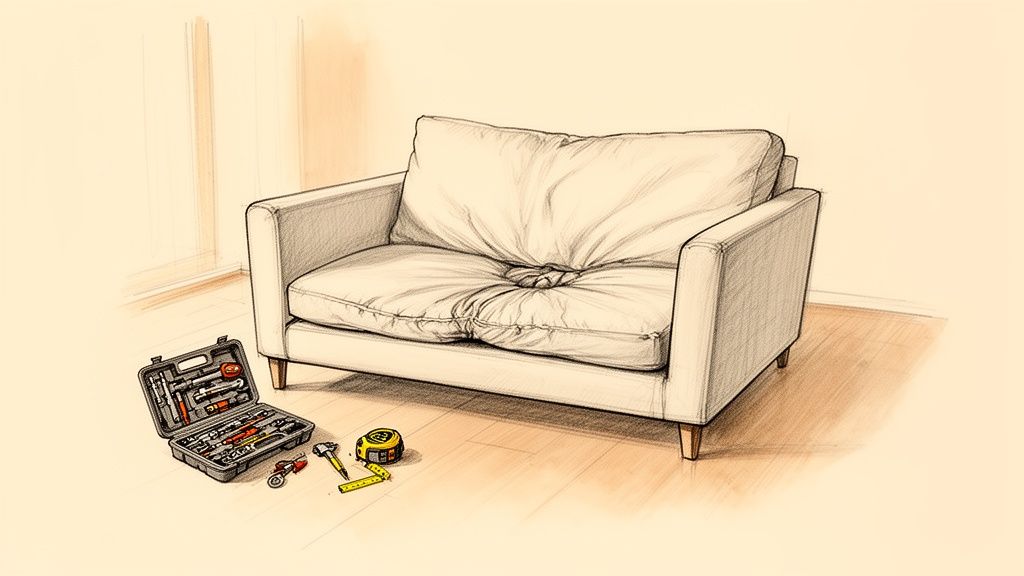
The living room sofa is the heart of your home, isn't it? It’s where you have movie nights, long talks, and quiet mornings with a cup of coffee. When those cushions start to sag, it messes with more than just the look of the room; it steals the comfort from the whole space. And if you think this problem has gotten worse lately, you're not wrong.
Between 2018 and 2023, interest in fixing saggy cushions shot up, which makes sense when you think about how much more time we all spent at home. With people spending an estimated 62% more waking hours at home in 2020 compared to the year before, our sofas took a real beating. This highlights a key fact: cushion softening is the single most common comfort complaint for upholstered furniture, making up about 30–40% of all post-warranty service calls. You can learn more about how recent furniture trends have impacted consumer behavior on AOL.com.
Why Do Couch Cushions Sag?
Before you can solve the problem, you need to understand what's causing it. Sagging isn't just about a sofa getting old; it's about the materials inside breaking down from constant use.
Here are the usual suspects:
- Foam Compression: Most cushions have a foam core. Every time you sit, you're squishing tiny cells inside that foam. Over thousands of sits, those cells lose their ability to spring back.
- Fiberfill Compacting: If your cushions are filled with a softer material like polyester fiberfill or down, that fluff eventually clumps together and flattens out, leaving you with dips and valleys.
- Stretched Suspension: Sometimes, the cushion isn't the problem at all—it's what’s holding it up. The webbing or springs in the sofa's frame can stretch or break, taking away that firm foundation.
Quick Diagnosis for Your Sagging Couch
Pinpoint the problem before you start the repair. Use this table to identify the likely cause of your sagging cushions and the best first action you can take.
| Symptom | Likely Cause | Recommended First Action |
|---|---|---|
| Cushion feels flat but recovers slightly | Foam Compression | Unzip and inspect the foam insert. Plan to restuff or replace it. |
| Lumps and unevenness in the cushion | Fiberfill Compacting | Open the cushion and fluff the filling by hand or with a stick. |
| The whole seating area dips down | Stretched Suspension | Flip the sofa over and examine the springs or webbing for damage. |
Once you know what you're dealing with, you can choose the right fix and get your couch back to feeling brand new.
You have the power to transform your couch from a source of frustration back into a welcoming centerpiece. The key is identifying the right problem so you can apply the right fix, whether it's a simple DIY refresh or an informed decision about an upgrade.
Tackling this project is about more than just fixing furniture; it’s about restoring a piece of your home life. You'll walk through every step with the confidence of a pro. For a deeper dive into cushion styles and care, check out this ultimate style guide for sofa cushions.
Whether you're ready to get your hands dirty with a repair or you're starting to think about a new investment, you can make a real difference. At Miller Waldrop, our goal is to give you the knowledge you need to create a home you absolutely love. And if you discover the issue is a weak frame beyond repair, here’s how you can explore a collection of high-quality, durable sofas built to give your family lasting comfort.
Pinpointing the Real Cause of the Sag
Before you jump into a fix, you need to do a little detective work. Trying to fix a sagging couch without knowing why it's sagging is a recipe for frustration. You might spend an afternoon restuffing a cushion only to realize the problem was a broken spring all along.
The real culprit isn't always the cushion itself. Sometimes, the issue is hiding deeper within the sofa's frame. A quick but thorough inspection will tell you exactly what you're up against and make sure you're applying the right solution.
The Cushion-Off Investigation
First thing's first: pull all the seat cushions off the sofa and lay them out on the floor. This simple move often tells you a lot right away. Are they all the same height, or is one noticeably flatter? That's probably the family's favorite spot, where the filling has taken the most abuse.
Now, give each cushion a good press right in the middle.
- Does it spring back fast? If the cushion bounces back into shape almost immediately, the foam core inside is probably still in good shape. The sag might just be from compacted fiberfill wrap or, more likely, an issue with the sofa's support structure underneath.
- Is it slow to recover? If your handprint lingers for a few seconds, the foam has lost its resilience. That’s a dead giveaway that the cushion's internal structure is shot and needs to be replaced or seriously beefed up.
- Does it feel lumpy? If you feel clumps and inconsistencies, you're likely dealing with a loose filling like polyester fiberfill or down feathers that have shifted and bunched up over time.
This quick test helps you figure out if the problem is contained within the cushions or if you need to look deeper.
Examining the Sofa's Foundation
With the cushions off, turn your attention to the now-empty sofa deck. Look across the surface where the cushions sit. Is it a flat plane, or can you see obvious dips and valleys in the fabric?
Run your hands firmly across the entire seating area. You're feeling for any weak spots in the support system underneath. A healthy sofa base should feel consistently firm from one end to the other. If you find an area that gives way easily, you’ve probably found a problem with the springs or webbing.
Remember, the cushions can only be as supportive as the foundation they rest on. A perfectly good cushion will still sag if the springs or webbing beneath it have failed.
As you press down, listen carefully. Do you hear any creaks, groans, or popping sounds? Those are the tell-tale signs of broken springs, detached clips, or even a crack in the wooden frame. A silent frame is usually a happy, healthy frame.
Differentiating Between Springs and Webbing
To finish your diagnosis, you may need to peek underneath the sofa. If you have a helper, carefully flip the sofa over to inspect its belly. You'll generally find one of two types of support systems.
- Spring Systems: You might see a series of S-shaped wires (sinuous springs) running from front to back, or a more complex grid of coils (8-way hand-tied springs). Look for any that are obviously broken, bent out of shape, or have popped loose from their clips.
- Webbing Support: This system looks like a basket weave of wide, elasticated straps. Check for any straps that are stretched out, frayed, or have come un-stapled from the frame. Stretched webbing loses its tension and creates a hammock effect.
Knowing what kind of support you're working with is key, as it dictates the repair method. It also plays a big role in the overall feel and longevity of your furniture. To see how these internal components interact with the fabric you see and touch, you can explore [everything you need to know about upholstery materials](https://www.millerwaldrop.com/everything-you-need-to-know-about- upholstery-materials/).
At this point, you should have a solid idea of what’s causing the sag, so you can move forward with confidence and choose the right fix.
Practical DIY Fixes for Your Couch Cushions
Now that you’ve played detective and figured out why your couch is sagging, it’s time to get hands-on and win back your comfort. Don’t worry, you don’t need to be a master upholsterer to make a huge difference here.
Here are three powerful, straightforward DIY fixes you can master. Each one targets a different culprit behind saggy cushions, so you can pick the perfect strategy for your sofa’s specific needs and your own comfort level with a project.
This simple flowchart can help you visualize the diagnostic process, making sure you’re on the right track for the repair.
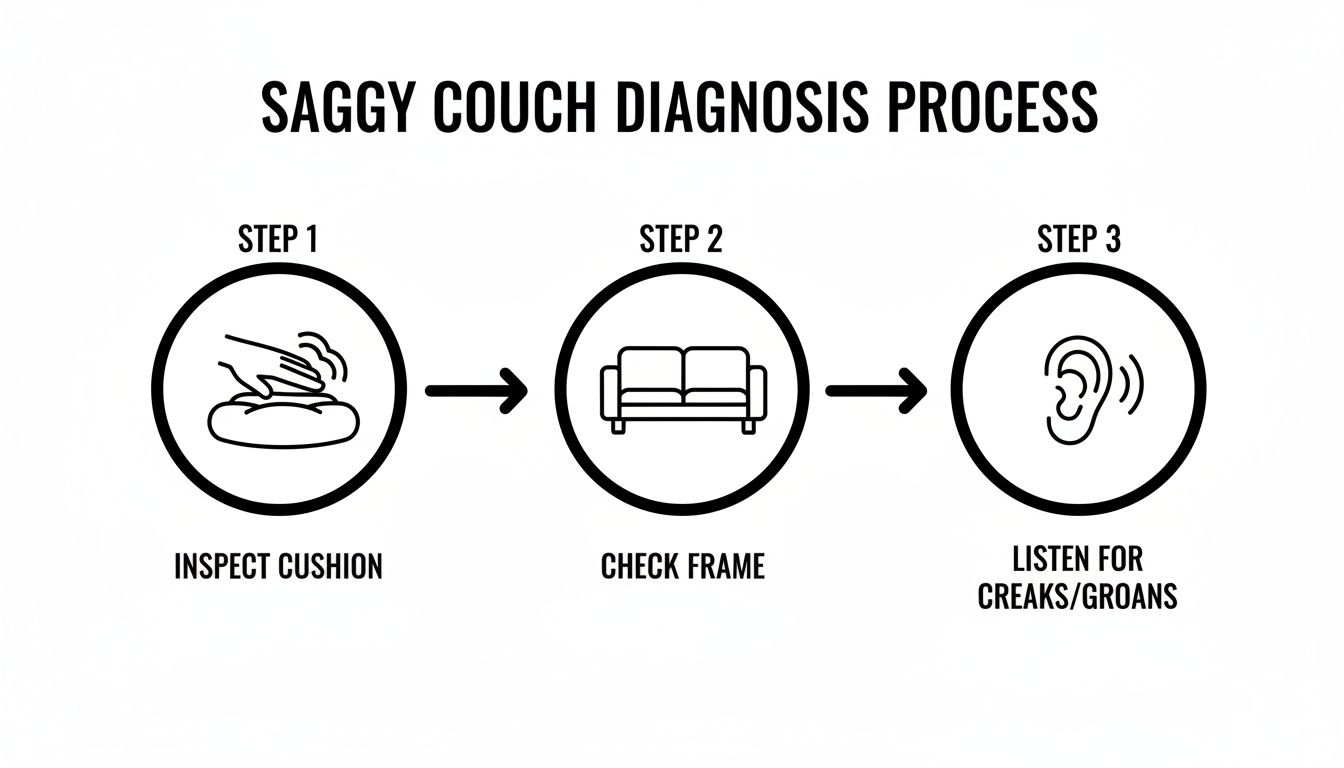
As you can see, a good fix starts with a good diagnosis, moving from the cushion itself down to the frame support.
The Quick Refresh: Restuffing and Wrapping
If the foam core inside your cushion is still in decent shape but just feels a bit deflated, a simple restuff is your best friend. This is the least intensive and most budget-friendly fix—perfect for cushions that have simply lost their initial plumpness over time.
The goal is to add volume back into the cushion cover. The two best materials for this are polyester fiberfill and quilt batting.
- Polyester Fiberfill: This is that loose, fluffy stuffing you can buy in big bags at any craft store. It’s fantastic for filling in the empty spaces around your foam core, especially in the corners, to give your cushion a fuller, more rounded look.
- Quilt Batting: This comes in flat sheets and is perfect for wrapping around the entire foam core. A layer or two, secured with a light spray adhesive, creates a uniform layer of softness and loft that smooths out any minor lumps or bumps.
Just unzip your cushion cover and pull out the foam insert. If you're using batting, wrap it snugly around the core. Then, strategically stuff handfuls of fiberfill into the cover before sliding the foam back in. It’s like giving your cushion a new, plush jacket.
And while you have the covers off, it’s a great time for a deep clean. Our guide on how to properly steam clean a couch provides the tools and tips that can make the entire sofa feel brand new.
The Core Replacement: Swapping Out the Foam
For those cushions where the foam is truly tired—squished flat and slow to bounce back—a full foam replacement is the only way to go. This approach replaces the very heart of the cushion, restoring that firm, supportive feel you've been missing. It takes a bit more effort, but the results are dramatic.
First, you need to get accurate measurements. Remove the old foam and measure its length, width, and thickness. A pro tip is to measure the cover itself from seam to seam, then add about a half-inch to each dimension. This ensures the new foam will fill it out completely for a taut, professional look.
Next, you need to choose the right foam. You'll run into two key terms:
- Density: This measures the foam's weight per cubic foot and tells you how durable it is. A higher density (2.5 lbs or more) means the foam will last much longer.
- Firmness (ILD): This number indicates how much pressure it takes to compress the foam. This is purely about personal preference—do you like to sink in or sit on top?
For a repair that lasts, you can't go wrong choosing a high-resilience (HR) foam. It costs a bit more upfront, but its superior durability and bounce-back quality mean you won't be dealing with saggy cushions again anytime soon.
Once your new foam is cut to size, getting it back into the cover can be a bit of a workout. Here’s a pro trick: place the foam in a large plastic bag (a clean trash bag works) and use a vacuum to suck all the air out, compressing it. This makes it much easier to slide into the cushion cover. Once it’s in, just release the vacuum seal, and the foam will expand to fill the cover perfectly.
The Foundation Fix: Installing Cushion Support
What if your cushions are perfectly fine, but the sag is coming from below? This is a really common problem, especially when a sofa's springs or webbing have stretched out after years of use. A fantastic—and surprisingly simple—fix is to add a rigid support board under the cushions.
You can buy pre-made, foldable cushion support inserts, or you can easily make your own with a thin piece of plywood or hardboard cut to fit the seating area of your sofa. Just slide it right on top of the sofa deck, directly under the seat cushions.
This method gives an immediate lift by creating a firm, level base that stops the cushions from sinking into the weakened suspension system. It’s an incredibly effective solution that addresses the root of the problem without forcing you to do any complex repairs to the sofa's internal frame.
Knowing When a Repair Just Won't Cut It
There's a real satisfaction in bringing saggy couch cushions back to life with a good DIY fix. But part of being a savvy homeowner is knowing when to call it a day. Sometimes, the problem runs deeper than flattened foam, pointing to structural issues that no amount of polyester fill or new inserts can salvage.
Recognizing these red flags isn’t about admitting defeat; it’s about making a smart investment of your time and money. Pouring effort into a sofa with a failing foundation is a losing battle. You have to know when it’s time to stop patching and start fresh.
Signs the Problem is More Than Skin Deep
Think of your sofa's frame as its skeleton. If the bones are broken, nothing else matters. You can plump up the cushions all you want, but if they have nothing solid to rest on, you'll be right back where you started.
Keep an eye out for these critical warning signs that your couch has problems far beyond simple sagging:
- A Cracked or Warped Frame: Do you hear loud creaks, groans, or sharp popping noises when you sit down? That’s often the sound of a stressed or broken wood frame. This is the most serious issue and almost always means it’s time for a new sofa.
- Multiple Broken Springs: One spring coming loose from its clip is usually fixable. But if you flip the sofa over and see a graveyard of broken or severely bent springs, the entire suspension system is shot. This creates that dreaded "hammock" feeling that no cushion can fix.
- Lingering Odors: If the couch has a persistent musty or moldy smell that no amount of cleaning or airing out can fix, you might have moisture damage deep inside the frame or foam. That’s not just unpleasant; it can be a health concern.
- Worn-Out Upholstery: Fabric that is ripped in multiple spots, badly frayed, or has become brittle and thin is telling you the sofa has lived a long, full life.
When you're facing these kinds of structural failures, any money you spend on new cushions is, unfortunately, just a temporary fix for a permanent problem.
The Great Debate: Reupholster or Replace?
So, what if the frame is still solid as a rock, but the fabric is a disaster and the cushions are completely flattened? Professional reupholstery is definitely an option, but it’s a serious investment. This is where you have to put on your financial strategist hat.
A full professional reupholstery job can easily run from $1,000 to $4,000, and that’s often before you even factor in the cost of the new fabric. While it can absolutely transform a cherished piece, you have to be sure the sofa's "bones" are worth it.
Let's walk through a common scenario. Say you have a high-quality sofa with a kiln-dried hardwood frame that you inherited or invested in years ago. The frame is still perfect, but the fabric is dated and the cushions are shot. In this case, reupholstery is a fantastic choice because you're preserving a genuinely well-built piece of furniture.
On the flip side, imagine you have a more budget-friendly sofa that originally cost you less than $1,000. The cost to reupholster it would almost certainly be more than what you paid for it. From a purely economic standpoint, it makes far more sense to put that money toward a brand-new, durable sofa.
Ultimately, the decision is yours. The most important thing is to honestly assess the underlying quality of your sofa's frame. Putting expensive new fabric on a weak frame is like putting a brand-new roof on a house with a crumbling foundation.
Making the call to replace a beloved sofa is never easy, but it’s about investing wisely in your home's comfort. When you're ready to find a new centerpiece built for longevity from the start, you can browse this collection of high-quality sofas. We are here to help you find the perfect foundation for your family, ensuring your next choice provides comfort for years to come.
How to Choose a Sofa Built to Last
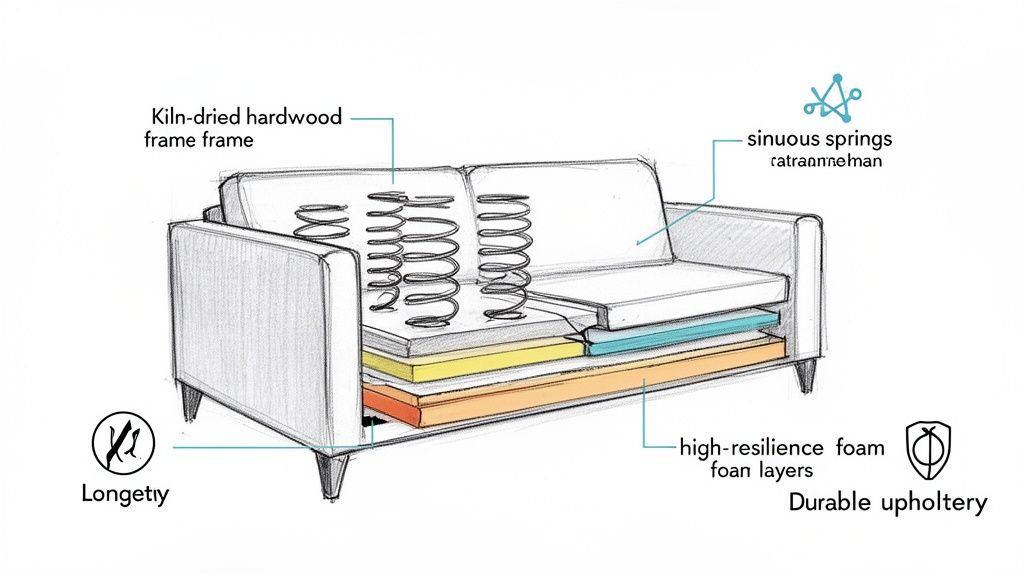
When the time comes for an upgrade, you can absolutely choose a sofa that’s built to resist sagging from day one. It’s not about crossing your fingers and hoping for the best; it’s about knowing what to look for under the surface. Understanding the bones of a good sofa turns you from a hopeful shopper into an informed buyer, ready to pick a piece that will stand up to years of family movie nights.
Knowing the difference between a quality build and something that just looks good is everything. To avoid sinking cushions down the road, you can start with a practical guide on how to choose a sofa that's made for the long haul.
Look Deeper Than the Fabric
The first marker of a truly well-made sofa is something you’ll never see: the frame. A flimsy frame is the original sin of saggy furniture. It’s the foundation for everything else, and if it fails, the whole sofa fails with it.
Always ask what the frame is made of. The gold standard is a kiln-dried hardwood frame. Kiln-drying sucks the moisture out of the wood, which stops it from warping or cracking as the years go by. Sofas built with softer woods like pine or, even worse, particleboard, are just not going to hold up to the daily grind.
The Support System Matters Most
Next up is the suspension system—the network of springs or webbing that holds up the cushions. This is really where the war against sagging is won or lost. You’ll usually run into two main types of support.
- Sinuous Springs: These are S-shaped steel wires that run from the front of the sofa to the back. When they're made from heavy-gauge steel and spaced closely together, they offer fantastic, uniform support that lasts.
- 8-Way Hand-Tied Springs: This is the hallmark of high-end craftsmanship. Individual springs are tied to each other and the frame in eight different directions by hand. The result is an interconnected system that distributes weight flawlessly for incredible comfort and durability.
A solid suspension system is what prevents that dreaded crater from forming right in your favorite spot.
Demystifying Foam Density
Finally, let’s talk about the cushions themselves. The real secret to a cushion that bounces back and doesn't turn into a pancake is the foam inside. What you want to look for is high-resilience (HR) foam. It's the undisputed champ of durability.
Foam quality is rated by density, which is just a measure of its weight in pounds per cubic foot. A higher number means the foam is denser and more resilient. While standard foam might have a density of around 1.8, a quality HR foam will be 2.5 or higher. That's the stuff that can handle years of sitting, jumping, and napping without giving up.
By focusing on the frame, suspension, and foam quality, you equip yourself with the tools to make an informed decision. You're no longer just buying a sofa; you're investing in lasting comfort for your family.
This insider knowledge is more important than ever. The latest trends for 2025–2026 show a huge demand for plush, deep-seated sofas, but shoppers are getting smarter. Market reports reveal that over 65% of buyers now actively look for proven longevity, which is pushing more manufacturers to use better materials like HR foam and stronger suspension systems.
Armed with this insight, you can walk into a showroom and ask all the right questions. For an even deeper dive, this comprehensive guide on how to buy a sofa will walk you through every step of the process.
At Miller Waldrop, we want you to find furniture that you’ll love for years, not just for a season. When you visit our showrooms in Lubbock, Hobbs, or Ruidoso Downs, our team is ready to show you these quality features in person. Your perfect, sag-proof sofa is out there, and now you know exactly how to find it.
Answering Your Couch Cushion Questions
Alright, so you've learned how to spot the problem, fix it yourself, and even what to look for in a brand-new sofa. But you probably still have a few nagging questions. Let's tackle the most common ones we hear, so you can feel confident handling any cushion conundrum that comes your way.
This is your go-to cheat sheet for keeping your sofa looking and feeling great for the long haul.
How Can I Make My Cushions Firmer Without Replacing the Foam?
So the foam core isn't a total goner, but things are feeling a little soft? You've got a couple of solid options that don't involve a full foam-ectomy. One of the easiest and most effective tricks is to bulk things up with some polyester fiberfill, which you can find at any craft store.
Just unzip the cover and get to work. For an all-around boost, you can wrap the foam core in a layer or two of quilt batting, using a light spray adhesive to keep it from shifting. After that, stuff handfuls of fresh fiberfill into any empty spaces, paying special attention to the corners, before zipping it all back together.
Need an even faster solution? A firm cushion support insert or a piece of thin plywood cut to size and placed under the cushions on the sofa frame can provide an instant lift. This is a great workaround if the real problem is weakened springs or webbing, not just the cushions themselves.
What Is the Best Foam for Replacing Saggy Couch Cushions?
When you’ve decided the old foam has to go, picking the right replacement is everything. If you want the best of the best for durability and comfort, your hero material is High-Resilience (HR) foam. It’s the gold standard, defined by a density of at least 2.5 pounds per cubic foot and an amazing ability to snap right back into shape.
HR foam is definitely a premium choice, but it's an investment that pays off by preventing future sagging. If that’s not in the budget, a good quality conventional foam with a density of 1.8 pounds per cubic foot or more is still a huge step up from old, flattened-out foam.
How Often Should I Flip or Rotate My Couch Cushions?
This is, without a doubt, the single easiest thing you can do to keep your couch from developing sags. To help your cushions wear evenly, make it a habit to flip and rotate them once a week. This is non-negotiable if your cushions are reversible.
Even if your cushions aren't reversible (maybe they're attached or only have fabric on one side), you can still rotate their positions. On a three-seater, swap the left and right cushions and move the middle one to an end. This simple routine spreads out the wear and tear from everyone's favorite spot and can seriously delay the onset of saggy cushions.
You now have the know-how to diagnose, repair, and maintain your sofa, bringing comfort back to your living room. Here at Miller Waldrop Furniture & Decor, we're all about giving you the tools you need to create a home you absolutely love. And if you've decided it’s finally time for an upgrade, we invite you to explore our selection of high-quality, durable sofas built to provide lasting comfort for you and your family. Visit us in-store or online to find the perfect solution for your home.