


Guardsman Furniture Warranty: Your Complete Guide

You found the right sofa. The color works, the size fits, and you can already see where everyone will sit for movies, naps, and weekend coffee. Then a practical question shows up fast. What happens the first time someone spills a drink, a pet jumps up with dirty paws, or a sharp object catches the fabric?
That’s where many families start asking about a guardsman furniture warranty. The name can be confusing because it sounds like a standard warranty, but what most shoppers are really considering is a furniture protection plan that helps with the accidents real life brings into a home. If you're choosing new upholstery, it helps to know exactly what the plan is, when it's offered, what paperwork matters, and what to expect once your furniture is delivered.
Protecting Your New Furniture Investment
A new sofa isn’t just another purchase. It becomes the seat for daily life. Kids climb on it. Guests gather there. Pets claim their favorite corner. Even careful households deal with the occasional spill, scratch, or stain.
That’s why furniture protection matters. The point isn’t to make you nervous about buying something nice. The point is to let you enjoy it without treating your living room like a museum.
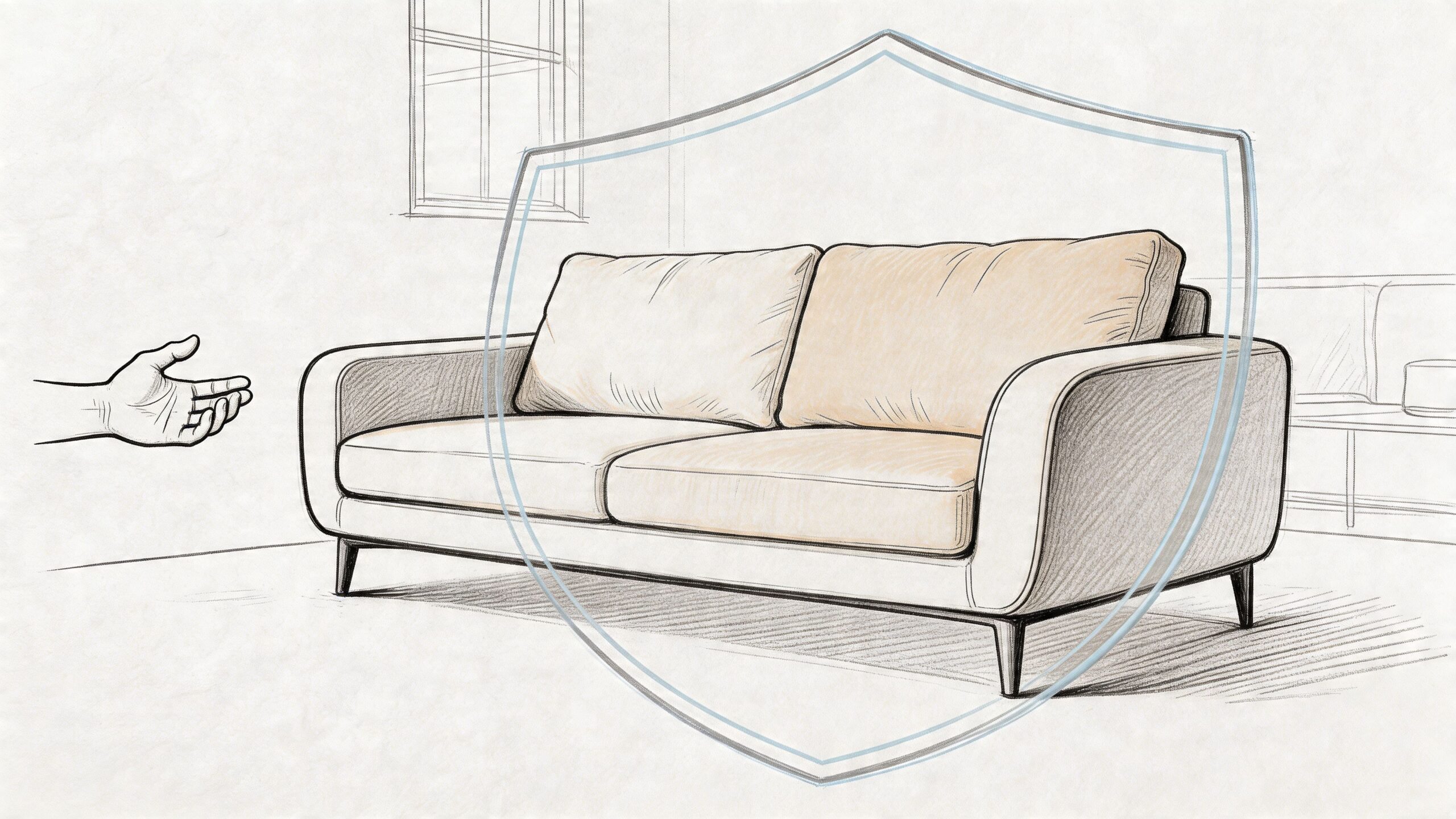
A Guardsman plan is best understood as a tool for everyday confidence. If your family uses the furniture the way furniture is meant to be used, there’s always some risk involved. Protection helps turn that risk into a clear process instead of a stressful surprise.
Why families ask about protection right away
Most shoppers don’t ask about a plan because they expect something to go wrong. They ask because they know homes are active places. A light fabric sectional, a recliner in a busy den, or a leather sofa in the main living room all face different kinds of wear and accidental damage.
Here is a practical way to view this:
- You’re protecting daily use: Meals, game nights, pets, and guests all increase the chance of accidental messes.
- You’re protecting appearance: A single stain or tear can change how the whole room feels.
- You’re protecting your budget: A plan can help you avoid paying out of pocket for covered accidents.
Practical rule: The more central a piece is to your home, the more sense it makes to think about protection before delivery day.
If you also want broader care ideas for busy households, this ultimate guide to furniture protection is a useful companion resource for thinking through prevention, covers, and day-to-day upkeep.
What Is a Guardsman Furniture Protection Plan
You choose a sofa, pick the fabric, and feel good about the order. Then, before delivery is scheduled, you hear about a Guardsman plan and wonder what you are being offered.
At Miller Waldrop, this is the point where a little clarity helps. A Guardsman furniture protection plan is an optional plan you can add when you buy qualifying new furniture. It is separate from the manufacturer’s warranty, and it is meant to address the kinds of accidents that happen during real family use after the piece is delivered.
A simple way to sort it out is this. The manufacturer’s warranty speaks to how the furniture was built. The Guardsman plan speaks to what can happen while you live with it. One covers defects in materials or workmanship. The other is designed for covered household mishaps such as spills, stains, or accidental damage, depending on the item and the plan selected.
That distinction matters at the store, not just later.
Families often use the word “warranty” to describe any kind of protection. That is completely understandable, but it can blur two different promises. If you picture your furniture purchase like buying a new car, the manufacturer warranty is the promise that the vehicle was made properly. The protection plan is closer to coverage for what happens in everyday use.
At Miller Waldrop, the plan is typically discussed during the purchase process while your order is being written, so you can decide before the furniture reaches your home. Our team can explain which pieces qualify, how the plan is attached to the item on your order, and what documents to keep once delivery is complete. If you want a broader overview before you buy, our furniture protection plan options at Miller Waldrop page lays out the purpose of these plans in plain language.
Another point that helps families is timing. The plan is tied to the new furniture you purchase with it, and coverage begins based on the delivery of that item under the terms of the plan. That means the delivery date matters. It is one of the key details to keep with your receipt and plan paperwork.
This also explains why delivery day is part of the buying experience, not the end of it. Once your furniture arrives, you want to know what was purchased, when coverage starts, and where your records are stored if you ever need help.
Before you say yes to a protection plan, ask three practical questions:
- What kinds of household accidents is this plan meant to address for my specific piece?
- How will the plan appear on my sales paperwork?
- What should I keep after delivery in case I need to file a claim later?
Those questions help you choose with confidence, especially if the sofa or chair you are buying will be used every day by kids, guests, or pets.
Decoding Your Coverage What the Guardsman Plan Protects
A protection plan makes the most sense when you picture real life in your home. The new sofa arrives from Miller Waldrop, everyone uses it right away, and a few months later a drink tips over during movie night or a pet leaves an unexpected stain on a cushion. The question is not whether accidents happen. The question is which accidents the plan is built to address.
Guardsman describes its fabric protection coverage as protection for new upholstered furniture against certain spills that become permanent stains, offered through participating retailers, on the Guardsman fabric warranty page. That gives you a good starting point, but the practical benefit comes from reading the covered events like a household checklist instead of a sales label.
At Miller Waldrop, this is usually the point where families want plain-English examples. That is the right approach. Furniture protection works a lot like reading the label on a medicine cabinet product. The name tells you the purpose, but the ingredient list tells you what it does.
Stains that are commonly included
For upholstered furniture, the plan is generally aimed at sudden, accidental staining events that happen during normal home use.
- Food and beverage spills: Common examples often include things like wine, juice, ketchup, and gum.
- Household stains: Ink, grease, mud, grass, and cosmetics are often listed in plan materials.
- Human and pet stains: Certain bodily fluid and pet-related staining incidents may also be included.
For a busy family room sofa, those are often the events people care about most. They are the kinds of messes that happen in a moment, but can stay visible for years if the fabric cannot be cleaned or repaired.
Accidental damage beyond stains
Many shoppers hear "protection plan" and think only about spills. Coverage can go further than that, depending on the item and the specific plan attached to your purchase.
- Fabric, leather, or vinyl damage: Accidental punctures, rips, burns, or cracking may be included under certain plan terms.
- Wood furniture accidents: Scratches, gouges, chips, breaks, or heat marks may fall under covered accidental damage for eligible wood pieces.
- Set replacement situations: If one piece in a matching set cannot be repaired or replaced with a proper match, plan terms may address that problem differently than a single-item claim.
That matching-set issue matters in a practical way. A damaged chair in a dining set is not just one damaged chair. It can leave the whole room looking unfinished.
If you want a broader reference point while comparing protection coverage with brand defect coverage, Miller Waldrop’s furniture warranty information page helps explain the difference.
What usually causes confusion
Confusion usually starts when a family expects the plan to handle every problem that appears over time. Protection plans are usually written around named accidental events, not every sign of aging or every change that comes from regular use.
This quick guide helps:
| Coverage question | Better way to read it |
|---|---|
| A spill happened suddenly | Often the type of event these plans are written to cover |
| A tear came from a one-time accident | Often treated differently from wear that builds up over time |
| A problem points to how the furniture was made | Usually falls under manufacturer responsibility |
| The fabric changed from everyday use | Needs careful review because normal wear is often handled differently |
The safest habit is simple. Read the listed examples on the plan paperwork and ask for clarification before delivery if any item feels vague. That is how you know whether the plan fits your home, your furniture, and the way your family will use it.
Guardsman Plan vs Manufacturer Warranty
The most common mix-up happens after a family brings home a new sofa or recliner. A problem shows up, and the first question is, "Do we call the manufacturer, the store, or the protection plan?" The answer depends on what caused the problem.
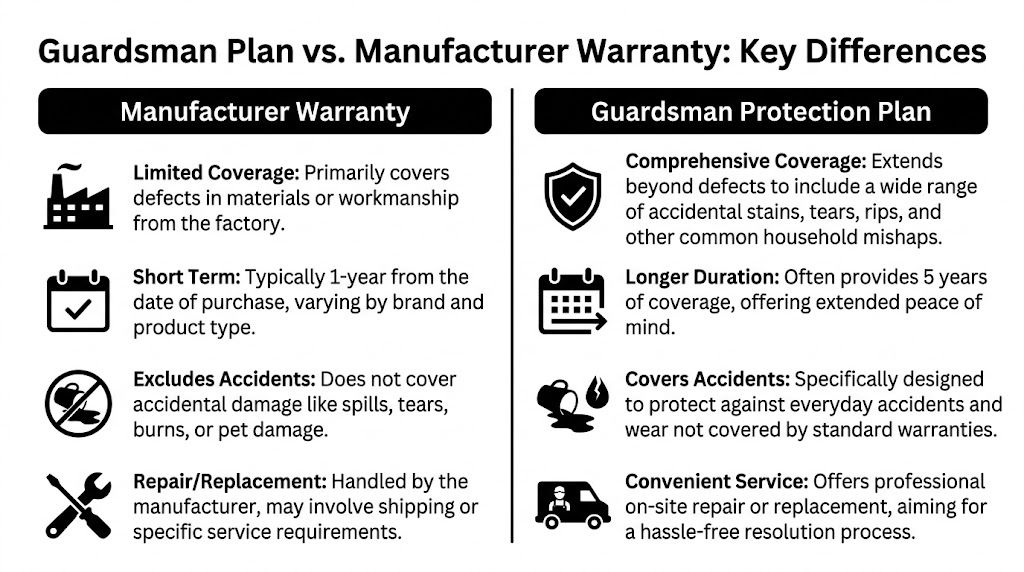
A manufacturer warranty and a Guardsman plan do different jobs. The manufacturer warranty is tied to defects in materials or workmanship. The Guardsman plan is designed around covered accidents and certain later service situations under the plan terms. As noted earlier, some power and structural protection may begin after the manufacturer warranty period ends, which helps separate factory-related issues from problems that happen during everyday life at home.
If you want a broader store-by-store and brand-by-brand reference, Miller Waldrop’s furniture warranty information page gives helpful context on how these responsibilities are usually divided.
Side by side comparison
| Coverage Aspect | Manufacturer Warranty | Guardsman Protection Plan |
|---|---|---|
| Main purpose | Covers defects in materials or workmanship | Covers eligible accidental stains and damage from household incidents |
| Best example | A frame issue caused by how the piece was built | A spill, puncture, rip, scratch, or similar one-time accident |
| When it applies | Begins under the brand's warranty terms | Purchased with eligible new furniture and begins under the plan terms |
| Length | Varies by brand and product | Varies by plan purchased |
| Power and structural issues | Usually handled first if they fall under manufacturer terms | Certain later breakdown coverage may apply after manufacturer coverage ends |
| Who you contact | Usually the manufacturer or the retailer's warranty service process | Usually the Guardsman claim process |
A simple way to sort it out is to ask two questions.
First, does the issue look like it started at the factory? If yes, that usually points toward the manufacturer warranty.
Second, did something specific happen in the home, like a spill during movie night or a tear from an accident? That usually points toward the protection plan.
A power recliner shows the difference clearly. If the chair arrives with a mechanical problem tied to manufacturing, that belongs in the manufacturer lane. If the chair works properly at first and a covered issue appears later under the plan terms, that may belong in the Guardsman lane instead.
This distinction matters during the Miller Waldrop buying experience because your family is deciding on protection before the furniture is in your home. Understanding the split at purchase makes delivery day less stressful and makes future service questions much easier to handle.
Your Purchase Experience at Miller Waldrop
The best time to understand protection is before the furniture reaches your home. The buying process is much smoother when you know when the plan is offered, how it appears on your paperwork, and what to check at delivery.
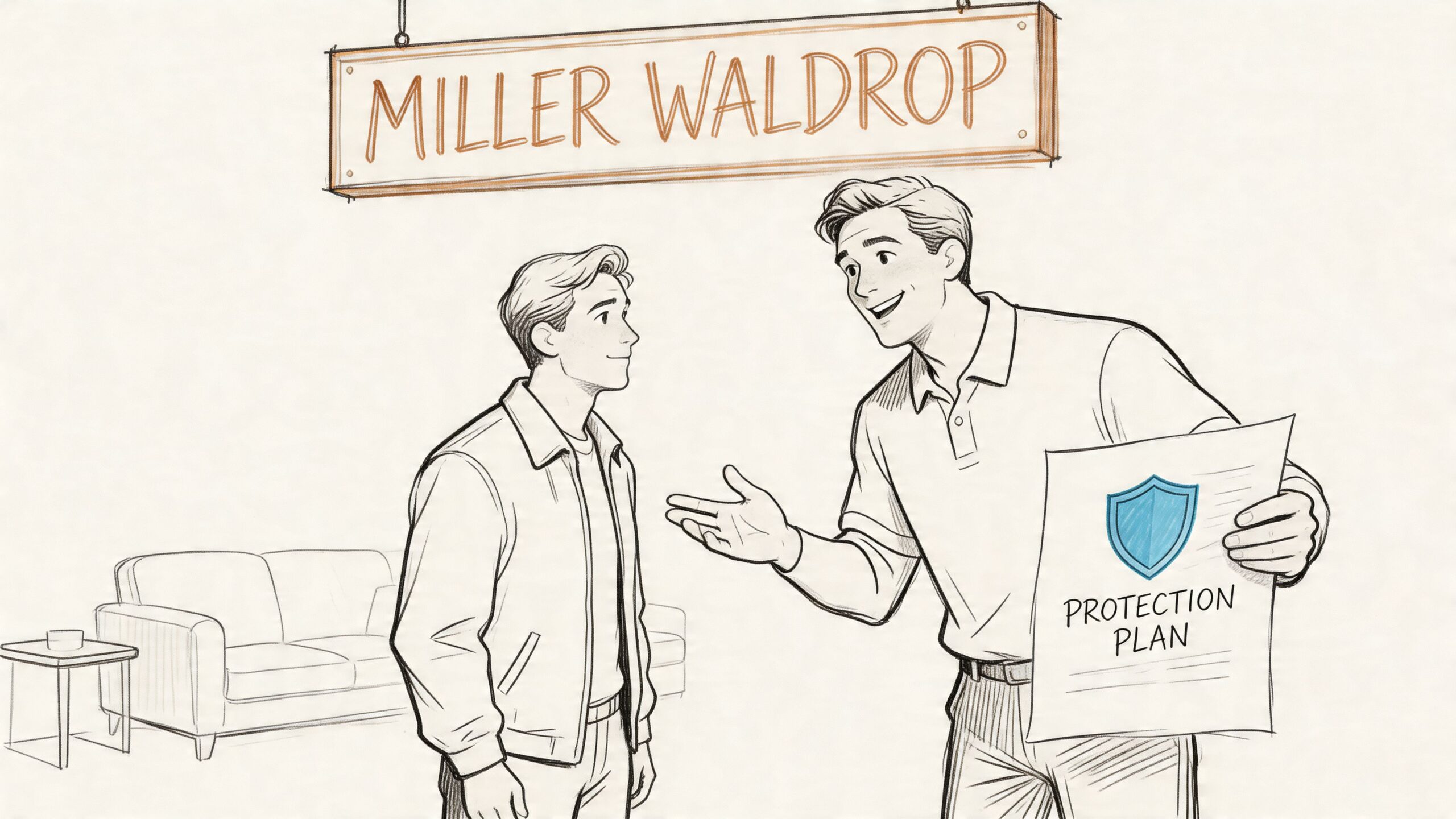
A typical experience starts while you’re choosing the piece itself. Maybe you’re comparing fabric performance, deciding between a sectional and a sofa, or picking a family-friendly color. At that stage, a design associate can explain whether the item is eligible for a Guardsman plan and what kind of protection fits that type of furniture.
What happens at the time of sale
The most important details happen before you sign anything.
- The plan is offered with new qualifying furniture: Guardsman protection is tied to eligible new furniture, not added later to an older piece.
- Your receipt matters: Plan documents indicate the furniture item and plan purchase should be itemized on the sales receipt.
- Keep your records together: Save your receipt, plan information, and any confirmation documents in one place.
If you’re shopping upholstery, browsing a collection of customizable sofas for your living room can help you think about which pieces will see the most daily use and deserve extra protection.
What to expect during delivery
Delivery day is exciting, but it’s also part of the protection process. Before the crew leaves, take a few minutes to inspect the furniture carefully. Look at the fabric, seams, cushions, wood trim, and motion functions if the piece has them.
Use a simple delivery checklist:
- Confirm the correct item arrived
- Inspect for visible delivery-related issues
- Make sure the piece is set where you want it
- Store all paperwork after delivery is complete
That last step gets overlooked all the time. Families often remember the sofa and forget the documents. Later, if a claim is needed, those papers become important.
Why this experience matters
A good purchasing experience removes uncertainty. You shouldn’t have to wonder whether the protection was added, when it starts, or what to do if something happens months later. Clarity at checkout and care at delivery make the whole plan more useful.
How to File a Guardsman Claim Step by Step
A claim usually starts with a very ordinary moment. Someone sets down a drink, a pet jumps up, or a pen catches the seat cushion. The family reaction is often the same. Clean it fast and hope for the best.
A better approach is calmer and simpler. Treat the accident the way you would handle a small issue with a car under warranty. Protect the item, gather the right information, and follow the process in order. That gives the service team a clearer picture of what happened and helps protect your coverage.
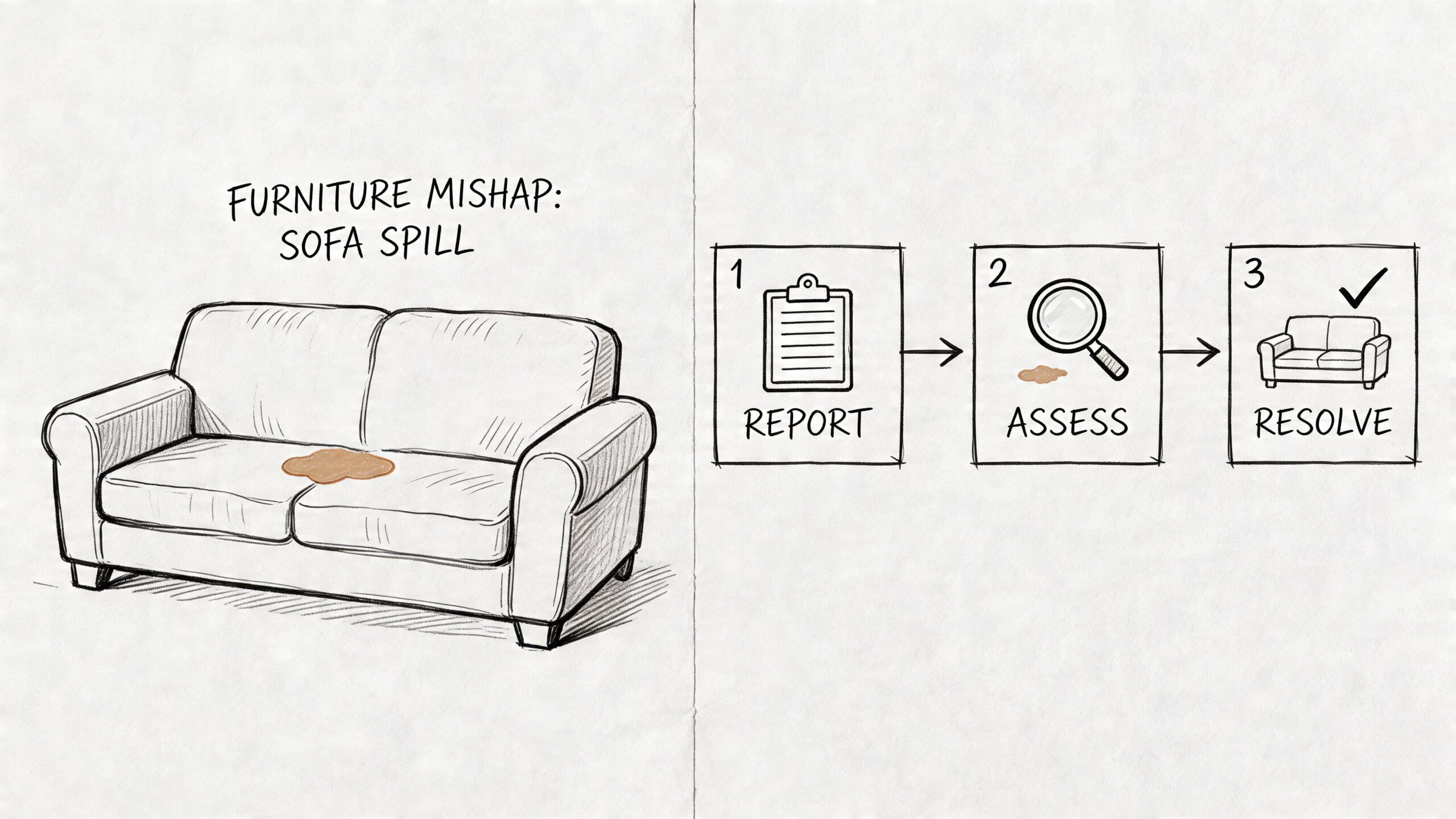
A practical claim sequence
Address the accident gently
If something spills, blot it. Do not scrub hard or start testing household cleaners. A rushed home fix can spread the stain, set it deeper, or change the fabric surface before the claim is reviewed.Pull out your purchase records
Have your sales receipt and plan information ready. This is one reason Miller Waldrop encourages customers to keep their paperwork together after delivery. When you can quickly identify the piece, fabric, and plan purchase, the claim process tends to be much clearer.Contact Guardsman promptly
Report the incident as soon as you reasonably can. Fresh details are easier to explain, and the condition of the furniture is easier to evaluate before anyone has tried multiple cleaning methods.Describe exactly what happened
Be specific. Say what caused the issue, when it happened, and what you did right after. “Red juice spilled on the right arm cushion and I blotted it with a white cloth” is much more helpful than “the sofa got stained.”Follow the next instructions carefully
Guardsman may ask for photos, purchase details, or a service appointment. At that stage, your job is simple. Provide what is requested and avoid extra treatment unless they direct you to do it.Let the assessment determine the remedy
A trained technician or claims representative may decide whether the furniture should be cleaned, repaired, or handled another way under the plan terms. That step matters because the right fix for leather is not always the right fix for fabric. If you own leather seating, it helps to understand basic care before accidents happen. This guide on how to protect leather furniture gives useful context.
Common mistakes that slow things down
The first is over-cleaning. Families often mean well, but scrubbing, soaking, or using strong store-bought products can change the damage before it is assessed.
The second is incomplete information. If the receipt is buried in a drawer or the plan paperwork is missing, the process can feel harder than it needs to.
The third is trying to judge coverage on your own. A spot that looks minor may still need professional attention, and a home remedy can create a bigger problem than the original accident.
Good care between accidents still matters, too. Reading about maintaining your furniture can help you avoid the kinds of wear and cleaning mistakes that lead to confusion later.
The goal is straightforward. Respond calmly, protect the furniture from further harm, and give the claims team clear information so they can help.
Making Your Furniture Protection Worthwhile
A guardsman furniture warranty is most useful when you treat it as part of your furniture care routine, not as a substitute for care. Good habits help preserve the look of your sofa, chair, or dining set, and they also make it easier to handle a covered accident properly.
A few simple habits go a long way:
- Keep your paperwork organized: Store your receipt and plan details somewhere easy to find.
- Report accidents promptly: Don’t wait and hope a stain will disappear on its own.
- Avoid amateur repairs: A home remedy can turn a manageable issue into a complicated one.
- Follow care guidance: Regular upkeep still matters for appearance and long-term performance.
If you want practical reading on day-to-day care, this article on maintaining your furniture offers useful habits for preserving upholstery and surfaces between accidents. For leather owners, these tips on protecting leather furniture can also help you build better care habits at home.
Protection works best when it supports real life. You buy the furniture to use it, not to worry about it every day.
Frequently Asked Questions About Guardsman Plans
Is the plan a one-time purchase
In most retail settings, the Guardsman plan is presented as a one-time fee structure tied to the furniture purchase, rather than an ongoing monthly charge, based on plan summaries in the verified material. The exact price depends on the furniture and plan offered at the time of purchase, so the best approach is to ask for the itemized amount on your receipt before checkout.
What if the furniture can’t be repaired
Plan summaries indicate that Guardsman may arrange repair, cleaning, or replacement for covered accidents, and some plan descriptions note replacement of a matching set if one covered piece can’t be repaired. The practical takeaway is simple. The first goal is usually to save the furniture through professional service, but replacement may be the next step when repair isn’t appropriate under the plan.
Can you transfer the plan if you move or sell the furniture
This is one of the least clear areas. Official materials rarely explain transfer procedures for address changes or second-owner use, which leaves a gap for mobile households, according to this Havertys Guardsman protection plan information. If transferability matters to you, ask that question before purchase and keep the answer with your paperwork.
If you’re choosing a new sofa, sectional, recliner, dining set, or mattress and want straightforward guidance on what’s worth protecting, Miller Waldrop Furniture & Decor is ready to help. Visit a showroom in Lubbock, Hobbs, or Ruidoso Downs to explore quality pieces for real homes, ask detailed questions about protection options, and find furniture that fits your family’s style, comfort needs, and daily life.