

A Practical Guide to Polyester Furniture Cleaning

Mastering polyester furniture cleaning is simpler than you think, but there's one crucial step you can't skip: checking the manufacturer's tag. On it, you’ll find a cleaning code—usually W, S, W/S, or X. This little letter is your roadmap, giving you the power to clean your furniture correctly so you don't accidentally damage the fabric.
Understanding Your Polyester Furniture Before You Clean
That beautiful polyester sofa is the heart of your living room. It’s where life happens—movie nights, long chats, and quiet afternoons. You picked it for its durability and style, but the real secret to keeping it looking brand new is tucked away on a small tag. Before you even think about grabbing a cleaner, finding that tag is your most important mission.
Think of it as the ultimate cheat sheet, straight from the people who made your furniture. Once you know the code, you can tackle spills and stains with total confidence, without worrying about leaving behind water rings, discoloration, or other cleaning mishaps. It’s your furniture’s own language, and learning it makes upkeep a stress-free job.
Decoding Your Furniture's Care Tag
The letter on your furniture's tag tells you everything you need to know to clean it like a pro. Here's a quick rundown of what each code means, empowering you to choose the right tools for the job:
- W stands for "water." This is great news because it means you can use water-based cleaning solutions. It's the most common code you'll find on family-friendly furniture.
- S stands for "solvent." This code requires a water-free, solvent-based cleaner. Putting water on an 'S' code fabric is a recipe for disaster and can cause serious, often permanent, damage.
- W/S gives you the best of both worlds. You can safely use either water-based or solvent-based cleaners, giving you maximum flexibility.
- X is the most restrictive code. It means liquids are a no-go. For these fabrics, you should only vacuum or lightly brush the surface.
This flowchart makes it easy to see which path to take once you've found your furniture's care tag.
As the guide shows, figuring out the code is the one step that dictates everything else you do. It’s your non-negotiable first move.
A Quick Guide to Upholstery Cleaning Codes
Use this reference to quickly identify the cleaning code on your polyester furniture and understand which methods are safe to use.
| Code | What It Means | Safe Cleaning Method | What to Avoid |
|---|---|---|---|
| W | "Water-Based Cleaning" | Mild soap, distilled water, upholstery shampoo | Solvents, harsh chemicals, bleach |
| S | "Solvent-Based Cleaning" (Water-Free) | Dry cleaning solvents, rubbing alcohol | Water, steam cleaners, liquid detergents |
| W/S | "Water or Solvent-Based" | Water-based or solvent-based cleaners are fine | Harsh abrasives, bleach |
| X | "Vacuum Only" | Vacuuming, light brushing with a soft brush | ALL liquid cleaners, water, solvents, foam |
This table is your go-to cheat sheet, arming you with the knowledge to start any cleaning project with confidence.
Why Polyester Is a Smart Choice for Your Home
There's a good reason polyester has become a favorite for upholstered furniture—it's incredibly forgiving. Tightly woven polyester microfiber, in particular, is a game-changer for busy homes. Its super-fine threads are fantastic at trapping dust and oils, which makes spot cleaning surprisingly effective.
On top of that, its natural stain resistance and quick-drying properties make it a low-maintenance dream. These qualities often mean you won't need to call in the professionals as often, giving you more control over your furniture's upkeep. You can dive deeper into how polyester stacks up against other fabrics by exploring our complete guide on upholstery materials.
Your furniture's tag isn't just a suggestion; it's the manufacturer's direct advice for preserving the fabric's integrity. Ignoring it is the single biggest mistake you can make in polyester furniture cleaning. Taking a moment to check it first is your best defense against cleaning mishaps.
Building Your Polyester Cleaning Kit
When a spill happens, the last thing you want to do is scramble for supplies. Having a dedicated cleaning kit ready to go empowers you to turn a potential panic into a minor inconvenience. Think of it as your furniture's first-aid kit—a little prep now saves a huge headache later.
You don’t need a cabinet full of expensive, single-purpose cleaners. Most of what you need for effective polyester cleaning is probably already in your home. It’s all about having the right tools on hand to win the day.
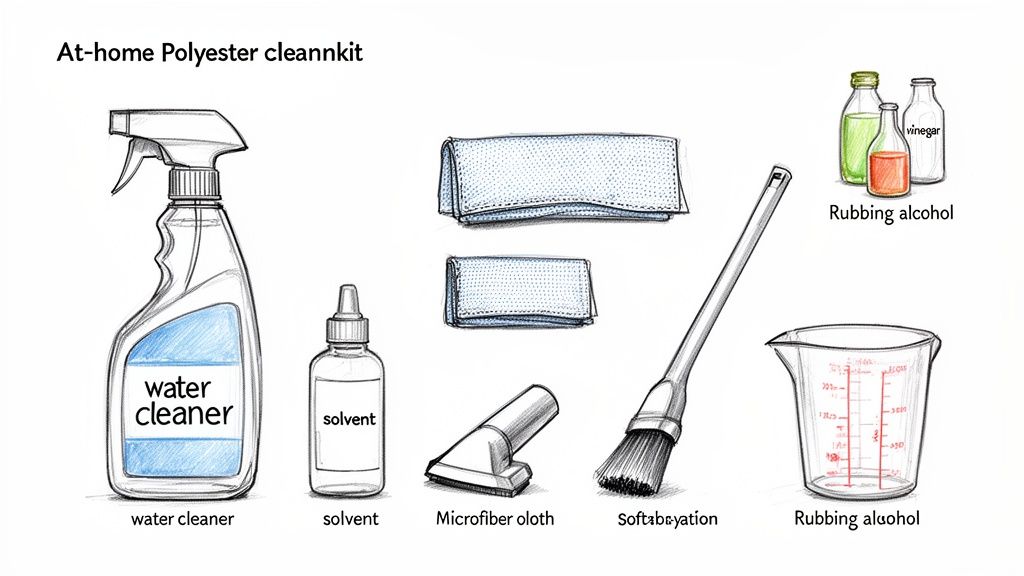
The Essential Tools
A successful cleaning job comes down to having a few simple but non-negotiable items. These tools are the foundation for applying cleaners, lifting stains, and getting rid of debris without damaging the fabric.
Here's what every kit should have:
- Vacuum with Upholstery Attachment: This is your first line of defense. It gets rid of all the loose crumbs, pet hair, and dust before you start wet-cleaning.
- Clean, White Microfiber Cloths: Stick with white cloths to avoid any risk of dye bleeding onto your upholstery. You’ll want at least three—one for applying the solution, another for blotting the stain, and a final one for drying.
- Soft-Bristled Brush: An old toothbrush or a similar soft brush is perfect. It gives you just enough scrubbing power to work on a stain without snagging the polyester fibers.
Proven DIY Cleaning Solutions
Forget the store-bought stuff for a minute. You can mix up some incredibly effective cleaners right in your kitchen, tailored to your furniture's specific needs. Just check that cleaning code first.
For 'W' Coded Fabrics (Water-Based)
This is your go-to recipe for most everyday spills on water-safe polyester. It's gentle but effective.
- In a spray bottle, combine two cups of distilled water, one tablespoon of clear dish soap, and one tablespoon of white vinegar.
- Give it a gentle shake. Distilled water is recommended because tap water can leave mineral rings behind as it dries.
For 'S' Coded Fabrics (Solvent-Based)
When you can't use water, this simple mix is a lifesaver for breaking down oily stains.
- Mix one cup of rubbing alcohol with one cup of white vinegar in a spray bottle.
- That's it. This solvent-based cleaner evaporates quickly and won't leave water marks on sensitive fabrics.
The golden rule of upholstery cleaning is to be both effective and gentle. Always start with the mildest cleaner and test it on a hidden spot first. This one simple step can save you from a cleaning disaster.
With your kit ready, you're prepared for just about anything. Of course, for true peace of mind, a professional plan can be a great investment. Our Stain Protection Plan is the ultimate tool to give you an extra layer of defense, making future spills even less of a worry and keeping your furniture looking fantastic.
Alright, you've got your supplies and you know your fabric code. Now it's time to actually get to work. Tackling a stain on your polyester sofa isn't about brute force; it's about following a smart, methodical process. Get this right, and you'll lift the stain without leaving behind those dreaded water rings or causing any discoloration.
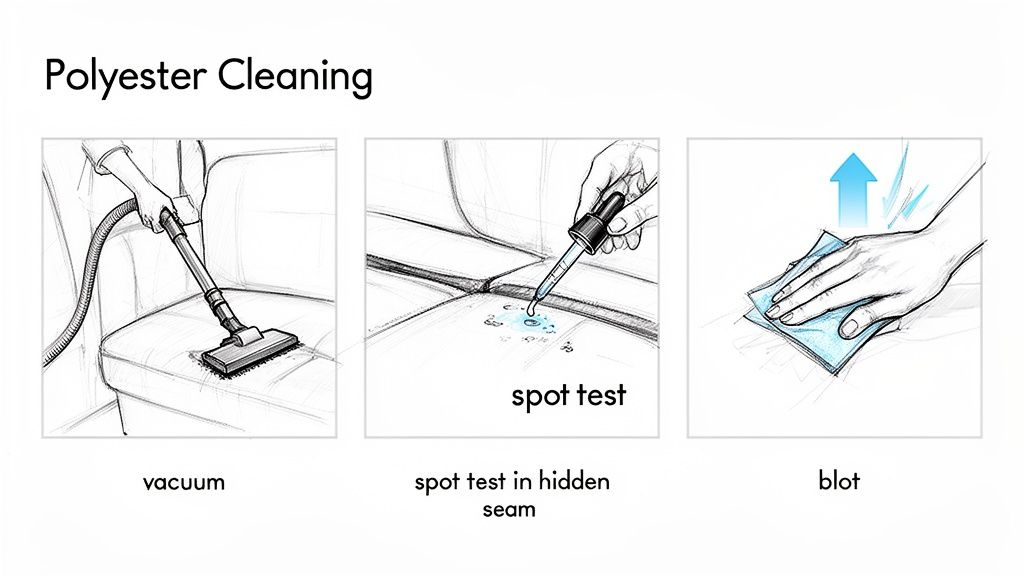
Begin With a Thorough Vacuum
Before a single drop of cleaner touches your sofa, you need to vacuum. And I mean really vacuum.
If you skip this, all that loose dust, pet hair, and cracker crumbs will instantly turn into a grimy paste the moment you add liquid. You’ll end up with a bigger, muddier mess than you started with.
Grab your vacuum's upholstery attachment and go over every inch. Don't forget to dig into the seams, get under the cushions, and hit all those hidden crevices where debris loves to collect. A clean surface is the foundation for a successful cleaning job.
The All-Important Spot Test
I can't stress this enough: never go straight for a visible spot with a new cleaning solution. A quick five-minute test can be the difference between a clean couch and a ruined one.
Find an inconspicuous area to work on—the back of the sofa near the floor or the underside of a cushion are perfect candidates. Dab a small amount of your cleaner onto a white cloth and gently blot the test spot. Now, walk away and let it dry completely. If you come back and see no color bleeding or weird texture changes, you've got the green light.
Pro Tip: Patience is your best friend here. Rushing the drying phase of your spot test can give you a false sense of security. Make sure that little patch is bone-dry before you decide it's safe to proceed on the main event.
Master the Blotting Technique
When you see a stain, the gut reaction is to scrub it into oblivion. Resist that temptation! Scrubbing just grinds the stain deeper into the polyester fibers and can fray the fabric's weave. The key is to blot, not rub.
Start at the outer edge of the stain and blot toward the center. This little trick keeps the stain contained instead of spreading it into a bigger problem.
Using a clean, white microfiber cloth, apply a bit of your cleaning solution and press firmly on the spot. Lift the cloth, and you'll see the stain starting to transfer. Keep repeating this with a fresh section of the cloth until the stain is gone. While these techniques are tailored for polyester, you can find more general advice on how to clean fabric sofas at home.
Rinsing and Drying for a Flawless Finish
Once the stain is lifted, you're not quite done. You need to "rinse" the area to get rid of any soap residue, because leftover cleaner acts like a magnet for future dirt. Simply take a new, clean cloth, dampen it lightly with distilled water, and blot the area again.
Now for the final, crucial step: drying. This is how you prevent those tell-tale water rings. The goal is to avoid oversaturating the fabric. After rinsing, press a dry cloth or a stack of paper towels firmly onto the spot to soak up as much moisture as possible.
To finish the job and ensure an even dry, point a fan at the damp area or use a hairdryer on its coolest, lowest setting. If you're dealing with deep-set grime that spot cleaning just can't handle, a more powerful method might be in order. Our guide on how to steam clean a couch can walk you through that more intensive process.
How to Tackle Common Stains on Polyester
Life happens. Spills are just part of a well-loved home, but a stain doesn't have to mean a permanent blemish on your beautiful polyester furniture. With the right strategy, you can handle specific messes with confidence and save the sofa.
Think of it like having the right tool for the job. You wouldn't use a hammer on a screw, and the same idea applies here. Knowing the correct technique is your key to success.
For Water-Based Spills Like Coffee, Juice, or Wine
That morning coffee mishap or evening wine drip can spark a moment of panic, but don't worry—water-based stains are usually the easiest to handle on polyester. Your best defense is a simple, homemade solution that cuts through the stain without harsh chemicals.
Mix equal parts white vinegar and distilled water in a spray bottle. This is your secret weapon. Lightly mist the stained area (don't soak it!) and gently blot with a clean, white cloth. The vinegar helps break down the stain's pigments, lifting them right out of the fabric fibers.
For Greasy Stains From Food or Fingerprints
Grease is a bit more stubborn because it repels water. For oily marks from pizza, buttery popcorn, or even greasy fingerprints, your first move shouldn't involve a liquid cleaner at all. You need to absorb as much of that oil as possible before you start cleaning.
Here’s a simple but powerful technique:
- Generously sprinkle cornstarch or baking soda directly onto the greasy spot.
- Let it sit for at least 15-20 minutes. This gives the powder time to draw the oil out of the upholstery.
- Once the time is up, vacuum the powder thoroughly. Now the area is prepped, and you can follow up with a spot cleaner that matches your furniture's cleaning code.
The single most important thing to remember with any spill is to act fast. The longer a stain sits, the deeper it bonds with the fabric, making your cleaning efforts much tougher. Quick action almost always guarantees a better outcome.
For Tricky Ink Marks
An accidental pen mark might look like a disaster, but it’s often fixable, especially on furniture with an 'S' cleaning code. Rubbing alcohol is surprisingly effective at dissolving the pigments in many types of ink.
To tackle an ink stain, lightly dampen a cotton ball or the corner of a clean white cloth with isopropyl alcohol. Carefully dab at the ink mark, making sure not to rub or spread it. You should see the ink transfer from the sofa to your cloth. Just keep dabbing with fresh sections of the cloth until the mark disappears.
For a deeper dive into various stain removal methods, you can explore our detailed guide on how to remove stains from upholstery.
To make things even easier, here's a quick cheat sheet for handling those everyday spills.
Your Stain-Specific Action Plan
This table is your quick reference for handling common household stains on your polyester sofa with the right approach and solution.
| Stain Type | Immediate Action | Recommended Cleaner | Expert Tip |
|---|---|---|---|
| Coffee, Wine, Juice | Blot immediately with a dry cloth to absorb excess liquid. | 1:1 mix of white vinegar and distilled water. | Always blot, never rub. Rubbing can push the stain deeper into the fibers. |
| Grease, Oil | Sprinkle with cornstarch or baking soda; let sit for 20 minutes. | Solvent-based cleaner (for 'S' code) or mild soap ('W' code). | Vacuum up the powder thoroughly before applying any liquid cleaner. |
| Ink | Dab gently with a cloth dampened with isopropyl alcohol. | Isopropyl (rubbing) alcohol. | Test the alcohol on a hidden spot first to ensure it doesn't affect the fabric dye. |
| Pet Stains (Urine) | Blot up as much as possible, then rinse with a damp cloth. | Enzymatic cleaner specifically designed for pet stains. | Regular cleaners won't break down the uric acid; you need an enzyme cleaner to eliminate the odor. |
By equipping yourself with these targeted strategies, you're ready to face common household spills head-on. You'll keep your polyester furniture looking beautiful and feeling welcoming for years to come.
When to Call in the Pros for Upholstery Cleaning
Taking care of your polyester furniture yourself is a fantastic way to keep it looking great day-to-day. But let's be realistic—even the most dedicated DIY-er eventually meets their match. Knowing when to put down the spray bottle and call in a professional isn't admitting defeat. It's actually a smart move to protect your investment and bring your furniture back to life.
You’ve blotted, you’ve spot-treated, and you’ve scrubbed, but some problems are just plain stubborn. That's your cue to think about calling an expert.
Signs It’s Time for a Professional
Sometimes, the writing is on the wall. If that once-vibrant sofa has a permanent, dingy film no matter what you do, it's time. The same goes for large, set-in stains that just mock your cleaning attempts.
Another big red flag is a lingering odor you can't get rid of. Funky smells often signal that the problem isn't just on the surface—it’s deep inside the cushions where your household tools can't reach.
When you're up against these kinds of issues, it helps to know what to expect from professional cleaning services. Their equipment and techniques are specifically designed to solve problems your at-home kit simply can't handle.
Professional cleaning is about more than just erasing visible stains. The real goal is to pull out the deeply embedded dirt, allergens, and bacteria that build up over time. It's like hitting the reset button for your furniture’s health and appearance.
The Power of Hot Water Extraction
Professionals have a secret weapon called hot water extraction, and it's worlds beyond anything you can do on your own. They use specialized machines to spray a hot, high-pressure cleaning solution deep into the fabric.
This powerful spray instantly loosens all the trapped dirt, grime, and allergens. Then, a high-powered vacuum sucks it all away immediately. It's a one-two punch that leaves fabric incredibly clean.
The results speak for themselves. Professional systems can remove up to 98% of pollutants and dirt from upholstery when done right. There's a reason the carpet and upholstery cleaning market is projected to hit over $83 billion by 2030—it works. Homeowners like us are the biggest drivers of this industry, making up about 55% of all service hours. You can dig deeper into the numbers with these insights on the upholstery cleaning market.
If you’ve decided a professional deep clean is the way to go—or if you're thinking it might just be time to upgrade to a more resilient sofa—we're here to help you find the perfect solution for your family's needs. Your perfect piece is just a conversation away—visit our showroom to explore our collection of modern performance fabrics.
Answering Your Top Polyester Furniture Care Questions
Cleaning furniture can feel like a high-stakes game, and it's totally normal to have a few questions before you start. Let's tackle some of the most common dilemmas people face when cleaning their polyester upholstery.
Can I Use a Steam Cleaner on My Polyester Sofa?
I'd be very careful with this one. As a general rule, it's best to avoid using a home steam cleaner on polyester unless the manufacturer's instructions specifically say it's okay. The intense, direct heat from a personal steamer can sometimes damage or even shrink synthetic fibers.
You might be thinking, "But don't professionals use steam?" Not exactly. They use a method called hot water extraction, which is a different beast altogether. It involves carefully controlled water temperatures and high-powered vacuums that pull moisture out almost immediately, making it much safer. Bottom line: always check the tag first. If you see code 'S' or 'X', steam and water are off-limits.
Help! How Do I Get Rid of Water Stains After Cleaning?
Ah, the dreaded water ring. It's one of the most common frustrations, and it usually happens when a spot gets too saturated and dries unevenly, leaving mineral deposits behind. The trick is to use as little liquid as possible and speed up the drying time.
If you're already dealing with a water stain, don't panic. Grab a clean, white cloth and dampen it lightly with distilled water—the lack of minerals is key here. Gently blot the entire cushion or section, working from the center of the stain outward and then blending the moisture from seam to seam. This "feathering" technique helps it dry evenly. After that, point a fan at the spot or use a hairdryer on its coolest setting to get it dry quickly.
Pro Tip: The secret to a flawless finish is control. Use less water than you think you need, blot more than you think you should, and dry the area faster than you think is necessary. This simple mantra prevents most common cleaning mishaps.
Is It Safe to Machine Wash Removable Cushion Covers?
Just because the covers come off doesn't automatically mean they can go in the wash. Your care tag is still the law. The good news is that many polyester covers are designed for machine washing, which is a huge plus for busy households.
If the tag gives you the go-ahead, follow these steps for the best results:
- Use a gentle cycle with cold water.
- Choose a mild, bleach-free detergent.
- Zip up all zippers before washing to prevent snagging.
The number one rule? Avoid high heat in the dryer at all costs—it's the main culprit behind shrunken, ill-fitting covers. Air-drying is your safest bet. For a perfect, snug fit, you can even put the covers back on the cushions while they are still just a little damp.
At Miller Waldrop Furniture & Decor, we believe that having a beautiful home should feel empowering, not stressful. We offer the tools and expertise you need to create a living space you love. If your sofa needs more help than a simple spot clean can provide, or if you’re looking for new, easy-care furniture that fits your life, our team is here to guide you. Explore our collection of durable and stylish living room furniture and discover how you can design the perfect space for your family.