


Bedroom Rocking Chair: Buyer’s Guide 2026


A lot of shoppers arrive at the same point. The bed is in place, the dresser works, the nightstands are fine, but the bedroom still doesn't feel finished. There's an empty corner by the window or a blank wall near the lamp, and it's asking for something softer, more personal, and more useful than another storage piece.
That's where a bedroom rocking chair earns its keep. It can turn a dead corner into the best seat in the house for reading, feeding a baby, unwinding before bed, or easing into the morning without heading straight for a screen. The right one also lasts for years, which means this isn't a throwaway purchase. It's a comfort decision, a design decision, and in many homes, a long-term investment.
Table of Contents
- Finding Your Perfect Rocking Chair Style
- Choosing Materials for Comfort and Longevity
- Mastering Sizing and Ergonomics for the Perfect Fit
- Placing Your Rocker for Function and Flow
- A Smart Shopper's Guide to Finding Your Chair
- Caring for Your Rocking Chair for a Lifetime of Comfort
Finding Your Perfect Rocking Chair Style
A bedroom rocking chair shouldn't look like it wandered in from another room. It should look chosen. When the style is right, the chair settles the whole bedroom and gives the space a purpose beyond sleep.
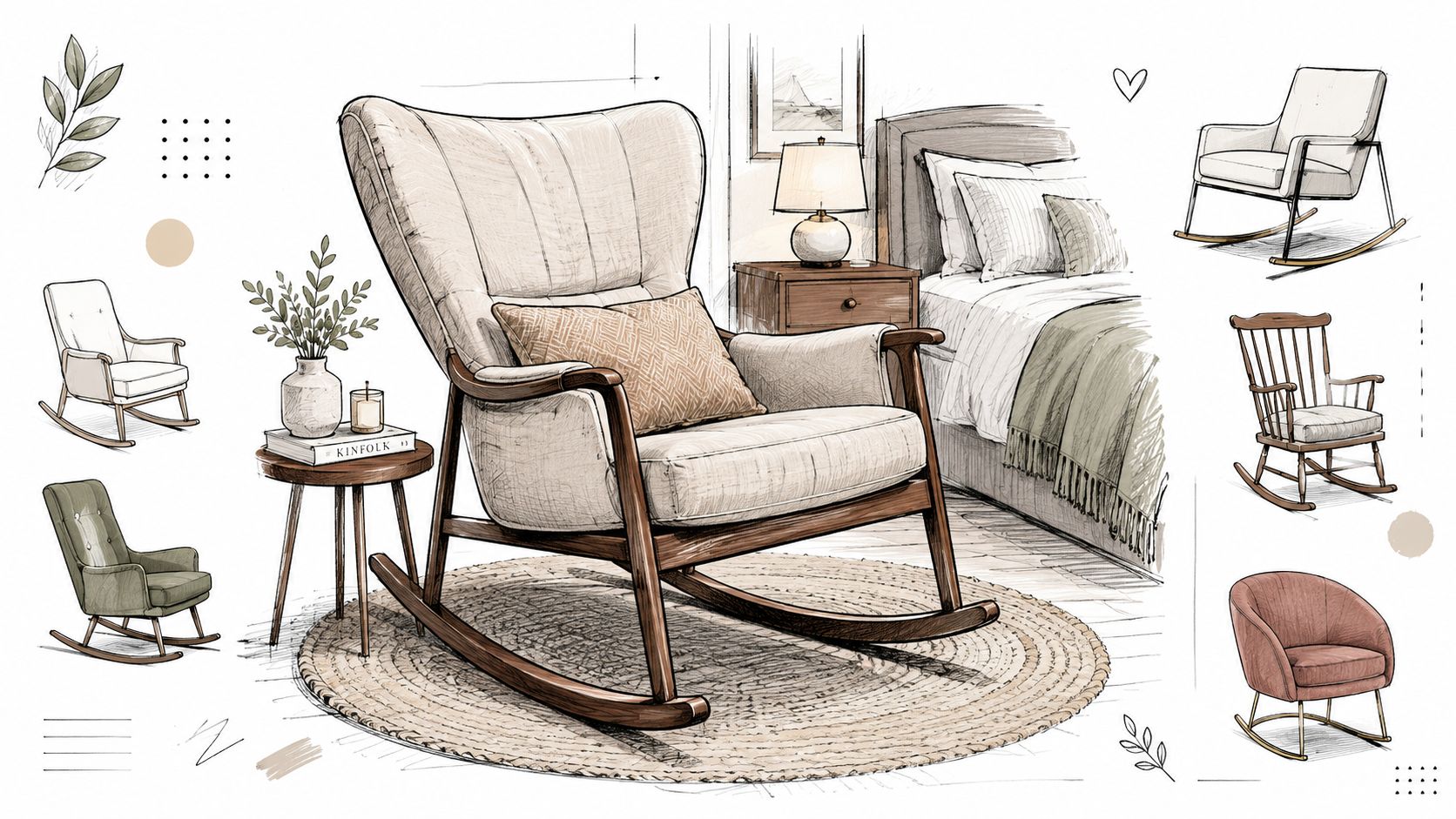
The appeal isn't only visual. Studies on “rocking chair therapy” show that the gentle, repetitive motion can cause a release of mood-elevating endorphins, improve balance, and effectively ease arthritis and back pain, making it a wellness tool as well as a piece of furniture, according to rocking chair therapy findings summarized in market research. That's why this piece works so well in a bedroom. It brings calm without asking for attention.
Start with the mood, not the label
Many shoppers get stuck because they shop by category names. Modern. Traditional. Farmhouse. Nursery. That's backwards. The better move is to decide what the bedroom should feel like.
- Quiet and refined: Choose a rocker with clean arms, a simple silhouette, and restrained fabric.
- Warm and rooted: Look for visible wood, softer curves, and a finish that adds depth.
- Soft and cocooning: An upholstered rocker with a supportive back creates a bedroom retreat fast.
- Lighter and airy: A slimmer frame keeps a smaller room from feeling crowded.
A good shortcut is to compare the chair to the bed. If the bed has strong lines and a structured headboard, a bulky overstuffed rocker may fight the room. If the bed is upholstered and soft-edged, a severe angular chair can feel out of place.
Practical rule: The rocker should either echo the bed's shape or balance it. It shouldn't compete with it.
For shoppers still narrowing the look, browsing chairs and settees for bedroom seating ideas can help identify whether the room wants exposed wood, full upholstery, or a mixed-material profile.
Match the chair to the room's visual weight
Bedrooms need breathing room. A chair can feel beautiful in isolation and still be wrong for the space if its visual weight is off.
A high-back upholstered rocker carries more presence. That works in a primary bedroom with a substantial bed, wide nightstands, or taller ceilings. A lean wood rocker with a shaped seat feels lighter and often works better in guest rooms, smaller bedrooms, or near windows where the goal is to keep the sightline open.
There's also a practical style decision that many people miss. A bedroom rocker gets used in quiet rituals. Reading at night, feeding, stretching the back after a long day, sitting with a cup of coffee before the house wakes up. That means the style has to support the habit. If a chair looks elegant but invites no one to stay in it, it has failed.
The best choice is the one that makes the bedroom more usable and more settled at the same time.
Choosing Materials for Comfort and Longevity
Material choice is where a pretty decision becomes a smart one. A bedroom rocking chair lives close to skin, clothing, blankets, lotions, pets, and daily habits. Surface feel matters. Cleanability matters more.
Pick the material that fits real life
Start with the frame. Wood feels timeless and tends to age with character. Upholstered rockers feel softer and often win on sink-in comfort. Neither is automatically better. The right answer depends on how the chair will be used.
A wood rocker is a strong fit for shoppers who want crisp lines, easier dusting, and a more architectural look. An upholstered rocker makes sense when the bedroom is meant to feel padded and restful. If the chair will be used for feeding, reading, or longer sitting sessions, upholstery often earns the nod.
Pets change the conversation fast. With a 24% annual rise in pet ownership in bedroom spaces, selecting pet-friendly materials with scratch-resistant upholstery has become a critical and often overlooked durability factor, according to research on bedroom-space pet ownership and upholstery concerns. That means buyers shouldn't treat fabric as a decorative afterthought.
Consider these real-life questions before choosing:
- Does the chair need to shrug off claws or snags? Tighter weaves and more durable upholstery are safer bets.
- Will children climb on it? Easy-clean surfaces matter more than delicate texture.
- Will it be used daily or occasionally? Daily use deserves sturdier cushions and finishes.
- Is the room dusty or sunny? Some materials demand more frequent care.
For shoppers comparing upholstery options, this upholstery fabric guide is useful because it helps translate showroom language into practical choices.
Use this material comparison before buying
| Material | Pros | Cons | Best For |
|---|---|---|---|
| Solid wood | Timeless look, easy to dust, strong visual character | Harder surface feel, may need a cushion for long sitting | Traditional bedrooms, lighter visual styling |
| Upholstered fabric | Softer sit, warmer feel, more inviting for longer use | Can trap dust, needs fabric care, some weaves snag more easily | Reading corners, nurseries, primary bedrooms |
| Performance-style fabric | Easier upkeep, better for active homes, practical for frequent use | Texture options may be more limited than decorative fabrics | Homes with kids, pets, or everyday use |
| Mixed wood and upholstery | Balances warmth, structure, and comfort | Needs attention to both frame and fabric maintenance | Shoppers who want style and softness together |
A chair used every evening should be chosen like a mattress or dining chair, not like an accessory. Comfort and durability have to work together.
The strongest buying decision usually comes from honesty. If the home has pets, don't buy delicate upholstery and hope for the best. If the room is formal and rarely used, a more refined finish may be worth the extra care. A chair that suits the household will look better longer because it won't constantly be fighting the way the room lives.
Mastering Sizing and Ergonomics for the Perfect Fit
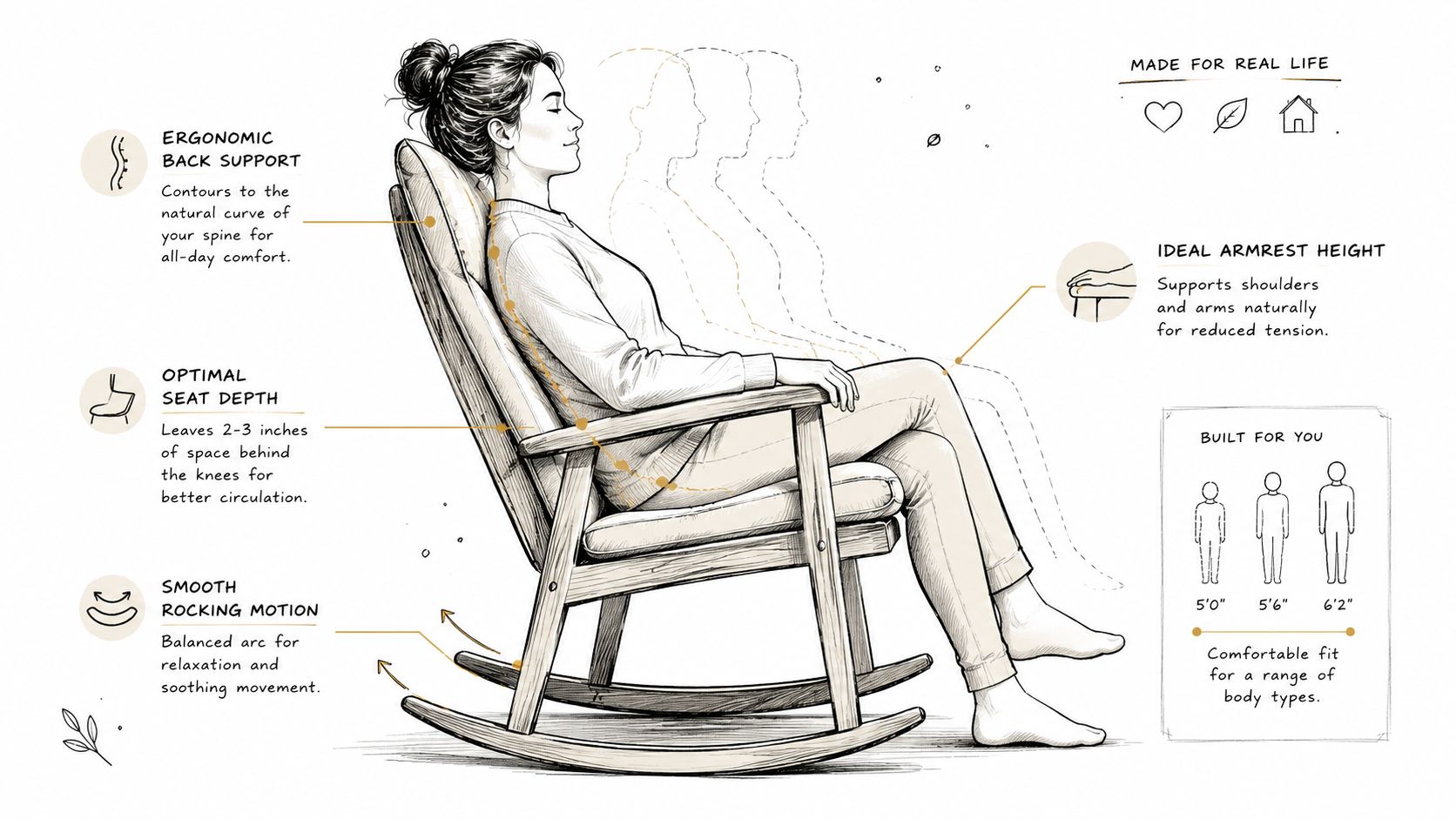
Comfort isn't luck. It comes from measurements, proportion, and motion. If a bedroom rocking chair is too shallow, too tall, too low, or too stiff in its arc, the body notices immediately.
The measurements that actually matter
A useful benchmark helps. A bedroom rocking chair requires standard dimensions of a 19.6"L x 20.5"W seat and a 31.5" back height to support stability and comfort for most users, while the ideal rocking angle falls between 80° and 130° for relieving back pressure, according to ergonomic rocking chair dimensions and angle guidance.
Those numbers aren't decoration. They shape how the chair feels.
- Seat depth: A seat near the standard depth helps users sit back without cutting into the back of the knees.
- Seat width: A balanced width supports comfort without making the chair feel oversized in the room.
- Back height: A supportive back gives the shoulders a place to settle, which matters in a bedroom chair meant for winding down.
- Rocking angle: The 80° to 130° range helps create a smoother, more relieving motion instead of a shallow or awkward pitch.
Another point often missed is floor space. Standard outdoor rocking chairs range from 22 to 28 inches wide, with average setups needing 24 to 32 inches in width, 48 to 60 inches in depth including the rocker arc, and at least 24 inches of side clearance for comfortable motion. Taller users measuring 6’+ should look for 18 to 20 inch seat heights and longer back support, based on sizing guidance for rocker dimensions and clearance. Even though that guidance is written for outdoor rockers, the clearance lesson applies indoors too. A rocker needs room to rock.
How to judge comfort before you buy
A chair can match the tape measure and still feel wrong. The body test matters.
Use this simple checklist when trying a chair:
- Sit all the way back. The lower back should feel supported without forcing the shoulders forward.
- Set both feet naturally. The user shouldn't have to point the toes hard just to start the motion.
- Rock through a full cycle. The motion should feel smooth, not abrupt or tippy.
- Check the arms. For reading or feeding, the arms should support the elbows without lifting the shoulders.
- Stay seated for a few minutes. Pressure points show up quickly.
A good rocker doesn't ask the body to adapt to it. It meets the body where it is.
This matters even more for shoppers planning long-term use, recovery use, or aging-in-place updates. Anyone thinking about safer, more supportive bedroom furniture choices should also review resources for an aging in place project, especially when the chair is part of a wider comfort and accessibility plan.
One last point deserves some blunt honesty. Online photos rarely tell the truth about scale. A rocker that looks petite can dominate a bedroom. Another one can look plush and turn out shallow. Measurements, body fit, and actual rocking motion decide whether the chair is right.
Placing Your Rocker for Function and Flow
A strong chair in the wrong spot becomes clutter. A strong chair in the right spot becomes a ritual. Placement decides which one it is.
Build a destination, not a leftover corner
The best bedroom rocking chair setups feel intentional. They aren't wedged into a gap after everything else is arranged. They create a small zone with a clear job.
A reading corner is a classic example. Put the rocker near natural light if possible. Add a small table that can hold a drink, glasses, or a book. Place a lamp where light falls over the shoulder instead of directly into the eyes. That setup turns one chair into a working part of the room.
A nursery corner inside a bedroom needs a different rhythm. The rocker should sit close enough to storage for blankets and feeding essentials, but not so close to the bed or dresser that the arc feels cramped. Easy reach beats symmetry every time.
The chair should have enough space around it to move freely and enough support around it to be useful.
Shoppers trying to improve a bedroom's overall layout can borrow ideas from bedroom furniture arrangement guidance, especially when the room already has large pieces that limit placement options.
Two bedroom layouts that work
In one common layout, the rocker sits beside a window at an angle, with a small round table on the open side and a floor lamp behind it. That arrangement works well because the chair gets light, the user gets a surface within reach, and the room gains a focal point that doesn't block circulation.
In another layout, the rocker goes at the foot-end side of the bed, offset rather than centered. That's a smart move when the room is narrow and the only free corner feels too tight. The rocker becomes part of the bed zone without crowding the sleeping path.
For homeowners preparing a home for sale, placement has another layer. The rocker can help a bedroom feel more finished and livable without making it feel packed. That's where staging discipline helps. Savera's home staging advice is useful for seeing how a single accent piece can define a room's purpose while keeping the visual flow clean.
The practical test is simple. If a person has to shuffle furniture to enjoy the chair, the placement is wrong. If the chair invites someone to sit down the second they walk in, the room is working.
A Smart Shopper's Guide to Finding Your Chair
Buying a bedroom rocking chair online without ever sitting in one is a gamble. Sometimes it works. Often it doesn't. This is one category where the showroom still wins.

Why the sit test beats online guessing
Photos can show shape. They can't show motion. They also can't tell a shopper whether the back hits at the right place, whether the seat feels supportive after several minutes, or whether the rocker glides smoothly instead of lurching.
A good in-store test should be deliberate, not rushed.
- Rock naturally: The motion should feel controlled from the first push.
- Lean back and forward: The chair should support both quiet resting and active use.
- Check the sound: Squeaks, rubbing, or uneven movement are warnings.
- Notice the exit: Standing up should feel stable, not awkward.
Custom ordering also deserves more attention than it gets. The right frame in the wrong fabric is still the wrong chair. If a store offers fabric and finish options, that opens the door to fitting the chair to the bedroom instead of settling for a near match.
Buy the frame first, then the covering. Shape and support are harder to fix than color.
What to ask in the showroom
Smart shoppers don't need fancy questions. They need practical ones.
Ask how the rocker is built. Ask whether the upholstery is easy to maintain. Ask how the finish will age in a sunny bedroom. Ask whether custom orders are available if the right silhouette needs a different fabric or wood tone. Ask about delivery and room placement, because a large rocker can be awkward to maneuver through tight doorways or stair turns.
A quality purchase also needs a budget plan that makes sense. Flexible financing can help some households buy the better chair now instead of replacing a cheaper one too soon. That's not about overspending. It's about buying once with confidence.
The best shopping experience doesn't pressure anyone into a quick decision. It gives the buyer enough information to choose a chair that fits the room, the body, and the daily routine.
Caring for Your Rocking Chair for a Lifetime of Comfort
A good bedroom rocking chair should age gracefully. That only happens if the owner treats it like a working piece of furniture instead of a decorative object.
Simple care habits that prevent wear
Dust the frame regularly, especially around joints and lower rails where grit can collect. Vacuum upholstered surfaces with a soft brush attachment so dirt doesn't grind into the fabric. If the chair has loose cushions, rotate them when possible to keep wear more even.
For longevity and safety, especially in homes with children or for therapeutic use, chairs built to healthcare-grade standards deserve extra attention because they call for smooth, tip-resistant rocking motion and easy-to-clean upholstery, as outlined in healthcare-grade rocking chair guidance. That standard is a useful mindset even in a private bedroom. Smooth motion, stable structure, and cleanable materials make ownership easier.
Use this maintenance routine:
- Check movement monthly: If the rock feels rough or uneven, inspect the base and floor contact points.
- Clean spills fast: Blot upholstery immediately and follow the care code for the fabric.
- Protect wood finishes: Keep the chair away from direct heat sources that can dry or stress the finish.
- Tighten concerns early: If something feels loose, handle it before wobble turns into damage.
Protect the chair during moves and room changes
A lot of avoidable damage happens during rearranging, not daily use. Rockers are awkward to carry because the curved base changes how the weight shifts. Dragging them across rough flooring can stress joints and scuff both the chair and the floor.
For major moves, professional handling is often worth it, especially for heavier or upholstered pieces. Homeowners comparing service levels can review Boston's guide to premium moving to understand what careful furniture transport should include when a piece needs extra protection.
The best result comes from a simple attitude. Treat the rocker like a long-term companion. Clean it, place it well, and fix small issues early. That's how a bedroom chair stays comfortable year after year instead of becoming another thing to replace.
A well-chosen bedroom rocking chair can change how a room feels and how a household lives in it. For shoppers ready to find the right fit in person, explore Miller Waldrop Furniture & Decor for curated bedroom seating, helpful design guidance, custom-order options, and a showroom experience that makes the decision easier.