

Can You Put an Area Rug Over Carpet? A Complete Design Guide

So, can you put an area rug over carpet? The answer is a resounding yes! Not only is it possible, but it’s a powerful tool you can use to completely transform a room without ripping up the existing flooring. This guide will empower you to add your own personality and solve common decorating dilemmas with confidence.
A Designer’s Secret to Transforming Carpeted Rooms
Think of your wall-to-wall carpet as a blank canvas. An area rug layered on top becomes the masterpiece that pulls everything together, introduces new textures, and defines a specific space. It's an incredibly effective way to make a room feel like yours, especially if you're renting or just aren't ready to replace the flooring you inherited.
This layering approach is your secret weapon for versatile design. You can use it to anchor a seating area in a sprawling living room, protect a high-traffic hallway from constant wear, or simply add a pop of color to a bland room. The impact is immediate.
Why Layering Works So Well
The real magic behind this technique is how it adds depth and intention. A thoughtfully chosen area rug can act as a visual anchor, giving you the power to create clear zones and focal points that make a room feel more organized and professionally designed.
Here are a few ways this strategy can work wonders in your own home:
- Define Your Space: In a large, open-concept room, an area rug can create a distinct boundary for a conversation nook or seating arrangement. You're essentially telling the eye, "this is the cozy living area."
- Inject Color and Pattern: Stuck with a neutral beige or gray carpet? An area rug is the perfect opportunity to introduce a vibrant color or a bold pattern that instantly shifts the room's entire vibe.
- Protect Your Investment: Laying a durable area rug over the main pathways—like the well-trodden route from the sofa to the kitchen—is a brilliant way to shield the carpet underneath from daily foot traffic.
- Enhance Comfort and Sound: That extra layer adds a welcome bit of plushness underfoot. It also helps dampen sound, making the whole room feel warmer, quieter, and more inviting.
To help you get started, here's a quick summary of the core concepts you can use to get this look right.
Key Principles for Layering Rugs on Carpet
| Key Consideration | Best Practice | Why It Matters |
|---|---|---|
| Rug Pile Height | Choose an area rug with a lower pile than your carpet. A flatweave or low-pile rug is ideal over a high-pile carpet. | This contrast prevents the rug from looking bulky and helps it lie flat, reducing tripping hazards. |
| Color & Pattern | Create contrast. A patterned rug works beautifully on a solid carpet, or a solid rug can ground a subtly patterned carpet. | Contrast makes the layered rug a deliberate design choice, not an accident. It adds visual interest. |
| Size & Placement | The area rug should be large enough to anchor your furniture. For a living room, at least the front legs of the sofa and chairs should be on the rug. | A rug that's too small will look like a postage stamp and make the space feel disconnected. |
| Rug Pad or Anchor | Use a rug pad or anchor specifically designed for carpet-on-carpet applications to prevent bunching and shifting. | This is crucial for safety and aesthetics. A creeping, wrinkled rug is both annoying and dangerous. |
Remembering these simple guidelines will ensure your layered rug looks intentional and stylish, not like an afterthought.
Ready to find the perfect piece to start your room’s transformation? Explore our stunning collection of area rugs and discover the style that will become the hero of your space.
The Strategic Benefits of Layering Rugs
Putting a rug on top of carpet is one of those design tricks that’s about so much more than just looks. It’s a smart, strategic move you can make to solve a surprising number of common decorating problems, adding function and personality all at once.
Think of an area rug as the single best tool for bringing a sense of order to a room. Its most powerful job is creating visual zones and anchoring your furniture. In a big living room, for instance, a rug pulls everything together. Just place the front legs of your sofa and chairs on it, and you've instantly created a defined, intentional conversation spot. It’s a simple trick that tells your eyes exactly where the social hub is, making a large, open space feel cozy and inviting.
Defining Spaces and Adding Character
This zoning magic is a lifesaver in modern open-concept homes. You can use a rug to neatly carve out a dining area, a quiet reading nook, or even a small home office without putting up a single wall. It brings a sense of structure and purpose to a room that has to do it all. This is a fantastic strategy to explore if you're looking for design ideas for small living rooms where you need every square foot to count.
Beyond just creating zones, layering rugs is your chance to add a huge dose of texture, color, and character. It’s the perfect way to break up a sea of plain, neutral carpet and really let your personality shine. A bold, patterned rug can become a stunning focal point, tying the whole room together, while a deep, plush rug adds an incredible layer of warmth and luxury under your feet.
This isn't just a fleeting trend. It reflects a real shift in how we want to personalize our homes with flexible, non-permanent solutions. In fact, the global carpet and rug market was valued at a massive USD 55.9 billion in 2024, with homes making up nearly 72% of that demand. A lot of that growth is coming from remodels and rental situations—exactly where layering a rug over existing carpet is the perfect answer. You can discover more insights about the carpet and rug market to see just how big this movement is.
The Practical Side of Layering
The perks of layering go way beyond just looking good. Adding that extra rug brings some real, practical benefits that make your home a better place to live every day.
An area rug is one of the hardest-working pieces in a room. It adds comfort, absorbs sound to create a quieter atmosphere, and protects the underlying carpet from the daily wear and tear of foot traffic.
That protective quality is a game-changer, especially in high-traffic spots like hallways or the main family room. The area rug takes the beating from all those footsteps, which helps your wall-to-wall carpet last much, much longer. It’s a smart investment that can save you from a costly replacement down the road. With one great piece, you can completely refresh your room’s style while also making it more comfortable and durable.
How to Choose the Perfect Rug for Layering
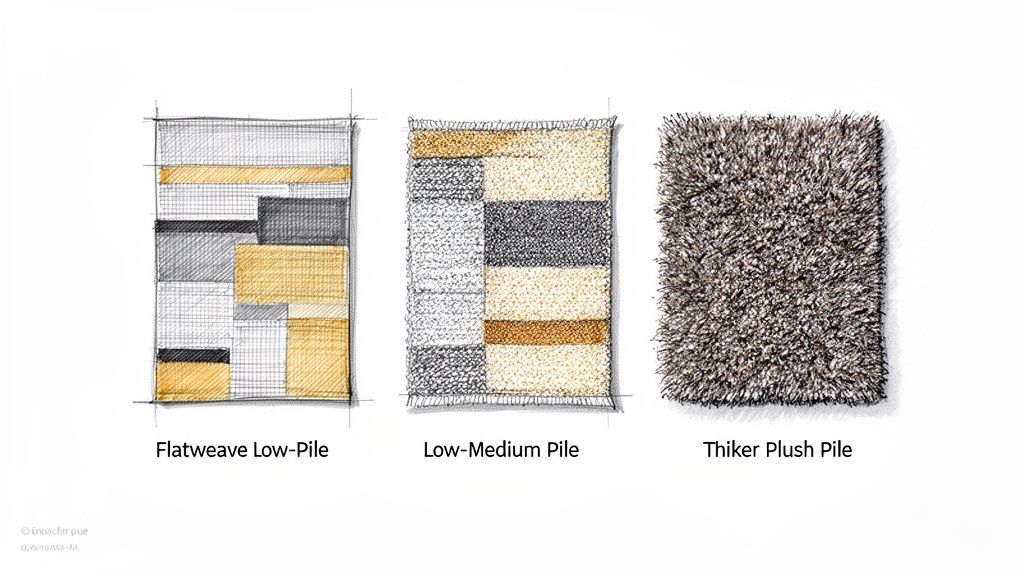
Picking the right area rug is what makes this layered look feel intentional and designer-approved, rather than like a happy accident. The secret sauce is creating a beautiful contrast in texture. This gives the room depth and ensures your new rug doesn't just sink into the carpet below.
Think of it like getting dressed. You wouldn't throw a bulky cable-knit sweater over an already-thick fleece jacket, right? The same logic applies to your floors. The number one rule is to create a noticeable difference between the pile heights of the carpet and the area rug.
Mastering Texture and Pile Height
If you're working with plush, high-pile carpeting, you'll want to look for an area rug with a low profile. This contrast is key. It helps the area rug lie flat, keeps the edges looking crisp, and prevents the floor from feeling mushy or unstable underfoot.
For layering over thick carpet, these are your go-to options:
- Flatweave Rugs: With no pile to speak of, these are the ideal partner for plush carpets. Their tight construction creates a firm, stable surface that really lets intricate patterns pop.
- Low-Pile Rugs: Rugs made from wool, polypropylene, and other synthetics with a short, dense pile are fantastic choices. They're durable, a breeze to clean, and perfect for busy areas. For instance, a beautifully patterned but low-pile rug like the Surya Harput HAP-1038 Area Rug strikes that perfect balance of style and practicality for a layered look.
On the other hand, if your home has low-pile carpet—like a berber or something more commercial-grade—you've got a lot more creative freedom. This is your chance to introduce a thick, medium-pile or even a shag rug to add a serious dose of texture and comfort. It’s a great way to make a more utilitarian space feel cozy and inviting.
Choosing Colors and Patterns
Once you've nailed down the texture, it's time for the fun part: picking out colors and patterns. This is where you can really steer the personality of the room. You can go one of two ways, each creating a totally different vibe.
Think of your area rug as the hero piece. It can either blend in to create a calm, cohesive look or stand out as a bold, stunning focal point for the entire room.
For a more subtle and elegant feel, pick an area rug that complements the color of your wall-to-wall carpet. Choosing a shade that’s just a few tones lighter or darker than the base carpet creates a sophisticated, monochromatic foundation that feels incredibly polished.
But if you're looking to make a statement, embrace contrast! A vibrant, patterned rug laid over a neutral carpet instantly injects the space with energy and personality. When thinking about the functional side of floor coverings, like comfort and safety, it's interesting to see how the principles overlap with other areas, like those discussed in guides on choosing the best baby play mat, where durability and style are also paramount.
Ready to find that perfect piece to complete your vision? Our team of design experts at Miller Waldrop is here to help you explore our collection and find a rug you’ll absolutely love for years.
How to Keep Your Area Rug From Moving on Carpet
The biggest headache when layering a rug over carpet is the dreaded "rug crawl." You know the look: the top rug bunches, wrinkles, and seems to slowly migrate across the room all on its own. This happens because every footstep causes the fibers of the rug and the carpet underneath to slide against each other.
Luckily, you have the tools to solve this problem. You've got a few great options in your arsenal to make sure your beautiful new area rug stays exactly where you put it, giving you that flawless, layered look without the constant fuss.
The Best Tools for the Job
Your first and best line of defense is a rug pad made specifically for going over carpet. These aren't the same pads you'd use on a hardwood floor. Instead of just gripping a hard surface, they're designed to lock two soft, plush surfaces together.
- Carpet-to-Carpet Rug Pads: These are the real MVPs. They usually have a slightly tacky feel or a felt-like side that grabs the carpet fibers below, while the other side holds your area rug tight.
- Rug Gripper Tape: This is another solid choice. Think of it as a strong, double-sided tape with a special adhesive that’s safe for both your carpet and your rug. It’s perfect for tacking down those pesky corners and edges that want to curl up.
Picking the right tool is the secret to a stable, secure rug. It saves you from constantly having to readjust and, more importantly, gets rid of a serious tripping hazard for your family and guests.
Using Furniture as a Natural Anchor
Don't forget about the tools you already have in the room! Your own furniture can be a powerful ally in the battle against a wandering rug. Strategically using heavy pieces to pin down your area rug is a simple, no-cost trick that works like a charm.
Just think of your sofa, coffee table, or bed frame as giant, stylish paperweights. When you place the edges of your rug under the legs of these heavy items, you create natural anchor points that stop it from shifting around.
A well-placed sofa or sectional can anchor the largest edge of your rug, instantly stopping about 50% of potential movement. Combine this simple trick with a quality rug pad, and you've got an unbeatable system for keeping your layered look pristine.
For instance, in the living room, make sure the front legs of your sofa and any armchairs are sitting firmly on the rug. In a dining room, the sheer weight of the table and chairs will naturally hold everything in place. This simple use of weight distribution makes a huge difference, grounding your rug both physically and visually.
Here's how you can choose the perfect living room furniture to not only define your style but also hold your new rug right where you want it.
Mastering Rug Placement and Styling
You’ve found the perfect rug and a reliable anchor. Now for the fun part: placing it with a designer’s eye. This is where the magic happens. Proper placement is the secret sauce that transforms a simple layered look into something that feels intentional, balanced, and visually stunning.
This little flowchart breaks down the decision-making process for keeping your rug secure, whether you're relying on heavy furniture or a specialized pad.
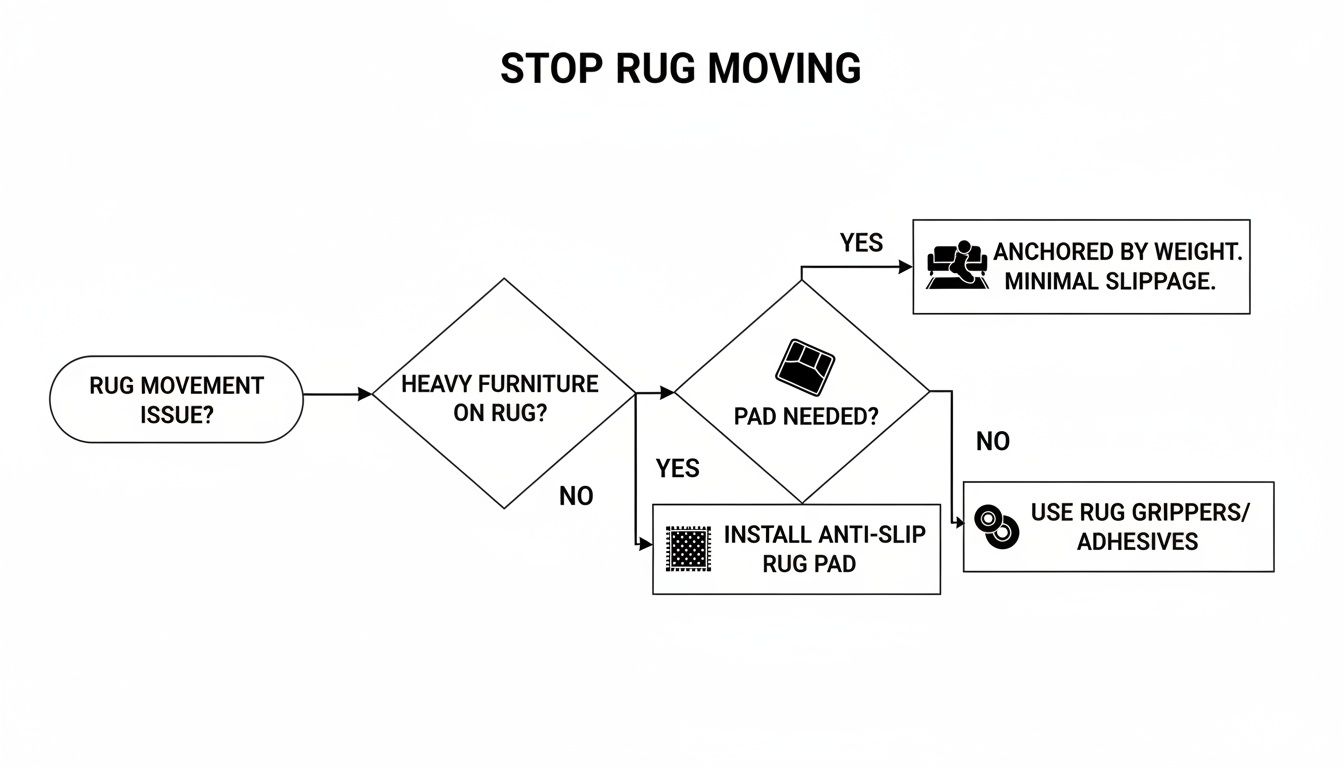
The main takeaway here is pretty simple: heavy furniture is a great natural anchor, but a dedicated rug pad is almost always the best bet for total stability.
Living Room Layouts Demystified
When it comes to the living room, your goal is to create a unified and inviting conversation area. Designers have a few go-to rules for arranging furniture on a rug, and you can pick the one that works best for your room and rug size.
- All Legs On: Think luxurious and expansive. This is where all your furniture—the sofa, chairs, and tables—sits completely on the rug. You'll need a large rug for this, but the result is a grounded, cohesive space.
- Front Legs On: This is probably the most popular and flexible option. You just place the front legs of your sofa and chairs on the edge of the rug. It does a fantastic job of tying all the pieces together without needing a massive, room-sized rug.
- Floating (Coffee Table Only): Perfect for smaller rooms. In this setup, only the coffee table sits on the rug, while all the other furniture stays on the carpet around it. It's a great way to add a pop of color and texture without making the space feel crowded.
Creating a Serene Bedroom Retreat
In the bedroom, a rug is all about adding softness and warmth. It’s that cozy landing for your feet when you get out of bed in the morning.
The classic placement is to slide the rug perpendicularly under the bed, so about one-third of it shows at the foot. You'll want to leave about 18-24 inches of rug exposed on either side of the bed. To get this serene look just right, you can discover more professional tips on area rug placement in the bedroom.
This whole trend of layering rugs on carpet is part of a much bigger picture. The global area rugs market was valued at a whopping USD 12.5 billion in 2023 and is on track to hit USD 20.8 billion by 2033. This growth is fueled by homeowners everywhere, including right here in West Texas and New Mexico, who are looking for flexible and beautiful design solutions.
With North America expected to make up 38% of that growth, local showrooms like ours are key places where people get the inspiration and know-how to style their homes perfectly.
Caring for Your Layered Rugs
Once you've created that beautifully layered look, you’ll want to keep it looking fresh. A little proactive care goes a long way, protecting your investment and ensuring both the area rug and the carpet beneath it stay in great shape for years to come.
Your vacuum is your best friend here. Regular vacuuming is non-negotiable for preventing dirt and dust from getting ground into the fibers of both surfaces.
When cleaning the area rug, it's a good idea to turn off the beater bar on your vacuum. This prevents the rotating brush from snagging or pulling at the rug's fibers, which is especially important for delicate or high-pile textures. Every few months, go the extra mile: roll back the area rug and give the carpet underneath a thorough vacuuming to clear out any trapped dust.
Keeping Your Layers in Top Condition
Beyond just vacuuming, a couple of simple habits will make a huge difference in the lifespan of your setup. One of the most effective tricks in the book is rotation.
Think of it like rotating the tires on your car. Rotating your area rug every six to twelve months ensures it wears evenly. This is an absolute game-changer in high-traffic areas where footpaths can start to show.
This simple habit keeps one side from fading or flattening more than the other, maintaining a consistent look. It also gives you a chance to check for any signs of moisture, which is rare but always good to catch early. For more tips on floor care, here's how you can protect your floors from your furniture.
Remember, layering does more than just look good—it adds practical benefits like extra insulation. There’s a reason residential homes account for roughly 71.9% of all carpet and rug usage; it's all about comfort.
Adding an area rug over carpet doubles down on that thermal comfort, which helps explain why the U.S. carpets and rugs market hit a massive USD 34 billion in 2023. It’s a smart, stylish way to add a little extra warmth and even dampen sound. Learn more about the drivers of the U.S. carpet market.
Finding the Perfect Rug to Complete Your Vision
So, can you put an area rug over carpet? By now, you know the answer is a resounding yes. More importantly, you see it’s a brilliant design move that gives you complete control over the look and feel of your home. This isn't just about covering up old carpet; it's about defining spaces, layering in rich textures, and letting your personality shine through.
Layering is one of those fantastic techniques that lets you completely reinvent a room on your own terms. Whether you're looking to create a cozy conversation pit in the living room, add a durable runner to a busy hallway, or just splash some much-needed color into a neutral space, the right area rug is the key.
Your Design Journey Starts Here
The last step is often the most exciting: finding that one perfect piece to tie everything together. Now that you have the knowledge and tools, you can confidently explore a variety of rugs to find a style that really speaks to you.
Just keep the core principles we've covered in mind:
- Contrast is King: Make sure there's a clear difference in pile height between your carpet and your rug. This creates a clean, intentional look.
- Anchor with Purpose: A good carpet-to-carpet rug pad is non-negotiable. Use it along with your furniture to hold that rug firmly in place.
- Size Matters: Always choose a rug that’s big enough to sit under the front legs of your furniture. This is what makes a space feel cohesive and thoughtfully designed.
You're not just decorating anymore—you're a design problem-solver. You have everything you need to turn a bland, carpeted room into a polished space that truly reflects who you are and how you live. The power to create a home you love is officially in your hands.
Now that you know the secrets to layering like a pro, let the experts at Miller Waldrop Furniture & Decor help you find the perfect piece to finish the job. Stop by one of our showrooms in Lubbock, Hobbs, or Ruidoso. Our design team would love to walk you through our collection and help you find the rug that completes your story. Start your design journey with us today!