

How to Clean a Fabric Sofa Naturally: Your Complete Guide

Your sofa is the heart of your home—the hero piece of your living room. It’s where you unwind, cuddle with your family, and host memorable movie nights. But all that living means it also collects its fair share of crumbs, spills, and mystery smudges.
Before you reach for harsh chemicals, you should know that you have the power to get your sofa looking and smelling fresh with a few simple, natural ingredients. Cleaning a fabric sofa naturally isn't just a hopeful idea; it's a highly effective strategy. You just need the right tools and techniques to win the day.
Getting Started: Assemble Your Natural Cleaning Arsenal
Forget those expensive, specialized cleaners. Your victory over dirt and odors starts with a few trusty staples from your own pantry. The real magic lies in understanding how to wield each one.
This approach isn’t just about saving money; it’s about creating a healthier home. You become the hero of your space by controlling exactly what goes onto the furniture your family lives on every day.
Your Natural Cleaning Toolkit
You don’t need a complex arsenal to get started. In fact, these three items are the heavy lifters of natural fabric care, giving you the power to restore your sofa.
- Baking Soda: This is your go-to deodorizer. It’s brilliant at absorbing and neutralizing stubborn, lingering smells from pets, food, or just daily life. It works by gently drawing odors out of the fibers without any risk of damage.
- White Vinegar: Don't let the initial scent fool you. Its acidity is your secret weapon for cutting through and breaking down common stains, especially things like juice or grass. Once diluted properly with water, it becomes a powerful cleaner, and the vinegar scent completely vanishes as it dries.
- A Gentle Dish Soap: For general dirt and grime, a few drops of a simple, clear dish soap in warm water work wonders. It’s the perfect solution for most fabrics with a "W" or "W/S" cleaning code, empowering you to tackle everyday messes safely.
See these not as "lesser" alternatives, but as the powerful, targeted tools you need to win. By using these simple items, you're not just cleaning a mess; you're preserving the life and look of a piece of furniture you love.
A clean sofa makes the whole room feel more inviting. And when you're ready to choose your next great piece, knowing how to care for furniture helps you make a heroic choice. Equipping yourself with durable, life-proof materials, like those found in this beautiful collection of Flexsteel sofas, sets you up for success from day one. Now, let’s get into the specifics of making your current sofa look its best.
Preparing Your Sofa for Its Natural Refresh
Before you mix your cleaning solution, a little prep work is your first mission. Taking these preliminary steps is the difference between a beautifully refreshed sofa and a costly mistake. Let’s get your couch ready for its deep clean.
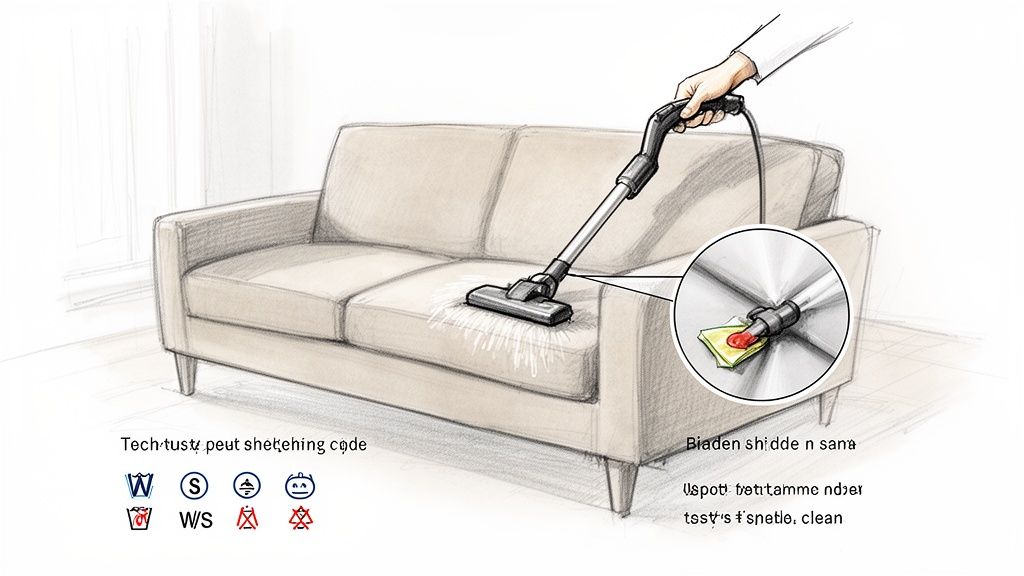
First, you need to play detective. Hunt for the care tag, usually tucked away under the cushions or on the sofa's frame. This tag holds the secret code to safely cleaning your fabric, and ignoring it is a risk you don't want to take.
Decode Your Sofa's Cleaning Tag
On that tag, you'll find a single letter code. This code is your golden rule, telling you exactly which tools you can and can't use on your upholstery.
- W: This is the one you're hoping for. It means water-based cleaners are your allies, giving you the green light for our natural vinegar and soap solutions.
- S: This stands for "solvent only." Water is the enemy here and will likely leave a stain. Natural DIY methods are off the table for these fabrics.
- W/S: You’ve got options. Both water-based and solvent-based cleaners are generally fine, but proceed with caution and always spot-test.
- X: The most delicate of them all. This code means vacuum only. Any liquid, water or solvent, will damage the fabric.
Once you know your code (and have confirmed it's a 'W' or 'W/S'), it's time to vacuum. And we mean really vacuum. Arm yourself with your upholstery attachment and conquer every single seam, crevice, and corner. Removing all the loose crumbs, dust, and pet hair now stops you from creating a muddy mess when you add liquid later.
If shedding is a constant battle in your home, we have some great tricks for how to remove pet hair from furniture.
The final, non-negotiable step is the spot test. We can't stress this enough. Find a hidden spot—on the back, under a cushion, or along the skirt—and apply a tiny amount of your cleaning mixture. Let it dry completely. If you see any color bleeding, fading, or changes in the fabric's texture, stop right there. This quick test can save you from a huge disaster.
With your sofa prepped and free of loose debris, you are ready to mix your cleaning solution. You can skip the harsh, store-bought chemicals—some of the best cleaners are probably already sitting in your kitchen pantry. This is especially true if your sofa has a ‘W’ or ‘W/S’ cleaning code, which is common for many family-friendly fabrics.
We're not just spot-cleaning here. The goal is to equip you with a gentle, all-purpose solution that can lift away daily grime and refresh the entire piece, bringing back that clean, inviting feeling.
DIY Natural Cleaning Solution Recipes
The magic of DIY cleaners lies in their simplicity and effectiveness. You can whip up a powerful solution with just a couple of household staples. Below are a few of our go-to recipes for tackling different fabric sofa issues.
| Solution Type | Ingredients | Best For |
|---|---|---|
| All-Purpose Cleaner | • 2 cups warm water • 1 tbsp white vinegar • 1 tsp clear dish soap |
General cleaning, light stains, and overall fabric refreshing. |
| Odor Neutralizer | • 1/2 cup baking soda • 1/2 cup warm water |
Deodorizing stubborn smells and lifting organic stains like pet accidents. |
| Gentle Soap Wash | • 2 cups warm water • 2-3 drops of castile soap or another mild, clear soap |
Delicate fabrics or for a very light clean without the vinegar scent. |
These simple mixtures give you incredible cleaning power without any mysterious additives. Just be sure to always spot-test any solution on a hidden area of your sofa first.
Mixing and Applying Your Go-To Cleaner
A simple white vinegar and dish soap solution is a time-tested classic for a reason. Its cleaning power is surprisingly effective. In fact, the 5% acetic acid in standard white vinegar is strong enough to break down about 80% of common household stains, like coffee or juice spills.
To make it, just mix a tablespoon of white vinegar and a teaspoon of clear dish soap into two cups of warm water. If you're interested in just how versatile vinegar can be around the house, there are some great resources out there, like this article on Four Not So Commonly Known Cleaning Uses Of Vinegar.
The Right Way to Apply It
How you apply the cleaner is just as critical as what’s in it. Your mantra here should be: damp, not drenched.
- Squeeze It Out: Dip a clean microfiber cloth into your solution, then wring it out until it’s barely damp. A soaking-wet cloth is your enemy—it can leave water rings and create a 40% higher risk of mildew on certain fabrics.
- Work in Sections: Don't try to tackle the whole sofa at once. Start at the top of a cushion or an arm and work your way down methodically. This keeps drips from running over the sections you've just cleaned.
- Use Gentle Circles: Wipe the fabric using light, overlapping circular motions. This technique lifts dirt out of the fibers instead of grinding it further in.
This process is about more than just scrubbing. Think of it as restoring a central piece of your home’s comfort.
You're not just attacking a stain; you're giving your entire sofa a gentle refresh that respects the fabric and brings back its original vibrancy.
Once the entire surface has been wiped down, the hard part is over. Now, it's all about letting it dry properly. Of course, if you find that your current sofa's fabric is a constant battle, it might be time to explore easier-to-maintain options. Our collection of durable and stylish La-Z-Boy sofas offers fantastic fabrics designed for real life.
Tackling Common Stains and Odors Naturally
No matter how careful you are, life happens on a sofa. A splash of coffee, a greasy fingerprint from pizza night, or that familiar pet smell can all take a toll. This is your chance to be the hero, armed with simple, natural solutions to conquer these everyday messes.
You don't need a cabinet overflowing with harsh chemicals. In fact, some of the most effective treatments are probably already in your pantry. The real secret is knowing which natural remedy to use for which type of stain.
Using Baking Soda for Grease and Odors
Baking soda is a powerhouse for natural cleaning. Its ability to absorb oils and neutralize odors is second to none, and it's gentle enough for most fabrics.
When you're dealing with a greasy or oily stain, a simple baking soda paste is your first line of defense. Here's how you can use it to win:
- Mix a few tablespoons of baking soda with just enough water to create a thick paste, almost like toothpaste.
- Apply the paste directly onto the spot, making sure you cover the entire stain.
- Leave it alone for about 15-20 minutes. You're letting the baking soda do the work, drawing the grease right out of the fibers.
- Once it’s dry and crumbly, just brush it off or vacuum it up with your upholstery attachment.
This method lifts the grease without the need for aggressive scrubbing that can damage your sofa's fabric. If you're ready to become a true spot-cleaning pro, our guide on how to remove stains from upholstery has even more in-depth techniques.
Deodorizing Your Sofa with Dry Baking Soda
Sometimes your sofa doesn't have a specific stain, it just smells a little… lived-in. For those general odors from pets, food, or just daily life, dry baking soda works wonders. Simply sprinkle a generous layer across all the fabric surfaces and cushions.
Let it sit for at least a few hours. For really stubborn smells, leaving it overnight is your best strategy. The baking soda acts like a dry sponge, absorbing and neutralizing whatever is causing the odor. The next day, a thorough vacuuming is all it takes to reveal a noticeably fresher sofa.
A Vinegar Solution for Tougher Spills
For stubborn, non-oily spills like coffee, juice, or wine, a diluted vinegar solution is incredibly effective. The natural acidity in vinegar is perfect for breaking down these types of stains, making them much easier to lift away.
Mix equal parts white vinegar and water in a spray bottle. Lightly mist the stained area—never saturate it. Gently blot the stain with a clean microfiber cloth, working from the outside edge toward the center to keep it from spreading.
Some messes, like pet accidents, need a little extra attention to break down the organic compounds. The principles found in guides on how to clean cat vomit from carpet can offer some great insights that apply to upholstery as well.
Of course, before you tackle any spot, you have to know if your sofa's fabric can handle a water-based cleaner. This is non-negotiable.
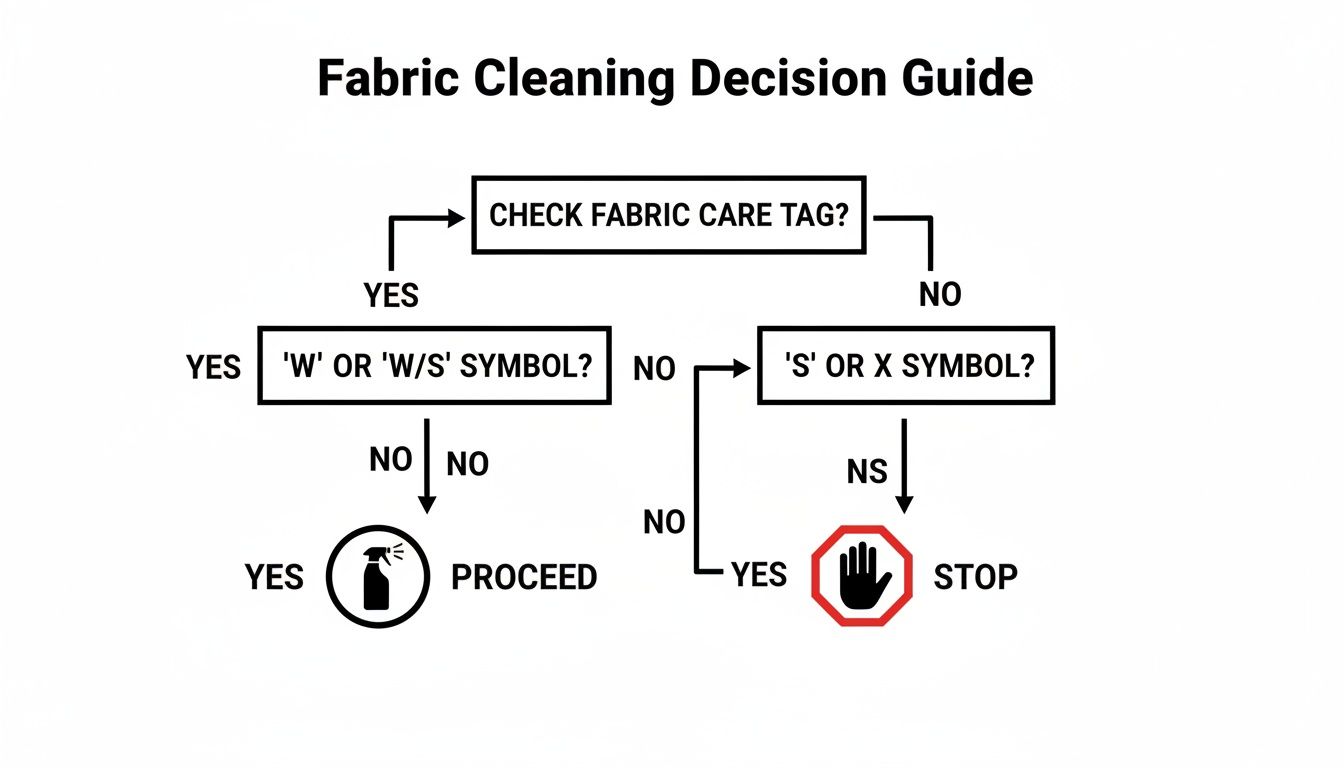
As the chart shows, that little cleaning tag is your best friend. If you see a 'W' or 'W/S', you're clear to use these natural, water-based methods. But if it's an 'S' or 'X', you'll need to stop and use a different, solvent-based approach to avoid damaging your furniture.
Drying and Maintaining Your Freshly Cleaned Sofa
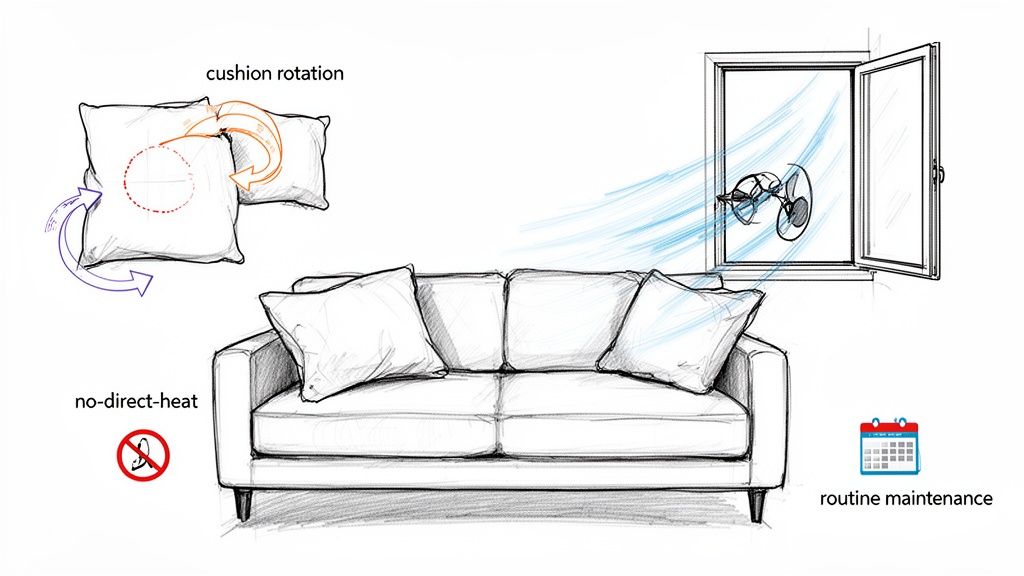
You've put in the elbow grease—now for the most critical final step: drying. How you handle this part makes all the difference between a pristine finish and frustrating watermarks or, even worse, mildew.
The golden rule is to air-dry. It’s tempting to grab a hairdryer or point a space heater at a wet spot, but don't do it. Direct heat is the enemy of most fabrics and can cause shrinking or even scorch the fibers.
Instead, get some air moving. The easiest way is to open a few windows and let a natural cross-breeze do the work. If the air is still, a ceiling fan on a low setting or a portable fan placed several feet away will help the moisture evaporate evenly and effectively.
A Simple Routine to Keep Your Sofa Looking New
Now that your sofa is looking its best, the goal is to keep it that way. A little regular maintenance goes a long way and will save you from having to do a deep clean so often. Think of it as protecting your hard work.
These are the small, consistent habits that truly make the biggest impact.
- Vacuum Regularly: Once a week, use your vacuum’s upholstery attachment to get rid of dust, pet hair, and crumbs. This prevents everyday grit from getting worked deep into the fabric weave.
- Fluff and Flip: Make it a weekly habit to rotate and fluff all the removable cushions. This ensures they wear evenly and helps them keep their shape, preventing those dreaded permanent butt-dents.
- Attack Spills Immediately: The moment a spill happens, blot—don’t rub!—with a clean, dry cloth. Soaking up the excess liquid right away is 90% of the battle and makes stain removal much simpler.
A few minutes of care each week is your best defense. It's a small investment of time that extends the life of your furniture and keeps it as the comfortable, clean centerpiece of your living room.
Long-Term Care and Deeper Cleaning
If you have kids, pets, or just want an extra layer of protection, consider a stylish throw blanket. It can add a nice decorative touch while taking the brunt of the daily wear and tear.
For dirt that's more set-in, or if you're dealing with a fabric that can handle it, there are other deep-cleaning methods to explore. If your sofa's care tag gives you the green light, our guide on how to steam clean a couch can walk you through another great option.
By pairing these natural cleaning techniques with a solid maintenance plan, you’ve got everything you need to keep the furniture you love in fantastic shape for years to come.
Choose a Sofa That Can Handle Your Life
All the cleaning tricks in the world can only go so far. While knowing how to tackle stains is essential, the real secret to a low-stress living room is starting with the right sofa in the first place.
Think about it. If you have kids, pets, or just love hosting, choosing a sofa with a durable, easy-to-clean fabric isn't a luxury; it's a sanity-saver. When you're ready for an upgrade, you can make the perfect choice for your family's needs by looking for materials specifically engineered for high-traffic homes. Performance fabrics have come a long way and can make spills a non-event.
The smartest cleaning hack is choosing furniture built for the life you actually lead.
At Miller Waldrop, we've seen firsthand how a well-chosen sofa can transform a home. Here’s how you can choose the perfect sofa for your family’s needs: start by exploring our collection of Flexsteel sofas. They are truly built to last and handle the beautiful chaos of family life, giving you a comfortable spot to make memories for years to come.
Your Top Questions About Natural Sofa Cleaning
Even with a solid game plan for cleaning your sofa, a few questions always seem to pop up. You've done the hard part of learning the right techniques, so let's tackle some of the common uncertainties to make sure you can finish the job with confidence.
Can I Really Use These Methods on Any Fabric Sofa?
This is the big one, and the short answer is no. Before you mix up any solution, the absolute first thing you must do is find your sofa's cleaning tag. This little tag is your roadmap.
- Look for a 'W' or 'W/S' code. These are your green light. It means the fabric is safe for the water-based cleaning methods we’ve been talking about, like vinegar or a gentle soap solution.
- If you see an 'S' (Solvent Only) or 'X' (Vacuum Only) code, stop right there. These fabrics are not meant for water-based cleaning and you could cause serious, permanent damage or discoloration.
No matter what the code says, we can't stress this enough: always spot-test first. Find an out-of-the-way area, like on the back of the sofa skirt or under a cushion, and test your cleaning solution. It’s a tiny step that can prevent a huge disaster.
How Often Should I Be Deep Cleaning My Sofa?
For most households, a full-on, deep clean with a water-based solution is only necessary about once or twice a year.
The real secret to a long-lasting sofa is consistent maintenance. A weekly vacuuming session does wonders for keeping dust and crumbs under control. And of course, try to tackle spills the moment they happen. If your living room is the main hub for kids, pets, or just a lot of daily life, you might want to do a lighter all-over refresh every 3-4 months to keep things looking and smelling fresh.
Help! A Natural Cleaner Left a Water Spot. What Now?
Don't panic! Water spots are pretty common, especially if the fabric got a little too wet or dried unevenly. The fix is usually quite simple.
Grab a clean, white cloth and dampen it slightly with distilled water—it’s free of the minerals that often cause rings. Gently blot the very outer edge of the water spot, working your way inward. This helps blend the spot into the surrounding fabric. Then, feather the moisture out with the cloth so there's no hard line.
Finish by using a hairdryer on its coolest, lowest setting to dry the area evenly.
The trick is to blend the moisture and then dry the spot gently. This prevents a new ring from forming as the fabric dries.
I Cleaned the Sofa, but It Still Smells a Little. What's Next?
If a stubborn odor is hanging around after you've cleaned, baking soda is your secret weapon. Sprinkle a generous, even layer of dry baking soda all over the sofa. Don't be shy with it!
Now, just let it sit. The longer, the better—a few hours is good, but overnight is great. The baking soda will work its magic, absorbing those lingering smells from deep within the fibers. When you're ready, just vacuum it all up thoroughly, using a brush attachment to get everything. If that still doesn't do the trick, it might be time to call in a professional.
At Miller Waldrop Furniture & Decor, we believe a home is meant to be lived in, and that means having furniture that can handle real life. Knowing how to care for your sofa is the best way to keep your home beautiful and comfortable for years. If you’re looking for your next perfect piece or just have more questions on fabric care, our team is always here to help. Visit us online at MillerWaldrop.com to see our collections and get some expert advice.