


Master Cottage Furniture Style for an Inviting Home

You walk in after a long day, set your keys down, and feel that familiar tug. You want your home to soften the edges of the day, not add to them. In West Texas and Southeastern New Mexico, where the light is bright, the wind can be relentless, and family life tends to be full, that kind of comfort matters.
That’s where cottage furniture style makes sense. It isn’t about turning your home into a stage set or filling every room with antiques. It’s about choosing furniture that feels welcoming, looks lived-in in the best way, and helps everyday spaces work better for real people.
A lot of homeowners like the look but get stuck on practical questions. Will it hold up to kids, dogs, and busy schedules? Will it fit with newer construction? Will it feel too sweet, too old-fashioned, or too fragile? Those are fair concerns, and they’re exactly why this style is worth understanding before you shop.
An Invitation to Everyday Comfort
A cottage-inspired room usually starts with a feeling before it starts with a furniture plan. You notice it when a chair looks like the one everyone will fight over, or when a painted dresser makes a room feel lighter instead of heavier. The effect is quiet. Your home starts to feel like a place that gives something back.
Why this style feels so easy to live with
Cottage furniture style has a gentle personality. It leans toward comfort, painted or weathered finishes, and shapes that feel relaxed instead of rigid. That matters when your home has to do a lot. Maybe your living room doubles as movie night headquarters. Maybe your dining table handles homework, coffee, and dinner in the same day.
The best version of this look doesn’t ask you to be precious.
Practical rule: If a piece makes you worry more than it helps you live, it’s probably not the right cottage piece for your home.
That’s why this style connects with so many families. It allows charm without fuss. You can bring in softness, pattern, and character while still making smart choices about durability and storage.
A home that supports your real life
Think about the rooms you use hardest. A bedroom should help you settle down. A dining room should invite people to stay. A living room should let everyone land comfortably, even if the day has been messy.
Cottage style supports that goal with a few simple ideas:
- Choose comfort first so seating and beds feel inviting, not formal.
- Let finishes show character so small marks and daily wear don’t ruin the mood.
- Mix pretty with practical so your home feels personal while still handling everyday use.
That’s what makes the style approachable. You don’t need a historic house. You don’t need a perfect budget. You need a few thoughtful choices that make your home feel warmer, lighter, and more like yours.
The Heart of Cottage Style
Cottage style works best when you understand what it stands for. It’s a design language built around comfort, modesty, and charm. If formal Victorian furniture can feel like a starched jacket, cottage furniture feels more like a well-loved sweater.
A style rooted in everyday homes
This isn’t a modern invention dressed up to look nostalgic. Cottage furniture became widely available in America between 1830 and 1890, and it gained momentum after Andrew Jackson Downing promoted it in 1850 in The Architecture of Country Houses. He pointed out that a full cottage bedroom set cost the equivalent of one luxury mahogany wardrobe, which helped make coordinated rooms available to the middle class for the first time, as noted in this history of cottage furniture.
That history matters because it explains the spirit of the style. From the beginning, cottage furniture wasn’t only for grand homes. It offered families a way to create beauty on a realistic budget.
What makes it feel different from heavier traditional furniture
Cottage furniture style often looks lighter and friendlier than more formal period furniture. Instead of dark, imposing pieces, you see painted surfaces, floral decoration, softwoods, and bedroom suites that were meant to feel cheerful and cohesive.
A few classic features show up again and again:
- Painted finishes in soft shades like white, pale blue, green, pink, gray, and lilac
- Decorative motifs such as flowers, leaves, fruit, and simple outdoor views
- Coordinated suites that bring the room together instead of making each piece compete
Cottage style has always had room for imperfection. That’s part of its appeal, not a flaw.
That idea helps modern homeowners the most. You don’t need everything to match perfectly. You do want your home to feel collected, easy, and human. Cottage style gives you permission to build that kind of room one useful piece at a time.
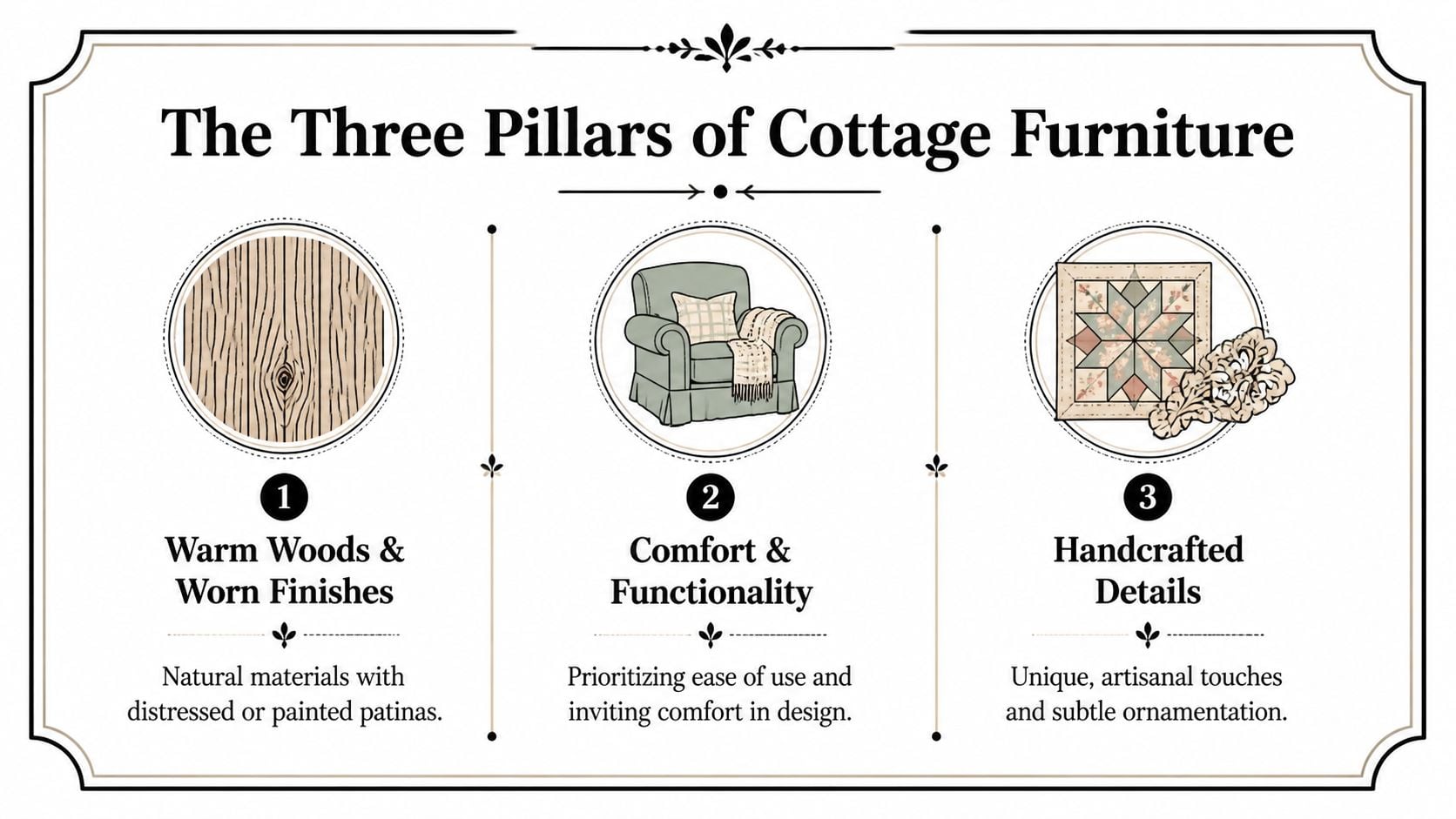
The Three Pillars of Cottage Furniture
Once you know the spirit of the style, it gets much easier to spot the pieces that fit. I like to group cottage furniture style into three pillars: silhouettes, finishes, and materials. If a piece gets these right, it usually feels right in the room too.
Silhouettes that invite you in
The first clue is the shape. Cottage furniture favors soft, rounded silhouettes like rolled arms, arched headboards, and scalloped edges. Those curves don’t just look gentler. They also reduce visual tension and help distribute pressure points more evenly, which supports comfort, according to this overview of cottage furniture style.
That means a rounded arm sofa can feel more restful than a boxy one, even before you sit down. A softly curved bed feels calmer than one with sharp, severe lines. In family homes, that visual softness goes a long way.
Finishes that hide real life
The second pillar is the finish. Cottage style embraces painted, distressed, and weathered surfaces. That’s good news if you use your furniture every day.
Distressed and painted finishes sealed with wax or polyurethane can hide wear and extend practical lifespan by 30 to 50 percent compared to smooth lacquers, as described in this guide to cottage-style finishes. In plain terms, scratches and scuffs tend to blend into the character of the piece instead of standing out.
Here’s why many families love that:
- Small marks disappear more easily on textured, painted surfaces
- The room feels relaxed because nothing looks too polished or untouchable
- Older and newer pieces blend better when finishes have some softness and variation
A cottage finish should look forgiving. If every fingerprint shows, the piece is fighting the style.
Materials that add warmth
The third pillar is material. Traditional cottage furniture used affordable woods like pine, poplar, and birch, often with hand-painted decoration. Today, that same warmth can come from wood grain, wicker, cotton, linen, and upholstered pieces with an easy, tactile quality.
A quick way to evaluate a piece is to ask what it adds to the room:
| Pillar | What to look for | Why it works |
|---|---|---|
| Silhouette | Rounded edges, turned legs, arches | Feels softer and more welcoming |
| Finish | Painted, distressed, weathered surfaces | Helps disguise daily wear |
| Material | Wood, wicker, cotton, linen, textured upholstery | Adds comfort and lived-in warmth |
If you keep those three pillars in mind, you won’t have to guess whether a piece belongs. You’ll be able to see it.
Creating Your Cottage-Inspired Home Room by Room
On a busy weeknight in the Southwest, the same home can hold muddy shoes at the door, homework at the table, a dog stretched across the sofa, and guests stopping by after sunset. Cottage style works well here because it is not precious. It gives a room softness and character, but it still has to stand up to real family life.
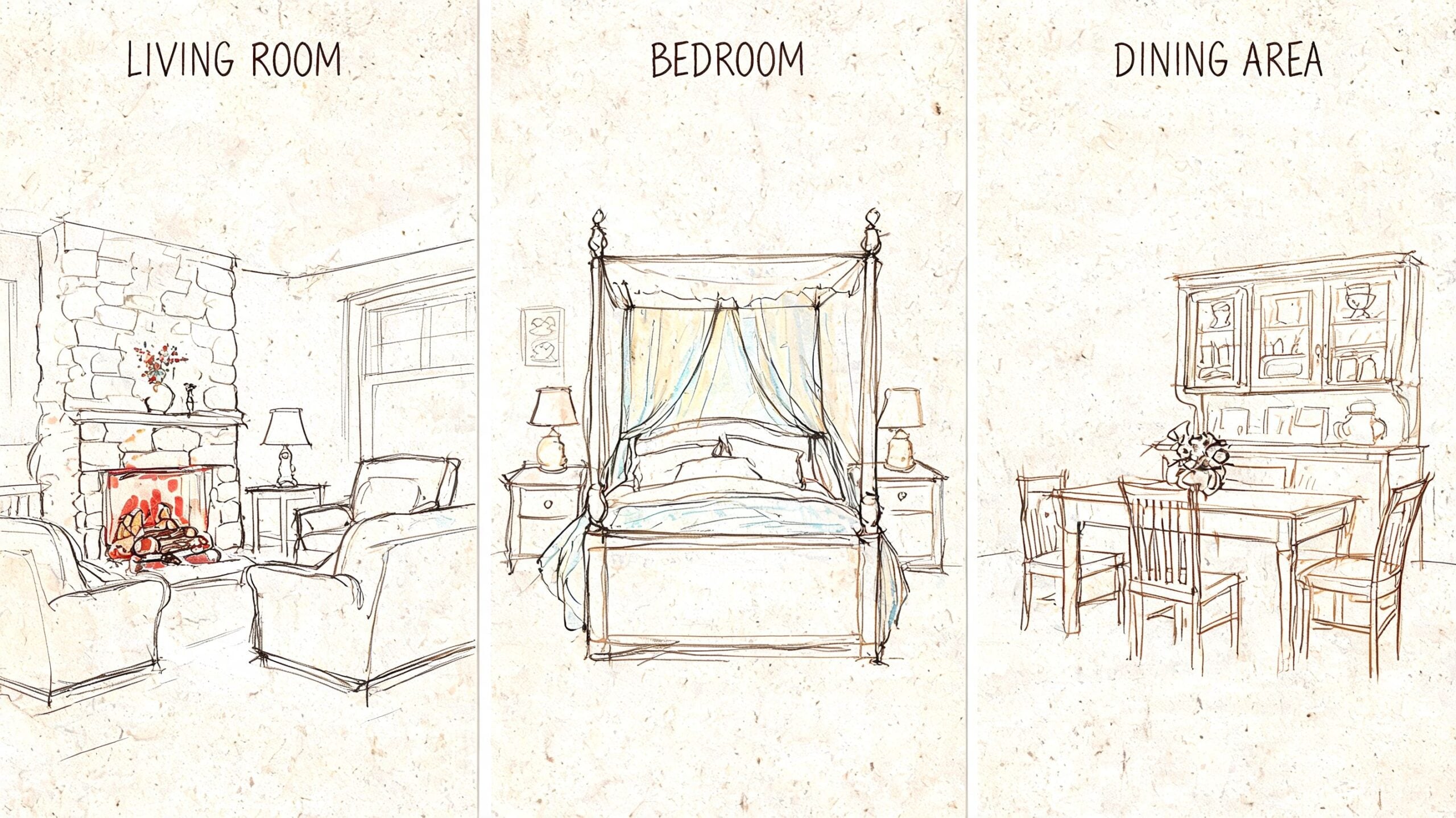
A good way to plan is to treat each room like its own small project. Start with one anchor piece, then build around it with items that add comfort, storage, or flexibility. That approach keeps the house from feeling over-decorated, and it helps you spend your budget where it matters most.
Living room choices that welcome everyone
In the living room, begin with the seat your family uses most. Usually that is the sofa, a loveseat, or one generous chair. Soft arms, a relaxed silhouette, and upholstery that feels comfortable instead of formal all fit the style.
For Southwest households, practicality matters as much as charm. Sun, dust, pets, and kids can be hard on fabric, so performance upholstery, washable slipcovers, and wood tables with a little visual texture usually age better than pieces that show every spot and scratch. A storage ottoman or a coffee table with shelves also helps the room do more than one job, which is often what families need.
One simple formula works well:
- Anchor seat with a welcoming shape and durable fabric
- Useful table or cabinet for storage, books, or baskets
- Soft layer of throws and pillows you can wash and replace easily
If you are unsure whether a room feels too plain, add warmth through texture first. A nubby throw, a woven basket, or a painted side table often does more for cottage character than buying another large piece.
A bedroom that feels lighter and calmer
Bedrooms benefit from cottage style because the look naturally quiets a space. An arched bed, a painted dresser, or a nightstand with a little curve can soften a room the same way a lamp softens harsh overhead light. The effect is gentle, not fussy.
In many American Southwest homes, bedrooms also need to feel cool and open. Lighter wood tones, soft paint colors, and furniture with visible legs can help the room breathe. Heavy, blocky pieces tend to make smaller rooms feel crowded, especially once you add bedding, lamps, and storage.
Matching everything is not required. What matters is that the bed, case pieces, and lighting share the same mood. If one piece feels farmhouse-rustic, another feels formal, and another looks ultra-modern, the room can lose that settled cottage feel.
Choose pieces that make the room easier to live in. A dresser that holds enough clothing, a nightstand with one useful drawer, and a bench that catches extra blankets will serve you better than decorative pieces with no real job.
The best cottage bedroom pieces lower the visual noise in the room and make rest feel easier.
Dining spaces that can handle daily use
Dining rooms often work the hardest. In many homes, this table hosts tacos on Tuesday, science projects on Wednesday, and a holiday meal a few weeks later. Cottage style suits that kind of space because it welcomes wear instead of fighting it.
A weathered or painted table is especially practical here. The surface already has variation, so everyday marks blend in more naturally. If you want to see how that look comes together, this distressed dining set with a lived-in cottage feel is a helpful example.
As you shop, focus on how the table will function over time:
- Extension options for guests, projects, or a growing family
- Forgiving finishes that hide everyday scuffs better than glossy surfaces
- Comfortable chairs that support long meals, homework, and conversation
This is also a smart place to balance budget and durability. Spend more on the table if it will be the workhorse of the room. Save on accent seating, a hutch, or smaller accessories that you can update later.
Room by room, cottage style starts to feel much more manageable. You are not chasing a perfectly themed house. You are choosing pieces that make daily life easier, warmer, and more inviting.
How to Blend Cottage Charm with Modern Life
One of the biggest mistakes people make with cottage furniture style is assuming everything has to look old. It doesn’t. In fact, the freshest cottage rooms usually mix warm, character-filled pieces with cleaner modern elements.
Why mixing styles keeps the room current
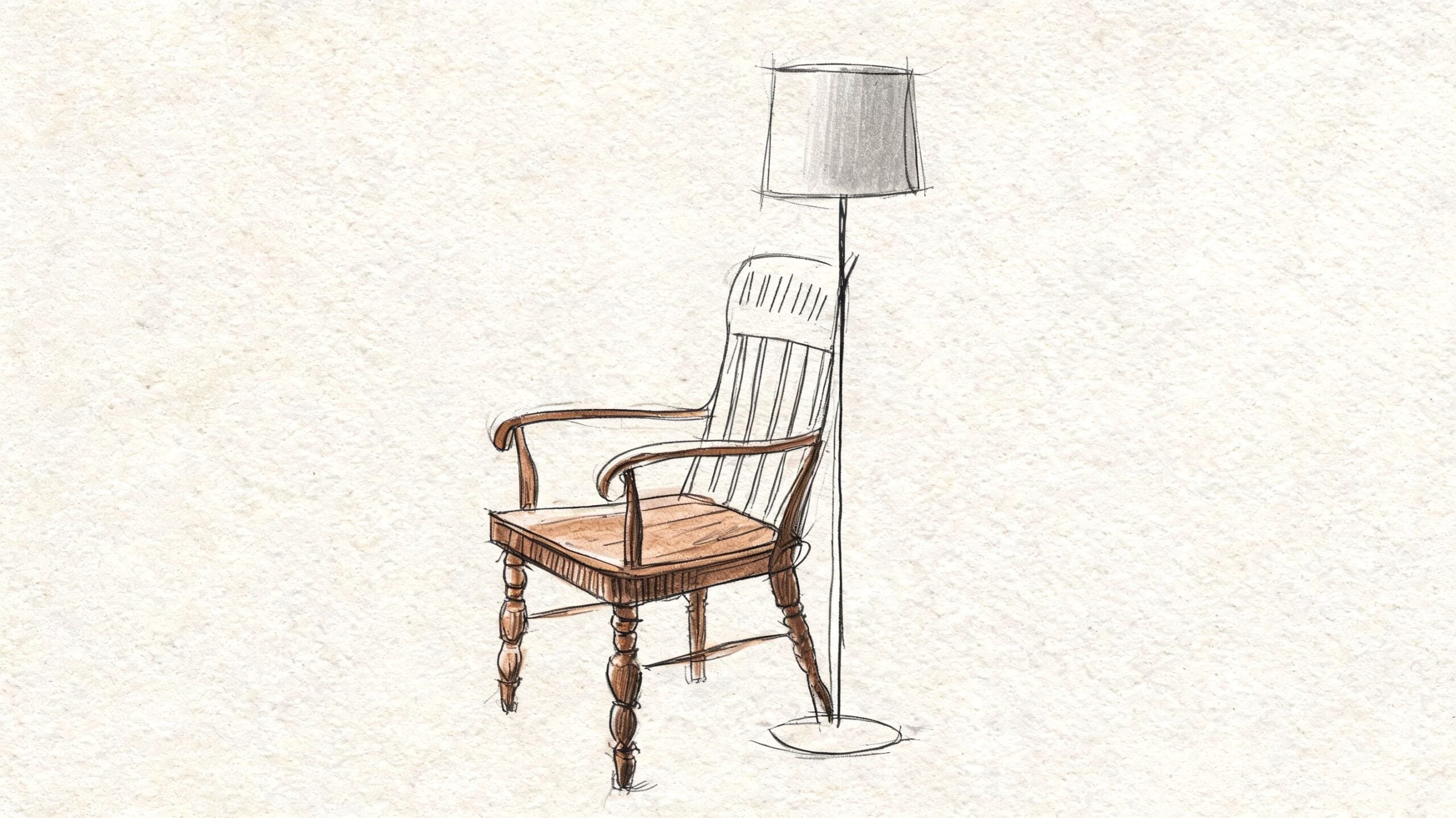
If every piece in a room is ornate, painted, and heavily styled, the space can start to feel staged. Balance is what keeps cottage charm from turning into costume. A spindle chair beside a simple floor lamp works because one piece brings personality and the other brings restraint.
That same idea applies across the room. A weathered dining table can sit comfortably under a clean-lined light fixture. A painted chest can live in a room with plain walls and modern art. If you want to see how that blend can look in practice, contemporary cottage style ideas offer a useful reference point.
A few combinations that work especially well
Try pairing opposites on purpose:
- Rustic wood with smoother metals for visual contrast
- Curved cottage upholstery with simpler tables to keep the room from feeling heavy
- Painted storage pieces with modern lighting so the space feels collected, not themed
The room doesn’t need to match. It needs to feel balanced.
That’s the key. Cottage style isn’t dated when you use it as one layer of your home, not the whole script. Keep the bones of the room simple, add texture where it matters, and let a few expressive pieces carry the charm.
How to Find Your Perfect Cottage Pieces
A family home in the Southwest has to do more than look charming. It has to stand up to dusty afternoons, busy school nights, weekend guests, and the kind of daily wear that comes from people living in it. That is why the best cottage pieces are not just pretty. They are comfortable, forgiving, and built for real use.
A better shopping question is, “Will this piece make everyday life easier and warmer at the same time?” That one question helps you sort through a crowded showroom much faster than color or trend alone.
A simple checklist for smarter shopping
Start with the bones of the piece. Cottage furniture usually has softened lines, gentle curves, and a relaxed shape that feels welcoming instead of stiff. If a chair looks lovely but feels formal or fussy, it may not give you the easy comfort that cottage style is known for.
Then look at the finish. In a Southwest home, that matters more than many shoppers expect. Painted wood, wire-brushed textures, and mid-tone finishes often hide everyday scuffs better than glossy dark surfaces. A piece that wears gracefully will stay attractive longer, especially in homes with kids, pets, or frequent visitors.
Use matters just as much as style. A dining table should handle homework and taco night as well as holiday meals. A coffee table may need rounded corners and storage. A bedroom chest should hold enough to keep the room calm, not crowded. If you are furnishing a sleeping space, this guidance on choosing bedroom furniture can help you focus on size, storage, and daily function before you buy.
Scale is another common stumbling block.
Cottage style should feel light and breathable, but that does not mean every piece has to be small. In many American Southwest homes, rooms are open and ceilings are taller than in older cottages. You may need one larger anchor piece, like a substantial sofa or bed, and then balance it with lighter side tables, open-leg seating, or a painted cabinet that does not feel visually heavy.
Flexibility often makes the difference between a room that photographs well and a room that serves a family well. Look for washable slipcovers, benches that can move from entry to dining table, and storage pieces that keep daily clutter from taking over. Cottage style works best when it supports the rhythms of ordinary life.
Affordability belongs in the conversation too. Many homeowners assume cottage style requires antique finds or a full-room makeover. It does not. You can build the look one dependable piece at a time, especially if you start with the items you use every day and mix them with what you already own.
Why seeing furniture in person still matters
Online shopping is helpful for gathering ideas, but cottage furniture is a hands-on category. The paint finish may be warmer than it looks on a screen. The seat cushion may feel firmer. The wood tone may pull more gray, cream, or honey once you see it in natural light.
For shoppers in Lubbock, Hobbs, and Ruidoso Downs, Miller Waldrop Furniture & Decor gives you a place to compare cottage-friendly options from brands such as Hooker, Flexsteel, La-Z-Boy, Ashley, Serta, and Beautyrest. That kind of side-by-side comparison helps families weigh comfort, durability, finish, and budget in one trip. It also helps when you need practical answers about custom fabrics, cleanable materials, or financing.
A good furniture store should feel a bit like having an experienced neighbor walk the room with you. Someone should be able to say, “This finish will hide wear better,” or “That chair is charming, but it may be too delicate for how your family lives.” That kind of guidance turns cottage style from a vague look into a home that works.
Shop for the life you live every day, then choose the pieces that bring softness and character to it.
Your home does not need perfect matching sets to feel settled. It needs furniture that welcomes people in, handles real use with grace, and brings a little comfort to ordinary days.