

Discover Your Ideal Distressed Dining Set


You’re probably trying to warm up a dining room that feels a little too new, a little too careful, or unfinished. The walls are painted. The floors are in. But the room still doesn’t feel like the place where birthdays, homework, holiday meals, and late coffee conversations are supposed to happen.
That’s where a distressed dining set earns its keep.
A good distressed table doesn’t look stiff or precious. It brings in texture, age, and a sense that your home has been lived in well, even if you moved in last month. Around West Texas and Southeastern New Mexico, that matters. Our homes work hard. We track in dust, host extra people, and need furniture that feels welcoming instead of fussy.
Some families want that look but assume they have to hunt antiques, spend a fortune, or wait years for a room to develop character on its own. You don’t. A thoughtfully chosen distressed set gives you that collected, storied feeling from day one.
Creating a Home with Heart and History
A family comes in all the time with the same concern. They’ll say their dining room looks “fine,” but not warm. They’ve got decent lighting, a clean layout, maybe even a rug they like. Yet the room still feels more like a pass-through than a gathering place.
Usually, the missing piece is texture and memory.
A distressed dining set helps because it doesn’t ask the room to be perfect. The softened edges, visible grain, and worn-looking finish make people relax. Kids don’t feel like they’re one dropped fork away from disaster. Guests lean in a little easier. The room starts acting like the center of the home.
That’s also why this look pairs so well with simple upgrades. If you’re refreshing the rest of the room without overspending, these 5 DIY home decor ideas on a budget to elevate your space can help you build around the table with practical touches that feel personal.
Why this style feels so inviting
Some furniture asks for admiration from across the room. Distressed furniture asks to be used.
That difference matters in real homes. A polished formal set can look beautiful, but it often creates distance. A distressed one creates ease. It says this room is for family dinners, game nights, and second helpings.
A dining room feels finished when the furniture looks like it belongs to the people living there, not to a display floor.
The story matters as much as the seat count
People often shop for dining sets by size first, and that’s smart. But they stay happy with a set because of how it makes the room feel.
A distressed finish gives even a newer home a sense of continuity. It suggests tradition without making the space feel old-fashioned. For families who want warmth, character, and durability in the same room, that’s hard to beat.
What Makes a Dining Set Distressed
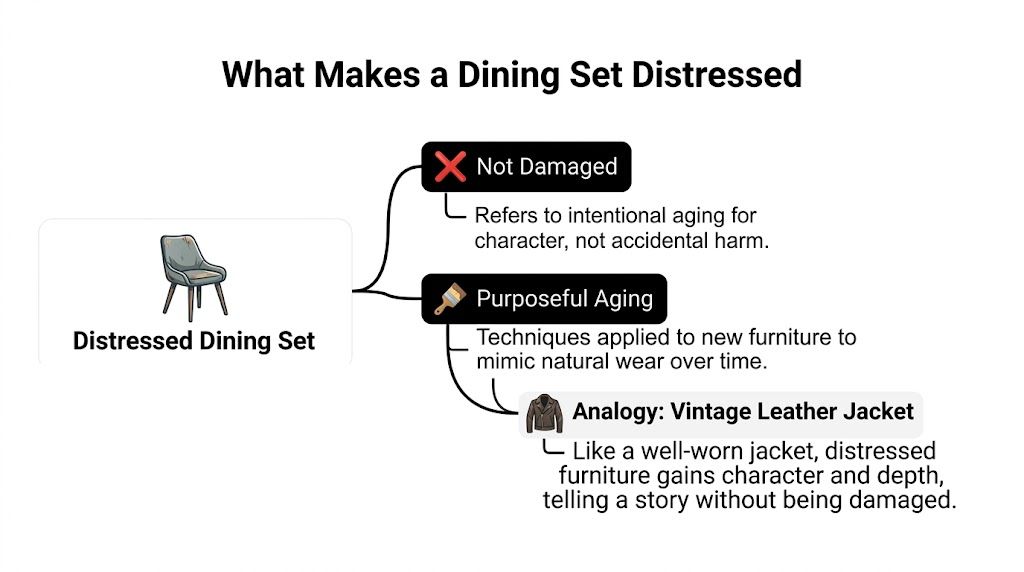
A distressed dining set isn’t damaged furniture. It’s furniture with intentional aesthetic aging built into the finish.
The easiest comparison is a broken-in leather jacket or your favorite worn jeans. They don’t look bad because they show texture. They look better because they do. Distressing works the same way on a dining table, chair frame, or bench. Makers use finishing techniques that create visual age, depth, and variation.
Distressed doesn’t mean antique
This often proves problematic for shoppers.
An antique is old. A distressed set is usually newer furniture designed to capture some of that visual history. The roots of that look go back to the rise of dedicated dining rooms and fixed dining sets in the 18th century, and many of today’s distressed pieces are made to mimic a 300-year-old patina without the cost or fragility of a true antique, as described in this history of antique tables and dining-room development.
Distressed isn’t the same as rustic
These words overlap, but they’re not identical.
Rustic usually refers to the overall style. Think heavier wood presence, simpler lines, farmhouse influence, and a more natural look. Distressed refers to the finish treatment. A table can be rustic without being distressed, and a more refined table can still have a distressed finish.
Here’s a simple way to sort it out:
- Antique means the age is real.
- Rustic means the style leans natural, sturdy, and informal.
- Distressed means the aged look is deliberate.
What the finish usually includes
Distressing can show up in several ways, often layered together:
- Hand-scraped texture creates uneven surface character that feels less factory-smooth.
- Rub-through areas let a base color, wood tone, or underlayer peek through on edges and corners.
- Weathered marks mimic years of gentle use, sunlight, and handling.
- Wire-brushing pulls softer grain away to make the wood pattern stand out more clearly.
Practical rule: If a finish looks relaxed and time-softened but the structure feels solid and intentional, you’re likely looking at distressing done correctly.
The appeal is simple. You get a set with history in its look, but everyday function in its construction.
Exploring Common Distressed Styles and Finishes
Not every distressed dining set says the same thing. Some feel airy and cottage-inspired. Others lean farmhouse, lodge, or industrial. The trick is learning to spot the finish language so you can name what you like before you shop.
Search behavior shows how much people want that flexibility. Recent trends show 35% year-over-year growth in searches for custom rustic furniture, with rising interest in sustainable, low-VOC distressing processes that can reduce emissions by up to 60%, according to this custom dining and finish trend overview. That tells me shoppers don’t just want “rustic.” They want the right version of rustic.
Whitewashed and light weathered finishes
These finishes brighten a room without losing texture. They work especially well in homes that need to soften darker floors, heavier beams, or warm wall colors.
You’ll usually see pale oak, sandy beige, gray-washed wood, or soft chalky tones. This look suits cottage, casual traditional, and desert-light interiors.
Two-tone farmhouse finishes
This is one of the most practical looks for local homes. A natural or weathered wood top sits over a painted base, often in black, cream, gray, or muted blue.
The contrast gives the piece shape. It also helps bridge styles, which is useful if your kitchen leans modern but you still want the dining area to feel grounded. You’ll see this look often in lines associated with brands homeowners recognize, including Ashley and Hooker.
Deeply scraped and heavier-aged finishes
These finishes have more visible saw marks, scraping, or dramatic grain emphasis. They tend to feel bolder and more architectural.
This style works well in homes with stone fireplaces, iron lighting, darker leather seating, or lodge-inspired details. It can also bring needed weight to an open-concept room where lighter furniture disappears.
Comparing distressing techniques
| Technique | Description | Best For (Aesthetic) |
|---|---|---|
| Hand-scraping | Irregular surface texture that suggests years of use | Farmhouse, rustic, heritage-inspired rooms |
| Wire-brushing | Removes softer grain for stronger wood pattern visibility | Modern farmhouse, casual transitional spaces |
| Whitewashing | Lightens wood while letting grain remain visible | Cottage, coastal, bright desert interiors |
| Rub-through finishing | Reveals undertones at edges and corners | Vintage, French country, collected interiors |
| Two-tone finishing | Combines painted and natural-looking surfaces | Modern farmhouse, transitional family homes |
What to notice in person
Color is only part of the story. Pay attention to how the finish behaves at the edges, on the legs, and across the top.
Some distressed finishes read soft and refined. Others are intentionally rugged. If you run your hand over the top and it feels visually interesting without seeming rough or neglected, you’re in a good zone.
The best distressed finishes look edited, not accidental.
How to Choose Your Perfect Distressed Dining Set
A dining set can be beautiful and still be wrong for your house. Practical decisions then save you from buyer’s remorse. Start with the way your family lives, then work outward into style.
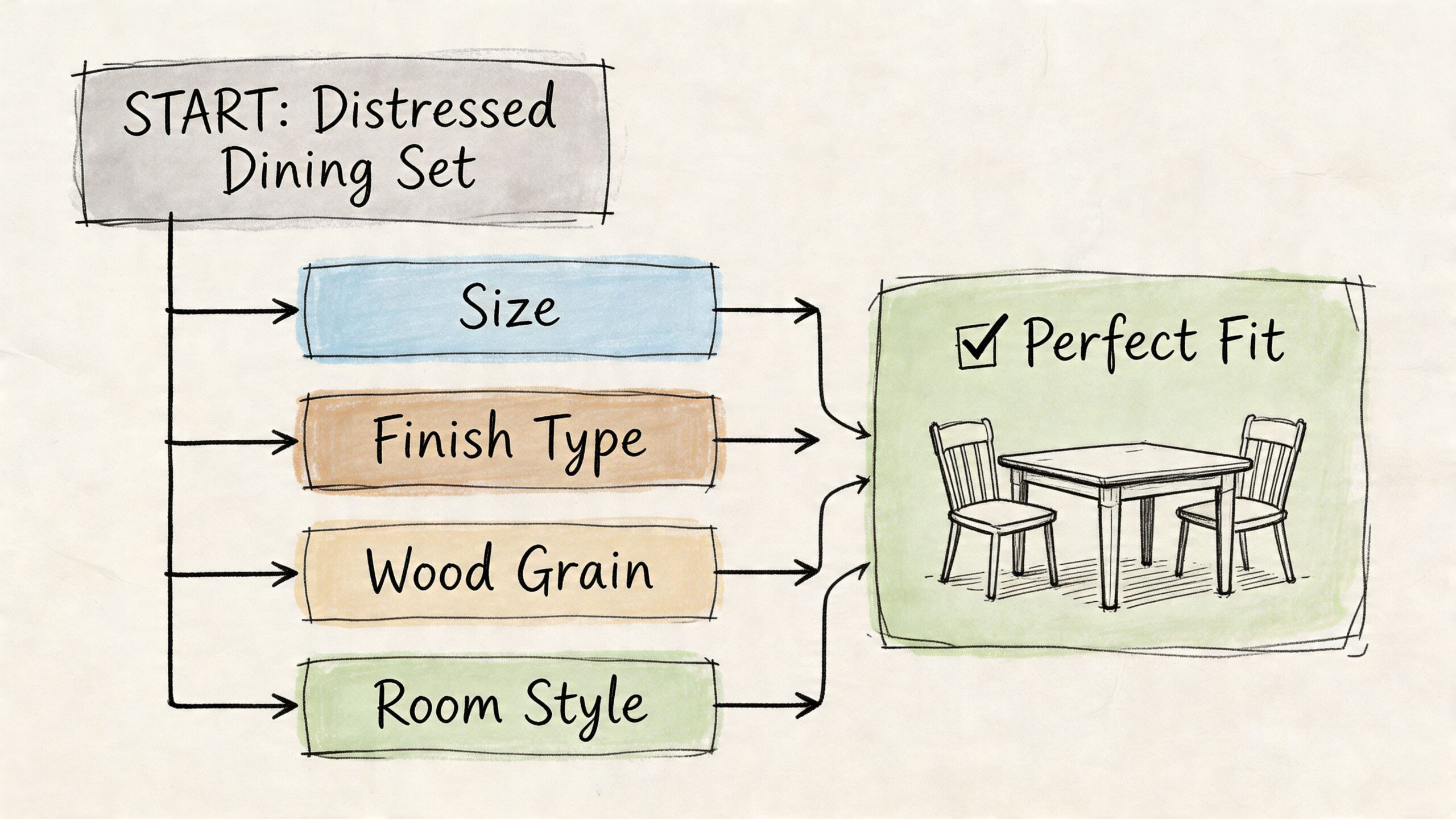
Start with room shape and daily use
If your dining room is narrow, a heavy rectangular table with bulky chairs can make the whole space feel pinched. If your room is square or part of an open kitchen layout, a round table often makes movement easier and conversations more natural.
For families comparing shapes, a round dining set option can be a useful reference point because it shows how softer lines change the feel of the room. Round sets often work especially well in breakfast areas, smaller dining rooms, and homes where traffic needs to flow around the table.
Ask yourself:
- How many people eat here most days. Don’t shop only for holidays.
- Do you need extension capability. A table that grows occasionally can serve you better than one that feels oversized all year.
- Will kids use this daily. If yes, focus on forgiving finishes and sturdy chair frames.
Choose the top material with your climate in mind
Material matters more with distressed finishes because the surface has intentional texture.
A key consideration is durability. Solid wood tops offer the most visual authenticity, but they need protective finishes so moisture doesn’t settle into the grain created by distressing. Engineered veneer surfaces offer stronger resistance to cracking in the fluctuating humidity common to West Texas and Southeastern New Mexico, as explained in this product specification discussion of distressed surface construction.
That doesn’t make veneer “cheap,” and it doesn’t make solid wood automatically better. It means each one solves a different problem.
Pay attention to the base, not just the top
Shoppers often begin by considering tabletop shape and finish first. I always want them to look down next.
The base affects stability, legroom, and how forgiving the table will be if your floors aren’t perfectly level. Trestle bases distribute weight across two primary points and need a more level floor. Four-leg designs spread the load across four points and reduce stress on the joints by 60 to 70%, making them more tolerant of slight floor variation, according to this breakdown of dining table base architecture.
That matters around older homes, remodeled homes, and mountain-area properties where floors don’t always behave perfectly.
Here’s the quick trade-off:
- Trestle base brings farmhouse presence and often easier chair placement on the long sides.
- Four-leg base tends to be simpler, steadier on imperfect floors, and easier for everyday use.
- Counter-height base changes the room’s feel, but make sure it fits how your family dines.
If your floor has even a slight wobble issue, don’t ignore it in the showroom. The right base can save frustration later.
Match the finish to your tolerance for upkeep
Some people love every nick and shift a table picks up over time. Others want the distressed look but still want the surface to stay consistent. Be honest about which camp you’re in.
A lightly distressed finish often blends into more homes and is easier to live with if you don’t want the room to skew too rustic. A heavily distressed finish hides daily evidence of busy family life better, but it also makes a stronger style statement.
Think about the whole seating mix
You don’t have to buy a perfect matchy-matchy set to make a room feel finished.
Try these combinations:
- Wood chairs all around if you want a classic farmhouse look.
- Upholstered end chairs if you want more softness and a slightly dressier feel.
- Bench seating on one side if your household includes kids or frequent overflow guests.
A distressed dining set works best when it fits your habits first and your inspiration board second.
Styling a Distressed Set for a West Texas Home
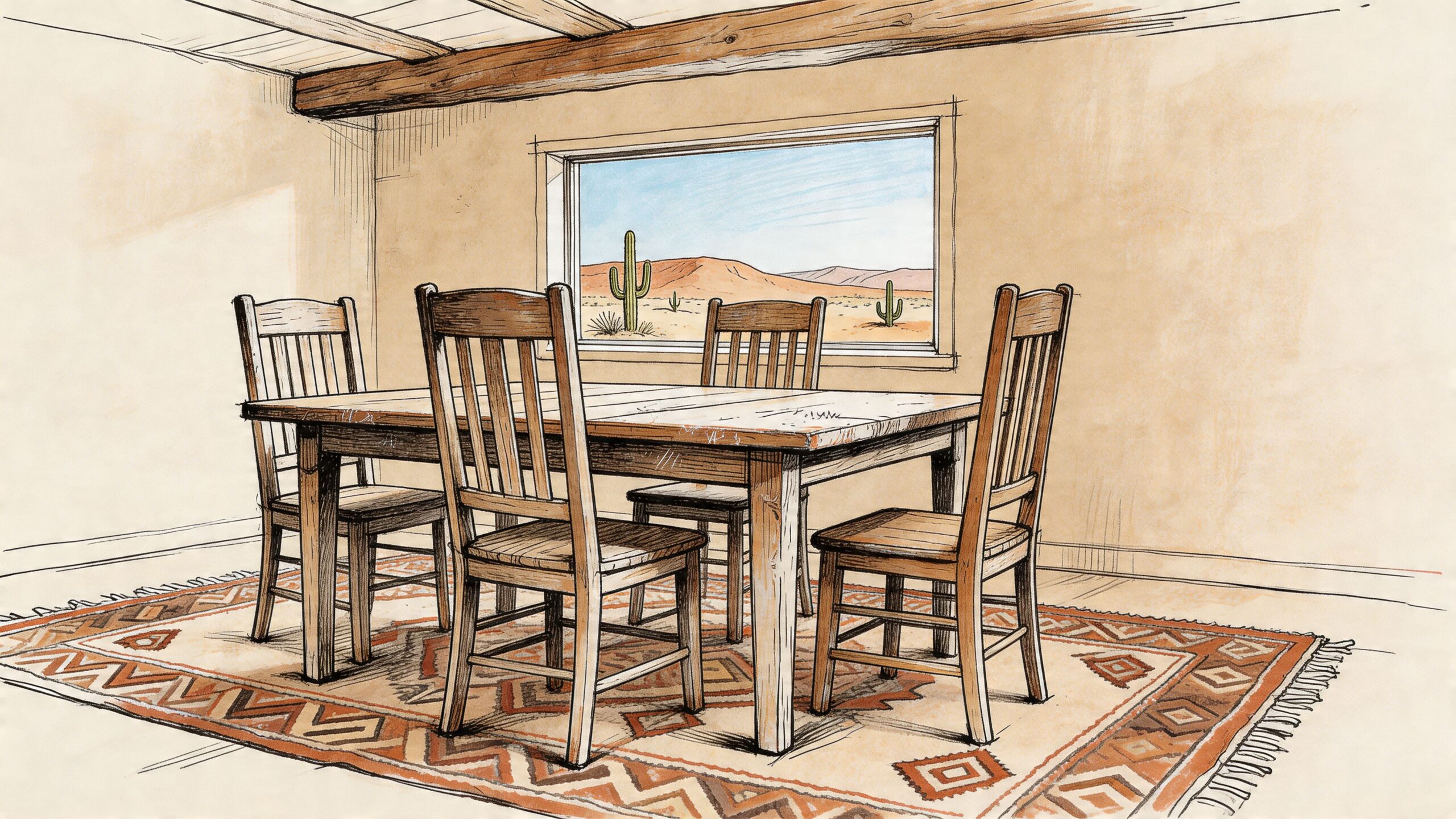
The reason distressed furniture works so naturally here is simple. Our surroundings already teach the eye to appreciate texture. Weathered wood, dry grasses, stone, leather, woven fabrics, iron, and sun-washed color all belong in the same conversation.
A distressed dining set doesn’t fight that environment. It joins it.
Pull color from the land around you
Start with tones that already make sense in Lubbock, Hobbs, or Ruidoso Downs. Sand, clay, smoke, saddle brown, muted sage, charcoal, and off-white all play well with distressed wood.
If your table has a lighter weathered top, ground it with darker chairs or a deeper rug. If the table is heavy and dark, lighten the room with upholstered seating, linen curtains, or pottery in chalkier tones.
For readers gathering ideas beyond residential spaces, these general interior design ideas can be surprisingly helpful for thinking about mood, texture, and how materials work together in rooms meant for gathering.
Mix textures instead of matching everything
The room gets richer when every surface doesn’t say the same thing.
Try combinations like these:
- Leather and distressed wood for warmth and structure
- Linen seats and a scraped tabletop for softness against grain
- Black iron lighting with a weathered base for contrast
- Handmade pottery and woven runners for local character
This is also where floor layering matters. The right rug softens chair movement, frames the table, and keeps a distressed finish from feeling visually adrift. If you’re unsure about proportions, this guide on how to choose a dining room rug size under your table can help you sort out scale before you buy.
Let durability shape your styling choices
Not every distressed top behaves the same way in our climate. As noted earlier, solid wood tops bring authentic grain and texture, but they need a good protective finish so moisture doesn’t settle into distressed low points. Engineered veneer surfaces handle regional humidity swings more easily, which can make them a smart fit for homes dealing with seasonal shifts, active family use, or less predictable indoor conditions.
That practical side should shape your styling.
If you choose solid wood, use placemats, coasters, and a centerpiece that doesn’t trap moisture underneath. If you choose veneer, you may have more flexibility for a busy breakfast-area setup where the table sees constant action.
A room feels regional and timeless when the materials look like they belong there, not when every item matches.
Caring for Your Set in Our Unique Climate
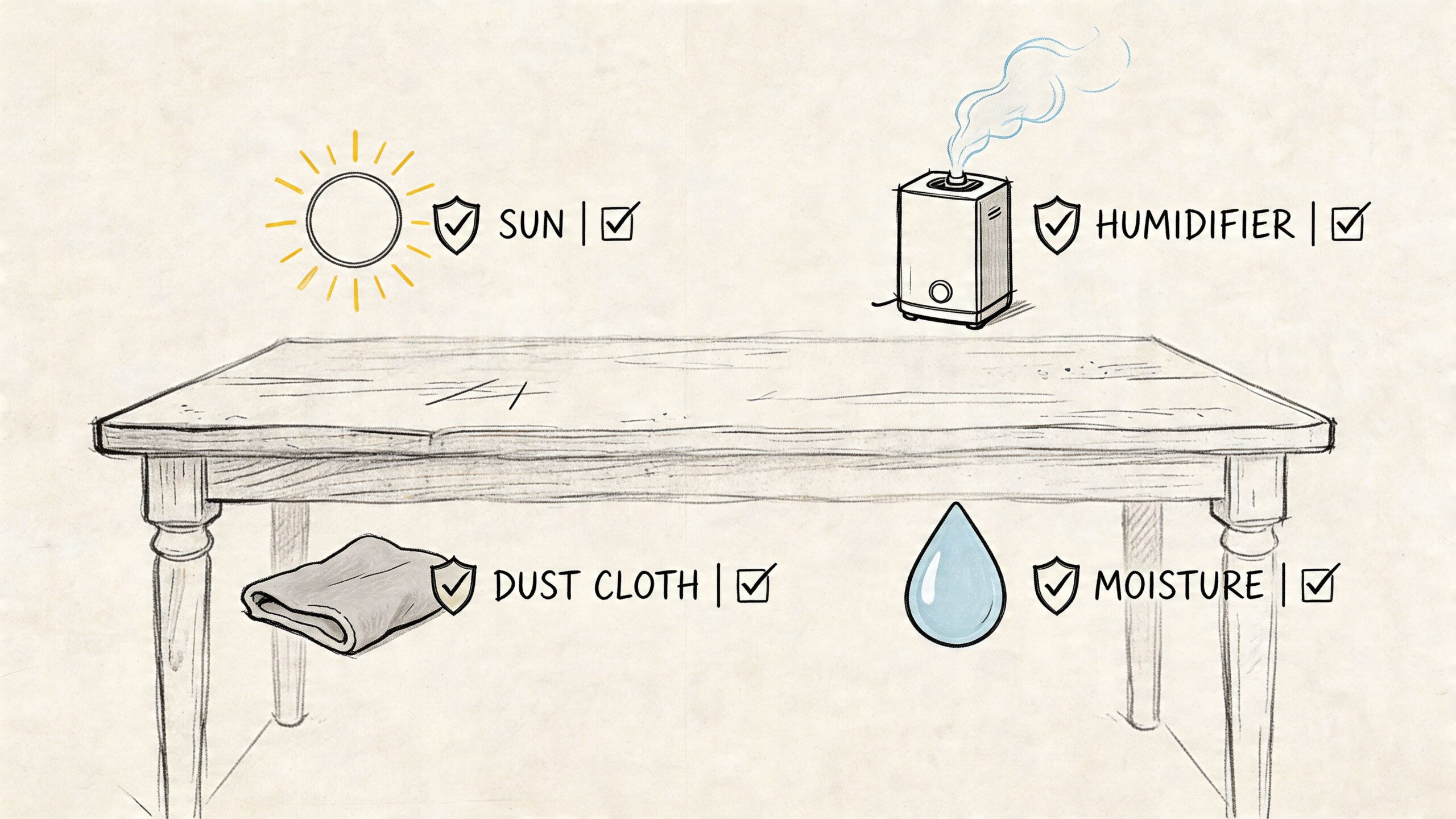
West Texas and Southeastern New Mexico are hard on furniture in ways many decorating articles ignore. Fine dust settles into textured surfaces. Air swings from dry to damp. Sunlight is strong. And distressed finishes, by their nature, have more visual texture to protect.
That’s why care matters from the start.
What local owners should watch for
Data shows that distressed furniture sets in arid climates with high dust and variable humidity can have 25% higher refinishing needs than in other regions, according to this discussion of rustic rough-sawn furniture care challenges. The good news is that careful routine maintenance goes a long way.
The biggest trouble spots are usually the tabletop, edge wear, and any distressed grooves that collect dust or hold moisture longer than a perfectly smooth surface would.
A simple care routine that works
You don’t need anything fancy. You need consistency.
- Dust gently and often with a soft, dry cloth so grit doesn’t act like sandpaper.
- Wipe spills quickly because distressed low spots can hold liquid longer than you think.
- Use coasters and placemats for cold drinks, hot dishes, and anything acidic.
- Rotate decor pieces so one covered spot doesn’t age differently from the surrounding finish.
- Keep the table out of harsh direct sun when possible, especially near large west-facing windows.
When solid wood needs extra attention
If your distressed dining set has a solid wood top, conditioning and finish protection matter more. Homes with strong HVAC cycles, dry winters, or frequent door opening can dry wood unevenly.
A practical next step is reviewing a dedicated wood-care guide like how to care for wood furniture so you can match cleaning methods to the finish on your table. That’s especially useful if your set mixes wood, veneer, upholstery, and painted elements.
Gentle care preserves the character you paid for. Aggressive scrubbing strips it away.
Find the Set That Tells Your Family's Story
Saturday supper is on the table. Somebody sets down a cast iron dish a little too hard, a grandkid drags a chair instead of lifting it, and dust from a windy West Texas afternoon still lingers near the back door. A good distressed dining set should live through all of that with grace and still look like it belongs in your home.
That is what makes this choice so personal.
The right set brings a sense of history to a newer house and gives an older home a steady gathering place. In West Texas and Southeastern New Mexico, that matters. Our homes work hard. They host weeknight meals, holiday pie, after-church lunches, homework, and long visits over coffee. A distressed finish fits that kind of life because a little character on the surface keeps everyday wear from feeling like damage.
Still, the best set for your family is not only the one with the prettiest finish. It is the one that suits your room, your routines, and the way your people gather. A dining table works like a good pair of ranch boots. It needs to look right, feel right, and hold up under real use.
Keep these questions in mind while you shop:
- Will the size leave enough room to pull out chairs and walk comfortably around the table
- Will the materials hold up well in a dry climate, strong sun, and regular HVAC use
- Will the table base and chair construction feel steady during daily use
- Will the finish still feel true to your home five or ten years from now
If possible, see the set in person before you decide. Photos can show color, but they rarely show the depth of the wood grain, the softness of a rubbed edge, or the difference between a finish that feels natural and one that feels forced. Your eyes catch that. Your hands confirm it.
Miller Waldrop Furniture & Decor can help you compare table sizes, finish textures, wood tones, and seating options so you can choose a distressed dining set that fits your family now and keeps serving your home well for years.