

How Long Should Furniture Last? An Essential Durability Guide

"How long should furniture last?" It’s a simple question with a not-so-simple answer. While a quality piece should serve you for many years, the exact lifespan can vary wildly. A well-built sofa, for example, might last 7 to 15 years, but a solid wood dining table could easily see you through over 40 years. Then there's your mattress, which typically provides its best support for about 8 to 10 years.
Your Quick Guide to Furniture Lifespan
Buying furniture is a big deal. It's a real investment in your home and your family's comfort, so you deserve to know what you’re getting for your money. Learning the typical lifespan of different pieces is the first step to becoming a smart shopper, helping you tell the difference between a short-term fling and a piece that will be with you for decades.
Think of it as setting a benchmark for quality and value. When you know what to expect, you can plan your budget, make choices with confidence, and truly see the long-term worth of the items you bring into your home. It’s about much more than a price tag—it’s about years of reliability, comfort, and style.
Decoding Durability Benchmarks
Different types of furniture are built for different lifespans, and that comes down to what they're made of and how much wear and tear they face every day. A mattress, for instance, generally lasts about 8–10 years before it starts losing its supportive qualities. Upholstered pieces like sofas and armchairs usually give you a good 7–15 years of service.
On the other end of the spectrum, solid wood furniture—think dressers, bookcases, and dining tables—can be true heirlooms, lasting anywhere from 15 to over 40 years. In stark contrast, you have flat-pack or particleboard items, which typically have a much shorter life of around 3–10 years. If you're curious, you can dive deeper into furniture industry statistics to see how these trends play out in the market.
To give you a clearer picture, here's a quick look at what you can generally expect from common household items.
Expected Lifespan of Common Furniture
This table summarizes the typical lifespan ranges for different types of household furniture, assuming normal use and proper care.
| Furniture Type | Typical Lifespan |
|---|---|
| Mattress | 8–10 years |
| Sofa | 7–15 years |
| Dining Table (Solid Wood) | 15–40+ years |
| Dresser (Solid Wood) | 15–30+ years |
| Bookshelf (Solid Wood) | 20–50+ years |
| Coffee Table | 5–20 years |
| Office Chair | 5–10 years |
| Flat-Pack/Particleboard | 3–10 years |
As you can see, the materials and intended use make a huge difference. This is why paying attention to construction quality is so important when you're shopping.
The chart below gives a great visual summary of these lifespan ranges for some of the most common pieces in any home.
The massive difference in durability really drives home why it's so critical to understand what you're buying.
Key Takeaway: Furniture isn't just a purchase; it's a long-term relationship. Knowing how long that relationship should last helps you choose a partner that won't let you down.
When you’re ready to find pieces that match your expectations for both style and longevity, you'll find the tools you need right here. Here’s how you can explore our collection of durable and stylish living room furniture to furnish your home with confidence, knowing you’ve made a choice that will bring you comfort and joy for years to come.
What Determines How Long Furniture Lasts?
Ever wondered why one sofa can handle a decade of family movie nights, while another starts to sag and creak in just a few years? It’s not a matter of luck. The real answer lies in a powerful trio of factors: the materials used, the quality of its construction, and how it’s used in your home day-to-day.
Think of yourself as a furniture detective. Once you understand these three pillars, you can spot the difference between a piece built for the long haul and one designed for a much shorter stay. It’s all about looking past the surface to see the hidden signs of quality that promise years of reliable service.
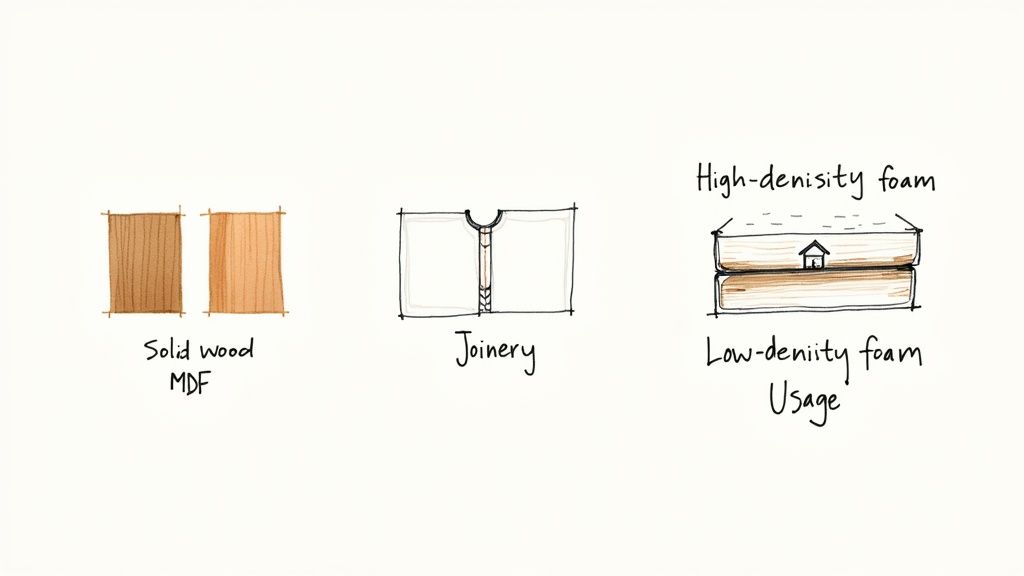
This knowledge changes the game. You go from being a passive buyer to an informed investor, ready to choose pieces that can truly stand up to your life.
The Foundation: Materials Matter Most
At the end of the day, the single biggest factor in a piece's lifespan is what it's made of. Just like building a house, a strong foundation is everything.
Solid wood is the undisputed champion of longevity. Woods like oak, maple, and cherry have incredible natural strength. Better yet, they can be sanded and refinished multiple times, giving them a fresh start over and over again.
On the other hand, you have engineered woods like particleboard and Medium-Density Fiberboard (MDF), which are essentially wood scraps and resin pressed together. They’re certainly more affordable, but they are far more vulnerable to moisture, can sag under weight, and just don't have the structural integrity of solid wood.
A Quick Analogy: Think of furniture materials like car engines. A solid wood frame is like a powerful, high-performance engine built to go for hundreds of thousands of miles. An MDF frame is more like a small economy engine—it gets the job done for a while, but you can't expect the same kind of long-term performance.
This same idea applies to your upholstered furniture, too. The type of fabric, the density of the foam inside the cushions, and the frame material all work together to determine how long that sofa or chair will last.
The Craftsmanship: How It’s All Put Together
Great materials are just one part of the equation. How those materials are assembled—the construction—is what separates a wobbly table from a family heirloom. It’s the craftsmanship that turns good materials into a great piece of furniture.
Pay attention to the joinery. Techniques like dovetail and mortise-and-tenon joints create incredibly strong, interlocking connections that hold firm for decades. Cheaper furniture often relies on just staples, glue, and screws, which can loosen and fail over time, leading to that dreaded wobble.
For sofas and chairs, the construction details are just as critical.
- The Frame: A kiln-dried hardwood frame is the gold standard. This process removes moisture, preventing the wood from warping or cracking down the road and providing a stable skeleton for the whole piece.
- The Springs: An 8-way hand-tied spring system is a hallmark of high-end seating, offering incredibly balanced and durable support. Sinuous springs can also be a good, durable option, but only if they’re made from heavy-gauge steel.
- The Cushions: High-density foam cushions hold their shape far longer than the low-density stuff, which prevents that dreaded "sinking" feeling you get in a worn-out sofa.
The fabric choice is another major player. A durable, tightly woven fabric will naturally resist pilling and tearing. You can become an expert on how different textiles hold up with our complete guide on everything you need to know about upholstery materials. It will give you the power to choose the perfect fabric for your family's lifestyle.
The Reality: How You Live with Your Furniture
Finally, how you treat your furniture makes a huge difference. Your home isn't a museum showroom; it's a space for living. The demands you put on your furniture will absolutely affect its lifespan.
A sofa in a busy family room with kids and pets will endure far more stress than a formal armchair that’s rarely sat in. A dining table that hosts daily meals, homework sessions, and craft projects will show wear much faster than one reserved only for holiday gatherings.
Be realistic about your own lifestyle:
- High-Traffic vs. Low-Traffic: Furniture in the main living areas will naturally wear out faster.
- Kids and Pets: Spills, scratches, and climbing can take a serious toll on any piece.
- Sunlight Exposure: Direct sun will fade fabrics and can dry out and damage wood and leather over time.
By understanding these core pillars—materials, construction, and use—you gain the power to truly judge furniture quality for yourself. You can look at a dining set or a sofa and see beyond the price tag, recognizing the subtle signs that tell you whether it’s a fleeting trend or a lasting treasure.
How to Choose Furniture That Is Built to Last
You don't need to be a furniture-making expert to spot a piece that will stand the test of time. Think of it like this: with a little insider knowledge, you can become the hero of your own home, confidently identifying quality and making smart investments that pay off for years to come. This is your toolkit for learning how to inspect furniture like a pro.
Shopping for furniture should be fun, not a pop quiz you're afraid to fail. Once you know what to look for, you can walk into any showroom and feel confident that you're choosing pieces truly built for the long haul.
Start with the Skeleton: Frame and Joinery
The absolute foundation of any great piece of furniture is its frame—its skeleton. If the frame is weak, nothing else matters. You can do a quick, telling "wobble test" right there on the showroom floor.
Gently push on the corners of a sofa, chair, or table. Lift one corner slightly. Does it feel solid, heavy, and unyielding? Or does it creak, twist, or wobble? If a piece feels surprisingly light or racks easily, that’s a major red flag. It likely means the frame is made from cheap particleboard and held together with little more than staples and glue.
Next, get curious about the joinery—how the pieces of wood are connected. For any wood furniture, this is where craftsmanship really shines.
- Dovetail and Mortise-and-Tenon Joints: These are classic, interlocking wood joints that have been used for centuries for one simple reason: they create incredible strength. Seeing them is a sure sign of quality.
- Reinforced Corners: Peek underneath or behind the piece. You should see corner blocks that are both glued and screwed into place. This detail adds a huge amount of stability to the frame.
These are the small things that separate a piece that lasts 5 years from one that lasts 25.
Look Deeper: Upholstery and Cushions
For sofas and chairs, what’s on the inside is just as important as the frame. You'll feel the difference in the cushions and fabric every single day.
First, take a seat. Does it feel truly supportive, or just mushy? High-density foam is the gold standard for cushions because it holds its shape and provides real comfort year after year. Low-density foam might feel soft and inviting at first, but it will flatten and sag in no time, leaving you with a lumpy, uncomfortable mess.
Now, lean in and examine the fabric. The material itself is crucial, and a good guide on choosing the right upholstery fabric can make all the difference. Check for tight, even stitching with no loose threads. If there’s a pattern, does it line up perfectly at the seams? That alignment is a subtle but clear sign that a skilled artisan took their time.
Pro Tip: If you can, unzip a seat cushion. A quality cushion will have its foam core wrapped in fiber or down. This adds comfort and helps the cushion last longer. It’s a simple check that gives you a direct look at what you’re paying for.
Don't Be Shy—Ask the Right Questions
Finally, be your own best advocate. A good salesperson at a reputable store will be happy to answer your questions. Don't be afraid to ask for specifics—it shows you're a serious buyer.
Here are a few key questions to have in your back pocket:
- Frame Material: "Is the frame made of solid hardwood, or is it engineered wood?" Kiln-dried hardwood is what you want to hear.
- Spring System: "What kind of springs does this sofa use?" An 8-way hand-tied system is the best you can get, but sinuous springs made from heavy-gauge steel are also a solid, durable choice.
- Cushion Density: "What's the density rating of the foam in these cushions?" You're looking for high-density foam to avoid sagging seats.
- Warranty Details: "What, specifically, does the warranty cover and for how long?" Ask about the frame, springs, and upholstery separately, as they often have different coverage periods.
Choosing well also means planning for the future. For instance, if you fall in love with a beautiful wood dining table or dresser, knowing how to care for it is just as important as its construction. Our guide on how to care for wood furniture has valuable tips to keep your investment looking gorgeous for a lifetime.
By going in with this checklist, you’re no longer just a shopper; you’re an informed buyer. You’ll be able to spot the true hallmarks of quality and choose pieces that will become a beloved part of your family’s story for years.
Extend the Life of Your Furniture with Proper Care
Bringing a new piece of furniture home is just the beginning of its story with your family. How you care for it from day one will make all the difference in how long it lasts. The good news is, with a few simple habits, you can protect your investment and keep your furniture looking and feeling great for years to come.
Think of it less like a list of chores and more like a routine for preservation. A little consistent attention is the secret weapon for turning a nice purchase into a family heirloom.
Upholstery and Fabric Care Essentials
Your sofas and chairs are the MVPs of daily life, which means they need a bit of TLC to stay in the game. Making these simple tips part of your regular routine can stop premature wear and tear in its tracks.
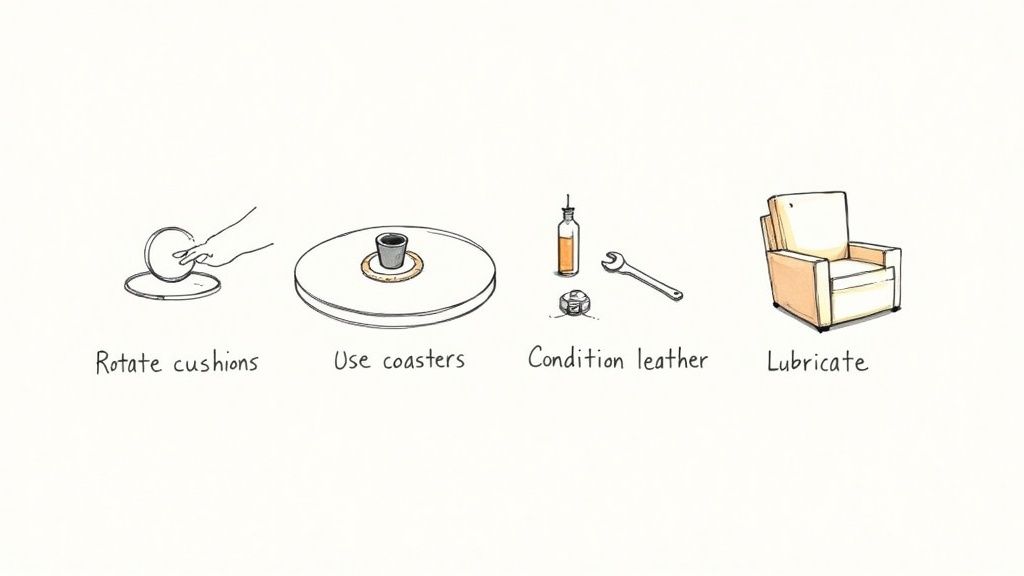
- Rotate and Fluff Cushions Weekly: This is probably the single most effective thing you can do. Flip and rotate your seat and back cushions to ensure they wear down evenly. This prevents those dreaded body-sized dents and keeps everything looking plump and inviting.
- Vacuum Regularly: About once a month, use a soft brush attachment to gently vacuum your upholstery. This lifts away all the dust, crumbs, and pet dander that can act like sandpaper on the fabric fibers over time.
- Tackle Spills Immediately: When a spill happens, speed is everything. Blot it with a clean, dry cloth right away. Whatever you do, don't rub—that just grinds the stain deeper into the fabric. Always check your furniture's cleaning code tag (W, S, W/S, or X) to see which cleaning solutions are safe to use.
Protecting Wood and Hard Surfaces
Solid wood furniture has the potential to last for generations, but it’s not invincible. Moisture, heat, and sunlight are its main enemies, but thankfully, they’re easy to manage.
A coaster might seem small, but it’s a powerful tool. Using them consistently prevents those ugly white moisture rings and protects the wood’s finish from hot mugs. The same goes for placemats and trivets on your dining table.
Sunlight is another silent offender. Its UV rays can fade the finish and dry out the wood, eventually leading to cracks. Try to place your most treasured wood pieces out of direct, intense sunlight. If you can’t, just use curtains or blinds to soften the light during the sunniest hours of the day. For bigger jobs, learning about refinishing wood furniture can be a game-changer for bringing an old piece back to life.
Key Insight: Dusting isn't just about keeping things clean; it’s a form of preservation. Dust particles are surprisingly abrasive and can create thousands of micro-scratches on a wood finish, making it look dull. A quick wipe with a soft, lint-free cloth keeps that from happening.
Specialized Care for Leather and Recliners
Some pieces just need a little extra know-how. Leather, for instance, is a natural material that needs moisture to stay healthy and avoid getting brittle.
Think of it like your own skin—if it gets too dry, it can crack. To prevent this, you should condition your leather furniture every 6 to 12 months with a product made specifically for upholstery. It’s a simple step that restores the natural oils and keeps the leather feeling soft and luxurious. Our guide on how to protect leather furniture gives you all the expert tips you’ll need to do it right.
And don't forget about mechanical pieces like recliners. If you start to hear squeaks or feel grinding, it’s time for a check-up. A quick spray of a silicone-based lubricant on the joints and mechanisms will keep everything moving smoothly and silently.
By adopting these straightforward habits, you become the best guardian of your furniture's future, ensuring every piece continues to bring comfort and style to your home. And if you ever have a question about caring for a specific item, our team at Miller Waldrop is always here to help you protect the furniture you love.
Recognizing When It’s Time for a Replacement
It can be tough to know when to say goodbye to an old piece of furniture. Is that squeaky sofa just settling in, or is it a cry for help? Figuring this out is about more than just looks—it’s about keeping your home safe, comfortable, and functional.
Learning to spot the real warning signs lets you make smart, timely decisions. You'll be able to look past a few cosmetic scuffs and see the problems that actually matter, like a sagging frame that’s wrecking your back or wobbly chair legs that are just an accident waiting to happen. Furniture isn’t meant to last forever, and understanding its natural lifecycle is part of creating a home you love living in.
What Your Furniture Is Trying to Tell You
Your furniture has its own way of communicating when it’s on its last legs, and it's rarely subtle. That armchair that was once your silent, sturdy friend might now groan every time you sit down. A bookshelf that felt rock-solid might now sway when you walk past it. These aren’t just minor annoyances; they're symptoms of bigger issues.
The absolute most important thing is structural integrity. Keep an eye out for these tell-tale signs:
- Wobbling or Instability: If a table or chair feels shaky even after you’ve tightened every screw you can find, its joints are probably giving out. That’s a major safety risk.
- Noticeable Sagging: A droopy sofa cushion is one thing, but when the entire frame starts to bow, it’s a clear sign the springs or internal structure have failed. The same goes for bookshelves or dressers that are starting to dip under the weight.
- Cracks or Splits in the Wood: Surface-level scratches are just part of life. Deep cracks in the frame, legs, or other support areas, however, mean the piece’s very foundation is compromised.
These kinds of problems are often incredibly difficult or expensive to fix, especially on more affordable furniture. When the skeleton of the piece is broken, a replacement is almost always the smarter, safer bet.
When Comfort and Function Are Gone
Beyond basic safety, ask yourself if your furniture is still doing its job. Is your favorite armchair still the comfortable escape it used to be? Or has your mattress started giving you more aches and pains than a good night's sleep?
Functionality is a dead giveaway. A recliner that won’t recline smoothly, drawers that constantly stick or fall off their tracks, or dining chairs that feel too unsteady to sit on comfortably are all signs that a piece has run its course. And don't forget about smells—if you have upholstery with a funky odor that just won't go away after a deep clean, it could be a sign of mildew or bacteria deep inside the fibers, which is a health concern you don't want to ignore.
A piece of furniture’s job is to provide comfort, support, and utility. When it consistently fails to do any of those three things, it has reached the end of its useful life, regardless of how it looks.
This ongoing need for replacement is a huge part of what drives the home furnishings industry. The global furniture market was valued at an estimated USD 568.6 billion in 2024 and is expected to keep growing. This reflects the constant demand from people buying their first homes and those who are simply in this natural replacement cycle. As you’d guess, less expensive items get replaced more often—typically every 3–7 years—while high-quality pieces can last for 10–30+ years. You can dig into more of the data on these global furniture market trends to see how these cycles shape the industry.
Making the Decision with Confidence
Choosing to replace a piece of furniture isn’t a failure; it’s an opportunity to bring new comfort and style into your home. It’s your chance to find something that not only looks fantastic but also perfectly suits how your family lives right now.
When you're ready to start looking for options that combine timeless design with real durability, we can help equip you with the perfect solution. Here’s how you can find the ideal replacement in our incredible collection of comfortable and supportive mattresses. Let us help you bring a little more safety, comfort, and peace of mind back into your home.
Common Questions About Furniture Longevity
You've got questions, and when you're making a big investment in your home, you deserve straight answers. It's easy to get tangled up in the details of warranties, repairs, and materials. Our goal here is to give you the practical knowledge you need to feel confident in your decisions.
Think of this as your personal guide for those nagging furniture questions. Whether you're trying to squeeze a few more years out of a budget find or deciding if that old armchair is worth saving, these answers will help you care for what you have and shop smarter for what's next.
Can I Make Inexpensive Furniture Last Longer?
You absolutely can. It's true that furniture built from materials like particleboard isn't designed to last a lifetime, but how you treat it makes all the difference. With a little care, you can push a piece toward the higher end of its typical 3-10 year range.
The trick is to start on day one. When you're putting it together, make sure every single screw and fastener is good and tight. A solid, stable structure is your best defense against wear and tear. From there, it’s all about daily habits:
- Don't Overload It: Pay attention to how much weight you're putting on shelves and surfaces. This prevents bowing and puts less stress on the joints.
- Protect the Finish: Coasters and placemats are your best friends. Particleboard's kryptonite is moisture—once it gets wet and swells, there's no going back.
- Wipe Up Spills Immediately: Grab a dry cloth and blot up any liquid right away. The goal is to stop moisture from seeping into the core material.
- Choose Its Spot Wisely: If possible, keep the piece out of high-traffic zones and away from direct sunlight, which can fade the finish over time.
Following these simple rules can easily add several years of life to an affordable piece of furniture.
Does a Longer Warranty Mean Better Quality Furniture?
A long warranty is definitely a good sign—it shows the manufacturer stands behind their work. But it should never be the only thing you look at. The real story is always hiding in the fine print.
You have to read what the warranty actually covers. So many are "limited," meaning they’ll cover a manufacturing defect in the frame but specifically exclude "normal wear and tear." That means the fabric, foam cushions, and reclining mechanisms are often left out. A 10-year frame warranty is fantastic, but if the upholstery is only covered for one year, you’re on your own when the fabric starts to pill or fade.
Think of a warranty as just one piece of the quality puzzle. The best bet is always a combination of a solid warranty, great materials you can see and touch, and craftsmanship that looks and feels sturdy.
Use the warranty as a guidepost, but let your own hands-on inspection of the piece be the final judge.
Is It Better to Repair or Replace Old Furniture?
Ah, the classic dilemma. The right answer really comes down to three things: the furniture's initial quality, how bad the damage is, and its sentimental value.
If you've got a high-quality piece with a solid hardwood frame, repairing it is almost always a great investment. Reupholstering a well-built sofa or refinishing a solid wood table can give it a whole new look, often for less than you'd spend on a new piece of similar quality. It’s also a wonderful way to preserve great craftsmanship.
On the other hand, if a budget-friendly item made from particleboard has structural damage—like a cracked frame or a top that's badly warped—the cost to fix it will probably be more than the piece is even worth. In that scenario, replacement is the smarter financial move. And finally, never underestimate sentimental value. If a piece is a family heirloom you adore, its emotional worth might make any repair worthwhile, no matter the cost.
How Does Climate Affect Furniture Lifespan?
Where you live can have a surprisingly big impact on your furniture, especially pieces made from wood and other natural materials.
In humid places, wood acts like a sponge, soaking up moisture from the air. Over time, this can cause it to swell and even warp. In very dry climates, the opposite happens: wood loses moisture, which can cause it to shrink and sometimes crack. And we can't forget the sun. Intense, direct sunlight will fade fabrics and can dry out and damage leather and wood finishes.
The good news is, you can fight back:
- Try to keep your indoor environment stable with a humidifier or dehumidifier.
- Use curtains, blinds, or even UV-blocking window film to protect furniture from constant sun.
- For wood and leather, use the right conditioners regularly to keep the materials from drying out.
A little prevention goes a long way in creating a stable home where your furniture can look its best for years, no matter what the weather is doing outside.
Choosing furniture that lasts is all about arming yourself with the right knowledge and tools. At Miller Waldrop Furniture & Decor, we believe in empowering you to make the best decisions for your home. When you’re ready to find pieces that fit your life and are built to go the distance, our team is here to guide you. Here’s how you can explore our collection of durable dining room furniture and see for yourself what a difference quality makes.