

A Guide to Comfortable Furniture for Small Spaces

When you're ready to find comfortable furniture for a small space, the real work begins long before you start shopping. It's less about a specific shopping list and more about a smart strategy. The mission is to find pieces that are proportionate to the room, serve more than one purpose (multifunctional), and help create the feeling of a larger, more open area. This approach is what empowers you to turn a cramped room into a comfortable, functional home.
Unlock Your Room's True Potential
That feeling of being boxed in? It’s usually not about the square footage itself, but how it's being used. Before you fall in love with a sofa or chair, the single most important thing you can do is get to know the room you're working with. This planning phase is your blueprint, and it’s what will give you the confidence to pick furniture that truly fits.
This isn’t just about keeping things tidy. It’s about designing a home that actually works for how you live. Taking the time to measure, map out different activity zones, and think about how you'll move through the space ensures that every piece you bring in will feel like it was custom-made for you.
Measure and Map Your Space
Grab a tape measure—this is where your design journey starts. First, get the room's overall length and width. But don't stop there. You need to account for everything permanent. Note the exact location and size of windows, doorways, and any quirky architectural features like a fireplace, built-in shelves, or an awkward corner. These are your non-negotiables.
Once you have your numbers, a quick sketch of the floor plan is a game-changer. You can do it on a piece of paper or use one of the many free online tools. This simple visual guide is your playground. It lets you test out different layouts without the back-breaking work of actually moving furniture, helping you immediately see if that sofa will block the window or if you have enough room to walk around a coffee table.
Define Your Activity Zones
Even the smallest room usually has to wear a few different hats. Your living room might be where you watch movies, but it could also be your home office and the spot where you entertain friends. The trick is to carve out specific "zones" for each of these activities.
That little corner with great natural light? Perfect for a reading nook with a comfy chair and a skinny floor lamp. The wall with the most outlets? That’s your new, designated workspace.
By assigning a purpose to each part of the room, you bring a sense of order and intention to your design. This simple act keeps the space from feeling jumbled and makes sure your furniture choices directly support your daily life.
Plan for Natural Traffic Flow
The last piece of this puzzle is traffic flow. Think about the natural paths people take to walk through the room, from one doorway to another or from the sofa to the kitchen. A well-designed room allows you to move freely without having to sidestep furniture.
A good rule of thumb is to leave at least 30 to 36 inches of clear space for major walkways. You need to be able to get around comfortably without feeling like you're navigating an obstacle course.
Understanding how you need to move through and use your room is everything. For more detailed tips on making a room work, you can learn how to arrange your bedroom furniture for a perfect layout, as many of the same principles apply to any small space.
This simple three-part process—measure, zone, and flow—gives you a clear roadmap for furnishing your small space successfully.
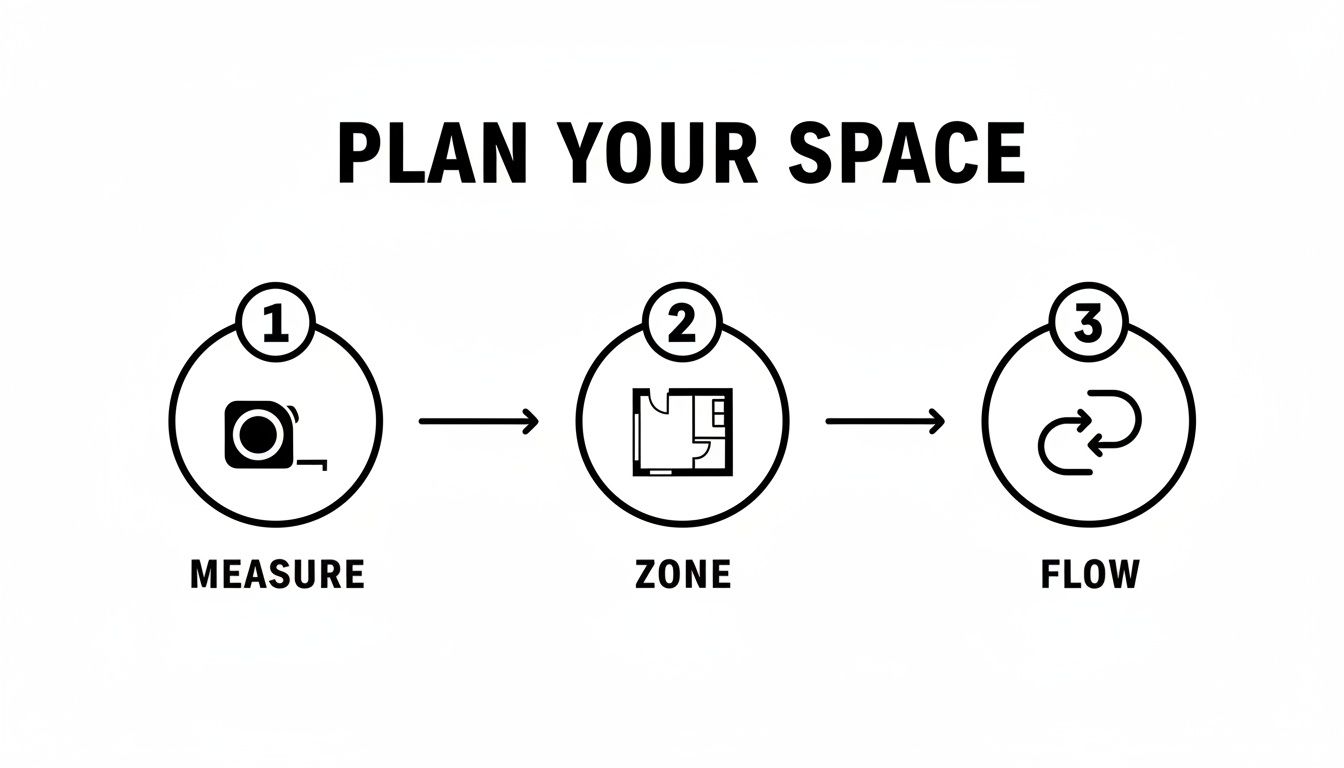
This kind of visual planning breaks down the pre-shopping phase into a totally manageable workflow, making sure you start off on the right foot. With a solid blueprint in hand, you're officially ready to find pieces that are not only comfortable but a perfect match for your home. Come visit one of our showrooms to see for yourself how beautifully scaled furniture can bring your vision to life.
Choose Your Anchor Pieces: Sofas and Sectionals
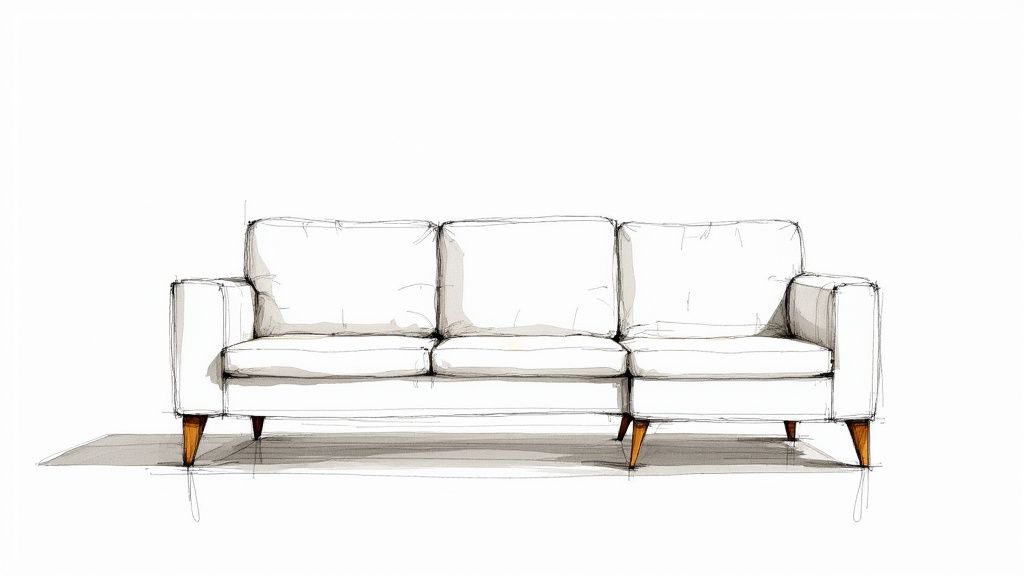
In just about any living room, the sofa is the heart of the home—it’s where life happens. When you’re trying to find comfortable furniture for a small space, this anchor piece has to pull double duty. It needs to be incredibly comfortable without overwhelming the room, setting the stage for a space that feels both inviting and open. Your goal is to find that perfect sweet spot.
The secret is to think in terms of visual weight. Furniture that looks heavy and oversized can make a small room feel cramped the moment it arrives. That’s why you’ll want to hunt for specific design details that trick the eye and create a feeling of spaciousness.
The Power of Smart Sofa Design
The best sofas for compact rooms almost always share a few key characteristics. Here's how you can choose a design that actively makes the room feel bigger than it is.
Here are a few game-changing features to look for:
- Slender Arms: Those big, plush rolled arms can add several inches to a sofa's width without giving you any more room to sit. A piece with a sleek track arm or a slim, tapered arm provides the same seating area in a much smaller footprint.
- Raised Legs: Sofas that sit flat on the floor can look like a solid, heavy block, visually cutting off the space. In contrast, models with exposed legs—whether they're tapered wood or clean-lined metal—lift the frame off the ground. This simple design choice lets you see the floor underneath, creating an illusion of more open, airy space.
- Lower Back: A sofa with a lower profile is a smart move, especially if it’s going in front of a window. It helps keep sightlines clear across the room, which is a classic interior design trick for making a space feel more expansive.
Why a Loveseat Can Be Your Secret Weapon
Sometimes, the perfect solution isn't a traditional three-seater sofa at all. A high-quality loveseat can provide plenty of comfortable seating for two or three people without gobbling up your precious floor space.
This is where you can get all the luxury without the large scale. For example, the Flexsteel Henry Power Reclining Loveseat delivers that incredible, sink-in comfort and power reclining features you crave—all packed into a compact frame. It’s proof that you don't have to sacrifice comfort just because you’re short on space.
By choosing a well-designed loveseat, you free up valuable square footage for other essentials like end tables, a floor lamp, or even a small accent chair to create a complete conversation nook.
Embrace Flexibility With Modular Sectionals
What if you need more seating than a loveseat offers but have a tricky layout to work with? A modular sectional is the ultimate problem-solver. Unlike standard sectionals, modular pieces can be arranged and reconfigured to fit your room’s unique shape and size perfectly.
You can set them up in an L-shape to tuck into a corner, break them apart to face each other for better conversation, or even use one piece as a standalone ottoman. Their adaptability makes them one of the most powerful tools for furnishing a small or oddly shaped living area. If you want to dive deeper, you can learn more about what a modular sectional is and see how it could transform your space.
Ultimately, picking the right anchor piece comes down to knowing what to look for. When you understand how scale, proportion, and smart design details work together, you can confidently choose the sofa or sectional that will become the heart of your comfortable, stylish home. Ready to find yours? Stop by our showrooms in Hobbs or Ruidoso to feel the comfort for yourself.
Maximize Every Inch With Multifunctional Furniture
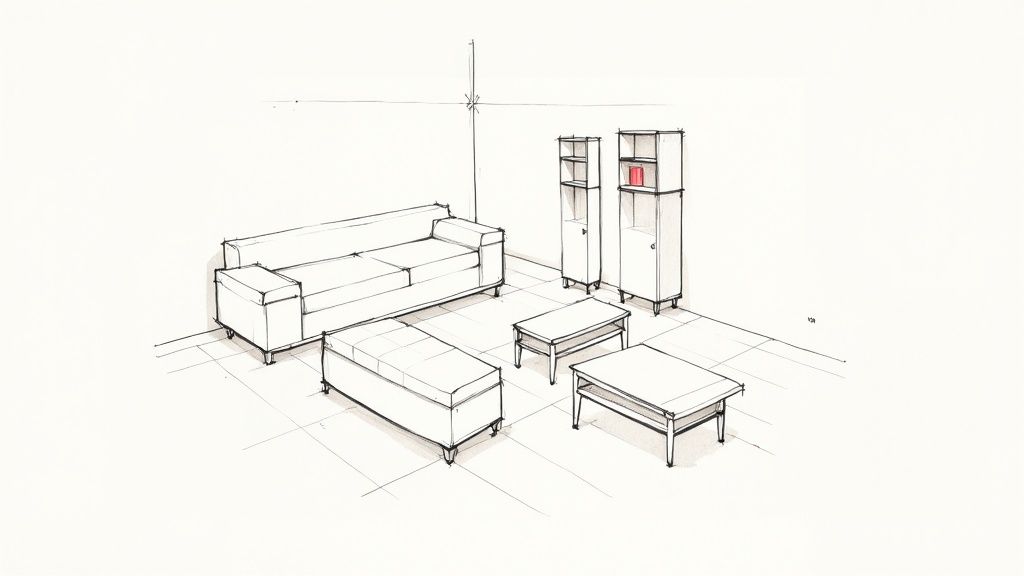
When you're working with a compact home, every piece of furniture has to pull its weight. This is where multifunctional furniture isn’t just a nice-to-have; it’s your secret weapon. These smart, hardworking pieces do more than just sit there—they actively solve problems, helping you beat back the clutter and reclaim precious square footage.
Think of it like outfitting your home with a toolkit of clever solutions. Instead of a standard coffee table, what about one with a top that lifts up to create a dining surface or a perfect impromptu workstation? These are the kinds of adaptable designs that make a home feel both organized and genuinely spacious.
Embrace Furniture That Works Overtime
The most brilliant multifunctional pieces are masters of disguise, hiding storage or extra features in plain sight. They let a single room wear multiple hats without ever feeling crowded or chaotic. A classic example? The humble storage ottoman. It’s a hero piece for any small living room.
This one item can be a true triple threat:
- Concealed Storage: It’s the perfect spot to stash extra blankets, magazines, or the kids' toys, keeping your main living area tidy.
- Extra Seating: A sturdy ottoman easily doubles as an extra seat when you have company.
- A Comfortable Footrest: And of course, it's the ideal place to kick up your feet and relax after a long day.
Another genius solution is a set of nesting tables. They give you flexible surface area that you can spread out when needed and tuck away neatly when you don't. This simple idea can save up to 40% of the floor space that a single, larger coffee table would monopolize. For more ideas, exploring the best furniture for small apartments can point you toward other smart, adaptable pieces.
Your Guide to Smart Multifunctional Furniture
Discover how popular multifunctional furniture types can solve your space challenges, with tips on where they work best.
| Furniture Type | Primary Use | Space-Saving Function | Ideal Placement |
|---|---|---|---|
| Sleeper Sofa | Seating | Converts into a bed | Living rooms, guest rooms |
| Storage Ottoman | Footrest/Seating | Hidden interior storage | Living rooms, bedrooms |
| Lift-Top Coffee Table | Surface Area | Rises to desk/dining height | Living rooms, dens |
| Nesting Tables | Side/Coffee Tables | Stack together when not in use | Next to sofas or chairs |
| Wall Bed (Murphy Bed) | Bed | Folds into a wall cabinet | Studio apartments, home offices |
Choosing the right combination of these pieces transforms your home from a static layout into a dynamic, flexible living environment.
Go Vertical to Create Visual Space
One of the most effective tricks you can use to make a small room feel larger is to draw the eye upward. We tend to focus on the floor plan, but your walls are prime real estate just waiting to be used.
Wall-mounted shelves are fantastic for displaying books and decor without eating up a single inch of floor space. In the same way, a tall, narrow bookcase creates an illusion of height, making the ceiling feel further away than it is. It's a clever visual trick that opens up the room while adding much-needed storage. If you're designing a space that doubles as a workspace, our guide to multifunctional home office furniture has even more ideas for you.
This shift toward adaptable furniture isn't just a trend; it’s a global movement driven by modern living. The demand for small-space furniture is booming, with the market projected to climb from USD 23.4 billion in 2023 to USD 41.2 billion by 2032.
By choosing these hardworking pieces, you’re not just furnishing a room—you’re creating a home that is flexible, organized, and surprisingly spacious.
Pick Fabrics and Materials for Comfort That Lasts
Real comfort isn't just about a plush cushion. It's a thoughtful mix of smart design and the right materials, all working together perfectly. Here's how you can choose genuinely comfortable furniture for your small space by looking beyond the surface. Choosing fabrics and construction that are both inviting and tough enough for daily life is the secret to loving your furniture for years to come.
Think of this as your inside guide to picking pieces that not only look incredible in your compact home but feel amazing day after day. It's about understanding what makes a piece truly comfortable and durable, not just stylish.
Getting the Feel and Durability Right
The fabric you pick really sets the mood for your room's look and feel. In a smaller home, furniture tends to get used more intensely, so durability is a must.
This is where performance fabrics come in—they're engineered to fight off stains, fading, and general wear. They're a fantastic choice if you have kids, pets, or just love to entertain, giving you peace of mind without feeling like you're sitting on plastic.
Of course, there’s a lot to be said for natural fibers. Materials like cotton, linen, and wool have a classic, breathable softness that's hard to beat. They might need a little extra TLC, but their timeless texture brings a cozy, organic warmth to a space that many people love. For a deep dive into all the possibilities, our guide to upholstery materials is a great resource.
The Heart of Comfort: What’s Inside the Cushions
What’s inside your sofa or chair is just as critical as what’s on the outside. The cushion construction is the bedrock of comfort and dictates how your furniture will feel and hold its shape over the long haul.
You'll generally run into a few fantastic options:
- High-Density Foam: A very popular choice for a reason. It provides a firm, supportive feel that bounces back beautifully, which helps prevent that dreaded saggy look down the road.
- Down Blends: If you're after that luxurious, sink-right-in experience, cushions filled with a down-and-feather blend are second to none. They deliver incredible softness but do need a good fluffing now and then to look their best.
- Innerspring Coils: Just like a good mattress, these cushions use springs wrapped in foam. This setup offers a resilient and supportive seat that distributes weight evenly for consistent comfort.
The best cushion isn't just about how it feels the day you buy it; it's about lasting support. Ask yourself this: Do you prefer to sit on your furniture or in it? Knowing the answer will point you to the perfect interior construction.
This focus on smarter, more ergonomic furniture is a huge global trend. In the Asia Pacific region, the small space furniture market is growing at a 7.2% CAGR. Much of this innovation is driven by real-world needs. In Japan, for instance, where 37% of people live in solo dwellings, sales of wall-hugger recliners have skyrocketed by 35% since 2019. These chairs provide full reclining comfort without needing a ton of space behind them. It makes perfect sense that globally, 75% of buyers now say ergonomic features are a top priority. You can dig into more of this data on this growing market on Dataintelo.com.
Choosing the right materials is the final puzzle piece in creating a home that’s both beautiful and truly, deeply comfortable. When you're ready to feel the difference for yourself, come visit our showrooms in Hobbs or Ruidoso. You can test out all the options and let our expert team help you find the perfect fit.
It's Time to Make Your Vision a Reality
You've put in the real work—measuring, sketching out layouts, and dreaming up all the possibilities for your small space. That thoughtful planning is invaluable. Now, it's time for the fun part: taking that vision and turning it into a comfortable, stylish reality.
While browsing online is a great start, there's no substitute for experiencing furniture in person. A picture can't tell you how a fabric feels against your skin or how deep and cozy the cushions truly are. To really know if a piece is the one, you need to move from the screen to the showroom.
Let's Be Your Guide in the Showroom
This is where your journey gets exciting. Visiting one of our showrooms in Hobbs or Ruidoso isn't just about shopping; it's about putting all your research to the test with an expert by your side. Think of our design consultants as your personal guides, here to help you connect all the dots.
Bring everything you've gathered—your floor plan, inspiration photos, and all your questions. Our team is ready to jump in and help you:
- Double-check your measurements and layouts to make sure everything will fit and flow just right.
- Talk through your lifestyle needs so you can pick materials that will stand up to kids, pets, and everyday life.
- Point you toward pieces that perfectly match the scale and style you're going for.
This collaborative approach takes the anxiety out of the final decision. You won't have to wonder if you made the right choice; you'll know it.
You’ve already done the heavy lifting by planning your space so carefully. Let our team be your expert ally to help you cross the finish line, ensuring the furniture you bring home is the perfect fit.
Finalizing Your Selections with Confidence
Feeling is believing. Go ahead—sit in the chairs, kick back in the recliners, and run your hand over the different upholstery options. Seeing how pieces from different collections, like the clever and compact designs from Flexsteel, look and feel in a real space provides the clarity you just can't get online.
Your home is your sanctuary, and finding the right furniture should feel rewarding, not stressful. By combining your vision with our hands-on expertise, we can create a space that’s not just beautifully decorated, but perfectly, uniquely you.
Ready to bring your ideas to life? Schedule a visit with one of our design consultants today, and let's build a comfortable, stylish home you’ll love for years to come.
Answering Your Small Space Furniture Questions
Even with a solid plan, you're bound to run into a few specific questions when you start shopping for comfortable furniture for a small space. It happens to everyone. Let's tackle some of the most common challenges with practical advice to help you feel completely confident in your choices.
What’s the Single Most Important Rule for a Small Living Room?
If you only remember one thing, make it this: scale and proportion are everything. You have to resist the urge to get that giant, overstuffed sofa that looks so comfy in a massive showroom. In your space, it will just eat up the room, both physically and visually.
Your goal is to hunt for furniture with a smaller footprint and slimmer profiles. Here's a classic designer trick: look for pieces with visible legs. When you can see the floor under a sofa or chair, it instantly creates an illusion of more space and light. "Apartment-sized" sofas are designed specifically for this, giving you plenty of seating without the bulk. Always, always measure your room and the furniture before you buy—it’s the only way to guarantee a perfect fit.
How Do I Add More Seating Without Just Adding Clutter?
The secret is to think in terms of flexibility and mobility. Instead of trying to cram in another loveseat, think about a pair of chic armless chairs, a single small-scale armchair, or even stylish floor cushions that can be stashed away.
This is where multifunctional pieces really shine. A sturdy storage ottoman is a true workhorse; it can be a coffee table, a footrest, and extra seating for a guest, all in one. Poufs are another brilliant, lightweight option you can easily move wherever you need them. You want pieces that can adapt to different situations without permanently hogging your precious floor space.
Your furniture should work for you, not the other way around. By choosing adaptable seating, you're building a room that can be a quiet retreat one moment and a welcoming space for friends the next.
What Are the Best Colors and Fabrics to Use?
Lighter colors are your best friend. Tones like beige, cream, soft grays, and pastels naturally reflect more light, which makes any room feel larger and more open. If you’re a fan of darker, moodier colors, don't worry! Just use them strategically. A single accent piece, like an armchair in a rich navy or deep green, can add a beautiful pop of drama without making the whole room feel heavy.
When it comes to fabric, durability is key. Furniture in a smaller home tends to get more concentrated use. Performance fabrics are a fantastic investment, especially if you have kids or pets, because they’re built to resist stains and wear. Don’t forget about texture, either! Materials like velvet, linen, or a chunky knit can add a ton of depth and visual interest without creating any clutter.
Can I Actually Fit a Recliner in My Small Room?
You absolutely can, but you have to choose the right kind. The magic words you're looking for are "wall-hugger" or "zero-clearance" recliners. These are brilliantly designed to recline by sliding the seat forward, not backward. This means they only need a few inches of space between them and the wall.
This clever engineering lets you enjoy all the kick-your-feet-up comfort of a recliner without sacrificing a huge chunk of your floor plan. Plus, modern recliners are so much sleeker and less bulky than the puffy chairs you might be picturing. They can fit perfectly into a cozy corner.
Now you have the knowledge and the strategy to tackle your design challenges head-on. At Miller Waldrop Furniture & Decor, we provide the tools and expertise to help you bring that vision to life. Stop by one of our showrooms to see a curated selection of perfectly scaled, comfortable furniture. Our design experts are ready to help you find pieces you’ll love for years to come.
Discover your perfect fit by exploring our Flexsteel collection online today.