

A Practical Guide on How to Protect Leather Furniture


Protecting your leather furniture is one of the best investments you can make in your home's comfort and style. You hold the power to keep it looking beautiful through a consistent routine of cleaning, conditioning, and shielding it from threats like sunlight and heat. Once you identify the kind of leather you're working with, you can easily stop common problems like cracking and fading before they even have a chance to start.
Your Guide to Lifelong Leather Furniture Protection
That leather sofa or armchair isn't just a place to sit. It’s a centerpiece, a reflection of your style that becomes part of your family's story. By taking the right steps now, you gain the power to keep it looking beautiful and feeling comfortable for years, turning a simple purchase into a heritage piece you can be proud of. The first step is empowering yourself with an understanding of the material and shifting to a proactive mindset.
Think of this guide as your complete toolkit for mastering leather care. Instead of reacting to damage after the fact, you'll learn how to anticipate and prevent it. This approach doesn't just save you from the headache and cost of repairs; it empowers you to ensure your furniture ages with character, developing that rich, unique patina that only comes from a well-loved home.
The Core Principles of Proactive Care
Great leather care isn't about one big, deep clean every year. It’s all about the small, consistent habits you build into your regular routine. These simple actions create a powerful shield against daily wear and tear.
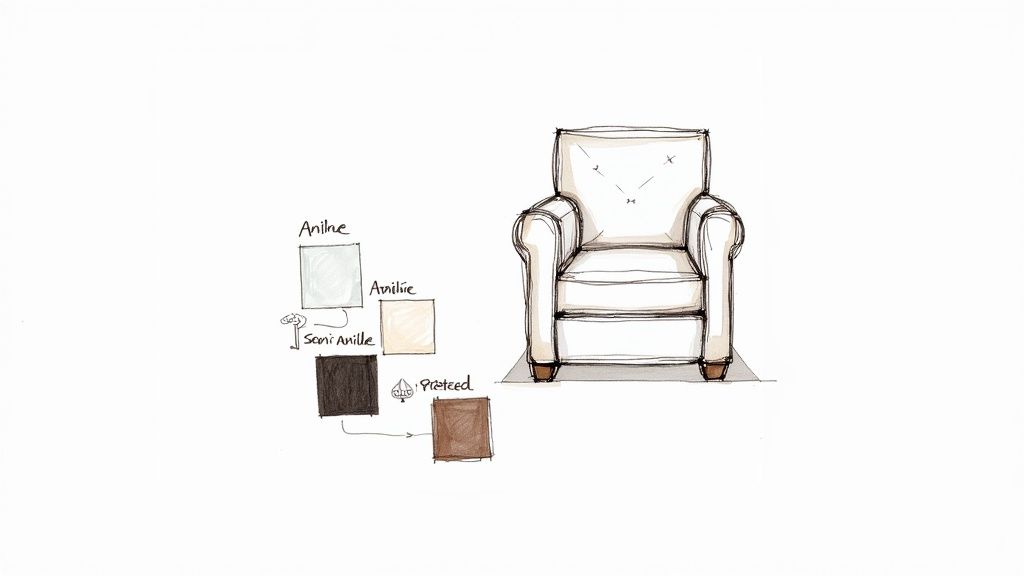
- Know Your Leather Type: First, identify if your furniture is protected (pigmented), aniline, or semi-aniline leather. Each one has different needs, and using the wrong product can do more harm than good. This knowledge is your first tool.
- Establish a Cleaning Rhythm: A quick dusting with a microfiber cloth goes a long way. It removes the tiny, abrasive dust and dirt particles that can slowly scratch the finish. A weekly wipe-down is your non-negotiable first line of defense.
- Embrace Conditioning: Remember, leather is a natural material. It needs moisture to stay soft and flexible. Conditioning is your secret weapon to keep the fibers from drying out, which is the number one cause of cracking and brittleness.
A good routine makes a huge difference. Regular conditioning can extend the life of your leather by up to 5 times. It's the key to preventing the dryness and cracking that affects 70% of untreated pieces within just five years. And don't forget placement—keeping furniture out of direct sunlight can prevent the fading seen in 80% of cases. If you're curious, you can explore market research on furniture trends to see just how critical proper care has become.
Build Your Protection Toolkit
To conquer the task, you need the right tools. A high-quality, pH-balanced leather cleaner and a good, nourishing conditioner are absolute must-haves. These aren't just bottles on a shelf; they are your instruments for keeping your investment looking and feeling its best.
To keep things simple, here’s your action plan.
Quick Leather Protection Checklist
| Frequency | Action | Why It Matters |
|---|---|---|
| Daily | Fluff cushions and check for spills. | Prevents permanent stains and keeps the shape uniform. |
| Weekly | Dust with a soft, dry microfiber cloth. | Removes abrasive dust that can cause micro-scratches. |
| Monthly | Wipe with a slightly damp cloth. | Clears away accumulated body oils and grime. |
| Every 3-6 Months | Apply a quality leather conditioner. | Replenishes moisture, preventing cracks and brittleness. |
| Seasonally | Assess furniture placement. | Avoids direct sunlight or heat sources that cause fading and drying. |
Following this simple schedule will make a massive difference in how your leather ages.
Ready to take control? You can find every tool you need in our curated collection of Leather Care Kits, designed to give you professional-level results at home.
Your Go-To Cleaning and Conditioning Routine
The best way for you to keep your leather furniture looking fantastic for years is to get into a simple, consistent routine. This isn't some huge, time-consuming project; it’s about creating small habits that empower you to protect your investment.
Forget about reaching for those all-purpose sprays under your kitchen sink. Most household cleaners are far too harsh for leather and will strip it of its natural oils, leading to a dry, cracked, and sad-looking sofa. The real secret is equipping yourself with the right tools for the job.
First, Build Your Gentle Cleaning Kit
Think of routine cleaning as your first line of defense. Dust and daily grime might not look like much, but those tiny particles are abrasive. Over time, they act like fine sandpaper, slowly dulling the leather's protective topcoat.
You can do wonders with a quick wipe-down once a week using a soft, dry microfiber cloth. This lifts off all that abrasive grit before it can get ground into the surface. If you need a bit more cleaning power for minor smudges, you can slightly dampen the cloth with distilled water. Always use distilled—the minerals in regular tap water can leave behind a chalky residue.
For a deeper clean to tackle built-up dirt or body oils (especially on headrests and armrests), you'll need a dedicated cleaner. Look for a pH-balanced leather cleaner specifically formulated to dissolve grime without drying out the leather itself.
My Two Cents: Before you go all-in with a new cleaner, always test it on a hidden spot first. The underside of a cushion or a small patch on the back of the sofa is perfect. Let it dry completely to make sure it doesn't cause any discoloration. Trust me, this simple check will give you the confidence to proceed without worry.
Keeping the surface clean doesn't just make it look better day-to-day; it also preps the leather for the next critical step. For more in-depth advice on tackling different fabrics, you can also explore our complete guide on the best way to clean upholstery.
The Art of Conditioning Your Leather
Conditioning is what keeps your leather furniture feeling soft and supple. Think of it like moisturizer for your skin. Leather is a natural material, and it can lose its inherent fats and oils over time, especially in the dry climate we have here in West Texas and Southeastern New Mexico. When that happens, the fibers get brittle and become prone to cracking.
A quality leather conditioner works by replenishing those essential oils, maintaining the material’s flexibility and giving it that rich, healthy look.
So, how often should you do it? Your home's environment will tell you.
- For most households, conditioning every 6 to 12 months is a solid plan.
- If your furniture is in a particularly dry room or gets a lot of sun, you'll want to take charge more often, maybe every 3 to 4 months.
The best advice is to just pay attention to your furniture. If the leather starts to feel a bit stiff to the touch or loses its subtle sheen, it’s basically telling you it's thirsty.
How to Condition Your Furniture the Right Way
Applying conditioner is easy, but your technique makes all the difference. You don't need any special skills, just a little patience.
- Start Clean. Always begin with a surface that's been thoroughly dusted and cleaned. You don't want to trap dirt under the conditioner.
- Apply to the Cloth, Not the Couch. Squeeze a small amount of conditioner onto a clean microfiber cloth or an applicator pad. Never pour it directly onto the leather, which can cause splotches and uneven absorption.
- Use a Gentle Touch. Work the conditioner into the leather using broad, circular motions. Tackle one section at a time—say, one cushion or one armrest—to ensure even coverage.
- Let It Soak In. Give the conditioner time to do its job. Most products need at least 30 minutes to an hour to fully penetrate the leather's pores. Check the product label for specific instructions.
- Buff It Out. Once the time is up, grab another clean, dry cloth and gently buff the entire piece. This removes any excess product and brings out a beautiful, natural luster.
By making this simple cleaning and conditioning cycle a regular part of your home care, you're doing the single most important thing to ensure your leather furniture remains a source of comfort and style for a long, long time.
Handling Spills, Stains, and Scratches Like a Pro
No matter how careful you are, life happens. A guest spills a glass of wine, a pen decides to leak, or a pet’s playful moment leaves a light scratch. The real secret to protecting leather furniture isn't just about what you do before an accident; it's about knowing how to respond calmly and correctly when one occurs. With the right approach, you can stop a small mishap from turning into a permanent eyesore.
When it comes to spills, your immediate reaction is everything. The longer a substance sits on the leather, the deeper it soaks in, making it a real headache to remove. This is especially true for porous, unprotected leathers like aniline, which can drink up liquids in seconds.
Your First Response to Spills
When a spill happens, fight the urge to scrub. Frantically rubbing the spot will only spread the stain and force the liquid deeper into the leather's grain. Your new mantra should be: blot, don’t rub.
Grab a clean, dry microfiber cloth or a good paper towel right away. Gently press it onto the spill to lift the liquid straight up and off the surface. If you're dealing with something thicker, like ketchup or a greasy food drop, use a dull knife or the edge of a credit card to carefully scrape away the excess before you start blotting.
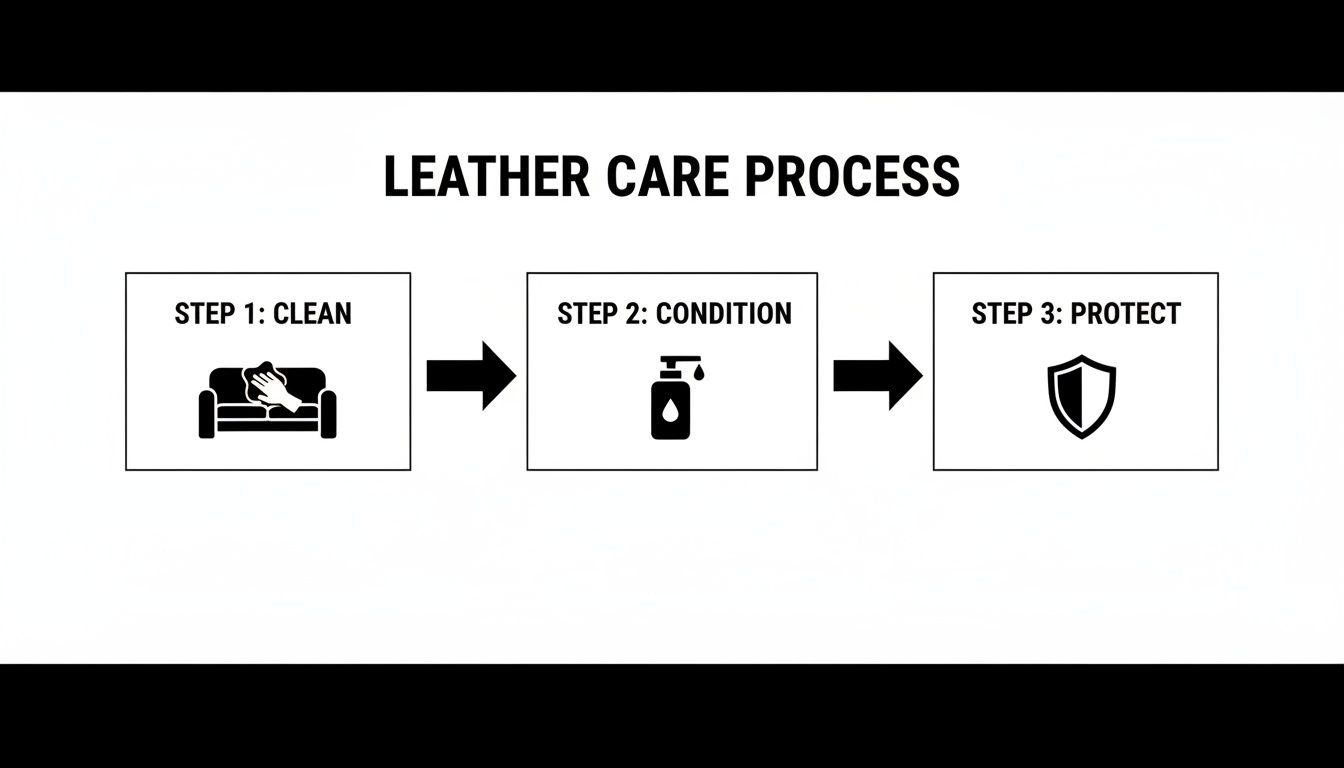
This simple cycle—Clean, Condition, Protect—is the foundation of great leather care. Mastering it not only keeps your furniture looking its best but also makes it far more resilient against the chaos of daily life.
Tackling Scratches and Scuffs
Scratches are another common headache, especially in homes with kids and pets. While a deep gouge might need a professional's touch, you can absolutely minimize the appearance of minor surface scratches yourself.
For very light marks, start with the simplest tool you have: your fingertips. Gently rub the scratch with your clean finger. The warmth and natural oils from your skin can often redistribute the waxes in the leather's finish, making the mark vanish. If that doesn't quite do the trick, try buffing the area with a clean, dry microfiber cloth using a circular motion.
A Quick Tip for Minor Scratches: A tiny dab of a compatible leather conditioner applied right on the scratch can work wonders. Use a Q-tip for precision, let it sit for a few minutes, then buff it gently with a soft cloth. This adds moisture and helps the scratch blend back into the surrounding leather.
Of course, scratches are sometimes unavoidable. When they happen, knowing a few tricks for repairing scratched leather is invaluable. Since pets are often the culprits, choosing the right furniture from the get-go can make a huge difference. You might find our guide on the best sofa fabric for pets helpful for exploring durable options for your furry family members.
Dealing With Stubborn Stains
What do you do if a stain has already set in? For common problems like ink or grease, you have a few home remedies to try before calling for backup.
- Ink Stains: For fresh ink, you can often use a cotton swab dipped in rubbing alcohol. Dab very gently and precisely on the ink mark, being careful not to spread it. Always test this on a hidden spot first, as alcohol can sometimes lift the color from certain types of leather.
- Grease and Oil Stains: These can be tough, but not impossible. Sprinkle a generous amount of cornstarch or talcum powder directly onto the stain and let it sit for several hours, or even overnight. The powder is fantastic at absorbing the oil from the leather’s pores. Afterward, just brush the powder away with a soft-bristled brush.
Knowing how to handle these common issues makes you your furniture's first responder. You'll not only preserve the beauty of your leather but also deepen your connection to a piece that’s a true part of your home.
Strategic Placement to Prevent Environmental Damage
Sometimes, the best offense is a good defense. While routine cleaning and conditioning are your go-to maintenance plays, your decisions about where the furniture lives in your home can prevent the most severe damage before it even starts.
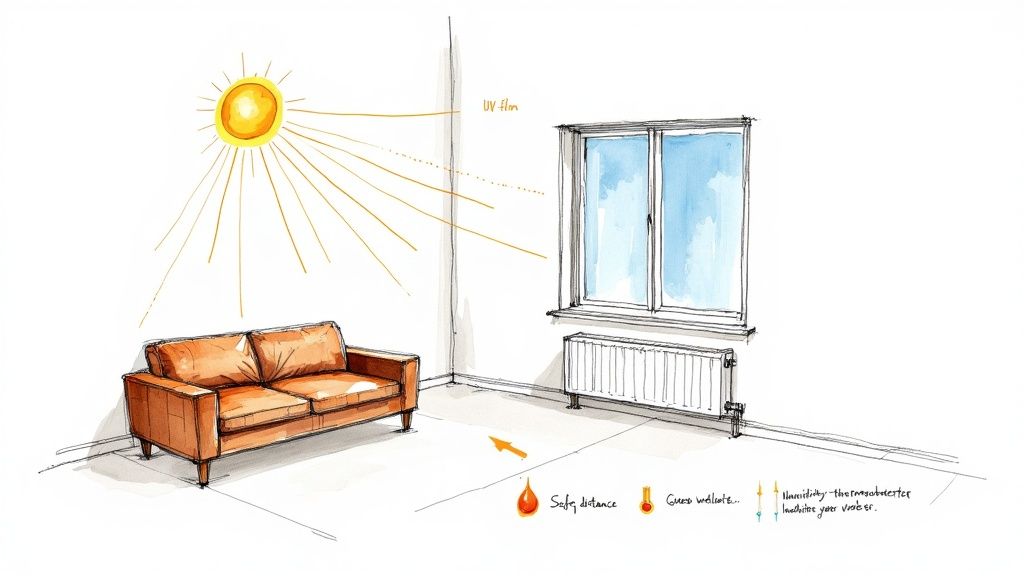
Think of your room's layout as the first and most crucial shield against the environment's toughest opponents: sunlight, heat, and humidity. This is more than just an interior design choice; it's a strategic move you can make to preserve your leather's color, texture, and integrity for years to come.
Defending Against the Sun's Damaging Rays
Direct sunlight is public enemy number one for leather furniture. Those UV rays act like a relentless bleaching agent, breaking down the dyes and causing irreversible fading. That rich, deep color you fell in love with can become a washed-out, uneven shadow of its former self.
But the damage isn't just skin deep. UV radiation also zaps the natural oils right out of the leather, causing it to dry out and become brittle. A once-supple sofa can turn stiff and start cracking simply from sitting in a sunny spot day after day.
Here are a few practical ways you can win the battle against the sun:
- Rethink Your Room Layout: The simplest fix is often the best. Position your leather pieces out of the direct path of sunlight, especially during those intense afternoon hours.
- Invest in Window Treatments: A good set of curtains, blinds, or shades can make a huge difference. Sheer curtains can diffuse the harshest light, while blackout options offer complete protection.
- Consider UV-Blocking Window Film: This is an excellent, nearly invisible solution. These thin, transparent films can be applied directly to your windows to filter out the vast majority of damaging UV rays without sacrificing your view.
Sunlight and heat are silent killers for leather, responsible for as much as 85% of color loss and drying over time. You can fight back effectively with UV-blocking window films; studies show they can reduce this type of damage by an incredible 92%.
The Hidden Dangers of Heat Sources
Just as bad as direct sun is placing leather furniture too close to a concentrated heat source. A fireplace, radiator, or even a floor vent can dramatically accelerate the drying process, essentially baking the moisture right out of the hide.
This intense drying causes the leather to shrink and contract, putting stress on the seams and leading to premature cracking. The golden rule you can follow is to keep at least two to three feet of space between your leather furniture and any direct heat source.
Maintaining a Stable Indoor Climate
Beyond direct sun and heat, the overall humidity level in your home is a big deal. Leather is a natural material, and it thrives in a stable environment. Here in the dry climate of West Texas and Southeastern New Mexico, indoor air gets incredibly arid, especially in winter when the heat is blasting. A simple humidifier can work wonders.
On the flip side, excessively high humidity can encourage mildew growth. The sweet spot you're aiming for is a consistent indoor humidity level between 40% and 60%.
To better understand these environmental threats and how you can counter them, here’s your mitigation plan:
Environmental Risk Mitigation Plan
| Threat | Impact on Leather | Your Best Solution |
|---|---|---|
| Direct Sunlight (UV Rays) | Fades color, dries out natural oils, leads to cracking and brittleness. | Position furniture away from windows, use curtains, or apply UV-blocking film. |
| Direct Heat Sources | Accelerates drying, causes shrinkage and cracking, can damage the finish. | Maintain at least 2-3 feet of distance from vents, fireplaces, and radiators. |
| Low/High Humidity | Low humidity causes dryness and cracks; high humidity risks mildew. | Use a humidifier/dehumidifier to maintain a stable 40%-60% indoor humidity level. |
By managing these three key factors, you're building the best possible defense to protect your investment for the long haul.
Creating a safe zone for your furniture is even more critical in a busy household. If you're navigating life with kids and pets, check out our guide on how to choose kid-friendly and pet-friendly furniture for more ideas.
By being proactive, you're not just protecting an object—you're preserving a central piece of your home's comfort and style.
Knowing When to Call for Professional Reinforcements
You’re now armed with a solid game plan for keeping your leather furniture in top shape. You can handle routine cleanings, tackle minor spills, and buff out small scratches, which is fantastic. But part of being a smart owner is knowing when to tag in a professional.
Let’s be honest—some jobs are just too big for a DIY approach. Recognizing your limits isn't giving up; it's the smartest move you can make to protect your investment from permanent damage. Trying to fix a major issue without the right tools or experience can turn a repairable problem into a costly disaster.
Telltale Signs You Need an Expert
So, when should you put down the cleaning cloth and pick up the phone? Certain types of damage are clear signals that it's time to find a reputable leather repair technician. These are issues where a home remedy just won't cut it and could make things much worse.
If you spot any of these problems, it’s definitely time to call in the cavalry:
- Deep Cuts or Tears: A tiny surface scratch is one thing. A gash that has sliced through the top layer of the leather is a whole different ballgame. A pro is needed to properly fill, re-texture, and perfectly color-match the repair.
- Widespread Color Loss: If your sofa has a large, faded patch from sitting by a window or from a chemical spill, you're past the point of conditioning. A technician can professionally re-dye and seal the leather to restore its original look.
- Severe Cracking: We're not talking about those fine lines that good conditioning can help. Deep, structural cracks that have broken through the finish mean the leather's internal fibers are damaged and crying out for professional restoration.
- Stubborn, Set-In Stains: You’ve tried everything on that ink blot or the dye transfer from a new pair of jeans, but it won’t budge. Professionals have access to powerful, specialized solvents that can lift tough stains without destroying the surrounding finish.
Expert Insight: Here’s a good rule of thumb I’ve learned over the years: if the damage has changed the physical texture of the leather—like a deep cut, a rough patch, or severe cracking—it’s almost always a job for a professional. They have the skill to not only fix the color but restore the feel of the surface itself.
How to Find a Reputable Specialist
Finding the right person for the job is crucial. You can start your search by looking for local upholstery and furniture repair shops that specifically advertise experience with leather. A true expert will be proud of their work, so don't be shy about asking to see a portfolio of before-and-after photos.
When you reach out, you can have a few key questions ready:
- What’s your experience with my specific type of leather (aniline, pigmented, etc.)?
- Can you walk me through your process for this kind of repair?
- Will you provide a detailed, written estimate before starting any work?
Sometimes, the problem is bigger than just one piece of furniture. In catastrophic situations like a house fire or major flooding, you’re dealing with more than just a damaged sofa. For widespread issues like smoke permeation that affects the whole room, you should look into a professional smoke damage restoration service that can handle the entire environment, not just the furniture.
Ultimately, knowing when to call for backup is one of the most powerful tools in your arsenal. It ensures complex problems are handled correctly, preserving the beauty and longevity of your furniture for years to come. And if you’re ever on the fence, our team at Miller Waldrop is always here to offer advice or help you connect with trusted local experts.
Got Questions? We've Got Answers
You've got the basics down, but what about those little "what-if" moments that pop up? Let's tackle some of the most common questions our customers ask. Think of this as the expert advice you'd get if you called us up.
Having these answers handy will help you handle almost any situation with confidence, knowing you're doing the right thing for your furniture.
How Often Should I Really Condition My Leather Sofa?
There's no single magic number here—it all comes down to your home's climate and the type of leather you have. For most people, a good conditioning every 6 to 12 months is a solid rule of thumb.
But we're not dealing with "most" climates here in West Texas and Southeastern New Mexico, are we? Our dry air is tough on leather. You can take control by stepping it up to every 3 to 4 months if your home feels particularly arid or your sofa is near a heat source.
Your furniture will give you clues. If the leather starts to feel a bit stiff or looks dull, it's thirsty. That's your signal that it's time for a little TLC. Remember, natural leathers like aniline need more frequent attention than their more finished, pigmented cousins.
Can I Just Use Household Cleaners Like Soap or Vinegar?
Please don't. I know it’s tempting to grab whatever is under the sink for a quick fix, but common cleaners like dish soap, vinegar, or all-purpose sprays are a recipe for disaster on leather.
Their chemical makeup is all wrong. They're often too acidic or alkaline, which strips away the leather’s natural oils and can eat through the protective finish. Before you know it, you've got a dry, brittle surface that's prime for cracking. It's a classic case of a quick "solution" causing a much bigger, more expensive problem down the road.
Our Pro Tip: You can avoid this by always, always using a cleaner made specifically for your type of leather. These are pH-balanced to lift away dirt and grime without damaging the material itself. It’s the only way to clean without causing harm.
What’s the Best Way to Protect Leather from My Pets?
We love our pets, but they can be tough on furniture. The good news is you don’t have to choose between your furry friend and your beautiful sofa. It’s all about creating a smart, layered defense.
Here are a few practical things you can do right now:
- Keep Claws Trimmed: This is your #1 defense. Keeping your dog or cat's nails trimmed is the single most effective way to prevent accidental scratches when they jump up for a cuddle.
- Give Them a Better Spot: Make their own space more inviting. A comfy pet bed, a good scratching post, or some engaging chew toys can easily redirect their attention away from the sofa.
- Use a Stylish Barrier: Drape a nice, breathable throw blanket or a fitted cover over their favorite lounging spot. It’s a simple, effective shield against claws, fur, and dirt.
And for those inevitable accidents? Keep an enzymatic cleaner that's safe for leather on hand. It'll neutralize odors and stains without damaging the finish. A well-conditioned sofa is also a more resilient one, making it easier for you to manage life with pets.
At Miller Waldrop, our goal is to empower you with the knowledge to care for your furniture like a pro. We're here to help you protect your investment with confidence. Explore our specially formulated Leather Care Kits to find every tool you need to keep your pieces looking beautiful for years to come.