

Decorating tips for small living rooms: Smart Ways to Maximize Space and Style

When you're working with a small living room, the best approach is to be clever and intentional. Forget trying to shrink down a "big room" design. Instead, you can focus on a few key things: using multi-functional furniture, playing up natural light, and picking pieces that are actually the right scale for the room.
This is how you can transform a space that feels cramped into one that feels curated and cozy.
Rethinking Your Small Space
Before you pull out the measuring tape or scroll through furniture websites, the very first step is to change how you see the room. A small living room isn't a limitation; it’s an opportunity for you to create a really smart, efficient, and personal space.
The biggest mistake people make is trying to force oversized furniture and too many ideas into a compact footprint. Let's flip that script. This guide will give you the same core principles designers use to make smaller rooms feel surprisingly open and welcoming. It's all about empowering you to make every single item in the room earn its keep.
Your goal is to design a room that actually works for how you live, whether that’s hosting game nights with a few friends or just having a comfortable spot to unwind by yourself.
Core Principles for Small Room Success
To get started, let’s zero in on three guiding ideas that will make all the difference in your design journey:
- Amplify the Light: A bright room always feels bigger. You can use windows, mirrors, and strategic lighting to open things up.
- Create Smart Traffic Flow: A good layout is everything. You want to be able to move around easily without bumping into things, creating logical zones for different activities.
- Pick Furniture That Works Harder: In a small space, every piece of furniture needs a purpose—or two! This is where multi-functional and correctly-scaled pieces become your best tools.
This isn't just a niche design challenge anymore. A recent report showed that in 2023, there was a 13% increase in people downsizing to smaller homes. This trend is especially noticeable right here in communities across West Texas and Southeastern New Mexico, putting a huge spotlight on clever design that makes every square foot count.
Getting these fundamentals right will completely change how you feel about your living room. You can take it from a point of frustration to a space you’re genuinely proud of. For more tricks on maximizing your square footage, check out our guide on how to make a small room feel big.
If you want to dive even deeper, these 8 smart decorating ideas for small spaces that actually work offer some fantastic, out-of-the-box solutions.
Creating a Smart Floor Plan
The secret to making a small living room feel spacious and functional isn't about finding that one perfect piece of furniture. It all starts with a pencil and a measuring tape. Before you even think about browsing online or walking into a showroom, mapping out a smart floor plan is the single most important thing you can do. This is where you shift from just buying furniture to actually designing your space.
Think of your room as a blank canvas. Your first job is to decide what needs to happen in it. Do you need a cozy corner for reading? A central spot for conversations with friends? A dedicated zone for family movie nights? By defining these "territories" first, you ensure every single square foot has a purpose.
Honestly, this planning phase is what separates a frustrating, trial-and-error decorating journey from a smooth, successful one. It’s what keeps you from falling for a gorgeous, oversized sofa that would completely swallow your room.
The simple visual below really breaks down the core mindset you need for planning a small space into three powerful ideas.
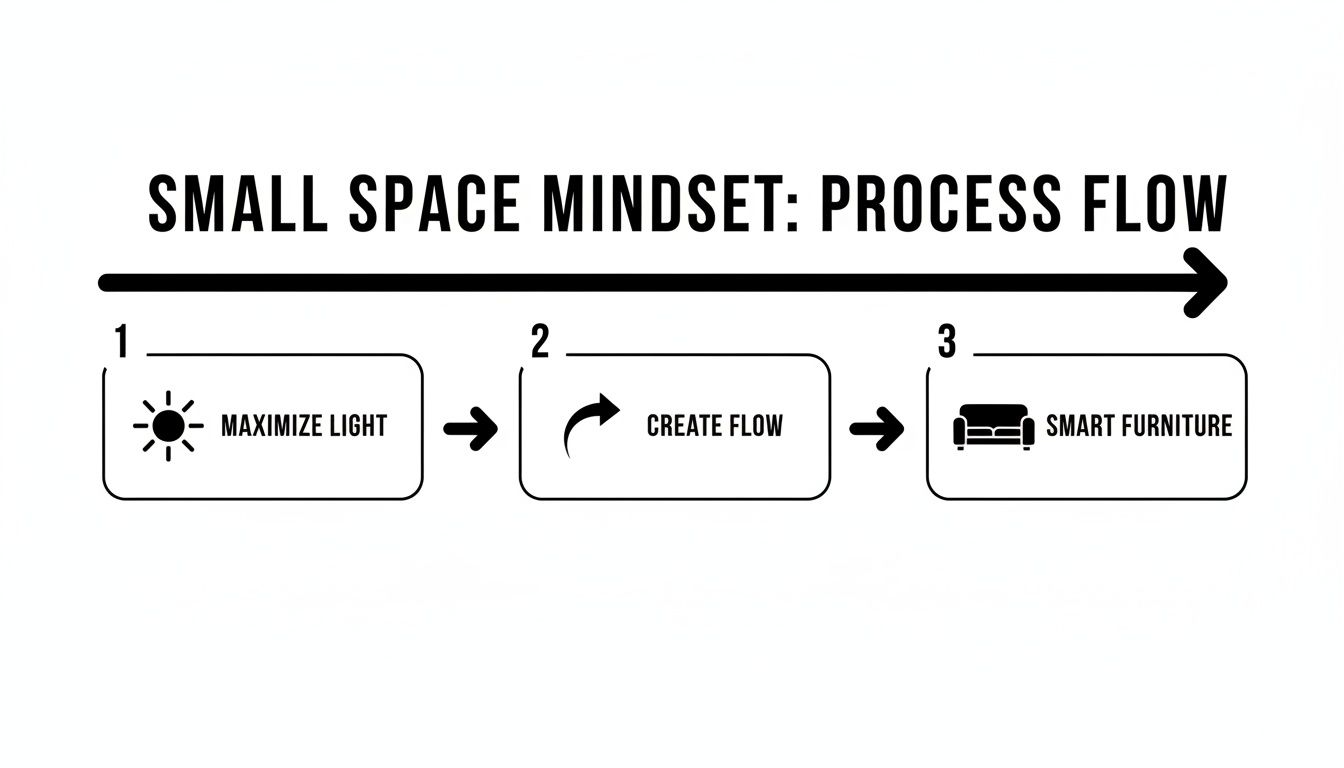
As you can see, it all comes back to a great floor plan. It’s the key that unlocks your ability to maximize light, create easy flow, and choose intelligent furniture.
Measure Twice, Furnish Once
There’s no substitute for accuracy here. Start by measuring the room's main dimensions—the length and width of the walls. But don't stop there. Get the wall height, the size of your windows and doorways, and the distances between them. Be sure to note where permanent fixtures are, like a fireplace, built-in shelves, or electrical outlets.
Jot all these numbers down on a simple sketch. You don't need to be an architect; a basic drawing on graph paper or a simple digital app works perfectly. This sketch becomes your roadmap for every decision you make from here on out.
Pro Tip: Don't just think about floor space. Look up! A tall, narrow bookcase can be a small room’s best friend. It takes up very little floor real estate but draws the eye upward, which gives the illusion of a higher ceiling.
Define Your Functional Zones
Now, look at your sketch and get real about how you need the room to work for you. For so many of us here in Lubbock and Hobbs, the living room has to be a multitasking machine. Nailing down these needs is crucial for your success.
- Conversation Zone: This is your main hub, usually centered around a sofa and chairs. You want it to feel intimate, but never cramped.
- Entertainment Hub: Where is the TV going to live? Make sure you have a clear sightline from your main seating area and a plan for taming all the cords.
- Reading Nook: An underused corner can become the perfect retreat with just a comfy armchair, a small side table, and a good floor lamp.
- Traffic Paths: Think about how you walk through the room. Where are the natural walkways—from the hall to the sofa, or from the kitchen to the patio door? Keep these paths clear. A good rule of thumb is to leave at least 30 to 36 inches for your main walkways to avoid that cluttered, obstacle-course feeling.
Sketching Your Layout and Avoiding Obstacles
With your zones defined, it's time for the fun part. Start sketching furniture shapes onto your floor plan. This is your chance to experiment without breaking your back. See how a sectional feels versus a classic sofa and two chairs. Try the TV on a different wall. This simple process helps you truly visualize the flow of the room before you commit to anything.
Your main goal is to protect those traffic paths. If you have to turn sideways and squeeze past the coffee table to get to the sofa, the layout is a failure. Your home should make your daily life easier, not harder. For a much deeper dive into furniture placement, our guide on how to arrange living room furniture is packed with detailed layouts and expert advice.
Once you land on a plan that feels right, you're officially ready to shop with confidence. You’ll know the absolute maximum size for a sofa, the perfect dimensions for an area rug, and exactly where that new accent chair can go. This prep work empowers you to find pieces that don't just fit your space—they enhance it.
Selecting Your Smartest Furniture
When you’re working with a small living room, every piece of furniture has to earn its keep. Think of yourself as a casting director—each item needs to play a crucial role, delivering on both style and function. The goal isn't just to fill the room; it's to equip it with smart, hardworking pieces that make the space feel bigger, more comfortable, and completely yours.
This is where you shift from just buying furniture to making strategic investments in how you live. You're looking for pieces that solve problems, not create new ones.
Embrace the Power of Multifunctional Design
In a tight space, single-purpose furniture is a luxury you just can't afford. The real magic happens when you choose pieces that can pull double—or even triple—duty. This approach instantly multiplies your room's utility without adding an ounce of clutter. It's not about having more stuff; it’s about having the right stuff.
This isn't just a clever design trick; it reflects a major shift in how we live. The home decor market hit $696.4 billion in 2023, driven in part by the remote work boom. With 43% of millennials now seeking multifunctional designs for smaller homes, it's clear that hardworking furniture is here to stay. This is especially true here in West Texas, where making every square foot count is a way of life.
Here are a few multitasking heroes you can use:
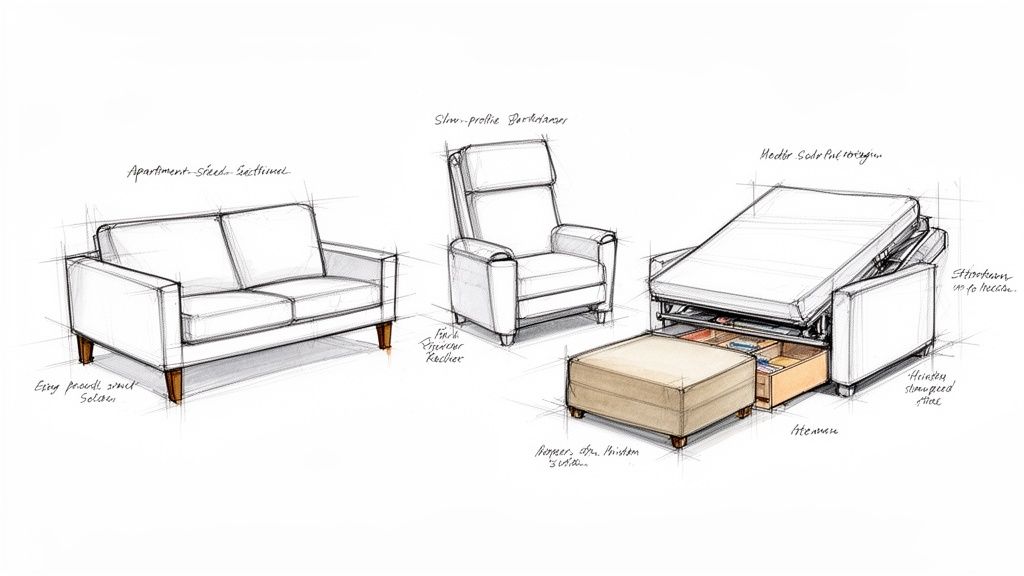
- The Modern Sleeper Sofa: Forget the clunky, uncomfortable versions of the past. Today's sleeper sofas offer fantastic seating by day and transform into a genuinely welcoming guest bed by night, saving you from needing a dedicated guest room.
- The Essential Storage Ottoman: This little workhorse can be a footrest, extra seating, and a coffee table (just add a tray). The best part? Most of them open up to reveal hidden storage for blankets, board games, or remote controls.
- The Game-Changing Lift-Top Coffee Table: This is a top recommendation. It provides storage and lifts to a comfortable height for working on a laptop or enjoying a meal, turning your seating area into a temporary dining spot or home office.
Scale and Proportion Are Your Secret Weapons
One of the most common mistakes in small living rooms is choosing furniture that's just too big. An overstuffed, bulky sofa will completely dominate the room, making it feel cramped and off-balance. The secret is finding pieces that are scaled appropriately for the space.
This is where apartment-sized furniture is a total game-changer. So many top brands now design entire collections specifically for compact living, giving you all the style and comfort in a more modest footprint.
An apartment-sized sectional from a quality brand like Flexsteel can give you the generous seating you're looking for without overwhelming the room. In the same way, a slim-profile power recliner delivers all the comfort of a traditional one but with a much sleeker, space-conscious design.
When you’re ready to start looking, our guide to the best furniture for small spaces is a great place to find perfectly proportioned pieces.
To make this easier, think about making some simple swaps. We've put together a quick comparison to help you visualize the impact of these smart choices.
Smart Furniture Swaps for Small Living Rooms
| Instead of This… | Choose This Smart Alternative… | Why It Works |
|---|---|---|
| A bulky, rolled-arm sofa | A sleek, track-arm sofa | The slim profile saves precious inches and looks much lighter visually. |
| A solid, skirted armchair | A chair with exposed legs | Seeing the floor underneath creates an illusion of more space and airiness. |
| A standard coffee table | A lift-top table or nesting tables | You gain storage, a flexible work/dining surface, or tables you can tuck away. |
| A large media console | A floating or wall-mounted unit | It frees up floor space and draws the eye upward, making the room feel taller. |
These simple trades can dramatically change the feel of your room, making it function better and feel more open without sacrificing style.
The "Leggy" Furniture Trick
Here’s a simple but incredibly effective visual trick: choose furniture with exposed legs. Sofas, chairs, and consoles that are raised off the ground instantly create an illusion of more space because your eye can see the floor continuing underneath them.
This "leggy" furniture feels lighter and less imposing than heavy, skirted pieces that sit like a block on the floor. Think about how brands like Hooker Furniture often use elegant, visible legs in their designs. It’s a deliberate choice—not just for aesthetics, but to create a sense of openness and help light move more freely around the room.
How You Can Choose the Perfect Sofa
The sofa is almost always the anchor of the living room, so it deserves some serious thought. Get this piece right, and everything else falls into place.
First, here’s how you can look at the arm style. Sofas with low-profile or track arms have a much smaller visual footprint than those with big, rolled arms. That one detail can easily save you several inches of space.
Next, consider the depth. A sofa with a shallower depth provides plenty of comfortable seating without jutting too far into the room, keeping those all-important traffic paths clear. Always, always measure the depth before you buy.
Finally, think about the configuration. While a traditional three-seater sofa works well in many small rooms, sometimes a compact sectional tucked into a corner can actually provide more seating and define the zone more effectively than a separate sofa and chair.
By focusing on multi-functionality, proper scale, and smart design details, you can assemble a team of furniture that makes your small living room a true champion of comfort and style. If you want to see these concepts in action, we invite you to visit our showrooms to experience these versatile pieces for yourself.
Using Light, Mirrors, and Color to Expand Your Room
Once your furniture layout is locked in, it's time to pull out a few classic design tricks. This is where you can make the room feel much bigger than it actually is. Think of light, mirrors, and color as your most powerful tools for visual expansion—they work together to manipulate perception, making walls seem to recede, ceilings feel higher, and dark corners simply vanish.
You're moving beyond the physical arrangement now and starting to shape the feeling of the room. Mastering these techniques is one of the most impactful things you can do for a small living room, creating a space that feels bright, open, and genuinely inviting.
Create Layers of Light
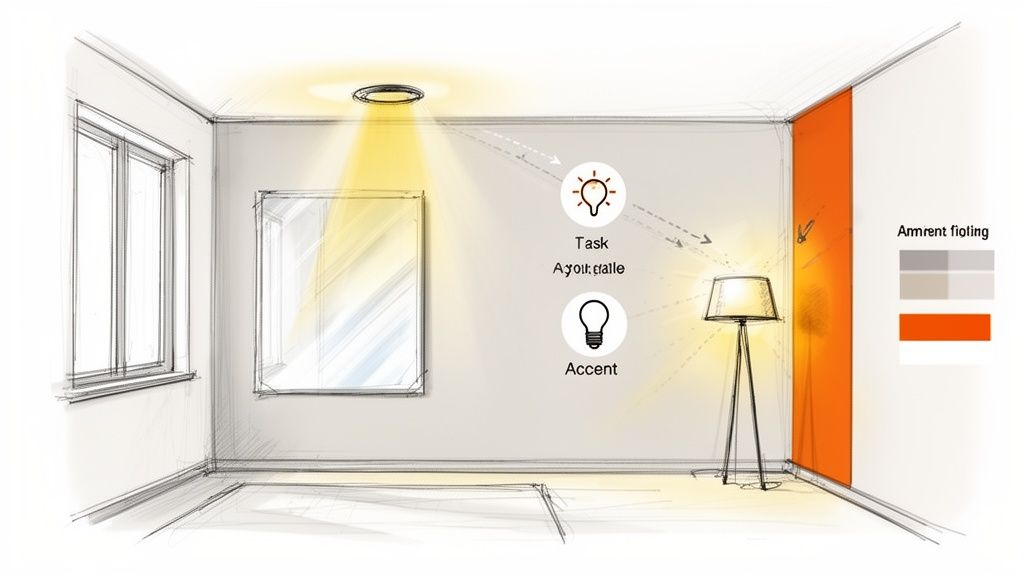
A single, lonely overhead fixture is the enemy of a cozy, spacious-feeling living room. It casts harsh shadows into the corners and creates a flat, uninspired vibe that can actually make a space feel smaller. The real secret is to create a layered lighting scheme, a strategy that combines different types of light to add much-needed depth and dimension.
- Ambient Lighting: This is your room’s overall glow. While it often comes from a central ceiling fixture, you can use a stylish flush-mount or semi-flush-mount light in a small space so you don't visually lower the ceiling.
- Task Lighting: This is all about focused light for specific activities. A beautiful floor lamp next to an armchair instantly creates a perfect reading nook. A sleek table lamp on a side table is perfect for conversations or just setting down a drink.
- Accent Lighting: Think of this as the "jewelry" for your room. You can use it to highlight artwork, architectural details, or even a beautiful plant in the corner. Small, adjustable picture lights or uplights are great for drawing the eye around the room, which creates visual interest and a sense of depth.
By combining these three layers, you completely eliminate those gloomy, shadowy areas and make the entire room feel more dynamic and expansive. It’s a simple change that makes a massive difference in how the space feels.
The Magic of Mirrors
There's a reason mirrors are one of the oldest tricks in the designer's handbook: they just work. A well-placed mirror can literally double your space visually and bounce light all over, making the room feel significantly brighter and more open.
The key is strategic placement. Don’t just hang a mirror on any empty wall. For the biggest impact, place a large mirror directly across from your main window. This will reflect all that gorgeous natural light and the view outside, creating a powerful illusion of another window and extending the sense of space.
A tall, floor-length mirror tucked into a corner or at the end of a narrow hallway can also do wonders. It draws the eye upward and reflects the room from a new angle, which adds depth and makes the area feel far less confined.
For an extra touch of elegance, you can use a piece like the Hooker Furniture Melange Adrian Mirror. Its sophisticated design is a beautiful decorative element in its own right, but it also serves that crucial function of amplifying light and space.
Of course, managing light is about more than just adding it—it's also about controlling it. If you're dealing with unwanted reflections, learning how to reduce glare on TV for clear viewing can make the room much more functional.
Debunking the All-White Myth
For years, the go-to advice for small rooms was to paint everything stark white. While white can certainly make a room feel airy, it’s far from your only option. Honestly, sticking to a single, flat color can sometimes make a space feel boring and boxy. The real goal is to use color with intention to create depth and personality.
Light, neutral colors are your friends here. Shades of soft gray, warm beige, or pale blue are fantastic choices because they reflect light well and give the impression that the walls are receding. This creates a serene, open backdrop for your furniture and decor.
But don’t be afraid of a little drama! A bold accent wall can be an incredibly effective strategy in a small living room. You can try painting the wall that’s furthest from the entrance a deep, rich color—like a charcoal gray or a moody navy. This creates a strong focal point that draws the eye all the way through the space, giving the illusion of greater depth. The other, lighter walls then feel even further away by comparison.
The trick is to maintain a cohesive color palette. Pick two or three main colors and use them consistently throughout the space in your paint, textiles, and accessories. This creates a unified look that feels intentional and calm, rather than chaotic. This is your home, and the colors you choose are your opportunity to infuse it with your unique personality.
Taming the Clutter: Smart Storage Solutions
Let's be honest: nothing makes a small living room feel cramped faster than clutter. It’s the visual static that fights for your attention, crowds every surface, and steals valuable floor space. Getting a handle on it isn't just about cleaning up; it's a core design strategy for making your home feel calm, open, and inviting. This is where you get to be the hero of your own space, creating smart systems that keep things serene for the long haul.
The trick is to stop thinking of storage as an afterthought and start seeing it as a key part of your decor. The best solutions are both practical and beautiful, blending right into your design while working overtime to keep everything neatly tucked away.
Think Vertically: Reclaim Your Floor Space
Here’s one of the most effective tricks in the book for small living rooms: draw the eye upward. When you’re short on square footage, the only direction to go is up. Using your vertical space is a brilliant way to add storage without adding bulk, which instantly makes the room feel taller and more spacious.
Tall, slender bookcases are a classic for a reason. They give you tons of shelving for books, decor, and attractive storage bins while taking up just a tiny patch of floor. Floating shelves are another fantastic choice. They have a clean, modern vibe and can be mounted above a sofa or TV to show off your favorite things without eating up a single inch of floor space.
This isn't just about adding shelves; it's about shifting the room's proportions and creating a much more expansive feeling.
Think of your walls as untapped real estate. A well-placed set of shelves can be just as impactful as a piece of art, adding personality and function in one elegant solution.
Master the Art of Hidden Storage
While open shelving is perfect for a curated display, every home has stuff we’d rather not have on view—the extra blankets, the tangle of remotes, the kids' toys. This is where clever, hidden storage becomes your secret weapon for a perpetually tidy living room.
You can find all sorts of hardworking furniture that pulls double duty, hiding clutter right in plain sight. These pieces are the unsung heroes of small-space design, offering so much more than meets the eye.
A few smart options you can use:
- Lift-Top Coffee Tables: These are an absolute game-changer. They offer a deep, hidden compartment perfect for board games or magazines, and the top often lifts to create a handy surface for working or a casual dinner.
- Storage Ottomans: A must-have for any small living room. An ottoman can be a footrest, extra seating when guests pop over, and a discreet storage chest all in one.
- Media Consoles with Doors: Instead of an open TV stand that shows off a mess of cables, opt for a console with solid doors or drawers. This lets you tuck away all the electronics and media essentials, creating a clean, organized focal point. A piece like the Hooker Furniture Entertainment Console brings both sophisticated style and the practical, concealed storage you need.
Curate Your Decor Like a Pro
Once your storage is sorted, it's time to think about what you actually put on display. Decorating a small space really is a "less is more" game. That doesn't mean your room has to be sterile or lack personality—far from it. It just means every single item you display should be chosen with purpose.
Rather than filling every surface, pick a few meaningful pieces you absolutely love. Try grouping smaller items in clusters of three or five to create a cohesive little scene, and always leave some empty space—what we designers call "breathing room." That negative space is just as important as the objects themselves; it’s what keeps the room from feeling visually chaotic.
To get started, here’s a simple way you can decide what stays, what gets stored, and what has to go:
- Keep and Display: These are your treasures—the items you love that add to your room's style. They’ve earned their spot on a shelf or table.
- Keep and Store: These are the functional things you need but don't want to look at all day. Give them a home inside your new hidden storage.
- Let Go: These are things that no longer serve a purpose or bring you joy. Donating or discarding them is the final, freeing step to a truly decluttered home.
By mastering these simple strategies, you can create a living room that’s not just beautiful but also incredibly functional. If you need a hand finding that perfect storage piece, our design experts at Miller Waldrop are here to guide you to solutions that will make your space feel organized, spacious, and completely you.
Putting It All Together
You've done the hard work—you’ve measured, sketched, and learned all the tricks of the trade for making a small living room feel expansive and inviting. With a solid plan in hand, you’re no longer just dreaming; you’re ready to start building. Think of this as the fun part, where your vision finally comes to life.
This is where the magic really happens. It’s that exciting moment when floor plans on paper and saved inspiration photos become a real, tangible space you can enjoy. Every choice you’ve made, from picking a perfectly scaled sofa to strategically placing a mirror, will now come together to create a room that truly reflects you and supports your lifestyle.
Let’s Find Your Perfect Finishing Touch
Sometimes, even with the best plan, you just need a second pair of eyes to confirm you’re on the right track or help you find that one missing piece. If you hit a roadblock or simply want to see your options up close, our design team at Miller Waldrop is ready to jump in. We’ve been helping furnish homes across West Texas and Southeastern New Mexico for years, so we understand the local style.
Your home should be a place of comfort and pride, not a source of stress. We’re here to help you solve any design puzzle, big or small, so you can create a space you absolutely love coming home to.
We’d love for you to stop by our showrooms in Lubbock, Hobbs, or Ruidoso Downs. Come see and feel incredible pieces from brands like Flexsteel and La-Z-Boy in person. Let us help you find exactly what you need to complete your vision. Your dream living room isn't just a possibility—it's right around the corner.
Tackling Your Toughest Small Space Questions
Even with a solid plan, a few tricky questions always seem to come up when you're working with a small living room. Let's get into some of the most common challenges you might face and how you can solve them.
One of the biggest headaches is always the awkward layout. We've all seen them—the rooms with weird angles, a window that's just a little off-center, or so many doorways it feels like a hallway. The secret isn't to fight the room's quirks, but to lean into them.
Instead of shoving furniture against every wall, try floating your main seating area in the center of the room. You can use a great area rug to really define that zone. This trick instantly creates a "room within a room" and helps you map out clear, easy-to-navigate pathways around it.
What Size Rug Should I Get for My Small Room?
This is a big one. So many people accidentally make their room feel smaller by choosing a rug that's just too tiny. A little "postage stamp" rug floating under just the coffee table visually chops up the floor and shrinks the space.
Your goal should be to find a rug that’s big enough for at least the front legs of your sofa and any chairs to sit on it comfortably.
This one move is a game-changer. It pulls the whole seating area together, making it feel like a single, cohesive, and more expansive space. Trust me, when you're on the fence, it's almost always better to go a little bigger.
A well-sized rug is the anchor for your entire furniture plan. It grounds the room and pulls all the separate pieces together, creating a look that feels polished, intentional, and complete.
Can I Really Use Dark Colors in a Small Space?
Yes, you absolutely can! Let's officially put that old, outdated rule about only using white to rest. While light, airy colors are fantastic for bouncing light around, a dark, moody color can create a stunning sense of depth and coziness.
The trick is to be strategic. Think about painting a single accent wall—the one furthest from the door is usually a great choice—in a rich charcoal, a deep navy, or an emerald green. This clever technique draws your eye all the way to the back of the room, creating an illusion of more space.
Just be sure to balance it with lighter colors on the other walls, plenty of good lighting, and reflective surfaces (like mirrors!) to keep the room from feeling closed-in. It's a bold choice, but one that can give your small room a huge dose of style and personality.
At Miller Waldrop, we believe you’re the hero of your home’s story. If you’re looking for that perfect, cleverly designed piece to complete your space, our team is here to help you find it. Discover beautiful and functional furniture like the Hooker Furniture Melange Adrian Mirror to make your vision a reality.