

How to Fix Sagging Sofa Cushions and Restore Your Comfort

That sinking feeling you get when you flop onto the couch is more than just a minor annoyance. It’s a tell-tale sign that your sofa's internal support system is officially tired. Sagging cushions almost always point to one thing: the foam or fiberfill inside has compressed over time, losing the plumpness and resilience it once had.
Thankfully, you don't have to live with it. Restoring your sofa’s comfort is totally doable, and it all starts with empowering you to figure out what's really going on beneath the fabric.
Understanding Why Your Sofa Cushions Sag
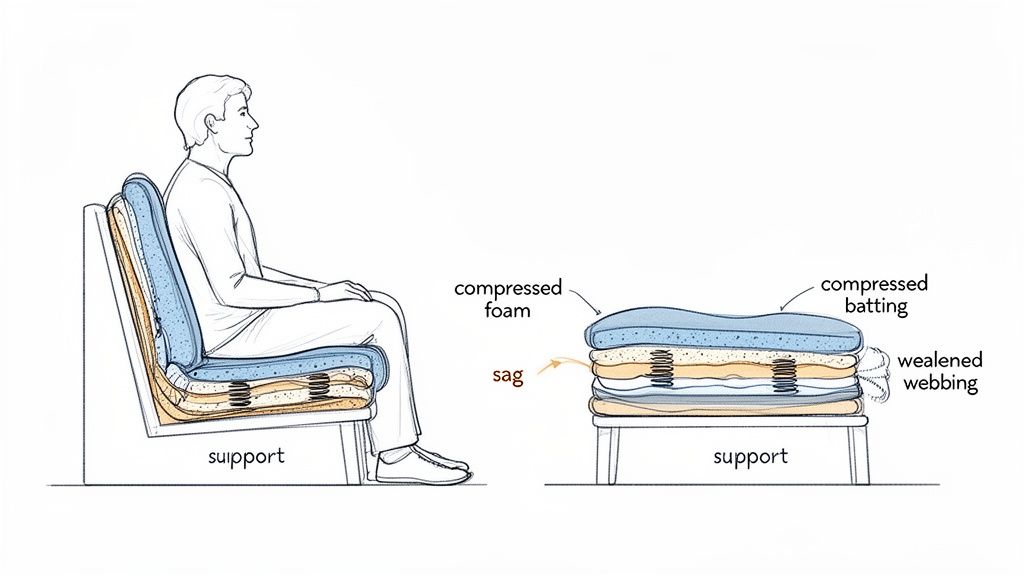
It's a common story. The sofa you once loved now has permanent butt-prints, turning a relaxing evening into an uncomfortable ordeal. This isn't necessarily a sign of a bad purchase; it's just a natural part of a well-loved sofa's life. All those movie marathons, afternoon naps, and family gatherings put constant pressure on the internal materials.
The main culprit is usually the cushion core itself. Day after day, the very structure of the foam or fiberfill inside begins to break down. Think of the filling as a massive network of tiny springs—with repeated use, they just lose their ability to bounce back, leaving you with a permanent sag.
The Breakdown of Cushion Materials
The stuff inside your cushions is designed for comfort, but it isn't indestructible. Here's a closer look at what’s likely happening inside your sagging sofa:
- Foam Compression: The most common filling, polyurethane foam, simply loses its firmness after years of use. The tiny air pockets that give it that supportive feel collapse, making it feel dense and flat.
- Fiberfill Matting: If your cushions are filled with polyester fiber (often called poly-fil), they were probably incredibly plush at first. Over time, however, those fibers clump together and flatten out, creating uncomfortable lumps and dips.
- Down and Feather Compaction: While wonderfully luxurious, natural fillings like down and feathers need a lot of fluffing. Without regular maintenance, they compress and shift away from the center, leaving the cushion flat and unsupportive right where you sit.
This is such a common headache for homeowners that it’s actually driving major changes in the furniture industry. Sagging cushions are one of the top frustrations we hear about, turning a beautiful centerpiece into an eyesore. This widespread issue has fueled a huge demand for more durable materials, with the global furniture foam market projected to hit $77.36 billion by 2029. You can read more about the growing demand for better cushion materials on OpenPR.com.
Beyond the Cushion: Checking the Support System
Sometimes, the problem runs deeper than the cushions themselves. If you've fluffed, plumped, and rotated everything with no luck, it’s time to look at the sofa's foundation. The support system underneath the cushions is just as critical for providing a firm, even seat.
Key Takeaway: A sagging cushion is often just a symptom. The real cause might be the cushion filling, the underlying support springs, or even both. Pinpointing the root problem is your first step toward a fix that actually lasts.
Things like weakened springs, stretched-out webbing, or even a cracked frame can all create that sinking feeling. Before you spend time and money on new cushion fillings, it’s absolutely crucial to inspect this hidden support structure.
With this knowledge, you can diagnose the problem like a pro and choose the most effective solution. This is how you reclaim your sofa's comfort and make your living room the welcoming space it was always meant to be. Of course, if you decide it's time for an upgrade, here's how to choose the perfect sofa for your family’s needs so you can find a new one built for lasting support.
Quick DIY Fixes to Revive Your Cushions
Alright, you’ve played detective and figured out what’s causing your sofa to sag. The good news is, you don't need to call in a pro just yet. Most of these fixes are surprisingly simple—we're talking about an afternoon project that can bring your couch back from the brink.
These aren't just temporary band-aids. They're effective, budget-friendly ways to restore comfort and support, putting you back in control of your living room's centerpiece.
Restuffing for a Quick Plump-Up
Often, the simplest solution is the best one. If your cushions are looking a little sad and flat, adding more filling is the fastest way to bring them back to life.
Check for zippers on your cushion covers. If you have them, you're in luck. For those common polyester fiberfill (poly-fil) cushions, just grab a bag from any craft store. The trick is to work the new filling into the old stuff, breaking up any compacted clumps you find. Make sure you get it into the corners and areas that get the most wear. Don't just cram it in there; tease the fibers apart and distribute everything evenly to avoid a lumpy result. This one little step can make an immediate difference.
Expert Tip: I always recommend overstuffing the cushion just a bit. New filling tends to settle and compress over the first couple of weeks, so starting with a little extra plumpness ensures it settles into that "just right" level of firmness.
The Foam Core Wrap: A Secret for Added Loft
What if your cushions have a solid foam core that’s just lost its oomph? As long as the foam isn't crumbling, you can give it a new lease on life by wrapping it. This technique adds a fantastic layer of plushness and support right where you need it.
Your secret weapon here is quilt batting. It’s a soft, dense sheet of material that adds a perfect, uniform layer of padding.
- First, pull the foam core out of its cover.
- Next, cut a piece of quilt batting big enough to wrap around the entire foam block, just like you’re wrapping a present. If it feels like it needs a lot of help, go ahead and use a second layer.
- A light mist of spray adhesive is great for holding the batting in place so it doesn’t shift or bunch up.
- Finally, carefully work the newly wrapped foam core back into its cover. It's going to be a snug fit, and that’s a good thing! That tension is what creates a firm, smooth, like-new surface.
This not only fills out the baggy cushion cover but also adds a soft top layer that masks any minor dips or indentations in the old foam.
Bolstering the Foundation with Under-Cushion Support
Sometimes the cushions themselves aren't the only problem. The issue can lie with a weakening foundation underneath. If you’ve noticed the springs or webbing are starting to give way, a support board is a fantastic and immediate fix for sagging. It creates a solid platform, preventing the cushions from sinking into the frame.
You can find pre-made sofa support boards online, or you can easily make your own. Just measure the seating area of your sofa's frame (underneath the cushions) and have a piece of ¼-inch plywood cut to fit.
Simply slide the board into place under the cushions. You'll feel the difference right away—it creates a much firmer and more supportive seat. This is a real hero move for getting a few more good years out of a sofa with a tired support system.
While you’ve got the cushions off, it’s the perfect time to give your upholstery a little attention. For specific advice on keeping different materials looking their best, we have a guide on how to clean leather furniture naturally. With these simple DIY tricks, you can confidently tackle those sinking spots and get back to enjoying your couch.
Choosing the Right Replacement Cushion Foam
If you’ve tried the quick fixes and your sofa cushions are still sinking, it’s time to go for the gold standard of repairs: replacing the foam core. This is hands-down the most effective way to bring a couch back to life. Honestly, with the right foam, it can feel even better than the day you bought it.
Getting into the world of upholstery foam might seem a bit technical, but you only need to know a few key terms to make a smart choice. Think of it less as a chore and more as an opportunity to customize your sofa's feel and durability for the long haul.
You’re not alone in this, either. The global market for sofa cushions is booming—it was valued at $24.96 billion in 2024 and is expected to hit $37.32 billion by 2031. That tells you a lot of people are tired of stock cushions that lose 30-50% of their support after just a couple of years. They're looking for an upgrade, just like you. For a deeper look at the numbers, you can check out market trends on Data Insights Market.
Decoding Foam Density And Firmness
To get this right and avoid sagging cushions in the future, you need to understand two critical ratings: density and ILD (Indentation Load Deflection).
-
Density is all about how much the foam weighs per cubic foot. A higher number means more material is packed in, which directly translates to a longer lifespan. Simply put, denser foam is more durable foam.
-
ILD measures the firmness. It’s the number of pounds of pressure needed to squish the foam by 25%. A low ILD means a softer, plusher feel, while a high ILD gives you that firm, supportive sit.
Key Takeaway: Here's the most important thing to remember: Density equals durability, while ILD equals feel. You can have a very durable high-density foam that feels incredibly soft, or a flimsy low-density foam that feels rock-hard. For the best result, aim for a high-density foam with an ILD that feels right to you.
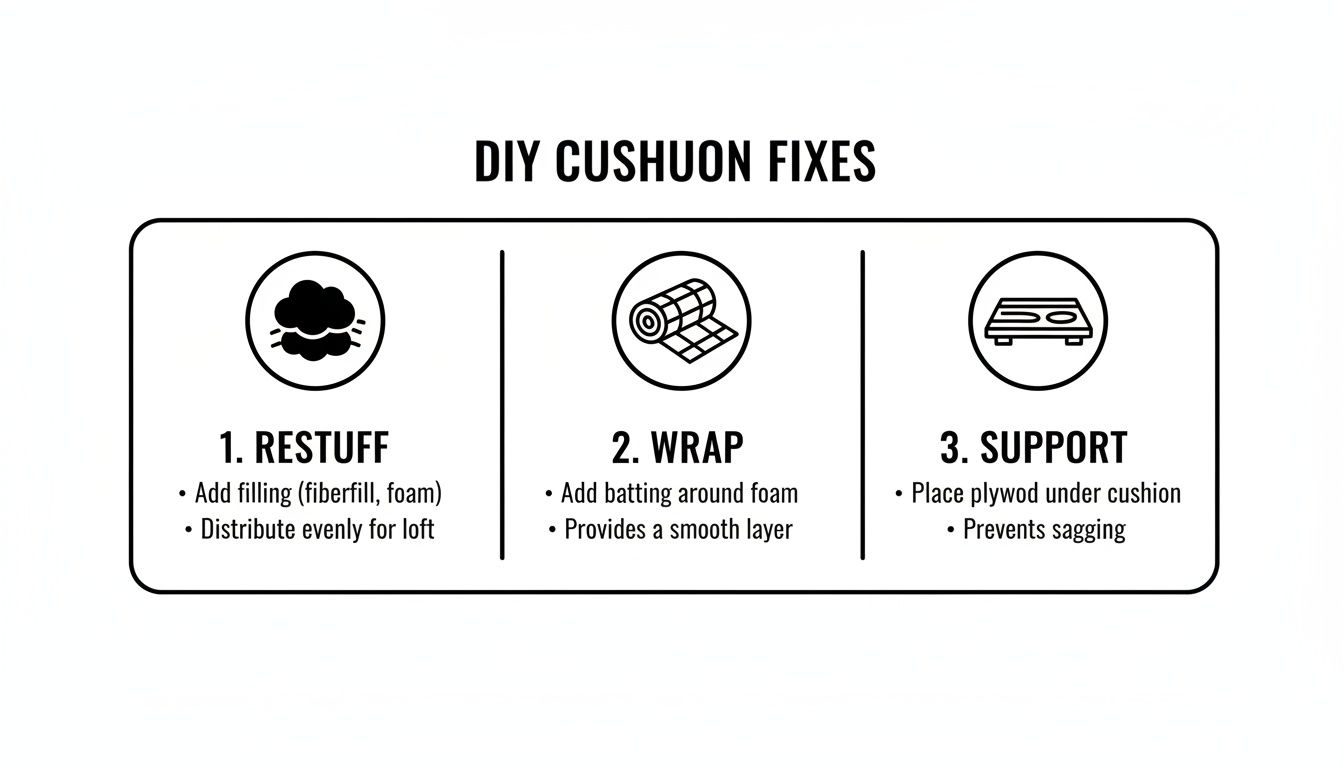
While the fixes shown above can provide some temporary relief, swapping out the foam core is the only way to solve the problem at its source for good.
Comparing Cushion Foam Types
Once you have a handle on density and ILD, you can start looking at the actual foam types. Each one offers a different blend of comfort, longevity, and price, so you can find the perfect fit for your family and budget.
To make it easier, here's a quick breakdown of the most common options we see and recommend.
Comparing Cushion Foam Types
| Foam Type | Key Benefit | Typical Lifespan | Best For |
|---|---|---|---|
| HD Polyurethane | Balanced & Affordable | 5-8 years | Everyday family room sofas and high-traffic areas |
| Memory Foam | Contouring Pressure Relief | 7-10 years | A top layer for a "hugging" feel; people who want to sink in |
| Natural Latex | Bouncy & Eco-Friendly | 12+ years | Premium feel; allergy-sufferers; those wanting a resilient, springy cushion |
Ultimately, choosing the right foam comes down to how you use your sofa and the feel you're after.
High-Density (HD) Polyurethane Foam is the go-to for a reason. It's the workhorse of the industry, offering a fantastic balance of support and comfort without breaking the bank. For any seat that gets daily use, I always recommend a density of at least 1.8 lbs, but pushing that to 2.0 lbs or higher will give you the best durability.
Memory Foam (Viscoelastic Foam), famous from the mattress world, is excellent if you love a cushion that molds to your body. It excels at pressure relief. A popular pro-tip is to use it as a top comfort layer bonded to a firmer HD foam core. This gives you that contouring feel without sacrificing the deep-down support you need.
Natural Latex Foam is a premium, eco-friendly option made from rubber tree sap. It has a uniquely buoyant and springy feel that bounces back into shape immediately. It's also naturally hypoallergenic and resists dust mites, making it a top-tier choice if allergies are a concern in your home.
Of course, choosing the foam is just one part of the equation. The fabric covering it plays a huge role in the final look and feel. To learn more about your options, have a look at our guide on everything you need to know about upholstery materials.
By understanding these options, you're not just fixing a problem—you're genuinely upgrading your sofa to be the comfortable heart of your home for years to come.
Taking a Look Under the Hood: Inspecting for Deeper Structural Problems
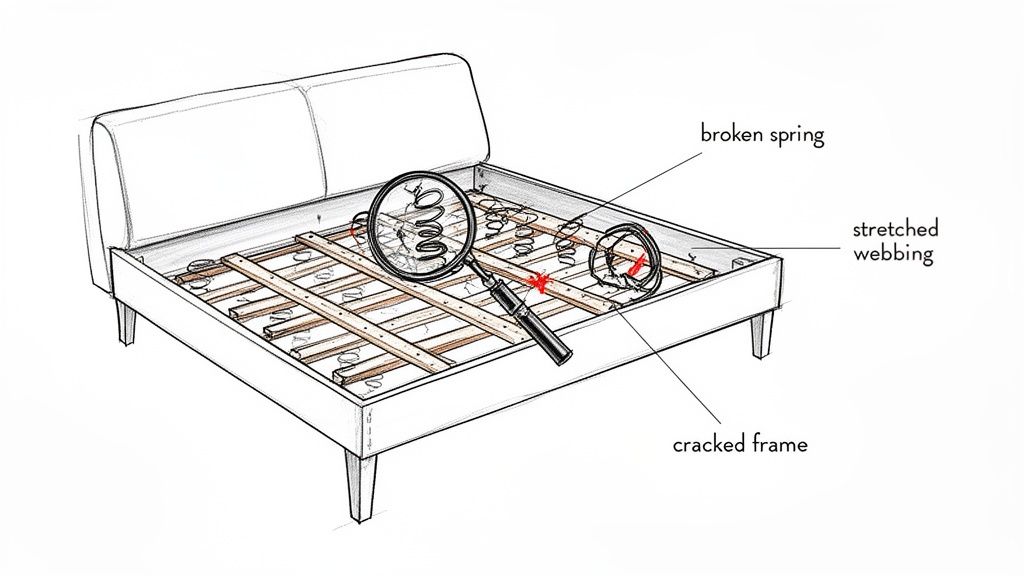
So, you’ve fluffed, plumped, and maybe even swapped out the foam, but you’re still sinking into that all-too-familiar crater. When the cushions aren’t the problem, it’s time to play detective. The real issue is almost always hiding in the foundational support system underneath.
Getting to the bottom of this is what separates a temporary patch from a real, lasting fix. Once you find the root cause, you'll know exactly what to do—and you won't waste any more time or money on cushion fillers that don't solve the underlying problem.
Getting a Clear View of the Foundation
First things first, pull all the seat cushions off the sofa. This gives you a direct view of the support deck, and honestly, you can often spot the problem right away.
Grab a flashlight and do a thorough scan of the entire surface where the cushions usually sit. You're looking for anything out of the ordinary. Does one side sag lower than the other? Do you see any obvious tears, gaps, or busted parts?
Next, use your hands to press down firmly across different areas of the deck. What you’re feeling for is consistency. A healthy support system will feel firm and springy. A damaged one will feel spongy, give way too easily, or even make creaking or popping sounds as you apply pressure.
Identifying the Usual Suspects
Once you get a closer look, you’ll likely find one of these common culprits is to blame for your sagging sofa.
- Busted or Unhooked Springs: Most sofas use either zigzag-style (sinuous) springs or individually coiled ones. A broken sinuous spring is often easy to spot—it’ll be visibly snapped or will have popped out of its clip on the frame. If you have coiled springs, look for one that’s bent, broken, or permanently smushed down.
- Stretched-Out or Torn Webbing: Instead of springs, some furniture uses a grid of interwoven webbing made from jute or elastic. Over years of use, this webbing can stretch and lose its tension, creating a hammock effect. In more severe cases, you might find the webbing has ripped away from the frame entirely.
- A Cracked or Broken Frame: The wooden frame is the ultimate foundation. Check the support slats and the main structural beams for any cracks, splits, or fractures. A compromised frame is a serious problem that will cause major sagging no matter how good your cushions or springs are.
Your Action Plan: Pinpointing the exact structural failure is empowering. It means you’re no longer just dealing with a "saggy couch"—you’re a homeowner who knows precisely what needs fixing. That clarity is the first step to getting your sofa back in shape.
Sizing Up Your Repair Options
Discovering a structural issue isn't a disaster; it’s just a decision point. A minor problem, like a sinuous spring that has simply slipped out of its clip, can often be wrangled back into place with a good pair of pliers.
For bigger problems, like a broken spring or torn webbing, you have a choice to make. You can find DIY repair kits, but be prepared—they require the right tools and a bit of patience. If you've found a cracked frame or a total failure of the support system, it's time to weigh the cost of a professional repair against the sofa's value.
This is the moment you take control. You can now make an informed decision that works for your home and your budget. If the repair seems too daunting or you're simply ready for an upgrade, our team at Miller Waldrop is here to help you find a durable, well-built replacement. Our collection of living room furniture features brands known for their solid construction, giving you comfort and peace of mind for years to come.
Repair or Replace? How to Know When It’s Time for a New Sofa
Every sofa has a lifespan. Even the most cherished family couch eventually gets to a point where you have to ask the tough question: is it worth fixing, or is it time to let go? Making the call between a big repair and a brand-new replacement is a major decision, and it’s one you want to feel good about.
This isn’t just about the cash you spend today, but about the comfort and value you'll get for years. Let's walk through how to weigh the cost of a major fix against the long-term benefits of a new, well-built sofa, so you can find the right answer for your home and your budget.
Crunching the Numbers on a Quality Repair
First things first, let's talk cost. Before you jump into a repair, you need a clear picture of what you’re getting into. A simple DIY foam swap for a couple of cushions can be pretty easy on the wallet.
But if the problem runs deeper—think broken springs, a weak frame, and professional reupholstery—the bill can climb surprisingly fast. Always get a detailed quote from a pro. Once you have that number, put it side-by-side with the cost of a new, quality sofa. A good rule of thumb? If the repair is going to cost 50% or more of what you’d spend on a replacement, investing in something new is almost always the smarter financial move.
Taking an Honest Look at Your Sofa’s Condition
Money aside, you need to give your sofa a brutally honest evaluation. Are its "bones" still good, or are you just putting a band-aid on a bigger problem? The frame is everything.
- Frame Integrity: Is the frame solid hardwood, or is it flimsy particleboard? If the core structure is cracked, warped, or wobbly, no amount of new padding will save it. A strong frame is worth the investment; a weak one is a money pit.
- Fabric Wear and Tear: Look past the saggy cushions for a moment. How’s the upholstery holding up? If it's faded, badly stained, or torn, you're looking at reupholstery costs on top of everything else. It can also be helpful to consider how other common sofa issues are addressed, like when you need to repair a rip in a leather sofa.
- Style and Fit: Does this sofa even fit your style anymore? Our tastes evolve, and sometimes a piece just doesn't work in the room, no matter how good its condition.
The Big Question: Ask yourself, "If this sofa were in perfect shape right now, would I still buy it for my home today?" If the answer is a hesitant "no," that's your sign. It's time to move on.
The Long-Term Value of Investing in Quality
Deciding to replace a worn-out sofa isn't admitting defeat. It’s a smart investment in your home’s comfort and your own peace of mind. When you choose a new, quality-built sofa from a brand known for durable, sag-resistant construction, you're buying yourself a solution that will last for years. If you need help knowing what to look for, our ultimate sofa buying guide is the perfect place to start.
This choice has a bigger impact, too. According to EPA data, a staggering 12 million tons of furniture wind up in U.S. landfills each year. A huge chunk of that comes from fixable issues like sagging cushions, which consumer insights show is one of the top complaints driving the furniture market. Instead of contributing to the cycle, choosing a durable, long-lasting sofa from the get-go is the most sustainable decision you can make—for your wallet and for the planet.
So, where do you go from here? Whether you feel ready to tackle a DIY repair or you're thinking it’s time for an upgrade, the goal is always the same: creating a home you truly love. You now have the know-how to figure out what's wrong and the confidence to fix it, putting you back in charge of your home's comfort.
At Miller Waldrop Furniture & Decor, we’re here to help you on that journey. With over 70 years of experience under our belts, we've learned a thing or two about helping families build a comfortable sanctuary where memories are made.
Your Partner in Comfort and Quality
Our team is ready to help you find high-quality replacement foam for your DIY project. Or, if you're ready for something new, we can introduce you to our favorite durable brands like Flexsteel and La-Z-Boy. These aren't just names; they represent manufacturers known for building furniture with superior, sag-resistant construction. It’s about getting a lasting solution right from the start.
Remember, a great sofa isn't just about what's inside. Keeping the fabric looking its best is just as important for its longevity. For common household spills, you can find great tips on removing red wine stains from your sofa to keep it looking fantastic.
Think of yourself as the hero of your home's story. We see our role as providing the high-quality pieces and expert guidance you need to create a space that feels just right—whether that means breathing new life into a beloved sofa or choosing a new one built to last.
When you invest in quality furniture, you spend less time frustrated by sagging cushions and more time actually enjoying your living space.
When you're ready to see what's out there, we invite you to browse our collection of living room furniture online or stop by the store. Our team would love to help you find the perfect foundation for your home, ensuring years of comfort and style. Let's build your perfect space together.
Your Sofa Cushion Questions, Answered
Still got a few questions? No problem. We've put together answers to the things we hear most often from customers dealing with sagging sofa cushions.
How Do I Stop My New Sofa Cushions From Sagging in the First Place?
The old saying holds true: an ounce of prevention is worth a pound of cure. If you want to get the most life out of your new sofa, the single best thing you can do is flip and rotate your cushions regularly. Aim for every week or two. It’s a simple habit, but it makes a huge difference by ensuring everything wears evenly.
Beyond that, try not to get too attached to one particular spot. We all have our favorite seat, but mixing it up spreads the load across the entire sofa instead of putting all the pressure on one area day after day.
A little light housekeeping helps, too. Vacuuming the cushions removes the dust and grime that can slowly break down the foam and fibers. When you start with a quality sofa, these small habits can add years to its life.
Is It Worth It to Get My Sofa Professionally Reupholstered?
Reupholstery can be a fantastic choice, but honestly, it’s only worth it if your sofa has great "bones." If you're working with a solid hardwood frame, a timeless design you still love, or a piece with a lot of sentimental value, then yes, investing in a professional job is a great call. It’s not cheap, but you get to completely customize the look.
On the other hand, if the frame is already wobbly or the style just doesn't fit your home anymore, you're almost always better off putting that money toward a brand-new, well-built sofa.
Our Pro Tip: Here's a good rule of thumb we use in the showroom: if the reupholstery quote is more than 50% of the cost of a similar new sofa, it’s probably time to invest in a new piece. You'll get a fresh frame, new springs, and a warranty to go with it.
Does That Plywood Trick Under the Cushions Actually Work?
It absolutely does! Slipping a thin piece of plywood or one of those purpose-built sofa support boards under the cushions is a classic quick fix for a reason. It creates a firm, even base that immediately counteracts the sag from tired springs or stretched-out webbing. You'll notice the difference right away.
This is the perfect stopgap solution. It can buy you a few more months of comfort while you decide whether to tackle a bigger repair or start shopping for a replacement. Just make sure you measure the inside of your sofa frame accurately to get the right size for a nice, snug fit.
Your home deserves furniture that looks great and feels supportive, and at Miller Waldrop Furniture & Decor, we're here to help you get there. Whether you need a little more advice on a DIY project or you’re ready to see what a truly durable, sag-resistant sofa feels like, our team is ready to help. Discover the difference that quality construction makes by exploring our living room furniture today.