

Fixing Sagging Cushions on Couch A Practical DIY Guide

That sinking feeling when you sit down is more than just an annoyance—it’s a clear sign your favorite spot is calling out for help. The good news? You can absolutely fix sagging cushions on a couch, and this guide is the tool you need to get it done. You'll learn how to diagnose the real problem and find actionable solutions to bring your sofa back to life, reclaiming it as the comfortable heart of your home.
Your Guide To Reviving a Sagging Couch
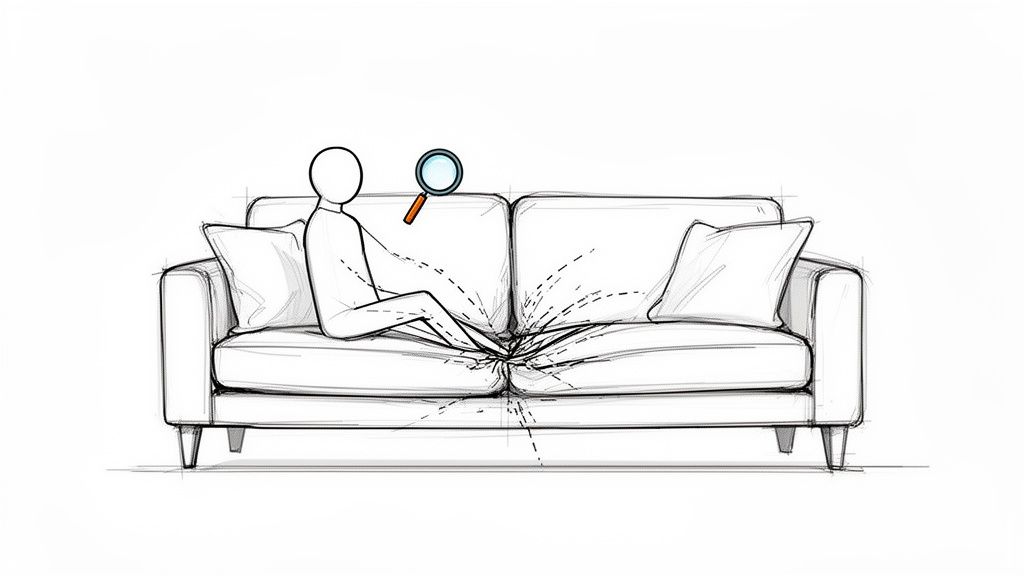
When your sofa starts to dip, it can make the whole room feel tired and uninviting. You might find yourself avoiding that one spot or constantly fluffing pillows with little to no effect. But before you even think about the cost and hassle of buying new, know that you have the power to solve this problem yourself.
This is about more than just a quick fix. It's about understanding your furniture and reclaiming the best seat in the house. Think of this guide as your roadmap, empowering you to turn that sunken sofa back into the comfortable centerpiece it was always meant to be.
What You Will Discover
My goal is to give you the confidence to become the hero of your own living room. With this guide, you’ll be able to:
- Diagnose the Problem: Is it just the cushion filling, or is something deeper going on with the support system or frame? You’ll have the tools to pinpoint the exact cause.
- Master DIY Fixes: From simple re-fluffing techniques to completely replacing foam inserts, you'll learn practical skills that make a real difference and save you money.
- Understand Quality Construction: You'll learn what makes a sofa last, giving you the knowledge to make smart choices for any future furniture investments.
The problem of sagging cushions is incredibly common. It’s one of the biggest complaints I hear from homeowners, and some studies show that up to 65% of sofa owners notice significant sagging within just 3-5 years. This is exactly why choosing quality from the start pays off down the road.
For families here in West Texas and Southeastern New Mexico, choosing a sofa with a durable foundation is key. Brands like Flexsteel are known for their 8-way hand-tied springs and high-density foam cores, which are built to withstand daily life. A well-built system like that can reduce sagging by up to 50% compared to many budget alternatives. You can find more insights on furniture durability from global market data to see how materials impact longevity.
By tackling those sagging cushions, you're not just improving comfort—you're extending the life of a piece of furniture that probably holds a lot of memories. It’s a worthwhile investment in your home and your own satisfaction.
Ultimately, whether you decide to do a simple weekend repair or realize it’s time for an upgrade, you'll have the knowledge to make the right call. And if you determine a new, quality-built sofa is the best solution for your family, our team is always here to help you find durable, stylish options that will stand the test of time. Your perfect living room is closer than you think.
So, Why Is Your Sofa Really Sagging?
Before you start ripping things apart or buying new foam, you have to play detective for a few minutes. A sagging cushion is just the most obvious symptom, and to get a fix that actually lasts, you need to uncover the root cause.
Your investigation starts with the cushion itself. Go ahead and unzip the cover—most are designed for easy access. Pull out the foam insert or fiberfill batting. Does it look sad and flat? Give it a good press with your hand. If it barely springs back or holds the indentation, you're looking at permanent compression. This is just a fancy way of saying the material has given up after years of supporting you through movie marathons and afternoon naps.
Look Beyond the Cushions
If the inserts still have some life in them but the sag is undeniable, it's time to dig deeper. The real problem might be hiding in the sofa's support structure.
Set the cushions aside and press down firmly on the sofa deck (the platform right under the cushions). It should feel consistently firm across the whole surface. If you find a specific dip or a squishy spot that gives way too easily, that’s a big red flag pointing to an issue with the springs or webbing underneath.
Here's a quick checklist for your inspection:
- Feel for Gaps: Systematically run your hands across the entire seating deck. You're searching for any significant voids or spots with zero resistance.
- Listen Closely: As you press down in different areas, pay attention. Any creaking, popping, or snapping sounds are often the calling card of a broken or disconnected spring.
- A Quick Look Underneath: This is the most telling step. If you can, carefully flip the sofa on its side or back. Grab a flashlight and look for anything out of the ordinary—cracked wooden slats, loose or snapped zig-zag springs, or webbing straps that are frayed and stretched out.
A sagging sofa isn't always a one-trick pony. What appears to be a simple cushion problem can easily be a symptom of a failing support system. Taking the time to check everything ensures you’re not just slapping a band-aid on a bigger problem.
Spending just five minutes on this diagnosis arms you with the knowledge to choose the right repair. You'll know for sure if you just need some new foam or if you're facing a more structural project.
And if your investigation reveals major frame damage or a web of broken springs that seems a bit much for a weekend project, that's okay. Sometimes, a replacement is the smarter move. Here’s how you can explore our collection of durable, sag-resistant sofas and seating options to find a new centerpiece built for the long haul.
DIY Techniques for Restoring Your Cushions
Alright, you've figured out why your sofa is sagging. Now it's time to roll up your sleeves and become the hero your living room needs. You can absolutely bring that tired, sinking couch back to life, transforming it into a comfortable centerpiece again without spending a fortune.
Before you start any major surgery, let's talk about the simplest fix: regular rotation and fluffing. It's just like rotating the tires on your car to ensure even wear. By flipping and swapping your cushions every couple of weeks, you prevent any single spot from bearing the brunt of daily use. If the cushions have zippers, open them up and give the filling a good massage to break up clumps and bring back some of the loft.
This quick diagnostic flow is a great starting point. Follow it to make sure you're tackling the real problem—whether it's the cushions themselves, the supports underneath, or the frame itself.
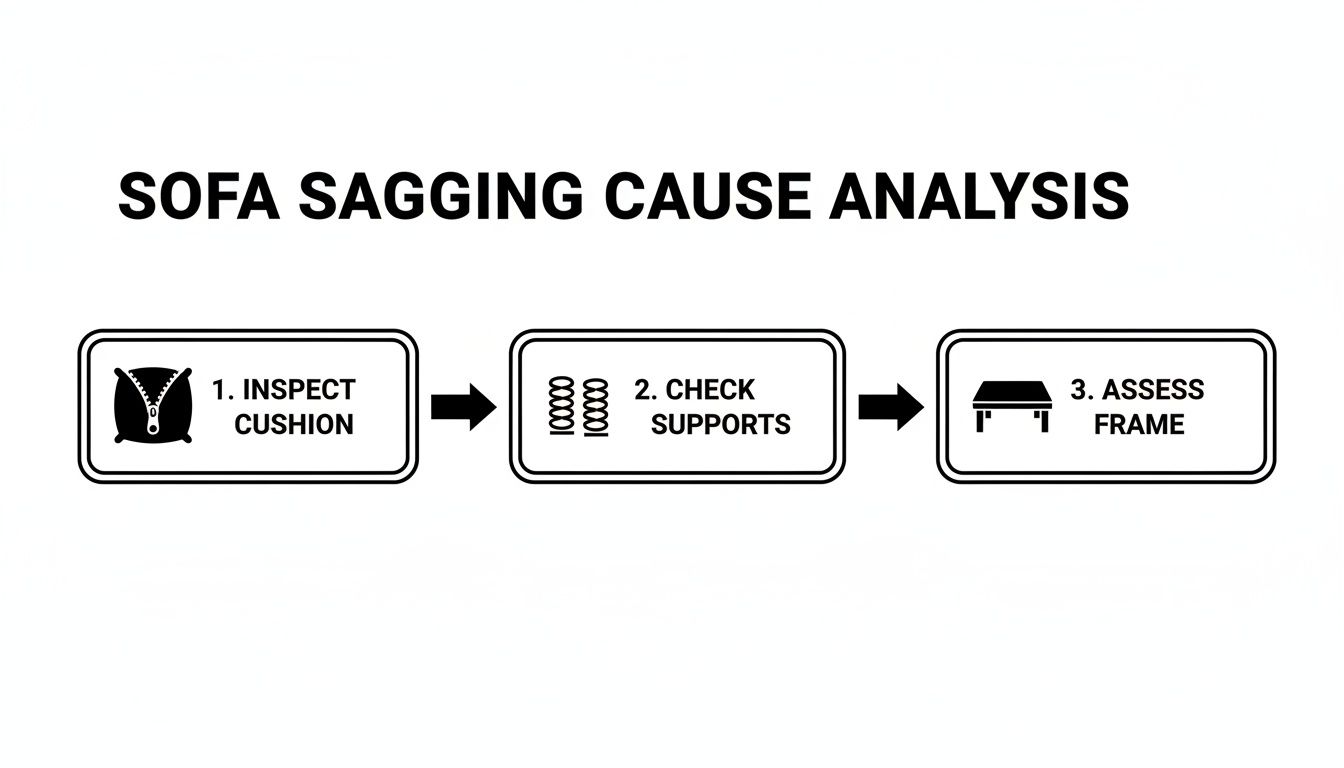
This little bit of detective work saves you from wasting time and money on a fix that won't solve the underlying issue.
Upgrading Your Cushion Filling
If a good fluff-up doesn't do the trick, your next move is to upgrade the filling. This is where you can make a huge difference in both comfort and longevity. You've got a few solid options, each with its own feel and price point.
- Polyester Batting: This is an easy and affordable way to add a soft, pillowy layer. You can simply wrap your existing foam core with fresh batting to plump it up. Think of it like adding a plush comforter inside the cushion cover—it fills out the corners and smooths everything over. You can find quality polyester batting right here to get started.
- High-Density Foam: For a truly supportive, firm seat, replacing the entire foam block is the best way to go. You'll want to look for foam with a density of at least 1.8 pounds per cubic foot. This stuff has serious resilience and will resist sinking way longer than the cheap foam often used in factory-made sofas.
- Down and Feather Blends: For that luxurious, sink-in feeling, nothing beats down. These inserts are incredibly soft but do require regular fluffing to keep their shape. They're usually the most expensive choice, but the comfort is top-notch.
Interestingly, the demand for these materials is on the rise. The global sofa cushion market was valued at a whopping US$24,960 million in 2024 and is projected to hit US$37,320 million by 2031. This isn't surprising when you learn there's been a 70% increase in consumer demand for replacement cushions. In fact, 52% of homeowners say sagging is the number one reason they consider getting a new sofa.
Installing New Foam Inserts
Swapping out your foam core is a totally manageable weekend project that delivers fantastic results. Once you’ve got your new high-density foam, the process is pretty straightforward.
Start by carefully measuring your cushion cover from seam to seam. A pro tip: add about a half-inch to both the length and width. This ensures the new foam will fit snugly inside the cover, giving you that full, plump look.
To cut the foam, an electric carving knife works wonders, but a sharp serrated bread knife will get the job done too. For a really professional finish, wrap the new foam block in a layer of polyester batting. A light coat of spray adhesive will hold it in place. This simple step softens the sharp edges and, trust me, makes it much easier to slide the new insert back into the cover.
By taking the time to properly measure and wrap your new foam, you’re not just fixing a sag—you’re crafting a custom seating experience that’s built to last.
While you have the cushions apart, it's the perfect time to give the covers a deep clean. If you're not sure about the best approach for your fabric, check out our guide on the best way to clean upholstery. Your whole sofa will feel brand new.
Fixing Problems Beneath The Cushions
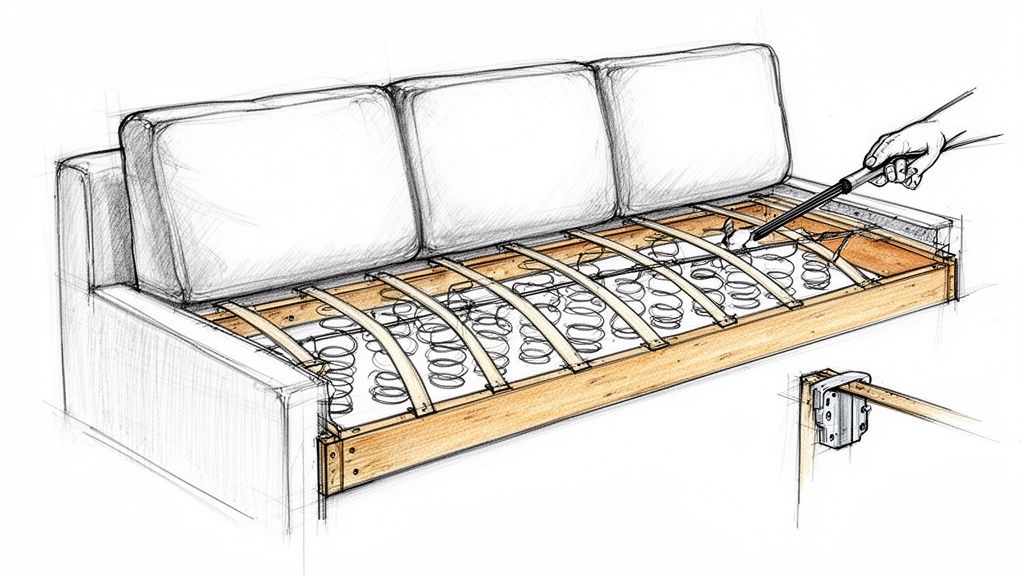
If you've fluffed your cushions and they're still in pretty good shape, but you're still sinking into a pit, the real problem is probably hiding underneath. The foundation of your sofa—the springs and frame—is the unsung hero of comfort. When that system starts to fail, even the plumpest cushions won't make a difference.
Before you can fix anything, you need to know what you’re looking at. Most sofas use one of three main support systems. Each one has its quirks and common failure points, but with a little investigation, you can figure out what’s going on and how to handle it.
Identifying Your Sofa's Support System
You'll need to get a look at the underside of your sofa, which usually means carefully flipping it over. There's often a thin fabric dust cover stapled to the bottom; you can gently pry those staples off to get a clear view of the inner workings. You’ll likely find one of these setups:
- Serpentine Springs: These look like big, S-shaped wires running in a zig-zag pattern from the front to the back of the sofa. They're the most common type you'll see in modern furniture because they're durable and don't cost a fortune to produce.
- Webbing: This is a system of interwoven fabric strips, either jute or elastic, stretched tight across the frame. It gives a slightly more flexible feel but can definitely lose tension over the years, which is a classic cause of sagging.
- 8-Way Hand-Tied Springs: This is the gold standard of sofa construction. It features individual coil springs, each tied to its neighbors and the frame with strong twine in eight different directions. This method provides incredible, long-lasting support but is more complex to repair and is usually reserved for high-end or vintage furniture.
Knowing your sofa’s internal structure is half the battle. A broken serpentine spring requires a completely different approach than stretched-out webbing, but both are surprisingly manageable fixes that can bring your sofa back from the dead.
Tackling Common Frame and Spring Repairs
Once you've got a clear view, start looking for the obvious culprits. A common issue with serpentine springs is a detached clip; one of the little metal brackets holding the spring to the frame has come loose, causing a very specific dip. More often than not, you can just use pliers to bend the clip back into shape and re-secure the spring. If a spring itself has snapped, you can find replacement S-springs and clips online or at an upholstery supply shop.
For sofas with webbing, the problem is almost always that the straps have stretched out. You can buy a tool called a webbing stretcher to pull the straps taut again before re-stapling them to the frame. It’s a game-changer. If the fabric is frayed or has zero elasticity left, your best bet is to just replace the strips entirely.
And don't forget to inspect the wooden frame itself. A cracked support slat can easily cause a major sag. Sometimes, all it takes is screwing in a metal brace or adding a reinforcing piece of wood to make the frame solid again. These fixes might sound a little intimidating, but they are the key to giving your cushions a solid foundation, adding years of life and comfort to your sofa.
Of course, if you get in there and find extensive frame damage or a complex spring system that feels like it's over your head, our team can help you find the right solution. Here’s how you can explore exceptionally durable sofas in our Lubbock, Hobbs, or Ruidoso Downs showrooms to find the perfect fit for your family.
Preventive Care To Keep Your Couch Comfortable
You’ve put in the work to fix those sagging cushions, and your couch is finally comfortable again. The last thing you want is for those dreaded dips to reappear. Fortunately, a few simple habits can keep your sofa looking and feeling great for years. Think of it as a proactive game plan to protect your investment.
The absolute easiest and most effective thing you can do is flip and rotate your cushions regularly. Make it a habit every one to two weeks. This simple action spreads out the wear and tear, preventing any single spot from taking a permanent hit. It truly is the best defense against future sagging.
Upholstery and Cushion Protection
Beyond just flipping them, protecting the actual cushion materials—both the foam inside and the fabric outside—is key. Your sofa’s upholstery is its first line of defense. Keeping it clean helps prevent the fabric from stretching out and losing its shape. If you're curious about what makes for durable material, you can learn how to choose the right upholstery fabric in our detailed article here: https://www.millerwaldrop.com/how-to-choose-upholstery-fabric/
Cushion covers also play a surprisingly important role. They act as a shield against spills, dust, and sunlight, all of which can make the foam break down faster. The demand for eco-friendly replacement covers has seen a 40% rise globally, which speaks to how critical this component is. Materials like cotton and linen are popular, holding a 45% market share, because they breathe well. This breathability helps reduce heat buildup, a factor that can speed up foam breakdown by 22%.
This is especially true in humid environments. In fact, industry tests have shown that cushions left uncovered can start to sag 28% faster than those with protective covers. You can dig into more of these market trends on Fortune Business Insights.
A simple maintenance routine is the secret to making your sofa's comfort last. Flipping cushions, spot-cleaning spills right away, and a quick vacuum are the small actions that prevent the gradual breakdown that leads to sagging.
Reinforcing Your Sofa's Foundation
Preventive care isn't just about the cushions; it's also about the sofa's frame. Every so often, give the legs and arms a quick check. If anything feels loose or wobbly, tighten the hardware. A solid, stable frame is essential for providing the right support for the cushions above it.
Sometimes, structural issues can trace all the way back to the day the sofa was put together. Understanding why professional furniture assembly is often a good idea can help you avoid these kinds of foundational problems from the start.
By adopting these straightforward habits, you're not just maintaining your sofa; you're preserving its comfort and integrity. You’ve already done the hard work of restoring it—now you know how to make sure it stays the heart of your home.
Repair or Replace? Knowing When to Call It Quits on Your Sofa
So, you've diagnosed the problem and have a good idea of what it'll take to fix that sag. Now for the million-dollar question: is your sofa actually worth saving? Sometimes a good DIY fix is all you need to bring it back to life. But other times, you're just throwing good money after bad. It really comes down to whether your sofa has "good bones" and if a repair will truly fix the problem for the long haul.
Let's be honest, there are times when a sagging cushion problem is a sign of a much deeper issue. If your initial inspection turned up some serious red flags, it's time to pause and weigh your options carefully before you start buying supplies.
Red Flags: When It’s Time for a New Sofa
Knowing when to walk away can save you a ton of time, money, and a major headache. While most sagging is totally fixable, some problems are clear signals that it's time to start shopping for a replacement.
Here are the big ones to look out for:
- A Cracked or Broken Frame: This is the non-negotiable dealbreaker. If the main wooden structure of your sofa is split or seriously warped, a simple fix is off the table. A compromised frame is like a cracked foundation on a house—everything else is just a temporary patch.
- Widespread Spring Failure: Sure, replacing a single serpentine spring is a manageable weekend project. But if you’re looking at a whole web of broken 8-way hand-tied springs or a series of snapped coils, the repair job just became incredibly complex and expensive.
- The Upholstery is a Lost Cause: If the fabric is torn, threadbare, or brittle across large areas, your only real option is a full reupholstery job. This can be a huge expense, often getting close to the cost of a brand-new, mid-range sofa.
The real deciding factor often comes down to the frame. If you've got a high-quality, solid wood frame, it's almost always worth the investment to repair it. But a cracked particleboard frame? That's usually your sign to start fresh.
A Realistic Look at the Costs
Before you make the final call, let's crunch some numbers.
New high-density foam for three standard cushions will likely run you somewhere between $150 and $300. If you call in a pro to repair the upholstery on just one cushion, you're probably looking at $100-$200. But a full, professional reupholstery job? That can easily set you back $1,000 to $4,000, and that’s often before you even pay for the new fabric.
Now, compare that to the price of a new, well-made sofa. Of course, prices are all over the map, but you can find durable, well-constructed pieces that give you a fresh start and come with a warranty. The specific design also matters—evaluating the construction of something like a classic Chesterfield sofa can help you understand the value and decide if its unique structure is worth repairing.
If you decide a new couch is the way to go, you have the advantage of choosing a piece that’s built to resist sagging from the get-go. Look for key features like kiln-dried hardwood frames, high-density foam cores, and heavy-gauge spring systems. To feel truly confident in your next purchase, you can read our comprehensive guide on https://www.millerwaldrop.com/how-to-buy-a-sofa/.
Whether you're bringing a beloved family sofa back from the brink or choosing a brand-new centerpiece for your living room, you now have the knowledge to make the best decision for your home, your budget, and your comfort.
At Miller Waldrop Furniture & Decor, we believe you deserve a comfortable, beautiful home. If you've decided a new sofa is the hero your living room needs, we invite you to explore our curated collection of durable and stylish sofas built to provide lasting comfort for you and your family.