

How to Clean Leather Furniture Naturally: A Homeowner’s Guide

Your leather furniture is a significant investment, and you have the power to keep it looking fantastic without a cabinet full of harsh chemicals. The real secret to cleaning leather naturally lies in simple, pH-balanced solutions you probably already have at home.
A 50/50 mix of white vinegar and water or just a few drops of mild soap in distilled water can be your go-to tools. These gentle cleaners lift away everyday dirt and grime without stripping the leather of its essential oils, empowering you to preserve its soft texture and rich color.
Why Go Natural with Your Leather Care?
Think of your leather sofa. It's more than just furniture; it's the heart of your living room, the spot for movie nights, and a quiet place for your morning coffee. Caring for it naturally isn't just about being "green"—it's about taking matters into your own hands to protect that investment with safe, effective methods. You get to be the expert in your own home.
Many store-bought cleaners are packed with harsh solvents and detergents that can do more harm than good. They strip the leather of its moisture, which can lead to premature drying, cracking, and fading, ultimately shortening the life of your beautiful furniture. Natural solutions, on the other hand, work with the material, not against it.
The Perks of a Gentle Approach
By choosing a natural cleaning routine, you unlock a ton of benefits that go far beyond just a clean surface. You're creating a healthier home environment and ensuring your furniture stands the test of time.
- Preserves Leather's Integrity: Gentle, pH-neutral cleaners protect the leather's natural finish. This prevents the fibers from becoming brittle and helps you maintain that supple feel for years.
- Safer for Your Family: When you use simple pantry staples like vinegar and mild soap, you avoid bringing harsh chemicals into your living space. It's a huge plus for homes with kids and pets.
- Cost-Effective Care: Let's be honest, DIY solutions are incredibly budget-friendly. You can create a top-tier care routine for just a few dollars.
- Eco-Friendly Choice: By skipping those chemical-laden products, you're making a small but meaningful choice that's better for the planet.
The real goal of natural leather care isn't just to clean, but to nourish. When you respect the material's organic nature, you allow it to develop a rich, beautiful patina over time—a unique character that tells the story of a well-loved home.
The same principles of gentle cleaning that work for your sofa can be applied elsewhere. If you want to expand your leather care knowledge to your vehicle, for example, it's worth learning how to clean leather car seats for some extra tips.
Once you master these simple techniques, you'll feel confident tackling spills and handling routine upkeep like a seasoned pro. But before you start, the single most important step is figuring out exactly what type of leather you're working with. That knowledge is the key to choosing the right method and getting that flawless, lasting finish.
Your First Step: Identifying Your Leather Type
Before you even think about mixing up a natural cleaning solution, you need to play detective. The single biggest mistake you can make is grabbing the wrong cleaner for your type of leather—it can cause damage that’s impossible to reverse. Taking a moment to identify what you’re working with is the most important step in protecting your investment.
Think of it this way: leather furniture comes in a few main "flavors," each with a different level of built-in protection. Matching your natural cleaning approach to your specific leather type is the secret to getting it right.
This flowchart gives you a great visual of where to start your leather care journey.
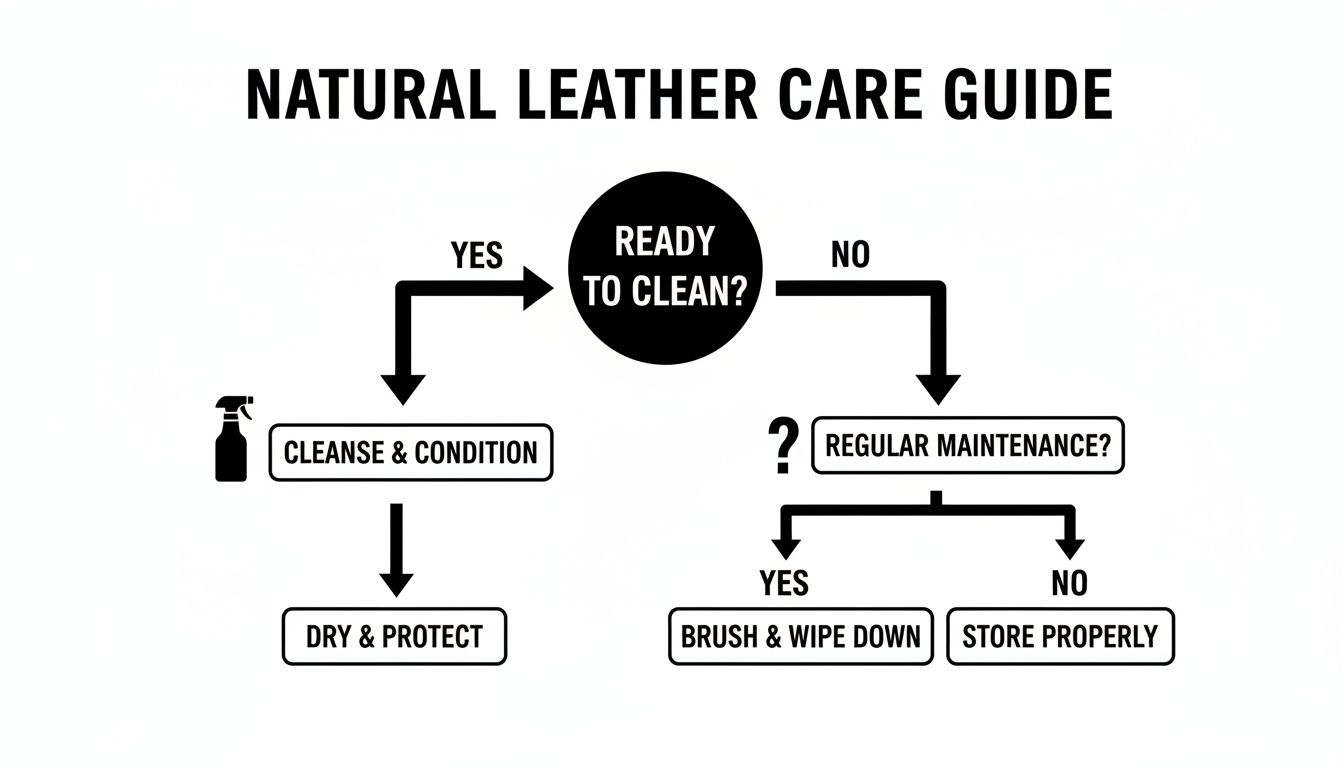
As you can see, understanding your material is the foundation of everything that follows.
Understanding the Three Main Leather Finishes
Most leather upholstery falls into one of three camps: aniline, semi-aniline, or pigmented. Each one has a distinct personality and requires a slightly different approach to care.
-
Aniline (Unprotected) Leather: This is leather in its most natural state. It’s incredibly soft and luxurious because it has no protective topcoat. You can see all the unique grains and markings, but this also means it’s a magnet for stains and is prone to fading. It's beautiful but high-maintenance.
-
Semi-Aniline (Lightly Protected) Leather: This is the happy medium. It has a very light protective coating, making it more durable than aniline while still feeling soft and looking natural. It offers a decent defense against spills without sacrificing too much of that classic leather character.
-
Pigmented (Fully Protected) Leather: This is the workhorse of the leather world and the most common type you'll find on family-friendly furniture. A polymer coating mixed with pigments gives it a uniform color and a tough, durable surface that stands up well to scuffs, spills, and sunlight. It’s the easiest to clean but doesn't feel quite as supple as the other two.
Your At-Home Leather Evaluation
You don’t need any special equipment to figure out what you've got. A simple, safe test is all it takes.
The Water Drop Test
First, find a hidden spot on your furniture—the back of a cushion or a small area on the bottom back of the sofa works perfectly. Place a single drop of water on the surface and just watch it for a minute.
- If the drop soaks in almost instantly and leaves a dark spot, you're looking at aniline leather.
- If the drop sits there for a minute or two before it starts to slowly soak in, you likely have semi-aniline leather.
- If the water beads up and stays on the surface indefinitely, congratulations, you have pigmented (or protected) leather.
To make it even clearer, here’s a quick guide to help you distinguish between them.
Leather Finish Identification Guide
| Leather Type | Key Characteristics | Water Drop Test Result | Recommended Natural Approach |
|---|---|---|---|
| Aniline (Unprotected) | Very soft, natural feel. Visible pores and markings. | Soaks in immediately, darkens the spot. | The most delicate touch. Use distilled water only or a specialized aniline cleaner. Avoid most DIY solutions. |
| Semi-Aniline (Lightly Protected) | Soft, natural appearance with slight sheen. | Sits on top for a few minutes before absorbing. | Gentle DIY soap solutions are usually safe. Always test first. Conditioning is vital. |
| Pigmented (Protected) | Uniform color, durable finish. Feels less "buttery." | Water beads up and does not absorb. | The most forgiving. Can handle gentle vinegar or soap-based cleaners. |
Once you've done this simple test, you'll know exactly how to proceed.
Aniline leather demands the most caution, while pigmented leather gives you a lot more cleaning flexibility. Knowing the difference is everything.
While these natural methods are perfect for routine surface cleaning, some jobs require a different set of tools. For instance, deep-seated grime in fabric furniture won't respond to these techniques. You can learn how to safely clean a sofa with a steam cleaner with our helpful guide that might be useful for other pieces in your home.
Now that you've identified your leather, you’re ready to choose the right natural recipe and get to work, confident you’re preserving its beauty for years to come.
DIY Recipes for Natural Leather Cleaning
You don't need a shelf full of expensive, chemical-laden products to keep your leather furniture looking fantastic. In fact, you can mix up some of the best and safest cleaning solutions right in your own kitchen. These simple recipes work wonders, cutting through everyday grime without stripping the leather's natural oils.
Think of it this way: you're giving your furniture a gentle spa treatment, not a chemical bath. Let’s walk through how you can create a couple of go-to cleaners.
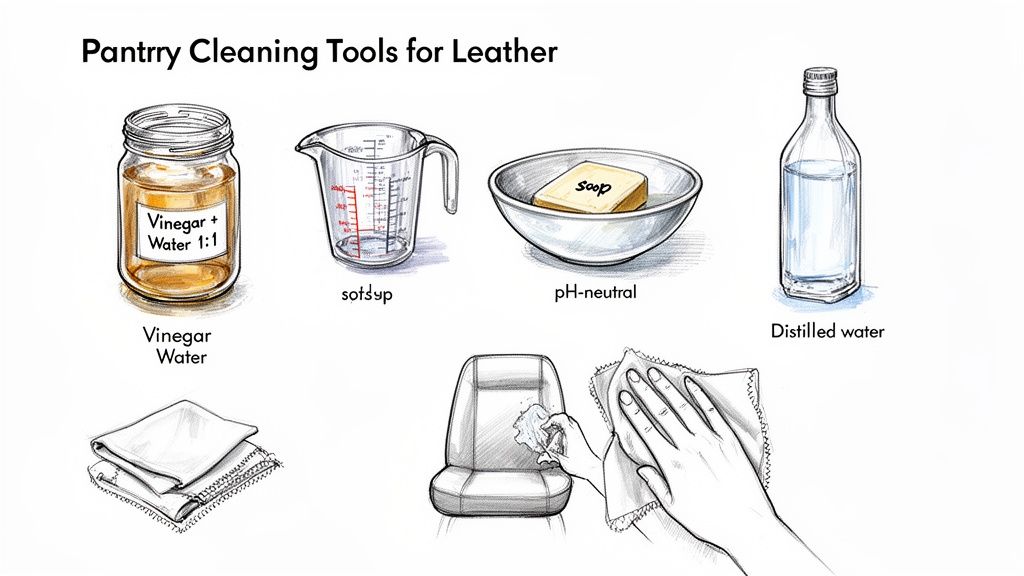
The All-Purpose Vinegar and Water Solution
For general maintenance on most protected (pigmented) leathers, nothing beats the simplicity of white vinegar and water. It's the perfect choice for light, routine cleaning. The vinegar's mild acidity is just enough to break down fingerprints and surface dirt without being harsh on the leather's finish.
To make it, just mix equal parts white vinegar and distilled water. Using distilled water is recommended because the minerals in regular tap water can sometimes leave behind a faint residue or streaks.
How you apply it is just as crucial as what's in the bottle. A widely trusted natural method involves this 1:1 mix. Dampen a soft microfiber cloth with the solution, then wring it out until it’s barely damp. We’re talking less than 5 mL of liquid left on the cloth. Wipe in small 4–8 inch sections with light, circular motions for about 20–60 seconds each. This lifts the soil without soaking the hide. Immediately after, blot the area with a dry, soft cloth to pick up any remaining moisture. Let it air-dry for at least 1–2 hours away from direct sun. For a deeper dive into this technique, the full guide on how to clean leather furniture from Fjords.no is a fantastic resource.
Key Takeaway: The golden rule here is to clean, not soak. A barely damp cloth is your most important tool. You never want moisture seeping into the seams or penetrating the leather itself, which can lead to problems down the road.
The Gentle Soap Solution for Deeper Cleaning
Sometimes, you're dealing with more than just a bit of dust. For more stubborn grime—especially on high-contact areas like armrests or headrests—a mild soap solution gives you a little more cleaning muscle. It's perfectly safe for protected and most semi-aniline leathers, as long as you perform a quick spot test first.
The trick is using the right kind of soap. Look for something that is:
- pH-Neutral: This ensures it won’t disrupt the leather’s delicate pH balance.
- Dye-Free and Unscented: Dyes and perfumes often contain chemicals that can react badly with leather finishes and cause discoloration.
- Moisturizer-Free: Avoid soaps with added lotions. They can leave a sticky film that actually attracts more dirt.
A couple of drops of a clear, gentle dish soap or a pure castile soap are perfect for this.
Mixing and Applying the Soap Solution
Whipping up this cleaner is incredibly easy.
- Start with a bowl of warm, distilled water.
- Add just 2-3 drops of your mild, pH-neutral soap.
- Give it a gentle stir to create some light suds, but don't try to make it overly foamy.
Dip a clean microfiber cloth into the suds, then wring it out until it feels almost dry. Working in small sections, gently wipe the leather in a circular motion. Have a second cloth handy, dampened with only plain distilled water, to "rinse" away any soap residue. To finish, blot the area completely dry with a third, dry microfiber cloth.
Following these steps ensures you're lifting the dirt without leaving behind a sticky film. You get a truly clean finish every single time.
With these simple, natural recipes in your back pocket, you can confidently care for your furniture. Of course, if you run into a tough stain or feel your piece needs professional-grade products, you can explore our range of high-quality furniture care kits to find the perfect tools to protect your investment.
Tackling Common Stains with Natural Methods
Even when you're careful, life happens. A slipped pen, a buttery popcorn mishap during movie night, or a spilled glass of water can feel like a disaster for your beautiful leather furniture. But there's no need to panic. With the right natural methods and a calm approach, you can handle these common stains and keep your furniture looking its best.
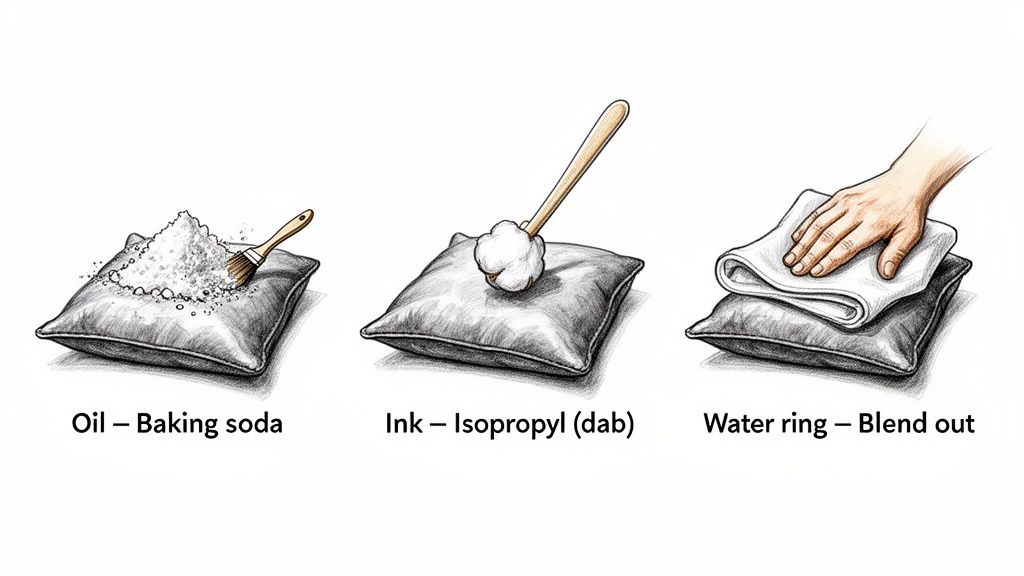
The real secret is speed. The sooner you get to a spill, the better your odds of removing it completely. Having a few natural stain-fighters ready means you can confidently handle almost anything life throws at your sofa.
Handling Grease and Oil Stains
Fresh grease or oil stains from things like pizza, lotion, or salad dressing look scary, but they're often surprisingly easy to fix if you catch them right away. The key is absorption.
Your go-to tool here is an absorbent powder like cornstarch or baking soda. Whatever you do, don't rub the stain—that will only push the oil deeper into the leather's pores.
Instead, generously sprinkle the powder directly onto the fresh stain, covering it completely. Let it sit for several hours, or even overnight. The powder works like a sponge, drawing the oil right out of the leather. In the morning, just gently brush or vacuum the powder away. If a faint mark is still there, you can repeat the process.
The Cautious Approach to Ink Marks
That accidental pen mark on your protected leather sofa doesn't have to be permanent. Ink is definitely trickier, but a careful application of isopropyl (rubbing) alcohol can often lift the stain. This is a job that calls for precision and a very light touch.
- First, dip the very tip of a cotton swab in rubbing alcohol.
- Next, gently dab at the ink mark. Do not scrub! Rubbing can spread the ink and damage the leather's finish.
- Use a clean part of the swab for each dab to avoid putting ink back onto the surface.
- Once the ink is gone, blot the area with a cloth dampened with distilled water, then immediately pat it dry with a clean, dry cloth.
A Crucial Reminder: Always, always test the alcohol on a hidden spot first—like under a cushion or on the back. Alcohol can sometimes affect the color or finish, especially on more delicate semi-aniline leathers. This test is non-negotiable.
Blending Away Water Rings
The dreaded water ring from a sweating glass can leave a distinct, discolored circle. The goal here isn't to "remove" the stain in the traditional sense, but to blend it away by evening out the moisture in the surrounding area.
Using a clean microfiber cloth dampened with distilled water, start wiping from the center of the water ring and work your way outward in broad, circular strokes. Feather the moisture out into the surrounding, unaffected leather. You're creating a larger, damp area that will dry more evenly, making the original ring disappear. Let it air dry completely, away from any direct heat or sunlight.
When spot-cleaning, less is always more. Manufacturer sources note that using too much water can create a 50–80% greater risk of staining or color bleed on less protected leathers. A safe approach is to use only a few drops of pH-neutral soap in water and apply it with a cloth that's been wrung out until it's almost dry.
While these natural techniques work wonders on leather, different materials require different strategies. You can find fabric-specific tips in our comprehensive guide on how to remove stains from upholstery. With these tools in your arsenal, you're ready to protect your beautiful investment for years to come.
Building a Long-Term Leather Care Routine
Cleaning up a spill is reactive, but making your leather furniture last a lifetime is all about being proactive. You can build a simple, sustainable maintenance ritual that becomes a natural part of caring for your home. This isn't a chore; it's the secret to preserving the beauty, comfort, and character of your investment for years, even decades.
Think of it like a favorite leather jacket. You wouldn't just clean it after getting caught in the rain; you take small steps all along to keep it soft and prevent damage. Your furniture deserves that same thoughtful attention. Consistent care stops minor issues, like dust and dryness, from escalating into major problems like scratches and cracks.
The Foundation of Lasting Leather Care
The absolute cornerstone of any good leather care routine is consistency. Thankfully, the most important actions are often the simplest, taking just a few minutes each week.
- Weekly Dusting: Grab a dry, soft microfiber cloth and give all the surfaces a gentle wipe-down. This simple pass removes abrasive dust and grit that can act like fine sandpaper over time, dulling the finish and creating micro-scratches you won't see until it's too late.
- Vacuuming Crevices: At least once a month, use the soft brush attachment on your vacuum to get into the seams and crevices. This is where crumbs, pet hair, and other debris love to hide, slowly wearing away at the stitching and the leather itself.
These small habits make a massive difference. They stop abrasive particles from embedding into the grain, which is the first line of defense in protecting your furniture’s beautiful surface.
The Art of Natural Conditioning
Beyond the weekly tidying, the most vital part of your long-term routine is conditioning. Leather is a natural skin, and it needs moisture to stay healthy. Over time, exposure to dry air—especially here in West Texas and New Mexico—sucks the natural oils right out, leaving the leather feeling stiff and vulnerable to cracking.
You should plan to condition your leather furniture every 3 to 6 months. This simple act replenishes lost moisture, restores that soft, supple feel, and enhances its natural sheen. For a fantastic and effective DIY conditioner, just mix one part white vinegar with two parts linseed oil or flaxseed oil.
Always apply your conditioner with a clean, soft cloth, working it in with gentle, circular motions. A light touch and a thin, even coat are all you need. Let it sit for about an hour, then come back with another clean cloth and gently buff the surface to remove any excess. This ritual is your secret weapon against the drying effects of our climate.
Proactive care does more than just maintain; it transforms. Consistent conditioning allows your furniture to develop a rich, beautiful patina—a unique story told through subtle shifts in color and texture that only well-loved leather can achieve.
The value of this routine is well-known among industry specialists. Regular maintenance—dusting, spot cleaning, and conditioning every 3–6 months—can extend the service life of quality leather by an estimated 25–50% compared to neglected pieces. Just vacuuming the seams every few months removes the gritty particles that cause the cracks and brittle failures commonly seen after only 5–10 years of use.
Elevating Your Leather Care Ritual
While our main goal is natural care, it's smart to understand what's out there in the world of commercial products. For a broader perspective, this review of leather cleaner and conditioner products details a variety of options.
Sometimes, you just want the confidence that comes with a professionally formulated product. For those moments, having a high-quality kit on hand gives you specialized tools for the job. We often recommend the Guardsman Leather Care Kit, a trusted choice for protecting and revitalizing fine leather. It equips you with everything needed to clean, condition, and shield your investment with professional-grade results. You can find more in-depth strategies in our detailed guide on how to protect leather furniture.
Building this routine empowers you to become the hero of your home's story, ensuring your furniture remains a source of pride and comfort. If you ever have questions or need help finding the perfect products for your specific piece, the design experts at Miller Waldrop are here to guide you. Visit our showroom today, and let us help you find the ideal care solutions to keep your furniture looking its best for a lifetime.
Common Questions About Natural Leather Care
Even with the best instructions, real-life questions always come up. It's completely normal to feel a little hesitant when you're working on a beautiful piece of furniture. Here are the answers to some of the most common questions our design team gets, giving you the clarity and confidence to protect your investment with total peace of mind.
What’s the Safest Way to Clean Up After My Pets?
This is a big one for so many of us. For everyday pet messes like drool or muddy paw prints on protected leather, that simple soap and water solution is your best bet. It’s surprisingly effective at lifting the grime without being harsh on the finish.
If you're dealing with lingering pet odors, a light mist of the 50/50 white vinegar and water solution can work wonders. Vinegar is a natural deodorizer that neutralizes the bacteria causing the smell. Just be sure to spritz it on lightly, then wipe it down with a clean, damp cloth so no vinegar residue is left behind.
Can I Just Use Coconut Oil or Olive Oil to Condition My Sofa?
This is a common myth, and while something like olive oil might give you a temporary shine, it's best to avoid it. These household oils don't absorb properly; instead, they clog the leather's pores and create a sticky surface that becomes a magnet for dust and dirt.
Worse, over time, these food-based oils can go rancid, leading to unpleasant smells and even permanent discoloration.
Always stick with a conditioner made specifically for leather or a trusted natural recipe that uses linseed or flaxseed oil. These are designed to penetrate and nourish the hide from the inside out, without leaving that greasy film. It's a critical part of any good leather care routine.
Is There a Point Where DIY Cleaning Just Won't Cut It?
Absolutely. Your natural, homemade solutions are fantastic for routine maintenance, general cleaning, and catching minor spills right when they happen. They are the heroes of everyday care, especially for protected and semi-aniline leathers.
But they definitely have their limits. You'll want to call in a pro when you're facing:
- Deeply Set Stains: A red wine spill that sat overnight has likely bonded with the leather fibers. This usually requires professional-grade solvents that are too risky for home use.
- Significant Damage: We're talking about large tears, deep cracking that goes beyond surface lines, widespread peeling, or major color loss from sun exposure. These are structural issues that cleaning can't fix.
- Delicate Leathers: Unprotected aniline leather is incredibly porous and sensitive. Beyond a simple dusting or a very careful wipe with a cloth dampened with distilled water, it's best left to an expert.
How Often Should I Condition My Leather in a Dry Climate?
For those of us living in the arid climates of West Texas and New Mexico, the air is especially tough on leather. It's constantly pulling moisture out of the hide, which can speed up the drying and cracking process significantly.
The general rule of thumb is to condition every 3-6 months, but in our dry region, you'll need to be more vigilant. Pay close attention to how your furniture feels. If the leather starts to feel a bit stiff or loses that supple quality, it’s time to condition, even if it hasn’t been three months. A proactive approach is the secret to keeping your leather soft and healthy out here.
Knowing the answers to these questions helps you make the best calls for your furniture. You're now equipped to handle the day-to-day upkeep and have the wisdom to recognize when a problem needs a professional touch.
At Miller Waldrop Furniture & Decor, we believe your home should be a source of comfort and pride. Our design experts are always ready to help you find not only the perfect furniture but also the best ways to care for it. If you're looking for professional-grade care products or have more questions about protecting your investment, we invite you to visit us and explore our solutions.