

How to Decorate Small Living Room: Smart, Stylish Ideas

Decorating a small living room isn’t about cramming things in; it’s about empowering you to make smart, intentional choices to create a space that feels open, airy, and genuinely functional. You can master this process by focusing on a few key strategies: getting your mindset right, mastering the floor plan, and picking furniture that works a lot harder than it looks.
This approach transforms what feel like limitations into clever design opportunities, putting you in control of creating a home you love.
Embrace a Small Space Mindset
Before you even think about moving a single piece of furniture, the most powerful thing you can do is shift your perspective. A small living room isn’t a problem you need to solve—it’s an opportunity for you to be incredibly deliberate with your design.
Every single item has to earn its spot. Every choice you make will directly contribute to how the room feels. This is your chance to create a space that’s perfectly curated for how you actually live.
Think of it this way: you're the hero in your home's story. Your mission is to shape a living area that supports your life, whether that means collapsing on the couch after work, hosting a few friends, or just enjoying a quiet morning with a cup of coffee. The first real step is figuring out the room's primary purpose.
Define Your Room's Mission
What does this room absolutely need to do for you? Get really specific here and prioritize. A clear vision will guide every single decision that follows, from the sofa you choose to the kind of lighting you install.
- Cozy Retreat: Is this your personal sanctuary for reading and binging shows? If so, you'll want to focus on ultra-comfortable seating and soft, inviting textures.
- Entertainment Hub: Planning on hosting game nights or having people over? Your top priorities should be flexible seating options and a clear path for people to move around.
- Multi-Purpose Zone: Does your living room also have to double as a home office or a kids' play area? Multifunctional furniture is going to be your absolute best friend.
Once you’ve locked in your core mission, you can start making choices with confidence. For example, a stylish yet compact accent chair can offer that much-needed extra seat for guests without completely taking over your floor plan.
Your goal isn't to fit more stuff into the room; it's to choose the right stuff that adapts to how you live. Functionality should always lead the way, with style following right behind it.
To get a better handle on what's possible, it can be helpful to explore modern AI room decoration tools that can help you visualize different layouts and designs. This kind of strategic approach makes sure every decision truly serves your lifestyle.
When you're ready to find those perfect pieces to bring it all together, our design experts are here to help you turn that vision into a reality.
Master Your Layout and Floor Plan
The real magic in a small living room isn't just about finding the perfect sofa—it's about where you put it. Before you even think about shopping, you can think like an architect. A thoughtful layout is what takes a room from cramped and clumsy to airy and welcoming.
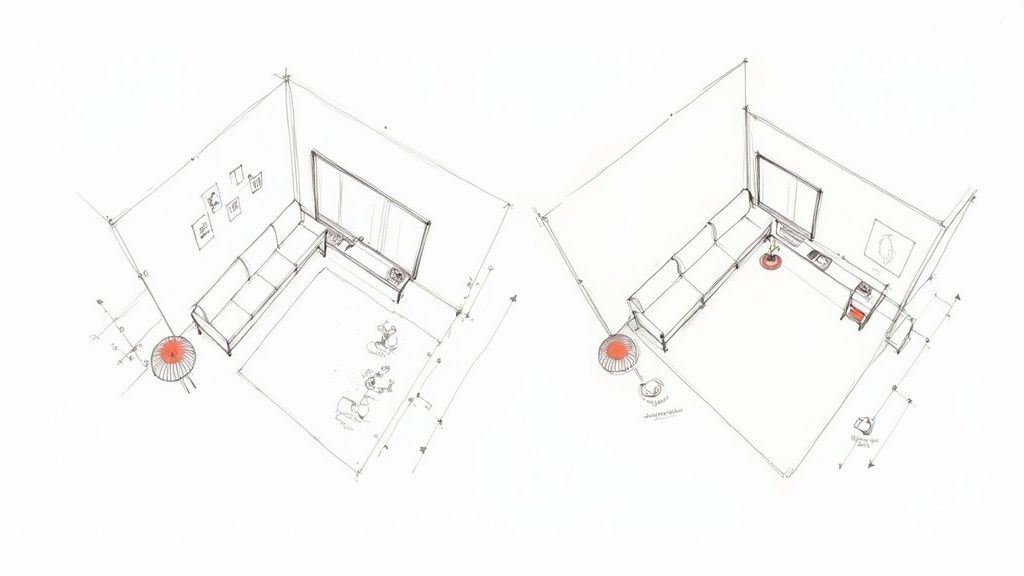
Your first step? Measure everything. This is the one step that can cause the biggest headaches later if skipped. Grab a tape measure and get the room's dimensions, but don't stop there. Note the exact placement of windows, doors, outlets, and any quirks like a fireplace or built-in shelves.
With those numbers in hand, you can sketch out a simple floor plan. It doesn't have to be a professional blueprint; even a quick drawing on notebook paper lets you test-drive layouts without breaking a sweat. This little map is your secret weapon for making sure furniture doesn't just fit, but actually improves the room's flow.
Find and Honor Your Focal Point
Every great room has a star of the show—a focal point. This is the first place your eye is drawn to when you enter, and it's the natural anchor for your entire design. It could be an architectural feature like a fireplace, a large window with a great view, or even a blank wall you've designated for a stunning piece of art.
Once you’ve identified it, orient your main seating around it. If it's the fireplace, the sofa should face it to create a cozy, intuitive conversation area. And here’s a pro tip: resist the powerful urge to shove all your furniture against the walls! Even pulling pieces a few inches away from the wall creates breathing room that instantly makes the space feel bigger and more sophisticated.
A common mistake is thinking that pushing furniture against the walls maximizes space. In reality, it often makes a room feel static and boxed-in. Floating your furniture creates pathways and an illusion of depth, which is key in a small room.
Nail the Spacing for Effortless Flow
How you space your furniture is just as critical as where you place it. You're aiming for a room that's easy to live in and move through, not an obstacle course. Sticking to a few key measurements will help you get that effortless, functional feel.
Here are the numbers you can keep in mind:
- Coffee Table Clearance: Aim for 14 to 18 inches between the edge of your sofa and your coffee table. It's close enough to set down a drink but leaves plenty of legroom.
- Major Pathways: The main traffic lanes in the room should be at least 30 to 36 inches wide. This ensures no one has to squeeze by sideways.
- Conversation Zones: To keep conversations comfortable, try to place chairs no more than 8 feet from the sofa. Any further and you'll find yourselves shouting.
Think of these as guidelines, not unbreakable laws. They’re a starting point for creating a layout that works for your home and your lifestyle. For an even more detailed breakdown, our guide offers more expert tips on how to arrange living room furniture for the perfect balance of comfort and style.
If you get stuck trying to map it all out, our design team is always here to help you craft a floor plan that truly makes the most of your space.
Choose Furniture That Works Smarter
When you're working with a compact living room, every single piece of furniture has to earn its keep. This is where you get to be selective and bring in pieces that are not only beautiful but brilliantly functional. Think of your furniture as a team of specialists, each chosen for a specific, problem-solving skill.
It’s all about making your furniture work smarter for you. Instead of just filling the room, you’re investing in items that add value far beyond their basic function. That mental shift is key when you're decorating a small space—it turns potential clutter into streamlined, efficient living.
The demand for this kind of intelligent design is bigger than ever. With more people moving into cities, the need for space-savvy solutions has gone through the roof. In fact, the global small space furniture market was valued at $23.4 billion in 2023 and is expected to hit $41.2 billion by 2032. This isn’t just a fad; it’s a collective move toward making our homes more efficient, proving smart furniture is the future.
Select a Sofa That Breathes
Your sofa is almost always the biggest thing in the room, so choosing the right one is a make-or-break decision. Here’s how you can choose the perfect sofa for your family's needs without completely overpowering the space. Look for sofas with a slim profile and clean lines, and steer clear of those bulky, overstuffed styles that just eat up visual real estate.
One of the best tricks you can use is to choose a sofa with raised legs. When a sofa sits up off the floor, it allows light and air to flow underneath, which immediately creates an illusion of more space. It’s a subtle detail that prevents the piece from feeling like a heavy, immovable block.
For example, a thoughtfully chosen sectional like the Haven Sofa can expertly define a cozy corner for conversation or movie nights. It anchors the layout while its sleek design keeps everything feeling open and airy.
Embrace Multifunctional Marvels
The real heroes of small-space living are the pieces that do more than one job. These are the items that pull double, or even triple, duty, saving you precious square footage.
- Storage Ottomans: It's a footrest, it's extra seating for guests, and it’s a hidden spot to stash blankets, magazines, or kids' toys. What's not to love?
- Lift-Top Coffee Tables: These are game-changers. One minute it's a coffee table, the next it's a comfortable dining surface or a temporary desk, all while hiding storage inside.
- Nesting Tables: Why have one big end table when a set of nesting tables gives you multiple surfaces when you need them? When you're done, they tuck away neatly into a single footprint.
By choosing furniture that serves multiple purposes, you’re not just saving space—you’re creating a room that can adapt to your life in an instant. It’s about building in flexibility from the ground up.
If you already have furniture you love, you don't necessarily have to start from scratch. You can find some easy and creative DIY tips to upcycle furniture that can give older pieces a new life and a custom fit for your small living room.
Finding the right pieces can feel like putting together a puzzle, but we've got you covered. Check out our expert picks for the best furniture for small spaces to discover items that perfectly blend style with functionality. Our design team is also always ready to help you select the pieces that will turn your living room into a smart, stylish, and incredibly livable space.
Use Color and Light to Create Openness
When you're working with a small living room, color and light are two of the best tools at your disposal. Think of them as secret weapons in your mission to conquer that cramped feeling. They can trick the eye, creating a sense of depth and airiness that makes the entire room feel significantly larger. This isn't about slapping white paint on every surface and calling it a day; it’s about a more thoughtful approach to your color palette and a strategic lighting plan that builds a space with both openness and character.
Forget the old rule that you’re stuck with boring colors. The real goal is to create a cohesive, unified look that doesn't chop up the space visually. A monochromatic scheme—using different shades and tints of a single color—is fantastic for this. It has a way of blurring the boundaries of the room, making it feel less defined, less cluttered, and ultimately, more expansive.
Homeowners seem to get this instinctively. A recent survey showed that a whopping 59% of Americans prefer clean, uncluttered interiors. And when you zero in on people with smaller homes, 52% choose neutral tones specifically because they make rooms appear larger. Off-white and light woods are always top contenders for this very reason.
Choosing the right color palette is crucial. Different color families can dramatically alter the perception of a room's size and mood.
Color Palette Impact on Small Spaces
| Palette Type | Visual Effect | Best For Creating | Example Colors |
|---|---|---|---|
| Monochromatic | Creates a seamless, unified look that blurs room boundaries. | A serene, expansive, and sophisticated atmosphere. | Shades of light gray, beige, or soft blue. |
| Light & Neutral | Reflects maximum light, making the space feel bright and airy. | An open, minimalist, and versatile backdrop. | Off-white, cream, taupe, and light wood tones. |
| Cool Tones | Walls appear to recede, creating an illusion of more space. | A calm, refreshing, and spacious environment. | Pale blue, soft green, and light lavender. |
| Warm Tones | Can make a space feel cozier but may also feel smaller if too dark. | An intimate, welcoming, and inviting vibe. | Soft terracotta, buttery yellow, or warm beige. |
Ultimately, a light, cohesive palette is your safest bet for maximizing the feeling of space, but don't be afraid to add pops of color through your decor to keep things interesting.
Master a Layered Lighting Plan
Good lighting is so much more than a single fixture hanging from the ceiling. A well-lit room instantly feels more welcoming and spacious simply because you've eliminated those dark, shadowy corners that visually shrink a space. To really nail it, you need to think in layers.
- Ambient Lighting: This is your room's main light source. Think recessed lighting or a stylish ceiling fixture that provides general, overall illumination.
- Task Lighting: This is your focused light for specific activities. A floor lamp next to your favorite armchair for reading is a perfect example, or a small lamp on a side table.
- Accent Lighting: This final layer is all about highlighting the good stuff, like a picture light over a piece of art or a small spotlight aimed at a plant.
When you combine all three, you create a dynamic, balanced environment that you can tweak for any mood or occasion. A simple, elegant floor lamp can often pull double duty as both task and accent lighting, adding functional brightness and a touch of style without hogging precious floor space.
A layered lighting plan is your ultimate tool for making a small room feel bigger. It draws the eye around the space and banishes shadows, creating a bright, airy atmosphere that feels both inviting and open.
This infographic breaks down some of the core principles for furnishing a small space, hitting on the importance of multifunctional pieces, proper scale, and using that vertical real estate.
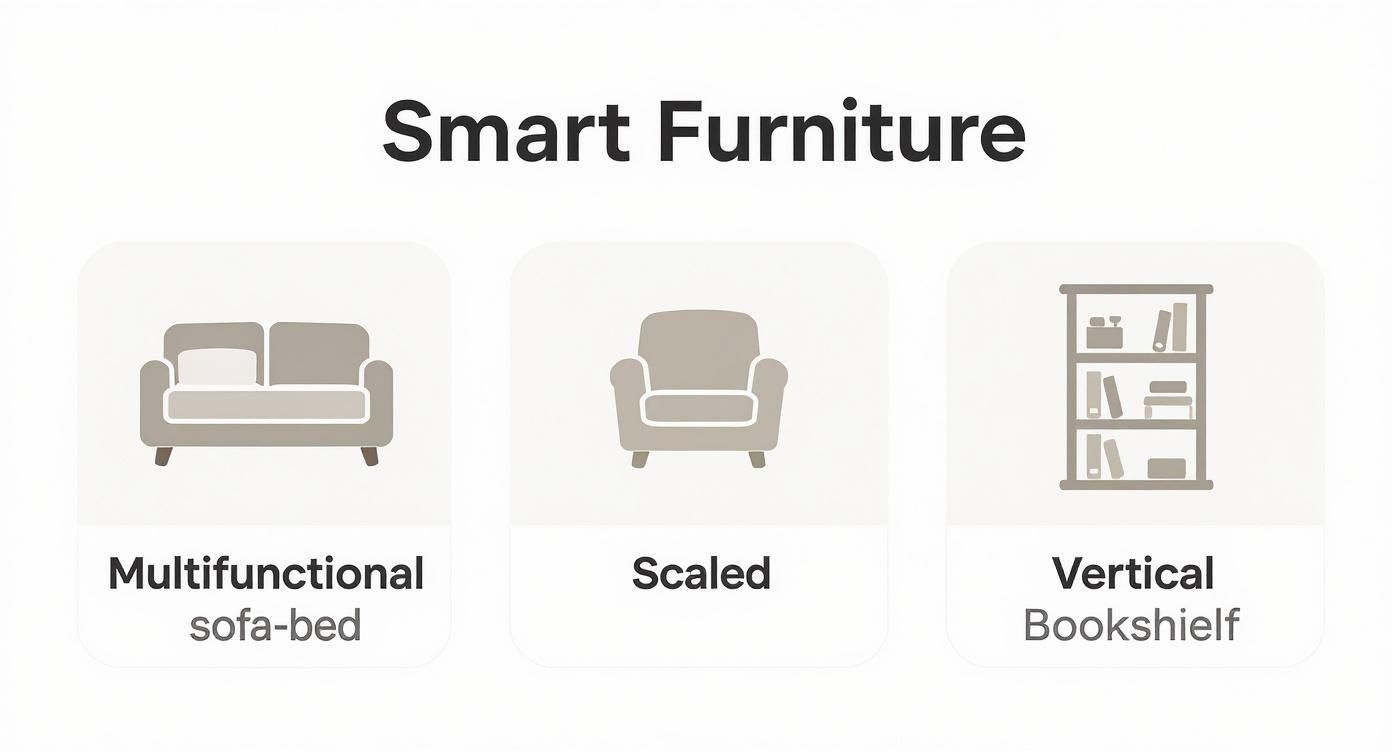
As you can see, smart furniture choices are absolutely key. Pieces that can do more than one job and are scaled appropriately for the room will truly maximize your living room's potential.
Reflect Light with Strategic Mirrors
Finally, never underestimate the power of a well-placed mirror. Mirrors are the oldest trick in the book for a reason—they work. By bouncing light around the room, they instantly make it feel brighter while creating a genuine illusion of depth.
One of the best moves you can make is to place a large mirror on the wall directly opposite a window. It will capture all that natural light and reflect the view outside, doubling the feeling of openness. Another great option is to group several smaller mirrors together to create a decorative feature that serves the same light-bouncing purpose. Just think of mirrors as functional art that works hard to enhance your space.
For a deeper dive into lighting techniques, check out our guide on how to put your living room in the best light. If you're struggling to find that perfect lamp or mirror to complete your vision, our design experts are always here to help you select pieces that will make your home shine.
Style and Personalize Your Space
Alright, the foundation is set. Your layout is smart, the furniture is in place, and the lighting is just right. Now for the fun part: making the space truly yours. This is where a room transforms into a home, filled with personality and pieces that tell your story.
Think of this final stage as a curation project. Instead of just filling empty spots, the goal is to be intentional. Every item you bring in should be something you love or something that serves a real purpose. This mindful approach is the secret to avoiding clutter and creating a living room that genuinely feels like a reflection of you.
Draw the Eye Upward with Vertical Decor
Here's a classic designer trick that works every time in a small room: make people look up. Drawing the eye vertically creates an instant illusion of height, making the entire space feel bigger and more open. Best of all, you can add tons of character and storage without eating up any valuable floor space.
- Floating Shelves: These are your best friends for displaying a handpicked collection of books, framed photos, or a few small plants. Stagger them on a wall to create a dynamic, personal art installation.
- Tall, Slender Bookcases: Look for something like an étagère with an open-frame design. It gives you storage without the visual bulk of a traditional bookcase, anchoring a corner while keeping things light and airy.
- Hang Curtains High and Wide: This is non-negotiable. Mount your curtain rod several inches above the window frame and make sure it's wider than the window, too. Letting the drapes fall all the way to the floor makes a standard window feel grand and the ceiling feel miles away.
Layer Textures for Depth and Coziness
Ever walked into a room that just felt… flat? It was probably missing texture. Layering different materials is how you build visual interest and create that warm, inviting atmosphere everyone craves. It’s all about mixing and matching textiles to create a space that’s a delight for both the eyes and the touch.
A well-styled small room feels intentional, not accidental. By mixing textures like smooth leather, chunky knits, and soft velvet, you're creating a tactile experience that makes the space feel more luxurious and thoughtfully designed.
Start with a plush area rug to anchor your seating arrangement. Then, toss a soft, chunky-knit throw over the arm of the sofa. Finish it off with a few throw pillows in different materials, like velvet or linen. Even a single stylish throw pillow can introduce a new texture and a pop of color that pulls the whole look together.
It's clear people want their homes to be more than just pretty. Recent trends show a major shift toward creating spaces that are both personal and sustainable. In 2023, 42% of younger shoppers in the U.S. and EU actually paid more for sustainable furniture, and a whopping 68% of consumers under 40 feel it's important for their home to express their individuality. You can dive deeper into these home decor trends on Statista. People want their homes to tell a story.
Ready to find those perfect finishing touches? Our design experts can help you select decor and textiles that tell your story.
Your Small Living Room, Reimagined
So, where do you go from here? You're now armed with a ton of strategies and a newfound confidence to tackle that small living room. This isn't about following a rigid set of rules, but about making smart, intentional choices that truly reflect how you live and what you love.
You've got the tools to create a space that’s not just beautiful, but also incredibly functional and uniquely you.
From mapping out the perfect layout to adding those final, personal touches, you now understand how to make every single inch work harder. Think of this guide as your blueprint. You're in the driver's seat, ready to design a room that supports your everyday life and genuinely makes you happy.
Your small living room is a canvas for your creativity. Embrace the challenge, trust your gut, and create a space that finally feels like home.
When you're ready to start finding those perfect pieces to bring your vision to life, we'd love for you to explore our curated collections. A thoughtfully chosen accent chair, for example, can be a game-changer, offering flexible seating without gobbling up precious floor space.
Feeling a little stuck? Let our design experts help you take that next step. Together, we can create a living room you'll absolutely love for years to come.
A Few Common Questions, Answered
When you're working with a small living room, a few questions always seem to pop up. Let's tackle some of the most common design puzzles so you can move forward with confidence and create a space you absolutely love coming home to.
What's the Biggest Mistake People Make?
Hands down, the most common mistake is cramming the room with too many small furniture pieces. It’s a classic case of good intentions gone wrong. You think "small room, small furniture," but what you end up with is a cluttered, chaotic feeling that actually makes the space seem smaller.
Instead of a collection of little items, think bigger but fewer. A comfortable three-seater sofa and one fantastic armchair will almost always look better and feel more open than a loveseat surrounded by a jumble of small chairs. Another classic misstep? Pushing every single piece of furniture right up against the walls. Just pulling things away from the wall by a few inches creates a sense of airiness and makes the layout feel so much more intentional.
How Do I Get More Storage Without Adding Bulk?
The trick here is to go vertical and get clever with furniture that does more than one job.
Think about it: your walls are prime real estate. Tall, slender bookcases are brilliant because they draw your eye upward, making the ceiling feel higher while using space that would otherwise be empty. And always, always look for pieces that pull double duty.
A storage ottoman is the unsung hero of small living rooms. It's a footrest, it's an extra seat when guests pop over, and it's the perfect hiding spot for blankets, magazines, or kids' toys. A coffee table with a lift-top or hidden drawers works the same magic, keeping your living room tidy without sacrificing style.
Do I Have to Avoid Dark Colors?
Absolutely not! This is a myth I love to bust. While it's true that light, bright colors are a safe bet for creating an airy vibe, dark colors can bring a sense of drama, depth, and sophistication that's just stunning. It's all about balance.
Instead of painting the whole room a dark shade, try it on an accent wall—especially the wall that’s farthest from the door. This little trick creates an illusion of depth, making the room feel longer. You can also introduce those richer tones through your textiles or a gorgeous statement piece of furniture while keeping the main walls light. Just make sure your lighting is on point. When you have a good, layered lighting plan, a room with dark accents feels unbelievably chic and inviting, not cave-like.
Now you have the know-how to transform that small living room into a place that’s stylish, functional, and completely you. As you start bringing your vision to life, remember that you’re the one writing your home's story.
And if you need a hand finding those perfect pieces, the design experts at Miller Waldrop are always here to help. A great place to start is by exploring our curated collection of accent chairs—they’re perfect for adding a pop of personality and extra seating without taking over the room.