

How to fix a saggy mattress: simple, effective tips

That sinking feeling you get from a sagging mattress is more than just annoying—it can ruin your sleep and leave you with a sore back. The good news is you don't always have to rush out and buy a new one. With the right tools and strategies, you have the power to reclaim your sleep space. Simple fixes like rotating the mattress, adding a supportive topper, or shoring up the foundation can often bring immediate relief and squeeze more life out of your bed.
Why Your Mattress Is Sagging and How to Fix It
A saggy mattress is a clear signal that your sleep setup isn't working anymore. The most common reason is simply that the support materials are breaking down over time, which can happen a lot sooner than you'd think. In fact, research shows that nearly 40-50% of mattresses start to show signs of sagging within the first five years, especially those made with lower-density foams. You can dive deeper into the data with this market research on mattress statistics. Night after night, the pressure from your body compresses the foam or weakens the coils until they can no longer bounce back.
But before you blame the mattress, it's worth taking a look underneath. Sometimes, the real problem is a weak or broken foundation. An old box spring with shot springs or a bed frame with slats spaced too far apart can’t provide the even support your mattress needs, causing it to sag even if it's in decent shape.
Common Culprits Behind Mattress Sagging
So, what’s the real villain in your sleep story? Is it the mattress, the foundation, or both? Pinpointing the cause is your first step to finding a solution that actually works and puts you back in control of your comfort.
Here are the usual suspects you can look for:
- Normal Wear and Tear: After years of use, it's only natural for materials like foam and fibers to compress, leaving behind permanent body impressions.
- A Flimsy Foundation: Your mattress needs a rock-solid base. A worn-out box spring or a frame with slats more than three inches apart is a recipe for sagging.
- Low-Quality Materials: Budget mattresses often use less-dense foams and thinner steel coils, which simply don't have the durability to last and will break down much faster.
- Moisture Damage: Spills that aren't cleaned up properly—or even high humidity—can seep into the mattress and degrade the foam, causing it to lose its supportive structure.
The infographic below offers a great visual guide for your first move: measuring the sag to see if a simple fix is on the table or if it's time to start shopping for a replacement.

As a rule of thumb, if the indentations are less than 1.5 inches deep, you can probably fix them. Anything deeper usually points to a total structural failure, and no topper or plywood sheet is going to save it.
Now, let's break down your immediate options.
Immediate Solutions for a Saggy Mattress
Here’s a quick look at your best options, outlining the effort, cost, and effectiveness of each potential fix. This will help you choose the right tool for the job.
| Solution | Best For | Estimated Cost | Time Commitment |
|---|---|---|---|
| Rotate or Flip | Newer mattresses with even wear | Free | 10 minutes |
| Mattress Topper | Minor sags (<1.5 inches) and comfort issues | $75 – $300 | 15 minutes |
| Foundation Support | Sagging caused by a weak or broken base | $20 – $150 | 30-60 minutes |
| Fill the Gaps | Targeted sags in specific spots | $10 – $40 | 20 minutes |
These quick fixes can make a real difference, especially if your mattress is still relatively new. Remember, a little proactive maintenance goes a long way. Proper upkeep is key, and our guide on mattress care tips has some great advice for extending the life of your bed. By figuring out the root of the problem, you can choose the right fix and get back to sleeping soundly.
Give Your Mattress a Turn: The Rotation Rule
Sometimes the best tool you have to fix a saggy mattress is also the simplest—and it doesn’t cost a dime. Regularly rotating your mattress is a game-changer. It’s a simple, strategic move that spreads out the wear and tear, preventing those annoying dips and body impressions from settling in for good.
Think of it like the tires on your car. You rotate them to ensure they wear down evenly. Your mattress works the same way. By periodically shifting which areas handle the most pressure, you’re giving the foam and springs a chance to breathe and bounce back. This one little habit can seriously extend the life of your bed.
But First, Know Your Mattress Type
Before you start heaving your mattress around, you need to know what you’re working with. Different mattresses have different rules, and getting it wrong can make things worse.
-
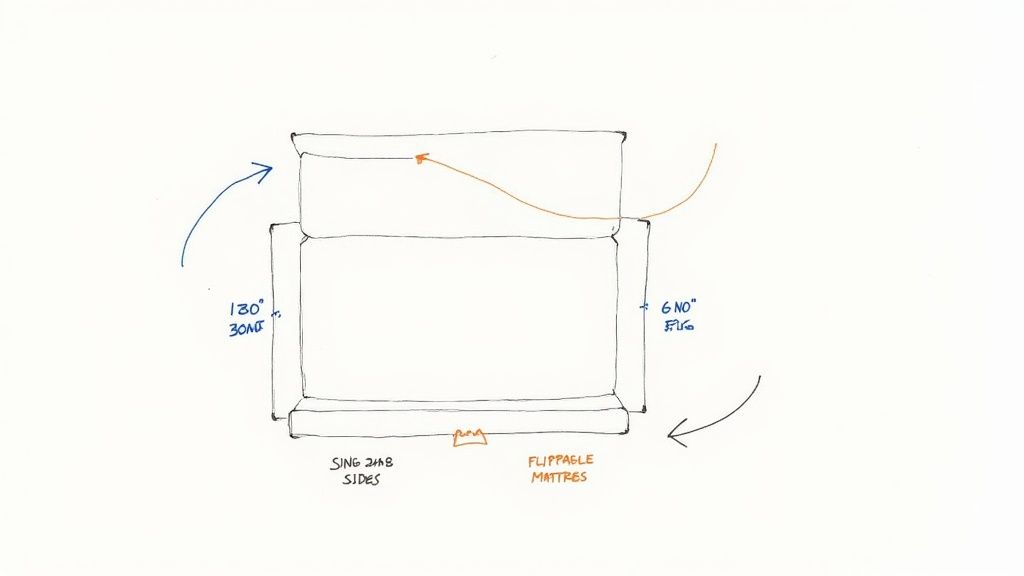
One-Sided Mattresses: This is what most people have these days—think memory foam, latex, and hybrid models. They’re built in layers, with all the comfy stuff on top and a firm support core at the bottom. These should only be rotated 180 degrees, so the head becomes the foot. Never flip them over. You’d be sleeping on the rock-hard base, and nobody wants that.
-
Flippable (Two-Sided) Mattresses: These are more old-school but still around, especially with traditional innerspring beds. They're built for longevity because you can both rotate and flip them. This gives you four different surfaces to cycle through, which is fantastic for evening out the wear over time.
Expert Tip: Not sure which kind you have? The manufacturer's tag is your best friend. If you see a plush pillow-top on one side and a flat, non-quilted surface on the other, you've got a one-sided mattress. No flipping allowed!
The Ideal Rotation Schedule
Consistency is everything. Rotating your mattress once in a blue moon won't do much to stop sags from forming. You have to be proactive.
For a brand-new mattress, you can ensure it breaks in evenly by rotating it every three months for the first year. This helps all the new materials settle properly. After that initial year, you can usually switch to rotating it every six months.
Already see some slight sagging? Bump the frequency back up to every three months to help redistribute the wear and give those compressed spots a break.
If you’ve been diligent about rotation and the sag is still getting worse, it might be a sign that your mattress has simply run its course. When you’re ready for an upgrade, our in-store Sleep Experts can help. They can even map your body’s pressure points to find the perfect durable option for your sleep style, like a quality Serta mattress, that’s built to give you consistent support night after night.
Building a Stronger Foundation for Your Bed
Sometimes, that frustrating dip you feel at night has nothing to do with the mattress itself. The real culprit could be hiding underneath in an inadequate or failing foundation.
Think of it this way—your mattress is a high-performance car, but it can't give you a smooth ride on a broken, bumpy road. Your bed frame and box spring are that road. If they aren't providing a solid, even surface, your mattress is destined to sag.
Here’s how you can reinforce your bed from the ground up and give your mattress the strong backbone it needs to properly support you.
Start With a Support System Inspection
First things first, you need to get down on your hands and knees and take a good, hard look at what’s actually holding up your mattress. A quick visual inspection is often all it takes to spot the source of your sagging woes.
You're looking for specific signs of weakness that are keeping the foundation from doing its job.
- Cracked or Bowed Slats: Wooden slats need to be perfectly straight and sturdy. If you see them bowing downward, or worse, cracked and broken, you've found a direct cause of mattress sagging.
- Wide Slat Spacing: This is a big one, especially for foam and hybrid mattresses. The slats should be no more than 3 inches apart. Any wider, and the mattress will start to sink between the gaps, creating those dreaded dips.
- Missing Center Support: Any bed that's a queen, king, or California king absolutely requires at least one center support leg touching the floor. If it's missing, or even just a bit wobbly, the middle of the frame has zero reinforcement. That’s how you get that classic sag right down the center.
A weak foundation can actually void your mattress warranty. Most manufacturers are very specific about the type of support required. If you don't meet those standards, you could be on your own when your mattress develops deep body impressions.
Simple Fixes for a Sturdier Bed Frame
If your inspection turned up a weak link, the good news is that the fix is often straightforward and doesn't have to cost a lot. You don't need to be a DIY expert to add some much-needed reinforcement.
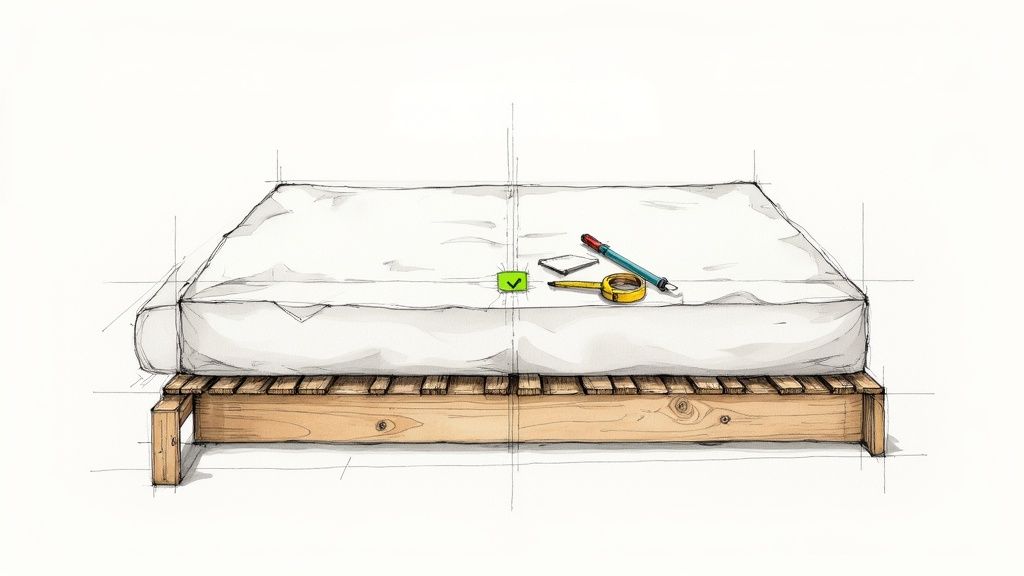
A simple piece of plywood or a bunkie board can create the firm, even surface your mattress is craving. Just measure the inside dimensions of your bed frame and have a piece of ¾-inch plywood cut to fit. Placing this solid board over your existing slats provides an immediate, unwavering base of support. It’s a surprisingly effective way to fix a saggy mattress when the foundation is the real problem.
This is especially critical for memory foam and hybrid models that demand consistent, solid support. In fact, a better understanding of proper support is one reason the global mattress market is projected to hit USD 64 billion by 2030. If you're using an older box spring, it's also worth checking it for broken springs—something we cover in our article explaining why you really do need a box spring for certain beds.
Choosing the Right Topper to Restore Comfort
When your mattress starts to feel more like a hammock, a high-quality mattress topper can be a real game-changer. Think of it as a bridge over the dips and valleys that have formed, giving you a fresh, even surface to sleep on. This isn't just a band-aid solution; a good topper can genuinely mask minor to moderate sagging (anything under 1.5 inches) and buy you precious time before you have to invest in a whole new mattress.
It's a smart, cost-effective tool to get back the comfort you've been missing.

Selecting the Right Topper Material
The material is everything when it comes to fighting sag. Each type has a unique feel and support level, so you can choose one that directly counteracts your mattress's weak spots.
- Memory Foam: This is usually your best bet for filling in those annoying dips. Dense memory foam molds to your body, relieving pressure points and creating a solid, level surface right over the sag. To really do the job, look for one that's 3 to 4 inches thick.
- Latex: If you want something a bit more responsive and bouncy, latex is a fantastic, durable option. It doesn't develop its own impressions easily and provides a gentle push-back that keeps you from sinking into the saggy parts of the mattress below.
- Down or Down Alternative: While these feel incredibly luxurious, they are not the right tool to fix a saggy mattress. They add a layer of plush softness but simply don't have the structure needed to level out any real indentations.
How Thickness and Density Make a Difference
Okay, so you've picked a material. Now you can dial in the thickness and density based on just how bad the sag is.
If you're dealing with a pretty shallow dip, a 2-inch topper might be all you need to smooth things over. But for those more noticeable valleys where you feel like you're rolling into the middle of the bed, you absolutely need a topper that is at least 3 inches thick. Anything less just won't have enough material to fill the void and give your body proper support.
Density is the other side of the coin. A higher-density foam will feel firmer and last longer, offering much better support over those failing areas. Softer, low-density foams might feel nice at first, but they won't have the strength to fight the sag for long.
You're not alone in looking for smart, DIY ways to improve sleep without buying a new mattress. Toppers are a popular fix because they offer an affordable way to make an old mattress feel usable again.
Ready to find your fix? A supportive option like our Serene Hybrid Topper is designed to provide the structure needed to bridge the gaps in a tired mattress. You can also explore a wide variety of mattress toppers and pads to see the full range of what's available. Of course, if you want a more personal recommendation, our in-store Sleep Experts are always ready to help you find the perfect match.
Knowing When to Repair or Replace Your Mattress
The fixes we've covered can breathe new life into a tired mattress, but let's be realistic—every mattress has a lifespan. At some point, you're no longer just applying a band-aid; you're fighting a losing battle. Knowing when to call it quits is key for your sleep quality and your overall health.
Deciding between one more repair attempt and a full replacement comes down to an honest look at the mattress's real condition. You need to figure out if you're just trying to fix a saggy mattress or if it's fundamentally broken. The first step is to get out a measuring tape.
How to Assess the Damage
Grab a broomstick, a yardstick, or any long, straight edge and lay it across the indented area of your mattress. Now, take a ruler and measure the gap between the bottom of the straight edge and the lowest point of the sag.
If that dip is 1.5 inches or deeper, you're looking at a serious breakdown of the core support system. No mattress topper or plywood board can fix that. It's a clear sign the mattress has given up.
Next, use your hands and ears. Press down firmly all over the surface. Do you feel hard lumps or uneven spots? Do you hear any creaking, popping, or crunching sounds? Those noises are a dead giveaway of broken or worn-out springs in an innerspring or hybrid bed, and that’s something you simply can't fix from the outside.
Check Your Warranty Coverage
Before you start shopping, there’s one last thing to check: your warranty. Many manufacturers actually cover excessive sagging as a structural defect, but they have very specific rules. Almost all of them require the indentation to be at least 1.5 inches deep with no one lying on the bed.
Dig out your original paperwork or head to the manufacturer's website. They'll have precise instructions on how to measure and document the sag for a claim. If you follow the process correctly, you could end up with a brand-new mattress for free. A successful warranty claim is the best "fix" of all.
But if your warranty is long gone, the sag is severe, and you’re still waking up sore no matter what you do, it’s time. It's time to invest in your sleep. Pushing a failed mattress for a few more months just isn't worth the chronic back pain and restless nights. For more help making that call, check out these 7 signs it’s time to replace your mattress.
When you're ready to make the switch, getting rid of the old one can be a real hassle. If it's truly done for, you may want to look into professional junk removal services to haul it away responsibly. Then, when you're ready to find a replacement that offers real support, our Sleep Experts are here to help you find the perfect new mattress that will last.
Common Questions About Fixing a Saggy Mattress
When you're trying to solve a sleep problem, you just want straight answers. Our in-store Sleep Experts get questions every day about dealing with a saggy mattress, and we've noticed a few pop up again and again. Here’s some practical advice you can use to make the right call for your bed.
Can a Topper Really Fix a Deep Sag?
Honestly, it depends on what you mean by "fix." A high-quality topper can work wonders for minor to moderate sagging—think dips around 1 to 2 inches deep. A dense memory foam or a responsive latex topper that's at least 3 inches thick can do a great job of filling in that depression, giving you a more level and supportive surface.
But it’s crucial to understand that a topper is a comfort layer, not a structural repair. Think of it as a really effective bandage. If you're dealing with a deep canyon in your mattress or suspect broken springs underneath, a topper can only do so much. It might make the bed feel better for a little while, but it can't fix the core problem. In those cases, the real solution is to look at your foundation or start shopping for a new mattress.
How Do I Know if My Bed Frame Is the Problem?
It's so easy to blame the mattress, but your bed frame is often the silent culprit behind sagging. It's the true foundation of your sleep setup, and if it's failing, your mattress doesn't stand a chance.
Giving it a quick inspection is the best place to start. You’re looking for obvious signs of weakness that show it’s not providing the support it should.
- Visible Damage: Are the wooden slats cracked or bowing? Is the metal frame bent? Do the joints wobble when you push on them?
- Missing Center Support: This is a big one. For any bed queen-size or larger, a center support leg that reaches the floor is non-negotiable. Without it, the middle of the mattress is guaranteed to dip over time.
- Improper Slat Spacing: Most modern mattresses, especially foam and hybrids, need slats that are no more than 3 inches apart. Any wider, and the mattress can start sinking into the gaps, which leads directly to sagging and uneven wear.
If you spot any of these red flags, reinforcing the frame or adding more support is your first and most important step.
Will My Mattress Warranty Cover Sagging?
Most warranties do cover sagging, but you have to read the fine print. The terms are always very specific. Usually, the dip has to reach a certain depth—often 1.5 inches or more—and it has to be measured correctly, with no weight on the bed.
Here’s the trick to measuring it yourself: lay a broom handle or another straight edge across the mattress, right over the sag. Then, take a ruler and measure the space between the bottom of the straight edge and the deepest point of the dip.
Just a heads-up: warranties can be voided if the mattress was used on an unsupportive foundation or if it has major stains. Always pull out your specific warranty document to know the rules before you go through the trouble of filing a claim.
When the quick fixes just aren't cutting it anymore, investing in a new, supportive mattress is the best thing you can do for your health. At Miller Waldrop Furniture & Decor, our Sleep Experts use advanced bed matching technology to find your unique pressure points, so they can guide you to the perfect mattress for your body.
Explore our collection online and see how you can use the right support to completely change the way you sleep. Find your perfect mattress at Miller Waldrop.