


Your Guide to Home Furnishings Brands


Scrolling brand lists late at night is how a lot of furniture mistakes start. One tab shows a sleek sofa, another promises luxury, another screams value, and by the end of the search, every product starts to look the same. For homeowners in West Texas and Southeastern New Mexico, that confusion gets worse when real life enters the picture. The room has odd dimensions. Kids and pets are hard on upholstery. A guest room needs to come together fast. A “beautiful” piece isn't enough if it won't fit the home or the way the household lives.
That overload makes sense. The home furnishings business is enormous. The global home furnishing market was valued at USD 1,018.2 billion in 2024 according to Grand View Research's home furnishing market report. When the market is that large, shoppers see endless home furnishings brands competing for attention.
The fix isn't memorizing every brand on the market. The fix is having a framework. A smart shopper doesn't ask, “What's the best brand?” A smart shopper asks, “Which kind of brand fits this room, this budget, and this household?”
That shift changes everything. It turns furniture shopping from guesswork into a decision.
Table of Contents
- Your Journey to the Perfect Home Starts Here
- Decoding the Types of Home Furnishings Brands
- Your Framework for Evaluating Furniture Brands
- Create Your Personal Brand-Selection Checklist
- A Deeper Look at Mattress Brands and Sleep
- Discover Curated Brands for Your West Texas Home
- From Vision to Reality Your Beautiful Home Awaits
Your Journey to the Perfect Home Starts Here
A homeowner might start with one simple goal. Replace an aging sofa. Then the search expands. Should the next piece be custom or in stock? Is the fabric family-friendly? Will the finish work with the dining table already in the house? Suddenly the project feels bigger than it should.

That's the moment where most shoppers go wrong. They keep chasing brand names instead of defining the problem first. A busy family furnishing a den doesn't need the same answer as a couple finishing a formal bedroom. A ranch home outside town doesn't need the same mix as a downtown condo. The right choice depends on how the room gets used.
A confident buyer uses a filter
The strongest approach is simple:
- Define the room's purpose before looking at products.
- Choose the type of brand that matches the category needed.
- Evaluate construction, warranty, and service before getting attached to style alone.
- Prioritize personal needs so the final choice reflects real life, not marketing language.
Practical rule: If a shopper can't explain why a piece fits the room, the shopper isn't ready to buy it yet.
Confidence starts not with more browsing, but with better questions. The shopper who knows what matters can ignore a lot of noise.
Good furniture buying is personal
A sectional for movie nights, a dresser that has to hold up for years, or a mattress for someone waking up sore each morning all require different standards. That's why generic “best furniture brands” lists often miss the point. They tell shoppers what's popular. They rarely tell them what fits their lives.
A strong home comes together when each purchase solves a real need. That's the standard worth using.
Decoding the Types of Home Furnishings Brands
Some brands try to cover the entire house. Others focus on one category and do that category well. Shoppers who understand that distinction stop wasting time.
Technavio identifies major global players such as Ashley Furniture Industries, La-Z-Boy, and Tempur Sealy, and notes the importance of understanding whether a brand is broad-line or specialized in order to operate within the category effectively in its home furnishings market industry analysis. That's the first useful filter for sorting home furnishings brands.
Start with the brand's job
Furniture brands are a lot like vehicle makers. Some build a wide lineup for many needs. Others focus on one lane. A shopper buying a full-house package may benefit from a broad assortment. A shopper replacing one high-use recliner may be better served by a specialist.
For anyone planning a room around custom layouts, visuals also matter. Before committing to a design concept, it can help to compare 3D furniture modeling options to understand how digital room planning supports scale, placement, and product presentation.
Shoppers get clearer faster when they stop asking, “Which brand is famous?” and start asking, “Which brand category matches this project?”
Four categories that simplify the search
Full-line brands
These brands serve multiple rooms and product categories. They're useful for shoppers who want coordination across living room, bedroom, dining, and accents. The advantage is range. The risk is assuming every category inside that lineup is equally strong.
Upholstery-focused brands
These are the brands to study when the project centers on sofas, sectionals, recliners, or motion furniture. This category matters for households that need comfort, fabric choices, and durable seating for everyday use.
Casegoods-focused brands
Dressers, beds, dining tables, consoles, and storage pieces fall here. These brands earn attention through wood finishes, drawer construction, hardware, and overall craftsmanship. If the project is bedroom-heavy, a focused review of bedroom furniture brand considerations helps narrow the field.
Mattress brands
Mattress shopping needs its own lane. Comfort materials, support systems, and body fit matter more than matching the bedroom set. This isn't furniture shopping with a sleep label attached. It's a health and comfort decision.
A shopper who sorts brands this way can eliminate a lot of bad options early. That matters. Shopping gets easier when the search starts with category fit instead of brand hype.
Your Framework for Evaluating Furniture Brands
Most shoppers can spot style in a few seconds. Very few know how to judge whether a piece will still perform well years later. That's where expensive mistakes happen.
House Beautiful's coverage points out that many “best brands” discussions focus on aesthetics, while real quality often hides in construction details, foam density, and warranty terms in its best furniture brands article. That's exactly right. A handsome silhouette can still be a poor buy.

Look past the logo
A known name doesn't guarantee the right fit. Smart evaluation comes from checking what's under the surface and what happens after delivery.
For buyers making other long-term home decisions, the same logic applies beyond furniture. A focused local resource like this South Jersey kitchen cabinet guide shows how useful it is to judge home products by materials, construction, and service, not just finish samples.
The eight checks that matter
Quality and construction
Check the frame, suspension, joinery, drawer function, and stability. A sofa for daily use should feel solid when seated and when weight shifts. A dresser should open smoothly and feel balanced.Warranty
Read what's covered. A long warranty on one component doesn't mean the entire piece has equal protection.Materials
Fabric, leather, wood veneers, hardware, cushion fill, and foam all matter. Material choices should match the room's traffic level, sunlight exposure, and maintenance tolerance.
Worth remembering: The wrong material in the right style is still the wrong piece.
Style and scale
Good design isn't only about appearance. Proportion matters just as much. A deep sofa can overwhelm a smaller room. A massive bed can choke a bedroom's walking space.Price and value
Cheap and affordable aren't the same. Value comes from balancing performance, comfort, appearance, and expected lifespan.Sustainability and longevity
For many households, the practical version of sustainability is simple. Buy fewer throwaway pieces. Choose furniture that can hold up, be maintained, and stay useful over time.Customization options
Fabric choices, finishes, configuration options, and scale variations matter when a room has specific needs. This is especially important for sectionals, dining collections, and beds.Local availability and service
Delivery, setup, service support, and problem resolution count. For motion seating, mattresses, and custom upholstery, local support can matter just as much as the initial purchase.
For shoppers focused on comfort seating, a closer look at recliner sofa brand differences can help apply these checks to one of the most used pieces in the home.
Create Your Personal Brand-Selection Checklist
A strong buying framework only works if it reflects the household living with the furniture. A young family, a retiree furnishing a quieter home, and a property owner setting up a guest space should not score brands the same way.
Set priorities before stepping into a showroom
The fastest way to narrow home furnishings brands is to assign weight to what matters most.
- Family homes with kids or pets should push durability, cleanability, and warranty to the top.
- Guest rooms or low-use spaces can place more weight on style, price, and lead time.
- Primary bedrooms often justify more attention to comfort, storage function, and long-term value.
- Open-concept living spaces need stronger focus on scale, finish coordination, and upholstery performance.
- Move-in deadlines make availability, delivery, and service more important than endless customization.
A shopper doesn't need the perfect spreadsheet. A simple ranking system works. Score each attribute from low priority to high priority, then compare brands against that list instead of comparing advertisements against each other.
Your Brand Evaluation Checklist
| Attribute | My Priority (1-5) | Questions to Ask | Brand A Score | Brand B Score |
|---|---|---|---|---|
| Quality | How solid does it feel? What construction details are visible? | |||
| Warranty | What parts are covered, and for how long? | |||
| Materials | Will these materials handle the room's real use? | |||
| Style | Does it fit the home, or just look good online? | |||
| Price and Value | Is the cost justified by comfort, construction, and lifespan? | |||
| Sustainability | Is this built to last, maintain, and keep using? | |||
| Customization | Are size, fabric, finish, or layout options available? | |||
| Local Service | Who handles delivery, setup, and any follow-up issues? |
A checklist keeps emotion in the process, but it prevents emotion from running the process.
This approach also protects against impulse buys. A dramatic showroom piece can still lose once it's scored fairly against the household's real needs. That's a good thing. Furniture should earn its place.
A Deeper Look at Mattress Brands and Sleep
Mattress shopping frustrates people for one reason. They're often trying to judge sleep support the same way they judge a sofa. That doesn't work.
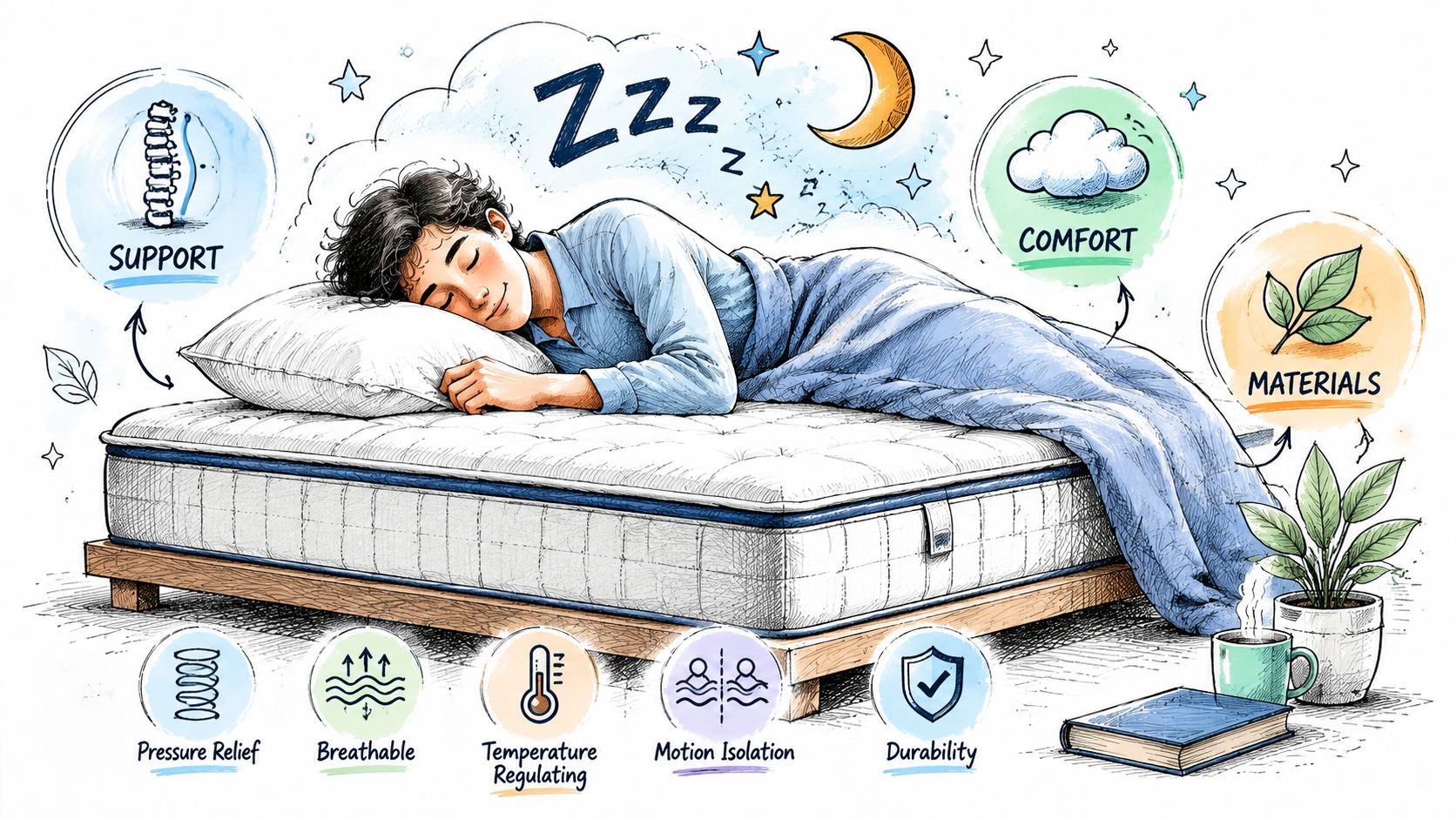
A mattress needs a different standard
A sofa gets judged by look, sit, and fabric. A mattress has to support spinal alignment, reduce pressure issues, and match sleep position. The wrong choice can affect every morning.
The key categories are straightforward:
- Innerspring often appeals to sleepers who want a more traditional feel and noticeable support structure.
- Foam can offer contouring and pressure relief for sleepers who prefer a closer cradle.
- Hybrid designs combine support and comfort layers for shoppers who want a balance.
None of those categories is automatically “right.” Body type, preferred sleep position, temperature preferences, and comfort expectations all matter.
How to shop for support, not hype
A mattress should be tested in a way that reflects actual sleep. A quick sit on the edge doesn't tell much. The shopper should lie down in a normal position long enough to notice pressure at the shoulders, hips, and lower back.
A few questions make the process clearer:
- Does the sleeper wake up sore?
- Does the bed feel too hot?
- Does one partner disturb the other easily?
- Is the sleeper primarily on the side, back, or stomach?
- Would an adjustable base improve comfort or ease of getting in and out of bed?
For shoppers sorting through major sleep brands, this comparison of Beautyrest vs Serta mattress options is a practical starting point because it keeps the focus on feel, support, and fit rather than brand familiarity alone.
The right mattress brand is the one that matches the sleeper's body and habits. Not the one with the loudest marketing.
That's why sleep shopping deserves patience. A bedroom can tolerate a lamp that's less than perfect. A bad mattress keeps collecting a price every night.
Discover Curated Brands for Your West Texas Home
A curated assortment solves a major shopping problem. It trims the field to brands that serve real needs instead of forcing shoppers to sort through endless options alone.
Aperture Labs notes that configurable furniture requires structured product data around dimensions, materials, compatibility, and custom options so shoppers can answer practical questions like fit and matching with confidence in its article on what furniture brands can learn from automotive fitment data. That matters in practice. Custom-order upholstery, finish options, and room planning only work when the details are managed correctly.
What a curated assortment solves
For a household furnishing a primary living room, curated brands make decisions easier in three ways:
- They reduce noise. The shopper spends less time sorting through irrelevant options.
- They clarify strengths. One brand may be a better fit for motion comfort, another for bedroom storage, another for custom upholstery.
- They make customization safer. Dimensions, fabrics, and configurations are easier to evaluate when the assortment is organized well.
This matters even more for buyers relocating into the region. Anyone budgeting a long-distance move may need to compare Boston to Texas moving costs before deciding whether to move existing pieces or start fresh with new furnishings that fit the next home properly.
Brand examples that match real priorities
If durability and everyday seating comfort sit at the top of the checklist, upholstery-focused collections deserve first attention. That's especially true in family rooms where seating gets heavy daily use.
If wood finishes, bedroom storage, and dining presence matter most, casegoods brands should take priority. A shopper should inspect scale, finish consistency, drawer action, and how well the piece fits the architecture of the home.
If reclining comfort and function rank highest, motion-focused seating becomes its own category. The right piece has to feel good in the seated position, the reclined position, and the room itself.
For a concrete example inside that decision process, the Flexsteel Thornton Sofa shows the kind of product a shopper can evaluate through this framework. The questions aren't complicated. Does the scale work? Does the seating feel right for daily use? Does the style fit the home? Does the construction justify the investment?
Miller Waldrop Furniture & Decor offers curated home furnishings brands across living room, bedroom, dining, and mattress categories, which gives shoppers a way to compare these priorities in one place rather than trying to piece the process together across scattered sources.
From Vision to Reality Your Beautiful Home Awaits
The smartest shoppers don't hunt for one mythical “best” brand. They build a decision system and use it well. That's what separates a confident purchase from an expensive guess.
The process is simple enough to repeat for any room. Decode the type of brand. Evaluate what matters under the surface. Prioritize based on the household's real life. That's how shoppers choose home furnishings brands that make sense for the way they live in West Texas or Southeastern New Mexico.
Local support matters too. As noted by the earlier market discussion around shopper expectations, convenience and follow-through shape the buying experience as much as the product itself. In practice, that means custom orders, financing, delivery, and service shouldn't be afterthoughts. They should be part of the decision from the start.
A beautiful room starts with taste. A successful purchase also needs fit, function, and support after the sale.
That combination is what turns a plan into a home. The shopper who walks in with a checklist, clear priorities, and a realistic budget is already ahead. The final step is seeing pieces in person, testing comfort, checking scale, and asking sharper questions than most buyers ever ask.
A great home rarely comes together by accident. It comes together when the right pieces meet the right plan. Miller Waldrop Furniture & Decor gives shoppers in Lubbock, Hobbs, and Ruidoso Downs a place to test styles, compare trusted brands, explore mattresses, and work through custom options with design guidance, financing, delivery, and service built into the process.