


Navigating a Mattress Return Policy: Your 2026 Guide

A mattress feels perfect for ten minutes in a showroom. Then it arrives at home, the first few nights feel different, and doubt starts creeping in. Was the wrong comfort level chosen? Is that firmness normal? If it doesn't work out, what happens next?
That uncertainty stops a lot of shoppers in West Texas and New Mexico from making a decision they otherwise feel good about. A mattress is a major purchase, and nobody wants to feel trapped. The good news is that a mattress return policy doesn't have to be mysterious. When shoppers understand how trials, exchanges, condition rules, and pickup steps work, they can buy with a much steadier mind.
That knowledge helps twice. It helps before the sale, because a shopper can ask better questions and avoid common mistakes. It also helps after delivery, because a shopper can tell the difference between normal adjustment and a true mismatch. That's where confidence starts.
Your Guide to Confident Mattress Shopping
A family moving into a new home often faces the same scene. One person wants softer comfort. The other wants stronger support. Both worry about spending good money on the wrong bed. By the time they start reading the fine print, the words “trial,” “exchange,” and “restocking fee” can make the whole process feel heavier than it needs to.
That worry is reasonable. Mattress policies can sound simple in the advertisement and much more complicated in the details. A “risk-free” promise may still come with timing rules, condition requirements, pickup steps, or limits on what counts as a return.
A mattress return policy is more than a backup plan. It's part of choosing wisely from the start.
The broad pattern across the industry is clear. About 89% of mattress retailers globally accept returns, while 11% do not, and trial windows commonly fall between 30 and 120 days, with 90 days being a common benchmark, according to Sleep Advisor's mattress return policy overview. That sounds reassuring, but many shoppers get tripped up because the trial period and the actual return eligibility aren't always the same thing.
The smarter approach starts with three calm questions:
- What is the actual trial window? A long headline promise doesn't always explain the specific dates.
- Is there a minimum break-in requirement? Many stores won't process a comfort return right away.
- Is the better path a refund or an exchange? Those aren't always handled the same way.
For local shoppers, that clarity matters even more. Delivery distance, pickup timing, and store support can feel very different depending on where the mattress was purchased. A little knowledge up front lowers the chance of an expensive surprise later.
Decoding the Standard Mattress Return Policy
The phrase mattress return policy usually bundles together several separate rules. Once those rules are separated, the process becomes much easier to understand.
Sleep trial and return window
A sleep trial is the home testing period. It's the mattress version of a long test drive. A shopper sleeps on the mattress in a real bedroom, with real pillows, real room temperature, and real nightly habits. That's different from lying on a bed for a few minutes under showroom lights.
A return window is the period when the retailer may allow a return or exchange. Those windows vary, and the exact dates matter more than the marketing headline. That's why reading the store's policy terms matters before delivery day. A shopper can review the specific details on a retailer's store policies page.
Why the break-in period exists
Many people assume a mattress should feel exactly right on the first night. That's often not how mattresses work.
Most mattress retailers enforce a mandatory 30-day minimum break-in period before processing returns. During this phase, mattresses can experience a 15–20% reduction in surface firmness as materials settle, meaning early returns often happen before the body and mattress have fully adjusted, as explained in Sleepopolis's guide to how mattress returns work.
That break-in period is similar to breaking in a new pair of shoes. At first, the materials are at their firmest and the body hasn't adapted yet. A few nights of uncertainty don't automatically mean the mattress is wrong.
Practical rule: If discomfort is mild and seems related to firmness or unfamiliar support, giving the mattress time often leads to a more accurate decision.
Return versus exchange
These two options sound similar, but they solve different problems.
A return usually means the shopper wants a refund, subject to the policy terms. An exchange means the shopper wants to move into a different model that may fit better. For example, a sleeper who chose a very firm mattress may discover that a plush hybrid gives better pressure relief, while another sleeper may need stronger support and less sink.
A simple way to consider this:
- Return fits the shopper who wants out of the purchase.
- Exchange fits the shopper who likes the brand or store but needs a different comfort or support profile.
- Timing matters because the same policy may treat each option differently.
That distinction becomes important fast, especially once pickup charges or processing fees enter the conversation.
Online vs In-Store Returns What to Expect
Buying online and buying in a store can both work well. The return experience, though, often feels very different once the mattress is in the home and a problem has to be solved.
The practical differences
An online return usually starts with customer service. The shopper contacts the company, explains the issue, waits for instructions, and then follows whatever pickup or donation process the retailer requires. Some brands use third-party crews for pickup. Others ask the customer to arrange donation and send proof before the refund is approved.
An in-store return usually feels more direct. The shopper speaks with a person at the local store, reviews what the policy allows, and works through the next step with a team that knows the purchase history and delivery area. Local pickup expectations can often be reviewed ahead of time through the retailer's delivery information page.
Fees and hidden costs
Such confusion turns expensive.
Return processing and restocking fees are a critical detail. Fees like $249.99 are common at major chains and can represent 25-30% of the item's cost, often negating the value of a refund. However, these fees are frequently waived if the customer chooses to exchange the mattress for another model, according to this video discussion of mattress return and restocking fees.
That means two shoppers with the same mattress problem can end up with very different outcomes depending on whether they ask for a refund or an exchange.
Mattress Return Process Comparison
| Feature | Online Retailer (Typical) | In-Store Retailer (e.g., Miller Waldrop) |
|---|---|---|
| First contact | Customer service form, phone, or email | Local store team |
| Next step | Wait for instructions from a remote support process | Review policy with a nearby sales associate or manager |
| Mattress handling | Third-party pickup or customer-arranged donation may be required | Store-directed pickup process is often clearer |
| Exchange experience | Replacement is chosen from photos and descriptions | Replacement can be tested in person |
| Common friction points | Delays, documentation requests, donation proof, unclear timelines | Availability, scheduling, and policy terms still apply, but communication is often more direct |
| Best fit for | Shoppers comfortable handling remote logistics | Shoppers who want face-to-face help and easier comfort testing |
Some shoppers don't mind remote support. Others sleep better knowing there's a local team and a physical showroom if the first choice misses the mark.
For many households, the best move is asking one question before buying: “If this mattress isn't the right fit after the break-in period, what exactly happens next?”
Warranty vs Return Policy Understanding the Difference
Many shoppers use the words “warranty” and “return” as if they mean the same thing. They don't.
One covers comfort and one covers defects
A return policy is about satisfaction. The mattress may be clean, undamaged, and exactly as built, but the sleeper may not like how it feels. Maybe the bed feels firmer than expected. Maybe it doesn't relieve pressure in the shoulder or hip the way the shopper hoped.
A warranty is about product failure. It applies when the mattress has a flaw in materials or workmanship, not when the comfort preference changes.
A simple phrase helps people keep this straight:
A return policy is for a mattress that isn't the right fit. A warranty is for a mattress that has a flaw.
Why the distinction matters
If a shopper calls about a comfort issue and uses the word “defect,” the conversation can go down the wrong path. If a shopper has a genuine product problem but waits too long because the issue is treated like a comfort complaint, that creates frustration too.
The best first step is matching the problem to the correct channel:
- Too firm or too soft: usually a return or exchange question
- Visible manufacturing problem: usually a warranty question
- Sagging or structural concern: often a warranty review
- General discomfort in the first few weeks: often part of the adjustment period already discussed above
Warranty details differ by manufacturer, so the safest move is to review the retailer's mattress warranty information and keep the original paperwork in an easy-to-find place.
What shoppers should keep
A smoother claim often depends on simple recordkeeping:
- Proof of purchase
- Photos if a defect appears
- The law tag and product identification
- Notes about when the issue started
When people know whether they're asking for a satisfaction solution or a defect solution, the process becomes faster and less stressful.
How to Initiate a Mattress Return with Miller Waldrop
A return always feels easier when the steps are clear and the shopper knows what information to gather before making the call.
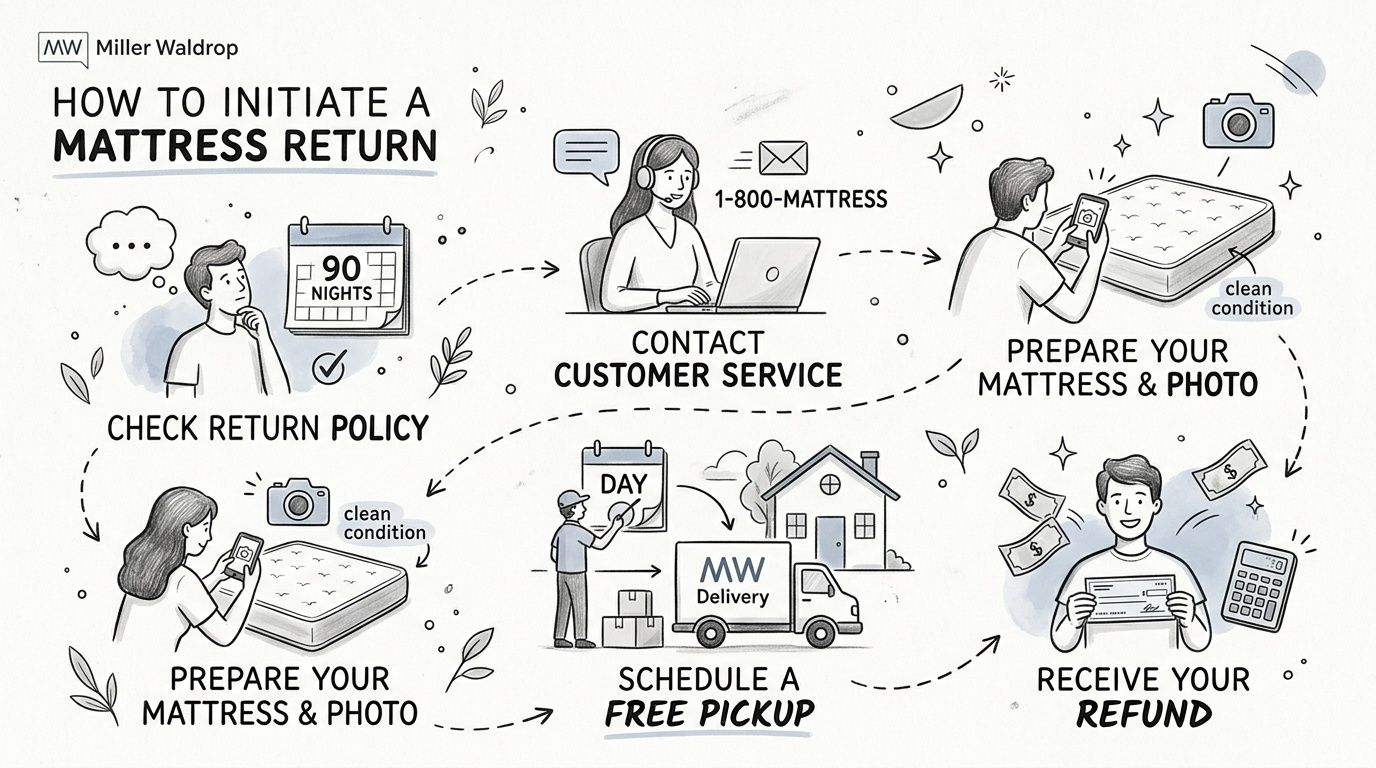
Step 1 through Step 3
Start with the basics.
- Check the purchase date. The first question is whether the mattress is still within the applicable trial or exchange period.
- Find the sales receipt. A receipt, order number, or delivery record helps the store locate the purchase quickly.
- Inspect the mattress carefully. Look for stains, odors, tears, or other visible issues before starting the process.
That condition check matters. Return eligibility is strictly dependent on the mattress's condition. Policies universally disqualify items with stains, odors, or physical damage. Retailers can refuse returns if the item is not in satisfactory quality due to user-induced issues, as explained in Ideal Home's mattress return guidance.
Step 4 through Step 6
Once the shopper has the key information ready, the process gets simpler.
- Call the store where the purchase was made. Ask for the original sales associate or a manager.
- Describe the issue clearly. “Too firm after the break-in period” is more helpful than “It's not working.”
- Ask what resolution fits best. Depending on the policy and condition, the answer may be an exchange, a pickup arrangement, or another service step.
The clearer the description, the easier it is for the store team to guide the shopper toward the right next move.
Useful details to have ready include the purchase date, the model name, the size, and a short explanation of what the sleeper is feeling. For example, side sleepers might report shoulder pressure. Back sleepers might say the mattress feels softer through the midsection than expected. Clear feedback helps the team identify whether a different feel or support profile is the better solution.
For shoppers arranging an exchange, the replacement choice matters even more than the first one. A supportive hybrid option such as the Serta iComfort Eco Hybrid Mattress can be a better fit for sleepers who want a blend of contouring and support. That's where in-store testing and pressure-point matching can help a household avoid repeating the same mistake.
Common Exemptions and How to Avoid Problems
Most denied returns don't happen because the shopper missed the deadline by a day. They happen because the mattress condition no longer meets policy standards.
The mistakes that void eligibility
The biggest problem is usually preventable. A small stain, body oil mark, pet accident, or persistent odor can change a mattress from returnable to non-returnable. Even when the comfort complaint is legitimate, hygiene rules often control the outcome.
Items around the mattress can create confusion too. Most mattress retailers explicitly exclude items sold as part of a mattress set, such as bedding, pillows, and fabric protection plans, from any return or exchange policy, classifying them as final sale items to prevent health hazards, according to this BBB listing discussing furniture store policy language.
Common trouble spots include:
- Stains or spills: Even minor marks can cause the return to be refused.
- Odors: Smoke, moisture, or pet odors can create hygiene concerns.
- Physical damage: Tears, bent edges, or damage from improper handling may void eligibility.
- Missing documentation: Receipts, photos, or product identification may be needed.
- Final sale accessories: Pillows, protectors, and similar items often aren't covered.
The best prevention step
The single smartest move is using a high-quality waterproof mattress protector from day one.
That isn't just an accessory. It's protection for the shopper's options. The protector helps preserve hygiene, keeps the surface clean, and reduces the chance that one accident removes the possibility of a return or exchange altogether.
A mattress protector doesn't just protect the mattress. It protects the shopper's flexibility if the comfort choice needs to change.
A short checklist for the first night
A household can lower risk immediately by doing a few simple things:
- Set up the right foundation: Use the base or frame recommended for the mattress.
- Leave tags in place: Don't remove identifying tags unless the retailer says it's allowed.
- Use a protector immediately: Don't wait until after the first week.
- Keep paperwork together: Receipt, warranty details, and delivery paperwork should stay in one folder.
A clean mattress gives the shopper the strongest position if a comfort issue appears later.
Frequently Asked Questions About Mattress Returns
Does the shopper need to keep the original plastic bag or box
Usually, the important thing is not the original wrapping. The more important items are the receipt, order information, and the mattress itself being kept in acceptable condition. If a retailer has a packaging requirement, that should appear in the written policy, so it's worth checking before throwing anything away.
What happens to a returned mattress
Many shoppers assume every returned mattress goes right back onto a sales floor. That usually isn't how this category works.
Returned mattresses contribute to significant waste, with up to 20 million discarded annually in the U.S. While some states have recycling mandates, many retailers landfill returned units. Others partner with refurbishment companies or donation centers as a more sustainable alternative, according to GoodBed's reporting on online mattress return rates and disposal practices.
That's one more reason to choose carefully before buying. Avoiding the wrong fit doesn't just save hassle. It can also reduce waste.
Are there special mattress return laws in Texas or New Mexico
Return policies are usually set by the retailer and the manufacturer, along with general consumer protection rules. A shopper in West Texas or New Mexico should focus on the written store policy, the trial terms, and the condition requirements. If a mattress arrives damaged or materially different from what was sold, that becomes a different issue than a comfort-based return.
Can a shopper return a clearance or custom-order mattress
Often, those items come with tighter terms or final sale language. Clearance pieces, floor models, and custom-order products can follow different rules than regularly stocked mattresses. The safest move is getting that answer in writing before the purchase is completed.
Is an exchange better than a refund
In many situations, yes. If the mattress quality is fine but the comfort match is wrong, an exchange may preserve more value and lead to a better long-term sleep solution. A refund sounds cleaner, but any applicable fees or policy limits can change the math.
How can a shopper avoid needing a return at all
The best prevention strategy is simple:
- Test the feel for real sleeping positions
- Ask about the break-in period
- Use a protector on night one
- Review the written policy before purchase
- Choose support based on body needs, not just the softest first impression
A calm buying process usually leads to a calmer sleeping experience.
Shoppers in Lubbock, Hobbs, and Ruidoso Downs who want a clearer path to better sleep can explore Miller Waldrop Furniture & Decor for guidance, quality mattresses, and support that continues after delivery day. Their long-standing local experience, curated selection, and sleep expertise give families the tools they need to choose the right mattress the first time, ask smarter policy questions, and sleep with more confidence.