


White Glove Delivery Service: What It Includes & Pricing


You've probably had the same moment plenty of furniture buyers have had. The sofa looks perfect online, the delivery date is set, and then the questions hit. Will the crew bring it inside, set it where it belongs, remove the packaging, and leave the room ready to use, or will the box just land at the door and become your problem?
That gap between expectation and reality is exactly where white glove delivery service gets misunderstood. The term gets used loosely, but the service itself is a lot more than transport. For bulky, high-value pieces, the difference between a true setup experience and a basic drop-off is the difference between a smooth move-in day and a long, frustrating cleanup.
What White Glove Delivery Actually Means
The mistake shoppers make is simple. They hear “white glove” and assume it only means the item comes inside the house. That's not enough, and it's not what the term was built to cover.
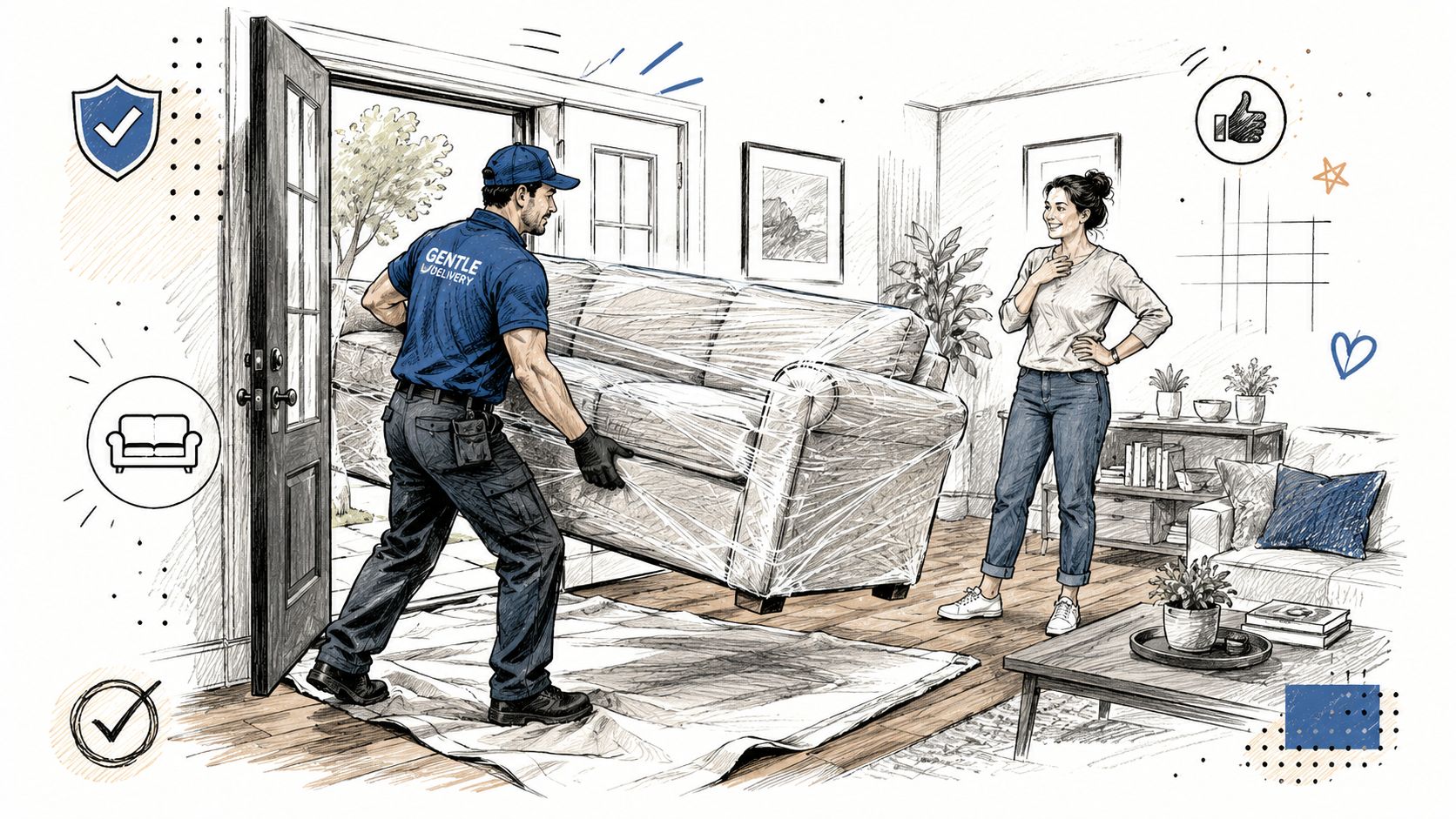
The delivery day difference
A real white glove crew doesn't stop at the curb, and it doesn't treat the job like a handoff. Industry descriptions define the service as inside placement plus controlled final-mile handling, which means scheduled arrival, trained crews, room-of-choice delivery, unpacking or uncrating, assembly or installation, and debris removal. That's why it fits oversized or fragile furniture so well, along with appliances and medical equipment, where the final move matters as much as the transport itself. One useful way to think about it is as a last-mile process integration service, not a truck drop.
Practical rule: If the delivery offer doesn't clearly say where the item goes, who unpacks it, and who removes the packaging, it's not true white glove service.
That distinction matters on the actual delivery day. A room-of-choice crew brings the piece through the entry, works around stairs or narrow hallways, and places it where it belongs. A lighter-touch delivery may only get the item to the threshold, or it may count as “white glove” even when setup is limited.
For shoppers who want a clean handoff and less chaos at home, the service should be judged by the whole sequence, not the label. If a customer also wants the home to be left neat after a project, a premium cleaning service can be a useful companion resource, especially after furniture installation or a full room refresh.
Everything Included in a True White Glove Experience
A proper white glove delivery service should feel like a managed handoff from start to finish. The crew should arrive with an appointment window, confirm access, and know exactly where the piece is going before anyone starts lifting. That kind of discipline is what keeps a big item from becoming a hallway problem.
From the truck to the right room
Room-of-choice placement is the core of the service. The team carries the item inside, moves it up stairs if needed, and sets it in the specific room the customer chose, not just near the front door. That matters for large pieces like Flexsteel sofas, La-Z-Boy recliners, and Beautyrest mattresses, because the value is not just arrival, it's getting the item into usable position without the customer having to wrestle it through the house.
Unpacking and uncrating come next. The crew removes outer packaging carefully so finishes, corners, and upholstery don't get nicked in the process. On a mattress or sectional, that step also lets the customer inspect the item right away instead of discovering a hidden scuff later.
Assembly, installation, and the finish line
Assembly is where premium service stops being vague and starts being useful. A dining set may need legs attached, a sectional may need modules connected, and an adjustable base may need installation before it's ready to use. The point is not just placement, it's functionality.
Good crews don't leave until the customer can see the item, use the item, and understand what was done.
Debris removal is the last step that separates real premium delivery from standard delivery dressed up with better wording. Packaging, straps, cardboard, and protective wrap should leave with the crew unless the offer clearly says otherwise. A walkthrough before departure also matters, because it gives the customer a chance to confirm placement, spot defects, and ask for a final adjustment while the team is still there.
White Glove vs Standard and Curbside Delivery
Buyers should compare delivery tiers with a clear eye, not with hope. The biggest difference isn't speed, it's responsibility. Standard delivery and curbside delivery often end at the truck, while white glove delivery extends into the home and finishes the job.
The liability gap is real. Standard carrier liability is commonly only $0.60 per pound Secursus explains the common liability limit and related planning issues, which is far below the replacement value of premium furniture. That is why careful handling and separate shipping insurance make sense for high-value items.
| Delivery Service Tiers Compared | Curbside Delivery | Threshold Delivery | White Glove Delivery |
|---|---|---|---|
| Placement | Outside the home | Inside entry or garage area | Specific room of choice |
| Unpacking | No | Usually no | Yes |
| Assembly | No | Usually no | Often included or available |
| Debris Removal | No | Usually no | Often included |
| Scheduling | Basic | More coordinated | Appointment-based |
| Damage Exposure | Higher at handoff | Moderate | Lower with trained handling |
The internal policy page at Miller Waldrop delivery is the kind of resource shoppers should look for before they buy, because delivery details should be written down before the truck is loaded. That's the point most retailers skip, and it's where confusion starts.
White glove is worth the investment when the item is expensive, awkward to carry, difficult to assemble, or being delivered into a space where mistakes are costly. A basic option can still make sense for light, durable, easy-to-move pieces. The smart choice is the one that matches the shipment, the home, and the buyer's tolerance for risk.
Understanding White Glove Delivery Pricing
A customer in West Texas or Southeastern New Mexico can hear one delivery quote and assume it means the same thing everywhere. It does not. White glove pricing is built around labor, access, time on site, and the risk of moving a premium item without damaging the piece or the home.
What drives the quote
Stairs raise the price because they slow the crew and add handling complexity. Elevator access can also change the quote, especially when a freight elevator has to be reserved or timed around building rules. Assembly complexity matters too. A sofa that is ready to place is a different job from a modular item that has to be set up in the home.
Geography changes the economics as well. A delivery into a dense city route and a delivery into a rural zip code are not the same operationally, which is why customers in West Texas and Southeastern New Mexico should expect routing realities to affect the final number. In that market, white glove service is no longer a small niche. The Mordor Intelligence market estimates show the category has grown into a mainstream delivery option, which matches what retailers see on the ground.
The quote should also reflect the retailer's own rules and handling limits. A clear Miller Waldrop store policies page is the kind of document buyers should read before they commit, because the details should be spelled out before the truck is loaded. That is where confusion usually starts, not on the driveway.
Why skipping the service can get expensive
The fee looks different once the hidden costs are counted. Self-assembly takes time, packaging still has to be handled, and one handling mistake can turn into damage that a standard carrier will not fully cover. A white glove quote should be weighed against the cost of replacing, repairing, or living with furniture that was delivered in poor condition.
The right question is not whether it is cheap. The right question is whether the item deserves controlled delivery. A heavy sofa, a mattress setup, or a full room of new furnishings usually does. A small, durable item with easy access may not.
How to Prepare Your Home for Delivery Day
Good delivery days are usually planned, not lucky. The customer's job is to clear the route, verify access, and remove friction before the crew arrives. That's especially important when the item needs to move through a tight entry or into a second-floor room.
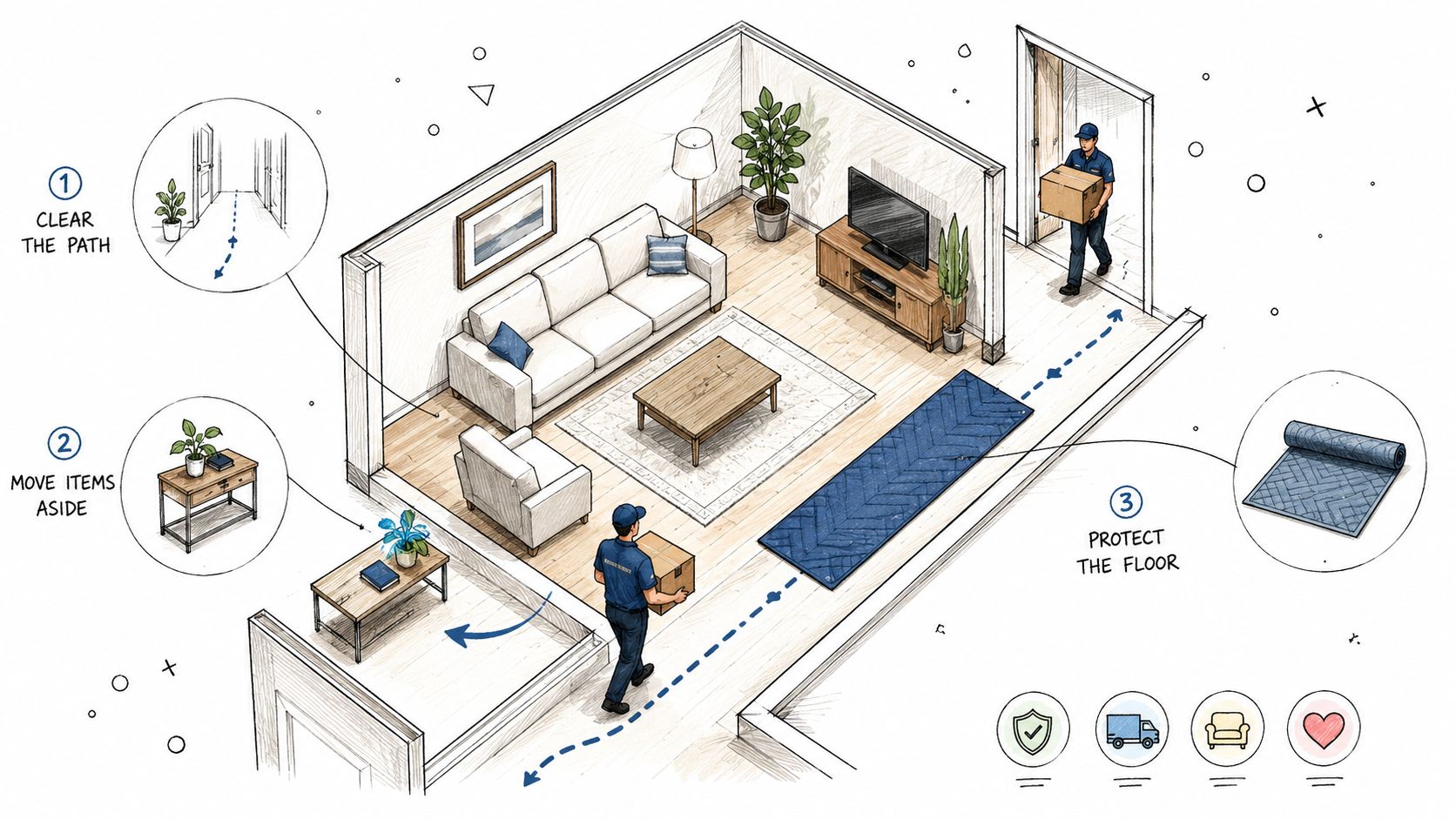
The checklist that prevents problems
Measure doorways, hallways, staircases, and turns before delivery day. If the path is tight, that measurement tells the customer whether the piece needs to be unboxed earlier, whether a different size is smarter, or whether the delivery crew should be warned in advance. If the item must go upstairs, the route should be clear all the way to the room of choice.
Pets and children should be secured before the crew arrives. Delivery teams need open pathways, and households need safe movement while large furniture is being carried. Floors can be protected if the customer prefers, but the more important step is keeping the route free of clutter, shoes, baskets, and fragile decor.
Have the right details ready
Building access codes, gate codes, elevator reservations, and HOA or property management rules should be ready ahead of time. Missing one of those details can slow the entire delivery window. The service request page at Miller Waldrop service request is the type of channel customers should use early, not after the truck is already on the way.
The easiest deliveries are the ones where the home is ready before the truck turns onto the street.
Appointment windows work best when they fit the household's actual schedule, not just a vague convenience. A customer who can be present for the walkthrough should plan on that, because it gives the crew room to confirm placement and finish the job cleanly. That small bit of preparation usually pays off in less stress and fewer surprises.
Why Miller Waldrop Delivers a Superior White Glove Experience
A local white glove operation should do more than move furniture. It should understand the homes, the roads, and the delivery obstacles in its own region. That's where a family-owned retailer with a long history has an advantage, because the team has seen the same access issues, building rules, and rural route challenges over and over again.
Regional knowledge matters
Miller Waldrop has been serving West Texas and Southeastern New Mexico for over 70 years, with roots going back to 1952 and operations in Lubbock, Hobbs, and Ruidoso Downs. That matters when the delivery route crosses long distances or when a customer lives outside the easiest metro lanes. Crews that work this region daily know what a tight entry, a rural driveway, or a building reservation can do to a schedule.
The showroom assortment also matters because the delivery team is handling the same kinds of pieces every day, from Flexsteel, La-Z-Boy, Hooker, Ashley, Serta, and Beautyrest. A retailer that sells those categories regularly has a delivery process that fits the product, not the other way around.
What customers actually get
The advantage is practical. Customers get coordinated scheduling, trained handling, and a delivery process built around full-value protection rather than a bare-bones drop-off. They also get help that extends beyond the truck, because a good furniture team doesn't just place a piece, it helps the room feel finished.
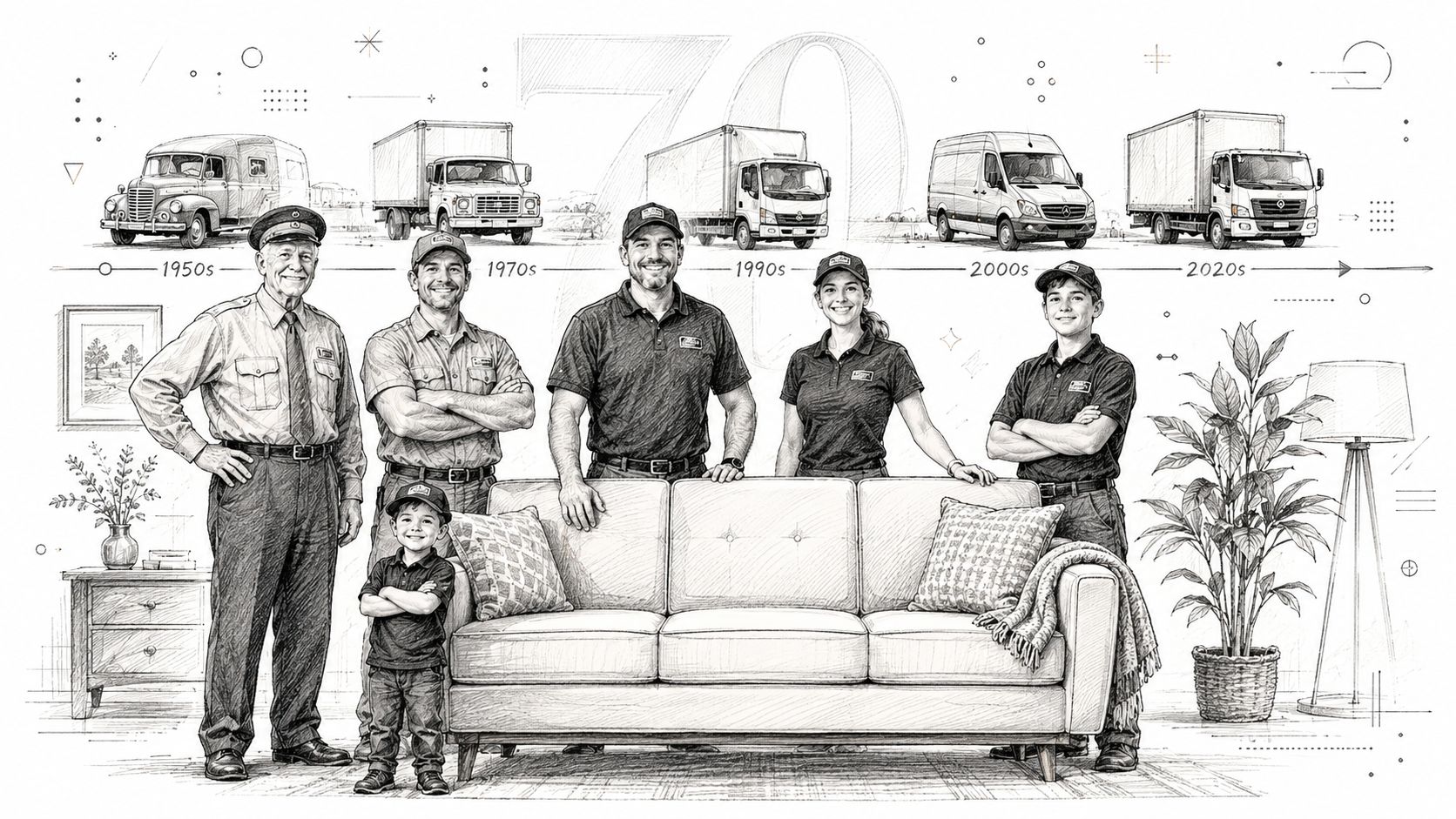
That combination of delivery, service, and design support is why a local retailer is often a better fit than a faceless carrier network. For homeowners in the region, especially those furnishing living rooms, bedrooms, and dining spaces, the safer choice is the team that can sell the piece, schedule the delivery, and stand behind the outcome.
Common Questions About White Glove Delivery
Can white glove delivery reach rural addresses in West Texas and Southeastern New Mexico? Sometimes yes, but the customer should expect different lead times, route planning, and possibly different fees than a dense city address. Rural service is a real gap in the industry, so the buyer should ask directly before placing the order.
What's the difference between true white glove service and a lighter variant? True service includes room-of-choice placement, unpacking, setup, debris removal, and a walkthrough. A lighter version may only include inside entry, threshold placement, or a limited two-person handoff, even if the marketing language sounds premium.
What happens if stairs or a narrow doorway make setup difficult? The crew should assess the access route, and the customer should disclose those obstacles before delivery day. That is the point where good planning prevents damage, delays, and frustration.
What items benefit most from this service? Sectionals, adjustable bed bases, dining room sets, sofas, mattresses, and other bulky or fragile pieces are the clearest candidates. For a practical breakdown of bed assembly and setup expectations, the perfect bed setup guide offers a useful frame for what careful installation should look like.
If a furniture purchase is too important to leave to chance, choose a retailer that treats delivery like part of the product. Miller Waldrop Furniture & Decor offers furniture, mattresses, and delivery support designed for real homes in West Texas and Southeastern New Mexico. Visit Miller Waldrop Furniture & Decor to find the right piece and arrange the kind of delivery that finishes the job.