


Wine Rack Furniture: A Guide to Perfect Placement & Style

A lot of homeowners start the same way. A few favorite bottles sit on the kitchen counter, two more hide in a pantry corner, and a gift bottle gets tucked beside the toaster because there isn't a real place for it yet. The collection isn't huge, but it already feels scattered.
That's usually the moment wine storage stops being a small annoyance and starts becoming a furniture decision. The right piece doesn't just hold bottles. It clears visual clutter, gives the room more purpose, and turns a personal collection into something that looks intentional.
In West Texas and SE New Mexico, that matters more than people sometimes expect. Homes in this region often need furniture to work hard. A piece may need to serve as storage, display, and entertaining support all at once. Wine rack furniture fits that role well because it can live in a dining room, anchor a living space, or add structure to an open kitchen without feeling overly formal.
A smart choice also connects to how a household lives. Some people want a compact cabinet near the dining table. Others need a tall bar cabinet that keeps bottles, glasses, and serving pieces together. Some want the counter back.
From Counter Clutter to Chic Collection
One common scenario looks like this. A homeowner buys wine a bottle or two at a time, mostly for dinners, holidays, and the occasional weekend gathering. At first, storing it on the counter seems harmless. Then the labels start disappearing behind olive oil, mail, and small appliances. What began as a few bottles becomes visual noise.
That problem usually isn't about having too much wine. It's about not having a piece of furniture that gives the collection a proper home. Wine rack furniture solves that in a way a pantry shelf never can. It organizes, yes, but it also tells the room what belongs there.
A dining area with a slim cabinet feels more polished than a row of bottles on a countertop. A living room with a bar-height storage piece feels ready for company. Even a small apartment can feel more settled when wine storage is treated as furniture instead of overflow.
Practical rule: If bottles are being stored in more than one room, the home is already asking for a dedicated solution.
That shift also changes how people entertain. When bottles, glasses, and accessories are gathered in one place, hosting gets easier. The setup feels calm instead of improvised. For households building a welcoming serving area, this guide to bar cart essentials offers useful ideas for what should stay close at hand.
The true opportunity isn't just storage. It's design. A wine cabinet, sideboard, or wall-mounted display can add warmth, structure, and personality to a room that otherwise feels unfinished. Instead of asking, “Where can these bottles go?” the better question becomes, “What kind of piece would make this space work better every day?”
Understanding the World of Wine Furniture
Many people hear “wine rack” and picture a small metal holder tucked into a pantry or placed on a countertop. That's only one corner of the category. Modern wine rack furniture spans everything from compact wall pieces to substantial cabinets that blend bottle storage with shelves, drawers, and serving space.
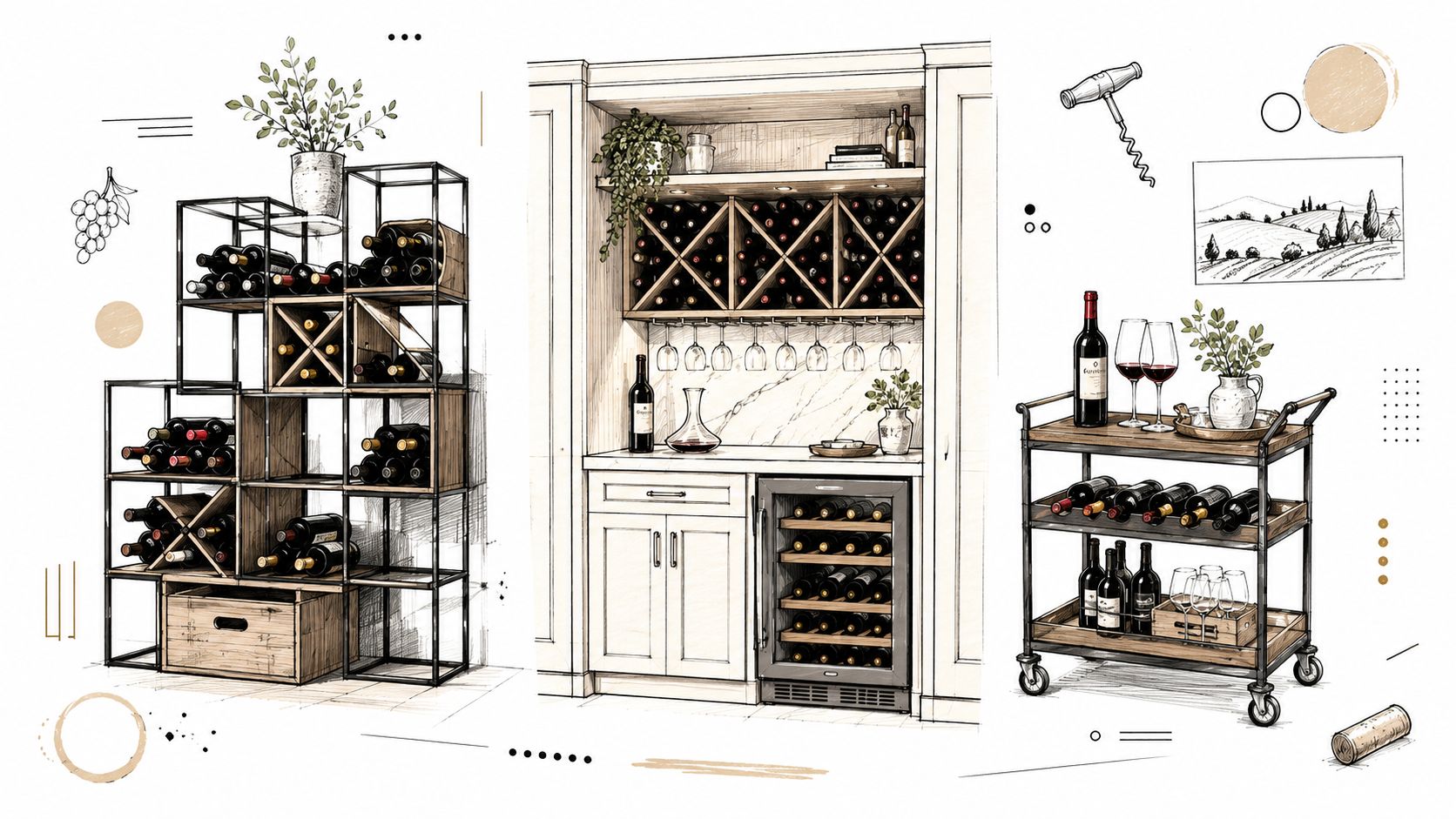
The easiest way to think about it is this. A simple rack is like a basic bookshelf. It stores the essentials. Integrated wine furniture is more like a built-in library. It doesn't just hold items. It shapes the room around them.
More Than a Bottle Holder
Some pieces are designed to disappear into the room's existing function. A sideboard with a built-in wine section can sit in a dining room and still hold linens, platters, or serving bowls. A bar cabinet can hide glassware behind doors and keep bottles visible in a more curated way. A console with wine storage can soften the line between dining and living spaces in an open floor plan.
That flexibility helps explain why the category keeps expanding. The global wine racks market was valued at USD 1,497.4 million in 2025 and is projected to reach USD 2,557.7 million by 2035, growing at a CAGR of 5.5%, highlighting the increasing demand for stylish and functional wine storage in homes.
In practical terms, homeowners are no longer treating wine storage as an afterthought. They're choosing pieces that work like real furniture.
The Main Ways Wine Furniture Shows Up at Home
A helpful way to narrow the field is to think in terms of integration:
- Open display pieces keep bottles visible and easy to reach. These suit casual use and can add texture to a kitchen or dining nook.
- Closed cabinets create a cleaner look. They work well in rooms where a quieter visual profile matters.
- Mixed-use furniture combines wine storage with drawers, shelving, or serving surfaces.
- Dedicated collector setups focus more heavily on preservation, scale, and display.
Some homeowners eventually decide their collection needs a more specialized environment. For readers exploring what it takes to build a custom wine cellar, that broader perspective can help clarify when furniture is enough and when a more dedicated storage plan makes sense.
Good wine furniture doesn't interrupt a room. It makes the room feel more complete.
The key is to stop thinking only about bottle count. Start with how the piece needs to live. Should it support entertaining? Fill an empty wall? Replace a cluttered corner? Blend into existing dining furniture? Once that role is clear, the right type becomes much easier to spot.
Find Your Perfect Match Key Furniture Styles
A good wine piece should solve a room problem and add character at the same time. In one home, that problem is bottles crowding the kitchen counter. In another, it is a blank dining room wall that needs a furniture anchor. The right style depends on how you live, how you host, and how much visual weight the room can carry.

One helpful way to sort your options is to ask a simple design question. Does your home need a piece that hides, displays, serves, or grows with your collection? That answer usually points you toward the right furniture style faster than bottle count alone.
A Quick Comparison
| Style | Best for | Strengths | Watch for |
|---|---|---|---|
| Freestanding bar and wine cabinets | Entertainers, larger rooms, mixed storage needs | Concealed storage, strong visual presence, room for glasses and accessories | Requires floor space and thoughtful placement |
| Wall-mounted racks | Smaller homes, apartments, narrow spaces | Saves floor space, keeps bottles accessible, can become wall decor | Limited storage and more exposure to room conditions |
| Integrated buffets and sideboards | Dining rooms, open layouts, multi-use furniture plans | Blends wine storage with serving and dining storage | Bottle capacity may be secondary to overall furniture design |
| Modular stacking systems | Growing collections, flexible layouts | Expandable, easy to reconfigure, adaptable to changing needs | Can look unfinished if not planned as part of the room |
Freestanding Bar and Wine Cabinets
Freestanding cabinets work like a small command center for entertaining. They give you bottle storage, stemware space, room for bar tools, and often a top surface for pouring or serving. If a room feels a little empty or unbalanced, this style can also give it the furniture presence it has been missing.
This option often fits West Texas and SE New Mexico homes especially well because many local layouts have open dining areas, generous living rooms, or long walls that need a substantial piece to feel finished. In those spaces, a cabinet does more than store wine. It helps organize the flow of the room.
The main caution is scale. A cabinet that is too deep can crowd a walkway, and one that is too small can look accidental. For homeowners drawn to old-world character, this article on choosing an antique drinks cabinet offers style ideas that also apply when selecting a newly made piece.
Wall-Mounted Racks
Wall-mounted racks make sense when floor space is already doing a lot of work. They are a smart fit for breakfast areas, smaller dining zones, or transition walls between the kitchen and living room.
The appeal is visual lightness. Instead of adding another case piece, you use the wall as storage and display. That can be especially useful in homes where you want the room to feel open and easy to move through.
The tradeoff is function. Wall racks usually hold fewer bottles, and everything stays in view, so they ask for a little styling discipline. If labels, bottle shapes, and spacing look orderly, the rack reads as decor. If not, it can feel like overflow storage.
The best wall-mounted racks look planned into the room, the same way art or lighting would be.
Integrated Dining Buffets and Sideboards
Integrated buffets and sideboards are often the best choice for homeowners who want wine storage to feel like part of the room's architecture. Instead of bringing in a separate bar piece, you choose furniture that already supports dining, serving, and bottle storage in one place.
This style is especially useful in real family homes because it handles more than one job. Bottles can stay tucked below, platters and linens can live behind doors or in drawers, and the top becomes a natural serving surface during holidays or casual dinners. If you are weighing that approach, this guide on what a buffet table is used for can help clarify how the piece functions day to day.
For many homeowners, this is the sweet spot between beauty and practicality. It feels like furniture first, with wine storage built into the plan rather than added afterward.
Modular Stacking Systems
Modular systems suit collections that are still taking shape. If you buy wine a few bottles at a time, enjoy rearranging a flex space, or expect your storage needs to change, modular pieces give you room to adjust.
They are often a strong fit for casual entertaining areas, converted niches, or secondary spaces where flexibility matters more than a formal furniture look. In that sense, modular storage works like shelving for a growing library. You can start with what you need now and add to it with purpose.
The risk is a pieced-together look. Good modular storage still needs a plan for alignment, spacing, and how it relates to the rest of the room.
A simple filter can help narrow the choice:
- Choose a cabinet if the room needs hidden storage and a stronger furniture presence.
- Choose wall-mounted storage if floor area is limited and the wall can carry some visual interest.
- Choose an integrated sideboard if wine storage needs to support dining and serving in the same zone.
- Choose modular pieces if your collection is changing and you want flexibility without committing to one large piece.
Choosing Materials and Finishes That Tell Your Story
Materials do more than hold bottles. They set the tone for how the piece lives in the room.
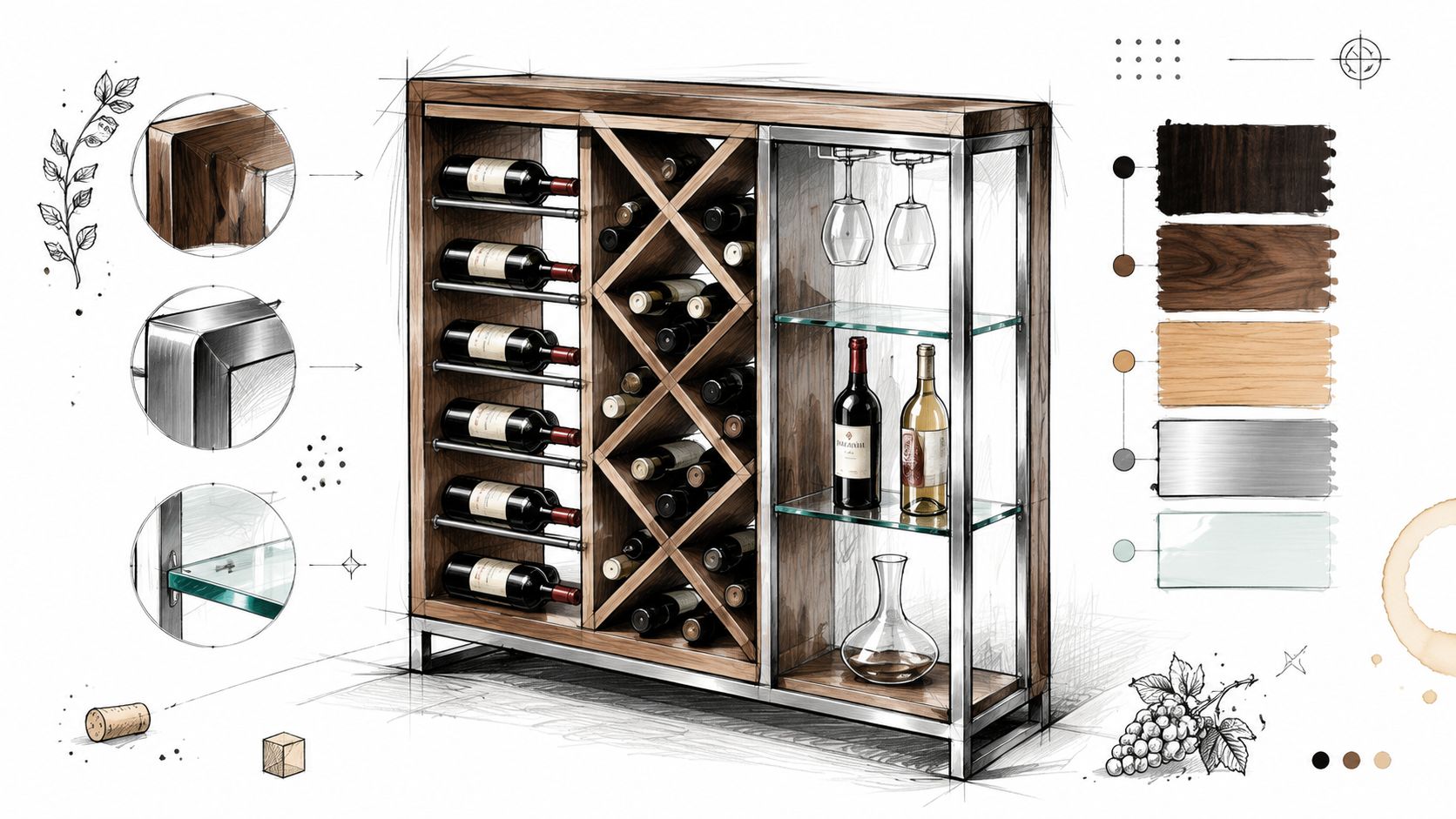
A wine cabinet in a West Texas dining room often has to do two jobs at once. It needs to organize bottles and serving pieces, and it also needs to belong with the rest of the home. In this region, that can mean mesquite or oak tones, iron accents, leather seating, plaster walls, or lighter painted finishes that soften all that warmth. The right material helps the piece feel settled, like it was part of the room plan from the beginning.
What Different Materials Say in a Room
Wood usually brings the most warmth and familiarity. Oak feels steady and classic, which makes it a good match for homes that already use natural grain in dining tables, buffets, or beams. A painted wood cabinet changes the mood. It can brighten a darker corner, lighten the visual weight of storage, or connect with trim and cabinetry nearby.
Metal creates a different effect. Iron and steel add definition, much like a dark frame around artwork. They give wine furniture clearer lines and a stronger outline, which can help in transitional or modern-rustic rooms where you want contrast without making the space feel cold.
Glass shifts the balance again. Used on shelves or doors, it breaks up heavy solids and keeps a larger piece from feeling bulky. That matters in breakfast areas, open dining spaces, or multipurpose rooms where a fully enclosed cabinet could feel too dense.
Mixed materials often work best in homes across our area because many interiors are layered rather than strict in one style. Wood, metal, and glass together can bridge old and new influences in a way that feels natural.
Match the Finish to the Feeling You Want
Finish is where personality shows up.
If the room feels flat or too uniform, a deeper stain can add gravity and help the wine piece read as a destination, not just storage. If the room already has a lot of dark wood, a lighter finish or painted surface can create relief and keep the furniture from blending into one large brown mass.
A few pairings tend to work well in real homes:
- Warm wood tones support ranch, traditional, and transitional spaces with texture and character.
- Black or charcoal finishes add structure in dining rooms with lighter walls or stronger contrast.
- Natural wood with metal accents suits open-plan homes that mix rustic comfort with cleaner lines.
- Soft painted finishes help smaller rooms feel lighter and more open.
The Lansing Tall Bar Cabinet is a good example of how finish and form work together. Its taller profile gives it presence, but the furniture-style design keeps it connected to the room instead of reading like a utility piece.
Small Details Change the Result
Many homeowners often stumble here. They choose the main material correctly, then overlook the supporting details that decide whether the piece feels cohesive.
Pay attention to these finish choices:
- Hardware tone: Aged brass, bronze, black, or nickel should relate to nearby lighting, faucet finishes, or cabinet pulls.
- Sheen level: Lower-sheen finishes usually feel more relaxed and do a better job of hiding fingerprints and daily wear.
- Interior color: A darker interior can frame bottles and stemware, while a lighter interior feels softer and more casual.
- Glass exposure: Glass doors make a cabinet feel lighter, but they also put contents on display, so styling and tidiness matter more.
A helpful way to judge materials is to ask one simple question. Does this piece want to blend with the room, or anchor it?
That answer gives direction fast. For example, if your dining area already has strong wood furniture, your wine storage may work best in a painted or mixed-material finish that adds contrast. If the room feels scattered and needs more visual weight, a richer wood tone can pull the space together.
Good wine furniture supports your collection, but it also supports your lifestyle. The material and finish should make serving easier, storage calmer, and the room more complete. When that happens, the piece stops feeling like a specialty purchase and starts earning its place as part of the home.
Sizing Your Furniture for Your Collection and Room
A beautiful piece can still be the wrong purchase if it doesn't fit the collection or the room. Sizing mistakes usually happen in one of two ways. The homeowner buys too little storage and outgrows it quickly, or buys a piece that overwhelms the wall and disrupts traffic flow.
Both problems are avoidable with a simple two-part check.
Size the Storage for the Collection
Bottle count should be treated as the starting point, not the target. Collections rarely stay static for long, especially when people begin entertaining more often or receive wine as gifts.
That guidance helps readers avoid the common mistake of buying for today only. A rack that looks perfectly sized right now can feel undersized surprisingly fast.
A practical way to think about capacity:
- Count current bottles accurately. Include bottles stored in the pantry, kitchen, and dining room.
- Add growth space. Don't shop for a piece that matches the count exactly.
- Group related items. If glasses, openers, and serving pieces also need a home, the furniture must support more than bottles.
- Separate display from reserve. Some homeowners want every bottle visible. Others only want favorite bottles on display.
Storage should fit the collection people actually keep, not the version they imagine on a perfectly tidy day.
Size the Furniture for the Room
After bottle capacity comes physical fit. This part matters just as much because wine rack furniture often lives in rooms that already carry a lot of function.
Take these measurements before shopping:
- Wall width: Measure the usable width, not just the full wall. Exclude windows, vents, switches, and nearby door trim.
- Depth allowance: Think about walkway clearance and chair movement, especially in dining rooms.
- Height context: A tall cabinet near low furniture can become a focal point. That may be good or distracting.
- Door and drawer swing: Cabinets need room to open without hitting walls, tables, or nearby seating.
A simple room check can help:
| Question | Why it matters |
|---|---|
| Will people walk past this piece every day? | High-traffic placement needs better clearance |
| Does the room already have one visually heavy anchor? | A second large piece may make the room feel crowded |
| Will the top surface be used for serving? | Extra elbow room is needed in front |
| Is the piece near dining seating? | Chair pull-out space has to remain comfortable |
In smaller homes, a narrow vertical cabinet often works better than a wide low one. In larger dining spaces, a broader sideboard can help the room feel balanced. The key is to judge furniture by both measurement and visual weight. Those aren't always the same thing.
Perfect Placement and Seamless Room Integration
You carry in a beautiful wine cabinet, set it against the first open wall, and for a week it looks perfect. Then the dining chairs start catching on it, the afternoon sun hits the bottles, and the piece that was supposed to bring order starts feeling like an obstacle. Placement decides whether wine furniture settles into a room naturally or keeps asking for attention in the wrong way.
A good location does two jobs at once. It supports the way your household lives, and it gives the bottles a calmer environment. In homes across West Texas and SE New Mexico, that second job matters more than people expect because strong sun, heat gain, and dry conditions can make a pretty wall a poor storage choice.
Best Rooms for Wine Rack Furniture
Dining rooms are often the easiest answer because the furniture already belongs to the rhythm of the room. Bottles, serving pieces, and glassware stay close together, and the top can work like a small landing zone during dinner with friends.
Living rooms can also work well, especially in open-concept layouts where one furniture piece helps organize the entertaining side of the room. A cabinet with doors, drawers, or a finished display front usually feels more settled here than a basic utility rack. It reads as furniture first, storage second, which is usually the right balance in a main living space.
A den, study, or home office suits homeowners who want wine storage to feel personal rather than public. In those rooms, a compact cabinet can soften the space the same way a bookcase or accent chest would. It adds character without asking the room to become a full bar area.
What Placement Should Avoid
Wine prefers consistency. Sudden temperature swings, direct sun, and constant vibration work against that.
That means placement should avoid a few common trouble spots:
- Exterior walls with heavy heat exposure: In our region, a wall that gets afternoon sun can hold warmth longer than the room itself.
- Heat sources: Keep wine furniture away from ovens, fireplaces, floor vents, and appliances that throw off regular heat.
- Bright windows: Natural light is great for a reading chair, but it is a poor partner for bottle storage.
- High-vibration areas: Spots next to laundry equipment, loud speakers, or heavily used traffic lanes are less ideal for long-term storage.
A useful rule is simple. If a location feels hot, bright, or busy to you, it probably feels that way to the wine too.
Making the Piece Feel Built In
The best placement usually comes from visual relationships. A wine cabinet looks more intentional when it lines up with something nearby, such as the height of a window sill, the length of a dining table, or the edge of an area rug. That kind of alignment works like hemming a good pair of drapes. The room feels finished because the proportions make sense.
Styling helps, but restraint helps more. A lamp, a tray, or one piece of art can give the cabinet context without turning the top into a catchall. If the room already has oak, iron, brass, or a warm painted finish, repeating one of those materials helps the wine piece feel connected to the rest of the house.
Leave a little open space around it too. Furniture needs room to read clearly. When every inch around a wine cabinet is crowded with baskets, stools, or wall decor, the piece loses the calm, grounded look that makes it feel like a lasting part of the room.
For homeowners building out a broader entertaining setup, these home bar ideas for whiskey enthusiasts can help with zoning, seating, and serving flow.
In the end, placement is what turns wine storage into furniture. The right spot helps the piece serve the room, protect the collection, and reflect the way you live. That is what makes it feel less like an accessory and more like a smart investment in your home.
Bring Your Vision to Life with Miller Waldrop
You have measured the wall, looked at your bottle count, and narrowed down the style. Now the decision becomes more real. You are not just buying a place to store wine. You are choosing a piece of furniture that needs to work with your room on an ordinary Tuesday and still feel ready when friends come over on Saturday.
That is why seeing pieces in person helps so much. A finish that looks warm on a screen can read too dark beside your flooring. Doors that seem compact online may need more swing space than your dining area allows. Shelves that look generous in a photo may not leave room for glasses, trays, or the serving pieces that usually travel with a good bottle.
For homeowners in West Texas and SE New Mexico, Miller Waldrop Furniture & Decor gives that process a practical home base. Shoppers in Lubbock, Hobbs, and Ruidoso Downs can compare scale, materials, and storage layouts face to face, then talk through how a piece will live in an actual room. That conversation matters in our region, where open living areas, ranch-style homes, and multipurpose dining spaces often ask one cabinet to do several jobs at once.
A little preparation makes the visit more useful:
- Bring room measurements. Wall width, ceiling height, and the size of nearby furniture quickly rule out pieces that will feel cramped or undersized.
- Bring a few photos. Natural light, wood tones, and wall color can change how a finish reads.
- List what needs to fit. Bottles are only part of the picture. Many households also need space for stemware, cocktail tools, linens, and serving boards.
- Share how you live. A quiet collection for weeknight dinners calls for something different than a cabinet that supports regular entertaining.
Good wine furniture should feel settled, like it has always belonged there.
That is the value of working with a team that understands both furniture and room planning. Miller Waldrop can help homeowners sort through questions that are easy to miss on a website, such as whether a cabinet will feel top-heavy on a short wall, whether the finish will fight with existing wood tones, or whether closed storage would keep the room looking calmer.
Miller Waldrop Furniture & Decor helps homeowners in West Texas and SE New Mexico turn design ideas into workable rooms with curated furniture, design support, and personalized guidance. Whether the goal is a compact wine cabinet for a dining nook or a larger piece for an entertaining space, a visit to one of the showrooms can turn a loose idea into a furniture choice that fits the home, the collection, and the way you live.