

10 Living Room Furniture Trends for 2026

A fresher living room sounds simple until the room has to do real work. One family needs a sofa that can survive pets and movie nights, another wants seating that handles visitors without blocking the walkway, and plenty of households in West Texas and Southeastern New Mexico also need furniture that holds up to dry air, changing routines, and a room that doubles as a gathering space, reading nook, and TV zone. The strongest living room furniture trends for 2026 are not just about looks, they solve those daily problems with better seating, flexible layouts, durable upholstery, useful storage, and color choices that feel intentional instead of trendy for a month.
The market data backs that shift toward practical, high-use pieces. Sofas and sectionals led the product mix with 30.92% of revenue in 2025, wood held 38.73% of material share, residential demand made up 73.81% of end-user demand, and the B2C and retail channel represented 78.94% of sales in the global living and dining room furniture market, which reached USD 256.10 billion in 2026 and is forecast to hit USD 314.43 billion by 2031. That points to the right buying mindset, start with the biggest pieces, then layer in style.
Miller Waldrop helps shoppers in Lubbock, Hobbs, and Ruidoso Downs work through those decisions with curated brands, design guidance, custom options, and delivery support. A smart plan is simple, measure the room, identify the most-used pieces, test comfort and mechanisms in person, and choose materials and colors that fit the home's traffic and climate. Start with the showroom and contact path at Miller Waldrop, then use the products and design help there to make the room work harder.
1. Sustainable and Eco-Friendly Living Room Furniture
Sustainable furniture is no longer a niche choice, it's a practical one for households that want durability, better materials, and fewer regrets after a big purchase. The clearest win here is simple, pieces made with responsibly sourced materials, low-VOC finishes, and transparent manufacturing tend to feel more considered and age better than cheap, throwaway alternatives. That matters in living rooms, where the sofa, coffee table, and recliner take the most daily abuse.
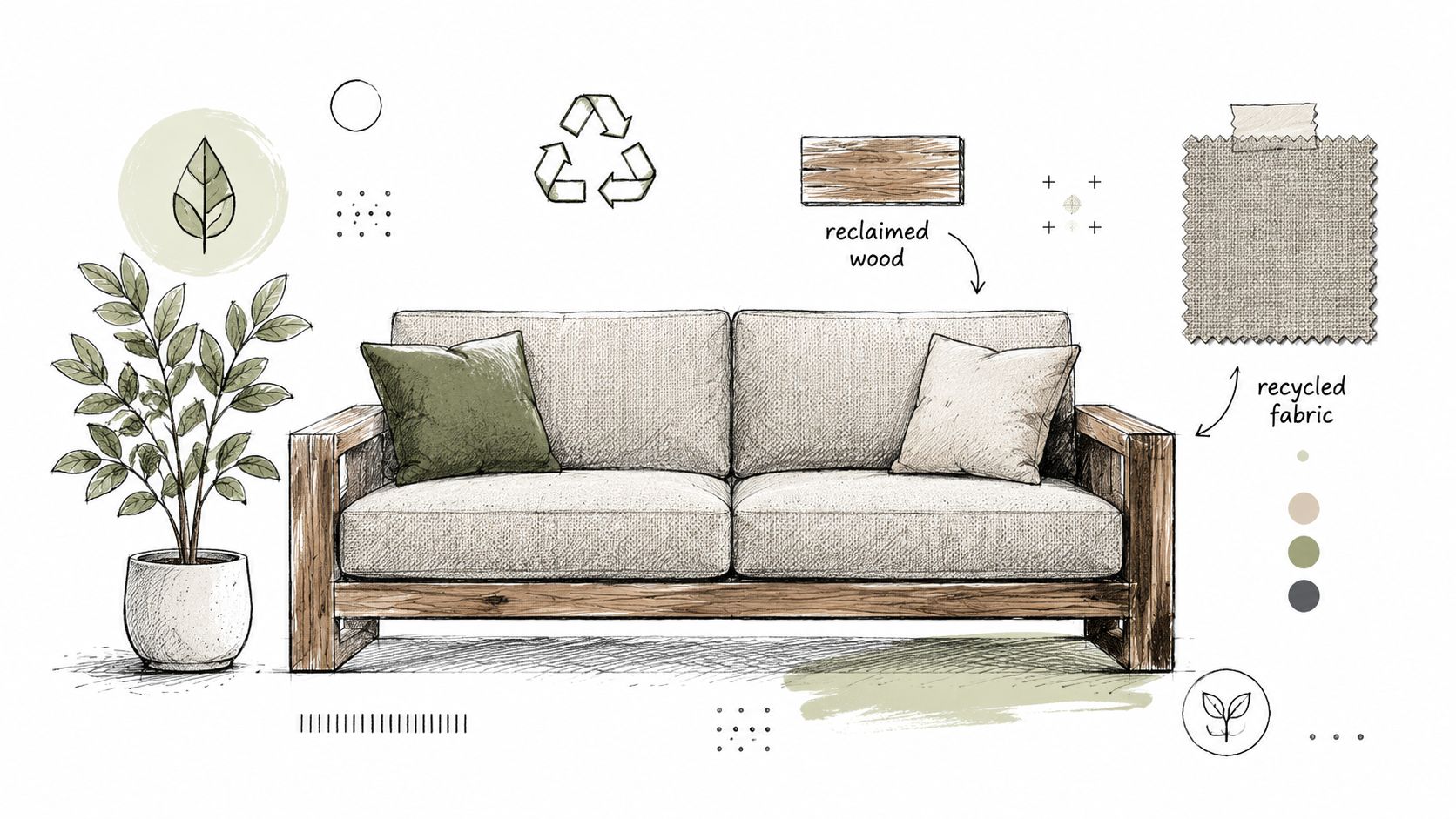
A reclaimed wood coffee table paired with a recycled fabric sofa gives a room texture without wasting materials. A sustainable reclining chair can also work as the room's statement piece, especially if the upholstery is built for long use. For shoppers comparing finishes in person, Miller Waldrop's showrooms make it easier to check wood tone, fabric hand-feel, and build quality side by side.
Practical rule: buy the sustainable piece that you'll live with every day, not the accent that only looks good in a styled photo.
The smartest approach is to pair one long-lasting investment piece with simpler accents. Ask where the wood came from, what the finish contains, and whether the fabric line can be custom ordered in a color that fits the room. Sustainable choices make the most sense when they're also the easiest to maintain.
2. Modular and Flexible Seating Arrangements
Modular seating solves one of the most common living room problems, the room never stays the same. A family that entertains one weekend, hosts kids the next, and wants open floor space on weekdays needs furniture that can change shape without replacing the whole room. That's why sectional systems with movable components, chaise sections, and ottomans that pull double duty are such a strong fit for current living room furniture trends.
Build the room around movement, not just seating count
A modular setup works best when the layout supports actual circulation. Measure the room first, then map where people walk, where the TV sits, and which wall needs the biggest visual anchor. For renters, young families, and households that expect their space to evolve, that flexibility matters more than having a fixed sofa that only works one way.
The value of modular furniture is easy to see in person because the pieces need to fit both the room and the people using it. Miller Waldrop's design team can help map a layout before purchase, which reduces the risk of buying too much depth, too many components, or a configuration that cuts off a doorway. A good starting point is to keep the base fabric neutral so the room can change later without replacing the whole seating group.
Modular pieces should earn their place twice, once as comfortable seating and again as a layout solution.
For a deeper look at the format itself, see what a modular sectional does for a room. That kind of planning is especially useful in homes that need one room to do more than one job.
3. Warm Maximalism and Layered Textures
The shift away from sparse minimalism is showing up in rooms that feel warmer, fuller, and more personal. Instead of one sofa, one lamp, and a blank wall, this look uses texture, pattern, and color to create a living room that feels lived in and ready for real use. That works especially well in homes where the furniture has to feel welcoming to guests, pets, and family all at once.
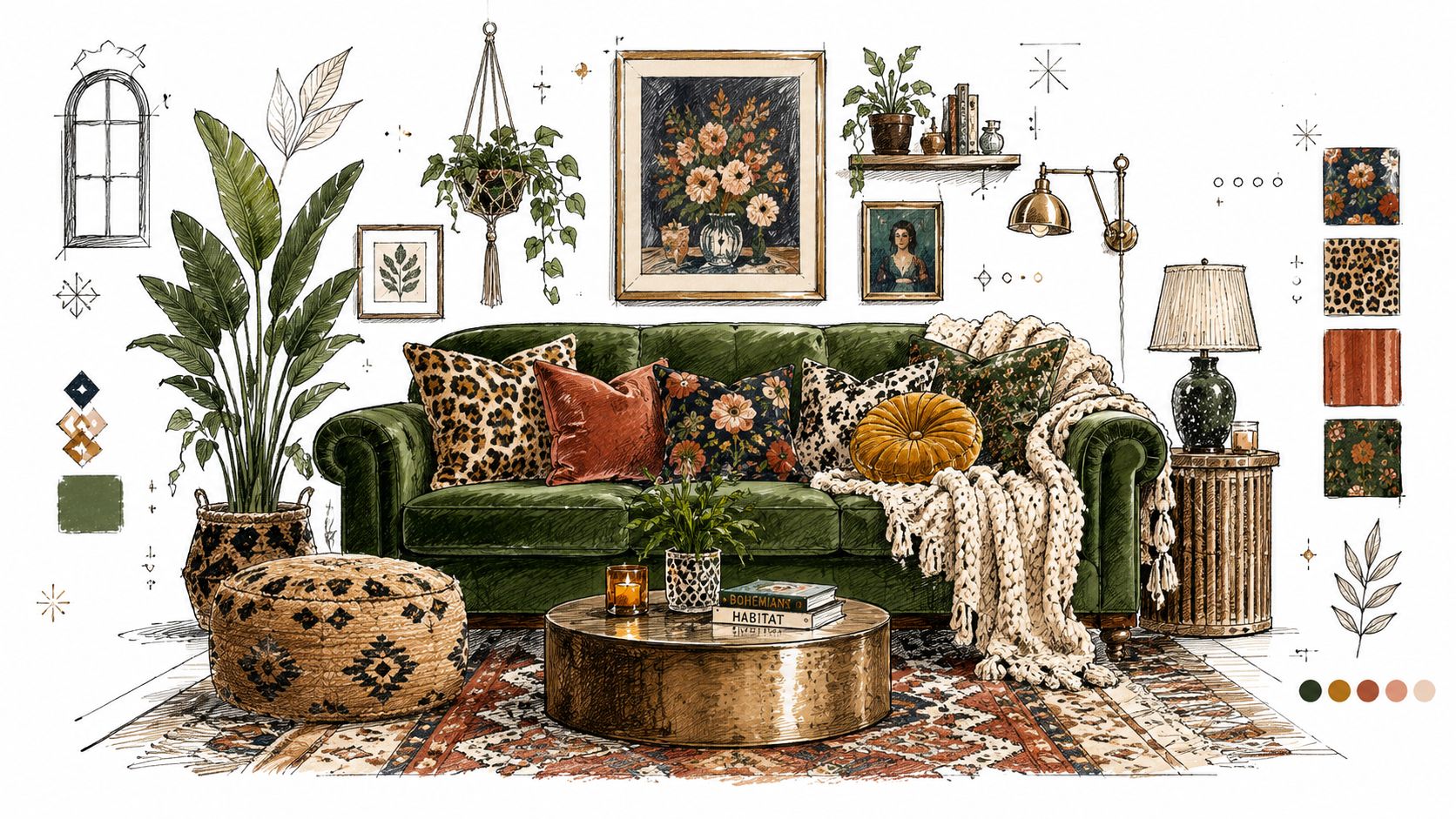
Velvet, chunky knits, woven poufs, and natural fibers build a room that feels collected instead of staged. A La-Z-Boy power recliner in velvet can look polished rather than bulky when it's balanced with pillows, throws, and a warm wood table. A Flexsteel sectional layered with tactile accessories also gives a room depth without forcing a full redesign.
Use texture to make the room feel finished
Keep the color story controlled, then let the materials do the talking. One warm anchor color is enough, especially if the room already has wood, leather, or a visible focal point. Layering works best when the scales change, large geometric pattern, medium stripe, small print, then a woven texture that softens the mix.
Natural fibers matter in regional homes because they bring warmth without making the room feel heavy. A wool throw, linen pillow, or woven basket can shift the mood immediately. The trade-off is that maximalism needs editing, if every surface competes for attention, the room loses comfort fast.
4. Power Recliners and Smart Comfort Technology
Comfort technology has changed what a living room can do. A good power recliner now supports reading, watching TV, working on a laptop, and recovering at the end of a long day without forcing the body into one fixed position. That makes these pieces one of the most useful living room furniture trends for households that value comfort but still want a clean-looking room.
A recliner with power headrests, heat, massage, and USB charging changes how the room gets used. Miller Waldrop's what is a power recliner resource is a good fit for shoppers comparing options before sitting down in the showroom. The key is not just motion, it's whether the chair supports the actual daily routine.
Test the chair like it will be used at home
Sit in multiple positions, not just the upright one. A chair can look right on the floor and still fail if the lumbar support misses the body, the footrest stops short, or the controls feel awkward. For households with pets or children, performance fabrics make the chair easier to live with, and USB charging helps keep the room uncluttered.
Power recliners also need planning around outlets and placement. If the chair blocks a walkway or sits too far from power, the feature set loses value. In a showroom, the point is to feel the mechanism, hear the motor, and make sure the chair fits the room without dominating it.
5. Curved Furniture and Organic Shapes
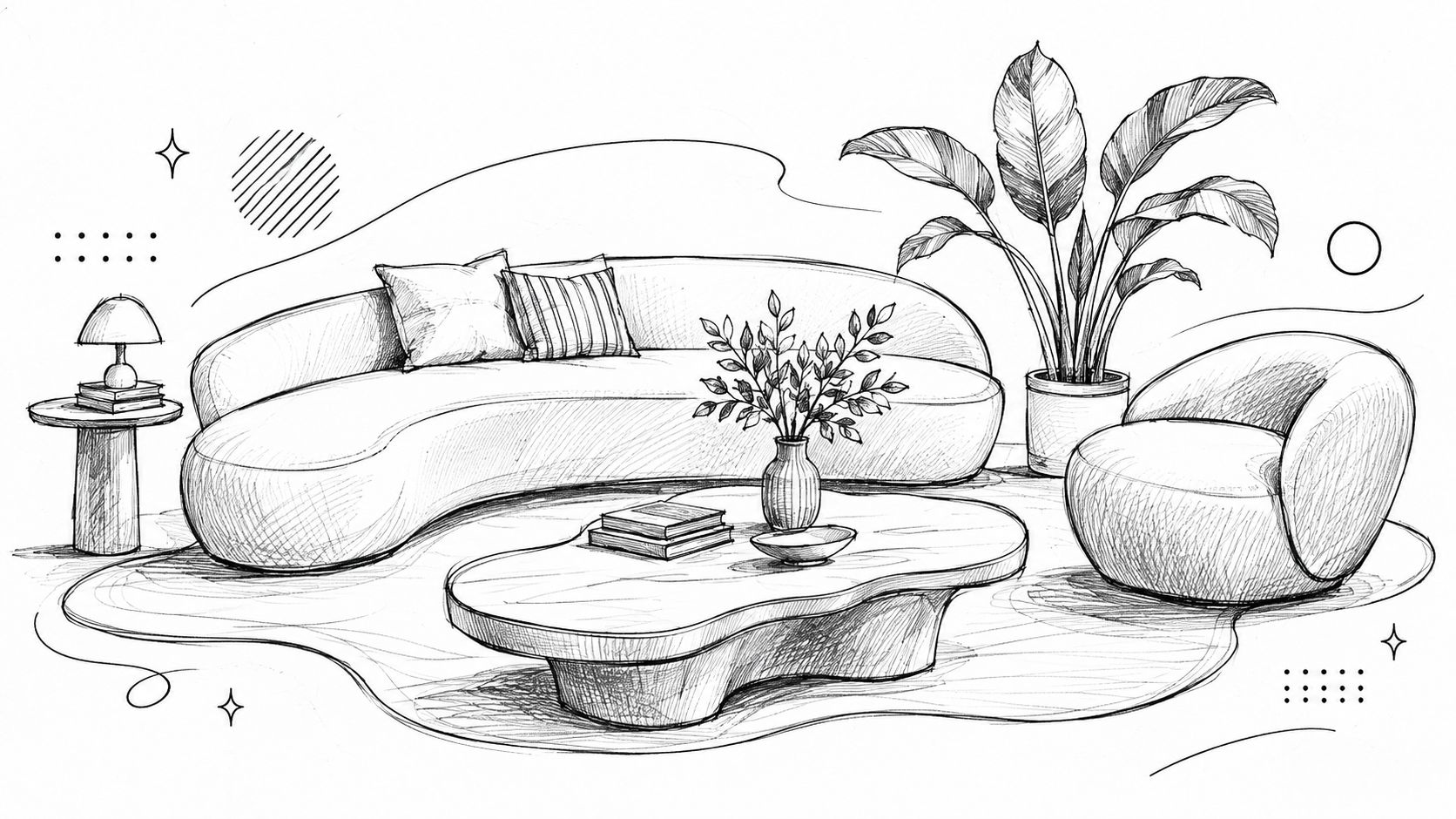
Curved furniture softens a room that feels too boxy or rigid. Rounded sofas, arched chairs, and organic coffee tables help the eye move through the space, which is useful in rooms that need to feel calm rather than crowded. The visual effect is immediate, the room feels less formal and more approachable.
Curves also help in small or transitional spaces because they reduce the hard edges that can make a room feel chopped up. A curved sectional can create a conversation area without looking heavy, and a round ottoman can serve as a flexible center point. Pairing a curved sofa with straight side tables gives the room enough structure so it doesn't feel overly soft or theme-driven.
Curves work best when they solve a circulation problem, not when they're added just because they're trending.
In West Texas and Southeastern New Mexico homes, the in-person test matters because curved pieces need more visual and physical room than a standard boxy sofa. Walk around the shape in the showroom and imagine where people will pass, sit, and set drinks. Neutral upholstery keeps the silhouette from fighting with the rest of the room, and that makes the shape the star.
6. Multifunctional Furniture and Hidden Storage Solutions
Furniture that hides storage solves one of the most annoying room problems, clutter that keeps coming back. A storage ottoman, lift-top coffee table, sleeper sectional, or sofa with hidden compartments gives the room a place for blankets, toys, remotes, and guest bedding without adding another cabinet. That makes multifunctional pieces a smart move for smaller homes and family rooms that get used all day.
Choose storage based on what actually piles up
The biggest mistake is buying storage for the sake of storage. A household should know whether it needs a place for seasonal throws, board games, work supplies, or overnight bedding before picking the piece. If the lid is hard to lift or the compartment is awkward to reach, the storage won't get used.
For shoppers looking at storage ottoman furniture, the practical test is simple, check whether the piece feels intentional as furniture, not like a container wearing upholstery. A good storage ottoman can serve as a coffee table, a seat, and a place to stash the mess before company arrives.
Accessible storage matters more than hidden storage. If a piece has to be moved every time someone opens it, the benefit disappears. The best multifunctional furniture keeps the room looking calm while making the daily reset easier.
7. Jewel Tones and Rich, Saturated Colors
Jewel tones bring immediate personality to a living room. Emerald, sapphire, amethyst, and burgundy work because they create depth without needing a complicated layout, and they make even simple furniture look more deliberate. That's useful for households that want color but don't want the room to feel chaotic.
An emerald sectional with brass accents reads polished. A sapphire recliner with warm lighting and metallic side tables can anchor a seating area without taking over the room. The safest way to use strong color is to let one major piece lead, then echo it in pillows, art, or a throw instead of scattering too many strong tones everywhere.
Check the color in your actual light
Fabric samples often look different in a showroom than they do at home. Natural daylight, evening lamps, and overhead light all change saturated colors, and that matters in rooms with west-facing windows or cooler LED bulbs. Warm neutrals like cream, taupe, and soft gray keep jewel tones grounded, while brass or gold accents add enough sheen to make the palette feel finished.
The best result comes from restraint. Start with one jewel-tone sofa or chair, then build around it, because a room full of saturated pieces can feel heavy fast. In person, the right color should feel rich, not loud.
8. Indoor Plants and Biophilic Design Integration
Plants work in living rooms because they soften furniture and make the room feel less static. Biophilic design, which means bringing natural elements into the space, helps a room feel calmer and more connected to daily life. For homeowners choosing furniture first, the right plant placement can make a sofa or side table feel more intentional.
A large fiddle leaf fig beside a neutral sofa creates height and movement. Natural wood side tables, shelving for plant displays, and warm-toned upholstery all help the green elements feel integrated instead of added as an afterthought. The key is to place plants where they frame seating, not where they block sightlines or crowd the room.
A practical caution matters here, especially around upholstery. Water protection should be part of the plan if plants sit near fabric furniture, because one spill can turn a good design idea into a repair issue. For pet owners, pet safe houseplants make the room greener without adding avoidable risk.
9. Performance Fabrics and Pet-Friendly Upholstery
Performance fabrics are one of the clearest upgrades a family can make. They're built to resist stains, handle heavy use, and stand up better to the reality of pets, kids, snacks, and everyday lounging. That makes them a better choice for the sofa and sectional than a delicate fabric that only looks good for the first month.
The best test happens in person. Touch the fabric, sit on it, and ask how it cleans before making a decision. A family room with active dogs needs different upholstery than a formal sitting room, and a multi-generational home needs a finish that won't punish everyday use. That's why high-use pieces deserve the performance treatment first.
Put performance fabric on the furniture that gets the most contact, then save softer decorative fabrics for lower-use accents.
Darker colors and subtle patterns can help hide normal wear, but the win is how the fabric behaves after spills. Miller Waldrop's brand mix makes it easier to compare finishes side by side on pieces built for homes, including Flexsteel, La-Z-Boy, and Ashley options that can be judged for feel, support, and upkeep in the showroom.
10. Accent Walls and Furniture Statement Pieces as Anchors
A strong living room needs one clear focal point, and an accent wall paired with a statement piece is the cleanest way to create it. The wall gives the room direction, while the furniture gives it weight. That combination works especially well in open-plan homes where the living room needs to define itself without adding clutter.
Deep color, texture, or pattern behind the main seating area helps frame the room. A neutral sectional in front of a rich wall keeps the look balanced, while a jewel-tone sofa against a textured surface makes the furniture feel more sculptural. The key is not to let the wall and the furniture compete for attention.
Use the wall to support the investment piece
Choose one accent wall, usually the one behind the main seating group, and use it to highlight the room's best furniture decision. If the sofa is the major investment, the wall should help it stand out, not vanish into visual noise. Lighting matters too, because the wrong light can flatten both the wall finish and the upholstery color.
Miller Waldrop's design consultants can help coordinate wall color, upholstery, and finish so the room reads as one plan. A room with a patterned or richly colored wall can feel finished fast when the seating is chosen with restraint. For a housewarming gift angle that pairs well with a finished room, Blushing Ivy Home Fragrance gift guide shows how smaller layers can support the main design.
10-Point Comparison: Living Room Furniture Trends
| Trend / Item | Implementation complexity | Resource requirements | Expected outcomes | Ideal use cases | Key advantages |
|---|---|---|---|---|---|
| Sustainable and Eco-Friendly Living Room Furniture | Medium, requires vetting certifications and suppliers | Higher upfront cost, certified/reclaimed materials, possible longer lead times | Lower environmental impact, healthier indoor air, longer-lasting pieces | Eco-conscious homeowners, long-term investments, health-focused families | Reduced carbon footprint; durable; supports ethical manufacturing |
| Modular and Flexible Seating Arrangements | Medium, needs layout planning and component selection | Moderate–high cost, space for reconfiguration, modular connections | Highly adaptable layouts, scalable seating, versatile entertaining options | Growing families, frequent entertainers, small/variable spaces | Flexibility; personalization; space optimization |
| Warm Maximalism and Layered Textures | Medium, requires confident styling to balance patterns | Moderate budget for varied textiles, accessories, and layering | Cozy, curated, visually rich spaces that feel lived-in | Design-forward homeowners, social-media staging, cozy family rooms | Visual interest; hides wear; comfort-forward design |
| Power Recliners and Smart Comfort Technology | Medium–High, electrical integration and mechanical considerations | High cost, access to power, occasional maintenance | Personalized ergonomic support, wellness benefits, tech convenience | Home theaters, mobility needs, daily comfort seekers | Adjustable ergonomics; integrated tech; improves quality of life |
| Curved Furniture and Organic Shapes | Medium, careful spatial planning to fit forms | Moderate–high cost, may require custom pieces or specific upholstery | Softer, more inviting aesthetic with improved visual flow | Conversation areas, modern/transitional spaces, small rooms seeking openness | Creates flow; inviting silhouettes; timeless appeal |
| Multifunctional Furniture and Hidden Storage Solutions | Low–Medium, plan for accessibility and real storage needs | Moderate cost, functional hardware (lift tops, drawers) | Maximized utility, reduced clutter, guest accommodation without extra furniture | Small apartments, multi-use rooms, families needing storage | Space-saving; integrated storage; multi-use functionality |
| Jewel Tones and Rich, Saturated Colors | Low–Medium, color testing and lighting coordination | Moderate cost for quality upholstery and layered lighting | High-impact, luxurious look that photographs well and feels intentional | Statement rooms, formal living spaces, showroom-style design | Dramatic impact; hides stains; sense of luxury |
| Indoor Plants and Biophilic Design Integration | Low–Medium, plan for light, placement, and plant care | Low–moderate (plants, stands, soil), ongoing maintenance time | Improved well‑being, natural focal points, enhanced air quality | Health-focused homes, natural-material interiors, gardeners | Reduces stress; adds natural texture; improves air quality |
| Performance Fabrics and Pet-Friendly Upholstery | Low, select appropriate engineered textiles | Moderate cost for performance materials, verify cleaning protocols | Durable, low-maintenance seating that resists stains and wear | Homes with children or pets, high-traffic seating | Stain resistance; durable; easier cleaning and longevity |
| Accent Walls and Furniture Statement Pieces as Anchors | Low–Medium, coordinate color, texture, and furniture scale | Moderate cost for paint, wallpaper, statement furniture, lighting | Clear focal point and defined room identity with high visual impact | Budget-conscious makeovers, focal-driven designs, small rooms | High visual impact for cost; easy to refresh; highlights key pieces |
Turn a Trend Into a Room You'll Love
The smartest living room move is to choose one foundational piece first, then one lower-risk styling update. That usually means starting with the sofa, sectional, recliner, or storage piece that will carry the most daily use, then adding color, texture, or a statement wall after the room's function is set. Fit, comfort, construction, upholstery performance, storage needs, and traffic flow should come before any trend that only looks good in a photo.
A showroom visit makes that decision easier because the details show up fast in person. Bring room measurements, note doorways and outlets, identify who uses the room most, and test seating depth, reclining mechanisms, and storage hardware before buying. Compare fabric samples in the light you live in, and ask about custom fabrics, finishes, configurations, financing, delivery, and service so the final choice matches the house, not just the display floor.
Shoppers in Lubbock, Hobbs, and Ruidoso Downs can use Miller Waldrop's knowledgeable staff and curated selections from Flexsteel, La-Z-Boy, Ashley, and other trusted brands to narrow the options without guesswork. The right living room furniture doesn't chase every trend. It solves the room's real problems, and that's where a good design partner makes the difference. Visit Miller Waldrop or the nearest showroom and talk with a design expert about furniture that fits the way the household lives.
Miller Waldrop Furniture & Decor offers curated living room furniture, design help, custom options, and showroom support for households that need a room to work as hard as it looks. Visit Miller Waldrop Furniture & Decor to compare sofas, sectionals, power recliners, and storage-friendly pieces with guidance that fits your space, your routine, and your style.