

What Is a Sleeper Sectional? Your Complete 2026 Guide


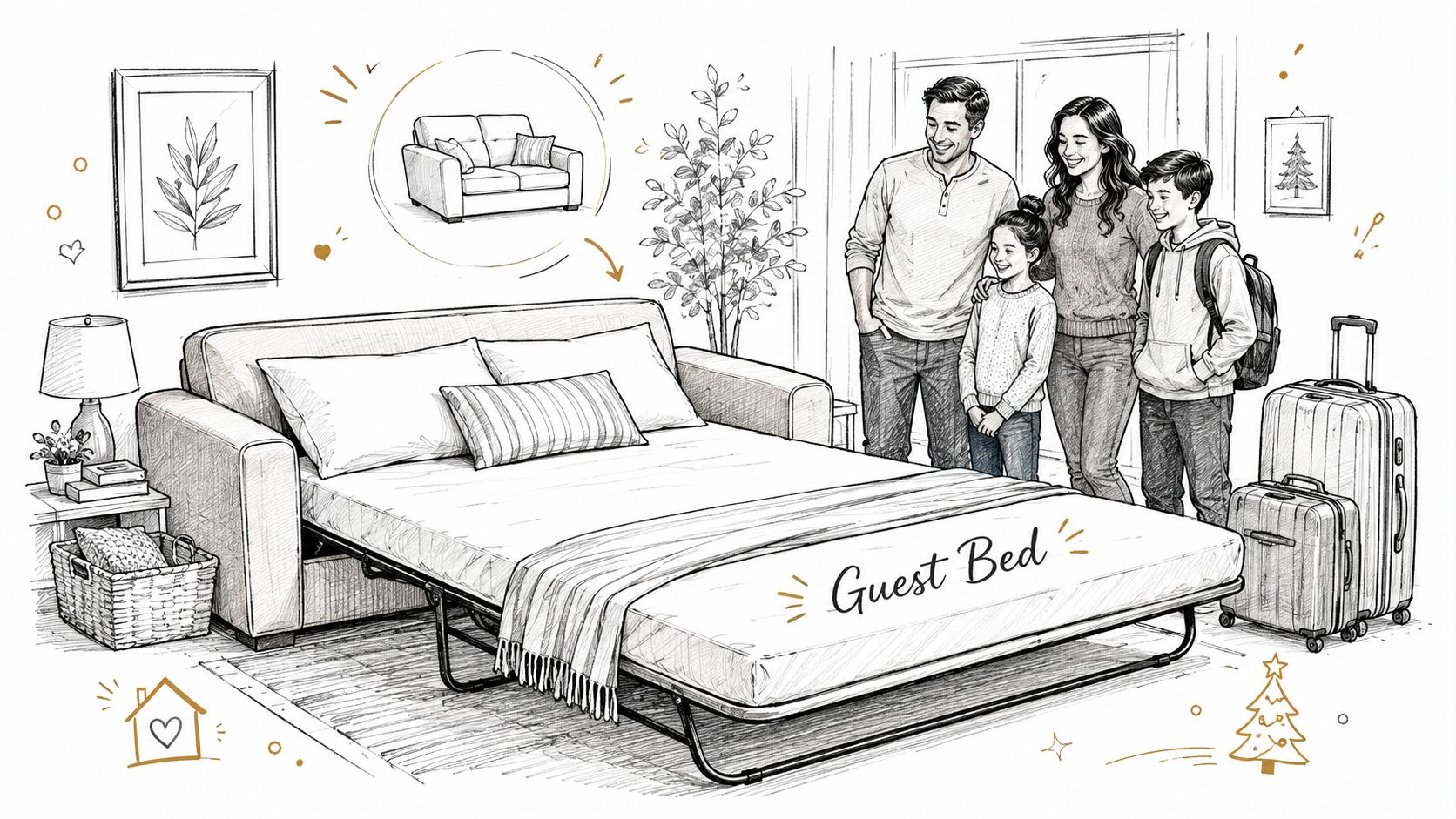
Holiday guests are coming. The kids have claimed every bedroom, the office already doubles as storage, and the living room is the only space left that can do any real work. That's where most homeowners in West Texas and Southeastern New Mexico start asking the same practical question: what is a sleeper sectional, and is it worth the floor space?
For many households, a dedicated guest room isn't realistic. A good sleeper sectional solves that problem without turning the house into a maze of folding cots, air mattresses, and apologetic hosting. It gives a family real seating during the day and a real place for overnight guests to sleep at night. Done right, it's one of the smartest pieces of furniture in the house.
The Ultimate Space Saving Solution for Your Home
A sleeper sectional earns its keep when a home needs to do more than one job.
A family in Lubbock might need a comfortable place for grandparents over the holidays. A homeowner in Hobbs might want a den that works as a movie room most of the year and a guest room on short notice. A renter in Ruidoso Downs may not have a spare bedroom at all. In each case, the problem is the same. The house needs another bed, but there's no room for another bed full-time.
That's why this category keeps growing. The United States sleeper sofa market, which includes sleeper sectionals, was valued at USD 2,844.22 million in 2024 and is projected to reach USD 4,881.96 million by 2032. This growth reflects a consumer shift toward multifunctional furniture that maximizes space, especially as over 70% of new apartments in major U.S. metros are under 1,000 square feet, according to Verified Market Research on the U.S. sleeper sofa market.
Why families keep choosing them
A sleeper sectional isn't just a backup bed. It's a way to keep the living room useful every single day.
- For daily living: it gives a household ample seating for movie nights, conversation, and stretching out.
- For overnight visitors: it creates a proper sleeping space without asking guests to sleep on cushions or the floor.
- For smaller homes: it eliminates the need to devote an entire room to occasional use.
Practical rule: If a room has to serve both family life and guest duty, a sleeper sectional is usually a better answer than trying to force a separate bed into the layout.
Some homeowners also draw inspiration from broader space-planning ideas such as bespoke small home solutions, because the best furniture choices come from the same mindset. Every square foot should work harder, not sit idle.
Defining the Sleeper Sectional
A sleeper sectional is exactly what the name says. It's a sectional because it's built from multiple pieces. It's a sleeper because it contains a hidden bed mechanism.
That sounds simple, but shoppers get tripped up by the wording all the time. A regular sectional gives seating and lounging space. A regular sleeper sofa gives seating plus a hidden bed, but in a standard sofa shape. A sleeper sectional combines both ideas into one larger, more flexible piece.
What makes it a sectional
The modular build is the key difference. A sleeper sectional is distinct from a standard sleeper sofa because it is constructed from at least two modular pieces that configure into an L-shaped or U-shaped layout, allowing the user to rearrange the seating sections independently before converting the unit into a bed, as outlined in this guide to sleeper sectionals.
That modular layout matters in real homes. It lets a family fit more seating into a corner, define an open-concept room, or create a layout that feels custom instead of cramped.
For a deeper look at sectional layouts and room planning, this guide on what to know before buying a sectional is worth reviewing.
What makes it a sleeper
The second half of the definition is even more important. A true sleeper sectional contains a dedicated pull-out mattress and frame inside the seating structure. That's different from a piece that folds flat or asks people to sleep on seat cushions.
A good sleeper sectional is a Swiss Army knife for the living room. It handles everyday seating, casual lounging, and guest sleeping without asking the room to change identity.
That hidden bed is what turns the furniture from “large sofa” into “problem solved.” For a family home, that distinction matters. A sleeper sectional isn't just for looks. It's built to do a second job.
Anatomy of a Quality Sleeper Sectional
Not all sleeper sectionals deserve a spot in a family room. Some are built to last. Others are built to look good for a short season and then start squeaking, sagging, or fighting every time someone opens the bed.
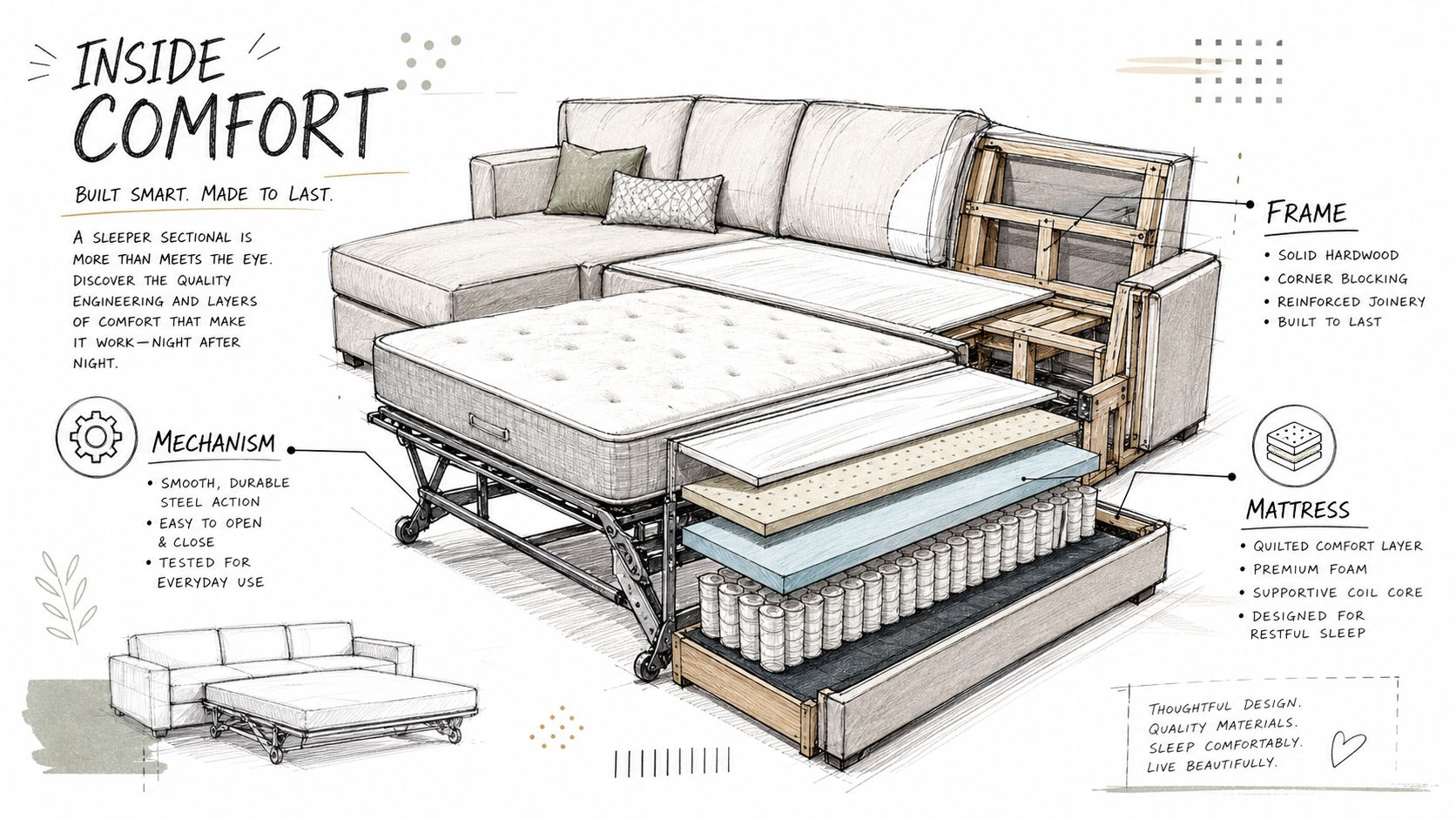
The smartest way to judge one is to ignore the throw pillows and study the three working parts: the frame, the mechanism, and the mattress.
The frame decides how long it lasts
The frame is the skeleton. If it's weak, everything else suffers.
A strong sleeper sectional needs a sturdy interior structure because it handles more stress than an ordinary sofa. People sit on it every day, then the frame must also support the bed platform when it opens. Families with kids, teens, or frequent guests should be especially picky here. A flimsy frame won't stay square for long.
What should shoppers look for? Tight construction, solid feel, and no wobble when weight shifts from one section to another. If a floor sample already creaks in the showroom, it won't improve at home.
The mechanism shows whether it's easy to live with
A sleeper can look beautiful and still be a nuisance if the opening system is awkward.
A quality pull-out mechanism should open smoothly, close cleanly, and feel controlled rather than jerky. The best units don't punish the user for setting up a bed after a long day. If opening it feels like wrestling farm equipment, that's not a smart purchase for a household that plans to use it often.
One product example of a more substantial approach is a sleeper sectional that integrates a classic square sleeper mechanism with a 6-inch innerspring mattress and a more continuous sleeping surface, as described on the Liam Sleeper Sectional product page.
The mechanism should feel boring. That's a compliment. Smooth, predictable operation is what a family wants.
The mattress separates decent from disappointing
A sleeper sectional's mattress thickness often dictates its overall quality, either proving its value or exposing its weakness. For optimal comfort, the mattress thickness within a sleeper sectional should be between 5 and 6 inches of high-density or memory foam. Mattresses under 4 inches are functionally inadequate, while those over 6 inches often fail to fold cleanly into the frame, based on market guidance for sleeper sofa construction.
A simple quality check helps:
- Underbuilt choice: too thin, too stiff, likely to leave guests sore.
- Practical sweet spot: 5 to 6 inches, with supportive foam construction.
- Overstuffed mistake: too thick to fold properly and more likely to interfere with the mechanism.
A family buying for regular overnight use should never settle for a thin mattress just to save a little money upfront. That shortcut usually turns into regret.
Planning Your Space and Taking Measurements
A sleeper sectional can be perfect on paper and completely wrong for the room. Many buyers then make the expensive mistake. They measure the wall, glance at the width, and stop there.
That's not enough. A sleeper sectional needs room in two positions. It has to fit when closed, and it has to function when open.
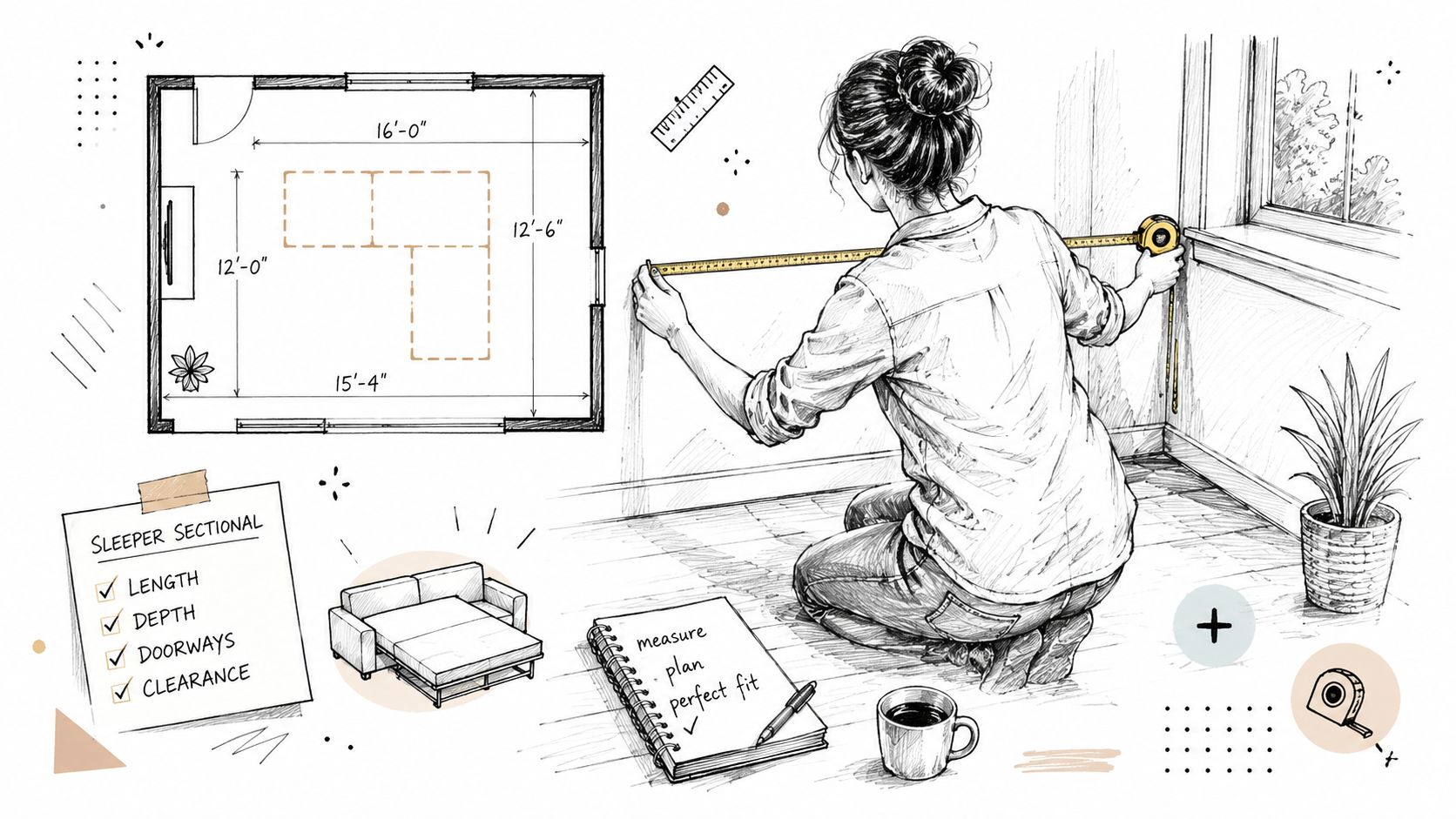
Measure the room in the open position
This is the part people forget. Sleeper sectionals require an additional 52–60 inches of pull-out depth and 24–30 inches of side clearance. This often overlooked spatial requirement can turn a versatile solution into a layout failure if not accounted for in advance, according to this sleeper sectional space planning article.
That means the coffee table may need to move. It means a walkway may disappear if the room is already tight. It means the sectional might fit the wall but still fail the room.
A practical measuring method
Use a tape measure and mark the footprint on the floor before buying.
- Mark the closed size: outline the sectional's length and depth with painter's tape.
- Mark the pull-out zone: extend the tape forward to show the sleeping position.
- Check side clearance: make sure nearby chairs, end tables, and traffic lanes still work.
- Walk the room: simulate how someone would move around the piece during daily use and while the bed is open.
For extra help, this planning guide on how to measure for a sectional couch is a useful companion.
A sectional that barely fits is not a good fit. A room still needs to breathe after the furniture arrives.
Don't forget the delivery path
The room isn't the only thing that must fit. The furniture also has to get inside.
Check the front door, hallway turns, stair landings, elevator access if applicable, and any sharp corners between the truck and the final room. Modular construction helps, but it doesn't erase delivery problems. A family should know the path before ordering, not while the delivery team is standing in the driveway.
Choosing the Right Sleeper Sectional for Your Home
Choosing the right sleeper sectional starts with one hard truth. A family can't optimize for everything at once. Some households need the best guest bed possible. Others need tougher fabric, easier maintenance, or a layout that works in a compact den.
The best choice comes from asking the right questions in the right order.
Start with who will actually sleep on it
If the bed will be used only a few times a year by a child or grandchild, the priorities are different. If it will host adult relatives for holiday stays, comfort and support move to the top of the list.
The mechanism matters here too. The pull-out bed mechanism in a sleeper sectional typically supports a weight capacity between 500 and 1,000 pounds, a specific threshold that buyers must verify to ensure the frame remains sturdy during the conversion from seating to sleeping mode, as noted in this overview of sectional sleeper weight support.
That number should never be treated as an afterthought. Families should verify it before purchase, especially when the sleeper will be used by adults regularly.
Match the upholstery to real life
A beautiful fabric that can't survive kids, pets, snacks, or daily lounging is a showroom decision, not a family decision.
A practical shopper should ask:
- Will this sit in the main living room? If yes, the fabric needs to handle constant traffic.
- Will pets claim one corner as their own? Then texture and cleanability matter more than trend.
- Will guests use it often? Then the mattress and mechanism deserve equal attention, not just the upholstery color.
For compact homes, this roundup of sectionals suited for smaller spaces can help narrow the field.
Think about ownership, not just purchase day
Sleeper sectionals are heavy, useful pieces. Families should think beyond the sale tag and ask how the piece will live over time. Can it be repositioned if the room changes? Will the mechanism still feel manageable for an older family member? Can the upholstery handle years of use without looking tired?
For anyone preparing for a move, practical handling matters too. Advice on how to protect furniture when moving can help preserve a large upholstered piece from scratches, torn fabric, and bent hardware.
Buy for the hardest day of use, not the easiest one. If the sectional works well during holidays, sleepovers, and daily family life, it will work the rest of the year too.
Sleeper Sectional vs Other Sleep Solutions
A sleeper sectional isn't the only way to host overnight guests. It's just usually the most complete solution for a family room that has to look good, seat people well, and provide a better bed than a temporary fix.
The key difference is this: a true sleeper sectional includes a separate pull-out mattress. That matters far more than most shoppers realize.
Sleep Solution Comparison
| Feature | Sleeper Sectional | Sofa Bed (Folding Cushions) | Futon |
|---|---|---|---|
| Seating use | Large, lounge-friendly seating for a family room | Standard sofa-style seating | Basic upright seating |
| Sleep surface | Dedicated pull-out mattress | Folding cushions used as bed surface | Fold-flat cushion surface |
| Long-term support | Better for repeated guest use | More likely to lose support over time | Usually best for short stays |
| Room presence | Anchors the room and defines the layout | More compact visual footprint | Casual, simpler look |
| Best fit | Homes needing both seating and guest sleep | Smaller rooms needing a basic dual-use piece | Occasional overflow sleeping |
Where the real difference shows up
Industry data indicates sleeper mechanisms with pull-out mattresses offer superior long-term support compared to folding-cushion alternatives (often called sofa beds), which can sag more quickly under the weight of adult guests, according to this explanation of sleeper mechanisms versus folding cushion designs.
That's the dividing line. A folding-cushion setup might work for a short nap or occasional emergency. It usually isn't the smartest answer for adult guests who expect real rest.
A futon has its place, especially in casual spaces, but it rarely feels integrated into a polished family living room the way a sleeper sectional does. It tends to announce itself as a compromise.
If a household wants one piece that handles daily seating with dignity and overnight guests without apology, the sleeper sectional usually wins.
Your Partner in Finding the Perfect Fit
A good sleeper sectional solves more than one problem at once. It adds seating, creates sleeping space, and helps a home stay flexible without surrendering a room to occasional guests. For homeowners in West Texas and Southeastern New Mexico, that kind of versatility matters because homes often have to work hard for large families, holiday visitors, and changing routines.
The right one isn't chosen by fabric color alone. It's chosen by fit, support, mechanism quality, and honest space planning. That's why shoppers should sit on it, open it, close it, and judge how it feels in real life. A sleeper sectional is too important a piece to buy on looks alone.
What serious furniture shopping should include
A worthwhile in-store visit should give a shopper the chance to do a few things well:
- Test the mechanism: it should open and close smoothly without drama.
- Check the mattress feel: not every sleeper surface is worth bringing home.
- Study the fabric by hand: texture, durability, and cleanability matter more than a swatch card suggests.
- Ask about configuration options: modular pieces should suit the room, not force the room to adapt.

Why guidance matters
A family making this purchase benefits from experienced help. Custom orders, fabric choices, room-fit questions, and delivery details all affect whether the final result feels effortless or frustrating. White-glove delivery and knowledgeable design support can remove a lot of uncertainty, especially with larger modular furniture.
For shoppers in Lubbock, Hobbs, and Ruidoso Downs, local guidance also matters because the homes, lifestyles, and traffic patterns in this region aren't identical to a downtown apartment in another market. A practical recommendation should fit the way local families live.
The best sleeper sectional is the one that fits the room, supports the guests, and still serves the family well every ordinary day in between.
Miller Waldrop Furniture & Decor has helped families furnish their homes since 1952, and that kind of staying power matters when buying a piece as hardworking as a sleeper sectional. Shoppers who want expert guidance can explore Miller Waldrop Furniture & Decor, visit a showroom in Lubbock, Hobbs, or Ruidoso Downs, and use the team's design knowledge, custom options, and delivery support to choose the right fit for their space and their family.