


How to Empower Your Home: A Guide to Cleaning Your Microfiber Couch

If you have a microfiber couch sitting in your living room, you’ve already made a powerful choice for your home. It’s more than just a stylish, comfortable place to land—it’s your family's fortress, built to handle the beautiful chaos of a busy life.
Why Your Microfiber Couch Was a Strategic Choice
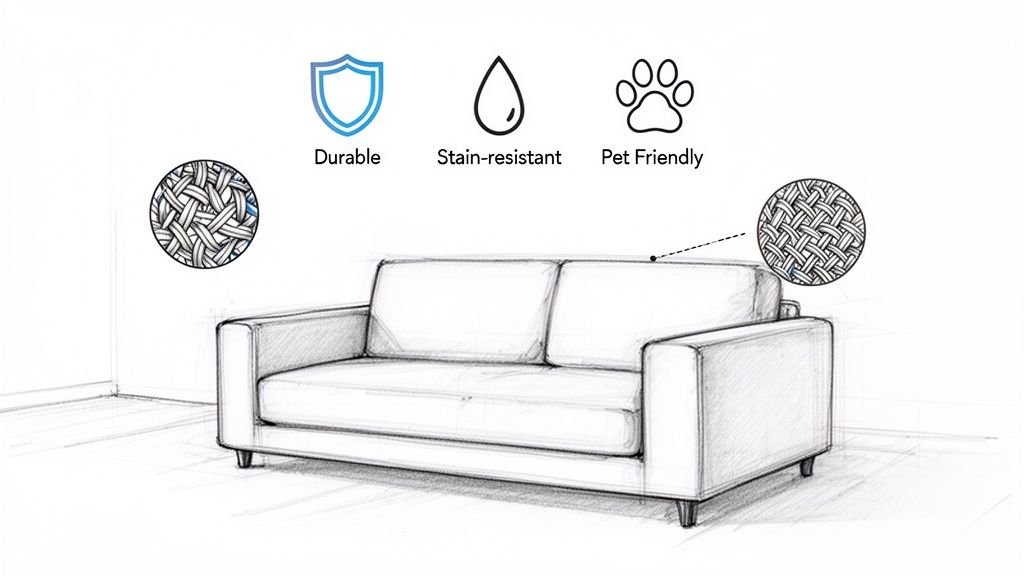
When you chose that sofa, you picked a fabric engineered for modern life. Microfiber is a game-changer for homes with kids, pets, or just the everyday reality of spills and messes, empowering you to live without worry.
The magic is in the material itself. Microfiber is made from synthetic fibers that are unbelievably fine—often 100 times thinner than a human hair. These fibers are woven together so tightly they form a natural shield against dirt and liquids.
The Science of Stain Resistance
Think about what happens when you spill something on a traditional cotton fabric. The liquid instantly sinks in. With microfiber, that same spill will often bead up on the surface, giving you those crucial few seconds to grab a cloth and blot it away before it has a chance to set. This built-in advantage puts you in control.
This is exactly why top-tier brands, like the Flexsteel sofas we carry at Miller Waldrop, rely on microfiber. They craft furniture that’s meant to last through movie night mishaps and the muddy paws that follow a West Texas dust storm.
Your microfiber couch isn’t just furniture; it’s a strategic choice for a low-maintenance, high-durability lifestyle. Its tightly woven fibers are engineered to repel stains, resist wear, and make cleaning far less of a chore.
It’s no surprise the microfiber industry has exploded. The global market hit USD 7,832.9 million in 2024 and continues to grow. Why? Because fabrics like the ones on those La-Z-Boy and Flexsteel couches you see at Miller Waldrop Furniture & Decor are incredibly effective. Their tiny fibers can trap dirt and bacteria with up to 99% efficiency, which drastically cuts down on the grime that accumulates from daily family life.
Benefits Beyond the Spills
But the perks don't stop at fighting stains. Here's what else makes your microfiber couch such a fantastic part of your home:
- Exceptional Durability: Those strong, tightly woven fibers hold up against pilling, stretching, and fading, keeping your sofa looking sharp for years.
- Pet-Friendly Fabric: The dense weave is tough for claws to snag. Even better, pet fur tends to sit on the surface, making it easy for you to brush or vacuum away.
- Hypoallergenic Properties: Because the weave is so tight, it doesn't trap allergens like dust mites and pet dander as easily as other fabrics.
Knowing what makes your couch great is the first step. Now, this guide will equip you with the knowledge of how to clean a microfiber couch, putting you in command. And if you’re ever thinking about adding another durable piece to your home, our design experts in Lubbock and Hobbs are always here to help you choose the perfect sofa for your family’s needs.
Before you can tackle that first spill, you need to have the right gear on hand. Assembling your cleaning arsenal is the first real step, and having everything ready to go gives you the confidence to handle pretty much anything life—or your kids—throws at your couch.
Gathering Your Cleaning Supplies
You don’t need a closet full of expensive, specialized equipment. Most of what you need is probably already in your home. The trick is knowing what tools to deploy and why.
Here's a look at the essential "couch emergency" kit you can build:
- A Vacuum with an Upholstery Attachment: This is your first line of defense. You have to get the loose crumbs, dust, and pet hair off first. If you don't, you’ll just be grinding that grit into the fibers when you start cleaning.
- Several White Microfiber Cloths: The "white" part is crucial. Using a colored cloth can transfer dye, creating a new stain. Stick with white cloths to be safe. You'll need a few for applying the cleaner and a few for blotting.
- Two Spray Bottles: Get two identical, cheap spray bottles and label them. One is for your cleaning solution (like rubbing alcohol or a water mix), and the other is for plain distilled water for rinsing. This organization ensures you grab the right tool in the heat of the moment.
- A Soft-Bristled Brush: After spot cleaning, microfiber can sometimes feel a little stiff. A soft brush is your secret weapon for gently fluffing those fibers back to their original, velvety softness, making the repair invisible.
By the way, keeping your tools in good shape is just as important. It’s worth taking a moment to learn how to effectively clean microfiber cloths so they’re always ready for the next job.
Your Most Important Tool: The Cleaning Code Tag
Now for the single most critical piece of this whole puzzle: your couch’s cleaning tag. This little fabric tag, usually tucked under a cushion or along the bottom frame, is your official instruction manual. Do not ignore it.
Trust us, using the wrong cleaning agent is a fast way to ruin your upholstery. That little tag is the key that unlocks the secret to preventing permanent watermarks, discoloration, or other damage. Always check it before a single drop of cleaner touches your couch.
These codes are simple, but they are the law of the land for your furniture.
Here’s a quick guide to help you decipher the tag on your couch. This will tell you exactly which cleaning agents are safe to use and help you avoid a costly mistake.
Microfiber Cleaning Code Quick Reference
| Code | Meaning | Safe Cleaning Agents |
|---|---|---|
| W | Water-Based Cleaner | You’re in luck. You can safely use water and water-based cleaning solutions. |
| S | Solvent-Based Cleaner | This is crucial: you must use a water-free solvent, like rubbing alcohol. Water will stain. |
| W/S | Water or Solvent | You've got options. Both water-based and solvent-based cleaners are safe to use. |
| X | Vacuum Only | Do not use any liquid. Cleaning is restricted to vacuuming or light brushing only. |
Once you know your code, you can act with confidence. A couch with an "S" code, for example, can be permanently ring-stained by a simple water spill, while a "W" code couch would be perfectly fine. Many of the same principles apply to other fabrics, too—our guide on how to clean polyester furniture has some great overlapping tips you can use.
Of course, if you'd rather not play chemist, the Guardian Fabric Protector & Cleaner Kit available here at Miller Waldrop is a fantastic tool. It bundles everything you need in one box, taking all the guesswork out of the process and empowering you to clean like a pro.
A Practical Guide to Spot Cleaning Common Stains
That sinking feeling when a glass of sweet tea tips over or the dog tracks muddy paw prints across the cushions—we’ve all been there. It’s easy to panic, but dealing with spills on your microfiber couch is all about executing a confident plan, not needing magical powers.
Before you do anything else, remember this: blot, don’t rub. Frantic scrubbing is the worst thing you can do. Grab a clean, white cloth and press firmly on the spill. Your goal is to lift the liquid straight up and out of the fibers, not push it deeper. Keep using dry sections of the cloth until you’ve absorbed as much as possible.
Matching Your Cleaner to Your Couch
With the excess moisture gone, your next move is dictated entirely by that little cleaning code on your couch's tag. This is the single most important part of the process. Using the wrong cleaner can instantly create a permanent watermark or discoloration, turning a small spot into a much bigger problem. Trust the manufacturer's directions to win the day.
This flowchart breaks it down perfectly. Find your tag, identify your code, and follow the path.
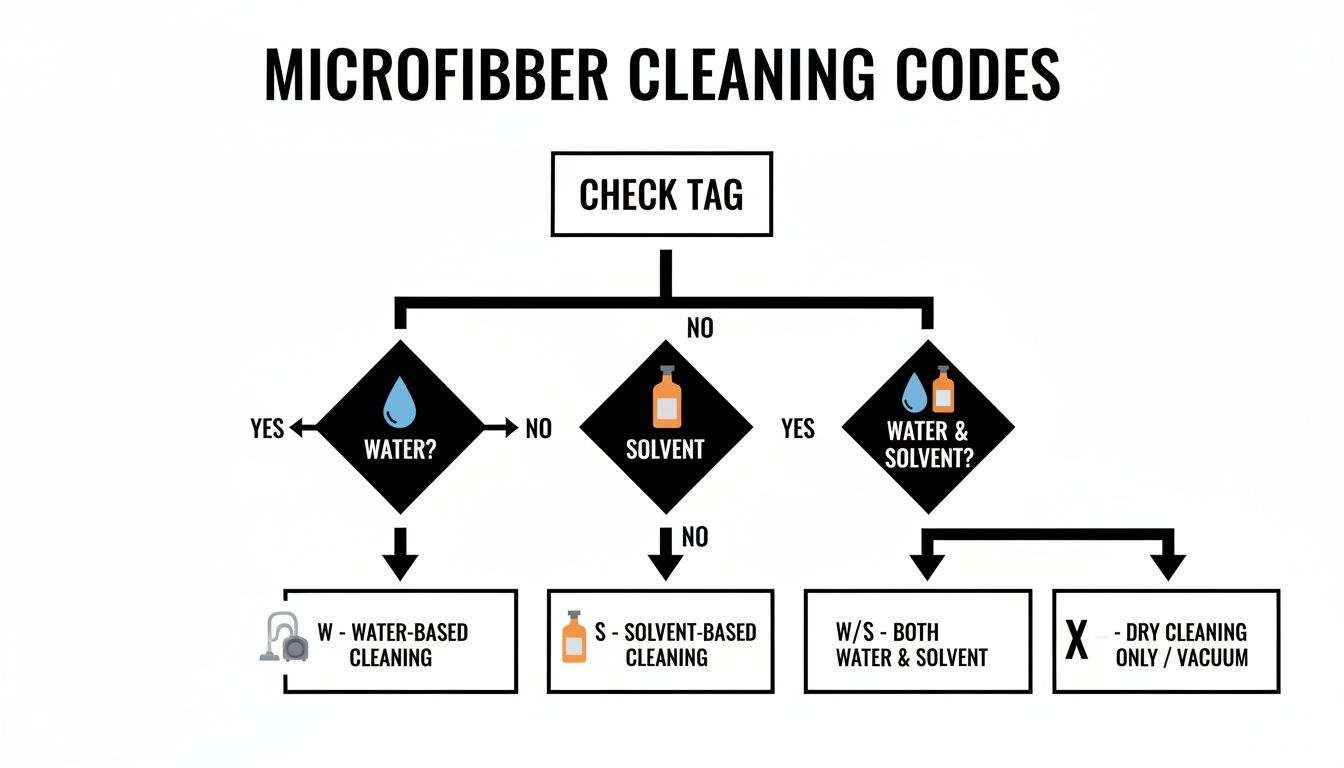
This simple guide reinforces the golden rule: the code tells you exactly what to do for a safe, effective cleaning job.
The Best DIY Solutions for Each Code
Now that you know your code, you can whip up a simple, effective cleaning solution using things you probably already have at home.
For a 'W' Code Couch (Water-Based Cleaners)
This is the most common and forgiving microfiber. Your best bet is a gentle mix of a few drops of clear dish soap in a spray bottle of distilled water. We always recommend distilled water because tap water contains minerals that can leave behind ugly rings when they dry.
For an 'S' Code Couch (Solvent-Based Cleaners)
On an 'S' code couch, water is the enemy. Your tool of choice here is isopropyl (rubbing) alcohol. Pour it straight into a spray bottle—no need to dilute it. The alcohol breaks down dirt and oil beautifully and then evaporates quickly, which is key to preventing those stubborn water stains.
For a 'W/S' Code Couch (Water or Solvent)
You've got options! For everyday spills like juice, the soap and distilled water solution is a perfect starting point. But for oil-based messes—think grease from a pizza slice or a swipe of lipstick—the rubbing alcohol will give you much better results.
Tackling Common Stains Like a Pro
Let's walk through a couple of real-world scenarios you might run into in your Hobbs or Lubbock home.
The Coffee Spill: A splash of coffee lands on your light-colored 'W' code couch. After blotting, lightly mist the spot with your soap-and-water mix. Using a clean, white cloth, gently work from the outside of the stain inward. This keeps it from spreading. Once the stain lifts, give it a light spray with plain distilled water to rinse, then blot it completely dry.
The Oily Food Stain: A greasy fingerprint from a potato chip appears on your 'S' code sectional. Don't even think about using water! Instead, spray the mark directly with rubbing alcohol. You'll actually see the oil start to break down. A gentle scrub with a white cloth should lift the stain right off. The alcohol will evaporate in minutes, leaving no trace.
Microfiber is popular for a reason—its stain resistance is incredible. The dense fabric structure is designed to repel liquids 5 times better than cotton and can absorb up to 7 times its weight in water, which is why blotting is so effective. For a smart first step, always dust the spot to remove up to 99% of loose particles. From there, a simple 1:10 white vinegar-to-water solution has been shown to lift oily residue from 80% of common household stains in under five minutes. If you're curious about the technology, you can learn more about the science behind these amazing fabrics.
The secret to effective spot cleaning isn't aggressive scrubbing; it's using the right solution for your fabric code and applying it with a gentle, systematic approach. Work from the outside of the stain inward to contain the mess and conquer the stain.
Reviving the Fabric Texture
After cleaning, you might notice the spot feels a bit stiff or crunchy once it’s dry. Don't worry, that's completely normal. It just means the tiny fibers have matted together from the moisture.
This is an easy fix. Grab a soft-bristled brush and, once the area is 100% dry, gently fluff the fibers in small, circular motions. You'll feel the fabric instantly return to its original soft, velvety state. It’s this final touch that makes the repair totally invisible.
By following these targeted steps, you’re doing more than just cleaning a spill—you’re preserving the beauty of your furniture for years to come. And if you ever face a stain that seems impossible, remember the design experts at Miller Waldrop are always here to offer advice and help you keep your home looking its best.
How to Deep Clean Your Entire Microfiber Couch
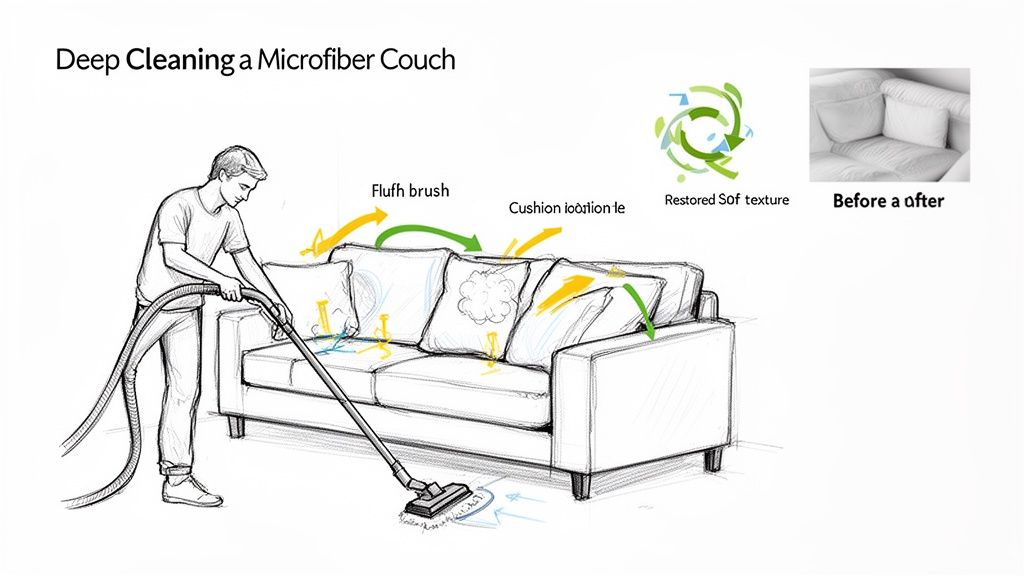
Sometimes, just hitting the spots isn't enough. Over time, your couch becomes a magnet for dust, allergens, and the general grime of daily life, leaving it looking dull and feeling a little less inviting. A good, deep clean is the perfect reset, restoring its original color and comfort.
Think of it as a much-needed spa day for your most-used piece of furniture. You’re not just cleaning it; you're protecting your investment and keeping your home healthy. This is especially true in the dusty climates of West Texas and Southeastern New Mexico, where a deep clean can feel like a breath of fresh air.
Start with a Serious Vacuuming Session
Before you even think about using a cleaning solution, you need to vacuum. And we mean really vacuum. This is a non-negotiable first step. If you skip it, all that loose dust, pet hair, and crumb debris will turn into a muddy paste the second you add liquid.
Pull off all the cushions and pillows. With your vacuum's upholstery attachment, go over every square inch of the couch frame and both sides of each cushion. Don't forget the nooks and crannies where dirt loves to accumulate.
- Crevice Tool: This is your best friend for getting deep into the seams and along the frame where snacks and dust disappear.
- Brush Attachment: Use the soft brush to gently loosen stubborn dust and pet fur from the fabric's surface without causing any damage.
You’d be surprised how much of a difference this alone makes. A thorough weekly vacuuming can actually pull up 90% of surface dust, which is huge for cutting down on allergens. When you follow that up with a targeted 50% isopropyl alcohol solution for greasy spots, you can lift stains in about 95% of cases. Proper prep work is everything.
Tackling the Grime: The Cleaning Process
With all that loose debris gone, you're ready for the main event. Make sure you have some good airflow in the room and, most importantly, stick to the cleaning method for your couch's code ('W', 'S', or 'W/S').
Grab your chosen cleaner—rubbing alcohol for 'S' codes or a mild soap and distilled water mix for 'W'—and lightly mist one section of the couch. It’s best to work in a grid pattern. Start with one cushion, move to an armrest, then a back panel. The key is to avoid soaking the fabric; a light, even spray is plenty.
With a clean, white sponge or microfiber cloth, gently scrub the area you just sprayed. Use consistent, even pressure to lift the dirt right out of the fibers. You'll see the grime transferring to your cloth, which is exactly what you want.
The secret to avoiding streaks is to work in complete sections, slightly overlapping where you just cleaned. This prevents those annoying water lines from forming as the fabric dries.
After scrubbing, grab a separate dry, white cloth to blot the area. This pulls up the excess moisture and cleaning solution, which is crucial for preventing water rings and speeding up the whole process. Just keep repeating this spray-scrub-blot method until the entire couch is done.
Drying and Bringing Back the Softness
Now comes the hard part: waiting. Let your couch air-dry completely. Don't be tempted to sit on it or throw the cushions back on too soon, or you'll end up with flat spots and wrinkles. Setting up a fan to blow across the surface can definitely help things along.
Once the couch is 100% dry, you'll probably notice the fabric feels a bit stiff or even crunchy. Don't panic! This is completely normal. It’s just the tiny fibers clumping together from the moisture.
Here’s how you fix it. Take a soft-bristled brush (a new upholstery brush is perfect, but even a clean baby brush will do) and gently go over the fabric in soft, circular motions. This "fluffs" the fibers back up, separating them and instantly restoring that signature velvety texture.
For a really intense clean, especially if you're dealing with lingering odors or set-in grime, a steam cleaner can be a game-changer on 'W' and 'W/S' code fabrics. If you want to go that route, you can check out our guide on cleaning a couch with a steam cleaner for the full rundown.
Proactive Care and When to Call a Professional
Knowing how to clean your microfiber is one thing, but the real secret to a long-lasting couch is smart, preventative care. It’s far easier to keep a couch looking great with a few simple habits than it is to perform a major cleaning overhaul every few months.
Think of it as the difference between a quick tidying up and a full-blown spring cleaning. A little effort each week goes a long way in defending your furniture against the daily grind of dust, crumbs, and life in general.
Building Smart Maintenance Habits
You don't need to add a bunch of heavy chores to your list. Just a couple of small, consistent tasks can make a huge impact on how your microfiber wears over time. These aren't just chores; they're an investment in the longevity of your furniture.
First up: make vacuuming a weekly ritual. Use your upholstery attachment to get into all the nooks and crannies, paying special attention to the spaces between and under the cushions. This simple pass removes the fine grit and dust that act like sandpaper, slowly wearing down the fabric fibers.
This is especially true if you have pets. If you're constantly fighting a losing battle with fur, you can find some great tips on how to remove pet hair from furniture that will really help.
On top of vacuuming, get into the habit of fluffing and rotating your cushions. Every week or two, just flip them over or swap their positions. This ensures they wear down evenly and helps you avoid those tell-tale indentations from a favorite seating spot. It keeps the whole couch looking plump and inviting.
Knowing When to Call for Backup
Even the most dedicated DIY hero knows when to call in a specialist. Sometimes, trying to fix a major issue yourself can do more harm than good, and it’s smarter to protect your investment by handing the job over to a professional. It’s not about giving up; it’s about making a strategic call.
Here are a few situations where picking up the phone is your best move:
- You Have an 'X' Code Couch: This is a non-negotiable. The 'X' code means vacuum-only, and any attempt to clean it with water or even a solvent-based cleaner can cause permanent rings and discoloration.
- A Stubborn Stain Won't Budge: You’ve followed the directions for your couch’s cleaning code, but that mystery spot isn’t going anywhere. Stop! Pushing it further could set the stain for good. A professional has commercial-grade equipment and specialized solutions for these exact scenarios.
- There's Major Water Damage: A big spill that has soaked deep into the cushions and frame is more than a surface-level problem. A pro has the high-powered extraction tools needed to pull out that deep-seated moisture and prevent mold or mildew from growing inside your sofa.
Sometimes, the best way to win the day for your furniture is to call in reinforcements. A professional cleaner is your best ally against delicate fabrics and the toughest stains.
If you find yourself needing a deep clean that's beyond your scope, knowing how to find the best cleaning company is a valuable skill. In the end, the goal is a beautiful, comfortable home. Whether you get there with a bit of elbow grease or by wisely calling in an expert, you're making the right choice. And for any other furniture questions in the Lubbock and Hobbs area, the team at Miller Waldrop is always here to help.
Answering Your Toughest Microfiber Questions
Even after you've mastered the basics of cleaning your microfiber couch, some tricky situations will inevitably pop up. That’s just life. From stubborn pet smells to that dreaded ink stain, knowing how to handle the unexpected is what really keeps your furniture looking great.
Let's walk through some of the most common questions we hear, giving you the solutions you need to be the hero of your home.
Can You Really Get Rid of Stubborn Pet Odors?
Yes, you absolutely can. That lingering "dog smell" or the faint scent from an old accident doesn't have to be permanent. Once you've spot-cleaned any messes, your best friend is probably already in your pantry: baking soda.
Sprinkle a generous, even layer of baking soda across the entire couch—don't be shy. Let it sit for a few hours, or even overnight if the smell is particularly stubborn. The baking soda works wonders by actually absorbing the odor-causing molecules, not just covering them up.
When the time is up, vacuum it all up with your upholstery attachment. If a faint smell remains, you can try a light mist of diluted white vinegar and distilled water (only on 'W' or 'W/S' fabrics). The vinegar smell will disappear as it dries, taking the other odors with it.
The secret to fighting odors is to absorb them, not mask them with perfumed sprays. Baking soda is a safe, cheap, and incredibly effective tool for this.
What's the Best Way to Remove an Ink Stain?
An ink stain always feels like a five-alarm fire, but it’s usually manageable if you act fast. For 'S' or 'W/S' code couches, the hero here is almost always rubbing alcohol.
First, take a clean, dry cloth and gently blot the stain to lift as much wet ink as possible. The biggest mistake people make is rubbing, which just grinds the ink deeper into the fibers and spreads it around. Don't do it.
Next, moisten a fresh white cloth with rubbing alcohol and start dabbing the stain. You'll see the ink transfer from the couch to your cloth. Just keep dabbing with a clean section of the cloth until the ink is gone. Alcohol evaporates quickly, which is great because it reduces the chance of leaving a water ring.
Are Fabric Protector Sprays a Good Idea?
They can be a fantastic investment, especially if you have a new couch or you've just given your old one a deep cleaning. These sprays create an invisible shield on the fabric that helps repel spills and stops stains from setting in immediately.
Think of it as giving yourself a head start. That spilled glass of juice will bead up instead of instantly soaking in, giving you precious seconds to grab a cloth. For a busy home with kids, pets, or just the occasional clumsy adult, that extra protection can be a real lifesaver. Just make sure the spray you choose is made for microfiber and always test it on a hidden spot first.
How Do You Fix Water Stains on a Microfiber Couch?
It sounds crazy, but water itself can leave ugly rings on microfiber, particularly on 'S' code fabrics that are sensitive to moisture. This happens because the minerals in your tap water get left behind as it dries.
The trick to removing a water stain is, ironically, to use more water—but it has to be distilled water.
Lightly mist the entire stained cushion or section with distilled water, making sure to feather the spray out past the edges of the original ring. Then, use a clean cloth to gently blend the dampness and blot the area. This allows the whole section to dry as one uniform piece, making that frustrating ring vanish.
Can You Wash Microfiber Cushion Covers in the Washing Machine?
This is one of those times where you absolutely must check the care tag on your cushions. Some microfiber covers are designed to be machine washed, but many are not. Tossing them in the washer without checking is a gamble that can lead to shrinking, damage to the fabric's backing, or faded color.
If your tag does say it’s okay, stick to these rules:
- Wash Cold: Use a gentle cycle with cold water only.
- Mild Soap: Opt for a gentle detergent without dyes or harsh chemicals.
- Air Dry: Never put microfiber covers in a machine dryer. The intense heat can melt or permanently damage the delicate fibers. Lay them flat or hang them to air-dry completely before putting them back on.
At Miller Waldrop Furniture & Decor, we know that a beautiful home is meant to be lived in. We provide you with the tools and durable, stylish furniture that can handle the realities of everyday life. If you want to give your furniture an extra layer of defense, check out the Guardian Fabric Protector & Cleaner Kit, your all-in-one solution for keeping your couch looking new.