

8 Buffet Table Decorating Ideas for Every Occasion

The menu is set, the platters are polished, and guests are minutes away from walking in. At that point, the buffet table often decides whether the room feels composed or unfinished. In a home with well-made dining furniture, that surface should do more than hold serving dishes. It should support the room, respect the furniture, and make hosting easier.
Buffet styling works best when display and function stay in balance. The setup needs to guide traffic, give each dish enough space, and still feel visually connected to the dining chairs, case goods, and lighting nearby. A crowded arrangement can make even beautiful furniture feel lost. A well-planned one brings the whole entertaining space together.
That is the difference between a table that merely serves food and one that helps you host with confidence.
The ideas in this guide focus on practical design choices that improve the buffet without competing with quality furniture, including pieces from Miller Waldrop. The goal is a setting that feels finished, useful, and warm, so the buffet reads as the final design layer in the room rather than an afterthought. For readers planning a larger celebration, these creative event decor ideas can offer added inspiration.
Table of Contents
- 1. Tiered Display Stands and Multi-Level Platforms
- 2. Themed Table Linens and Color Coordination
- 3. Fresh and Seasonal Floral Arrangements
- 4. Lighting and Uplighting Effects
- 5. Decorative Food Labels and Calligraphy Signage
- 6. Texture and Material Mixing
- 7. Themed Centerpieces and Statement Pieces
- 8. Functional and Decorative Serving Pieces
- Buffet Table Decor: 8-Point Comparison
- Your Blueprint for a Beautiful Buffet
1. Tiered Display Stands and Multi-Level Platforms
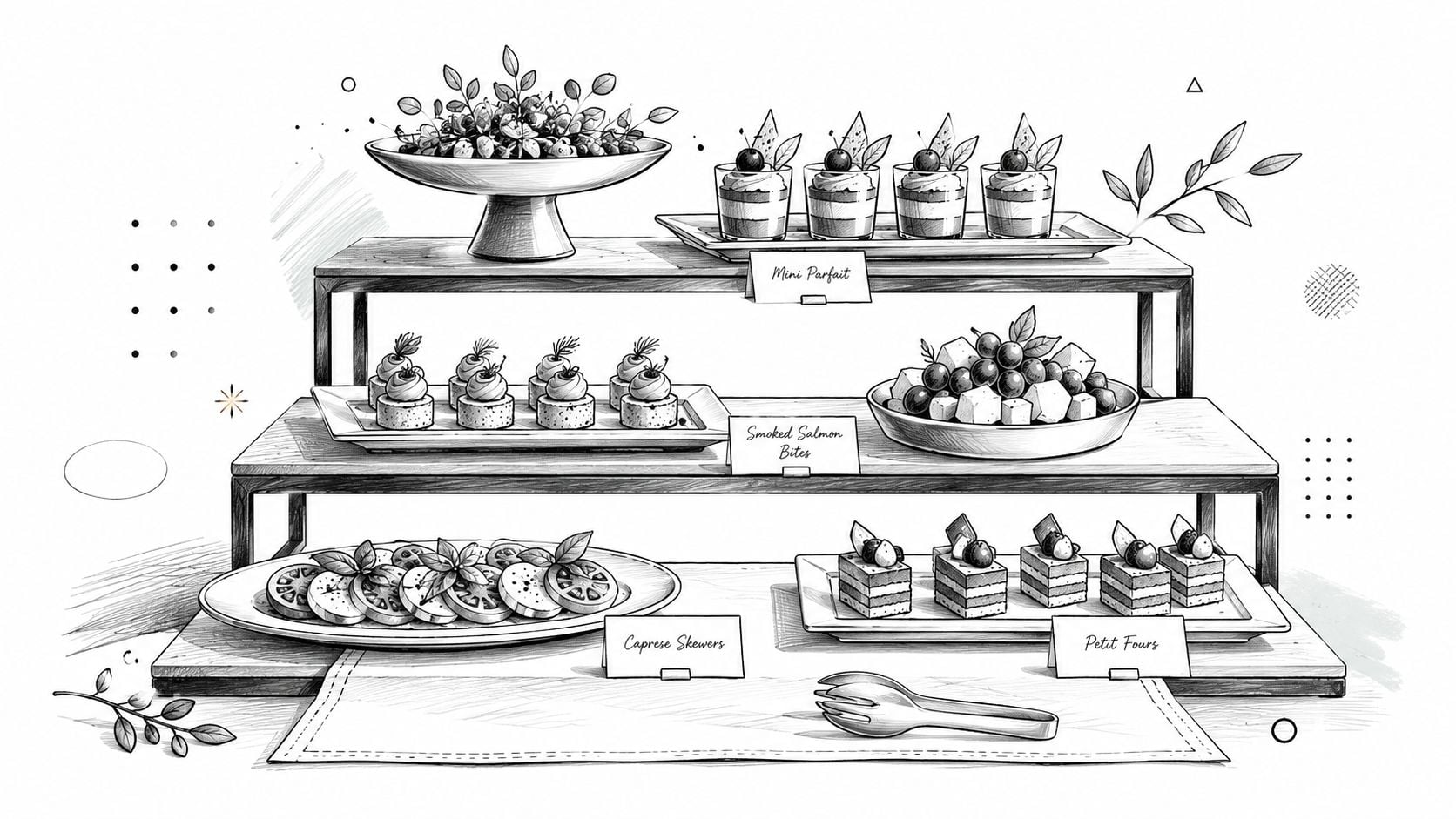
Guests walk up to a buffet with their eyes first. If every platter sits in one flat row, even excellent food and beautiful furniture lose some of their impact. Varying the height creates order, makes the spread easier to scan, and helps a well-made sideboard or server read as part of the design instead of just a surface holding dishes.
That matters even more when the buffet is set on quality furniture. A substantial piece with strong lines and rich materials already carries visual presence. The display on top should support that presence, not fight it. I usually build the table in layers so the furniture stays visible, the food feels abundant, and guests can serve themselves without awkward reaching.
Build height without losing stability
Start with function. Heavy serving pieces belong on the table surface or on broad, stable pedestals. Lighter items can move up. That usually means casseroles, carved meats, and large bowls stay low, while cookies, rolls, tea sandwiches, and wrapped sweets sit on higher stands.
A holiday buffet shows the method clearly. Keep pies and larger bowls on the main surface. Add a cake stand for bars or cookies. Place a slim riser at the back for greenery, extra plates, or a small stack of premium disposable napkins if you want convenience without introducing a flimsy detail into the setup.
Practical rule: If a guest needs tongs, a ladle, or two hands to serve it, keep that dish on the lowest level.
Material choice matters too. The risers and stands should relate to the room and the buffet beneath them. Wood and ceramic feel grounded and work well with warm finishes. Glass and metal suit more formal rooms where you want a lighter look. Acrylic risers are useful when you need extra height but do not want to block the craftsmanship of the furniture or interrupt sightlines across the table.
Color still plays a role here. If you want the platforms to feel integrated with the room instead of borrowed for the occasion, pull tones from the surrounding palette, much like these ideas for a living room color palette that keeps the whole room cohesive.
Restraint makes the arrangement look professional. Too many narrow stands packed together create traffic problems fast. Guests bump utensils, sleeves catch nearby decor, and the setup starts to feel fussy. A cleaner grouping with two or three clear height changes nearly always looks better and works better. That is how you get the table to feel polished while still letting your furniture do its share of the work.
2. Themed Table Linens and Color Coordination
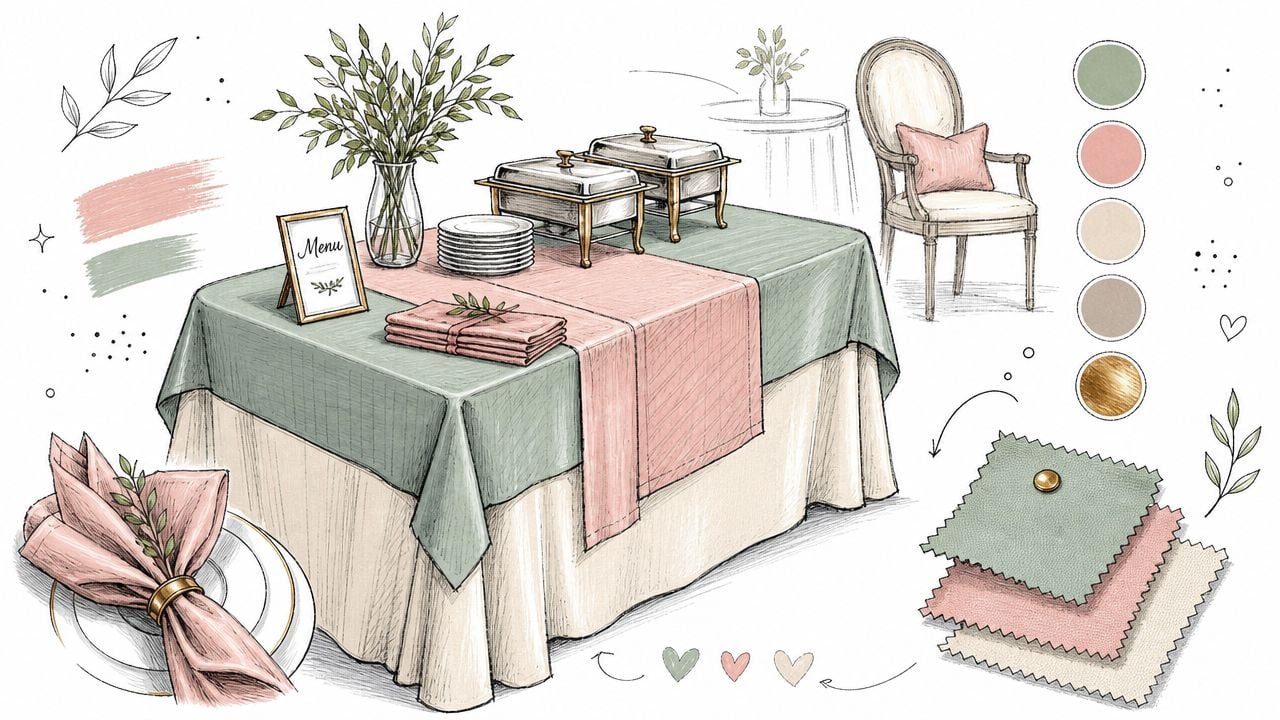
Linens do more than cover a surface. They establish mood, quiet down visual noise, and connect the buffet to the rest of the room. On a substantial buffet cabinet or sideboard, the right runner can soften hard lines while still letting the furniture show through.
Many buffet table decorating ideas focus on centerpieces first, but the linen is often what makes the whole composition feel finished. A cream runner on a dark wood buffet reads formal and calm. A sage or rust-toned textile can make the setup feel seasonal without a single themed object on top.
Let the linen connect the room
The easiest way to choose colors is to pull them from nearby upholstery, art, or rugs. Readers who are already refining a whole-room scheme can use these ideas from Miller Waldrop on a living room color palette to keep entertaining spaces cohesive.
A spring brunch might use a natural linen base with a floral runner in soft greens. A holiday dinner often looks stronger with a quiet foundation, such as ivory or taupe, plus richer accents through napkins or candles rather than a loud allover print.
After the tablecloth, napkins matter more than many hosts expect. They're visible from a distance, they repeat the palette, and they often sit right at the end of the buffet where guests pause. For readers comparing styles and finishes, this guide to premium disposable napkins shows how premium paper options can still look polished.
The linen should support the furniture, not hide it. If the buffet piece has a beautiful top or finish, a runner often works better than a full cloth.
What usually misses the mark is over-theming. A holiday motif on the cloth, plus printed plates, plus novelty signage, plus bright serving pieces can make quality furniture disappear into the background. One pattern is enough. Two can work. More than that starts to feel busy.
3. Fresh and Seasonal Floral Arrangements
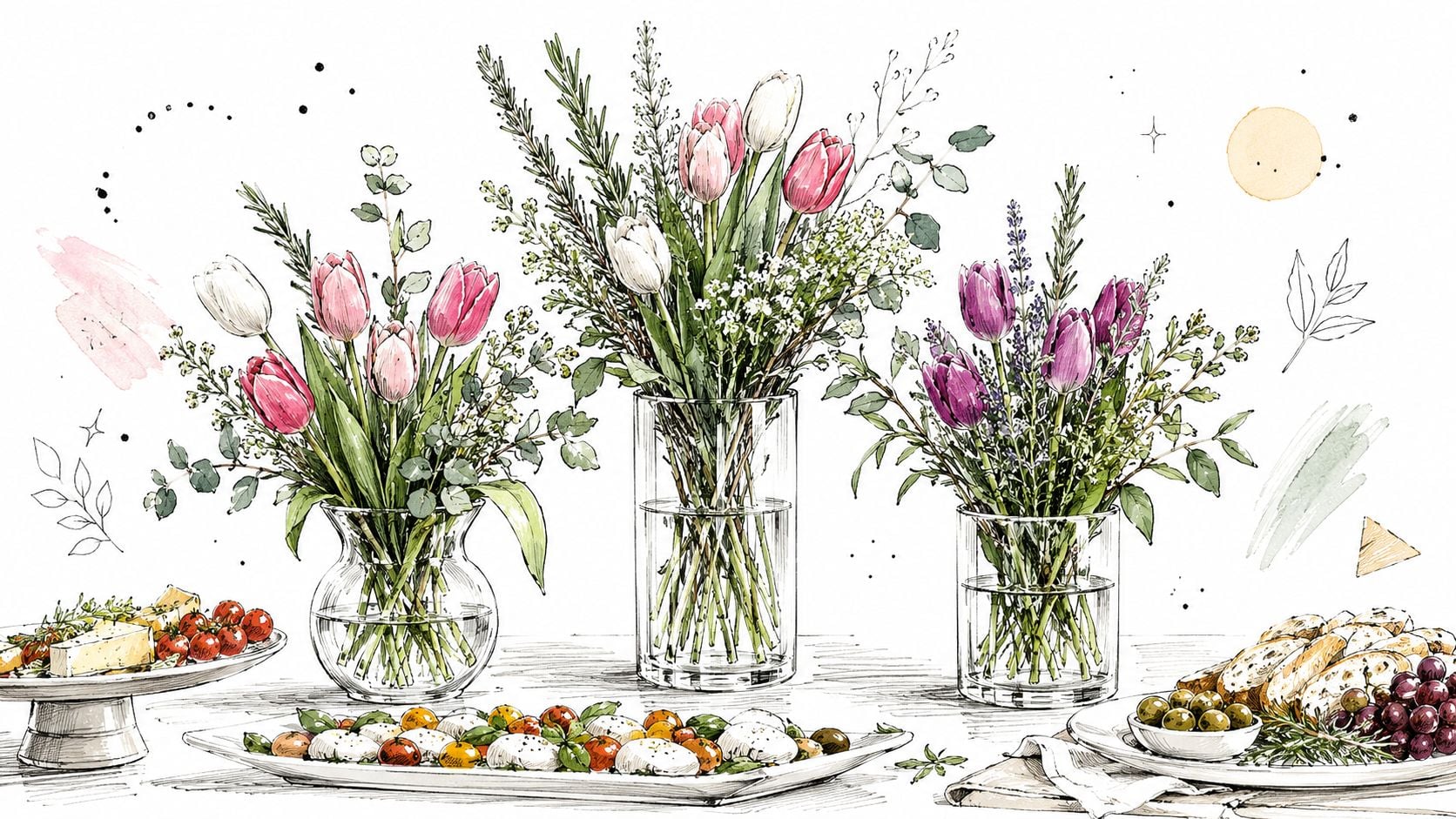
A buffet usually has one job visually. It needs to soften the hard edges of platters, trays, and serving pieces without competing with the furniture underneath. Fresh flowers do that well when they are scaled to the piece and chosen with restraint.
Seasonal material nearly always looks more convincing than elaborate mixed bouquets. Spring tulips, summer herbs, fall branches, and winter greens feel connected to the room and the meal. They also tend to sit more comfortably beside quality furniture because they read as natural texture, not event props.
Choose flowers that support the spread
On most buffets, one well-placed arrangement does more than several small ones scattered across the surface. I use that approach often on sideboards and dining consoles because it protects serving space and gives the eye a clear focal point. A tall arrangement can anchor a back corner, while a low bowl, candle grouping, or small bud vase fills the opposite side without crowding the plates.
This matters even more when the buffet sits on a beautifully finished piece. The flowers should complete the furniture, not cover it. If the wood grain, hardware, or silhouette deserves attention, leave breathing room around the arrangement so guests can still read the piece as part of the design.
A few combinations work reliably:
- Clear glass with loose stems: A good fit when the buffet already has visual warmth and the food brings plenty of color.
- Ceramic or stoneware vessels: Strong with rustic, traditional, or transitional furniture that benefits from a little weight and texture.
- Low herb arrangements: Practical for brunches and casual dinners where you want freshness without a strong floral scent.
Height takes judgment. Tall branches or blooms belong at the back edge or far end of the buffet, where they frame the setup instead of interrupting traffic across the serving line. If a lamp sits near the buffet, keep the arrangement low enough that it does not interfere with sightlines or the light source. This guide to dining-room lamp height and placement is useful when you are balancing flowers with nearby lighting.
Fragrance matters too. Strong perfume can fight the food, especially on a buffet where guests stand close to the dishes. Rosemary, mint, eucalyptus, olive branches, and other lightly scented greens usually work better than heavily perfumed blooms.
The best floral styling gives the buffet polish, softens the room, and lets the furniture still carry authority. That balance is what makes the whole entertaining space feel finished.
4. Lighting and Uplighting Effects
Good lighting can rescue an average buffet. Bad lighting can make even beautiful serveware and food look dull. In many homes, the overhead fixture handles the room but not the buffet surface itself, which leaves platters in shadow and centerpieces looking heavier than they are.
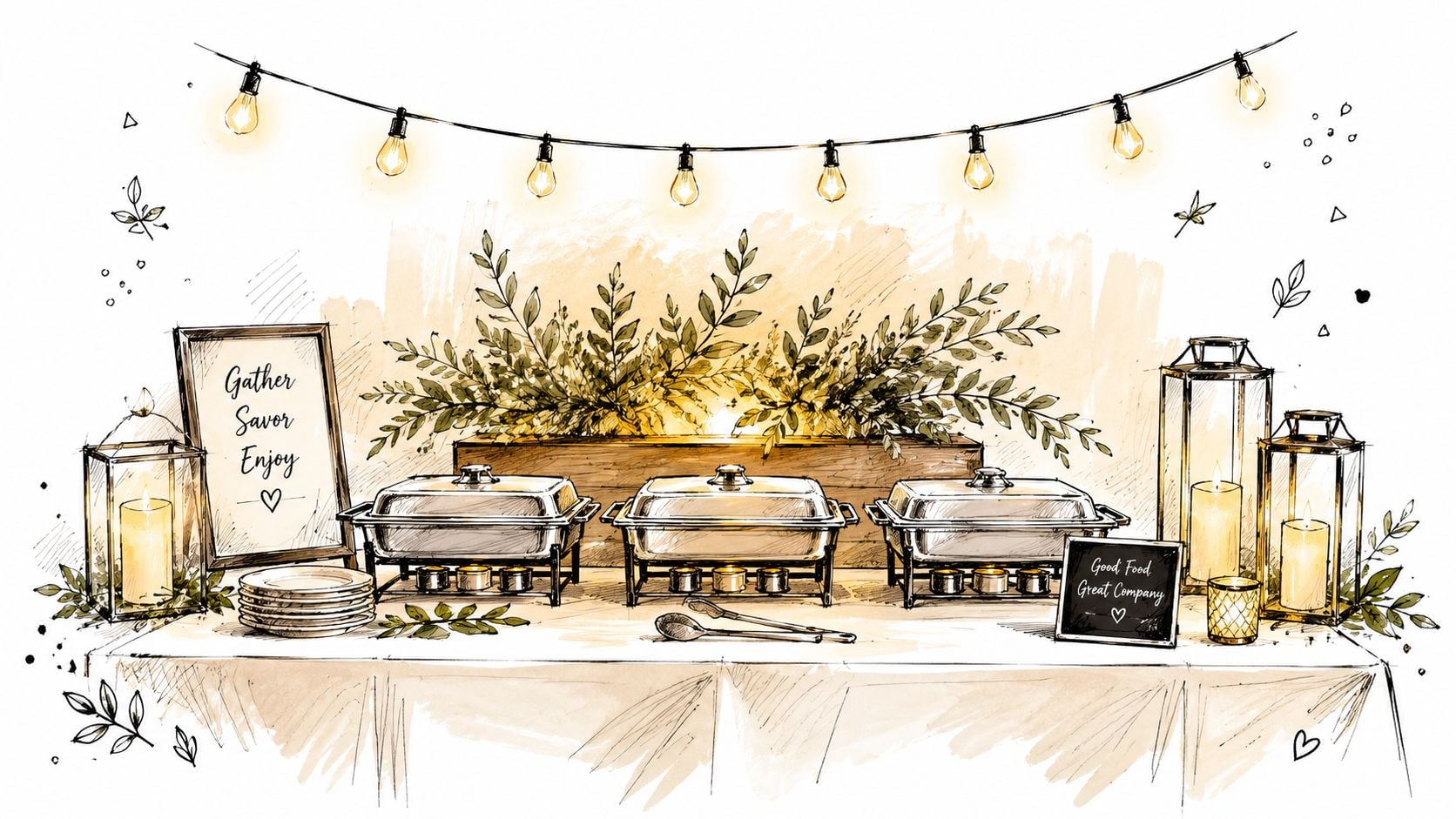
Buffet table decorating ideas often improve dramatically when light is treated as decor, not an afterthought. A pair of lamps, flameless candles, or a warm accent light behind the buffet can give the setup depth and make the furniture feel integrated with the event.
Light the food, not just the room
A dining room chandelier creates atmosphere overhead, but the buffet often benefits from side lighting or background glow. Table lamps on either end of a sideboard can frame the arrangement. For readers planning fixture placement around dining furniture, Miller Waldrop's article on the height of a lamp over a dining table offers useful room-scale context.
The safest and most versatile choice for most gatherings is layered light. Ambient light sets the mood, a lamp or sconce gives form to the furniture, and candles or small accent lights soften the edges.
Soft, warm lighting flatters food and furniture at the same time.
A winter buffet offers a clear example. Evergreen branches in a low bowl, brass serving pieces, and neutral platters can look flat under one bright ceiling light. Add two hurricane lanterns or flameless pillars, and the metal picks up warmth while the greenery gains texture.
A few pitfalls are easy to avoid:
- Candles too close to serving paths: Guests reach across flames, sleeves brush glass, and the setup starts to feel tense.
- One spotlight on the centerpiece: The decor glows, but the food disappears.
- Blue-toned bulbs: They can make food look unappetizing and drain warmth from wood furniture.
5. Decorative Food Labels and Calligraphy Signage
A beautiful buffet loses momentum fast when guests have to ask what each dish is, whether it contains nuts, or which spoon goes with which sauce. Good signage efficiently solves that problem. It keeps the line moving, helps guests feel at ease, and makes the whole setup look intentional rather than assembled in a rush.
Labels also do important design work. On a well-made buffet or sideboard, every accessory should support the furniture instead of distracting from it. A handwritten tent card, a small brass frame, or a clean acrylic marker can echo the room's style and make the serving area feel finished.
Make signage look built in
The best labels match the character of the table and the setting. Acrylic suits a cleaner, more modern room. Folded cardstock with restrained script works well in traditional spaces. Small framed cards often pair especially well with substantial wood furniture because they add definition without fighting the grain, finish, or hardware.
Brunch is where this pays off right away. “Spinach and feta quiche,” “seasonal fruit,” and “contains nuts” remove guesswork in seconds. Guests serve themselves with more confidence, and the table reads as cared for.
A polished setup usually comes down to three decisions:
- Keep the style consistent: Formal calligraphy, printed serif cards, and chalk-marker handwriting should not all appear on the same buffet.
- Prioritize legibility: If guests cannot read a label from a natural standing distance, it is too small or too decorative.
- Place each card carefully: Set labels beside or just in front of a dish, where they guide the guest without interfering with tongs, ladles, or serving spoons.
Scale is the mistake I see most often.
Large signs can dominate a refined buffet and pull attention away from quality furniture and well-chosen serving pieces. Tiny tags create the opposite problem. Guests lean in, slow down the line, and start handling dishes to confirm what they are seeing. Keep the message short. Dish name first, dietary note second, and only add one brief descriptor if it helps.
Small details like labels are often what separate a pretty buffet from one that works. The host feels calmer, guests move through the table with less hesitation, and the furniture still gets to be part of the story instead of disappearing under clutter.
6. Texture and Material Mixing
A buffet can have beautiful food, good lighting, and polished serving pieces, yet still feel flat. The missing layer is usually texture.
On a well-made buffet with visible wood grain, precise lines, or distinctive hardware, texture does more than add interest. It helps the table belong to the furniture. That is the difference between decorations that sit on top of a piece and a setup that feels designed as one complete composition.
The strongest tables usually mix a few contrasting surfaces with intention. Matte ceramic softens reflective metals. Glass keeps heavier materials from feeling dense. Linen adds a quiet, finished base. Wood brings warmth, but it needs contrast around it so the buffet itself still stands out.
Build around the furniture's finish
I usually start with the buffet, not the accessories. A dark walnut piece can handle chalky ceramics, soft linen, and a restrained brass accent beautifully. A painted buffet often benefits from natural wood boards or woven elements so the display does not feel too slick. If the furniture already has a lot of visual movement in the grain, fewer tabletop materials will look better.
Restraint matters here. Three or four materials are usually enough.
A balanced mix might include:
- Wood serving boards: Best for breads, pastries, and cheeses that need visual warmth.
- Ceramic bowls and platters: Useful for adding substance and a softer silhouette.
- Metal accents: Good for catching light through flatware, tray rims, or small stands.
- Glass pieces: Helpful when the table needs airiness around drinks, florals, or desserts.
The trade-off is simple. Too little variation makes the buffet feel one-note. Too many finishes create visual noise and pull attention away from the furniture you are trying to complement.
For a fall gathering, for example, a walnut buffet looks rich with stoneware, linen, and aged brass. Add mirrored trays, black slate, bright chrome, woven chargers, and tinted glass all at once, and the surface starts competing with itself. Guests may not name the problem, but they will feel the lack of order.
Negative space is part of this decision too. Leaving some of the buffet top visible gives the arrangement breathing room and lets the craftsmanship of the piece do its job. Hosts who want more visual drama can pair this material approach with ideas for stunning table settings and still keep the overall look controlled.
Done well, texture mixing gives the buffet depth, keeps service practical, and lets quality furniture remain the anchor of the room. That is often what helps a host win the day.
7. Themed Centerpieces and Statement Pieces
Guests enter the room, spot the buffet, and decide in a second whether the setup feels intentional or improvised. A strong centerpiece makes that decision easy. It gives the eye a place to land and helps the furniture read as part of a finished entertaining space instead of a holding zone for dishes.
The best statement pieces support the buffet cabinet itself. If your sideboard has rich wood grain, clean lines, or detailed hardware, the centerpiece should reinforce those qualities, not cover them up. That is the difference between decorating a table and designing a room.
Give the buffet one focal point
A single focal point usually works better than several smaller ones competing for attention. That focal point might be a large artwork, a mirror, a generous floral arrangement, a bowl with real sculptural presence, or a seasonal object with enough width and weight to hold the composition together.
Scale decides whether the arrangement feels polished or awkward. On a compact buffet, one low, wide centerpiece keeps serving comfortable. On a longer piece, a larger visual anchor on the wall can carry more of the impact while the tabletop stays functional. Hosts who want fresh inspiration can borrow from these ideas for stunning table settings and adapt them to the proportions of the furniture they already own.
I usually tell clients to test the centerpiece from three positions. Standing at the front door. Seated across the room. Reaching for a serving spoon. If it looks undersized from a distance or gets in the way up close, it needs adjustment.
A statement piece should create structure and calm. If guests have to work around it to serve themselves, it has become an obstacle.
Theme matters, but restraint matters more. Seasonal branches, lanterns, fruit, garland, or sculptural ceramics tend to age well because they echo the room instead of shouting over it. Novelty props often date the setup and can make a well-made buffet look less refined than it is.
That balance is especially important if you use the piece for more than parties. A buffet often serves as both a display surface and a working storage piece, which is why it helps to understand what a buffet table is used for in everyday entertaining. The strongest centerpieces respect both jobs.
Done well, a themed centerpiece gives the table character, keeps the service area usable, and lets quality furniture stay in the spotlight where it belongs.
8. Functional and Decorative Serving Pieces
A buffet often looks unfinished for one simple reason. The serving pieces do not suit the furniture.
On a well-made buffet, every platter, bowl, and utensil is part of the visual design. Cheap plastic lids, flimsy trays, and mismatched serving spoons can flatten the look of a beautiful sideboard in minutes. Strong serving pieces do the opposite. They add polish, protect the surface, and help guests move through the spread without hesitation.
I usually advise clients to buy fewer pieces and buy better ones. A small group of ceramic platters, wood or metal risers, a proper salad bowl, and serving utensils with some weight will outperform a cabinet full of novelty items. The goal is not to decorate around the food. The goal is to choose pieces that make the food and the furniture look like they belong in the same room.
That is especially important if the piece is used beyond parties. A sideboard has to work as both storage and service space, which is why it helps to understand what a buffet table is used for in everyday entertaining. Good serveware respects both roles.
A practical serving order usually works best:
- Plates first: Guests need a steady place to begin.
- Main dishes next: These set the route and take the most space.
- Sides and condiments after: They are easier to place once the larger dishes are set.
- Flatware and napkins near the end: This keeps one hand free while guests serve themselves.
Height matters here too, but in a more restrained way than in a centerpiece. A cake stand, low riser, or handled tray can improve visibility and break up a flat row of dishes without crowding the table. I keep the tallest pieces toward the back and the heaviest items near the center, especially on narrower buffets where overhang and reach become real problems.
The mistake I see most often is giving decorative objects the prime real estate and pushing serving bowls into corners. If there is no landing spot for tongs, no room to refill a platter, or no safe distance between hot dishes and the wall, the arrangement is not resolved yet.
Useful pieces are decorative pieces. That is the standard that helps a buffet look generous, work smoothly, and stay in proportion with quality furniture.
Buffet Table Decor: 8-Point Comparison
| Item | Implementation complexity | Resource requirements | Expected outcomes | Ideal use cases | Key advantages |
|---|---|---|---|---|---|
| Tiered Display Stands and Multi-Level Platforms | Medium, requires stable arrangement and balance | Tiered stands, risers, pedestals, storage space | Adds vertical depth and improved visibility of items | Weddings, dessert displays, formal buffets, upscale home entertaining | Maximizes vertical space, improves sightlines, flexible styling |
| Themed Table Linens and Color Coordination | Low, simple layering and swapping | Tablecloths, runners, overlays, laundering and storage | Cohesive color theme, polished backdrop, hides table wear | Seasonal gatherings, holidays, elegant dinners, quick makeovers | High impact at low cost, protects surfaces, easy to change |
| Fresh and Seasonal Floral Arrangements | Medium, sourcing and upkeep needed | Fresh flowers, vases, water/maintenance, replacement supply | Natural color, fragrance, focal breaks and seasonal feel | Intimate dinners, spring/summer events, garden parties | Natural and customizable, locally sourceable, guest appeal |
| Lighting and Uplighting Effects | Medium–High, planning and possible installation | Candles, string lights, LEDs, power or batteries, optional pro install | Enhanced presentation, warm ambiance, defined buffet area | Evening events, outdoor buffets, showpiece displays | Dramatic enhancement, adjustable scenes, improves visibility |
| Decorative Food Labels and Calligraphy Signage | Low–Medium, design or hire calligrapher | Cards, chalkboards, frames, markers or professional service | Clear dish ID, dietary notes, refined detail and guidance | Buffets with varied dishes, weddings, allergy-sensitive events | Improves navigation, inexpensive, highly customizable |
| Texture and Material Mixing | Medium, requires curated coordination | Wood, glass, ceramic, marble, metal pieces, mixing strategy | Layered visual interest, varied reflections and tactile appeal | Designer tablescapes, curated home entertaining, product displays | Uses existing items, sustainable, creates sophisticated depth |
| Themed Centerpieces and Statement Pieces | Medium–High, design and scale considerations | Large arrangements, sculptural pieces, transport and storage | Strong focal point, sets tone, memorable visuals | Weddings, milestone parties, galas, photo-forward events | High-impact statement, customizable, conversation starter |
| Functional and Decorative Serving Pieces | Low–Medium, selection and care required | Quality platters, bowls, utensils, storage, maintenance | Cohesive, practical presentation that reflects host taste | Regular entertaining, formal dinners, heirloom displays | Combines utility with aesthetics, durable investment, timeless appeal |
Your Blueprint for a Beautiful Buffet
A beautiful buffet doesn't happen because more objects were added. It happens because each layer has a clear job. Height creates movement. Linen sets the tone. Flowers soften the structure. Lighting adds warmth. Signage removes confusion. Materials add depth. A focal point gives the eye somewhere to land. Serving pieces make the whole arrangement work in real time.
That function-first mindset matters because the buffet has always been both decorative and practical. Its history as a self-service format still shapes the best buffet table decorating ideas today. The most successful setups don't just photograph well. They allow guests to circulate easily, find what they need, and enjoy the experience without friction.
Quality furniture plays a quiet but important role in that equation. A well-made buffet, sideboard, or server gives the arrangement weight, storage, and presence before a single platter is placed. It also helps the decor feel anchored. When the furniture is thoughtfully chosen, styling becomes the finishing step rather than an attempt to compensate for a piece that doesn't fit the room.
That's where careful selection pays off. A dining room piece with the right scale, finish, and storage can support everything from weeknight hosting to holiday entertaining. Miller Waldrop Furniture & Decor offers dining room furniture and design support that can help homeowners build that kind of foundation, especially when the goal is a room that feels polished every day and guest-ready when it matters.
For readers who feel inspired but still want help pulling the whole picture together, professional guidance can save time and second-guessing. A designer can help match buffet furniture to the room, refine scale, narrow materials, and suggest styling choices that work with the home instead of against it. That kind of support is especially valuable when the entertaining space needs to do double duty for daily life and special occasions.
Schedule a complimentary design consultation with Miller Waldrop's experts today and create a buffet setup that feels as welcoming, functional, and refined as the rest of the home.
Miller Waldrop Furniture & Decor can help shoppers find dining room furniture, accent pieces, and design guidance for entertaining spaces that need to look beautiful and work hard. Readers in West Texas and Southeastern New Mexico can explore curated furniture collections, visit a showroom, or connect with the team for personalized help choosing the right buffet, sideboard, or dining room setup.