


The Best Coffee Tables: Your 2026 Buying Guide


A living room can have a good sofa, decent lighting, and a rug that almost works, yet the whole space still feels unsettled. In many homes across West Texas and Southeastern New Mexico, that missing piece is the coffee table. The room needs a center of gravity. It needs a place for drinks, remotes, books, board games, and the everyday rhythm of family life.
That's why choosing from the best coffee tables isn't really about chasing a trend. It's about finding a table that fits the room, supports how the household lives, and holds up through busy weekdays, weekend guests, dusty boots, and long movie nights. In larger open-plan homes, the wrong table can look lost. In smaller apartments or multipurpose living rooms, the wrong one can block movement and make the space feel cramped.
A confident choice comes from a simple process. Measure first. Match materials and shape to real life. Then decide whether the table needs to do more than hold a mug.
Table of Contents
- The Unsung Hero of Your Living Room
- Getting the Measurements Right The First Time
- Matching Material and Style to Your Lifestyle
- Beyond the Surface Smart Coffee Table Functions
- Styling Your Coffee Table Like a Designer
- Your Partner in Home Design
- Create a Living Room You Love
The Unsung Hero of Your Living Room
The absence of a coffee table is often sensed before it's consciously recognized. The seating may be there, but conversation doesn't settle in the same way. The room can feel like the furniture is floating instead of working together.
Coffee tables became a distinct living-room furniture category in the late nineteenth and early twentieth centuries, evolving from earlier tea tables and low Ottoman-style tables. Their rise tracked with the modern living room itself, when lower seating and more open plans made a centered table practical for relaxed use, according to this coffee table history and sizing guide. That history still shapes how the best coffee tables work today. They are made for conversation, easy reach, and shared use, not formal dining.
A coffee table often does the quietest work in the room. It connects the seating, softens empty floor space, and gives daily life somewhere to land.
That matters in this region. A home in Lubbock may need a table that can handle frequent entertaining and family traffic. A compact living room in Hobbs may need a shape that keeps movement easy. A mountain home near Ruidoso Downs may need warmth, texture, and durability without feeling too heavy.
The strongest choices usually come down to three questions:
- Does it fit the seating area well: A table should feel connected to the sofa and chairs, not stranded in the middle.
- Does it suit the household: Kids, pets, snacks, laptops, and game nights all change what “best” means.
- Does it support the room's style: Rustic, refined, casual, or modern can all work if the scale and finish are right.
A coffee table isn't a small decision. It's one of the pieces that decides whether a living room feels complete.
Getting the Measurements Right The First Time
Saturday afternoon is when sizing mistakes usually show up. The new coffee table arrives, it looks fine in the box, and then the room tells the truth. Knees hit the edge. The walkway tightens. The table either floats too far from the sofa or sits so high it feels like a small desk.
Good measurements prevent that.
Height comes first
Start with the sofa seat, not the table.
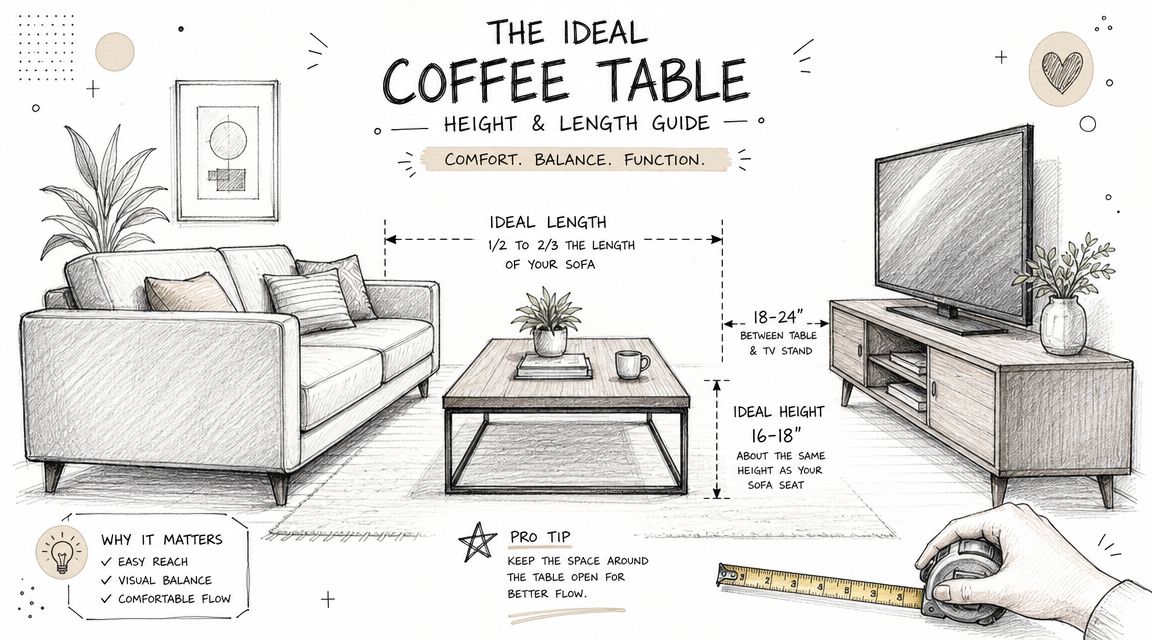
Design guidance commonly recommends a coffee table that sits at or slightly below the sofa seat height, often within a few inches, as explained in this guide to coffee table rules and sizing. That range tends to feel comfortable because your hand can move from lap to tabletop without an awkward lift or a deep reach.
In real homes around West Texas and Southeastern New Mexico, this matters more than people expect. Many living rooms here are built with generous seating, deeper sofas, and enough square footage that an undersized table can feel disconnected. A table that is too tall, though, starts to interrupt sightlines and daily use, especially in rooms where people gather for snacks, homework, dominoes, or a laptop in the evening.
Practical rule: Measure from the floor to the top of the sofa cushion before you shop.
If your cushions are soft, check the height while someone is sitting on the sofa too. Cushions settle. That small detail often explains why a table that looked right in a showroom feels off at home.
Length creates visual balance
Next, measure the sofa from arm to arm.
Many designers use a coffee table length that is about two-thirds of the sofa length. The reason is straightforward. That proportion usually looks connected to the seating without copying its full width. The Spruce's coffee table sizing guide notes the same general rule of thumb.
Here is what that looks like in practice. A long sofa in an open Lubbock living room can usually handle a longer table without the room feeling crowded. In a smaller apartment in Hobbs or a tighter den with multiple doorways, the safer choice may be a slightly shorter table that leaves more breathing room around it. Local homes vary a lot. Ranch-style layouts, open newer builds, and older compact rooms all ask for a different read on scale.
The table should support the sofa the way a good area rug supports the seating group. It should feel related, not identical.
Clearance protects daily comfort
The last measurement is the one families notice by bedtime.
The space between the sofa and the coffee table needs to be wide enough for legs and narrow enough for easy reach. Better Homes & Gardens recommends leaving about 14 to 18 inches between the table and seating. That spacing usually works well for sitting down, standing up, and setting down a drink without scooting forward every time.
This is also where local floor plans matter. In many West Texas and Southeastern New Mexico homes, the living room does more than one job. It may be a TV room, conversation area, homework spot, and pass-through to another part of the house. If kids or guests cut across the room often, a few extra inches of clearance can make the whole space feel calmer.
For anyone mapping the full seating area, this guide on how to plan a room layout helps you see how the coffee table works with chairs, rugs, and walking paths before you buy.
Keep these measurements handy:
- Sofa seat height: Match the table to this first, or go slightly lower.
- Sofa length: Use it to estimate a table around two-thirds as long.
- Distance from sofa to table: Aim for enough legroom and easy reach.
- Walking paths nearby: Check how people move through the room, not just how the furniture looks on paper.
The best coffee tables rarely feel dramatic. They feel easy to live with, which usually means the measurements were right from the start.
Matching Material and Style to Your Lifestyle
Saturday afternoon in West Texas often ends the same way. The kids come in from the yard, someone sets down a dusty drink cup, the dog cuts across the room, and sunlight is still pouring through the windows at six o'clock. A coffee table has to live through all of that, not just look good for a photo.
A coffee table's material and shape affect daily use as much as its appearance. In homes across West Texas and Southeastern New Mexico, that usually means choosing a table that can handle bright sun, fine dust, frequent traffic, and rooms that serve more than one purpose.
Shape changes how the room feels in use
Shape guides movement the way curbs guide a street. You may not notice it right away, but your body feels the difference every day.
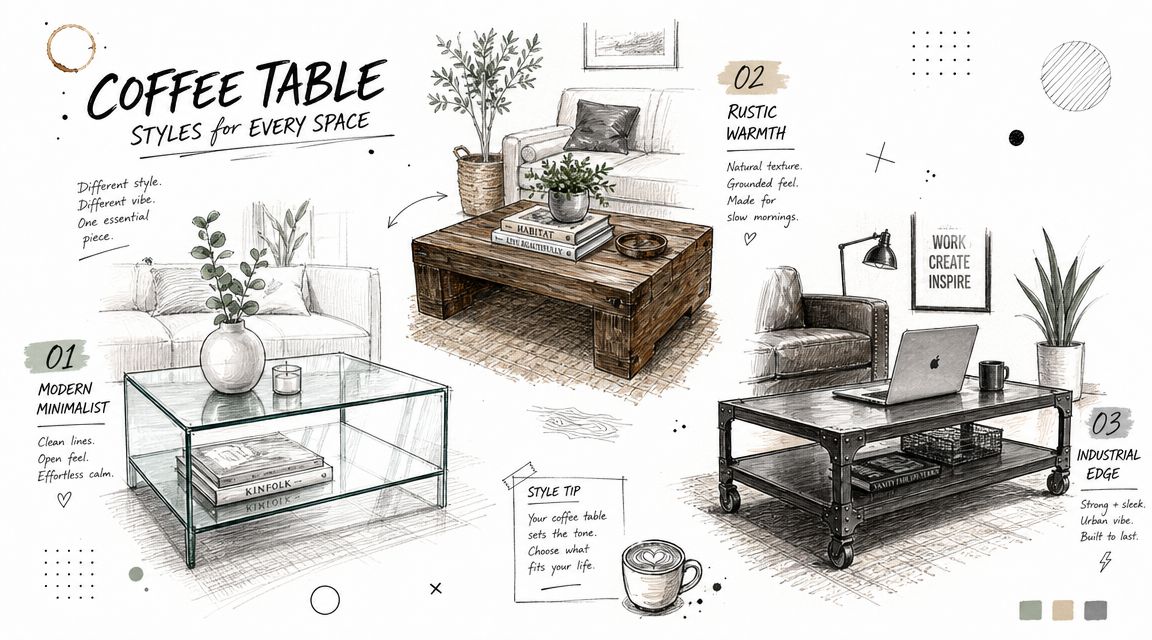
A rectangular coffee table usually fits a standard sofa well because it gives you a long, usable surface and a clear visual line in the room. A round or oval table often works better in family rooms where people cut through from one side to the other, especially in open layouts common in this region. Guidance from The Spruce's coffee table shape overview also notes that round forms can soften circulation in tighter or more active spaces.
Here is the practical trade-off:
- Rectangular tables give you more surface area for trays, remotes, books, and everyday clutter.
- Round tables are easier on shins and knees when children are moving fast.
- Oval tables keep a softer edge while still offering a longer top.
- Square tables suit larger seating groups, but they can feel bulky in narrower ranch-style living rooms.
In many West Texas and Southeastern New Mexico homes, living rooms are generous in width but still function as pass-through spaces. In that setup, a table with softened corners often feels easier to live with than one with four sharp points aimed into the walkway.
Material affects cleanup, wear, and how the table ages
Material choice matters most after the first week.
Wood is often the safest long-term pick because it wears in a forgiving way. A few small scratches on stained wood usually read as normal life. On glass, the same daily use shows up as fingerprints, dust, and streaks by the end of the day. In our dry climate, that difference becomes obvious fast.
Sun exposure matters too. Strong natural light can fade some finishes over time, especially on darker stains or veneers placed near large windows. Solid wood with a durable finish usually holds up better than delicate surfaces made mainly for appearance. Readers comparing species, grain patterns, and durability can explore this guide to the best wood for tables.
A simple comparison helps:
| Material | Often works well for | Main consideration in local homes |
|---|---|---|
| Solid wood | Family rooms, everyday use, traditional and transitional spaces | Sun can lighten some finishes over time, but wear is usually repairable |
| Glass | Smaller rooms, lighter visual feel | Dust, fingerprints, and smudges show quickly |
| Metal | Clean-lined modern or industrial rooms | Feels harder and cooler, which may not suit a relaxed family room |
| Stone or stone-look tops | Grounded rooms, heavier architecture, statement pieces | Weight and visual mass can overwhelm smaller seating areas |
One-sentence rule of thumb. The busier the household, the more forgiving the material should be.
Style should follow the way your home actually works
Local architecture often mixes sturdy bones with casual living. You may have tall ceilings, a wide sofa, textured flooring, or a room that opens straight into dining or kitchen space. The coffee table should support that architecture, not fight it.
A rustic or farmhouse-leaning room usually looks best with visible grain, a thicker top, or a base that has some visual weight. A cleaner contemporary room can handle slimmer legs, smoother finishes, or a mixed-material design. If your household uses the coffee table for snacks, board games, homework, and feet-up movie nights, a distressed finish or natural wood pattern is often easier to live with than a glossy surface that shows every mark.
Good style choices are rarely mysterious. They come from matching the table to the sunlight, the traffic, the cleaning routine, and the people in the room every day.
Beyond the Surface Smart Coffee Table Functions
Some coffee tables only need to hold a drink and a lamp remote. Others need to work much harder. In many homes, the living room is also a workspace, a playroom, a guest zone, or the most-used eating spot in the house.
That changes the definition of “best.”
For living rooms that do double duty
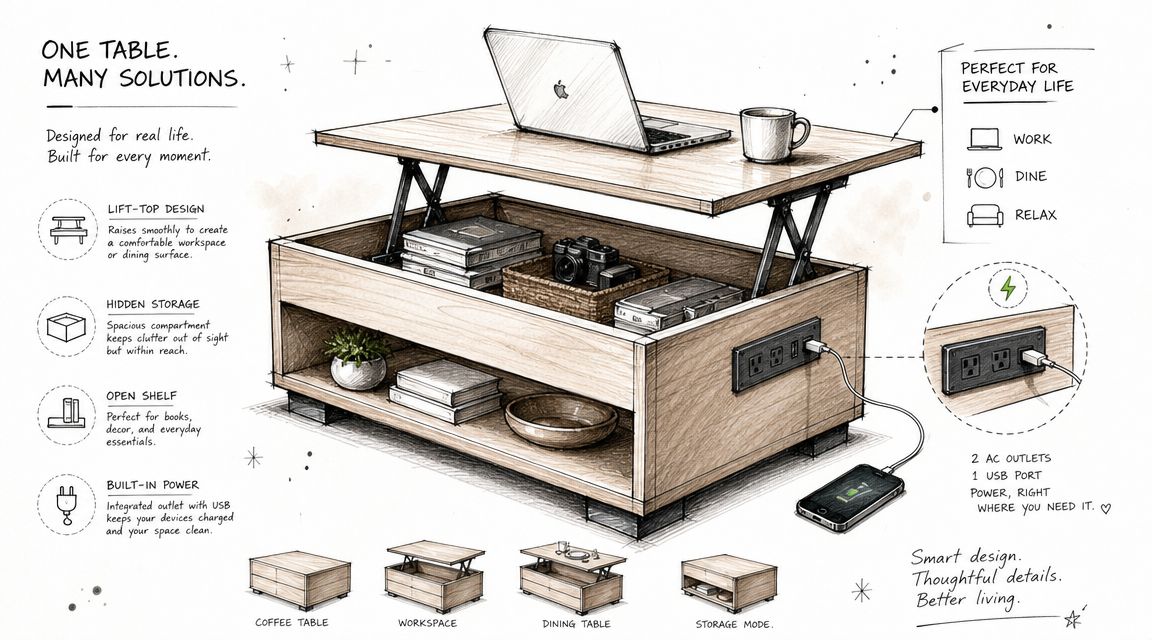
Industry content repeatedly recommends nesting tables, lift-top designs, and clear acrylic tables for small spaces because they preserve visual openness while adding function, as explained in this small-space coffee table guide.
That recommendation makes sense because multipurpose rooms need flexibility more than they need formality.
A few common scenarios show how this plays out:
- Laptop use on the sofa: A lift-top table can bring the surface closer for working or casual meals.
- Frequent entertaining: Nesting tables can spread out when guests arrive and tuck back in later.
- Tighter circulation paths: Rounded corners help the room feel easier to move through.
- Visually crowded small rooms: A lighter-looking table can reduce heaviness in the center of the space.
What function-first shopping looks like
Function-first shopping asks a different set of questions than style-first shopping.
Does the household need hidden storage for remotes, chargers, and coasters?
Does the room need a surface that can shift around as needed?
Does the table need to move easily for game nights or floor play?
Those answers often matter more than whether a table reads traditional or modern.
The smartest coffee table choice is often the one that solves a daily annoyance.
A family that constantly clears clutter from the tabletop may benefit from drawers or a lower shelf. A small apartment may get more from nesting pieces than from one large fixed table. A room that doubles as a homework station may need a lift-top more than a decorative silhouette.
The best coffee tables earn their place by doing useful work. Good looks matter. Useful design matters every day.
Styling Your Coffee Table Like a Designer
A well-styled coffee table should make daily life easier, not create one more surface everyone is afraid to touch. In homes around West Texas and Southeastern New Mexico, that matters. The living room often has to handle everything from after-school snacks to weekend visitors to a quick place to set down iced tea after coming in from the dust and wind.
That is why good styling starts with use, then adds beauty on top. A coffee table works like a kitchen counter in miniature. If every inch is covered, the room feels less usable. If the surface is completely bare, the table can look forgotten.
Start with one clear purpose
Before adding a single object, decide what the table needs to do most days. Hold drinks during movie night? Keep remotes contained? Add softness to a room with a lot of leather, wood, or stone? That answer guides the arrangement better than any style trend.
In many local homes, the best styling leaves open space. A large sectional in an open-concept room can handle a longer table with a few grouped items and still feel balanced. A smaller living room, or one with kids doing homework and families playing games, usually benefits from fewer objects and one contained arrangement.
A simple formula for rectangular tables
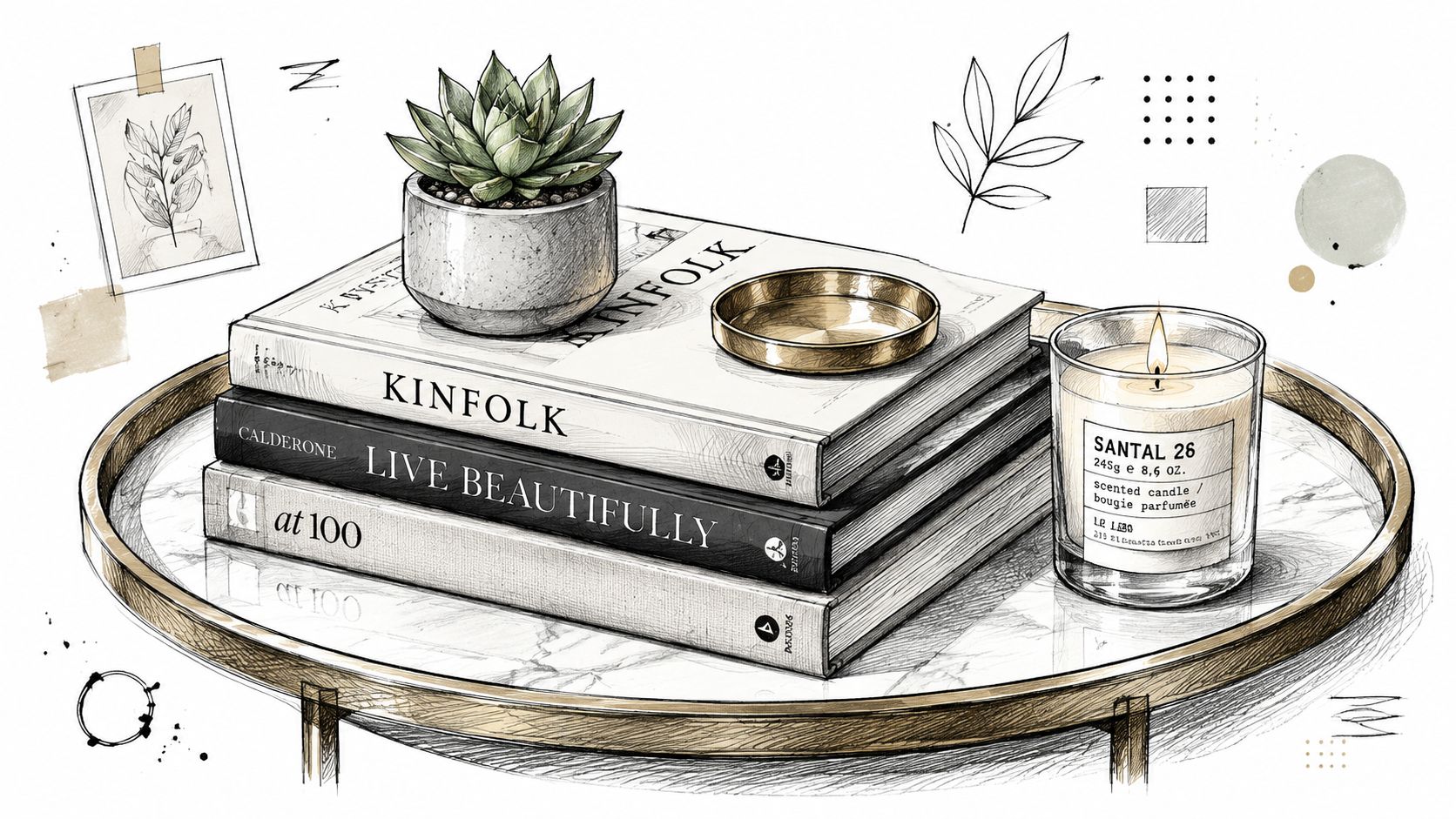
Rectangular tables usually look best when the decor is spread with intention instead of packed into the middle. Dividing the surface into loose zones helps the table feel finished while keeping it useful.
Try a mix like this:
- Books or a low stack: These create a visual base and give smaller items a place to sit.
- A tray: This keeps coasters, remotes, or a candle from drifting across the table.
- One natural element: A small plant, clipped branches, or a simple vase softens straight lines and hard materials.
- One taller accent: A candleholder or vase adds height so the arrangement does not look flat.
For readers who enjoy greenery, these creative indoor plant arrangements offer practical ways to add life without overwhelming the tabletop.
How to style round and square tables
Round and square tables usually feel calmer with one anchored grouping near the center. Spreading decor to the edges can make the shape feel busy, especially in family rooms where people walk around the table from several directions.
A tray or shallow bowl often helps because it gives the eye one place to land first. Then add one or two pieces with different heights. Keep the tallest item low enough that people can still talk across the table comfortably.
Design guides from furniture and layout experts commonly recommend a coffee table that relates closely to sofa seat height and leaves enough reach and walking room to feel comfortable in everyday use, as explained in this coffee table decorating guide with practical styling examples. Those proportions affect styling more than people expect. A low, wide table can handle a broader arrangement, while a smaller table usually looks better with fewer pieces.
Two easy layout examples
Rectangular table layout
| Zone | Item | Why it works |
|---|---|---|
| One end | Low stack of books | Adds weight without blocking sightlines |
| Center | Tray with coasters or candle | Keeps everyday items organized |
| Opposite end | Small plant or sculptural object | Brings shape and softness |
Round or square table layout
| Area | Item | Why it works |
|---|---|---|
| Center base | Tray or bowl | Creates a visual anchor |
| Layer one | Candle or object | Adds height |
| Layer two | Small natural accent | Keeps the arrangement warm |
If you want to see how these ideas translate into real pieces, you can browse a curated selection of coffee tables. The right styling should suit the way your household lives, not just how a room looks in a photo.
Your Partner in Home Design
Choosing a coffee table sounds simple until scale, finishes, floor plans, and family habits all collide. That's usually the point where people either rush a decision or keep postponing one.
A better approach is to treat the table as part of the whole room. The sofa depth matters. The rug matters. The walking path matters. The way the household uses the room matters most.
Local homes need practical choices
Homes in West Texas and Southeastern New Mexico often ask for practical judgment, not generic design advice. Open living areas can swallow a small table. Compact layouts need better circulation. Family rooms need surfaces that can handle daily wear without becoming fussy.
That's where local context helps. A piece that works in a formal inspiration photo may not suit a home where people gather after ballgames, host relatives for the weekend, or need the living room to work hard every day.
Good design support doesn't make the decision for the homeowner. It helps narrow the options so the choice feels clear.
Helpful tools for the decision
Miller Waldrop Furniture & Decor is a family-owned retailer that has served Lubbock, Hobbs, and Ruidoso Downs for over 70 years, with curated showrooms and design help for shoppers who want to compare pieces in person. The store carries brands such as Flexsteel, La-Z-Boy, Hooker, and Ashley, and it offers custom-order options for fabrics, finishes, and configurations when a standard floor piece isn't the right fit.
That kind of support is useful when the decision involves tradeoffs:
- Scale versus storage: A larger table may suit the room visually, but a slimmer profile may keep the walkway more comfortable.
- Durability versus delicacy: A finish that hides everyday wear can be the smarter long-term choice for busy homes.
- Ready-made versus custom: Sometimes the right shape exists, but the finish or scale needs adjustment.
Non-commissioned design staff, curated selections, and custom options don't replace a homeowner's taste. They give that homeowner better tools to act on it.
Create a Living Room You Love
The best coffee tables aren't chosen by accident. They're chosen by paying attention to how a room feels, how people move through it, and what the household needs every day.
That decision gets easier when it follows a simple framework.
The decision becomes simpler with a framework
Three ideas carry most of the weight:
- Measure well: A good fit makes the table easier to use and easier to live with.
- Match the lifestyle: Shape, corners, and material should reflect real traffic and real wear.
- Choose function on purpose: Storage, lift-top surfaces, or nesting pieces can solve problems before they start.
A stylish table that frustrates daily life won't feel like the right purchase for long. A practical table that also fits the room's character tends to stay satisfying for years.
Small steps lead to a room that feels finished
For anyone still refining the overall mood of the room, these expert tips for a cozy home can help tie together texture, lighting, and comfort after the larger furniture pieces are in place.
A coffee table may not be the largest item in the room, but it often finishes the space in a way nothing else can. It gives the seating area purpose. It supports daily routines. It helps the room feel settled.
That's good news for shoppers. A confident decision doesn't require guessing. It requires a tape measure, a clear look at household habits, and a willingness to choose function before impulse.
Bring room measurements, photos, and a few style ideas to Miller Waldrop Furniture & Decor to compare coffee table options in person, explore custom possibilities, or get help from the design team in Lubbock, Hobbs, or Ruidoso Downs. A thoughtful table choice can anchor the whole living room, and the right guidance can make that decision much easier.