

Box Springs & Foundations: A Guide to the Perfect Base

A lot of mattress shoppers reach the finish line and think the hard part is over. They've compared comfort levels, tested firmness, and finally chosen the mattress that feels right. Then the old base gets pulled out from under the bed, and a new question shows up fast: should that mattress sit on a box spring or a foundation?
That choice matters more than generally expected. The base under the mattress affects feel, support, height, durability, and in some cases the mattress warranty itself. A bed can look perfectly fine from the outside while the wrong support underneath slowly creates sagging, uneven wear, and frustration that feels like a mattress problem when it's really a base problem.
A good way to think about it is simple. The mattress is the comfort system people notice first. The base is the structure that helps that comfort last. When those two pieces match, the bed performs the way it was built to perform. When they don't, the result can be an expensive mistake.
Table of Contents
- Your Perfect Mattress Deserves the Right Foundation
- The Anatomy of Support Box Springs vs Foundations
- Box Spring vs Foundation A Side-by-Side Comparison
- How to Match Your Mattress to the Perfect Base
- A Buyer's Guide to Selecting Your Foundation
- Let Our Experts Help You Build the Perfect Bed
Your Perfect Mattress Deserves the Right Foundation
A customer buys a beautiful new hybrid mattress, brings it home, and sets it on the old box spring already in the bedroom. A few months later, the mattress starts to feel uneven. The center softens. The edges feel less steady. Then comes the frustrating part. The mattress may not be covered if the support underneath never met the warranty requirements in the first place.
That is why the base under a mattress deserves more attention than many shoppers give it.
A mattress and its base work like a team. If the mattress is designed for a firm, even surface but rests on a support system that bends or flexes too much, the comfort layers and core can compress in the wrong places night after night. The result is not just a different feel. It can shorten the life of the mattress and turn a smart purchase into an expensive mistake.
Many people use the term “box spring” to mean any base under the bed. In a showroom, that small language mix-up can lead to a costly choice. A traditional box spring and a foundation may look similar from the outside, but they support a mattress in very different ways.
Here is the simple rule to keep in mind:
The base does more than raise the mattress off the frame. It helps preserve the shape, support, and comfort the mattress was built to provide.
This matters even more with modern mattresses. Foam and hybrid models are usually engineered to rest on a flatter, more rigid surface. Put one on an older, springy base, and the mattress can bend like a bookshelf placed on a shaky ladder instead of a level floor. It may still sit there. It just will not perform the way it should.
Shoppers who are unsure whether a traditional box spring still has a place in their setup can get more context in this guide on why a bed may still need a box spring.
Three questions clear up most of the confusion:
- What type of mattress are you buying? An older innerspring mattress may pair well with different support than a foam or hybrid model.
- How much flex is under the mattress? Some beds need a rigid surface to keep their comfort and support layers working correctly.
- What does the warranty require? That line in the paperwork can determine whether future damage is covered or rejected.
A mattress can feel wonderful in the store and disappointing at home if the support underneath is wrong. The goal is not just a complete-looking bed. The goal is a sleep system that protects your comfort and your investment.
The Anatomy of Support Box Springs vs Foundations
What matters most is hidden inside the base.
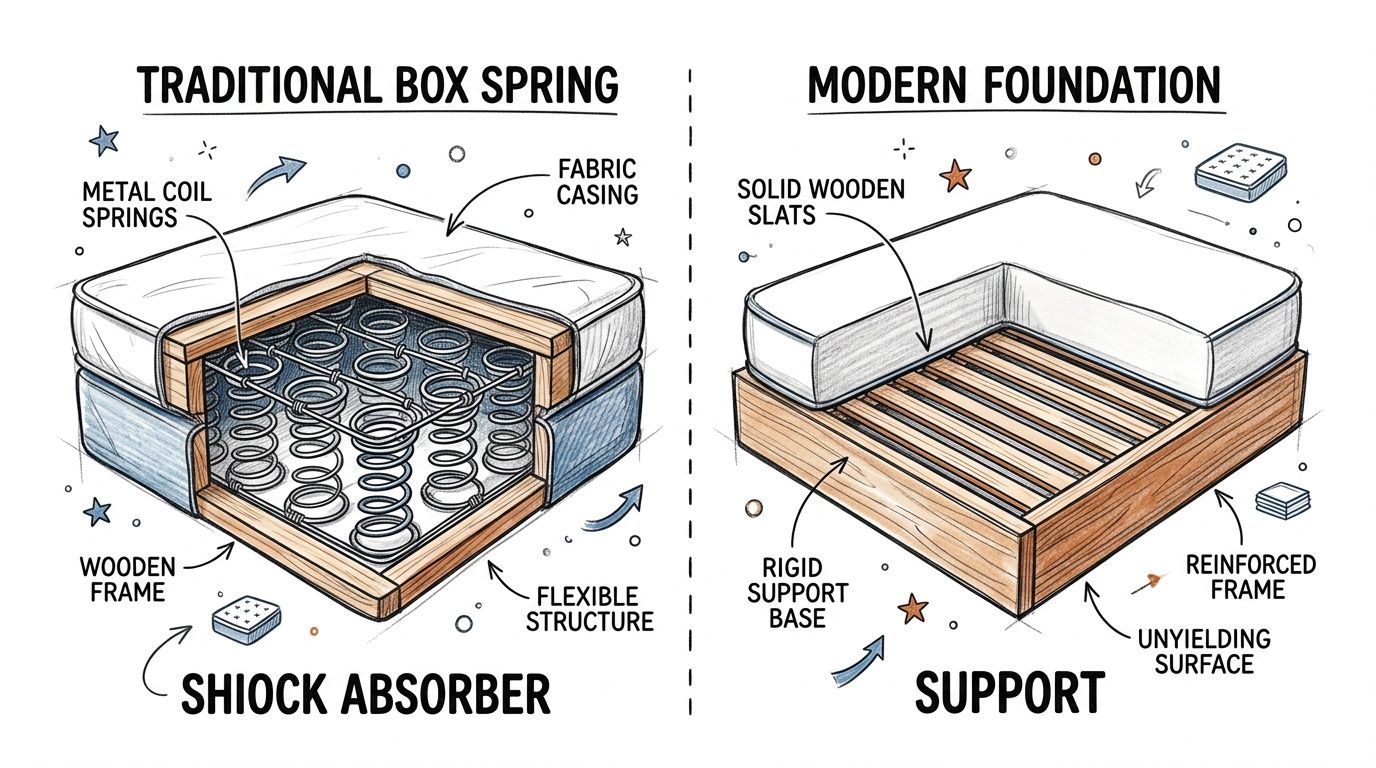
A box spring and a foundation can look similar from across the room. Under the fabric, they are built for two very different jobs. That difference affects comfort, mattress wear, and in some cases whether a warranty claim is approved or denied.
What a box spring is built to do
A traditional box spring contains steel coils inside a framed base. Those coils compress when you lie down and push back as weight shifts. The result is a little bounce and a little flex under the mattress.
That design matched older innerspring beds well because both pieces were made to respond together. The mattress had springs. The base had springs. Used as a pair, they created the feel many shoppers still recognize from older bedroom sets.
For shoppers sorting out whether that older setup still makes sense, this guide on why a bed may still need a box spring explains where a true box spring still fits.
A helpful way to picture it is this: a box spring adds motion under the mattress. Sometimes that motion is useful. Sometimes it changes the way the mattress was meant to feel.
What a foundation is built to do
A foundation uses a rigid wood or metal frame with either a solid top or closely spaced slats. Its purpose is simple. Hold the mattress level and supported from edge to edge.
That steady surface is usually the better match for foam, latex, and hybrid mattresses. These newer beds are built with comfort layers that need even support underneath. If the surface below bends too much, the mattress above can flex in the wrong places, which may lead to sagging, uneven feel, or early wear.
Slat spacing is one of the small details shoppers often miss. At Miller Waldrop, we tell customers to pay close attention here because wide gaps can let parts of the mattress sink between slats. Over time, that extra strain can affect how the bed feels and how well it holds its shape.
A simple comparison helps. A foundation acts more like a flat, steady floor. A box spring acts more like a surface with built-in give. If you put a modern foam or hybrid mattress on a base that keeps flexing underneath it, the mattress has to absorb movement it was not designed to handle.
- Box spring construction: Frame and coils. Built to flex and rebound.
- Foundation construction: Frame and rigid top support. Built to stay even.
- Why shoppers should care: The wrong base can change comfort, increase wear, and create warranty problems if the mattress manufacturer requires firmer support.
A mattress can only stay as even as the surface holding it up.
That is the financial risk many guides skip. A mattress can look perfectly fine on day one, then slowly develop soft spots or sagging because the support underneath was incompatible. If the manufacturer finds that the base did not meet its support requirements, the problem may not be covered.
Box Spring vs Foundation A Side-by-Side Comparison
A quick showroom test makes the difference clear. Press down on a mattress sitting on a box spring, and you may feel the base respond with a little bounce. Press on that same mattress over a foundation, and the support usually feels flatter and more controlled.
That difference matters because the base is not just holding the mattress up. It is changing how the mattress works night after night. A traditional box spring adds flex. A foundation acts more like a steady platform.
How they feel under a mattress
A box spring has built-in movement from its coil system. With the right traditional innerspring mattress, that extra responsiveness can feel familiar and comfortable. With many modern mattresses, that same movement can become a problem because the mattress is already engineered to provide its own pressure relief and support.
A foundation stays more neutral. It supports the mattress without adding much motion of its own. For foam, latex, and many hybrids, that is usually the safer setup because it helps the mattress keep the feel the manufacturer intended.
Durability is part of the comparison too. In our experience at Miller Waldrop, box springs often show wear sooner because their coils and moving parts can soften unevenly over time. Foundations usually hold their shape longer because their job is simpler. Provide a flat, rigid surface with fewer parts that can loosen, sag, or make noise.
That aging pattern shows up in ways shoppers notice:
- Box springs can soften unevenly: One area may start to feel less supportive than another.
- Foundations tend to stay more consistent: Their support surface changes less over time.
- Older box springs are more likely to creak: More moving parts usually means more chances for noise.
Box Spring vs. Foundation At a Glance
| Feature | Box Spring | Foundation |
|---|---|---|
| Core design | Frame with coils that compress and rebound | Rigid frame with solid top or closely spaced slats |
| Support style | Flexible, springy | Firm, flat, stable |
| Best match | Traditional innerspring mattresses | Foam, latex, and hybrid mattresses |
| Feel | More bounce and motion transfer | More even, grounded support |
| Lifespan | Often wears out sooner because coils can lose tension | Often lasts longer with fewer moving parts |
| Wear pattern | May soften unevenly | Usually stays more uniform |
| Noise risk | Higher as components age | Lower with fixed construction |
| Typical shopper profile | Someone keeping a classic innerspring setup | Someone buying a modern mattress or prioritizing stable support |
The cost difference is not always the actual risk. Replacement cost is.
If a modern mattress sits on a base that flexes too much, the comfort layers above it may compress in ways they were not built to handle. That can lead to early sagging, a change in feel, or visible wear that looks like a mattress defect even though the base caused the problem. Some manufacturers may reject a claim if the mattress was used on an unsupported surface, which is why shoppers comparing flat support systems should also review a mattress guide for adjustable bed compatibility if they want a more flexible setup.
A simple way to remember it is this: a box spring joins the performance of the bed, while a foundation supports the performance the mattress already has. For many shoppers, especially anyone buying foam or hybrid, the steadier option protects both comfort and the money spent on the mattress.
How to Match Your Mattress to the Perfect Base
You buy a new mattress, bring it home, and set it on the older base you already have. A few months later, the mattress feels uneven, the comfort has changed, and a warranty claim gets harder to make because the support underneath was never a good match. That is the expensive mistake many shoppers do not see coming.
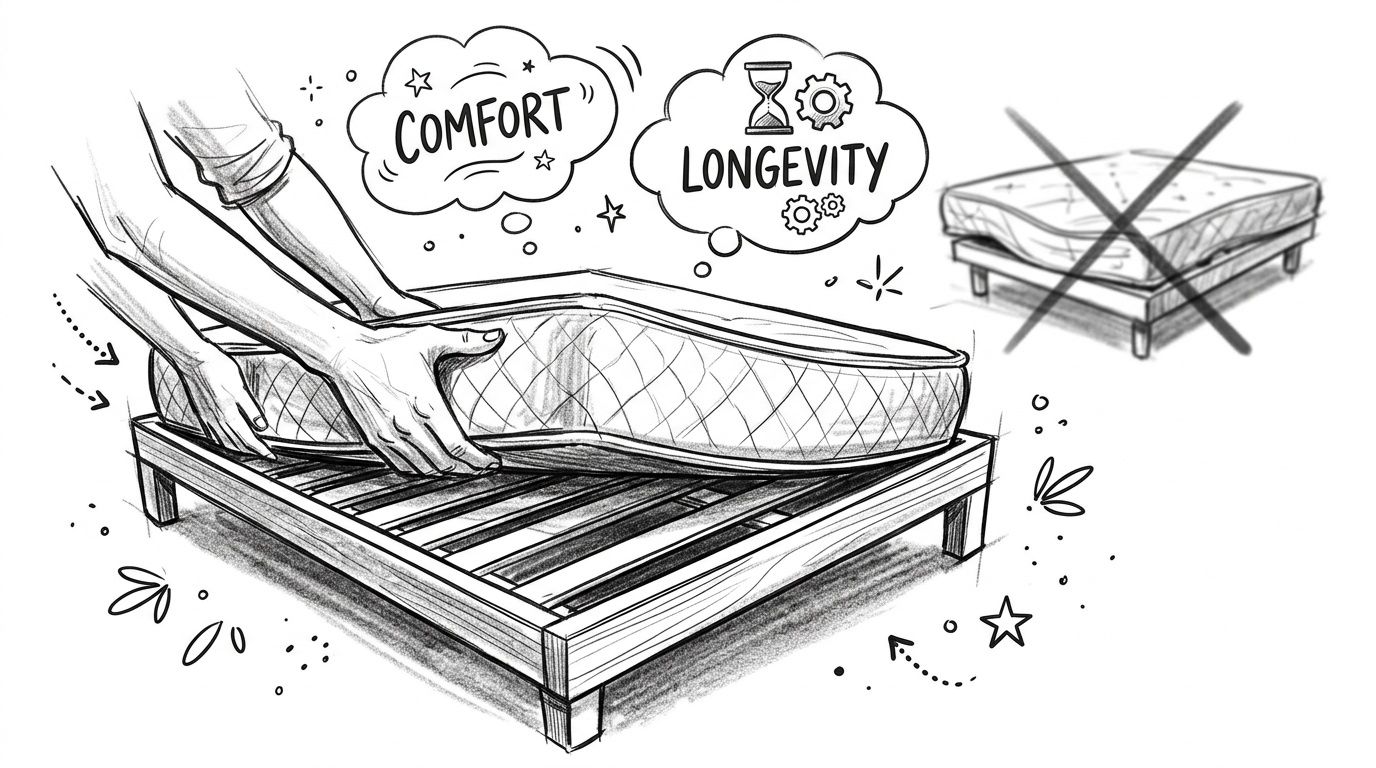
A mattress and its base work like the tires and suspension on a car. If one part is wrong for the other, the whole ride suffers. In a bed, that mismatch can change comfort, wear down materials faster, and create support issues that look like a mattress defect even though the problem started below it.
The one match that still makes sense
A traditional innerspring mattress is still the clearest candidate for a traditional box spring. Both pieces were built around coil movement, so they tend to work in the same direction. The box spring gives a little, the mattress gives a little, and the bed keeps some of that classic bounce many sleepers expect.
That said, an innerspring mattress does not automatically need a box spring. Some newer innersprings are designed for rigid support instead. The manufacturer's support requirements matter more than the label on the mattress.
Shoppers who want a base that bends and changes position should also review this guide to mattresses that work with adjustable beds, since a moving base follows a very different set of support rules than a box spring or fixed foundation.
Why modern mattresses usually need rigid support
Memory foam, latex, and most hybrid mattresses usually perform best on a firm, even surface. The reason is simple. These mattresses are built with layers that are meant to compress in a controlled way from top to bottom. If the base underneath flexes too much, those layers can bend or sink unevenly.
A box spring under a foam or hybrid mattress can act like a shaky floor under a heavy bookshelf. The bookshelf may still stand for a while, but the weight is no longer being held evenly. Over time, the pressure points shift, the materials work harder than they should, and the mattress can start showing early wear.
That is where the financial risk becomes real.
A base mismatch can lead to sagging, soft spots, or body impressions that make a newer mattress feel older than it is. It can also create warranty trouble, because many mattress manufacturers require specific support conditions. If the mattress sits on a surface that does not meet those conditions, a claim may be denied even when the wear looks serious.
The wrong base can make a good mattress seem defective long before the mattress itself has actually failed.
A simple way to match the two is to start with how the mattress is built:
- Traditional innerspring mattress: A box spring may be appropriate if the manufacturer approves that setup.
- Memory foam mattress: A rigid foundation is usually the safer choice.
- Hybrid mattress: A stable foundation with even support is typically the better fit.
- Latex mattress: A strong, closely supportive foundation is usually recommended because latex is heavy and needs consistent support.
Adjustable bases belong in this conversation too. They are support systems, not just convenience features. Many modern foam and hybrid mattresses pair well with them, as long as the mattress is designed to flex without damage.
The main question is not which base is cheaper. The better question is which base protects the mattress you are buying. Reusing an older box spring under a new hybrid can save money on day one and cost much more later if comfort changes early or warranty coverage becomes a problem.
The best match is the one that supports the mattress the way its maker intended. That is how you protect comfort, lifespan, and your investment at the same time.
A Buyer's Guide to Selecting Your Foundation
A foundation choice can look simple in the showroom. Then six months later, the mattress starts feeling uneven, the center dips, and the warranty claim turns into a frustrating surprise. The base under the mattress often decides whether your purchase stays protected or becomes an expensive mistake.
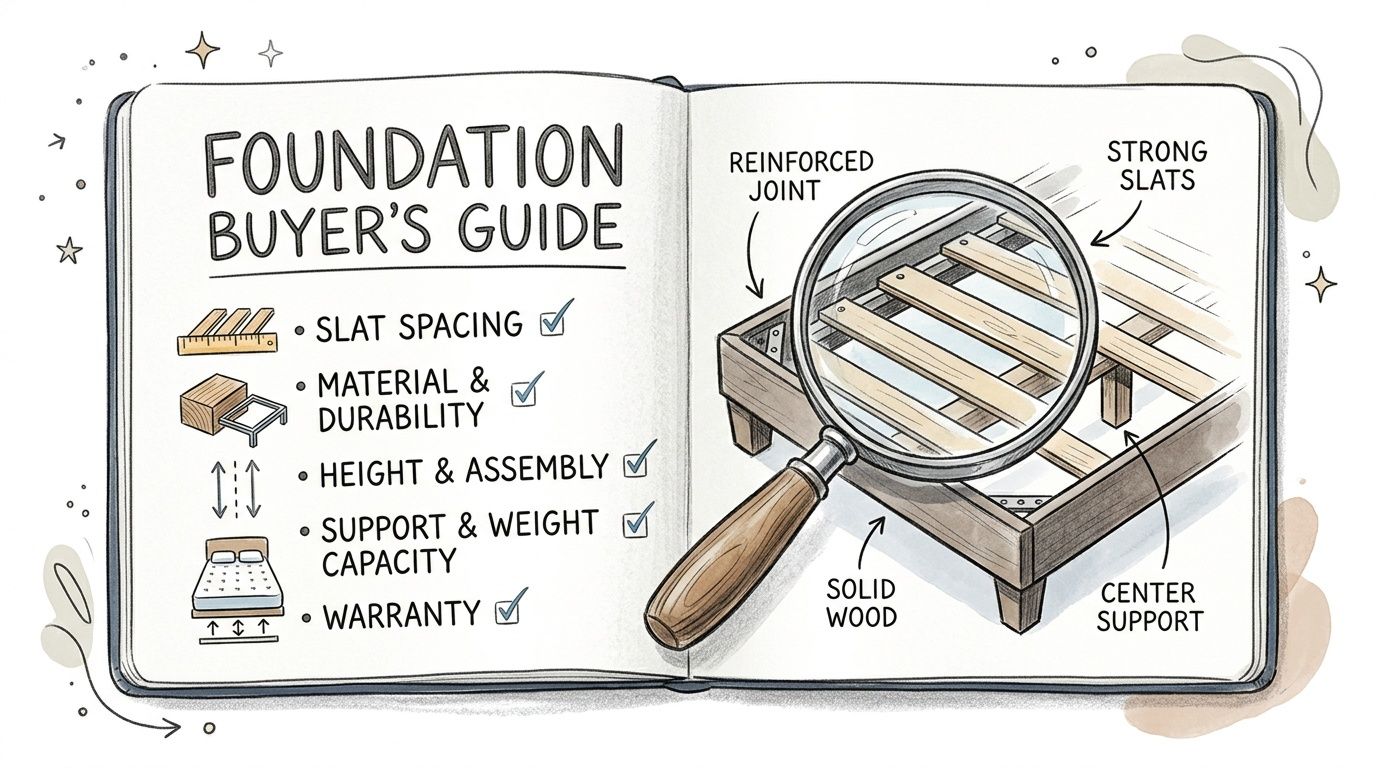
The details that matter most
Start with the warranty paperwork before you focus on color, height, or price. Many shoppers treat it like a receipt. It works more like an instruction manual. Mattress makers often spell out the support surface they expect, including whether the base must be solid or slatted, how close the slats need to be, and whether an older box spring can be reused. If the base falls outside those rules, the mattress can wear in ways that look like product failure even when the problem started underneath.
That is the financial risk many buying guides skip. A mismatched base does not just change comfort. It can let foam sag between wide slats, cause a hybrid to flex unevenly, or let the sleep surface bow in the middle night after night. Over time, that strain can shorten the life of the mattress and put warranty coverage at risk.
Materials come next. Wood and metal can both work well if the structure stays rigid and evenly supportive. A good foundation acts like a level floor under your mattress. If that floor bends, creaks, or has weak spots, the mattress above it has to absorb stress it was never meant to handle.
Price still matters, of course. In our industry experience, queen foundations and box springs often fall into different price bands based on construction, profile, and support style. Traditional box springs usually sit at the lower end. Rigid foundations often cost more because they are built to provide flatter, more consistent support for newer mattress designs. The smarter comparison is cost versus risk. Saving money on the wrong base can lead to comfort problems, premature wear, or a denied claim later.
A real product example helps make that more concrete. A Queen Low Profile Boxspring gives you a clear reference for bed height, room appearance, and whether a lower profile fits the mattress and frame you have in mind.
A simple shopping checklist
Use this quick checklist before you buy:
- Confirm the exact mattress type. Foam, hybrid, latex, and traditional innerspring models can require different support.
- Read the support rules in the warranty. Look for slat spacing, center support, and any note about approved base types.
- Check how the surface carries weight. The support should stay even from edge to edge, not just look sturdy from a distance.
- Measure the full bed height. Foundation height changes both the look of the bed and how easy it is to get in and out.
- Match the base to the load. Heavier mattresses and two-sleeper setups need stronger, steadier support.
One simple question helps cut through the confusion: will this base support the mattress evenly every night, the way the manufacturer expects?
That question protects more than comfort. It protects the money you are putting into the mattress above it.
Let Our Experts Help You Build the Perfect Bed
The best bed setups happen when the mattress, base, frame, and sleeper needs all line up. That sounds simple on paper, but it can get complicated fast in a showroom. A mattress may feel great for five minutes. The right support choice is what helps that comfort stay dependable months later.

Why expert guidance saves money
The most expensive mistake usually isn't buying a better base. It's buying the wrong one and having to solve the problem twice.
A shopper may walk in focused on mattress feel alone, but the full bed system deserves equal attention. That includes support style, bed height, ease of getting in and out, and whether the setup works with the mattress warranty. This is especially important as the market keeps moving toward newer sleep systems. The adjustable bed base market is projected to exceed $6 billion by 2031, which points to a continued shift toward rigid low-profile foundations and adjustable options.
That trend doesn't mean every shopper needs an adjustable base. It does show how strongly the industry has moved away from old assumptions about every bed needing a traditional box spring.
Tools that help shoppers choose with confidence
Good guidance turns a confusing category into a clear decision. A knowledgeable sleep specialist can help a shopper test comfort, identify the mattress type, verify support requirements, and choose the right partner underneath it.
The strongest approach combines a few practical tools:
- Pressure-point matching: Helps connect body type and sleep position to the right mattress feel.
- Base compatibility review: Confirms whether the mattress belongs on a box spring, foundation, or adjustable base.
- Setup planning: Makes sure bed height, frame style, and support system all work together.
The goal is confidence. Not guesswork. Not “good enough.” Just a bed that performs the way it should from the floor up.
For shoppers furnishing a primary bedroom, guest room, or first apartment, the support system under the mattress is one of the easiest places to make a smart decision that pays off every night. The right tools aren't there to complicate the purchase. They're there to help the shopper win the day with better sleep, fewer problems, and a bed that works as a complete system.
Miller Waldrop Furniture & Decor helps shoppers build that full sleep system with confidence. From trusted mattress brands to supportive bases, adjustable options, and expert guidance in the showroom, the team gives customers the tools they need to choose the right fit for their body, mattress, and budget. Explore sleep solutions at Miller Waldrop Furniture & Decor, or visit a showroom in Lubbock, Hobbs, or Ruidoso Downs for personalized help selecting the right mattress and base for long-term comfort.