


Home office furniture layout ideas to boost productivity and style


Creating the perfect home office layout is about so much more than just pushing a desk against a wall. It’s about designing a space that actively supports your focus and workflow. The best home office furniture layout ideas are a thoughtful blend of ergonomics, easy movement, and your personal work style, all coming together to create an environment where you can truly thrive. This guide provides the blueprint for your daily success.
Your Blueprint for a Productive Home Office Starts Here
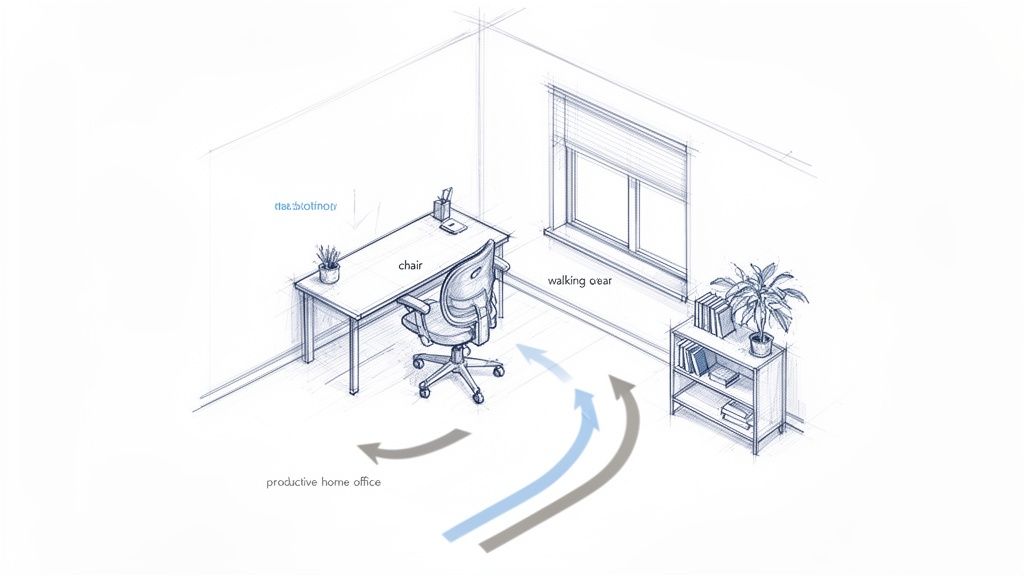
The move to remote and hybrid work is clearly here to stay. It’s fundamentally changed how we approach our homes, and people are now seriously investing in permanent, high-quality workspaces that feel both professional and personal.
The numbers back this up. The home office furniture market was valued at a staggering USD 29.3 billion in 2024 and is expected to climb to USD 49.1 billion by 2033. This boom is no surprise when you consider that nearly 58% of U.S. professionals now prefer working from home at least three days a week. You can dig into more of this data on imarcgroup.com.
This guide is your design partner. We’re here to give you the practical knowledge and expert insights you need to build a workspace where you can win the day, every day.
Why Your Layout Matters More Than You Think
A well-planned layout is the unsung hero of a productive home office. It’s the foundation that supports your comfort, concentration, and overall success. The right arrangement can make a tiny nook feel surprisingly spacious, while a poor one can make even a large room feel cramped and chaotic.
Here’s how a smart layout empowers you:
- Minimizes Distractions: Simply positioning your desk away from the main household traffic patterns creates a powerful psychological boundary. It signals to you (and others) that this is a zone for focus.
- Maximizes Efficiency: When your printer, files, and essential supplies are within arm's reach, you create what we designers call a "work triangle." This small detail drastically cuts down on wasted time and motion throughout your day.
- Improves Well-being: Thoughtful placement that takes advantage of natural light and proper ergonomics does wonders. It can reduce eye strain, prevent back pain, and genuinely boost your mood.
Your home office shouldn't just be a place where you work; it should be a space that works for you. The arrangement of your furniture directly impacts your ability to stay on task and feel good while doing it.
Moving beyond just "finding a spot for a desk" means getting to know the core principles of space planning. For a deeper dive into pulling all the elements together, you can find more inspiration in our guide on creating an inspiring home office.
Ready to get started? Let's build the productive and beautiful workspace you deserve.
Choosing the Right Furniture for Your Layout
Once you’ve settled on a layout, it’s time to select your tools. The right pieces are what turn a floor plan into a functional, productive workspace. This is where you get to choose the furniture that will help you do your best work, making sure every item not only fits the space but actually makes your day-to-day tasks easier.
Think of your desk as the heart of your home office. For a dedicated room with plenty of square footage, a classic executive desk provides a commanding presence and all the surface area you could need. If you’re working with a small nook or a corner of the living room, a more streamlined writing desk gets the job done without dominating the space.
Finding Your Perfect Desk and Chair
The desk is definitely the anchor piece. It's no surprise that desks and tables make up the largest part of the home office furniture market, holding a 33.74% market share. We're seeing a big shift toward compact, space-saving designs and clever, multi-use pieces that do more in less space. You can dig deeper into these trends over at mordorintelligence.com.
Next up is arguably the most important piece for your health and comfort: your chair. You're going to be spending a lot of time in it, so an ergonomic chair isn't a splurge—it's a necessary tool for staying comfortable and focused.
Here’s how you can choose the perfect chair for your needs:
- Adjustable Everything: A great chair will let you tweak the height, backrest, and armrests. This is crucial for getting a custom fit that keeps your feet flat on the floor and your arms resting at a natural angle.
- Good Lumbar Support: Look for a backrest that follows the natural curve of your lower spine. This simple feature is your best defense against the nagging back pain that can creep in after a long day.
- The Right Material: Do you run hot? A breathable mesh back might be perfect for you. Prefer something more traditional and plush? Padded fabric or leather can provide that extra comfort. It’s all about what feels best to you.
Smart Storage for a Clutter-Free Mind
A messy desk can easily lead to a scattered mind. That’s why smart storage is so critical for staying efficient and focused, no matter what your home office layout looks like. These are the supporting pieces that keep your main workspace organized and ready for anything.
An organized workspace is a secret weapon for productivity. When everything has a designated home, you spend less time searching and more time achieving your goals.
Don’t just default to a clunky filing cabinet. You can find beautiful storage that proves you don’t have to choose between style and function. For example, a tall, narrow bookcase can make a small room feel more spacious by drawing the eye upward, while a handsome credenza can keep printers, paper, and other supplies neatly tucked away.
If you’re looking for more clever ways to work storage into your space, our ultimate guide to multifunctional home office furniture is full of practical ideas.
Now that you know what to look for, you’re ready to start picking out the foundational pieces for your ideal office. Stop by one of our showrooms, and our team can help you find the perfect desk, chair, and storage to bring your plan to life and help you win your workday.
Your Blueprint: Smart Layouts for Any Home Office
Alright, let's get down to the brass tacks. Choosing the right desk and chair is a huge part of the puzzle, but how you arrange everything is what makes a space truly work. It’s the difference between a cluttered corner and a productivity powerhouse.
Every home is different. You might be working with a tiny nook, a spare bedroom, or a generous dedicated office. Each one comes with its own quirks and opportunities. The trick is to have a smart layout strategy that makes the most of what you've got.
This handy guide can help you get started, matching your room's size to the foundational furniture you'll need.
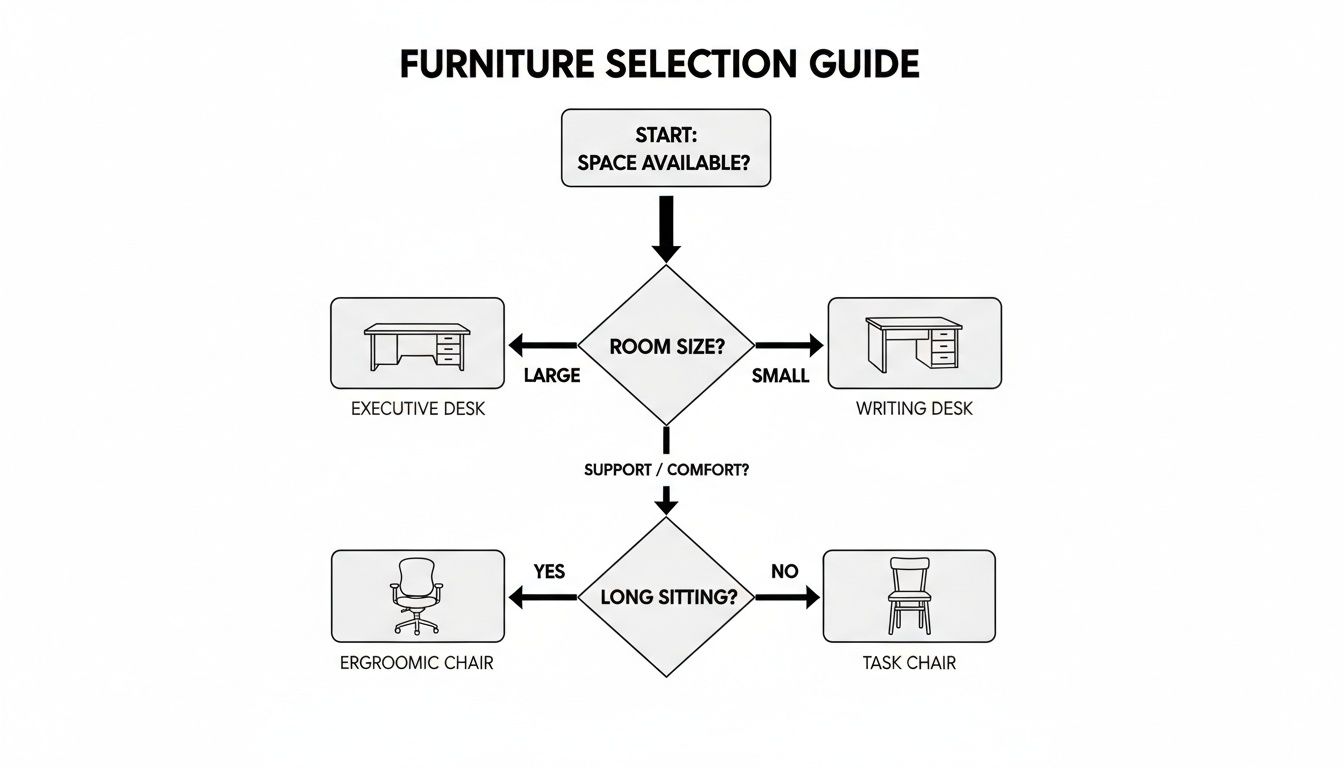
As you can see, the square footage you have to play with is the first major decision point. It's what will guide you toward a compact writing desk or a more commanding executive desk as the centerpiece of your new layout.
The Compact Corner Powerhouse
Don't have a spare room? No problem. Most of us have an underused corner in a living room or bedroom just waiting to be claimed. This is your chance to turn that forgotten spot into a functional work hub.
The key here is to think vertically. Instead of a wide desk that hogs precious floor space, opt for something slim and elegant. A piece like the Hooker Furniture Melange Scalloped Writing Desk gives you a great work surface without the bulk.
From there, look up. Wall-mounted shelves or a tall, narrow bookcase will keep your supplies organized and, more importantly, off your desk.
- Placement Pro-Tip: Face your desk toward the wall. It creates a psychological "work zone" and helps tune out distractions from the rest of the room.
- Traffic Flow: Make sure your chair can slide in and out easily without creating a roadblock. A small but critical detail!
The Small Room Solution
That spare bedroom is a fantastic canvas for a home office, but you have to be clever to keep it from feeling cramped. The goal is to maximize every inch while keeping the space feeling open and airy.
Your best bet is to place your desk against the longest wall. If you have a window with a nice view (and manageable glare), facing it can be incredibly inspiring. This arrangement immediately makes the room feel bigger. An L-shaped desk can be a game-changer here, giving you double the surface area in one consolidated footprint.
Your layout should serve your workflow, not complicate it. In a smaller room, that means keeping the center of the floor clear. It creates a feeling of spaciousness and makes it much easier to move around.
The Shared Space Strategy
When you need to carve out a workspace in a multi-purpose area like a living room or den, creating visual boundaries is everything. This helps you mentally switch "on" when it's time to work and "off" when it's time to relax.
An area rug is your secret weapon. Simply placing your desk and chair on a distinct rug instantly defines the "office." Another great tool is a physical divider, like an open-backed bookshelf. It separates the space without blocking light, maintaining that open feel while creating the necessary division.
Try to position your desk so your back is to the main living area. It's a simple trick that does wonders for focus by putting household activity out of your direct line of sight.
The Dedicated Office Power Layout
Have a whole room to work with? Fantastic. Now you can design a layout truly built for peak performance and comfort—your command center.
Consider placing your desk in the "power position," which means it faces the doorway. From a practical standpoint, this commanding view simply feels better; you’re not caught off guard and can see who's coming and going.
Arrange your other essentials, like a credenza for the printer or a filing cabinet, along the walls to create an efficient work triangle. This ensures everything you need is just a swivel or a step away, keeping your workflow seamless.
We've put together a quick comparison to help you weigh the options for your space.
Layout Comparison for Different Office Spaces
This table offers a side-by-side look at these layout strategies, highlighting the pros and cons to help you select the most suitable option for your home.
| Layout Type | Best For | Pros | Cons |
|---|---|---|---|
| Corner Nook | Small apartments, bedrooms, underutilized corners | Space-efficient, creates a dedicated zone in a shared room | Can feel cramped, limited surface and storage area |
| Small Room | Spare bedrooms, rooms under 120 sq ft | Private and quiet, more room for storage than a nook | Can feel isolating, requires careful furniture selection to avoid clutter |
| Shared Space | Living rooms, open-plan homes | Integrates work into daily life, maintains an open feel | Prone to distractions, requires clear visual boundaries |
| Power Layout | Dedicated office rooms, larger spaces | Maximizes productivity, commanding and comfortable, ample storage | Requires a dedicated room, can be more costly to furnish |
Ultimately, the best layout is the one that fits your space and your work style.
Feeling inspired but a little overwhelmed? You don't have to figure this out on your own. Our design team is here to help you measure your space and create a custom layout that brings your vision to life. Let's work together to build the productive, beautiful home office you deserve.
Getting Ergonomics and Workflow Right
A great layout is just the starting point. The real game-changer is when your workspace actively works for you, supporting your health and keeping you in the zone. This is where ergonomics comes in. It's not just about being comfortable; it's about building a setup that prevents strain, sharpens your focus, and helps you do your best work, day after day. These are the details that separate a good home office from a truly great one.
The first step is finding your personal "ergonomic sweet spot," and it all begins with your posture. Your feet should be flat on the floor, with your knees bent at a comfortable 90-degree angle. This simple alignment is the foundation of a healthy workday.
From there, think about your upper body. Your monitor needs to be directly in front of you, with the top of the screen sitting at or just below your eye level. This simple adjustment keeps you from hunching over or craning your neck—two of the biggest culprits behind back and shoulder pain. If you spend long hours staring at a screen, it's also worth learning how to reduce eye strain effectively.
The Ergonomic Triangle: Your Body, Chair, and Desk
Think of your body, chair, and desk as a single, connected system. For it to work, every part needs to support the others. In this setup, a high-quality ergonomic chair isn't just a piece of furniture; it's the hero piece that provides the support you need to win the day.
When you're looking for the right chair, here's what truly matters:
- Proper Lumbar Support: The backrest has to follow the natural curve of your lower spine. You’re looking for firm support that prevents that all-too-common afternoon slouch.
- Adjustable Armrests: These should be set so your shoulders are relaxed and your elbows bend at a 90-degree angle. This allows your wrists to stay in a neutral, straight position while you type, which is huge for preventing repetitive strain.
Your chair isn't just a place to sit; it's an active tool for your well-being. Investing in a quality ergonomic chair is one of the most impactful decisions you can make for your long-term productivity and health.
Designing a Seamless Workflow
Once you’ve got your personal ergonomics dialed in, you can apply the same logic to your workflow. I always come back to the "work triangle," a classic design concept that ensures your most-used items are always within arm's reach.
First, identify your three primary work zones. For most people, this is their computer, a printer or scanner, and their main filing cabinet or reference area. Arrange them in a loose triangle so you can easily pivot from one to the other without getting up or twisting awkwardly. This small change saves countless little interruptions and helps keep you in a state of flow.
This principle doesn't just apply to big items. Keep your phone, a notepad, and your favorite pens on your dominant side for quick grabs. By thoughtfully placing every tool, you eliminate friction and create a workspace that feels completely intuitive.
Ready to build a workspace that truly works for you? Our design experts can help you select the perfect ergonomic furniture and map out a layout that boosts your health and workflow. Let's start designing your ideal office today.
The Finishing Touches That Make a Workspace Great
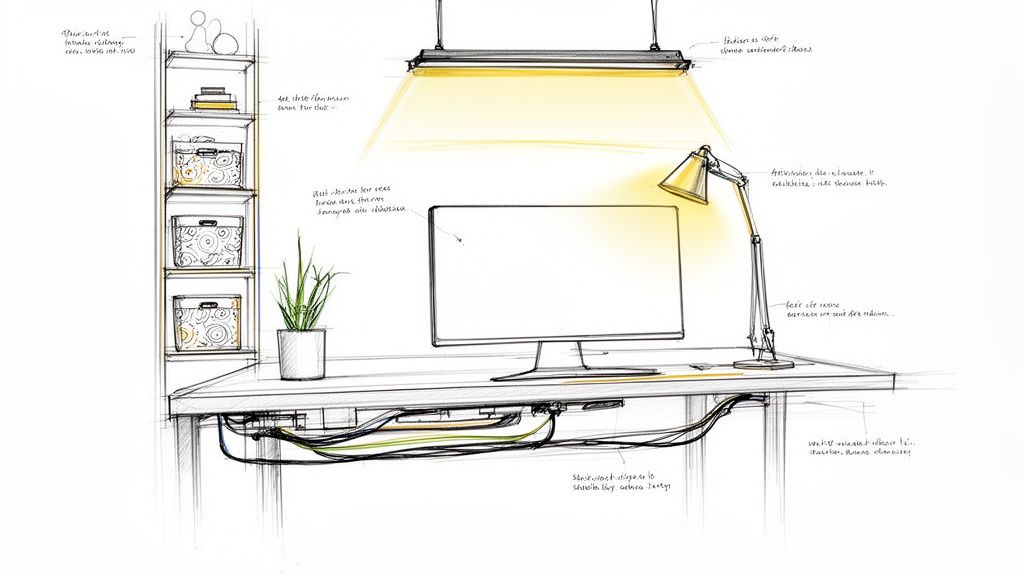
You can have the most brilliant home office layout, but if you neglect the small details, the whole space can feel off. Once your main furniture pieces are in place, the real magic happens. This is where you transform a functional room into a polished, productive atmosphere that actually inspires you to work.
We're talking about the essentials: lighting, storage, and cable management. Get these right, and you'll elevate your office from just a place with a desk to a space that feels professional and truly yours.
Light Up Your Work, Not Just the Room
Ever tried to work all day under a single, harsh overhead light? It’s a recipe for eye strain and headaches. Good lighting isn't just about seeing what you're doing; it's a powerful tool for setting the mood and boosting your focus.
The secret is what designers call layered lighting. Instead of relying on one source, you combine a few different types of light to create a comfortable, flexible, and glare-free environment.
Here’s a simple way to think about it:
- Ambient Light: This is the foundation. It's the main light source for the room, like a ceiling fixture, providing soft, even light across the whole space.
- Task Lighting: This is your workhorse. A great desk lamp is non-negotiable here. It puts bright, focused light exactly where you need it—on your keyboard, that report you’re reading, or your notepad.
- Accent Lighting: This is what adds personality. A small lamp on a bookshelf or a light highlighting a piece of art can make the office feel less like a cubicle and more like a curated part of your home.
Your lighting strategy does more than just help you see; it sets the tone for your entire workday. Thoughtful, layered lighting reduces fatigue and helps you maintain focus for longer periods.
Win the War on Clutter with Smart Storage
A clear desk really does lead to a clear mind. When every item has a designated home, you minimize visual noise and can focus on the task at hand. But storage is about more than just hiding things away in a filing cabinet.
Think vertically, especially if you're tight on space. A tall, elegant bookcase is a fantastic solution. It offers tons of shelving while drawing the eye upward, which can make a small room feel much larger and more open.
For those open shelves, use decorative bins and boxes to tuck away stray supplies. They keep things looking tidy while letting you add a bit of color or texture to the room. And don't forget the little things that support your daily routine. Investing in the best home espresso machine, for instance, can be a game-changer for your workflow and well-being.
Finally, let's talk about the dreaded cable spaghetti. A tangled mess of wires under your desk not only looks messy but can also be a tripping hazard. Thankfully, this is an easy fix. Simple tools like cable sleeves, adhesive clips that stick to the back of your desk, or a dedicated cable management box will instantly tame the chaos. It’s that final polish that makes everything look clean and intentional.
Ready to find those perfect finishing touches? From statement lamps to beautiful bookcases, we can help you select the pieces that will complete your ideal home office.
Turning Your Home Office Vision into Reality
You've got the ideas. You've seen the templates and absorbed the core principles of a great home office layout. The vision for a space that fuels your productivity is clear in your mind, but let's be honest—making that vision a reality can feel like the toughest part.
This is where the second-guessing stops. Instead of wrestling with a tape measure or wondering if that desk will really fit, you can lean on an expert. Think of us as your dedicated partner in pulling all the pieces together, from the initial floor plan to the final, perfect chair.
A True Design Partnership
Our design service isn't about us telling you what to do. It’s a genuine collaboration. We start by listening to you—understanding how you work, what you need, and the specific quirks of your space.
Our team can help you map out a layout that truly makes the most of every inch. It’s not about forcing a one-size-fits-all solution; it's about crafting a workspace that's uniquely yours. We'll help you sort through our fantastic selection from top brands to find that perfect La-Z-Boy office chair or the ideal desk to anchor your new setup.
Working with a design expert takes the guesswork out of the equation. It's the surest way to guarantee your finished office is not only functional but also a true reflection of who you are and what you do.
From A Blank Slate To A Finished Space
A great layout is more than just placing furniture. It's about creating a cohesive environment where everything just works. Our designers look at the whole picture—ergonomics, traffic flow, storage, lighting, you name it. We sweat the small stuff so you can focus on your actual work.
- Custom Floor Plans: We’ll help you design a layout built specifically for your room’s dimensions and unique challenges.
- Handpicked Furniture: We guide you straight to the pieces that fit your style, budget, and functional needs.
- Seamless Execution: From the first measurement to the final delivery, we make sure the entire process is smooth and stress-free.
Ready to create the home office you've always wanted but not quite sure which style suits you best? A great place to start is our quick Home Office Style Quiz to nail down your personal aesthetic.
Let's work together to build a space that empowers you to do your absolute best work. Schedule a design consultation today, and let's bring that vision to life.
Answering Your Top Home Office Layout Questions
You’ve got the big picture, but now it’s time for the details. I get asked about these specific layout challenges all the time, so let's tackle the common questions that pop up when you're finalizing your workspace.
Where’s the Best Place for My Desk?
This is a really personal choice, and I’ve seen all three main approaches work wonders depending on the person.
For intense, heads-down work, facing a wall is often the winner. It just cuts out all the visual noise and helps you lock in. On the other hand, if you like to feel in command of your space or see people coming, positioning your desk to face the door is a classic power move.
My personal favorite? Facing a window. The natural light is a huge mood booster. The only catch is potential screen glare, but that’s an easy fix with a good set of blinds or curtains. The best spot is always the one that helps you work best.
How Can I Make My Tiny Office Feel Less Claustrophobic?
When you're short on square footage, the trick is to go vertical. Think tall, slender bookcases or floating wall shelves. This naturally draws the eye upward, giving you a sense of height and making the whole room feel more open.
Furniture choice is also huge here. A desk with thin legs and a sleek profile feels a world apart from a heavy, traditional executive desk. Lighter colors on the walls and maybe even a strategically placed mirror will bounce light around and amplify that feeling of spaciousness.
Your two best friends in a small office are vertical storage and light-scale furniture. They’re the secret to making a compact space feel inviting and functional, not just cramped.
How Do I Carve Out an Office Zone in a Shared Room?
Creating a dedicated workspace in a living room or bedroom is all about setting boundaries, both physically and mentally. The simplest way I've found to do this is with an area rug. Just place your desk and chair on the rug, and voilà—you’ve instantly defined your “office.”
Another great tactic is using furniture as a soft divider. An open-backed bookshelf is perfect for this. It separates your desk from, say, the sofa area without chopping up the room or blocking light. It sends a clear signal to your brain that crossing that line means it’s time to focus.
Feeling more confident about your home office furniture layout ideas? The next step is finding the perfect pieces to bring your vision to life. Here at Miller Waldrop Furniture & Decor, our design experts can equip you with the tools you need. We can help you pick out the ideal furniture that fits your space and your work style.
Come browse our collection of high-quality home office furniture and let's work together to create a space where you can do your best work.


