

Transform Your WFH: 8 Cozy Office Ideas for 2026


At 8 a.m., a cold overhead light is glaring, the chair already feels wrong, and yesterday's paper pile is still in view on the desk. By noon, the room has done its damage. Focus slips, posture follows, and the office starts to feel like a place to endure instead of a place to do good work.
A cozy office fixes that by solving the right problems in the right order. Poor lighting strains the eyes. Low-quality seating creates tension in the back and shoulders. Flat walls make the room feel unfinished, especially on video calls. Visible clutter adds noise to the day. The best cozy office ideas are practical first. They make the room easier to use, then more beautiful to spend time in.
That matters even more in homes across Lubbock, Hobbs, and Ruidoso Downs, where offices often need to work hard in spare bedrooms, converted corners, or multipurpose rooms. A successful setup is rarely about adding random décor. It comes from choosing furniture, lighting, storage, and finishing materials that match the way the space is used.
Warm woods, layered light, built-in function, and personal details continue to shape home office design because they solve real problems, not because they follow a trend. Miller Waldrop's product categories and design services make those choices easier to get right, whether the goal is a full office refresh or a few targeted upgrades that change how the room feels every day.
The ideas below are organized the way I approach office design with clients. Start with comfort and function. Then add warmth, softness, and personality where the room still feels hard or unfinished.
Table of Contents
- 1. Warm Lighting Layering for Focused Work
- 2. Ergonomic Comfort with Stylish Seating
- 3. Natural Materials and Textures for Warmth
- 4. Personalized Wall Treatments and Focal Points
- 5. Functional Storage with Aesthetic Appeal
- 6. Soft Textures and Comfortable Accents
- 7. Biophilic Design Elements and Indoor Plants
- 8. Personal Collections and Meaningful Décor Display
- 8-Point Cozy Office Comparison
- Your Cozy Office Awaits in West Texas & New Mexico
1. Warm Lighting Layering for Focused Work
Bad office lighting makes even beautiful furniture feel uninviting. One bright ceiling fixture creates glare, flattens the room, and puts all the visual weight overhead. Cozy office ideas work better when light comes from several sources at different heights.
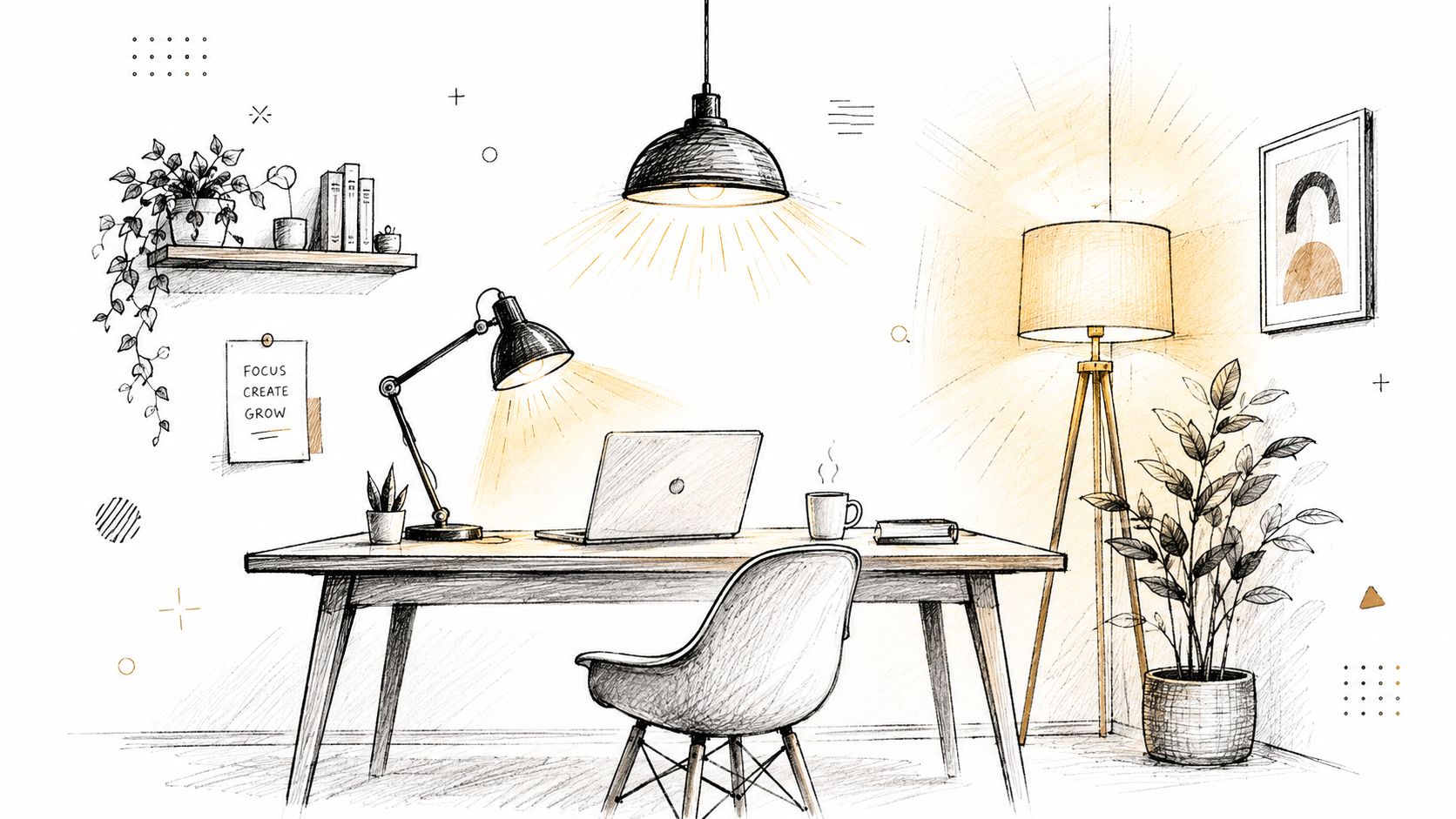
For rooms with windows, desk placement matters before any lamp is plugged in. Lighting specialists recommend placing workstations within 4.5 to 6 meters of windows to support better natural-light exposure and reduce reliance on artificial light, according to Office Principles' lighting guidance. In practice, that means the coziest setup usually starts by moving the desk closer to daylight, then layering softer light around it for early mornings and evening work.
Use three light sources, not one
A strong setup usually combines ambient, task, and accent lighting. That might mean a warm ceiling fixture, a desk lamp placed to the side of the monitor, and a floor lamp in the far corner to soften shadows. If the room has a standing desk, a pendant overhead plus wall sconces can create balance without making the office feel commercial.
Practical rule: If a room still feels cold at night, it doesn't need a brighter bulb. It usually needs another lamp lower in the room.
A few details make a visible difference:
- Use warm bulbs: Choose warm-toned LED bulbs in the 2700K to 3000K range for visible fixtures in a cozy office.
- Control intensity: Add dimmers where possible so the room can shift from focused work to calmer evening use.
- Reduce screen glare: Position task lighting to the side, not directly behind the monitor or directly overhead.
- Light the perimeter: A floor lamp, shelf lighting, or LED strip behind millwork helps the room feel wrapped in light instead of spotlighted.
Windowless offices need even more intention. Warm layered light, reflective finishes, and gentle perimeter glow usually work better than one strong overhead fixture. That approach keeps a converted spare room, closet office, or basement corner from feeling cave-like.
2. Ergonomic Comfort with Stylish Seating
A cozy office can't rely on looks alone. If a chair is pretty but unsupportive, the room won't feel cozy after a full workday. The right seat should support posture, reduce fatigue, and still feel appropriate next to warm wood, soft textiles, and residential finishes.

Chair selection often leads to problems in home offices. Homeowners often buy a chair that looks sleek online, only to discover that the seat depth is wrong, the back hits in the wrong place, or the arms interfere with the desk. Testing in person matters, especially for anyone spending long stretches at the desk.
Choose support first, then upholstery and finish
Modern ergonomic seating no longer has to look industrial. Upholstered task chairs, leather executive styles, and softer silhouettes can all work in a home setting when the proportions are right. A fabric desk chair beside a farmhouse-style desk or a leather ergonomic chair paired with a warm wood credenza can feel collected instead of corporate.
For shoppers trying to balance comfort, style, and function, Miller Waldrop's home office furniture buying guide is a useful starting point. It helps narrow the choice between chairs that look good for five minutes and chairs that still feel good late in the day.
A few standards separate a good chair from an expensive mistake:
- Check lumbar support: The lower back should feel supported without forcing the spine into a rigid position.
- Match the room's temperature: Breathable fabric usually works better than heat-trapping materials in warmer spaces.
- Watch arm height: Arms that hit the desktop make a chair frustrating to use, no matter how attractive it is.
- Coordinate on purpose: Choose a chair finish that speaks to the desk, shelving, or rug so the room feels designed.
A chair gets used more than almost any other piece in the office. It shouldn't be the place where quality gets cut first.
For Lubbock, Hobbs, and Ruidoso Downs shoppers furnishing a long-term workspace, a well-fitted chair is one of the most practical tools in the room. It's hard to feel settled in an office that never lets the body relax.
3. Natural Materials and Textures for Warmth
Cold offices usually come down to surface choices. A room filled with laminate, metal, glass, and plastic can function well, but it rarely feels settled or inviting for long work sessions.

Natural materials solve that problem by adding visual weight and tactile comfort. Real wood grain brings movement. Linen and wool soften the harder edges in the room. Stone, clay, rattan, and jute add texture that reads residential instead of corporate.
Build the room from the desk outward
In practice, I usually start with one honest material and let the rest support it. A wood desk often does the job best because it anchors the room immediately. From there, a natural fiber rug, woven storage pieces, cork accessories, or a lamp with a ceramic or stone base can warm the space without cluttering it.
The trade-off is balance. Too many raw textures in one small office can feel heavy, dusty, or visually busy, especially in homes around Lubbock, Hobbs, and Ruidoso Downs where dry light already pulls out every surface detail. Mix smooth and textured finishes on purpose. Pair walnut with linen, lighter oak with black metal, or a wool rug with a desk that shows real grain.
For readers who want that cleaner, warmer mix, Miller Waldrop's accent wall shelves can help carry the palette upward with wood tones and styled display space that feel connected to the rest of the room.
What works best is contrast with restraint. Repeating one wood tone on every piece can make the office feel flat. Filling the room with beige and rough texture can make it feel dull. A cozy office needs warmth, but it also needs relief for the eye.
4. Personalized Wall Treatments and Focal Points
Blank office walls create a temporary feeling, even when the furniture is solid. The room may be organized, but it won't feel finished. One thoughtful wall treatment can change the entire emotional tone of the space.
The key is restraint. A cozy office doesn't need every wall to compete. It needs one focal point that gives the eye a place to land. That could be soft sage paint behind the desk, grasscloth on a single wall, vertical paneling, or floating shelves that frame art and books.
Give the eye one place to land
The wall behind the desk usually carries the most visual importance because it affects both daily focus and video call appearance. Warm neutrals, earthy greens, muted clay tones, and textured finishes tend to create a more residential feel than stark white or cool gray. Shelving can add depth, but spacing matters. If shelves are packed too tightly or filled edge to edge, the room starts to feel busy instead of calming.
A smart place to borrow both function and style is Miller Waldrop's accent wall shelf collection. Floating shelves are especially useful in smaller offices because they create display space without using floor area.
A strong focal wall often follows a few simple rules:
- Choose one primary wall: Usually the wall behind the desk or the first wall visible from the doorway.
- Test color in the room: Paint shifts throughout the day, especially in west-facing or low-light offices.
- Mix purpose with personality: Combine framed art, books, baskets, and one or two meaningful objects.
- Leave breathing room: Empty wall space is part of the design. It keeps the display from looking cluttered.
The best focal walls feel intentional, not crowded. They support concentration instead of demanding attention.
For a renter, removable wallpaper or a shelf-led focal point may be the better tool. For a homeowner, painted millwork or panel detail can make the office feel fully integrated into the house.
5. Functional Storage with Aesthetic Appeal
Storage determines whether a cozy office stays calm after a full workweek. A room can have the right chair, good lighting, and a beautiful desk, then still feel unsettled if papers drift across the surface, cords stay visible, and every supply ends up in sight.
The design problem is usually not a lack of space. It is a lack of the right kind of storage.
Closed storage handles visual noise better than open shelving in most offices I see across Lubbock, Hobbs, and Ruidoso Downs, especially in guest rooms, loft corners, and offices that stay visible from the living area. A credenza, drawer desk, or cabinet-front bookcase keeps the working parts of the room accessible without asking them to become part of the decor.
Hide most of the mess and display the rest
The best pieces work like home furniture first and office storage second. That distinction matters. If the cabinet looks too corporate or the shelving is too shallow for real use, the room starts to lose the warmth that makes it feel inviting.
A reliable setup usually follows a simple split:
- Hide the unattractive essentials: Cables, routers, paper reams, chargers, and backup supplies belong in drawers, baskets, or cabinets.
- Display with intention: A few books, framed photos, pottery, or a small object collection can stay out if they support the room's mood.
- Use height wisely: Tall storage often serves a small office better than adding another wide piece that crowds the floor.
- Store by frequency: Daily tools should stay within arm's reach. Reference files and archive items can live higher up or farther away.
There is a real trade-off with open shelving. It adds airiness, but it also requires maintenance. Clients often ask for open shelves, then realize they do not want to style printer paper, external drives, and sticky note refills every few days. In those cases, mixed storage is the better answer. Use one visible shelf for display, then let closed cabinets do the heavy lifting.
Material choice matters here too. Warm wood tones, woven baskets, and matte hardware help storage feel integrated instead of utilitarian. If you want softness in bins, liners, or nearby accent pieces, this overview of fleece polyester fabric advantages offers useful context on texture, durability, and everyday practicality.
For a full-room installation, built-ins can make sense. For many homes, a well-scaled freestanding cabinet does the job with less cost and less commitment. That is often the smarter choice for homeowners who want flexibility, and for renters who need the office to adapt over time.
6. Soft Textures and Comfortable Accents
Some offices look warm in photos but feel hard in person. The desk is beautiful, the wall color is right, and the lighting is decent, yet the room still feels stiff. Usually the missing layer is texture.
Soft materials change how a room feels both visually and physically. A wool rug underfoot, lined drapery at the window, an upholstered chair, or a throw over a reading chair all make a workspace feel less transactional. That matters more than many people expect, especially in a room used every day.
Add softness where the room feels hardest
Start with the surfaces that carry the most visual weight. If the office has hard flooring, add an area rug large enough to ground the desk and chair. If the desk chair looks sharp or skeletal, balance it with a cushioned side chair or a fabric window treatment nearby. If the room echoes, textiles will help soften sound as well as appearance.
There's also a comfort advantage in choosing touchable, durable fabrics. For readers comparing cozy upholstery options, this guide to fleece polyester fabric advantages offers useful context on softness, warmth, and practical performance in everyday interiors.
Some combinations consistently work well:
- Rug plus drapery: This pairing softens both the floor plane and wall plane at once.
- Throw plus upholstery: A folded throw over a chair adds comfort without requiring another furniture piece.
- Natural fiber mix: Linen, cotton, wool, and textured blends create depth without looking glossy or overdone.
- Layered textiles: A jute base rug topped with a softer rug adds warmth and visual richness.
Softness still needs discipline. Too many pillows, oversized throws, or heavy fabrics can make an office feel sleepy instead of supportive. A cozy office should feel inviting, but it still needs enough structure to help work happen.
7. Biophilic Design Elements and Indoor Plants
A home office can have the right desk, good lighting, and comfortable seating, yet still feel flat. Usually, the missing layer is something living or something that recalls the natural world. That shift matters because an office should support focus without feeling sterile.
Plants solve a specific design problem. They break up hard lines, soften awkward corners, and keep work zones from feeling too rigid. In rooms I've worked on across Lubbock, Hobbs, and Ruidoso Downs, greenery often does the finishing work that furniture alone cannot do.
Use plants to correct the room
Start by looking for what feels unresolved. An empty corner beside a filing cabinet usually needs height. A long shelf above a desk often needs movement. A window ledge or return surface may need one organic shape to offset the straight edges of casegoods and worktops.
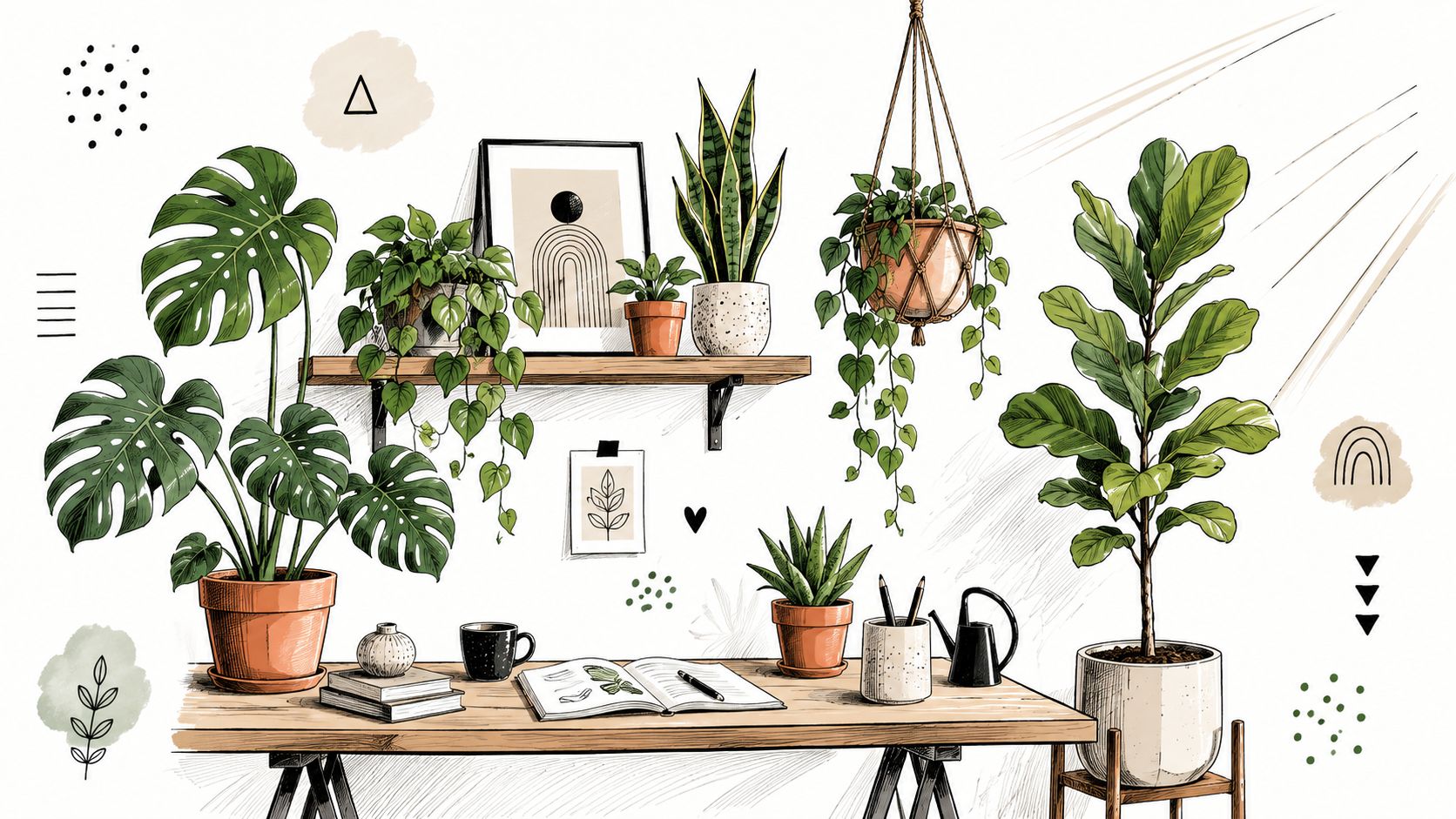
That is where plant choice matters. A snake plant adds vertical structure with very little upkeep. Pothos brings softness and a relaxed line from a shelf or cabinet. A ZZ plant works well where light is limited and maintenance needs to stay low. One larger floor plant often has more impact than several small plants scattered around the room.
Planters deserve the same attention as the plant itself. If the container fights the finishes in the room, the whole arrangement can feel like an afterthought. Match the planter to the office's materials and palette. Matte ceramic, woven baskets with liners, and simple stone-look containers usually integrate well with the layered, grounded look that makes an office feel cozy.
A single healthy plant in the right place will outperform a collection of struggling ones.
Biophilic design also includes the materials around the plant. Wood grain, woven shades, botanical artwork, and access to daylight all help the office feel calmer and more connected. If the room has limited natural light, use preserved branches, nature-inspired textiles, or warmer wood tones to create that same effect without forcing high-maintenance greenery into the wrong conditions.
There is a trade-off here. Too many plants can crowd a workspace, collect visual clutter, and add one more thing to manage during a busy week. The better approach is restraint. Use one plant for height, one for softness, and one small accent near the desk if the room can handle it. Miller Waldrop can help homeowners in West Texas and New Mexico pair those natural elements with the right desks, storage pieces, and finishing details so the office feels settled, functional, and lived in.
8. Personal Collections and Meaningful Décor Display
By the end of a long workday, the office should reflect the life you've built, not look like a storage corner with a laptop in it. Personal décor solves a specific problem here. It keeps the room from feeling sterile. It also needs boundaries, because sentimental items can overtake work surfaces fast.
Good display starts with editing. Pick a few categories that carry meaning and suit the scale of the room. Family photos in matching frames, a short stack of favorite books, handmade pottery from a trip, or a small collection of vintage objects can all work well. The common thread is restraint and repetition. That is what makes the display feel designed instead of accidental.
I usually advise clients to assign personal items to one defined zone. A bookshelf, credenza top, or a pair of floating shelves is often enough. Once every keepsake has a home, the desk can stay clear for actual work. That trade-off matters. A room can feel warm and personal without asking your eyes to process twenty unrelated objects every time you sit down.
A few display rules help keep that balance:
- Group similar items together: Collections read more clearly when materials, colors, or subject matter relate to each other.
- Use matching or coordinated frames: Consistency helps family photos and artwork feel polished.
- Leave open space around the display: Empty space gives meaningful pieces more presence.
- Keep the camera background in mind: Shelves behind the desk should look edited, calm, and appropriate for calls.
- Rotate pieces by season or mood: Swapping items out works better than adding more and more.
The furniture matters as much as the objects. A well-scaled bookcase, cabinet, or console gives collections structure, which is often the difference between cozy and crowded. Miller Waldrop helps homeowners in Lubbock, Hobbs, and Ruidoso Downs choose display furniture that fits the room, supports storage, and gives personal pieces a place to land with intention.
Meaningful décor should remind you who you are and what you care about. It should also let you find your notebook, clear your desk, and focus for the next meeting. That balance is what makes a cozy office feel complete.
8-Point Cozy Office Comparison
| Item | Implementation complexity | Resource requirements | Expected outcomes | Ideal use cases | Key advantages |
|---|---|---|---|---|---|
| Warm Lighting Layering for Focused Work | Moderate, planning and possible electrical/dimmer installation | Multiple fixtures, warm LEDs, dimmers | Adjustable ambience, reduced eye strain, focused comfort | Home offices, task-focused zones, variable daylight hours | Customizable light levels, energy-efficient, creates depth |
| Ergonomic Comfort with Stylish Seating | Low–moderate, selection, fitting, assembly | Investment in quality chair, space for adjustments | Reduced back/neck pain, improved long-term productivity | Full-time desk workers, remote workers, long sessions | Health support, customizable fit, durable design |
| Natural Materials and Textures for Warmth | Moderate, sourcing, finish selection, occasional maintenance | Solid wood, natural fibers, stone accents, higher budget | Calming, timeless aesthetic, sensory-rich environment | Residential-style offices, sustainable design schemes | Biophilic warmth, durability, eco-conscious appeal |
| Personalized Wall Treatments and Focal Points | Low–moderate, paint/wallpaper/panel installation | Paint/wallcovering, panels, art, possible professional help | Strong focal point, personalized atmosphere, video-call backdrop | Defining zones, renter-friendly updates, accenting desk area | High visual impact at relatively low cost, easy to change |
| Functional Storage with Aesthetic Appeal | Moderate–high, planning, possible custom cabinetry/installation | Shelving/cabinets, baskets, hardware, potential custom work | Reduced clutter, organized workflow, efficient access | Small offices, high-document work, multipurpose rooms | Maximizes space, conceals mess, tailored organization |
| Soft Textures and Comfortable Accents | Low, sourcing and placement of textiles | Rugs, throws, cushions, upholstery; regular cleaning | Immediate comfort, sound absorption, cozy visual warmth | Adding residential feel, improving acoustics, seasonal updates | Affordable mood boost, easy to refresh, tactile comfort |
| Biophilic Design Elements and Indoor Plants | Low–moderate, plant selection and care setup | Plants, planters, stands, appropriate light, maintenance time | Improved well-being, air quality, creativity and focus | Wellness-focused spaces, corners needing life, nature-deficient rooms | Health benefits, natural focal points, scalable solutions |
| Personal Collections and Meaningful Décor Display | Low–moderate, curation and cohesive display planning | Frames, shelves, display cases, lighting; periodic upkeep | Emotional connection, motivation, personalized identity | Personal branding, inspirational backdrops, client-facing rooms | Enhances identity, low-cost personalization, conversation starters |
Your Cozy Office Awaits in West Texas & New Mexico
Creating a cozy office is less about following trends and more about solving the problems that make a workspace feel cold, distracting, or uncomfortable. Better lighting fixes harshness. A supportive chair fixes physical strain. Natural materials warm up the palette. Storage reduces visual stress. Plants, soft textiles, and meaningful décor make the room feel lived in instead of temporary.
The strongest cozy office ideas also respect real life. Not every room has great windows. Not every office is a dedicated room. Some spaces need to work inside a guest room, a living room corner, or a converted nook. That's why the best results usually come from choosing a few high-impact tools and using them well rather than trying to do everything at once.
For many households, the smartest place to start is with the foundation pieces. A desk that fits the room. A chair that supports the body. Storage that hides the mess. Lighting that makes early mornings and late afternoons easier on the eyes. Once those essentials are in place, the softer layers become more effective because they're supporting a room that already functions.
That's where local guidance can make the process easier. Miller Waldrop Furniture & Decor has been helping families and professionals in Lubbock, Hobbs, and Ruidoso Downs build comfortable, well-furnished homes for over 70 years. With curated showrooms, quality brands, custom-order options, and knowledgeable design support, the process becomes less overwhelming and more personal. Instead of guessing online, shoppers can see proportions, test seating, compare finishes, and choose pieces that fit both the room and the way they work.
A cozy office doesn't have to be elaborate. It just has to feel supportive, intentional, and personal enough that sitting down to work feels easier than it did before. That might mean one warm wood desk, one upholstered chair, one better lamp, and one cabinet that finally contains the paper pile. Small changes can shift the entire mood of the room.
For homeowners and renters across West Texas and Southeastern New Mexico, the blueprint is already in place. The next step is choosing the right tools to bring it to life. A well-designed office won't just photograph well. It will help work feel calmer, focus last longer, and the room itself feel like somewhere worth spending time.
Ready to build a workspace that feels comfortable, polished, and personal? Miller Waldrop Furniture & Decor offers the home office furniture, accent pieces, and design guidance to help shoppers in Lubbock, Hobbs, and Ruidoso Downs create a cozy office that fits real life. Visit a local showroom to explore quality desks, ergonomic seating, storage furniture, lighting-friendly layouts, and custom-order options that turn a frustrating room into one of the hardest-working spaces in the home.