

Fix Your Sagging Couch Cushion and Revive Your Sofa

We’ve all been there. That one spot on the sofa, your favorite spot, starts to develop a familiar, unwelcome dip. It’s easy to think this means the whole couch is on its last legs, but that’s rarely the case. A sagging couch cushion is a common problem, and thankfully, it’s one you can almost always fix yourself. This guide is your toolkit to bring back that comfort and save the furniture you love.
Reclaim Your Comfort from a Sagging Couch Cushion
A sagging cushion doesn't just look sad; it completely changes the feel of your living room. It turns that go-to spot for relaxing into an uncomfortable crater. It's a simple fact that over time, even the best sofas show signs of wear, and the cushions are usually the first to give. This is just a natural part of a sofa's life, not a sign you need to start shopping for a new one.
Instead of seeing a sagging couch as a problem, look at it as an opportunity. Fixing it puts you back in control of your home's comfort and style. It's a surprisingly satisfying process that can add years of life to a piece of furniture you’ve already invested in.
Why You Should Bother Fixing Your Couch Cushions
It might seem like a hassle, but taking the time to fix a sagging cushion empowers you to improve your home in more ways than one.
- Bring Back Real Comfort and Support: A firm cushion is better for your back and makes movie night so much more enjoyable. You have the power to restore that support.
- Save a Ton of Money: A little DIY repair is always going to be a more cost-effective choice than buying a new sofa, which can easily run into the thousands.
- Get More Years Out of Your Sofa: This simple fix can give you years more use from a sofa you've already broken in perfectly.
- It’s the Sustainable Choice: The EPA reports that a staggering 12 million tons of furniture end up in landfills every year. By repairing instead of replacing, you're helping to cut down on that waste.
At the end of the day, restoring your couch is a fantastic way to refresh your space. It's one of those small projects that can inspire other cozy home decor ideas for your living room.
Think of this guide as having an expert looking over your shoulder. You'll learn how to diagnose the root cause and discover clear, simple solutions so you can get your sofa back to its former glory.
Ready to get your comfy spot back? Let's start by diagnosing what's actually causing that sag. And remember, if you get halfway through and decide it's more than you want to tackle, the expert design team at Miller Waldrop is always here to provide the tools and advice you need, whether that’s a custom replacement cushion or professional guidance.
Diagnosing the Cause of Your Sagging Cushions
Before you can be the hero and rescue your beloved sofa, you need to play detective for a few minutes. A sagging cushion isn't just one problem—it’s a symptom that can point to several different culprits lurking beneath the surface. Figuring out the real source of the sag is the key to choosing the right fix the first time, saving you a whole lot of time and frustration.
Start With the Obvious: The Cushion Itself
The first and easiest place to look is the cushion. Pull it off the sofa, unzip the cover, and take a good look at the insert inside.
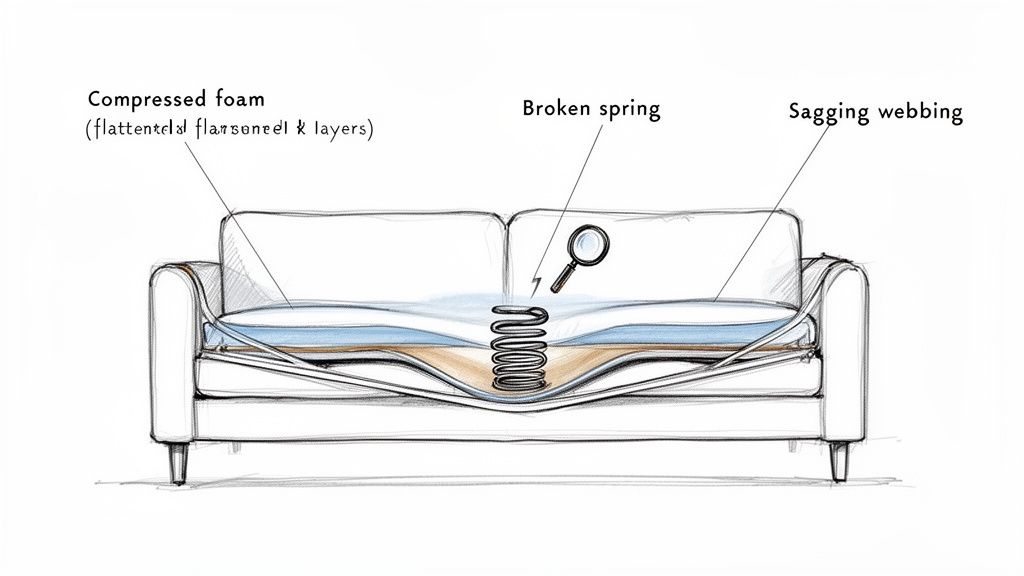
Does the foam look squashed, flattened, or lumpy? When you press down on it with your hand, does it spring back slowly, or does it stay indented? If so, you're likely looking at a classic case of foam fatigue. Over time, even the best foam loses its bounce and just can't support weight like it used to.
Go Deeper: Check the Sofa's Foundation
If the cushion insert itself seems to be in decent shape, the problem probably lies deeper within the sofa's frame and support system. With the cushions off, press down firmly on the sofa deck right where the sag is worst. You're feeling for what’s happening underneath.
- Feel for Broken Springs: Do you feel any sharp, poking ends or hear a metallic crunch or pop? Does one spot give way way more than the area next to it? That’s a tell-tale sign of a broken or detached spring.
- Inspect the Webbing: Many sofas, especially more modern ones, use a grid of elastic or fabric webbing for support. Look underneath for straps that are visibly stretched out, frayed, or have pulled loose from the frame. Worn-out webbing creates a hammock effect, letting the cushions sink no matter how firm they are.
- Give the Frame a Once-Over: While you're under there, take a quick look at the wooden frame. Check the corners and joints for any cracks, splits, or wobbly connections. A weak frame can cause the whole structure to lose its integrity and start to droop.
While you have the cushion cover off, it’s a good time to inspect the fabric, too. Here’s how you can understand how different materials wear, giving you clues about the sofa's overall condition. Learn more with our guide on everything you need to know about upholstery materials.
Sagging Cushion Problem and Solution Finder
Feeling a bit lost? Use this quick guide to match the symptom you're seeing with its likely cause and the best repair strategy for your sagging couch cushion.
| Symptom | Likely Cause | Recommended Solution |
|---|---|---|
| Cushion feels flat, leaves a butt-print | Foam Fatigue | Replace the foam insert or add polyester batting. |
| One specific spot dips dramatically | Broken Spring | Repair or replace the individual broken spring. |
| The whole seating area sinks like a hammock | Stretched Webbing | Tighten or replace the support webbing. |
| The sofa feels wobbly or uneven | Damaged Frame | Reinforce the frame joints or add a plywood support board. |
Once you've identified the culprit—whether it's the cushion, the springs, or the frame—you can confidently move on to the right repair and bring that cozy spot back to life.
By identifying whether the problem is the cushion, the supports, or the frame, you've already won half the battle. This simple diagnostic check is the most critical step toward restoring your sofa's comfort and support for years to come.
And if you uncover a major structural issue that feels a bit beyond a weekend DIY project, you'll know it's the right time to consult our expert team at Miller Waldrop for professional advice or to explore replacement options that put you in control.
Quick and Easy Fixes for Minor Sagging
Not every sagging couch cushion means you're in for a massive DIY project. Sometimes, the best fixes are the simplest ones—the kind that give you an immediate boost in comfort without breaking out a single tool. If you're just starting to notice a little dip in your favorite spot, these are the perfect first steps for you to take.
The No-Cost, High-Impact Solution
Honestly, the easiest and most effective trick costs absolutely nothing: flip and rotate your cushions. We all have our favorite spot on the sofa, right? That means one cushion gets way more use than the others, leading to that all-too-familiar sag over time.
You can get into the habit of regularly flipping your cushions over. While you're at it, swap their positions—move the left one to the right, the middle one to the end. This simple act distributes the wear and tear evenly, giving the foam a chance to bounce back and preventing any single spot from getting permanently flattened. It's a zero-cost move that can seriously extend the life of your sofa.
Add a Simple Supportive Layer
If flipping and rotating doesn't quite do the trick, the next move is to add a bit of extra oomph directly inside the cushion cover. You don't need to go all-out and replace the foam just yet. Instead, you can plump up the existing insert with a layer of polyester fiberfill, which you might know as batting.
You can find a roll of batting at any craft or fabric store. Just unzip the cushion cover, wrap the foam insert with a layer or two of the batting, and then carefully work it back into the cover. It fills out the empty space, smooths over any lumpy areas, and adds a fresh, plush layer of support. It’s a small addition that makes the cushion look and feel fuller in minutes.
Pro Tip: Need an even faster fix and don't have batting? A firm, flat bed pillow tucked inside the cushion cover behind the foam can work wonders. It adds instant structure, pushing the foam forward and getting rid of the sag.
Taking the cushion covers off also presents a great opportunity for a little deep cleaning. While they're off, you have the chance to give them a refresh. For a guide on doing this the right way, learn how to properly steam clean a couch.
These quick fixes are fantastic for keeping your couch comfortable and looking its best. But if the sag is more severe and these tricks aren't cutting it, it might be time for you to move on to a more substantial repair. For those minor dips, though, these simple steps can make all the difference.
Advanced DIY Repairs for Lasting Comfort
When fluffing and flipping just isn't cutting it anymore, it’s time to roll up your sleeves and tackle the real problem. If your couch cushions are seriously sagging, you're looking at a more involved repair, but the payoff is huge. Getting hands-on isn't just about saving money; it's about reclaiming that deep, satisfying comfort you fell in love with.
These next-level fixes are incredibly rewarding. You’re not just temporarily plumping a cushion—you’re rebuilding its core support. Here's how you can implement three powerful solutions that get to the heart of deep-seated sagging.
Replacing the Cushion Foam Entirely
Let's face it, sometimes the foam insert has just given up. After years of movie nights and afternoon naps, the foam’s internal structure breaks down, and no amount of fluffing can bring it back to life. Swapping it out for new, high-density foam is the single best way to fix a cushion that’s lost all its bounce.
This is a total game-changer for your couch. You get to decide the new firmness level and quality, essentially customizing your sofa's feel.
- Choose High-Density (HD) Foam: This is your best tool for a lasting fix. HD foam provides far better support and stands up to compression much longer than the standard-issue foam that comes in many couches.
- Measure Twice, Cut Once: This old saying is critical here. Get precise measurements of your old foam insert—length, width, and thickness. These numbers are all you need to order the perfect replacement.
- Don't Forget Dacron Batting: Before you stuff that new foam into the cover, wrap it in a layer of Dacron batting. It's a simple step, but it gives the cushion a soft, crowned look, helps it fill the cover completely, and cuts down on friction that can wear out the fabric.
Installing a Couch Cushion Support Board
What if the cushion is fine, but the frame underneath is failing? This is where a support board becomes your secret weapon. Over time, the springs or webbing that support the cushions can stretch out, creating a hammock effect. A simple piece of thin plywood, cut to fit under the cushions, provides an instant, firm base.
This is a surprisingly effective fix that requires very few tools but delivers a dramatic improvement. You're essentially giving your sofa a new spine.
By adding a solid foundation, you’re stopping the sag right at its source. This trick works wonders on older sofas where the springs are weak but not totally broken, giving the whole couch a much-needed lift.
Repairing Springs or Webbing
For the truly adventurous DIYer, getting underneath the sofa to fix the springs or webbing is the ultimate repair. It’s definitely the most complex job of the three, but it’s a professional-level fix that restores the sofa to its original glory.
You’ll need to flip the sofa over to get a look at the frame. If you spot a broken S-shaped spring, you can usually find a replacement online and use pliers to hook it back into place. If the fabric webbing has gone slack, a tool like this upholstery webbing stretcher will help you pull it taut before re-stapling it securely to the frame.
Before you dive into these bigger projects, remember that basic maintenance is your first line of defense. The infographic below shows the simple habits that can prevent sagging in the first place.
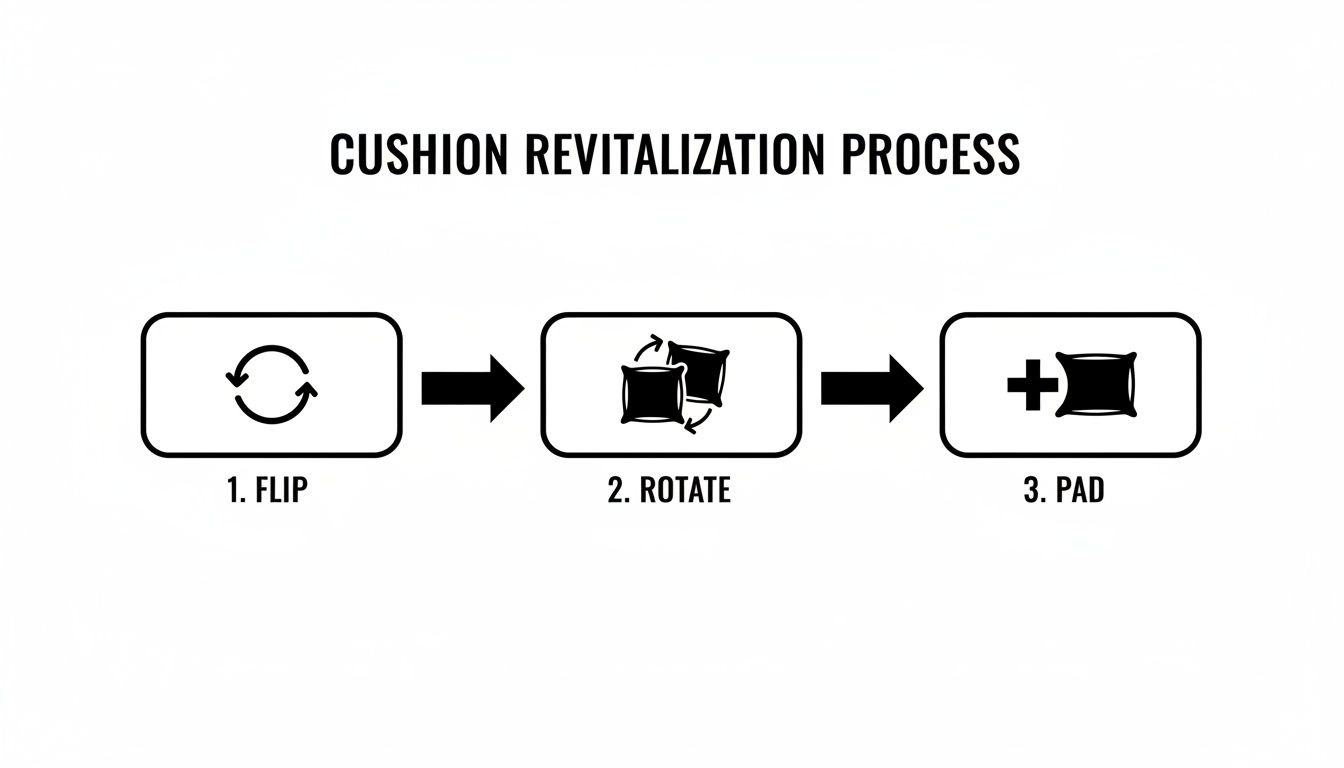
This simple flip, rotate, and pad routine is key to making your cushions wear evenly and last longer.
By taking the time to repair your furniture, you're joining a growing number of people who value quality and longevity. In fact, the global sofa cushion market was valued at around $8 billion as of 2025 and continues to grow. This trend shows just how much we all crave comfortable, well-kept furniture. You can read more about the growing sofa cushion market to see how your project fits into this worldwide demand.
And if you get stuck or decide you'd rather have a pro handle it, we're here to help. Whether you need custom-cut foam or advice on the next step, our team at Miller Waldrop Furniture & Decor has the expertise to be your trusted partner.
Why Repairing Your Sofa Is a Smart Move
Before you kick that sagging sofa to the curb, let's talk about why fixing it is one of the smartest moves you can make for your home and your wallet. In a world that defaults to "buy new," taking the time to repair what you have is a powerful choice. It’s not just about saving a piece of furniture; it’s about being resourceful and making a conscious decision.
This goes way beyond your living room, too. Every year, a staggering 12 million tons of furniture and furnishings get tossed, and the vast majority of that—around 9.6 million tons—ends up clogging landfills. When you choose to fix that cushion, you're directly pushing back against that "throwaway" culture. It's a small project with a surprisingly big impact. You can learn more about the impact of furniture waste and see how even a simple repair contributes to a healthier planet.
The Real Value of Restoration
The benefits of restoring your sofa go far beyond just fixing a sag. It’s an investment that pays off in several ways.
-
Serious Cost Savings: Let's be honest, quality sofas aren't cheap. The cost of new foam, batting, or even a simple support board is just a fraction of what you'd spend on a new couch. You're literally keeping hundreds, if not thousands, of dollars in your pocket.
-
Keeps Sentimental Value Alive: Your sofa has seen it all—family movie nights, lazy Sunday afternoons, deep conversations with friends. Repairing it means you get to hold onto those memories and the familiar comfort of a piece that's already perfectly molded to your life.
-
Dial-In Your Perfect Comfort: This is my favorite part. When you replace the foam, you're in the driver's seat. You get to choose the exact firmness you want. You're not just fixing the problem; you're upgrading your cushion to feel exactly how you like it.
By putting a little time into your sofa, you’re doing more than just fixing a dip. You're extending the life of a piece you love, consciously reducing waste, and reclaiming the heart of your home.
This commitment to getting the most out of your furniture is what we're all about. If you're curious about what to expect from quality pieces, our guide on how long should furniture last is a great read.
Ultimately, fixing a sagging cushion is an empowering project. And hey, if you get halfway through and decide it's more than you want to tackle, the Miller Waldrop team is here to help. We can track down custom replacement cushions or just give you the expert advice you need to make the right call.
When It’s Time to Call in the Pros
While rolling up your sleeves for a DIY fix can be satisfying, some sagging cushion problems are just the tip of the iceberg. They often point to deeper issues where calling in a professional is the smartest, safest play. Knowing when to tag in an expert saves you from a world of frustration and ensures your favorite sofa gets the proper care it deserves.
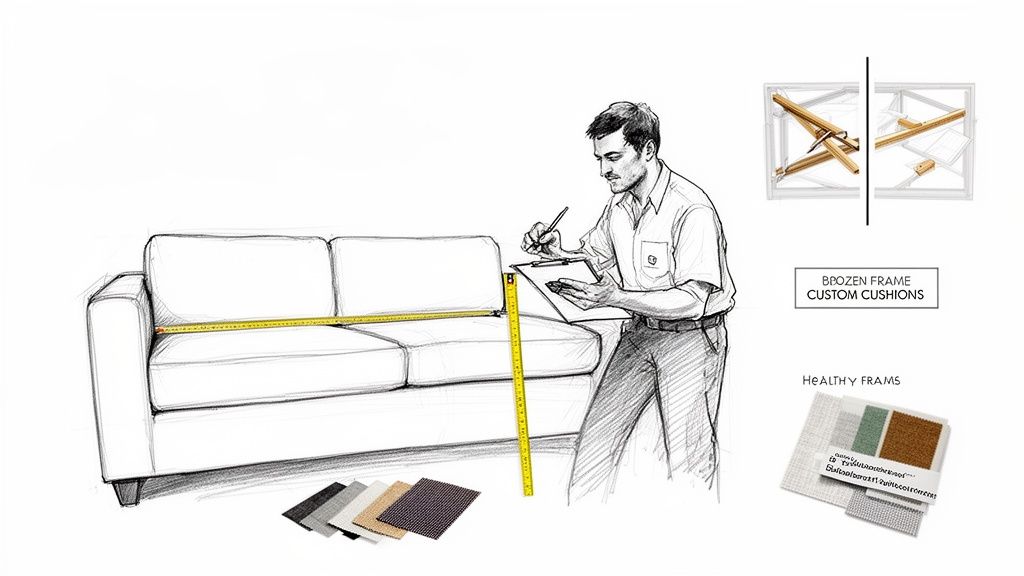
Think of it like this: discovering a cracked sofa frame is like finding a crack in your home's foundation. This is no longer a simple cushion problem; it's a serious structural issue. Fixing it right requires specialized tools and a level of woodworking expertise most of us don't have. The same goes for complex spring systems, especially in older, high-end, or antique pieces. One wrong move trying to fix those can cause even more damage.
Leaning on Over 70 Years of Experience
This is exactly where our team becomes your team. At Miller Waldrop, we've pretty much seen it all, and our design professionals are ready to help you find the perfect solution.
For example, let's say you have a beloved La-Z-Boy or Flexsteel sofa with a beautiful, unique fabric that's been discontinued. Finding a match feels impossible, right? Our team knows where to look and can source custom replacement cushions, sifting through countless fabric options to find one that perfectly complements the original look you fell in love with.
When your sofa needs more than a simple foam swap, professional guidance is your best asset. It’s the only way to ensure the repair honors the furniture's original quality and gives it many more years of life.
This kind of personalized service is becoming more and more sought after. People are moving away from one-size-fits-all furniture and want pieces that reflect their personal style. This growing desire for custom home solutions makes expert design services incredibly valuable. You can discover more about the shift toward custom home decor and see how it's reshaping the industry.
Whether you need a full custom-ordered cushion or just some friendly advice on what to do next, we’re here to help. Let our design team at Miller Waldrop be your guide to bringing comfort and style back to your home.
Got Questions About Your Couch Cushion Fix? We’ve Got Answers.
Even with a clear plan, a few questions always pop up before you start a project. We get these all the time from folks in Lubbock, Hobbs, and Ruidoso Downs, so let's tackle the most common ones right now.
How Much Will a DIY Cushion Repair Cost Me?
This is where the DIY approach really shines. You're almost always going to save a ton compared to buying a new piece of furniture.
A quick-and-easy fix, like adding extra polyester batting to plump things up, will probably only set you back $20 to $30. If you need to replace the entire foam core of a standard cushion, you’re looking at a range of $50 to $150. For a super sturdy solution, a plywood support board usually comes in under $40.
What’s the Best Foam to Use for Couch Cushions?
If you want this repair to last, don't skimp on the foam quality. High-density (HD) foam is the absolute best choice for the job.
Look for a foam with an ILD (Indentation Load Deflection) rating somewhere between 35 and 50. That range gives you that perfect blend of firm support and comfort, ensuring you won't be dealing with another saggy spot in a year. One pro tip: always wrap your new foam insert in Dacron batting. It gives the cushion that smooth, rounded look and helps it slide into the cover more easily.
Can I Actually Fix the Springs on My Couch Myself?
This is where things can get a little tricky. Fixing couch springs definitely leans toward a more advanced DIY project.
If you find that one of the S-shaped springs has simply popped out of its clip, you can often wrestle it back into place with a good pair of pliers. But if springs are actually broken, or the entire webbing system has failed, you're looking at a much bigger, more physically demanding job that might require specialized tools.
Sometimes, a DIY project is more than you bargained for, and that's completely okay. The team at Miller Waldrop Furniture & Decor is always ready to step in. We can help you explore options from custom-ordered replacement cushions to professional advice on your next steps. Check out our full range of home furnishings and let us help you get your favorite comfy spot back.