

Queen Size Mattress Cost: 2026 Guide to Prices & Brands

Queen mattresses can range from $300 to over $5,000, but most quality options that offer lasting value fall between $1,000 and $2,000. For many shoppers, that's the range where comfort, support, and durability start to make real sense without jumping into specialty pricing.
That wide spread is exactly why so many West Texas and SE New Mexico shoppers feel stuck. One queen mattress looks affordable. Another costs much more. A third claims premium features, but it's hard to tell what is important. The confusion usually isn't about whether a queen is the right size. It's about understanding what the price tag is really buying.
A queen mattress is 60 x 80 inches, which makes it the most common choice for couples and one of the most widely sold sizes in the market according to this queen mattress sizing and pricing guide. That popularity creates a very broad price spectrum, from basic builds to advanced constructions with added comfort layers, specialty materials, and support systems.
This guide breaks the queen size mattress cost into plain language. It shows what different price tiers usually mean, how mattress type affects cost, which features push prices up, and why trying a bed in person can save a shopper from paying for the wrong comfort level.
Table of Contents
- What Should a Queen Mattress Really Cost in 2026
- Decoding Price Ranges From Budget to Luxury
- How Mattress Type Determines the Price Tag
- Factors Beyond Type That Influence Cost
- Investing Smart How to Maximize Your Mattress Budget
- The Miller Waldrop Advantage for West Texas & SE New Mexico
- Your Next Step to Finding Perfect Sleep
What Should a Queen Mattress Really Cost in 2026
A couple walks into our showroom in Odessa after spending an evening comparing queen mattresses online. One price is a few hundred dollars. Another is several thousand. Both say “queen.” Both look comfortable in photos. At that point, the question isn't the size. It is what is built inside the mattress, and how long that comfort is likely to last.
That is why there is no single answer to queen mattress cost in 2026. A queen refers solely to the dimensions. Price comes from the materials, the support system, the amount of cushioning, and the features added for cooling, pressure relief, motion control, or durability. Two queen mattresses can share the same footprint and still belong in completely different budget conversations.
A helpful way to set expectations is to start with the broad market range already discussed earlier. Queen mattresses span from entry-level options to premium specialty models, and many shoppers land in the middle when they want a mattress for everyday use rather than a short-term fix.
For families in West Texas and Southeastern New Mexico, that context matters. Online pricing can make the whole category feel inconsistent, but the sticker price alone does not show how a mattress fits your body, sleep position, or comfort preferences. A mattress is a lot like a pair of work boots. The size matters, but the build decides how it feels after months of daily use.
Here is a simple rule that helps cut through the noise. If a queen mattress is priced far below what most quality models cost, ask what was simplified to get there. It may be thinner comfort layers, a plainer support core, fewer cooling features, or materials that are less likely to hold their feel over time.
The better question for many households is, “What price gives me solid support, good comfort, and a reasonable lifespan for how I plan to use it?” A guest room mattress may call for one budget. A primary bedroom mattress usually deserves more careful fitting. A sleeper dealing with shoulder, hip, or lower back pressure often needs a mattress chosen for feel and support, not just price.
If you are comparing mattress sizes while setting a budget, our guide to twin mattress cost can help show how pricing shifts from one size category to another. That comparison also makes one point clear. Size affects cost, but construction usually affects it more.
For many shoppers, the smartest starting range is the one that matches how the mattress will be used, who will sleep on it, and whether in-person testing can save the cost of a wrong guess. That local, hands-on part of the process is often what turns a confusing price tag into a confident decision.
Decoding Price Ranges From Budget to Luxury
A shopper in Odessa or Hobbs might walk into a mattress store expecting one clear answer, then see queen prices spread across a very wide range. That can feel confusing at first. In practice, those price bands usually reflect how much material, design work, and comfort tuning went into the bed.
A queen mattress works a lot like a pickup trim level. The frame may serve the same job on paper, but the suspension, interior, and long-term comfort change what daily use feels like. Mattresses follow that same pattern. Entry models cover the basics. Mid-range models usually add better comfort materials and a more refined feel. Higher-end models often include specialty components meant to solve specific sleep needs.
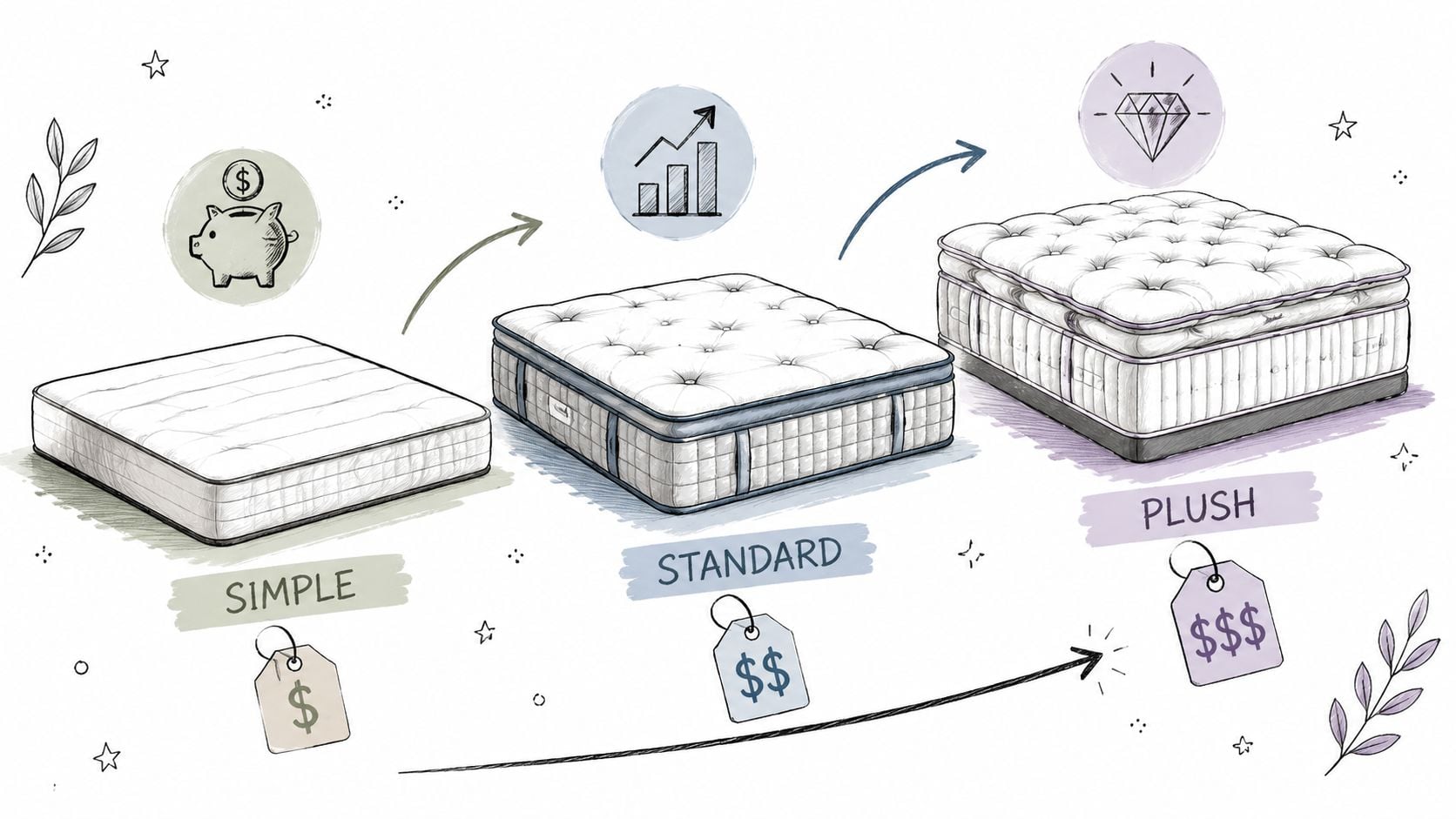
As noted earlier, queen mattresses can start at a few hundred dollars and climb into the luxury range, but many primary-bedroom shoppers focus on the middle because it often offers a steadier balance of comfort, support, and expected lifespan.
Budget under $1,000
This range often fits a guest room, a starter apartment, a college setup, or a short-term solution. The mattress may still feel comfortable in a quick test. The difference usually shows up in the details.
Budget queens often use simpler covers, thinner comfort layers, and more basic support systems. For a sleeper with straightforward comfort needs, that may be enough. For someone who wakes with shoulder pressure, sleeps hot, or shares the bed with a partner, the tradeoffs become easier to notice.
Price matters. So does purpose.
Mid-range from $1,000 to $2,000
For many families in West Texas and SE New Mexico, this is the range where shopping gets more practical and less like guesswork. Materials are often more substantial, pressure relief tends to feel more developed, and the support underneath is usually built with everyday use in mind.
This is also where in-person testing starts to pay off. Two mattresses at a similar price can feel completely different once you lie on them for a few minutes. One may cushion the shoulders better. Another may hold the hips more level. A quick online price comparison cannot show that. A local fitting can.
If you want help sorting out feel before you buy, this guide to innerspring vs memory foam mattress comfort and support differences can make those tradeoffs easier to understand.
A fair queen mattress price is the one that matches the sleeper's body, comfort preference, and expected use.
Premium above $2,000
Higher-priced queens often include more specialized builds, upgraded materials, and added comfort features. Sometimes that extra cost is well spent. Sometimes it buys features a sleeper will not notice after the first few nights.
The key is to connect the price to a real benefit. A premium mattress may make sense for a couple with very different comfort preferences, a sleeper who needs stronger pressure relief, or someone who plans to keep the mattress for many years. If those needs are not part of the picture, a lower tier may offer better value.
A simple way to sort the choices is to ask:
- How often will it be used? Nightly sleep usually calls for a better fit than occasional guest use.
- What does the sleeper need most? Pressure relief, firmer support, cooler sleep, and motion control can all change which tier makes sense.
- Which upgrades will be felt at home? Extra features only matter if they improve sleep in a noticeable way.
That is where local context matters. Shoppers in our part of Texas and New Mexico are not just comparing price tags. They are deciding whether the mattress feels right before it comes home, and that hands-on confidence can be worth as much as any feature listed on the label.
How Mattress Type Determines the Price Tag
Two queen mattresses can look almost identical on the sales floor and still land in very different price ranges. The reason is usually not the name on the tag. It is the construction inside the bed.
A simple way to read mattress pricing is to compare it to buying a pickup truck. Two trucks may be the same size, but the engine, suspension, and features change what they cost and how they perform. Mattresses work the same way. The type of support system and comfort materials do a lot to determine both feel and price.
Typical Queen Size Mattress Cost by Type
| Mattress Type | Typical Price Range | Best For |
|---|---|---|
| Innerspring | Lower to mid-range in many stores | Shoppers who like a more traditional, supportive feel |
| Foam | Budget to premium depending on build | Sleepers who want contouring and pressure relief |
| Latex | Often mid-range to higher-end | Shoppers who want a buoyant, responsive surface |
| Hybrid | Commonly mid-range to premium | People who want both coil support and foam comfort |
If you are still sorting out which feel sounds right, this comparison of innerspring vs memory foam mattress options can help connect the construction to what you notice at bedtime.
How each construction changes feel and price
Innerspring mattresses usually start with the most straightforward design. They use a coil unit for support and often keep the comfort layers thinner and simpler. That is one reason they often sit in a lower or middle price tier. Many sleepers in West Texas and Southeastern New Mexico still prefer this familiar, lifted feel because it is easier to move on and does not hug the body as closely.
Foam mattresses cover a wider spread. An entry-level foam bed can be fairly affordable, while a thicker, denser foam build can cost much more. The difference often comes down to how much material is used and what kind of pressure relief it is trying to deliver. For side sleepers, that extra contouring can feel like the mattress is filling in the gaps under the shoulders and hips instead of pushing back in the wrong spots.
Latex tends to cost more because the material itself is more expensive and has a distinct feel. It is springy, responsive, and less sink-in than many memory-style foams. Some shoppers love that balance right away. Others expect foam-like contouring and are surprised by how buoyant it feels, which is exactly why testing it in person matters.
Hybrid mattresses combine two more involved systems in one bed. You get a coil support core plus thicker comfort layers on top, often foam, sometimes latex, and sometimes several layers working together. That added build complexity usually pushes hybrids higher in price. For couples, though, a hybrid can be worth a closer look because it often tries to blend support, cushioning, and motion control in one design.
The label alone does not tell the full story.
A "plush" foam mattress and a "plush" hybrid may feel very different once you lie down for ten minutes instead of ten seconds. One may let you sink further. The other may keep you more level while still softening pressure points. The price gap often reflects those differences in materials and design, not just marketing language.
That is why mattress type is one of the first filters worth using as you shop. Once you know whether you sleep better on coils, foam, latex, or a combination of materials, the price tag starts to feel less mysterious. For local shoppers, that clarity is often easier to get in a showroom, where you can feel those construction differences directly instead of guessing from a product page.
Factors Beyond Type That Influence Cost
A queen mattress price can jump even when the label stays the same. Two mattresses in the same category may look similar on a website, yet one costs far more because of what is built into it and what comes with it.
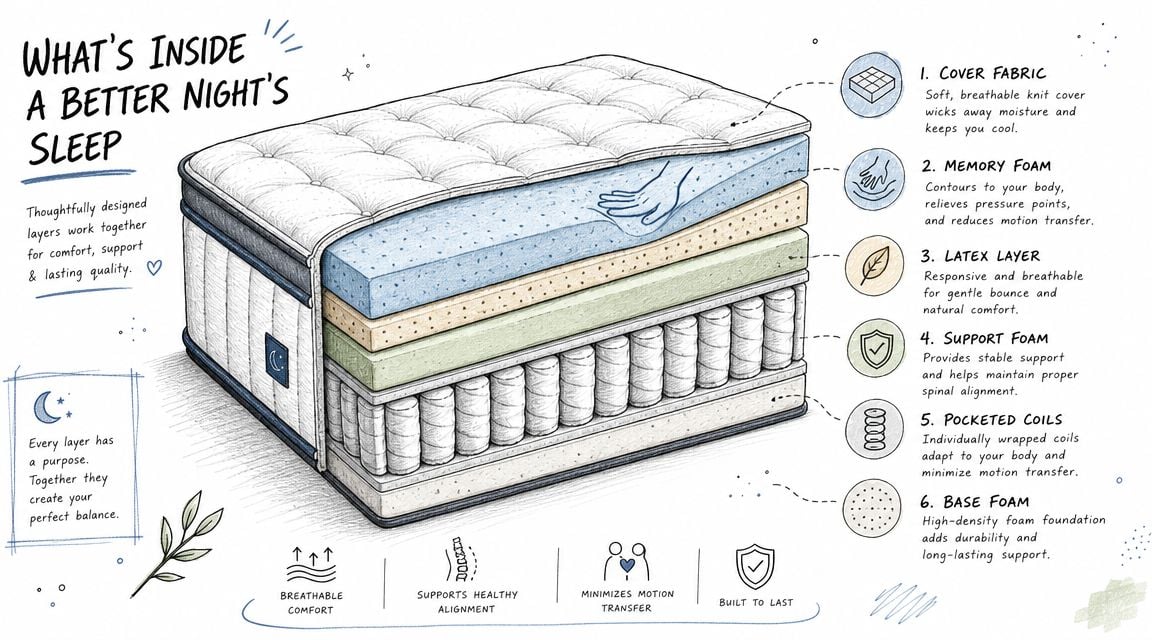
One simple way to read mattress pricing is to picture a house. The floor plan matters, but so do the insulation, windows, roof, and finish work. Mattresses work the same way. Type gives you the basic blueprint. The extras often explain the rest of the price.
What gets added to the bill
A higher queen mattress cost often reflects details like these:
- Cooling materials: Temperature-focused fabrics, gel layers, and breathable construction usually add cost because they use more specialized components.
- Cover quality: A thicker quilted cover or upgraded fabric changes both the feel and the production cost.
- Support design: Zoned support, reinforced edges, and more carefully layered comfort systems tend to raise pricing.
- Natural materials: Latex, wool, cotton, and other natural-focused components often sit in a higher price tier than standard synthetic materials.
- Retail support: Delivery, setup, old mattress removal, and in-store guidance all affect the value of the purchase.
That last point matters more than many shoppers expect in West Texas and Southeastern New Mexico.
Buying online can make two queen mattresses look equal because the sticker prices are close. But local shoppers often care about more than a box on the porch. They want to lie down, compare support levels, ask questions, and leave knowing the mattress fits their body and sleep habits. That in-person fitting can prevent an expensive mistake, especially for couples, side sleepers, and anyone dealing with back or pressure-point concerns. A practical guide to shopping for a mattress in person can make those showroom visits more productive.
Why queen prices vary so widely
Queen remains the size many households shop first, so it shows up in nearly every construction, comfort level, and feature set. A broad selection creates a broad price spread. In plain language, the most common size often gives you the most chances to overspend on features you do not need or underspend on support you will notice every night.
A higher price usually reflects more materials, more design work, or more service. It does not guarantee a better match for your body.
That distinction clears up a lot of confusion.
A shopper may pay more for cooling and never sleep hot. Another may choose a thick pillow top because it feels cozy for five minutes, then learn a month later that softer surface comfort did not solve the issue. Cost makes more sense once you connect each feature to a specific need.
For households trying to set a realistic range before they shop, resources on effective spending plans can help frame the purchase clearly. Start with what problem the mattress needs to solve, then judge the price by how well it solves that problem. That approach usually leads to a better queen mattress value than chasing the lowest number on the tag.
Investing Smart How to Maximize Your Mattress Budget
A smart mattress purchase starts by treating the budget as a tool, not a limit. The goal isn't to chase the lowest queen size mattress cost. The goal is to put money where it improves nightly sleep and avoid spending extra on features that won't matter.
Think in value, not just sticker price
A low opening price can look attractive, especially when a shopper is replacing a mattress unexpectedly. But if the bed doesn't fit the sleeper's body, preferred feel, or comfort needs, the “deal” can get expensive fast in frustration alone.
That's why many shoppers benefit from planning the purchase the same way they'd plan any other major household expense. Resources on effective spending plans can help households decide what range feels realistic before they walk into a store or start comparing mattresses online.
One helpful mindset shift is to separate “can afford today” from “worth sleeping on every night.” Those aren't always the same number.
Simple ways to stretch the budget
- Watch seasonal promotions: Mattress pricing often changes during major sale periods. A shopper who isn't in a rush may gain more options by timing the purchase carefully.
- Read the warranty closely: A warranty doesn't tell the whole story, but it can show how seriously a mattress is positioned and supported.
- Ask about financing: Spreading payments out can make a better-fit mattress possible without forcing a shopper into the lowest tier.
- Test before deciding: Comfort that feels fine for two minutes can feel very different after a full night's sleep.
For shoppers who want a clearer buying process, this guide on how to shop for mattress can help narrow choices before a final decision.
A mattress is one of the few household purchases used every single night. That doesn't mean the most expensive model is the right one. It means the best value usually comes from the mattress that matches the sleeper well enough to keep working night after night, without constant second-guessing.
The Miller Waldrop Advantage for West Texas & SE New Mexico
Local shoppers often face a different mattress question than national buying guides address. It's not only “What does a queen mattress cost?” It's also “How does a shopper know whether that mattress is right before bringing it home?”
Why local mattress shopping changes the decision
For shoppers in Lubbock, Hobbs, and Ruidoso Downs, in-person mattress shopping gives something online browsing can't fully provide. It lets a person compare firmness, edge support, pressure relief, and ease of movement with their own body instead of guessing from a product description.
That matters even more in queen size, because this category includes such a broad mix of constructions. One queen may feel flat and basic. Another may contour extensively. Another may feel supportive but not plush. On a screen, those differences often blur together.
The one place this article can naturally point to a product is the store's own queen mattress selection, where shoppers can review available models by category and price.
What a showroom adds that a screen cannot
A showroom visit helps shoppers answer practical questions faster:
- Fit for body type: Does the mattress keep the sleeper supported without creating pressure points?
- Fit for sleep position: Side, back, and combination sleepers often react differently to the same bed.
- Fit for shared sleep: Couples can judge movement, space, and comfort together instead of guessing separately.
- Fit for total setup: Mattress height, foundation, and adjustable-base compatibility can all affect the final decision.
The local advantage also includes continuity. A shopper isn't only buying a mattress. They're working with a team that can help from selection through delivery and setup.
That's especially valuable in regions where people often want practical guidance, not marketing language. A mattress is easier to choose when someone can lie down, compare, ask direct questions, and leave knowing the price reflects something they felt.
Your Next Step to Finding Perfect Sleep
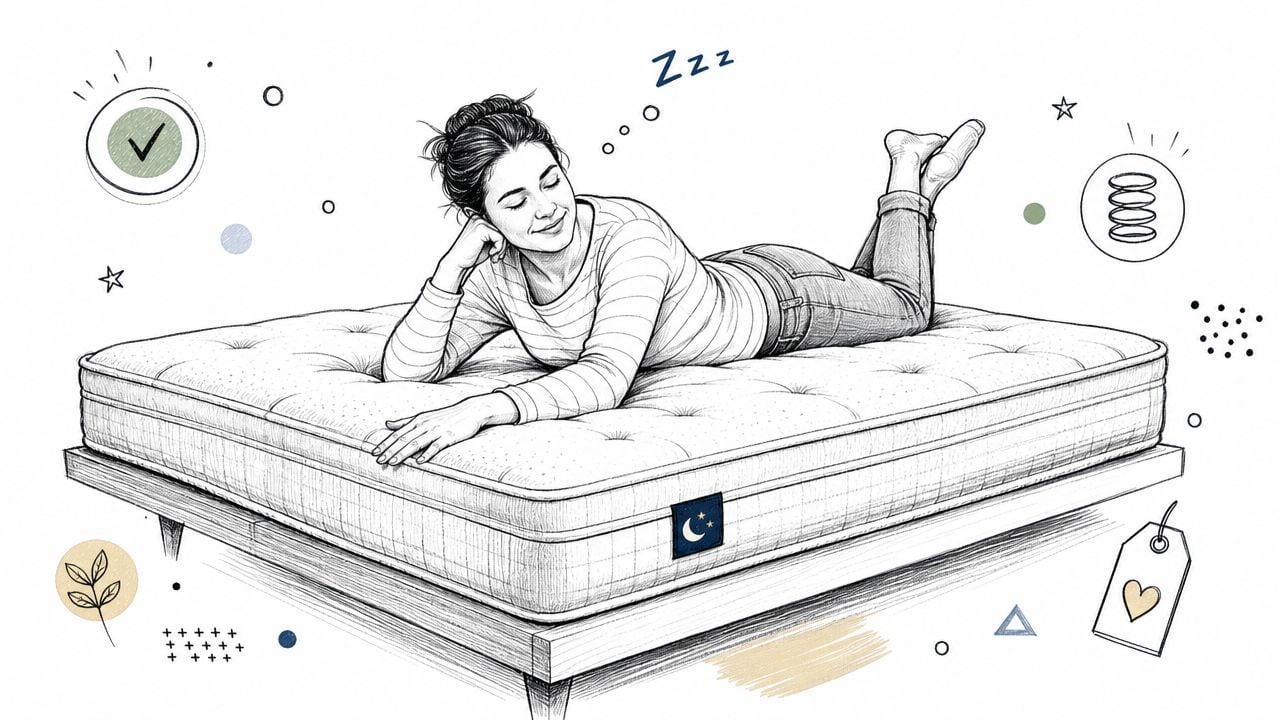
Price matters, but comfort makes the final decision. A queen mattress can fit the budget perfectly and still be wrong if it doesn't support the sleeper's body, sleeping position, or comfort preference.
Comfort decides the final answer
The best use of all this pricing knowledge is simple. It helps a shopper walk in with realistic expectations. It becomes easier to recognize when a mattress is underbuilt, when a premium feature may be useful, and when a price is mostly attached to extras that don't improve the sleeper's night.
Sleep quality also depends on habits beyond the mattress itself. For readers looking to improve the full sleep picture, this guide on how to improve deep sleep quality offers practical ideas that pair well with a better sleep setup.
A mattress should support sleep, not force a shopper to adapt around discomfort night after night.
Build a complete sleep setup
A queen mattress works best as part of a full sleep system. That can include:
- The right pillow: Neck support and sleeping position matter just as much as surface feel.
- A supportive base: The foundation under the mattress affects stability and performance.
- An adjustable base when needed: Some sleepers benefit from more personalized positioning.
- A proper in-store fitting: Testing comfort in person can prevent an expensive mismatch.
For West Texas and SE New Mexico shoppers, the next practical step is to take what they've learned about queen size mattress cost and apply it in person. Price ranges can narrow the field. Testing the mattress finishes the job.
A confident mattress decision usually happens when budget, support, and comfort line up at the same time.
The next step is simple. Visit Miller Waldrop Furniture & Decor to compare queen mattresses in person, explore sleep accessories and adjustable-base options, and use expert guidance to match the right comfort and support to the budget.