

Queen Mattress Cost: A 2026 Buyer’s Guide to Smart Shopping

A queen mattress in the U.S. averages about $1,500, with one industry guide putting the number at $1,537. But the specific cost depends on what's being bought, because basic foam options often land under $1,000 to $1,242, while specialty models average $2,490.
That's why so many shoppers feel stuck. One queen mattress price looks reasonable, another looks shockingly high, and both claim to offer “better sleep.” For anyone shopping in West Texas or SE New Mexico, the question usually isn't just what a queen mattress costs. It's what a good night's sleep will really cost after the mattress, support system, delivery, setup, and long-term comfort are all considered.
A queen is also the most familiar size for a reason. It fits many primary bedrooms, works for couples, and gives solo sleepers room to stretch out. Still, that familiar size can create a false sense that pricing should be simple when it really isn't.
Table of Contents
- Why Is Finding a Queen Mattress Cost So Confusing
- Decoding Queen Mattress Price Tiers
- The 4 Key Factors That Drive Mattress Cost
- Beyond the Sticker Price What Your New Bed Will Really Cost
- Smart Shopping in Lubbock Hobbs and Ruidoso Downs
- Your Path to Better Sleep Starts Here
Why Is Finding a Queen Mattress Cost So Confusing
The confusion starts with the price tags. A shopper can see one queen mattress advertised at a low price and another at several times more, even though both are the same size. That makes people wonder whether one is overpriced, one is underbuilt, or whether mattress pricing is just random.
It isn't random. One guide puts the average queen mattress cost at $1,537, with lower-cost foam averaging $913 to $1,242 and specialty mattresses averaging $2,490 according to this queen mattress cost guide. That spread shows why a single average doesn't answer the actual shopping question.
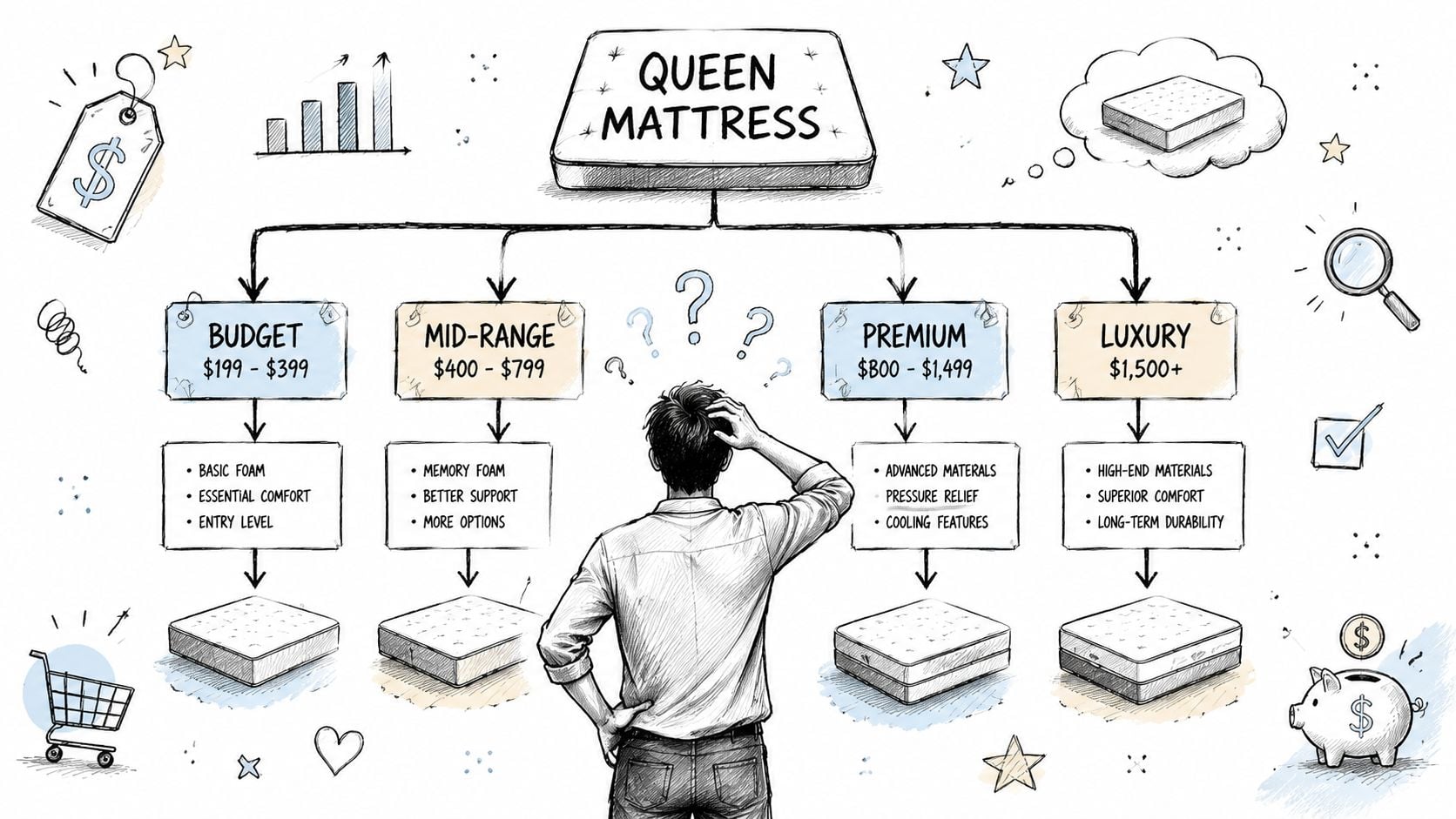
Size stays the same but construction changes
A queen mattress has one standard footprint, but what goes inside that footprint can change dramatically. One model may use simpler foam layers. Another may combine coils, pressure-relieving foams, cooling materials, edge support, or specialty components.
That's why two queen mattresses can look similar from a few feet away and still have very different prices.
Practical rule: A queen mattress price usually reflects materials, build level, and added sleep features more than the queen size itself.
Most people ask the wrong first question
What does a queen mattress cost?” sounds logical, but it skips the part that matters most. A better question is, “What should be paid for the comfort, support, and features this sleeper needs?
That shift makes shopping easier because it moves attention away from chasing the cheapest tag and toward finding value. For a guest room, a simpler option may be enough. For a primary bedroom used every night, pressure relief, motion control, and temperature features may matter much more.
A practical way to think about it is this:
- For occasional use: A lower-cost mattress may fit the job if it won't be slept on nightly.
- For a primary bed: Midrange and premium builds often make more sense when support and comfort need to hold up over time.
- For specific sleep concerns: Specialty features can raise the price, but they can also solve problems that a basic mattress won't.
That's where confidence comes from. Once shoppers understand why queen mattress cost varies, the pricing starts to make sense.
Decoding Queen Mattress Price Tiers
A useful way to shop is to stop thinking in terms of one “normal” queen mattress price and start thinking in tiers. Price tiers make the market easier to read because they connect cost to likely materials, comfort expectations, and intended use.
Queen Mattress Price Tiers at a Glance
| Tier | Typical Price Range | Common Mattress Types | Best For |
|---|---|---|---|
| Essential | Around $913 to $1,242 | Lower-cost foam | Guest rooms, starter budgets, lighter use |
| Midrange | Around $1,298 to $1,789 and near the $1,537 average depending on type | Hybrid, natural/organic, latex, coil | Primary bedrooms, couples, balanced comfort and support |
| Premium | Around $2,490 and up in specialty categories | Specialty and advanced sleep systems | Shoppers seeking added technology or more customized comfort |
These aren't hard walls. They're shopping lanes.
The essential tier
This tier usually appeals to first-time buyers, spare bedrooms, and anyone trying to control upfront cost. The biggest advantage is accessibility. A shopper can often get into a queen mattress without paying for advanced features that may not be necessary.
The tradeoff is simpler construction. That can still work well when expectations are realistic. If the goal is a basic sleep surface and not a highly specific feel, this tier may be enough.
The midrange sweet spot
Many shoppers discover the best balance within this range. In the verified pricing data, hybrids average $1,298 to $1,500, natural or organic models average $1,523, latex averages $1,739, and coil mattresses average $1,789 as shown in the earlier-linked pricing guide. This part of the market tends to line up with shoppers who want stronger support, better comfort materials, and a mattress that feels more substantial night after night.
For many households, this is the zone where “value” starts to feel real. The mattress isn't bare-bones, but it also hasn't climbed into specialty pricing.
A shopper trying to sort through these options can use a simple process like the one in this mattress shopping guide to narrow the field by sleep position, comfort preference, and budget before testing models.
A helpful buying mindset is to match the tier to the job. A guest room and a primary bedroom rarely need the same mattress strategy.
The premium tier
Premium queen mattresses usually cost more because they add more than surface comfort. They may include more advanced support systems, specialized cooling components, or customizable firmness features. This tier fits shoppers who already know a basic build won't meet their needs.
That doesn't mean every shopper needs premium. It means premium pricing usually has a reason behind it.
A simple way to decide between tiers is to ask three questions:
- How often will the mattress be used
- How sensitive is the sleeper to firmness, pressure, or heat
- Is the goal lowest upfront cost or stronger long-term value
Those answers usually point to the right tier faster than staring at price tags ever will.
The 4 Key Factors That Drive Mattress Cost
A queen mattress can be compared to two cars with the same body size. Both can seat passengers and get down the road, but the engine, suspension, interior, and technology package can make one feel basic and the other feel refined. Mattresses work the same way.
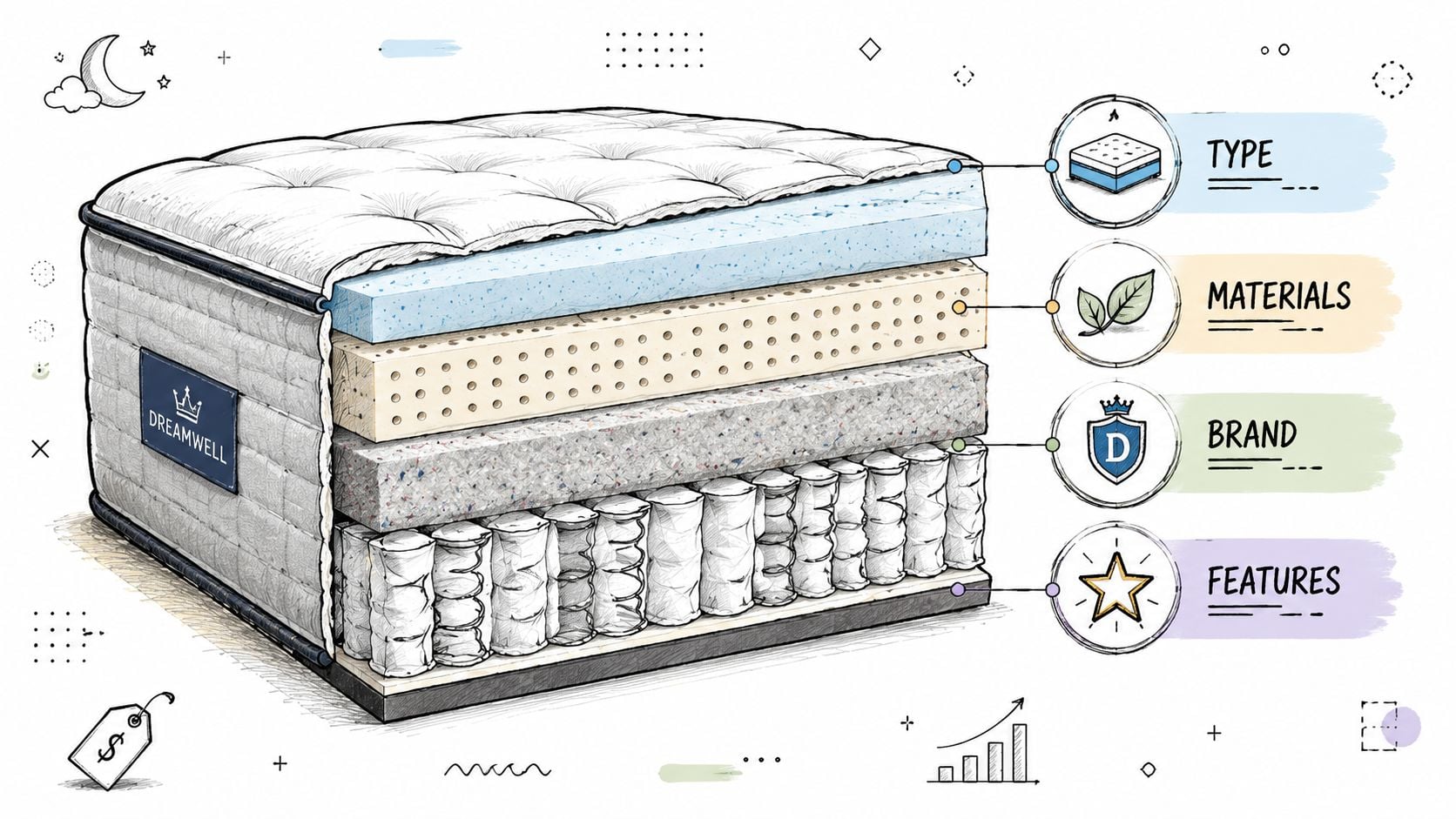
Mattress type shapes the baseline price
Construction style is usually the first cost driver. A queen innerspring mattress had an average U.S. unit price of $1,050 in 2023 according to Statista's mattress pricing data. Broader queen averages run higher because foam, latex, hybrid, and specialty designs can cost more than traditional innerspring builds.
That difference matters because the feel changes too. Some sleepers prefer the bounce and airflow of coils. Others want contouring foam or a hybrid feel that blends support and cushioning.
For shoppers comparing feel categories, this innerspring vs memory foam overview can help translate product language into practical comfort differences.
Material quality changes what the sleeper feels
Not all foam feels the same. Not all coil systems respond the same. Not all covers regulate heat the same way. Material quality changes pressure relief, edge support, motion control, and how consistent the bed feels over time.
A basic example helps. Two mattresses may both say “foam” on the tag, but one may feel flatter and simpler while another feels denser, smoother, and more supportive across the whole surface. The shopper doesn't need engineering language to notice that difference. Lying down for a few minutes usually tells the story.
Brand standards and warranty support affect value
Part of mattress cost comes from what surrounds the mattress itself. Product development, consistency across models, and the support structure behind the sale all add value when a shopper wants confidence rather than guesswork.
That doesn't mean a higher price always equals a better fit. It means the sticker price often includes more than the raw materials inside the bed.
Paying more only makes sense when the sleeper can identify what the added cost is doing for comfort, support, or peace of mind.
Technology raises cost when it solves a real problem
A queen mattress measures 60 inches by 80 inches, giving it 4,800 square inches of surface area, and that common footprint has become a platform for more advanced sleep systems. Premium models can add adjustable firmness, sleep insights, and active temperature control, with queen adjustable models listed from $1,499 to $2,399.20 at Sleep Number's queen mattress page. Those higher prices are tied to added sensors, air chambers, control systems, and proprietary comfort components.
For some shoppers, those features may be unnecessary. For others, they're the whole reason to upgrade.
A couple with different firmness preferences is a good example. If one person likes a firmer feel and the other wants more cushioning, added adjustability may deliver better sleep than a compromise mattress that doesn't satisfy either person. In that situation, technology isn't fluff. It's function.
Beyond the Sticker Price What Your New Bed Will Really Cost
Many shoppers focus on the mattress tag first. That's understandable, but it can lead to a budget surprise later. The bigger number isn't always the mattress alone. It's the total cost of ownership.
The add-ons that change the final number
Most online guidance centers on sticker price, but the all-in cost often includes a foundation, delivery, setup, and removal of the old mattress, as explained in this article on queen mattress budgeting. A queen mattress that looks affordable at first glance can feel very different once the full setup is considered.
That's especially important when the old support system is worn, mismatched, or no longer appropriate for the new mattress.
What shoppers often forget to ask
A practical buying conversation should include more than “How much is the mattress?”
It should also include:
- Foundation needs: Some mattresses perform best with the right support underneath.
- Delivery details: Bringing a queen mattress home isn't always simple, especially in tight hallways, upstairs rooms, or busy schedules.
- Setup expectations: Not every shopper wants to wrestle a mattress into place after work or on a weekend.
- Old mattress removal: Disposal can be more of a hassle than people expect.
A lower sticker price can lose its appeal quickly if the buyer still has to solve all four of those problems alone.
Monthly comfort and total value
Budget pressure is real. Many households care less about the headline number and more about whether the purchase fits comfortably into the monthly budget. Financing can help a midrange mattress feel more reachable, especially when that mattress offers better support and a better fit than the cheapest option.
That doesn't mean everyone should buy more mattress than needed. It means shoppers should compare complete value, not just the first number they see.
Smart Shopping in Lubbock Hobbs and Ruidoso Downs
Local mattress shopping matters because comfort is personal. One sleeper may call a mattress “supportive,” while another says it feels too firm. Reviews can be useful for general impressions, but they can't tell a shopper exactly how a mattress will feel to that body, in that sleep position, with that comfort preference.
In-person testing removes guesswork
Trying a mattress in person helps shoppers notice the details that product descriptions often blur together. Pressure at the shoulders, support under the hips, ease of movement, and edge feel all become clearer within minutes.
That matters in places like Lubbock, Hobbs, and Ruidoso Downs, where shoppers often want to make one well-informed purchase instead of dealing with the inconvenience of a wrong choice.
A mattress can sound perfect online and still feel wrong in person. The body usually gives a clearer answer than the product page.
Local guidance helps when needs are mixed
Couples often shop with different priorities. One person sleeps hot. One wants a firmer surface. One moves constantly. One has no idea what they like, only what they don't like. That's where a knowledgeable guide can help narrow the options and keep the process from turning into a frustrating loop.
A local showroom also gives shoppers the chance to compare models side by side instead of relying on memory and marketing language.
Service matters after the sale too
The value of local shopping doesn't end when the receipt prints. Delivery coordination, setup expectations, and answers after purchase all matter when buying a product used every night.
For anyone planning to test mattresses in person, Miller Waldrop locations in Lubbock, Hobbs, and Ruidoso Downs make it easier to compare options locally instead of treating mattress buying like a blind online gamble.
Your Path to Better Sleep Starts Here
A queen mattress purchase often starts the same way. Someone in Lubbock, Hobbs, or Ruidoso Downs sees one price online, another price in a store, then a third total after adding a foundation, delivery, setup, or financing. It can feel like shopping for a truck and realizing the window sticker is only part of what ownership will cost over time.
A better path is simpler than it looks. Start with how you sleep, narrow the comfort and support level, then check the full ownership cost before you decide. That approach helps you avoid paying twice, once for the mattress and again for the mistake.
A practical buying checklist
A focused plan keeps mattress shopping grounded.
- Start with sleep habits: Side sleepers, back sleepers, hot sleepers, and couples usually need different support and comfort in the same queen size.
- Judge the feel in your actual sleep positions: A mattress should keep your body supported evenly and reduce pressure where you usually notice it at night.
- Price the full setup: Foundation, mattress protector, delivery, setup, and old mattress removal can change the actual budget more than shoppers expect.
- Use financing with a clear limit: Monthly payments can make a better mattress more manageable, but the goal is steady value, not a payment that adds stress.
- Ask how help after the sale works: Guidance before purchase matters, but so do answers about delivery timing, setup, and next steps if something feels off.
Some shoppers also want better sleep from both angles, the bed and the habits around it. This guide to nitric oxide for restful sleep offers useful context on how the body supports sleep quality.
What good value looks like
Good value usually shows up as fewer regrets. The right queen mattress supports your body, fits your budget, and comes with the services that make ownership easier in real life, especially in parts of West Texas and SE New Mexico where shoppers often want to make one well-informed purchase instead of dealing with a return or replacement later.
For shoppers who want a clear next step, Miller Waldrop Furniture & Decor offers in-person testing, pressure-point bed matching, financing options, and delivery coordination. Those services can help turn a long list of mattresses into a shorter list based on comfort, support, and total cost of ownership.
Premium shoppers may also compare higher-end queen mattresses with features like advanced cooling materials, stronger edge support, and more targeted pressure relief. Those features can raise the upfront price, but for some sleepers they improve comfort enough to justify the extra cost over years of use.

Better value usually comes from a better match and a clearer full cost.
A queen mattress is one of the hardest-working items in a home. When it fits well, the price tends to feel worthwhile night after night. When it misses on support, temperature, or comfort, even a low sticker price can end up costing more than expected.