

Living Room Furniture Modern Design Guide for 2026

You're standing in a living room with good intentions and no clear plan. Maybe you've got a builder-basic sofa that never fit the room. Maybe you just bought your first home in Lubbock, Hobbs, or Ruidoso Downs and every search result for “modern living room” makes your house look like a cold white box with no personality.
That's where homeowners often feel stuck. Many believe modern design is a style to be copied. It isn't. It's a way of choosing furniture that looks clean, works hard, and feels calm to live in.
Your Guide to a Truly Modern Living Room
A modern living room should make daily life easier. It should handle movie night, guests, kids, pets, dust, sunlight, and the way people move through the room. If it looks sharp but annoys you every day, it's not modern. It's just expensive.
That's one reason people are paying more attention to their living spaces. The living room furniture market was valued at $228.5 billion in 2024 and is projected to reach up to $389 billion by 2032, according to living room furniture market projections from Credence Research. People want homes that feel intentional, not pieced together.
What modern design really means
Modern design is built on a few simple ideas. Clean lines. Fewer, better pieces. Storage where you need it. Shapes that feel open instead of bulky. Materials that age well.
That doesn't mean your room has to feel stark. In West Texas and Southeastern New Mexico, a modern room can still feel warm, grounded, and lived in. Think soft performance fabric, a wood cocktail table with texture, a chair that supports your back, and a layout that doesn't force everyone to zigzag around furniture.
Modern design should lower stress, not raise it. If your room is hard to clean, hard to walk through, or hard to relax in, start over with function.
There's another layer people often ignore. Floors matter. If you're pairing new furniture with existing wood floors, it helps to compare long-lasting hardwood floor coatings so your finishes, sheen, and durability all work together instead of fighting each other.
A good modern room isn't built by chasing trends. It's built by making smart choices in the right order.
The Three Pillars of Modern Design Philosophy
The easiest way to get living room furniture modern design right is to stop thinking about “decorating” and start thinking about editing. Modern rooms feel good because they leave room for people, light, and movement.

Intentional simplicity
The first pillar is intentional simplicity. That means fewer pieces, but every piece earns its place. A modern room doesn't need six little accent tables, three baskets, and random filler decor. It needs a strong sofa, a useful table, good lighting, and a few accessories with purpose.
If you're unsure where to cut back, remove anything that doesn't help with comfort, storage, lighting, or visual balance. Modern rooms look cleaner because they are cleaner.
A good test is this:
- Keep the anchor piece: Your sofa or sectional should set the tone.
- Keep one hard-working table: A cocktail table or console that serves daily use.
- Keep lighting that solves a problem: Reading, ambiance, or both.
- Drop the filler: If you bought it only to “take up space,” it's probably clutter.
Function first
This one matters most. Your room should reflect how you live, not how a catalog photo looks. If your family watches TV every night, design around that. If you host often, your seating plan matters more than decorative symmetry. If you need storage, build it in.
A modern room starts with behavior. Then furniture follows.
Practical rule: Choose layout before color. If the room flows well, almost every style decision gets easier.
For homeowners trying to make one space do more than one job, this guide on choosing multi-functional furniture for modern homes is a useful next step.
Connection to nature
The third pillar is warmth. Without it, “modern” turns flat. Bring in natural wood, woven texture, stone, soft fabric, and daylight. In our region, sunlight is abundant, so use that to your advantage. Let the room breathe. Skip heavy visual clutter near windows.
A modern room should feel grounded, not sterile. That usually means mixing clean silhouettes with natural surfaces. Smooth upholstery beside textured wood works. Matte finishes work. Soft rugs help. Greenery works if you keep it alive.
Here's the short version:
| Pillar | What it looks like | What to avoid |
|---|---|---|
| Intentional simplicity | Fewer, stronger pieces | Tiny decor overload |
| Function first | Layout based on real life | Copying a showroom blindly |
| Connection to nature | Wood, texture, light | Cold, shiny, over-staged finishes |
How to Choose Your Anchor Furniture Pieces
Most living rooms go wrong at the anchor pieces. People buy a sofa because the color looks good online, then realize it swallows the room, doesn't seat enough people, or feels awkward with the TV.
Start with the piece that carries the room. In most homes, that's the sofa or sectional. For many families, it's also the recliner that gets used every single night.
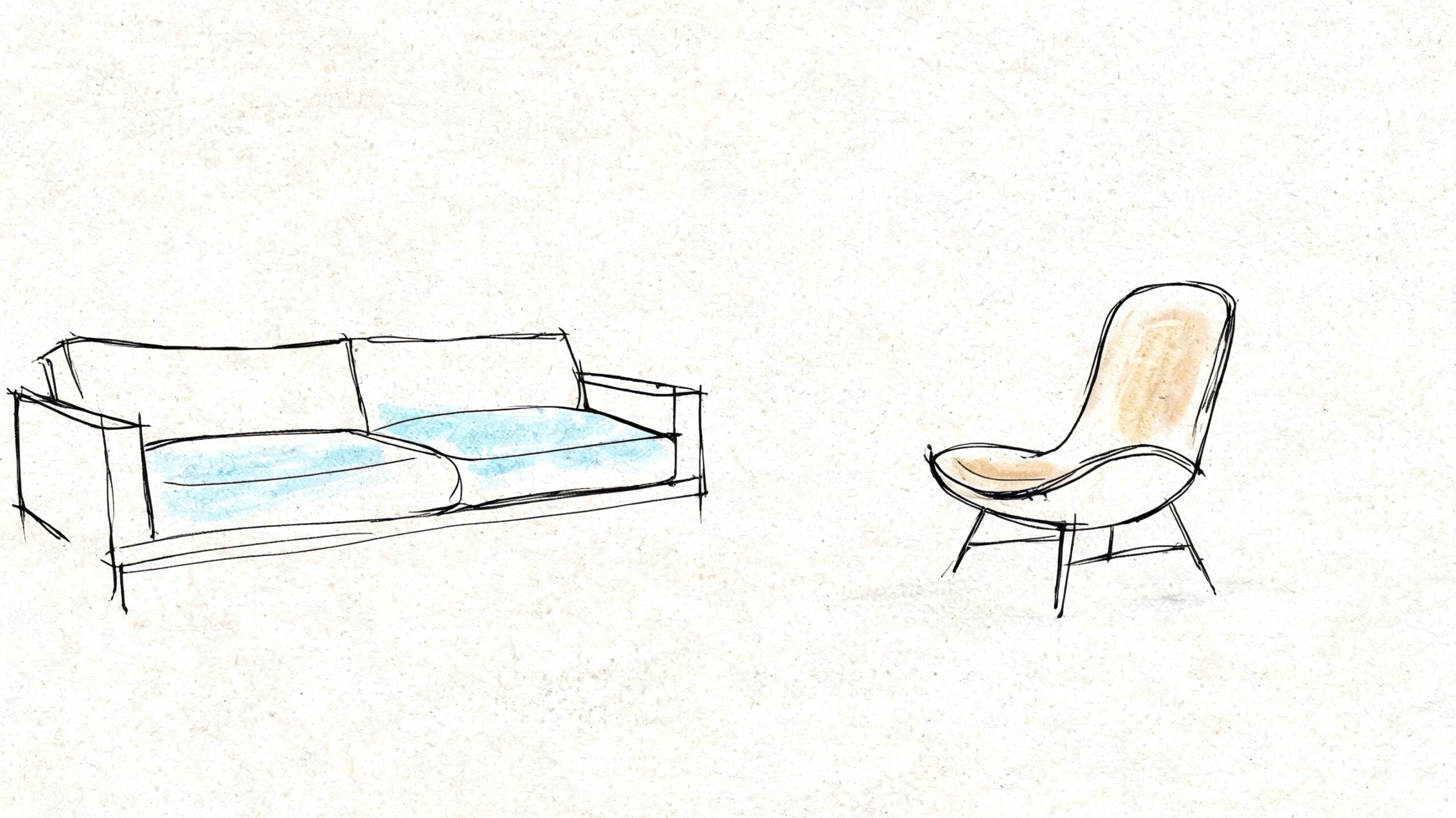
Pick the right sofa before you pick the style
A modern sofa needs the right scale. Standard sofa dimensions generally fall between 72 to 96 inches wide, 36 to 40 inches deep, and 30 to 36 inches high, according to this guide to standard living room dimensions. Those ranges matter because they help a sofa feel substantial without overwhelming the room.
Here's how I'd narrow it down fast:
Choose by room use
If your living room is for conversation and everyday sitting, keep the depth comfortable and not overly loungey. If it's your movie room, deeper seating can work better.Choose by household size
A couple may do fine with a sofa and two chairs. A family usually needs a sectional or a sofa with additional seating that doesn't feel like an afterthought.Choose by traffic flow
If you've got a narrow path to a hallway or kitchen, don't force a huge rolled-arm sofa into the plan. Clean arms and lifted legs usually make a room feel more open.
Sectional or sofa plus chairs
I'm opinionated here. Don't buy a sectional just because it looks current. Buy one if it solves your seating problem better than a sofa and chairs.
A sectional is smart when:
- Your room is open-concept: It helps define the seating zone.
- You host family often: More people can sit comfortably.
- You want one strong focal piece: It reduces the need for extra seating clutter.
A sofa with chairs is better when:
- You need flexibility: Chairs can move.
- Your room is narrower: A sectional may block pathways.
- You want a lighter look: Separate pieces often feel less heavy.
For many households in this region, especially homes with grandparents, kids, or frequent guests, modern recliners deserve a serious look. A 2025-2026 Statista report indicates a 42% rise in power recliner sales in family-heavy regions like West Texas, as they boost room versatility by 35% in multi-generational households, as referenced in this cited trend summary. That lines up with what many families already know. Comfort and accessibility aren't optional.
If someone in your home uses the chair more than anyone uses the sofa, that chair is an anchor piece. Treat it like one.
What modern comfort should look like
Power motion furniture doesn't have to look overstuffed or dated. Clean-lined power recliners and modular seating can blend into a modern room if you focus on silhouette, arm shape, and upholstery.
Look for:
- Low-profile arms: They read cleaner than oversized pillow arms.
- Custom-fit backs: Less visual bulk.
- Performance upholstery or protected leather: Better for daily use.
- Simple bases and legs: They keep the room from feeling heavy.
If you're weighing long-term home updates alongside furniture choices, it's worth reading about hardwood floor ROI for 2026 so your seating, floors, and resale-minded upgrades support each other.
For shoppers comparing styles and room fit, this living room furniture buying guide helps sort through sofas, sectionals, chairs, and motion seating without guessing.
A product type worth considering
One strong example of modern function is a power recliner with a sleek frame. It gives you comfort, easier mobility, and a cleaner look than the bulky recliners many people are trying to replace. If your living room has to serve a growing family, an aging parent, or both, this type of seating usually earns its square footage.
Selecting Materials for the Texas and New Mexico Climate
A modern room in our part of the country has to do more than look good at delivery. It has to survive dust, intense sunlight, dry air, and real use. Many homeowners make a costly mistake during this phase of the process. They shop for style first and climate second.
That approach backfires. A 2025 Houzz report found that 68% of Southwest homeowners struggle with climate-mismatched modern furniture, and materials not suited for arid climates can have their lifespan reduced by up to 30%, according to this summary tied to Good Housekeeping's living room design advice.
What works here and what doesn't
Leather can look fantastic in a modern room, but not every leather is a smart choice for a sun-filled West Texas home. If a sofa sits near big windows and the leather isn't designed to handle that exposure well, it can dry out faster and show wear more quickly. Ask about finish protection and placement before you fall in love with the piece.
Fabric can be even trickier. Some woven fabrics look rich in the store and then grab every bit of dust once they land in a dry home. That doesn't mean avoid fabric. It means choose tighter weaves, practical color variation, and upholstery you can maintain without babying it.
The smartest modern material is the one you won't resent owning six months from now.
Modern Material Guide for Southwest Homes
| Material | Pros for Our Climate | Cons to Consider | Best For |
|---|---|---|---|
| Protected leather | Clean look, easy wipe-down, works well in modern silhouettes | Can struggle in direct harsh sun if placement and finish aren't considered | TV rooms, grown-up living rooms, homes wanting a tailored look |
| Performance fabric | Handles daily use well, easier to live with, softer visual feel | Some textures show dust more than others | Family rooms, homes with kids or pets |
| Matte textured wood | Hides dust better than glossy finishes, adds warmth | Needs the right tone so it doesn't feel too heavy | Coffee tables, consoles, bookcases |
| Glass | Feels light visually | Shows dust and fingerprints fast | Small doses only |
| High-gloss finishes | Crisp and sleek in theory | Dust, smudges, and glare can become annoying | Best avoided in heavy-use rooms here |
My material recommendations
If you want a room that still looks sharp after a long summer, choose materials with forgiveness built in.
- Use matte woods: They hide dust better than glossy surfaces.
- Choose textured neutrals: Small variation in color and weave helps conceal everyday buildup.
- Be careful with glass: One glass table is enough. More than that starts to feel like a cleaning schedule.
- Protect window exposure: Your upholstery will last longer if you manage harsh direct light.
If your room gets a lot of sun, it also pays to think about windows and screening materials. This guide to Sparkle Tech Window Washing screen repair is a practical reference if you're trying to improve airflow and reduce the effect of dust and harsh light on the room overall.
One more opinion. Skip the overly delicate fabric that looks perfect for one staged photograph. In our climate, resilient usually looks better longer.
Mastering the Modern Living Room Layout
A modern room fails fast when the layout is off. You can buy good furniture and still end up with a room that feels cramped, awkward, or strangely empty. Layout is what makes the whole design feel effortless.
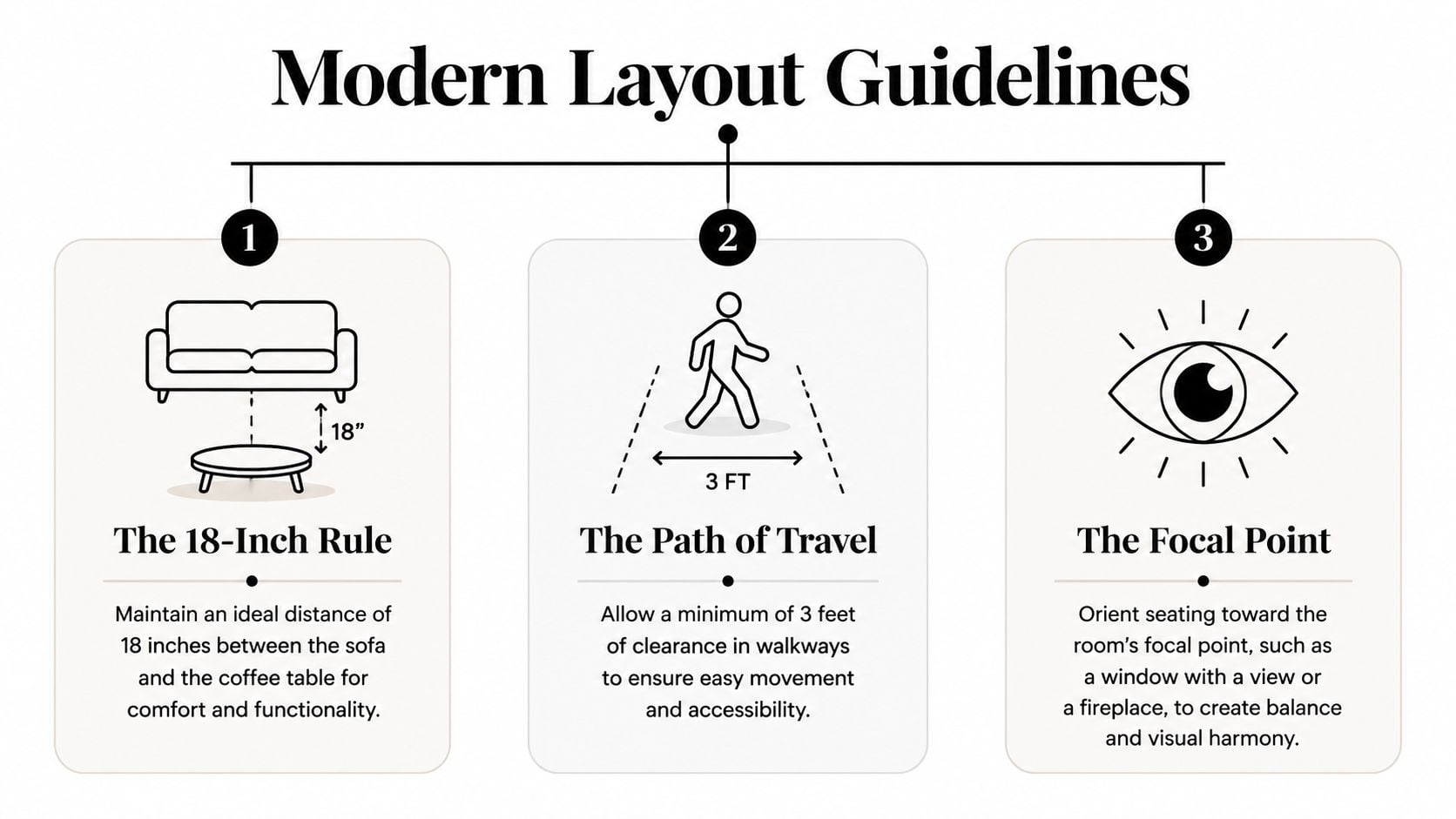
The most useful numbers are simple. Technical spacing guidelines are critical; ensuring 32-40 inch main walkways and 16-20 inch sofa-to-coffee table clearances can improve a room's functionality and user satisfaction by up to 40%, according to this living room size and spacing guide.
The non-negotiable spacing rules
These are the layout rules I'd use first:
- Keep walkways open: Aim for 32 to 40 inches in the main paths through the room.
- Set the coffee table correctly: Leave 16 to 20 inches between the sofa and coffee table.
- Respect viewing comfort: Place seating so the TV feels natural to watch, not like the front row of a theater.
- Let the room breathe: Don't crowd every wall with furniture.
People often think a bigger sofa makes a room feel more luxurious. Sometimes it does the opposite. It steals circulation space and turns normal movement into obstacle navigation.
Layout ideas that work in local homes
For an open-concept great room, use the sofa or sectional to define the seating zone. Let the back of that piece create a soft boundary between living and dining space. Add one chair across from it, not two if the room doesn't need them. Too many floating seats make the room feel busy.
For a rectangular room, place the largest piece on the longest wall if that supports the focal point. Then balance it with a chair, a bench, or a slim console rather than another heavy upholstered piece.
A modern layout should guide movement without announcing itself. If guests hesitate about where to walk, the room needs editing.
Common mistakes that make a room feel off
| Mistake | Why it hurts the room | Better move |
|---|---|---|
| Coffee table too far away | It looks disconnected and becomes annoying to use | Pull it into the recommended range |
| Furniture jammed against walls | The room can feel stiff and less intentional | Give key pieces a little breathing room where possible |
| Too many small pieces | Visual noise replaces calm | Use fewer, stronger shapes |
| Ignoring the focal point | Seating feels random | Aim the room at the TV, fireplace, or best window |
Use planning tools before delivery day
This is one place where design help saves real frustration. A planning service can test whether a sectional blocks a walkway, whether a recliner has the space it needs, and whether the room still feels balanced once tables and lamps are added. This guide to arranging living room furniture is a solid starting point if you want to map the room before you commit.
Miller Waldrop Furniture & Decor also offers design help and custom-order options, which is useful when you need to check fit, configuration, and finish choices before the furniture arrives.
Bringing Your Modern Vision to Life
The final layer is where the room stops looking “done” and starts feeling like yours. At this stage, people either get it right or ruin a clean design with too much stuff.
Modern styling needs restraint, but it also needs personality. Add warmth with texture first. A rug with subtle variation. A wood table with character. A lamp with shape. Pillows that relate to the room instead of shouting over it.
The finishing choices that matter most
Lighting changes everything. Choose lamps that soften the room, not fixtures that feel harsh at night. If your furniture has clean lines, use lighting with a little sculptural interest so the room doesn't become flat.
Art matters too. One larger piece usually works better than a cluster of small filler frames. Modern rooms look stronger when the decor feels edited.
Try this mix:
- One rug with texture: It grounds the room.
- A few meaningful accents: Books, pottery, or objects with real connection.
- A controlled color story: Neutrals plus one accent direction.
- Some softness: Curtains, pillows, or a throw to keep modern from feeling rigid.
Make it personal, not perfect
You do not need a magazine room. You need a room you'll enjoy on a Tuesday night.
If your family uses the living room hard, let that shape the final details. Pick washable or forgiving textiles. Use trays to keep surfaces tidy. Add storage where clutter starts. The best modern rooms aren't the emptiest ones. They're the ones where every item feels chosen.
Your living room should reflect your life clearly enough that it feels personal, and cleanly enough that it feels calm.
A strong modern room in West Texas or SE New Mexico doesn't copy coastal trends. It respects the climate, fits the house, and supports the people using it every day.
If you're ready to turn ideas into a room that fits your home and lifestyle, visit Miller Waldrop Furniture & Decor. You can explore sofas, sectionals, recliners, and accent pieces in person, then talk with a design expert in Lubbock, Hobbs, or Ruidoso Downs about layout, materials, and custom options that make modern design feel practical, personal, and easy to live with.