

Entryway Lockers with Doors for West Texas & SE New Mexico


The mess usually starts small. A pair of shoes by the door, a backpack on the floor, a jacket over the nearest chair.
Then real life piles on. Kids rush in. Dog leashes land wherever there's space. Gym bags, work totes, mail, caps, and boots all collect in the same few feet of the house. In a lot of West Texas and Southeastern New Mexico homes, the entry isn't a big magazine-style mudroom. It's a hardworking stretch of wall near the front door, garage entry, or hallway that has to do a lot with very little space.
That's why entryway lockers with doors solve a very specific problem. They don't just store things. They turn a high-traffic drop zone into something contained, easier to clean, and easier to live with every day.
Reclaim Your Entryway from Clutter
A chaotic entryway changes how the whole house feels. When the first thing you see is a heap of shoes and backpacks, the room starts every day behind.
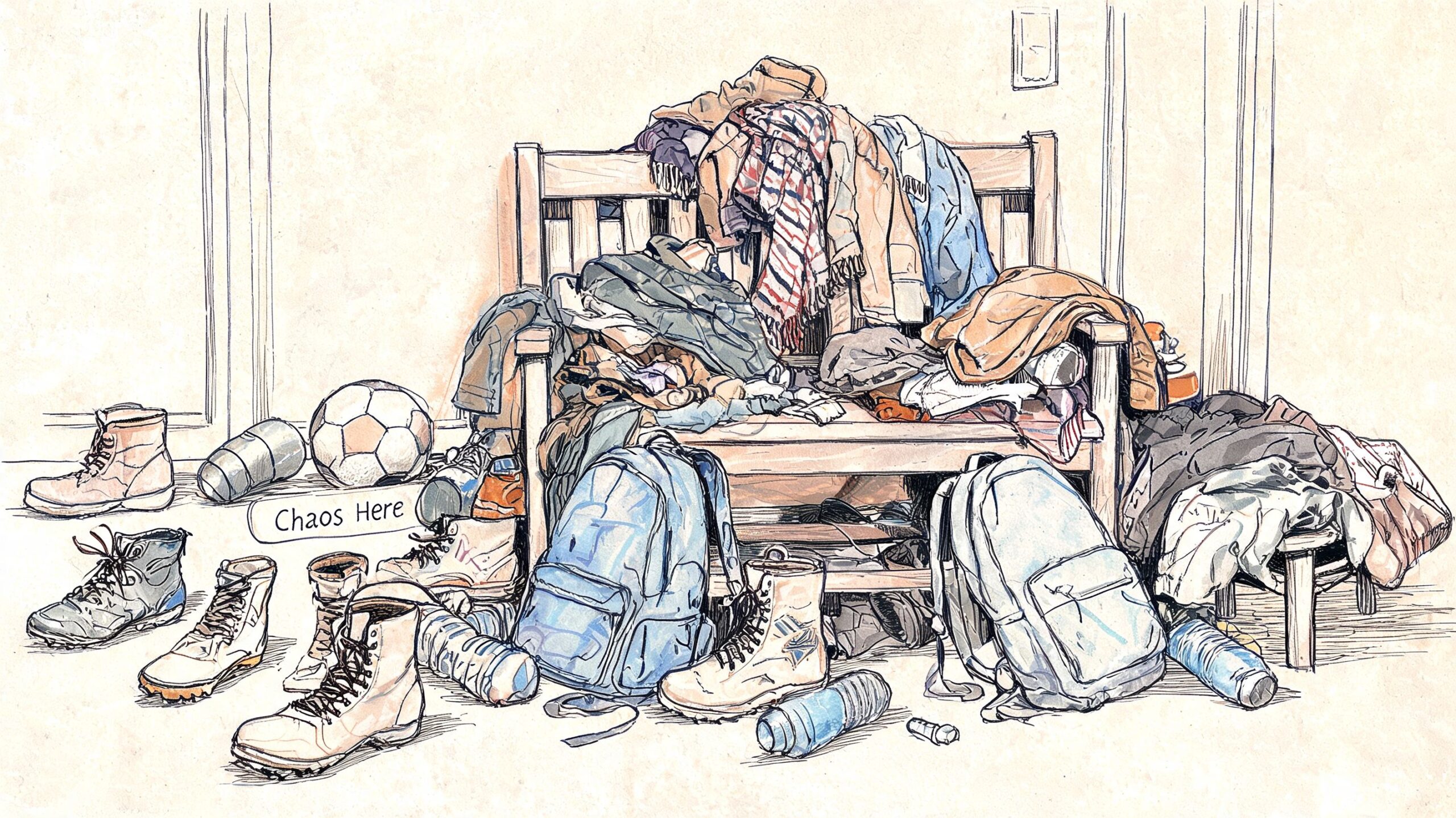
I've seen the same pattern in family homes, apartments, and smaller ranch layouts. The bench looks like a good idea at first. Then coats spill over the side, bags slide underneath, and the whole area becomes one open pile. What people usually want isn't more furniture. They want less visual noise and a place where each daily item has a home.
Why doors change the feel of the room
Doors do something open storage can't. They create a stop point.
You can shut the jackets away. You can hide the soccer bag that won't fit neatly anywhere else. You can keep the everyday mess from greeting you every time you open the door.
Practical rule: If your entryway is doing double duty as a hallway, pass-through, or garage landing zone, concealed storage almost always feels calmer than open storage.
That's especially useful if you're working with an awkward closet near the door. If you have one of those half-useful spaces that catches clutter but doesn't function well, these ideas for converting entryway closets into functional mudrooms are worth a look. The best locker setups often start with rethinking what's already there.
What a better setup usually includes
A good entryway locker zone doesn't have to be complicated. Most successful layouts share a few basics:
- A seated spot: A bench makes shoes easier to deal with, especially on rushed mornings.
- A hidden vertical section: Tall storage keeps coats, bags, and outerwear off the floor.
- A place for daily grab-and-go items: Keys, hats, and smaller accessories need a defined landing spot.
- A cleaner footprint: The fewer loose items visible at the door, the more welcoming the room feels.
If you like the idea of combining seating with hidden organization, a bench seat with storage can help you think through what functions matter most before you choose a full locker system.
Entryway lockers with doors aren't about making your home look formal. They're about making it easier to come in, settle down, and keep moving without the clutter following you into every room.
Choosing Between Open Cubbies and Lockers with Doors
A lot of West Texas and Southeastern New Mexico homes do not have the kind of oversized mudroom you see in national inspiration photos. The entry is often a short wall by the garage door, a hallway niche, or a narrow landing spot that has to work hard every day. In that kind of space, the choice between open cubbies and lockers with doors affects more than appearance. It changes how much mess you see, how often you clean, and how well stored items hold up in a dusty, windy climate.
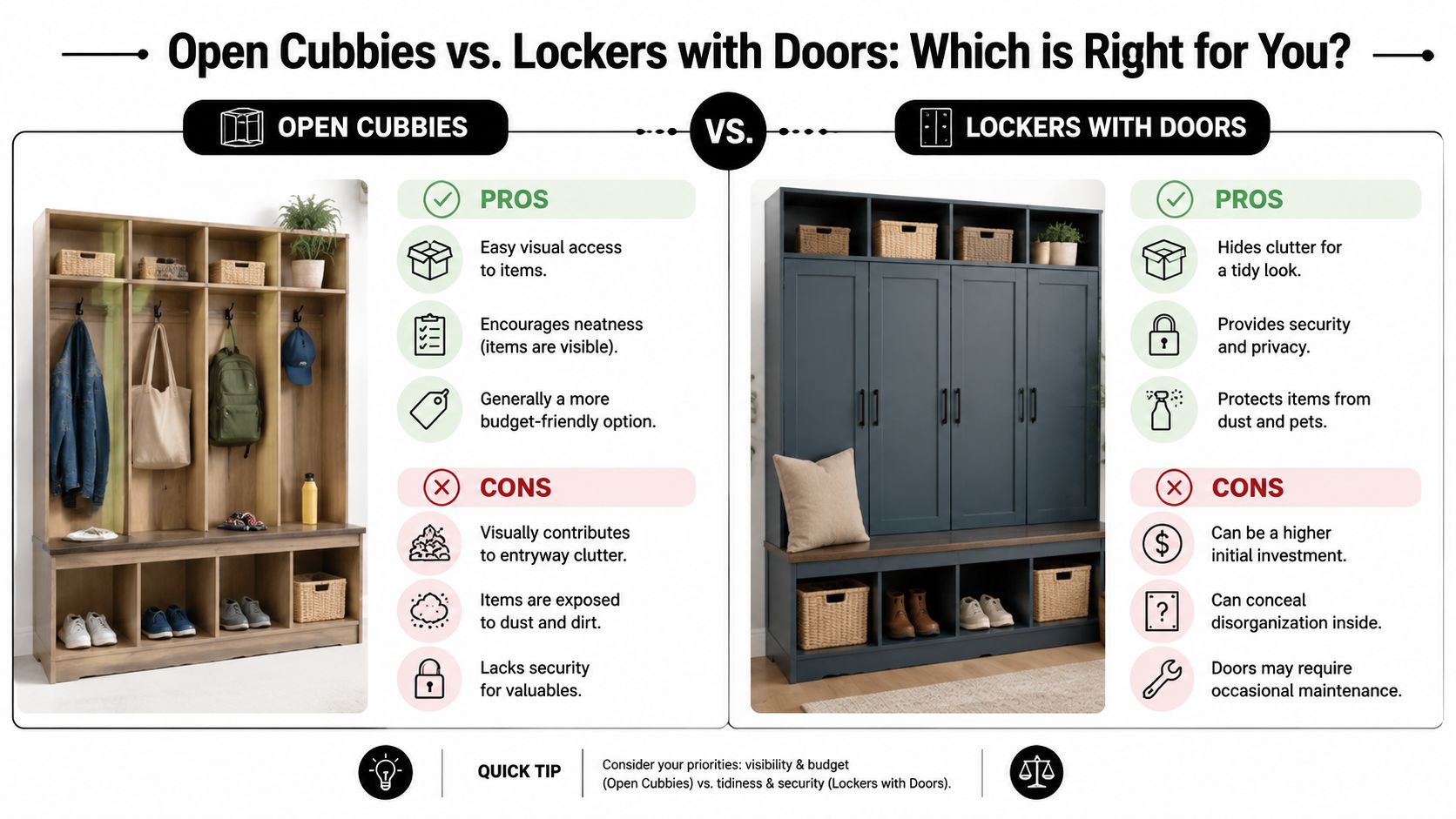
Open cubbies are easy to access. They also leave every pair of shoes, every backpack, and every loose hat out in the room. That can work in a tucked-away drop zone. It usually works less well in a front entry or a garage entry that opens straight into the main living area.
A direct side-by-side comparison
| Option | Works well for | Main drawback |
|---|---|---|
| Open cubbies | Fast access, visible organization, lighter visual style | Dust and clutter stay visible |
| Lockers with doors | Hiding clutter, shielding belongings, a cleaner look | Requires better interior planning |
The main trade-off is straightforward. Open cubbies save a few seconds. Doors reduce visual noise and give stored items more protection from the fine dust that settles fast in this region.
When open cubbies make sense
Open cubbies fit households with simple routines and low volume. One or two people. Fewer seasonal layers. Bags that get emptied when the day concludes.
They also make sense where ventilation matters more than concealment. If kids come in with damp sports gear or work clothes, open storage lets items dry faster unless the locker design includes vents or enough breathing room.
Some homeowners still prefer cubbies for practical reasons:
- Quick visual access: Everyone can spot shoes, bags, and lunch boxes immediately.
- Less hardware to maintain: No hinges, catches, or door alignment to worry about.
- A lighter look: In a very tight entry, open storage can feel less bulky.
Why doors usually win in this region
For many homes here, closed storage earns its keep quickly. Windblown dust gets inside no matter how careful you are, and open shelves give it a place to settle on bags, jackets, and shoes all week. Doors do not create a sealed environment, but they do cut down on direct exposure and make the entry look calmer between cleanings.
That matters in smaller homes where the entry is always in view. A bank of lockers with doors lets a family of four come through the door, drop what they need to drop, and still have the room look under control by dinnertime.
I usually tell homeowners to be honest about their real habits, not their ideal ones. If the family tends to leave something out every day, doors are usually the better choice. If everyone is disciplined and the entry is out of sight, cubbies can work just fine.
Closed storage does ask for better planning inside. Each locker needs the right mix of hooks, shelf space, and clearance for the items that come through your door. Without that, you end up hiding clutter instead of organizing it.
Key Features to Evaluate for Your Family
A locker earns its keep after the first dusty week, not on install day. In West Texas and Southeastern New Mexico, that means looking past the finish and checking how the unit is built, how it breathes, and whether it fits the way your family comes through the door.
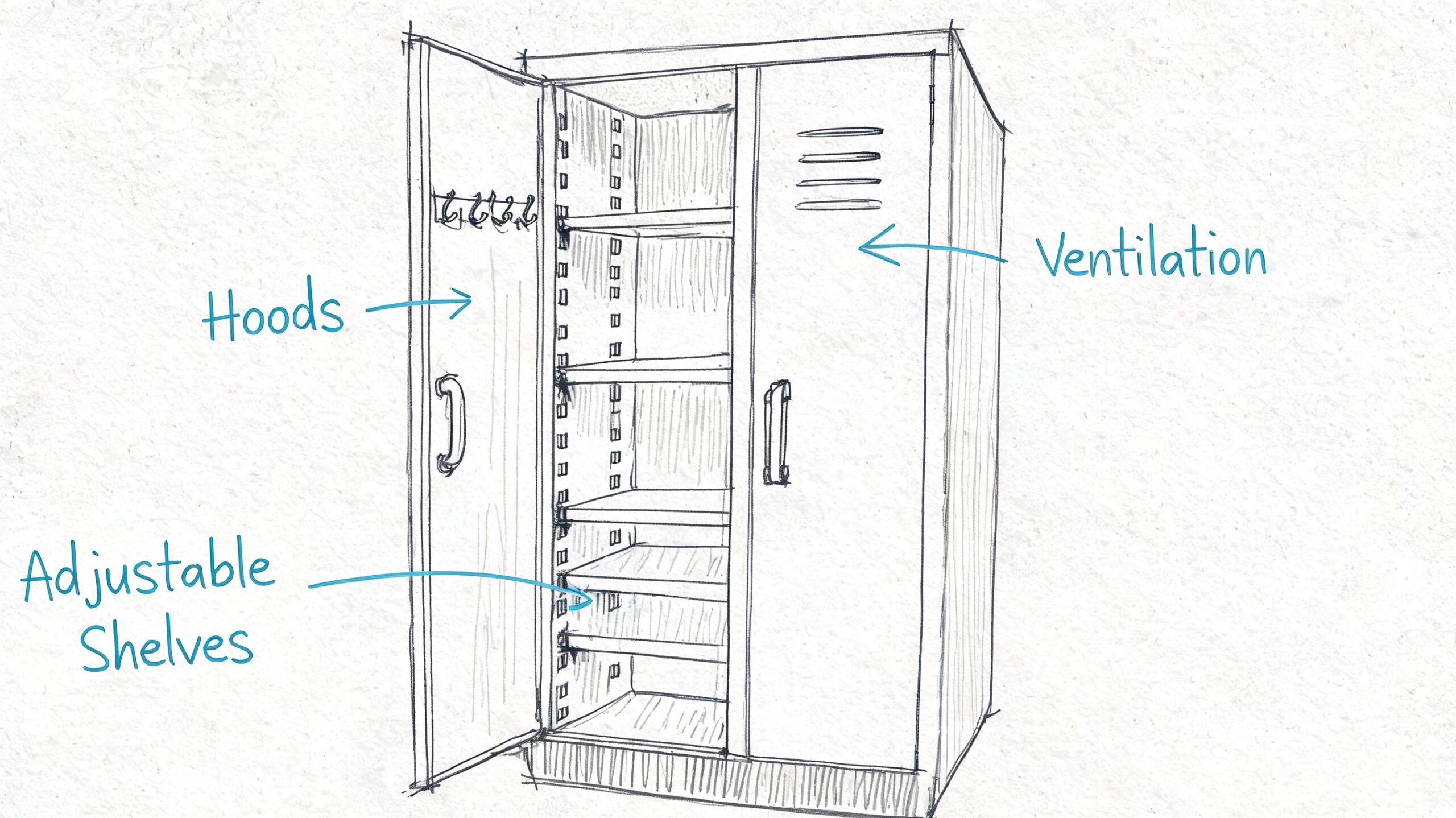
I tell homeowners to judge a locker the same way a cabinet shop does. Start with the box, then the hardware, then the interior setup. If the structure is weak, the rest is decoration.
Start with the carcass and door construction
The cabinet box does the essential work. Look for 3/4-inch plywood sides, a solid face frame or well-supported front edges, and joinery that uses glue plus mechanical fastening. Particleboard and thin panels can work in a low-use guest area, but they show their limits fast in a busy family entry. Shelves sag, screws loosen, and doors stop lining up cleanly.
Steel locker standards are a helpful reference point even for residential builds. The locker construction guidance in this spec reference reinforces the same principle I use in custom work. Strong doors, strong attachment points, and enough material thickness to handle years of opening, closing, and hanging weight.
Door style matters too. Full-height doors give the cleanest look, but they put more stress on hinges and need careful alignment. Split doors reduce that stress and can be easier to live with in tight entries where one person may need shoes while another needs a backpack from the upper section.
Pay close attention to hardware
Hardware is where budget locker units usually give themselves away.
Hooks should mount into a backer or solid panel, not just thin material. A single loaded backpack can pull weak hardware loose, especially when kids yank it sideways instead of lifting it straight up. I prefer fewer, better hooks over a row of light-duty ones that bend or loosen.
Hinges deserve the same scrutiny. Tall doors need hardware that can hold alignment through daily use, and soft-close hinges are worth the upcharge for many families because they reduce slamming and protect the door over time. That matters more in dry climates where wood movement and repeated impact can make small alignment issues show up sooner.
Before you buy, ask these questions:
- What are the sides, shelves, and backs made from?
- Are hooks screwed into solid backing or only into a thin panel?
- Can the shelves be moved later as storage needs change?
- Do the hinges allow adjustment if a door shifts over time?
- Will the door swing work in your actual entry without hitting trim, benches, or nearby doors?
If you are still sorting out those clearances, this room layout planning guide for real homes will help you catch problems before you order cabinetry.
Interior details that matter in this climate
Families here do not need oversized mudroom features copied from homes with huge back entries. They need interiors that deal with red dirt, windblown dust, and the mix of school gear, work bags, and dog supplies that piles up near the main door.
A useful locker interior usually includes three zones. An upper shelf for less-used items. A middle section with hooks or short hanging space. A lower area that can handle shoes, bins, or a boot tray. That layout keeps dirty items low, everyday grab-and-go items at hand, and occasional items up high where they do not crowd the entry.
Ventilation is another feature I would not skip. Enclosed lockers do a better job hiding visual clutter, but they still need some airflow if jackets, caps, or gym bags come in warm or dusty. Small vent cutouts, slatted shelves, and a toe-kick gap can help without giving the piece an industrial look.
Match the features to your household, not a showroom display
The right setup depends on who uses the space and what they drop there every day. A family with younger kids may need lower hooks and easy shoe access. A couple using the garage entry may care more about bag storage, mail control, and a closed compartment for pet supplies. In a narrower West Texas home, one well-planned locker per daily user often works better than trying to squeeze in extra width for occasional guests.
Use this checklist before you finalize a design:
- Count the daily users. Start with the people who use that door every day.
- Measure the bulkiest items. Backpacks, work totes, boots, and sports bags usually drive the dimensions.
- Decide what belongs behind doors. Shoes, cleaning supplies, dog gear, and visual clutter often make the cut first.
- Choose the features that solve your real problems. Adjustable shelves, a bench, ventilation, charging space, or taller hanging room all have trade-offs.
- Leave a little room to adapt. Kids grow, routines change, and a fixed interior can become frustrating faster than people expect.
The best entryway lockers with doors do not try to store everything your family owns. They handle the first five minutes after everyone walks in, which is where most clutter starts.
Planning Your Layout for West Texas Homes
A beautiful locker unit can still be wrong for the room. I see that most often when homeowners buy for appearance first and traffic flow second.
In this region, many entry spaces are compact. You may be working with a narrow hall, a side wall near the garage door, or a modest alcove that can't handle oversized cabinetry. Good planning starts with measurements that reflect real use, not just what fits on paper.
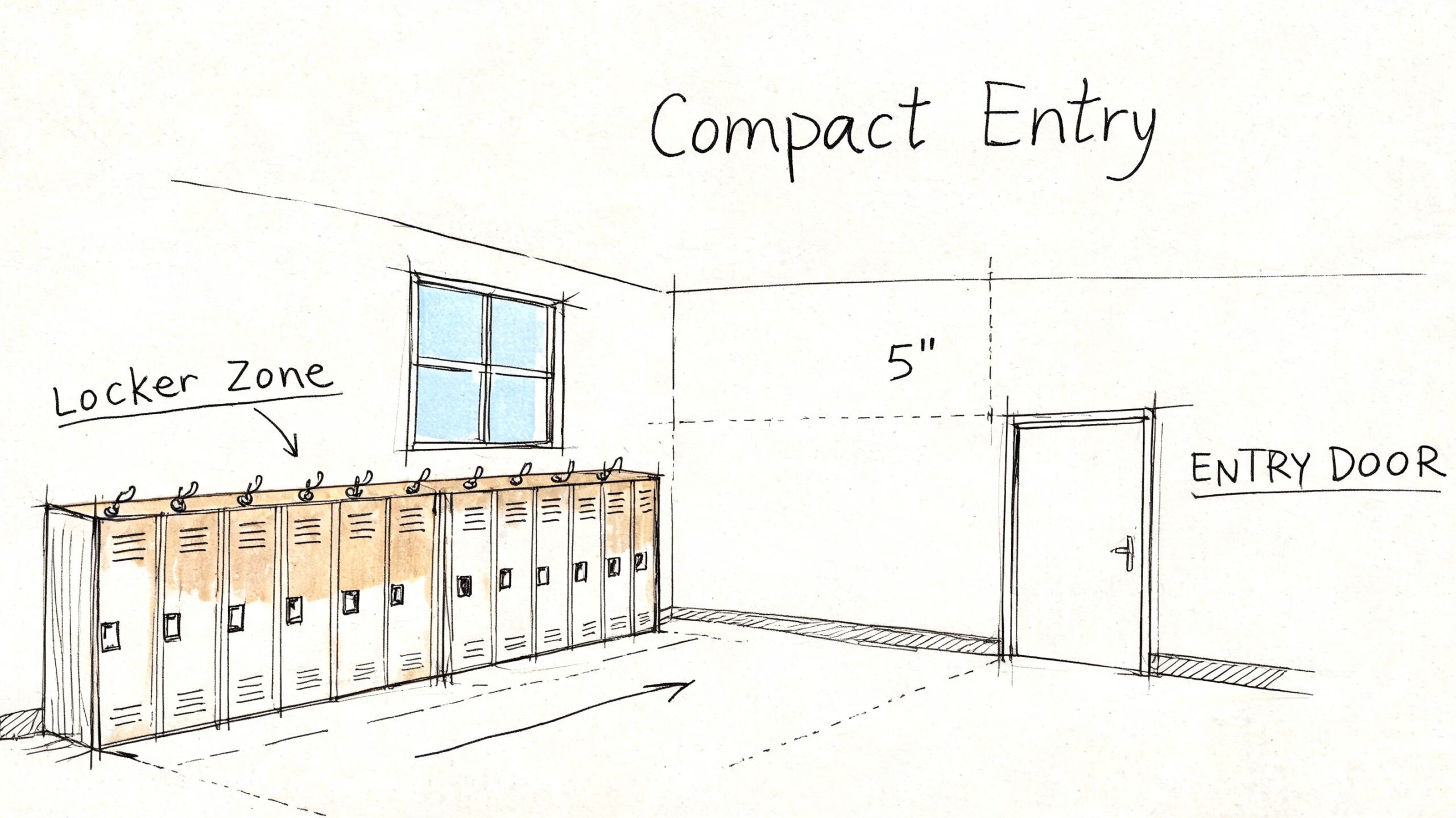
For function, aim for an interior width of 18 to 24 inches per person and a depth of 15 to 18 inches. That range accommodates backpacks and winter coats without crushing sleeves, and many West Texas homeowners in smaller homes prefer narrow units under 3 feet deep, which is a common need custom orders can solve, according to these mudroom locker dimension guidelines.
Measure the room the way you'll actually use it
Start with the wall, then measure everything that interrupts it. Door trim, switches, return vents, outlet locations, and the swing path of nearby doors all matter.
A few practical checkpoints:
- Measure usable width, not total wall width: Trim and door casing reduce what you can really install.
- Check door swing conflicts: A locker door that opens beautifully in a showroom may collide with a nearby wall or entry door at home.
- Walk the path: Make sure people can still pass through while someone is putting on shoes or opening a locker.
- Look up: Ceiling height affects whether tall doors feel built-in or bulky.
If you want help thinking through the room before you shop, this guide on how to plan a room layout is useful for mapping circulation and scale.
Layouts that work in smaller regional homes
Not every home has space for a full wall of built-ins. In smaller ranch-style houses, apartments, or narrow hallway entries, the smarter move is often a tighter configuration with cleaner proportions.
Here are three layout approaches that tend to work well:
Single-wall locker run
This is the most straightforward option. A bench with one or more tall lockers above or beside it creates one defined drop zone.
It works best when the entry wall is uninterrupted and the family needs one central landing area.
Compact modular grouping
A narrower unit paired with a separate bench or shoe piece can be easier to fit than one oversized cabinet. This approach also gives you more freedom if there's a thermostat, window, or door trim interrupting the wall.
Smaller spaces reward narrower pieces with stronger function. Trying to force a giant mudroom look into a tight hallway usually makes the house feel smaller.
Closet conversion or recess fit
If your home has a shallow closet or niche near the door, that footprint can often become a better locker zone than any freestanding piece. A recess fit keeps storage visually quieter and protects traffic flow.
A simple planning formula
Before committing to a configuration, sketch it with tape on the floor and wall. It sounds basic because it is, and it works.
Use this sequence:
- Mark the full depth on the floor.
- Open nearby doors fully.
- Set a chair where the bench would sit.
- Pretend someone is taking off boots while another person walks by.
That quick test reveals problems faster than any online room visualizer. If the room feels pinched during the tape test, it'll feel worse once the lockers arrive.
The right layout for entryway lockers with doors isn't the biggest one. It's the one that lets the house keep moving.
From Functional Storage to a Statement Piece
A good locker wall should solve the daily mess and still look right when a guest steps through the door. In West Texas and Southeastern New Mexico, that matters more than many national guides admit. Homes here often have compact entry zones, strong sun, blowing dust, and hard use from boots, bags, and jackets that change with the season.
Material choice affects how well the piece ages. Painted hardwood, oak veneer over stable plywood, and quality laminate all hold up well when they're finished properly and cleaned consistently. I usually steer families away from delicate finishes near the front door, especially in homes where grit gets tracked in regularly. Dust acts like fine sandpaper over time, and direct sun can age one side of a unit faster than the other.
A few finish directions tend to work well here:
- Painted wood or wood veneer: Works well when you want the lockers to read like built-in cabinetry instead of gym storage.
- Textured laminate: Easier to wipe down and forgiving in busy households with kids.
- Wood with metal hardware: Adds definition without making the entry feel cold.
Style matters, but restraint matters more. Entryway lockers with doors already carry a lot of visual weight, so the supporting pieces should stay simple. One cushion, one mirror, and hardware that ties into nearby lighting or plumbing finishes usually does the job. For broader inspiration, these stylish storage solutions for home decluttering show how storage can stay attractive without turning into visual noise.
Small entries need even more discipline. If the lockers already include a bench and closed storage, every extra item has to earn its footprint.
That is especially true with companion furniture. A narrow catchall surface can help if you need a spot for keys, sunglasses, or outgoing mail, but plenty of entries function better without one. If you're weighing that choice, this guide on what a console table is used for in an entryway can help you decide whether it adds function or just another flat place for clutter.
Maintenance is straightforward. Dust the faces and top edges with a microfiber cloth. Wipe lower panels and bench seats before grit gets rubbed into the finish. Check hinge screws a couple of times a year, because repeated slamming and heavy backpacks can pull doors slightly out of alignment.
Done well, the locker stops reading as a storage unit and starts reading as part of the house. That is the difference between buying furniture and improving the entry.
Your Next Steps for an Organized Entryway
At this point, you know what most shoppers miss.
You know that the right unit has to fit a real West Texas or Southeastern New Mexico floor plan. You know that doors help with visual control and dust. You know to check construction, hinge quality, ventilation, and depth before falling for a pretty photo.
That puts you in a much better position than someone walking into a showroom and pointing at the first mudroom wall they like.
Bring a short list, not just inspiration photos
Before you shop, write down three things:
- Who uses the entry every day
- What absolutely needs to be hidden
- What the room can realistically fit
That short list keeps the project grounded. It also helps you decide faster between a freestanding locker, a bench-and-locker combination, or a more custom configuration.
Think in daily routines
The best storage decisions come from habits, not trends. Where do bags land now? Where do shoes collect? Which coats get used every day, and which ones can live higher up or elsewhere?
If you have kids, labeling can also make the system easier to keep up with over time. Even though it's written for another setting, this advice on taming classroom chaos with labels translates surprisingly well to shared family storage. A labeled bin or shelf often makes the difference between a system that lasts and one that slowly collapses.
The most effective entryway organization is the kind your household will actually maintain on a busy Tuesday.
Aim for progress you can live with
You don't need a giant mudroom. You need a better landing zone.
Sometimes that means a full locker wall. Sometimes it means one well-built piece with a bench, solid doors, and a layout that fits the home you have right now. Either way, the payoff is the same. Less mess in sight, less daily friction, and a more welcoming first step into the house.
If you're ready to turn ideas into a real plan, Miller Waldrop Furniture & Decor is a strong next stop. Visit a showroom in Lubbock, Hobbs, or Ruidoso Downs to compare quality in person, explore pieces from trusted brands like Hooker, Flexsteel, Ashley, and La-Z-Boy, and get help from knowledgeable, non-commissioned staff who understand local homes and local conditions. If your entryway needs a specific size, finish, or configuration, their team can guide you through custom-order options, financing, and delivery so you can choose a solution that fits your space and your routine.