

8 Living Room Sofa Ideas for Every Home


A beautiful sofa can still be the wrong sofa. A room might need a tighter footprint, a different configuration, a harder-wearing fabric, or a shape that can handle a TV, fireplace, and walkway at the same time. That's why the best living room sofa ideas are less about chasing a look and more about making a smart purchase that works with the room, the household, and the way people sit, stretch out, and move through the space.
Consumer preference already points in that direction. In a survey cited by Living Spaces, 46% of respondents preferred modular sofas, 49% chose gray as their favorite sofa color, 43% selected polyester, and 68% preferred a neutral color scheme for the living room, which helps explain why adaptable silhouettes and low-risk palettes keep showing up in real homes and showrooms, not just in mood boards. Those buying habits line up with the scale of the category, too. The global living room furniture market was put at USD 226.5 billion in 2023, with a forecast rise to USD 389.2 billion by 2032 at a 6.2% CAGR from 2024 to 2032, while sofas and couches held about 30% to 32% of total share in 2023, according to Credence Research. Sofas are a long-cycle purchase, so comfort, durability, and layout efficiency tend to matter more than novelty.
That's the lens that makes sofa shopping easier. Miller Waldrop's curated showrooms, custom order support, and design guidance give shoppers a practical way to compare shapes, fabrics, and configurations in person, which matters because living room decisions don't happen in a vacuum. They happen in real rooms, with real traffic paths, real kids, real pets, and real outlets.
1. Sectional Sofas for Rooms That Need to Work Hard
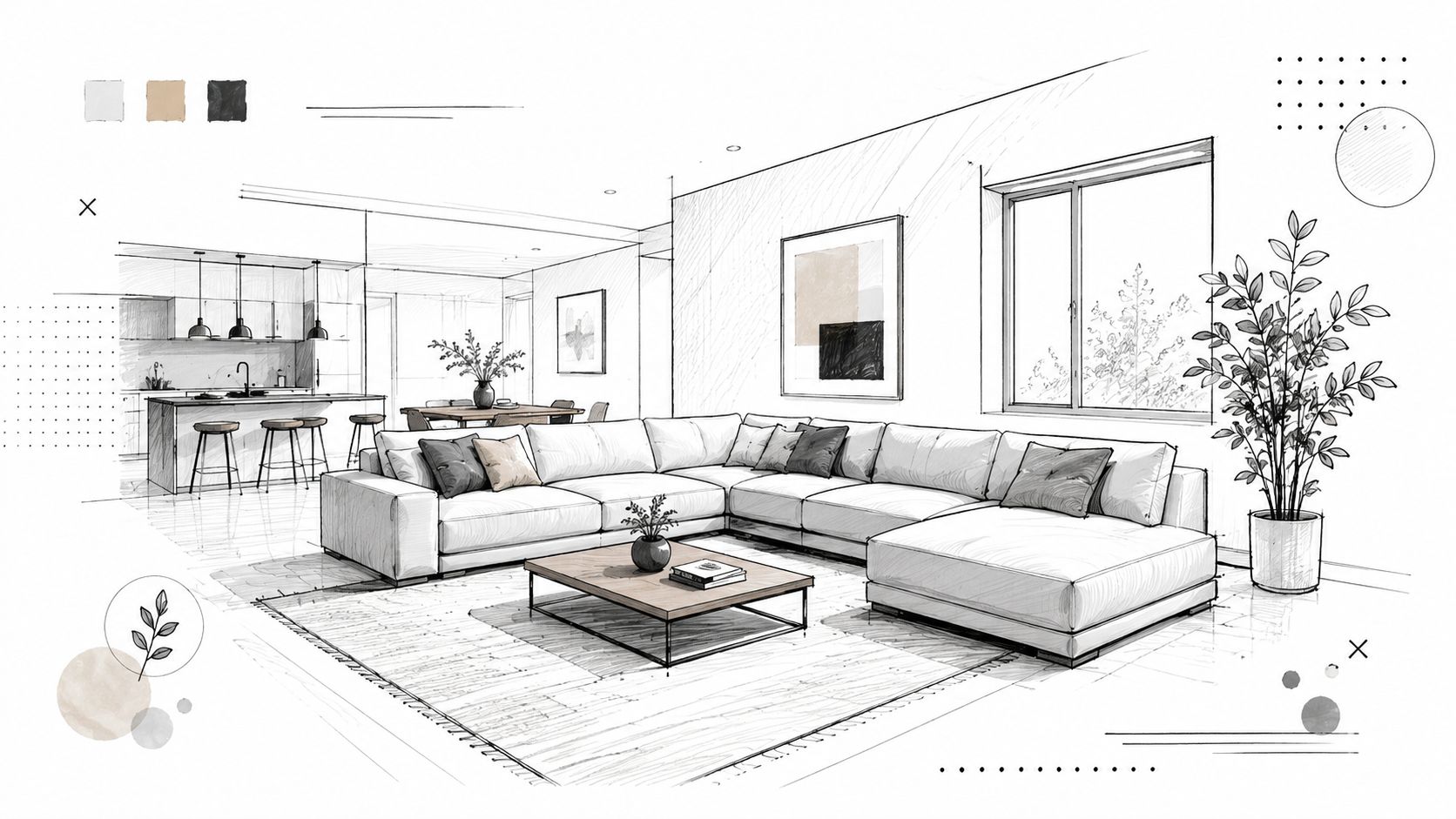
A sectional fits a living room that has to seat a crowd, define a zone, and still stay easy to move through. In open-plan homes, it can help mark the edge of the seating area without putting up a physical barrier, which is useful when the room also connects to a dining space, hallway, or front entry. The best version looks deliberate, not bulky, because it needs to support both conversation and circulation.
Scale is the first decision to get right. A sectional that looks balanced in a showroom can take over a smaller room, crowd a doorway, or leave awkward corners that never get used. Measure the room first, then decide on the configuration, then choose the upholstery.
Practical rule: leave about 30 to 36 inches of walking space around sectional seating so the room still feels easy to cross, especially in layouts with multiple entries or another focal point.
A chaise can make the layout more useful because it gives one person a place to stretch out without forcing the whole sofa to become larger. That works well in family rooms where the same seat has to handle movie nights, reading, and everyday lounging. Miller Waldrop's sectional sofas with chaise are a practical starting point when the room needs flexible seating and a clear place to relax.
In heavy-use homes, upholstery choice matters as much as the shape. A sectional covered in a performance fabric is usually easier to live with than one picked only for color or texture, especially if kids, pets, or frequent guests are part of the mix. For care planning, a sectional couch cleaning guide can help set expectations for routine upkeep before stains and wear become obvious. If the room already has a strong focal point, a neutral sectional can hold the space together without competing for attention.
2. Leather Sofas for a Clean, Collected Look
A leather sofa can steady a living room fast. In a space that feels scattered, it adds visual weight and gives the room a more finished center. Cognac leather often warms up a traditional room, while a darker leather can sharpen a cleaner, more modern layout.
The appeal is practical as well as visual. Leather handles spills, pet hair, and everyday use well in households that see a lot of traffic, so it fits rooms that need to look presentable without feeling precious. The trade-off is finish and grade. Top grain and full grain leather usually hold value better over time, while lower-grade options may look fine at first but age in a different way.
Leather also changes the feel of the seat. Some pieces sit firmer, some feel warmer, and that depends on the hide, the cushion build, and the frame underneath. Miller Waldrop's showroom and design support can help you compare those details in person, which matters more than a small swatch or online photo suggests.
What to watch for before buying
- Check the tanning and finish: Leather varies in hand feel and in the way it ages, so the same color can behave differently from one sofa to another. If you want a deeper reference point on hide types and finish, The Sofa Cover Crafter's sofa guide at https://thesofacovercrafter.co.uk/blogs/sofa-cover-ideas/material-for-sofa-2 can help you compare leather terms before you shop.
- Consider darker tones for busy households: They usually hide everyday marks more easily than pale shades, which can matter in family rooms and homes with pets.
- Plan for upkeep: Conditioning and spot cleaning keep the surface looking intentional instead of dry or patchy.
- Test comfort in person: Leather can feel firmer or warmer depending on construction, and that affects how the sofa sits in daily use.
The room's style should guide the final choice. In ranch-style homes, leather pairs naturally with wood, metal, and textured accessories, so the sofa can feel connected to the rest of the room without extra effort. In a more polished setting, it can carry the room on its own and let the other pieces stay restrained. The mistake is choosing leather only for appearance and skipping seat depth, cushion feel, and arm height until after the purchase.
3. Power Reclining Sofas for Comfort That Still Looks Polished
Power reclining sofas solve a problem that standard sofas can't always handle, which is helping the room work for full-body relaxation without turning it into a screen room that feels sloppy. The best ones keep clean lines from the outside while building comfort tech into the frame. That balance matters in media rooms, family dens, and aging-in-place homes where ease of use is part of the design brief.
Miller Waldrop's power recliner sectional sofa is the kind of option worth exploring when comfort has to be built into the furniture, not added later with extra pillows. Power features can include USB charging, adjustable headrests, and other conveniences, but the room still has to support the mechanism. That means outlet placement, floor clearance, and full recline depth all need checking before the purchase.
Comfort tech only helps if the layout fits
A recliner that looks great in a showroom can feel too deep once it opens at home. That's why shoppers should test every function, not just the seat feel. A manual override can also be worth asking about, since reliability matters in furniture that gets daily use.
The style trade-off is simple. Power recliners often bring more bulk than a standard sofa, so they work best when the room already has enough visual breathing room. Upholstery choice helps here too. A durable, stain-resistant fabric keeps the sofa looking intentional even when the room is used hard.
For a family that wants one piece to handle movie nights, naps, and casual hosting, power reclining sofas are a strong fit. For a room that needs a lighter, more formal profile, they may be too function-first.
4. Performance Fabric Sofas for Real Life
Performance fabrics are the easiest answer for households that use the living room every day. They're designed to hold up against wear, and that makes them a practical choice for homes with kids, pets, strong sunlight, or a constant stream of visitors. In bright desert homes, this matters even more because upholstery can face a tougher test from light exposure and dust.
The benefit is confidence. A sofa covered in performance fabric lets the room stay open for living instead of becoming a space people worry about using. That freedom matters in rental homes, investment properties, and busy family spaces where maintenance has to stay manageable.
The decision should be based on how the room gets used
A light-colored performance fabric can still make sense, even in a high-traffic room, because it shows off the clean finish of the material. The key is understanding the cleaning code and asking what treatment has already been applied. If a swatch looks good under showroom lights, it should also be checked in natural light at home before a final decision.
Performance fabric works especially well on modular seating, sectionals, and everyday family sofas. It's also a good way to keep a room feeling relaxed without resorting to dark upholstery that can make the space feel heavier than it needs to be. For people who want style without babysitting the sofa, this is usually the most practical route.
The main trade-off is texture. Some performance fabrics feel more structured than plush, so shoppers should test the hand feel as carefully as the color. If the couch is going into a room with lots of windows, fade resistance should be part of the conversation from the start.
5. Sleeper Sofas for Rooms That Need to Do Two Jobs
Sleeper sofas are the right answer when the living room also has to host guests. They're especially useful in first homes, small dens, bonus rooms, and home offices that need to convert quickly. The better versions no longer feel like a compromise, because their mattresses and mechanisms are designed for real use, not just occasional backup sleeping.
Space planning is the main issue. A sleeper that fits beautifully when closed can become awkward if the room doesn't have enough open floor space once the bed is extended. That's why people need to think about the room in two states, seated and sleeping.
Make the sleeper choice with the bed open, not closed. If the room can't handle both versions comfortably, the sofa isn't the right fit.
Sofa dimensions matter more here than almost anywhere else. Miller Waldrop's sleeper sofa dimensions resource is useful for comparing how different mechanisms change the footprint. A pull-out, fold-down, or click-clack design will all behave differently, and the arm height can affect how easy it is to get in and out of bed.
The best sleeper sofa is the one that gets used without frustration. That means testing the opening mechanism multiple times, checking the mattress comfort with a full lie-down, and making sure the upholstery can handle the room's everyday wear. For homes that host extended family or overnight visitors often, this category is hard to beat.
6. Transitional Sofas for Homes That Keep Evolving
Transitional sofas are often the safest long-term choice because they sit between traditional and modern without locking the room into one style. That makes them especially effective in homes where furnishings will change over time. A neutral transitional sofa can live through several decor refreshes, from family heirlooms to newer accent pieces.
The design strength here is restraint. Clean lines keep the sofa current, while subtle shaping keeps it from feeling cold. In practical terms, that means the piece can work in a resale home, a multi-generational home, or a room that mixes Spanish colonial details with newer furnishings.
Transitional style works because it leaves room for the rest of the house
A sofa with this profile doesn't demand that everything else match. Instead, it gives the homeowner room to layer in wood, metal, textiles, and artwork without the room becoming visually noisy. That flexibility also helps when a family wants one piece that will outlast a trend cycle.
Neutral fabrics in taupe, gray, or cream are usually the easiest route because they let wall color, artwork, and pillows do the heavier lifting. The danger is choosing something so plain that the room loses warmth. Texture solves that problem. Linen-look weaves, soft throws, and patterned cushions keep the sofa from fading into the background.
For shoppers who know the room will change, transitional style is often the most sensible investment. It's adaptable, familiar, and easy to build around without feeling generic.
7. Upholstered Sofas in Natural Fibers for Softness and Character
Natural fiber sofas bring a different kind of value to a living room. Linen, cotton, wool, and similar materials create a softer surface and a more relaxed mood, which is why they suit bohemian, cottage-style, and coastal spaces so well. They also age in a way that can feel more personal than synthetic alternatives.
That aging is part of the appeal. Natural fibers tend to develop character over time, which can make a room feel lived in rather than staged. The trade-off is maintenance, since these materials usually ask for more care than performance fabrics.
The case for natural fibers is emotional as much as visual
These sofas work best in rooms where the owner cares about texture, touch, and the quiet warmth that comes from organic materials. A linen sofa in a neutral shade can make layered pillows and throws feel more intentional, and a wool blend can add depth without relying on pattern alone. In homes that want a breathable, tactile feel, natural fibers are hard to replace.
The downside is that they aren't the low-maintenance answer for every family. A house with small kids or a lot of foot traffic may need to use throws, protectant treatments, and professional cleaning to keep the sofa looking fresh. That doesn't make natural fibers impractical. It just means the owner has to choose them with clear eyes.
For homeowners who want authenticity more than easy cleanup, natural fiber sofas can be a strong fit. They work best when the rest of the room supports that softness with rugs, wood accents, and relaxed lighting.
8. Modular and Customizable Sofas for Rooms That Change Over Time
A room that has to change with family life needs furniture that can change with it. Modular sofas fit that problem well because the layout can shift as the home shifts, whether the goal is more seating, a better traffic path, or a different conversation setup. In a recent industry survey, 46% of respondents chose modular sofas over other styles, which matches the way many households now shop for seating.
That flexibility matters in apartments, open-plan homes, and rooms with awkward dimensions. One setup can form an L-shape, another can split into separate seats, and a chaise can be added later if lounging becomes the priority. In a home with design goals that will probably evolve, the sofa can adapt to the room instead of making the room adapt to the sofa.
Customization is the point
Miller Waldrop's custom order support is useful because it lets shoppers work through size, fabric, finish, and configuration before they commit to a shape that only partly fits. That matters in rooms with an odd corner, a narrow walkway, or two seating areas that need to stay visually connected. It also helps keep the sofa in step with the rest of the home as other pieces are replaced over time.
Trade-off is planning. Modular pieces ask for more upfront thought than a standard sofa, especially when aisle clearance, module depth, and future rearrangement are part of the decision. A shopper who measures carefully can avoid a sofa that blocks circulation or feels oversized once it arrives. That extra effort pays off when the room stays useful for years instead of turning awkward after the first layout change.
For a home that is still evolving, a modular or customizable sofa is often the most practical buy. It gives the room room to change, and that matters when comfort, scale, and long-term use all have to work together.
8-Style Living Room Sofa Comparison
| Item | Implementation complexity | Resource requirements | Expected outcomes | Ideal use cases | Key advantages |
|---|---|---|---|---|---|
| Sectional Sofas: Maximizing Your Living Room Layout | Medium, requires measurement and layout planning | High floor space, moderate–high cost, delivery/installation help | Maximizes seating, defines conversation zones | Open-concept living, large families, entertaining | Flexible configurations, high seating capacity, zone definition |
| Leather Sofas: Timeless Elegance and Easy Maintenance | Low, choose leather grade and finish | Higher upfront cost, periodic conditioning, low cleaning effort | Long-lasting, polished aesthetic, easy surface cleaning | Allergy-prone households, formal rooms, busy families | Durable, easy to clean, ages well, hypoallergenic |
| Power Reclining Sofas: Comfort Technology Meets Style | Medium–High, electrical needs and function testing | Requires outlets, higher cost, heavier and serviceable motors | Customized recline support, enhanced relaxation and tech features | Media rooms, multi-generational homes, mobility needs | Motorized adjustment, USB/heated/massage options, ergonomic support |
| Performance Fabrics: Durable Style for Active Living | Low, fabric selection similar to standard upholstery | Moderate cost, minimal special maintenance, fabric testing recommended | Stain/fade resistant, long-lasting appearance in high-use areas | Homes with pets/children, sunny climates, rentals | Easy maintenance, UV and stain resistance, durable for high traffic |
| Sleeper Sofas: Multi-Functional Living Solutions | Medium, verify mechanism and clearance | Moderate cost, needs floor clearance and occasional mattress care | Dual seating and sleeping function, practical guest accommodations | Small homes, apartments, guest rooms, multi-purpose spaces | Space-saving, provides overnight sleeping option, versatile |
| Transitional Style Sofas: Bridging Classic and Contemporary | Low, select neutral styles and accessories | Moderate cost, versatile fabric choices, simple styling | Timeless, adaptable look that pairs with many décors | Resale homes, evolving interiors, multi-generational households | Versatile across styles, long-lasting appeal, easy coordination |
| Upholstered Sofas in Natural Fibers: Warmth and Authenticity | Low–Medium, require care planning and protection | Higher maintenance, may need professional cleaning, moderate–high cost | Warm, authentic aesthetic with natural patina over time | Sustainable homes, bohemian/coastal, owners valuing natural materials | Natural look and texture, breathable, sustainable, ages gracefully |
| Modular and Customizable Sofas: Your Design, Your Way | High, detailed planning, custom ordering, measurement critical | Higher cost, longer lead times, design consultation required | Tailored fit, reconfigurable layouts, adaptable as needs change | Irregular room layouts, renters, design-forward or growing families | Infinite customization, reconfigurability, easier module-moving |
Turn Inspiration Into a Sofa Plan
The easiest way to turn living room sofa ideas into a real purchase is to narrow the decision around the room itself. Measure the wall length, note how much walkway the room needs, and identify where the TV, fireplace, windows, and doors pull the eye. Then decide whether the sofa has to prioritize seating capacity, lounging comfort, guest sleeping, or a cleaner visual profile.
Room size should steer the shape first. A sectional can solve a wide, open room. A transitional sofa can keep a changing room flexible. A power recliner can make family time easier. A sleeper sofa can save space in a room that doubles as a guest area. The right answer isn't the most fashionable one, it's the one that lets the room function without feeling crowded or underused.
Upholstery should come next. Households with pets, kids, or strong sunlight usually benefit from performance fabric or leather, while people who care most about texture and softness may prefer natural fibers. If the room has a lot of daily use, ask how the fabric cleans, how it wears, and how it looks in natural light before deciding. That single step prevents a lot of regret.
Bring room dimensions, photos, outlet locations, and any must-have measurements to the showroom. That makes the shopping conversation faster and a lot more productive.
Miller Waldrop makes that process easier with three curated showrooms in Lubbock, Hobbs, and Ruidoso Downs, plus design support, custom order options, and a selection that includes living room sofas, sectionals, power recliners, and related furniture pieces. Shoppers can ask about brands, custom fabrics, finishes, configurations, delivery, and flexible financing, then compare options in person instead of guessing from a screen. It's a practical way to move from inspiration to a sofa that fits the room and the household.
For shoppers who want more room styling support, pairing the sofa search with art, lighting, and accent pieces can help the whole space feel finished. A well-chosen sofa creates the anchor, but the room works best when the furniture, textiles, and wall decor support one another, as a thoughtful Brooklyn inspired artwork guide shows in another context.
Miller Waldrop Furniture & Decor helps shoppers compare sofa styles, materials, and configurations in a way that fits real rooms and real routines. Visit Miller Waldrop Furniture & Decor to explore the collection, then bring your room measurements and photos into one of the three showrooms to get design help on fabrics, finishes, delivery, and custom options.