

How to Choose the Best Sectionals for Small Spaces


Choosing the best sectionals for small spaces is about empowering yourself with smart design knowledge. The perfect piece will often be an apartment-sized model with a reversible chaise, sit on elevated legs, and have slim arms. These design elements are the tools you need to create a streamlined profile, maximizing your seating without visually overpowering a smaller room. Opting for lighter-colored fabrics is another powerful choice, making your entire space feel bigger and more open.
Your Guide to Maximizing Small Space Living
That closed-in feeling you get from a cramped living room is all too common, but you have the power to completely change that dynamic with the right furniture. It might sound counterintuitive, but a well-chosen sectional—often seen as a piece for sprawling homes—can be the hero that makes your compact space feel functional, stylish, and surprisingly spacious.
This guide will empower you to make the perfect choice for your home. We're going to dive into the smart design strategies that make a huge difference. You’ll learn how to assess your room like a seasoned designer, get familiar with the different configurations available, and pick materials that contribute to that airy, open feeling you're after.
Understanding the Modern Sectional
The demand for furniture that can do more in less space has exploded, especially in cities where every square foot is precious. This isn't just a feeling; it's a massive market trend. The global sectional sofa market hit around USD 39.7 billion in 2024, largely because people want adaptable seating that fits their lives. You can dig deeper into these trends over at Growth Market Reports.
What does this boom mean for you? It means you have more innovative, space-savvy sectional designs to choose from than ever before. You have options crafted specifically to conquer the challenges of a smaller floor plan.
The goal isn't just to cram furniture into a room. It's to find a piece that elevates the flow, function, and overall feel of your home. With the right knowledge, you can choose a sectional that does that better than almost anything else.
Key Considerations for Your Space
Before you start browsing, you need a clear game plan. Think of these as the core principles that will guide you to the perfect sectional. When you're looking for the best furniture for small spaces, a few non-negotiable factors come into play.
- Scale and Proportion: Your sectional needs to feel like it belongs in the room, not like it’s taking it over. Look for designs with a lower profile and less visual bulk.
- Configuration: A reversible chaise is your small-space superhero. It gives you incredible flexibility to change your layout if you ever decide to rearrange things or even move to a new place.
- Visual Weight: This is a big one. Features like raised legs create space underneath the sofa, making the room feel less crowded. Lighter upholstery colors also make a sectional feel less heavy and imposing, contributing to that sense of openness.
With these fundamentals in mind, you can shop confidently for a piece that delivers maximum seating and style without hogging your entire floor plan. It's time to turn that small area into the cozy, functional retreat you've been dreaming of.
Key Considerations for Small Space Sectionals
Running through these key factors will save you a ton of time and prevent costly mistakes. This table breaks down what truly matters when you’re working with limited square footage, empowering you to make a smart decision.
| Factor | Why It Matters for Small Spaces | Quick Tip |
|---|---|---|
| Overall Dimensions | The most obvious, but crucial. It has to physically fit while leaving room for foot traffic. | Measure your space first, and then measure again. Use painter's tape to outline the sectional's footprint on your floor. |
| Reversible Chaise | Offers unmatched flexibility. You can switch the chaise from left to right to fit different room layouts. | This is a must-have if you think you might move or like to rearrange furniture periodically. |
| Arm Style | Bulky, rolled arms eat up valuable inches. Slim, track, or even armless styles are far more efficient. | Look for track arms. They provide a clean, modern look and maximize the available seating area. |
| Leg Height | Elevated legs create an illusion of spaciousness by allowing you to see the floor underneath. | Tapered or pin-style legs in a wood or metal finish can add a touch of style while lifting the sectional off the ground. |
| Back Height | Low-back sectionals don't obstruct sightlines, making the room feel more open and less cluttered. | A lower back is perfect for placing a sectional in the middle of a room or in front of a window. |
Considering these elements from the get-go ensures you’re not just buying a sofa, but making a smart, long-term investment for your home. Your journey to finding that perfect hero piece starts now.
How to Measure Your Room Like a Designer
Before you can choose your sectional, the most important step happens right in your own home. It’s easy to fall for a beautiful sofa online or in a showroom, but getting it home only to find it overpowers the room is a design tragedy. Here’s how you can get intimately familiar with your space first.
Think of it this way: you’re creating a blueprint for success. Grab a notepad and sketch out the basic shape of your room. Measure each wall and write down the numbers. Then, add in all the permanent fixtures—the "unmovables" like doorways, windows, fireplaces, and even electrical outlets. This little map is your secret weapon.
Map Your Traffic Flow
Now, pay attention to how you walk through the room. Where are the main pathways? A sectional shouldn't feel like an obstacle course. You want to keep the flow easy and open, so a good rule of thumb is to leave 30 to 36 inches of clearance for major walkways. Anything less and the space will start to feel cramped and difficult to navigate.
Getting the measurements right is crucial, and it goes beyond just the length and width of the walls. For a complete walkthrough, you can use our guide on how to measure your furniture to ensure a perfect fit every time.
This handy infographic breaks down the whole process, from that initial measurement to the final styling touches.
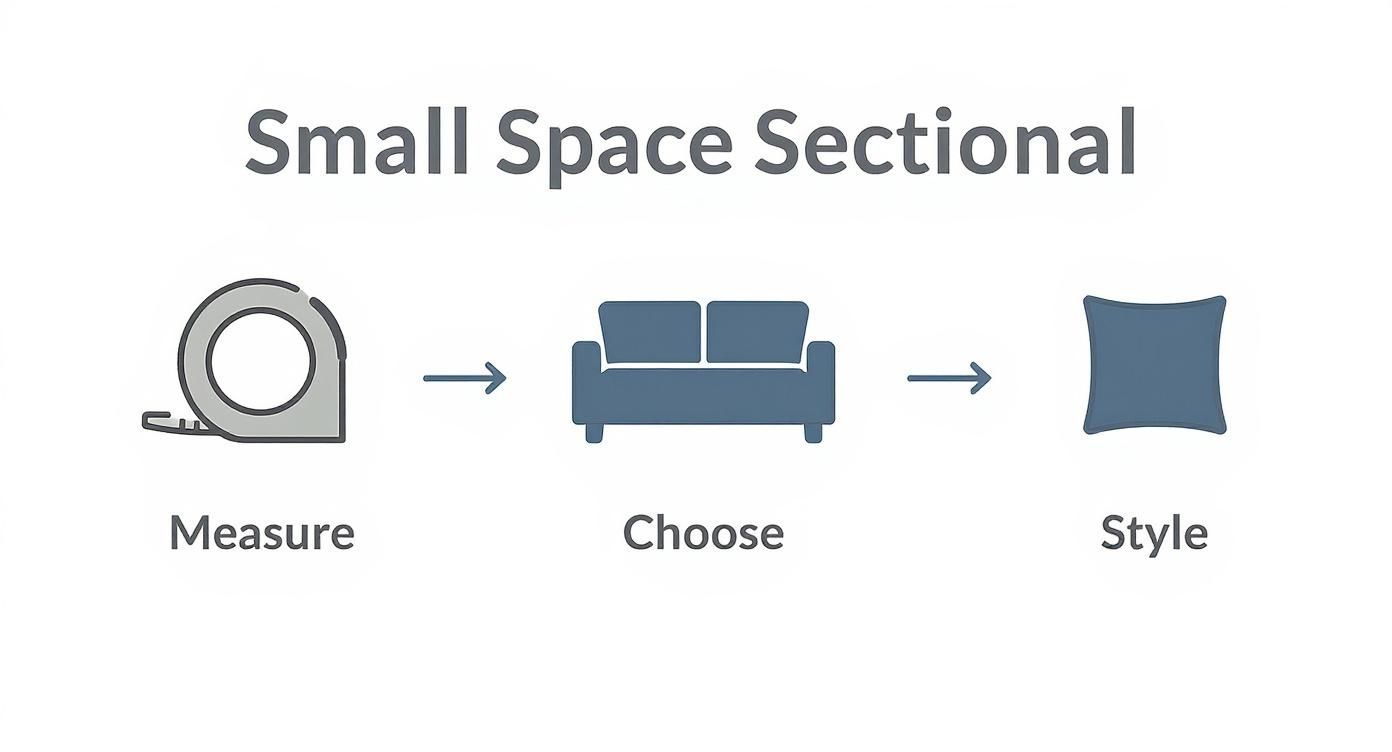
It’s a great visual reminder that a smart purchase always starts with a solid understanding of your space.
The Designer's Tape Trick
Want an insider tip that designers swear by? Once you have the dimensions of a sectional you’re interested in, grab a roll of painter's tape. Head back to your room and mark out the exact footprint of that sofa right on your floor. This simple action is an absolute game-changer.
It completely removes the guesswork. You can physically walk around the taped-off space and get a real feel for its scale. You'll see exactly how much room is left for a coffee table (I always recommend 14 to 18 inches of clearance) and how the piece will impact the overall feel of the room.
This is like giving the sectional an audition before you buy it. It ensures the one you bring home is truly one of the best sectionals for small spaces because you'll know it's perfect for your specific space. With these measurements and a clear visual in mind, you're more than ready to find a sectional that doesn't just fit—it elevates your entire home.
Choosing the Right Sectional Configuration
Once you've got the lay of the land, it's time for the fun part: picking the perfect sectional. This is where you can really make your living area shine, turning a space-planning puzzle into a perfectly cozy setup. Here’s how you can choose a smart seating solution that truly works with your home, not against it.
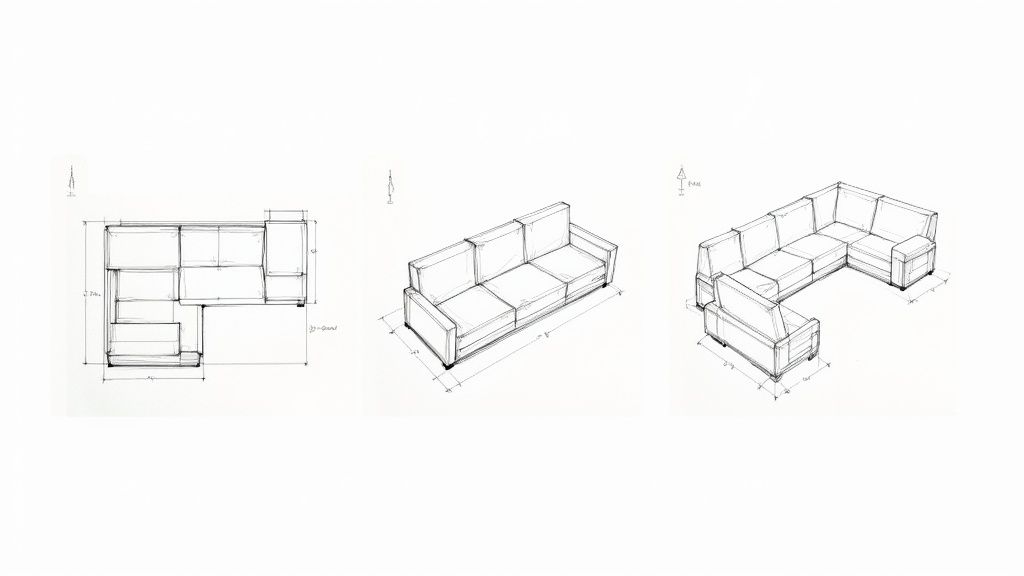
You might be surprised to learn that not all sectionals are massive. The unsung hero for smaller rooms is the apartment-sized sectional. These pieces are specifically designed with smaller footprints in mind, giving you all the comfort you want without any of the unnecessary bulk.
The Power of the Reversible Chaise
In a small space, versatility is everything. That's why a sectional with a reversible chaise is one of the smartest investments you can make. This handy feature lets you detach the chaise lounge and switch it from the left to the right side of the sofa whenever you need to.
So, why is this such a big deal?
- It Adapts With You: Thinking about rearranging the room next year? Moving to a new apartment? The sectional can change right along with you. You're never stuck with one setup.
- It Defines Your Space: The chaise is great for creating a subtle boundary for your living area, especially in an open-concept studio, without making the room feel closed off.
- It Adds Comfort, Not Clutter: You get that perfect spot to kick up your feet and relax, giving you the feel of a recliner without taking up another inch of precious floor space.
Furniture that can do more than one thing is becoming a necessity, not just a nice-to-have. As more people move into urban areas, the demand for clever, space-saving furniture is on the rise. In fact, projections show significant growth in the small-space furniture market over the next decade.
L-Shape vs. U-Shape
When it comes to sectionals, you'll mainly see two shapes: L-shape and U-shape. For a smaller room, the choice is usually pretty clear.
An L-shaped sectional is the go-to for most compact areas. It tucks beautifully into a corner, giving you plenty of seating along two walls while keeping the middle of the room feeling open and airy. It’s perfect for creating a cozy nook that invites conversation.
A U-shaped sectional, on the other hand, is a space-eater. While it’s fantastic for a large, open family room, it can easily overwhelm a small space, making it feel cramped and hard to walk through. It's best to save that style for a bigger home. Our guide on what to know before buying a sectional dives even deeper into picking the right shape for your needs.
To make it even clearer, here’s a quick rundown of how different configurations stack up for smaller rooms.
Comparing Sectional Styles for Compact Rooms
| Configuration Type | Best For | Space-Saving Feature |
|---|---|---|
| L-Shape with Chaise | Corners and defining a living area in an open floor plan. | Maximizes seating along walls, leaving the room center open. |
| Reversible Chaise | Renters or those who frequently rearrange furniture. | Ultimate flexibility; chaise can be moved to either side. |
| Armless Sectional | Very tight spaces or as part of a modular setup. | Reduces visual and physical bulk by eliminating arms. |
| Modular Sectional | Uniquely shaped rooms or evolving needs. | Pieces can be reconfigured or added to over time. |
Ultimately, understanding these basic configurations will give you the confidence to pick a sectional that doesn’t just fit your room, but actually makes it better.
Key Takeaway: For most small living rooms, an L-shaped sectional with a reversible chaise offers the perfect balance of seating, comfort, and adaptability.
Choosing Materials and a Style That Feel Right
Okay, you've figured out the layout and the perfect sectional shape for your room. Now for the fun part—choosing the details that will make this piece truly yours. The material, color, and overall design do more than just look good; they define what designers call the "visual weight" of the furniture. In simpler terms, it’s about how heavy or light the sectional feels in the room, regardless of its actual size.
Get this right, and you can make even a small room feel open and inviting. Two sectionals with identical dimensions can have completely different impacts. One might seem to swallow up the space, while the other looks like it was made for it. The secret is all in the style.
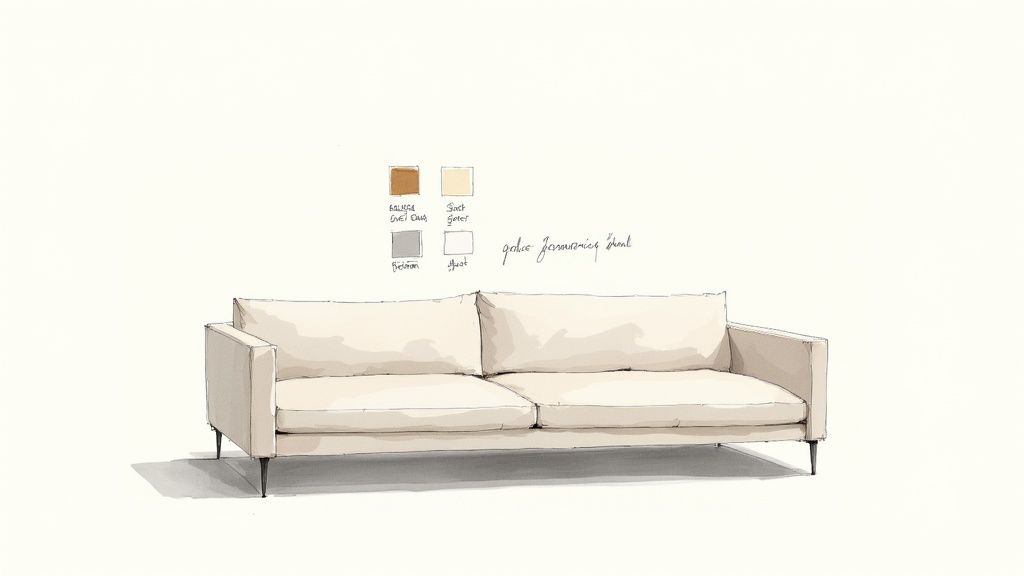
Go For a Sectional With Raised Legs
Here’s one of the best tricks in the book for small-space decorating: choose a sectional with visible, raised legs. When a sofa’s frame sits flat on the floor, it looks blocky and heavy. But lifting it off the ground, even by just a few inches, makes a world of difference.
This simple design choice lets light and air move underneath, creating an illusion of more space. Your eyes can see more of the floor, which instantly makes the room feel larger and less cluttered. It's a subtle but incredibly effective way to lighten the visual footprint of a large piece of furniture.
Think Light With Color and Fabric
Color can be your best friend or your worst enemy in a tight space. Light-colored fabrics—think beiges, creams, soft grays, and pastels—are brilliant for small rooms. They reflect light, making the whole area feel brighter and more open. Darker colors are cozy, sure, but they also absorb light, which can make a sectional feel much more massive than it really is.
Worried about kids, pets, or that friend who always spills their red wine? That’s where performance fabrics are a game-changer. These modern materials are specifically designed to resist stains and are a breeze to clean. You get that light, airy aesthetic you want, without the constant anxiety.
Choosing a sectional is a big deal. It’s a real investment in your home’s comfort and style. We're seeing more and more people opt for them, and the market numbers back that up.
The market for sofas and seats in the United States is expected to hit around US$44.55 billion by 2025. This growth is largely because people want homes that are both cozy and flexible. You can read more about these furniture trends and see what’s driving the shift.
Pay Attention to the Little Design Details
Beyond legs and color, the scale of the sectional’s other features matters immensely.
- Slim Down the Arms: A design with sleek, narrow track arms takes up less room—both physically and visually—than one with huge, puffy rolled arms. An armless design is an even better space-saver.
- Keep the Back Trim: A "tight back" sectional, where the back cushions are built into the frame, has a much cleaner and more streamlined look than a sofa with a bunch of big, overstuffed pillows.
- Check the Profile: Even the height of the back matters. A lower profile won't block the view across the room, helping to maintain that open feeling.
By keeping an eye on these stylistic details, you’re not just picking a sectional that fits your floor plan—you’re choosing one that will actually enhance the sense of space in your home.
Ready to see how these principles look in person? The best way to get a feel for it is to see them for yourself. Come explore our showroom, where our design team can help you find the tools you need to bring your vision to life.
Find the Sectional That Completes Your Home
You’ve done the hard part. You’ve measured, planned, and thought through what your living space truly needs. Now comes the best part: choosing the hero piece that pulls it all together and turns your room into a real home.
Think about it—this is where life happens. It's the backdrop for movie marathons, quiet mornings with a book, and lively conversations with friends. The right sectional isn't just a place to sit; it's the foundation for all those moments, creating a hub of comfort and connection no matter the square footage.
Your Curated Collection Awaits
Sifting through an endless sea of furniture online can be overwhelming. That’s why at Miller Waldrop, we provide a curated collection of sectionals specifically chosen for the challenges of compact living. You can browse with confidence, knowing every piece has been selected for its smart design, quality, and style.
The Albany Park Kova L-Shaped Sectional is a fantastic example of this balance. Its clean lines and deep, cozy seats offer incredible comfort without demanding a huge footprint. The modular design is a game-changer, giving you the flexibility to adapt as your needs change. It’s more than just seating; it's a versatile cornerstone for your living space.
Your home should be a reflection of you and a source of genuine comfort every single day. The right sectional is a huge step toward making that vision a reality.
Create the Home You Deserve
Choosing the perfect sectional is the final, satisfying move in your design strategy. It’s the piece that ties the room together, delivering maximum seating and a serious style statement all at once. You've got the knowledge and the vision—now it's time to bring it home.
Come explore our showroom or have a chat with our design team. We'd love to help you find the sectional that lets you create the beautiful, functional, and inviting home you and your family deserve. Your ideal living room is closer than you think.
Still Have Questions About Small Space Sectionals?
Even after you've measured and planned, a few doubts can creep in right before you commit. We get it. Choosing a sectional is a big decision, and you want to feel 100% confident you're making the right call. Let's tackle some of the most common questions we hear from customers just like you, who are working to get the most out of their cozy living spaces.
Can a Sectional Really Work in a Tiny Apartment?
Yes, absolutely! The trick isn't about the square footage of the room, but the scale of the furniture you put in it. For a truly small apartment, your best friend is an "apartment-sized" sectional. These are specifically designed with lower profiles, slimmer arms, and often have raised legs, all of which help create an illusion of more space.
A model with a reversible chaise is a game-changer. It gives you the flexibility to tuck it neatly into a corner or use it to define the edge of your living area. Honestly, a single, well-chosen sectional often makes a room feel far less cluttered than trying to cram in a separate sofa and a couple of chairs.
What Colors and Fabrics Make a Room Feel Bigger?
My advice is always to think light and bright. Lighter colors are your best ally in a small room because they reflect light, which instantly makes a space feel more open and airy. You can’t go wrong with neutrals like a soft gray, cream, beige, or even a muted pastel.
And don't worry about spills or kids if you're leaning toward a lighter tone. Many of today's sectionals come in high-performance fabrics that are engineered to stand up to real life and clean up beautifully. As for texture, try to avoid anything too heavy or bulky. A smooth, tightly woven fabric has less "visual weight" than, say, a chunky chenille, which helps maintain that sleek, uncluttered feel.
One of the biggest myths I hear is that small rooms demand tiny furniture. The truth is, one perfectly proportioned sectional often makes a space feel larger and more pulled-together than a handful of small, disconnected pieces ever could.
How Much Space Do I Need Around the Sectional?
Giving your furniture some breathing room is key to making a space feel functional, not just full. A solid rule of thumb is to leave at least 30 to 36 inches for any major walkways, like the path from the door into the main part of the room. You need to be able to walk, not shuffle.
For the space between the front of your sectional and your coffee table, aim for about 14 to 18 inches. That's the sweet spot—close enough to set down a drink without leaning over, but with plenty of legroom. Seriously, don't skip the painter's tape trick we mentioned earlier. Mapping out these clearances on your floor before the delivery truck arrives can save you a world of frustration.
Are Modular Sectionals a Good Idea?
Modular sectionals are a fantastic solution, especially for small or awkwardly shaped rooms. They offer the ultimate in flexibility. You can arrange the individual components to create the perfect L-shape for your corner, or maybe a long sofa with a floating ottoman is a better fit. When friends come over, you can even break the pieces apart for extra seating.
This adaptability is a huge plus if you see a move in your future, since the same sectional can be reconfigured for a completely different space. The Albany Park Kova L-Shaped Sectional, for instance, is a customer favorite for this very reason. It’s known for its super deep, comfy seats and its chameleon-like ability to change with your needs, making it a top contender for small living.
You're now armed with the know-how to pick a sectional that doesn’t just fit into your space but makes it better. Our passion is helping you create a home that's as functional as it is beautiful. Here’s how you can take the next step: browse our handpicked collection of stylish sectionals and let our design team help you find that perfect piece you've been dreaming of. Discover your perfect sectional at Miller Waldrop today.