

Sectional for Small Spaces: Top Picks & Tips 2026


Trying to fit a sectional into a small living room can feel like a puzzle with one bad move ruining the whole layout. The sofa has to seat real people, the room still needs to breathe, and the path from the kitchen to the back door can't turn into an obstacle course. That's why a sectional for small spaces works best when it's treated like a measured design decision, not just a bigger sofa.
In West Texas and Southeastern New Mexico homes, that balance matters even more because rooms often have to do double duty. A sectional can anchor the space, define a conversation area, and still leave room for daily traffic if the proportions are right. The trick is choosing one that fits the room you live in, not the room you wish you had.
The Small Space Sectional Promise
A compact sectional solves a problem that standard sofas cannot always handle, especially in apartments, condos, guest rooms, and smaller family spaces. The goal is not only to maximize seating, but to keep the room usable once the furniture is in place. For a practical starting point, Miller Waldrop's modular sofas for small spaces shows how flexible layouts can fit tighter rooms, and the expert guide for Australian small homes reinforces the same basic idea, scale has to work with circulation, not against it.
Why the sectional changed for compact homes
That shift reflects how people use rooms now. A sectional works best as a layout-first category, where circulation, door clearance, and seat count all have to stay in balance. The piece is no longer judged only by how many people can sit on it, but by whether the room still feels open after it is placed.
A homeowner sees the difference right away in a small den or front living room. A well-scaled sectional creates one clear seating zone, while a bulky one can swallow sightlines and choke off a walkway. The right answer is usually not the biggest model available, it is the one that lets the rest of the room keep working.
For readers who want a broader look at compact seating ideas, the expert guide for Australian small homes is a useful outside reference. The point is simple. The sectional has to earn its footprint.
Practical rule: If the room feels boxed in before the sectional even arrives, the issue usually is not the sofa style. It is the scale.
Is a Sectional Right for Your Room
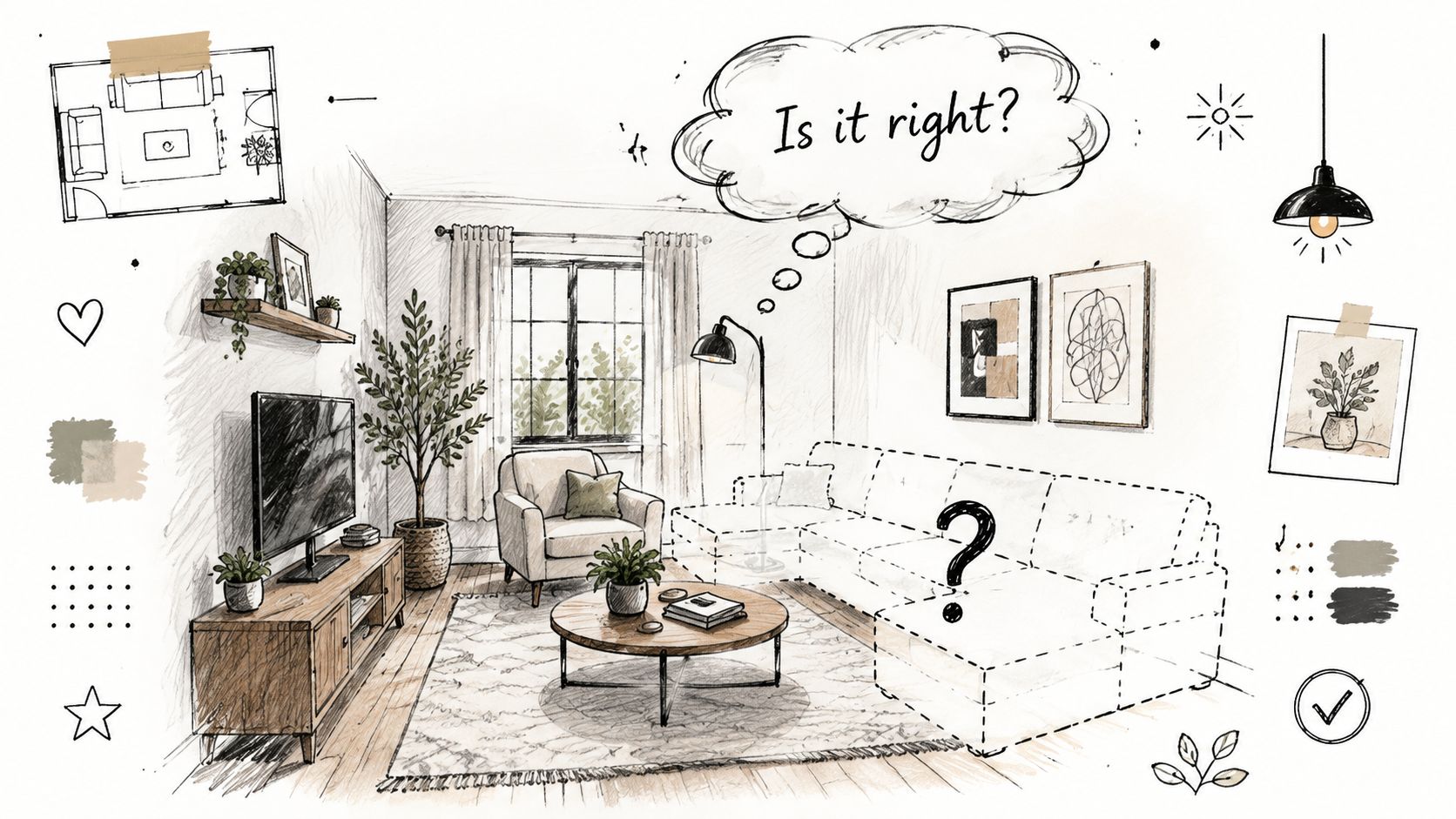
A sectional is not automatically the smartest answer for every compact room. In some spaces, it's the less flexible choice because it commits the room to one orientation and one traffic pattern. That matters for renters, growing families, and multipurpose rooms that may need a different layout later.
When another layout wins
Independent layout guidance notes that two apartment-size sofas facing each other or a sofa-plus-chairs arrangement can work better in tight rooms when circulation and future rearrangement matter. Layout guidance on sectional trade-offs That advice matters in homes where furniture gets moved for holidays, play space, or resale staging. A sectional can still be the right pick, but only if the room benefits from the fixed shape more than it loses flexibility.
The clearest signal to pause is when the room has multiple doorways, an awkward corner, or a path that cuts through the seating zone. In those cases, a reversible-chaise or modular layout can protect the flow, because the chaise can shift with traffic instead of blocking it. If the room needs to change often, adaptability usually beats maximum seating.
Lifestyle questions worth answering first
A sectional makes the most sense when the room has a stable purpose and the household wants one defined gathering area. It becomes less appealing when the space has to flex every day, like a home office that turns into a guest room or a playroom that doubles as a TV room. That's not a flaw in the sectional category, it's just a reminder that shape matters as much as comfort.
Before buying, think through these realities:
- Traffic patterns: Does anyone regularly cut through the room on the way to another space?
- Future changes: Is a move, remodel, or room re-purpose likely soon?
- Seating habits: Does the household need one long, anchored lounge zone?
- Light and sightlines: Would a fixed chaise block windows, lamps, or the view across the room?
A sectional is strongest when it solves more problems than it creates. If it doesn't, the smarter move is to keep the seating simpler and more movable.
Your Measurement and Mapping Blueprint
The safest sectional purchase starts with a tape measure, not a showroom seat. Measure the full room first, then measure the delivery path, including door swings, tight turns, hall corners, and any spot where the furniture has to angle through. A sectional that looks right on paper can still fail on moving day if it cannot make the turn into the room.
How to map the room
Start with the wall-to-wall footprint, then mark the proposed sectional shape with painter's tape so you can see it at floor level. That makes trade-offs easier to spot. You can tell whether the seating zone cuts into a walkway, blocks a vent, or leaves too little room for a coffee table.
The practical goal is to keep the sectional close to two-thirds of the room length, while preserving 30–36 inches for major walkways and 18 inches between the sofa and coffee table. In small rooms, those numbers are not just design advice, they keep the room usable after the furniture is in place.
A taped outline on the floor tells the truth faster than a floor plan on paper.
What to measure beyond the wall
The room is only part of the job. A sectional also has to clear the front door, stair landings, and any awkward pinch points on the way in. That is why a careful buyer measures the seating zone and the delivery route together, not separately.
For tight rooms, apartment-sized sectionals around 75–85 inches can work in spaces as small as 10×12 feet when traffic flow is planned carefully. That fit depends on discipline. The room has to support the sectional, not just contain it.
Miller Waldrop's how to measure for a sectional couch guide fits neatly into that process because it pushes the buyer to think about real-world placement before money changes hands. In a showroom, that often separates a confident purchase from an expensive guess.
Decoding Sectional Styles and Features
Once the measurements are solid, the next decision is shape and function. The best compact sectional isn't necessarily the one with the most features, it's the one with the least visual bulk and the most usable flexibility. That usually means paying attention to arm style, leg height, chaise orientation, and how much the frame visually sits in the room.
The compact profiles that work
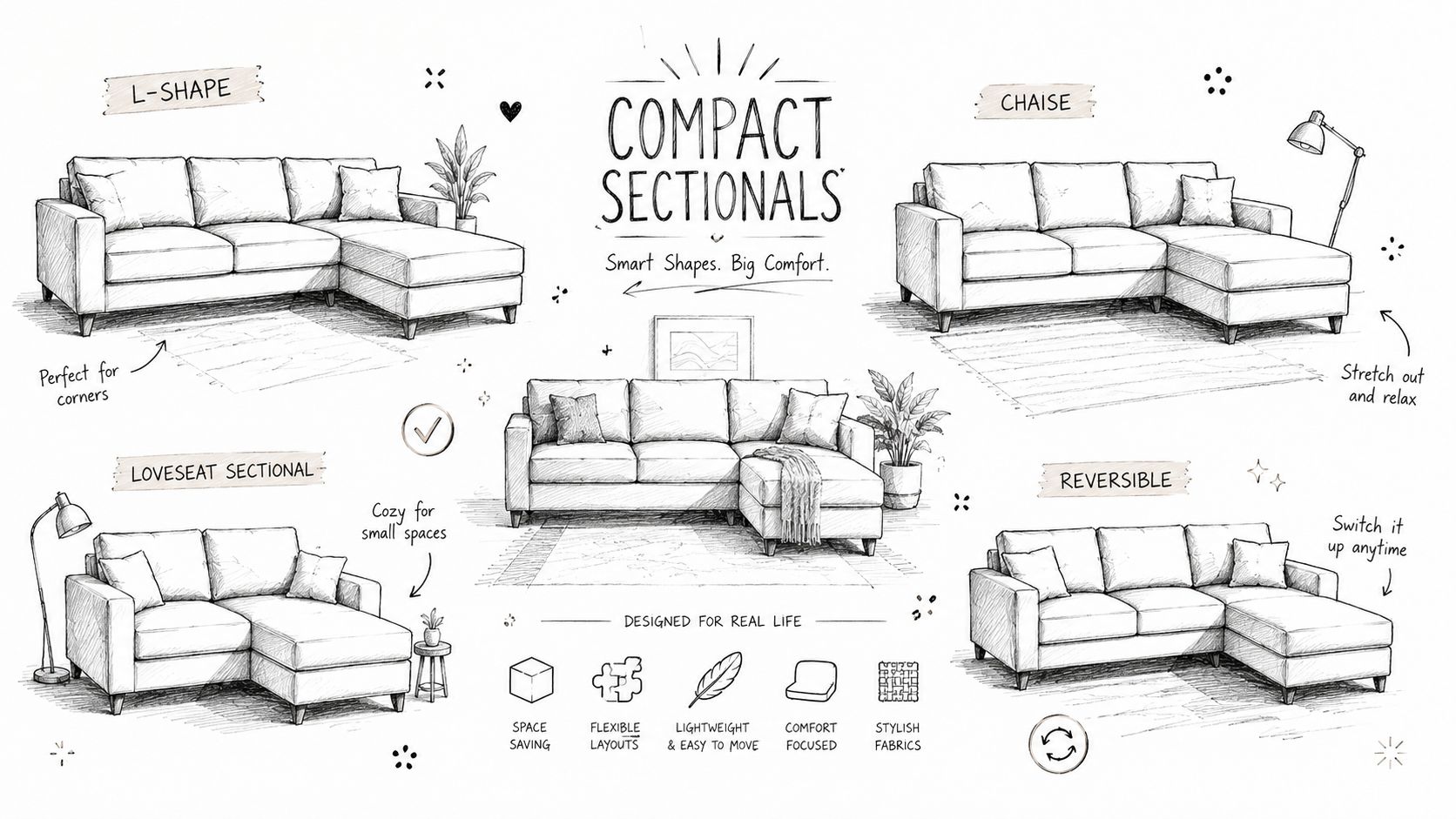
Current guidance emphasizes slim arms, raised legs, and reversible chaises as the core design solutions for compact rooms. One source recommends compact L-shapes with a long side of about 80–95 inches, depth of 35–38 inches, and overall widths generally under 90 inches for the smallest rooms. Miller Waldrop's small-space sectional guide Those proportions help the room feel lighter because more floor remains visible.
Raised legs matter more than many shoppers expect. They let light travel under the frame and make the piece feel less heavy, which is useful in homes where one room has to feel open even after adding a larger seating zone. Slim arms do something similar, they save inches without sacrificing the visual shape of the sectional.
Which configuration solves which problem
A reversible-chaise sectional suits households that don't want to commit to one traffic pattern. A modular sectional is better when the room shape is unusual or the seating needs may change later. An apartment-sized sectional works when the room is small but still needs the comfort of a true lounging piece rather than separate chairs.
For some homes, a multifunctional sectional with storage or sleeper capability makes sense because it pulls double duty. That can be especially useful in a guest room, a den, or a rental where every piece has to earn its place. Miller Waldrop's sectional offerings are part of that broader category of space-aware seating, and the right choice depends on how the room is used, not just how it looks on delivery day.
A smart buyer should keep one question in mind throughout the comparison. Does this shape protect movement in the room, or does it take over the whole floor plan? The answer usually points to the right configuration.
Layout and Styling to Enlarge Your Space
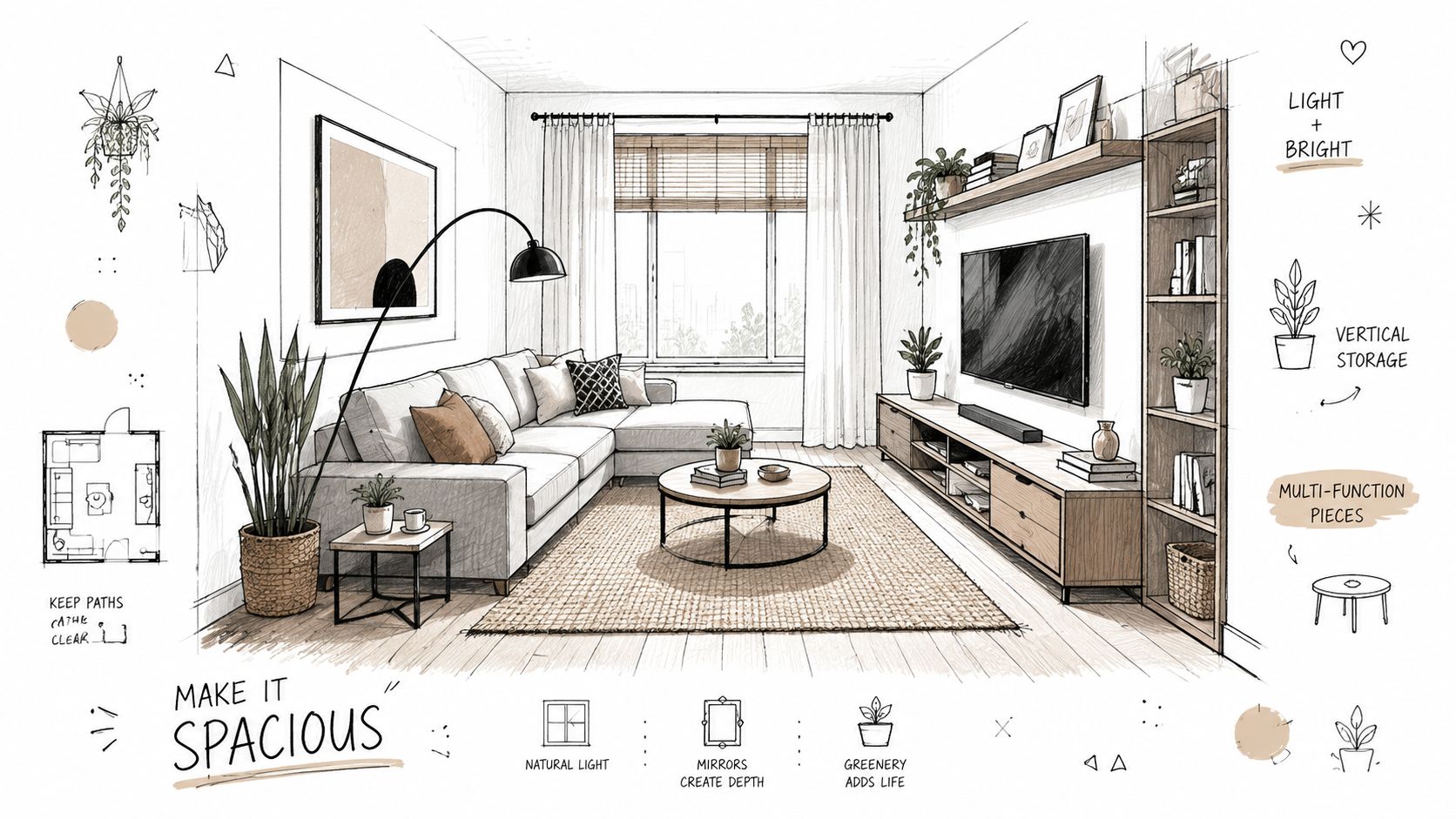
A compact sectional can make a room feel larger when the rest of the layout supports it. Placement matters, but styling carries just as much weight. A sectional that is scaled correctly can still feel heavy if it sits in a cluttered room with low contrast and no visual relief around it.
What helps a room breathe
The first move is to respect walking clearance on both sides where possible, especially in rooms that fall within the 140–200 square foot sweet spot for compact sectionals. That amount of breathing room helps the layout feel deliberate instead of crowded. The floor around the sofa should read as intentional circulation, not dead space.
A large rug helps by unifying the seating area and making the sectional feel like part of one composition instead of a random object placed in a corner. Mirrors add depth when they reflect light without reflecting clutter. Tall lamps and curtain panels draw the eye upward, which creates a stronger sense of height in a room that might otherwise feel low and compressed.
Design move: Keep the area around the sectional quiet. The more visual noise the room carries, the larger the sofa feels.
Placement choices that change the feel
Floating the sectional slightly away from the wall can work better than pushing every inch flat against the perimeter, especially in open-concept spaces where the sofa helps define a living zone. That small gap can make the layout feel more deliberate and can improve the circulation path behind the piece. It also leaves room for cleaning and for lamp placement when the room is tight.
For homeowners and stagers who want a room to read larger and more polished, the principle is the same. Furniture should frame the space, not choke it. A useful outside reference for that mindset is expert advice on home staging, which aligns with the same visual goals that matter in everyday small rooms.
Miller Waldrop's design ideas for small living rooms page fits well here because small-room styling is never only about the sofa. The sectional has to work with the rug, lighting, and sightlines, or the room never feels fully resolved.
Your Confident Purchase Plan
A smart purchase brings measurements, comfort, and delivery planning together in one decision. Start with the room, map a taped footprint, and keep 30–36 inches of circulation space wherever people need to walk. Apartment-sized sectionals around 75–85 inches can still fit in rooms as small as 10×12 feet when the traffic pattern is planned carefully. That combination turns a rough guess into a buying plan you can trust.
What to do in the showroom
A showroom visit matters because scale and comfort are hard to judge from a screen alone. Sit on the sectional style that fits the room, check how the arms feel, and pay attention to whether the chaise or corner seat supports the kind of lounging the household wants. If the piece feels awkward in person, it will probably feel worse at home.
Knowledgeable staff can help confirm whether the shape, fabric, and configuration make sense for the room. Miller Waldrop's team can walk shoppers through fit, finish, and configuration choices, which is especially useful for homes in West Texas and Southeastern New Mexico, where rooms often need to do more than one job. A sectional should solve the layout, not create a new one.
A final delivery-day check
A smooth delivery usually comes down to details that are easy to overlook. Confirm that hallways are clear, measure the doorway again before the truck arrives, and make sure the taped footprint still matches the intended placement. If the room has a tight turn or a narrow entry, that step can save a lot of frustration.
Strong buyers treat the sectional as a long-term anchor piece. They choose a shape that respects the room, a finish that fits the home, and a layout that can handle everyday life. That is the standard worth shopping for.
A CTA for Miller Waldrop Furniture & Decor. Visit a Miller Waldrop showroom in Lubbock, Hobbs, or Ruidoso Downs to test compact sectional options in person, compare reversible-chaise and modular layouts, and get help measuring your room before you buy.