


Furniture for First Apartment: A Practical Setup Guide

The first apartment looks simple on paper, then the keys hit your hand and the place turns into a blank problem. There's a floor, a sleeping spot, and a long list of things that suddenly matter more than style, especially when rent, deposits, and delivery fees are already pulling on the same paycheck. The smart move is not to furnish everything at once. It's to sleep first, live second, decorate third, and buy every piece with a job, a place, and a deadline.
The First Night in an Empty Apartment
The first night in a new apartment usually ends the same way. A renter drops the last box, stares at the empty room, and realizes that the bed on the floor is only half a solution. There's no toilet paper in the bathroom, no shower curtain, and no cleaning supplies for the mess that always shows up after moving day.
That's the moment when panic shopping starts, and it's a bad habit. The right response is a phased plan, not a credit-card sprint. The bedroom and basic household function matter first, because people don't regret waiting on accent decor, they regret not being able to sleep, shower, or clean.
Practical rule: If a purchase doesn't improve sleep, hygiene, or safety in the first 48 hours, it can wait.
A solid moving checklist helps keep the first day grounded, especially when the apartment still feels more like a storage unit than a home. A useful place to start is the handy renters moving checklist, because the first night is about making the place livable before it becomes stylish. That order matters. A comfortable home starts with function, not finishes.
Measure Everything Before You Buy Anything
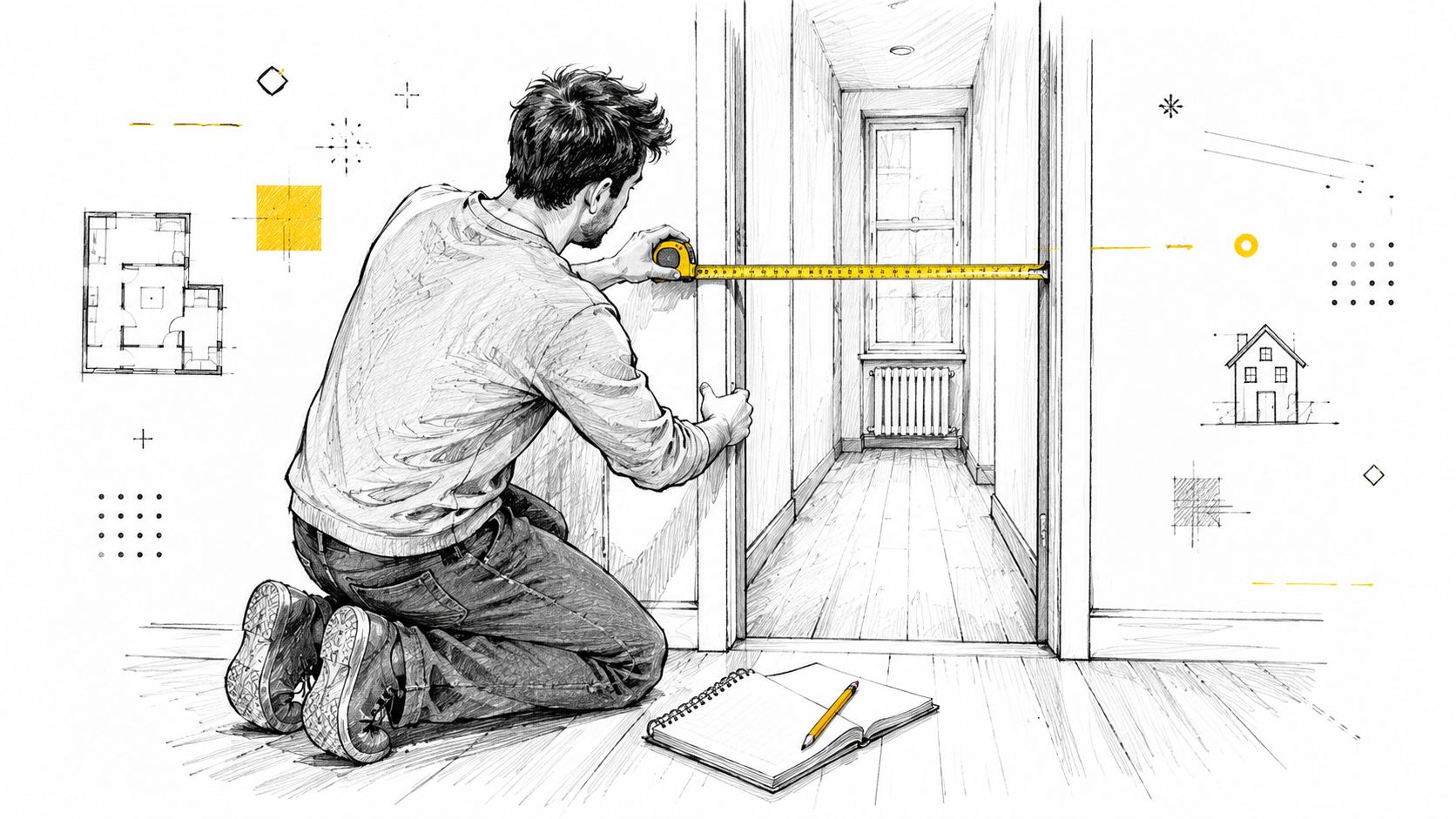
A first apartment shopping trip should begin with a tape measure, not a cart. The most expensive beginner mistake is buying a sofa, bed frame, or dresser that cannot make the turn through the doorway or up the stairwell. Measure doorway widths, hallway turns, stairwells, elevator openings, and the room itself before any purchase gets a final yes.
Measure the path, not just the room
Room dimensions matter, but access matters more. A piece can fit beautifully on paper and still fail at the front door if the hallway is tight or the elevator is small. That's why the whole path from truck to room needs to be checked, not just the final footprint.
Then map the layout with painter's tape. Mark the bed, sofa, and any large storage piece on the floor so the space can be read at a glance. That one step prevents the classic mistake of buying furniture that technically fits but leaves no walking room once it arrives.
A starter budget should be built with reality, not optimism. Recent apartment-furnishing guides place a basic setup around $3,500 to $5,800 (3 Men Movers), and one checklist pegs a minimum complete setup at $5,520.94 (Hello Landing). That range is large because delivery, brand tier, and new-versus-used choices change the math fast.
Don't spend the whole furniture budget on the item you see first in the showroom. The invisible costs, delivery, assembly, deposits, and the first month's bills, are what break a moving budget.
Build a one-page buying sheet before shopping. It should list room measurements, doorway clearance, a total furniture ceiling, and a separate cash reserve for move-in costs. If the numbers don't leave breathing room, the cart is too full.
What to Buy First When You Cannot Buy It All
People ask for a checklist, but what they really need is sequence. When money is tight and deliveries take time, the question isn't “What belongs in a first apartment?” It's “What has to land first so the place works?” That's where the sleep first, live second rule wins.
The budget split that keeps showing up in retail guidance is simple enough to use in real life. Put roughly 50% of the starter budget into the bedroom, about 30% into the living room, then leave the rest for dining, storage, and household essentials (Walker Edison). That split fits actual life. Sleep affects everything else, and a living room without a sofa still functions better than a bedroom without a decent bed.
First Apartment Purchase Priority
| Category | Priority | Budget Share | Common Mistake |
|---|---|---|---|
| Mattress and bed frame | Highest | About 50% | Buying decor before a good sleep setup |
| Sofa and living room anchor | High | About 30% | Overspending on a large piece that crowds the room |
| Dining solution | Medium | Part of the remaining share | Purchasing a table before measuring the nook |
| Storage and household basics | Medium | Part of the remaining share | Leaving no money for bins, towels, and organization |
| Decor and extras | Lowest | Last | Treating styling as if it were function |
A two-phase buying timeline usually works best. Phase one covers the bed, one livable seating area, and the basic kitchen and bath items needed to get through the first week. Phase two adds storage, dining, and decor after the move-in bills clear and the room proportions are easier to judge.
The common failure is emotional shopping. A renter sees a pretty table lamp, a throw pillow, or a decorative chair and buys it before the mattress. That's backwards. A first apartment should be built around the pieces used every day, not the pieces that photograph well.
Choosing a Mattress You Will Actually Sleep On
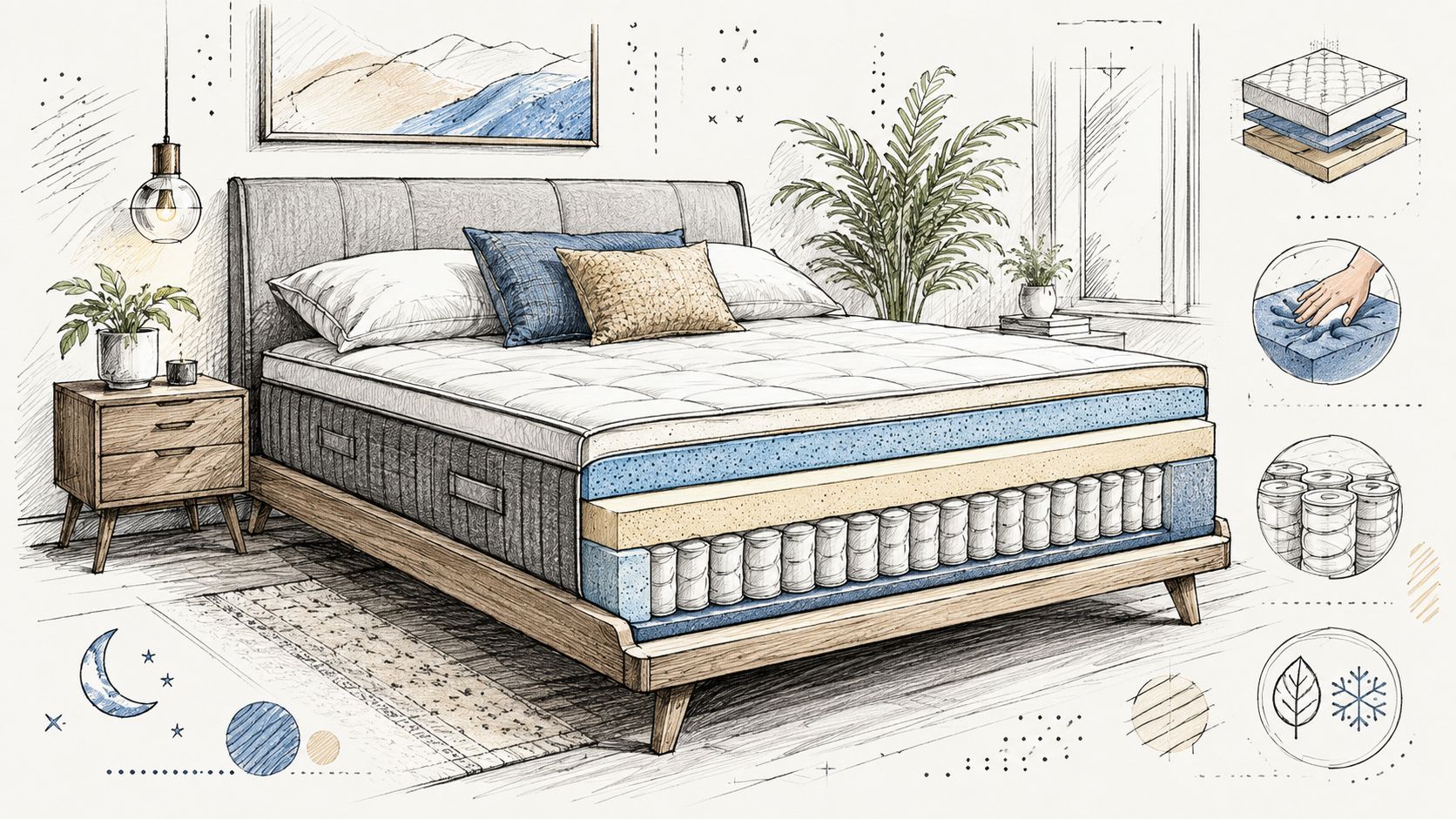
A mattress is not a decorative buy. It's the piece of furniture that changes how the next day feels, and it deserves more attention than the frame around it. In a first apartment, the right mattress usually matters more than the headboard, the bedding, or the trend of the month.
Compare the build, not just the label
Memory foam, innerspring, and hybrid beds all solve different problems. Memory foam can feel more contouring, innerspring often feels more traditional and responsive, and hybrids blend support layers with a cushioned top. The mistake is judging comfort by a firmness label alone, because two mattresses with the same firmness can still feel very different once weight distribution and pressure points come into play.
The best move is to test mattresses in person and use a guided fit process rather than guessing from specs. That matters even more in a first apartment, where the bed has to work as a sleep surface, a reading spot, and sometimes the only real place to sit while boxes are still stacked around the room. Adjustable bases can help in small bedrooms because they add flexibility for reading, relaxing, and tight layouts without needing extra floor space.
Best practice: Spend on the sleep system before chasing matching furniture. A simple frame under a mattress that fits the body is better than a stylish setup that never feels right.
A clean bed frame and a supportive mattress beat a flashy setup on a weak foundation every time. The frame should hold the mattress properly, but it doesn't need to be ornate. The goal is rest, not a showroom moment.
For shoppers who want help narrowing the choices, the mattress shopping guide is a practical starting point. It fits the question better than online browsing does, because a mattress has to match the body, the room, and the way the apartment will be used.
Small Space Rules That Make a Room Feel Bigger
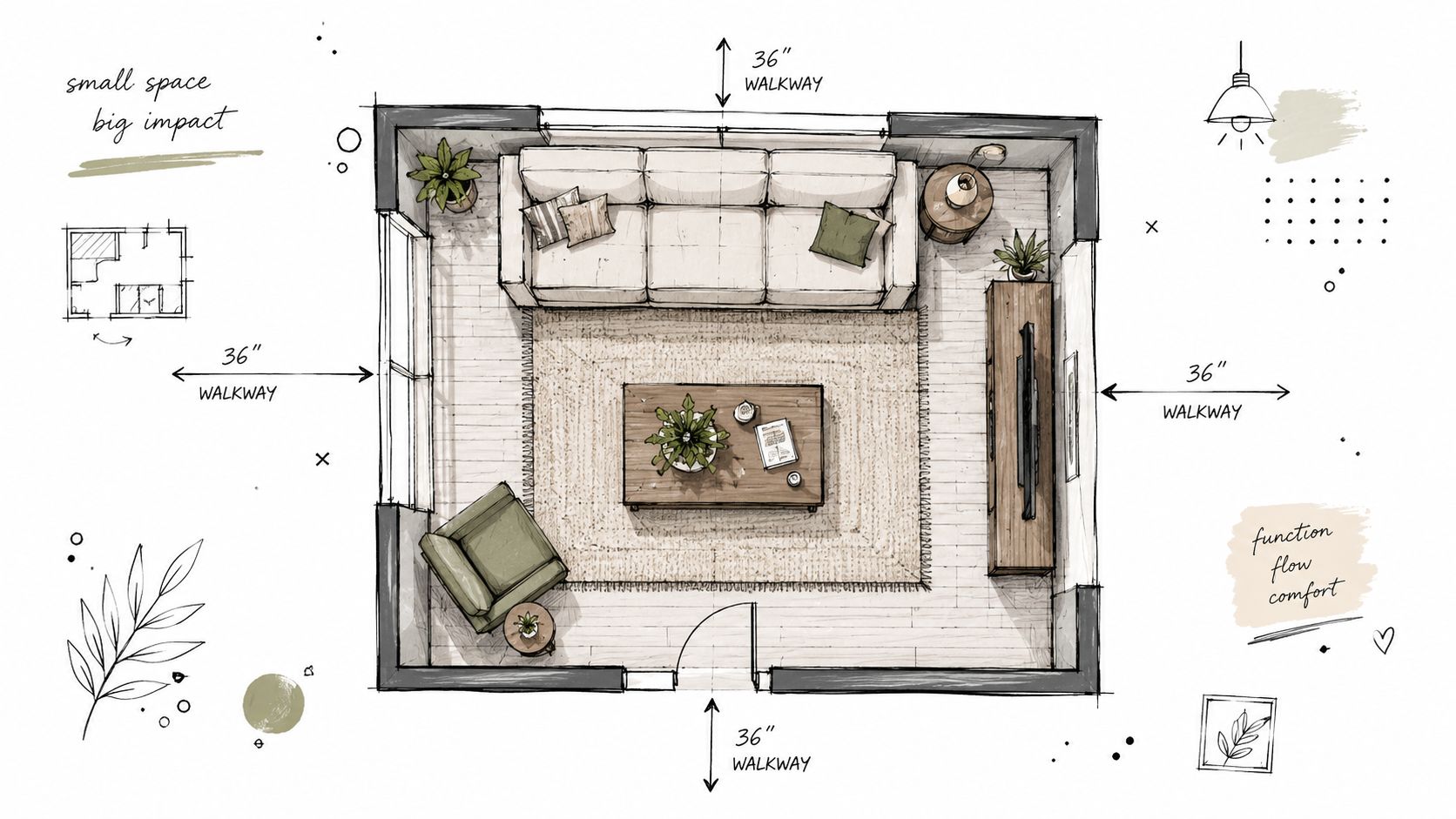
Small apartments look bad for one reason, the furniture is the wrong scale. Pieces that are too deep, too wide, or too visually heavy eat the room alive. A modest sofa, a simple table, and clean walk paths will always beat a crowded setup that feels expensive but functions poorly.
Use the room's movement rules
Leave clear walking space wherever people need to pass. In a living room, aim for roughly 30 to 36 inches of clearance, and keep about 18 inches between a sofa and coffee table so the room still works in daily use (Povison). If someone has to turn sideways to cross the room, the furniture is too large.
Keep the seating size honest, too. Small living rooms usually handle sofas around 70 to 80 inches wide better than oversized pieces, especially in apartments with narrow entry points or limited wall space. Visible legs help because they break up the bulk, and a low-profile bed frame or a lighter wood dining surface does the same job in other rooms. For broader guidance on proportion and layout, the small-space furniture design guidance is worth using before you buy anything oversized.
Favor pieces that read light
- Choose visible legs: They stop sofas and cabinets from looking like solid blocks.
- Keep tables visually simple: A lighter finish usually feels less heavy in a tight room.
- Use low bed frames: They make the bedroom feel taller and less crowded.
- Skip oversized sectionals early: They consume circulation space before the room can support them.
A small living room can feel cramped or open with the same square footage. The difference is scale and placement. When the sofa fits the wall, the table leaves room to move, and the sightlines stay open, the apartment feels intentional instead of squeezed.
The best layouts come from measuring first and buying later. A room does not feel smaller because of furniture alone. It feels smaller when the pieces are the wrong size, the wrong depth, or impossible to place without blocking the path.
For tighter kitchens and storage-heavy layouts, use the smart storage tips for cramped kitchens approach so the living area does not have to carry all the clutter.
Dining Storage and the Kitchen Starter Set
The kitchen is where first apartments expose bad planning. People remember the bed and the sofa, then stand in a bare kitchen with one pan and no dishes. The fix is not buying everything. It's buying enough of the right things to cook, eat, and clean without frustration.
Start with the right kitchen counts
A practical kitchen starter set includes one medium or large frying pan, one small pot, one large pot, two plates, two bowls, two of each flatware item, one set of measuring cups and spoons, one oven mitt set, four to six dish towels, and two or three dishrags (Moving.com). Those counts stop the usual overbuying and underbuying cycle. Two plates are enough to begin if laundry and dishwashing are regular habits, and the same logic applies to linens.
Dining furniture should match how the apartment is used. A drop-leaf table makes sense when floor space is tight. A compact two-seater works when the apartment needs a real eating surface but not a formal dining room. Waiting on a larger dining set is smarter than forcing a piece into a room that can't support it yet.
Storage deserves attention because it solves the daily clutter problem before it grows. Entry racks, under-bed bins, and over-the-door organizers are the kind of buys that make a small apartment feel calm without taking up precious square footage. For tighter kitchens, the smart storage tips for cramped kitchens resource is useful because it focuses on how to fit more function into less space.
A first apartment doesn't need a showroom dining area. It needs a place to sit, a place to cook, and a place to put things so counters don't disappear under clutter.
Financing Delivery Assembly and Where to Actually Shop
The final cost of furniture is rarely the sticker price. Delivery fees, assembly charges, and financing terms can change the total fast, which is why the purchase decision has to include logistics from the start. A good starter plan is one that the renter can afford to receive, not just one that looks good in the cart.
Don't treat the checkout screen like an afterthought
White-glove delivery, threshold delivery, and self-assembly all solve different problems. White-glove service is for buyers who want the piece brought in and set up. Threshold delivery stops at the door. Assembly matters most when the furniture is large, awkward, or part of a tight move-in timeline. If the bedroom has to be ready before the first night, the delivery method matters as much as the mattress choice.
Financing can help turn a phased plan into monthly payments instead of a single credit-card hit. That matters when a first apartment is already demanding deposits, utilities, and moving expenses. A household budgeting guide like this budgeting resource helps keep the furniture budget from swallowing the whole move-in budget.
Miller Waldrop Furniture & Decor fits naturally into that kind of plan because it combines showrooms, sleep guidance, design help, and financing in one place. The company has operated as a fourth-generation family-owned furniture store since 1952, with showrooms in Lubbock, Hobbs, and Ruidoso Downs and brands including Flexsteel, La-Z-Boy, Serta, Beautyrest, Hooker, and Ashley (Miller Waldrop). That kind of setup matters when a renter needs help choosing pieces that fit a small apartment and a real budget. The furniture financing options page is worth checking before delivery week arrives.
Bring your measurements, your budget, and your room list to Miller Waldrop Furniture & Decor, and use the showroom to match the pieces to the apartment instead of forcing the apartment to fit the pieces. If the goal is a first home that works on day one, the sleep setup, the sofa, and the delivery plan come together without guesswork.