

A Complete Guide to Dining Room Rugs Size Under Table


The one rule that will empower you to create a flawless dining space, and it's non-negotiable, is to make sure your rug extends at least 24 inches past the edge of your table on all sides. This is the secret to a dining setup that not only looks professionally designed but also works for your real life.
The Foundation for a Flawless Dining Room
Getting the rug size right under your dining table is more than just a finishing touch—it's the anchor for the entire space. A well-chosen rug is the tool you need to pull everything together, defining the dining zone while protecting your floors and adding a layer of comfort. Think of it as the stage where all your family dinners and friendly get-togethers will happen.
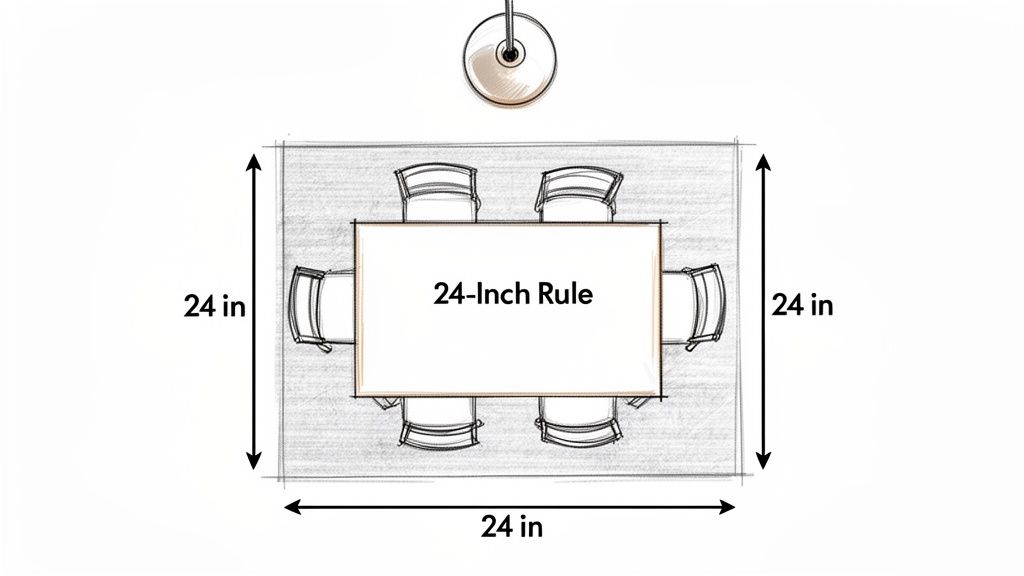
This is exactly why design pros swear by the '24-Inch Rule'. It’s a simple guideline that helps you prevent the most common design problem: a rug that’s just too small. You know the one—where the back legs of the chairs are constantly catching on the edge. It's frustrating and looks unfinished.
Why Sizing Is So Important
A properly sized rug does a lot of heavy lifting for your dining room's design and function. It completely elevates the experience.
- It creates a defined zone. This is especially crucial in open-concept homes, where a rug can visually cordon off the dining area from the living room or kitchen.
- It protects your beautiful flooring. Think of it as a barrier against chair scrapes, scuffs, and the inevitable spills.
- It adds comfort and warmth. A rug underfoot just feels cozier, and it does a wonderful job of absorbing sound, making conversations feel more intimate.
The biggest mistake you can make is getting a rug that’s too small. There’s nothing worse than having your chair catch on the edge of the rug every time you sit down or stand up.
Following this single principle makes every meal feel more intentional and every gathering smoother. It’s a true game-changer. In fact, some consumer surveys have found that as many as 75% of minor dining room mishaps are tied to ill-fitting rugs causing chairs to slip or stumble. You can learn more about the impact of correct rug sizing from industry pros.
Making the Right Choice for Your Home
Choosing the perfect dining room rugs size under table is a balancing act between aesthetics and practicality. This guide is here to give you the confidence to pick a rug that not only looks great but genuinely makes your life easier. It’s the first step in creating a space that’s as functional as it is beautiful—a value we’ve stood by for over 70 years.
With this foundation set, you can transform your dining room into a polished, welcoming hub for your home. When you're ready, take a look at our curated collection of high-quality dining room rugs to find that perfect piece for your space.
How to Measure Your Space for the Perfect Rug
Finding the right rug isn't about guesswork; it's about knowing your own space. Forget abstract design rules for a minute. The first thing you need is a good old-fashioned tape measure.
Start by getting the basic length and width of your dining table. These two numbers are your foundation, the starting point for everything else. Write them down. But here’s the secret: the table itself is only part of the equation. The real key is understanding how you actually use the space around it.
The Foolproof Chair Pull-Out Test
This is the one trick that guarantees success, and it has never failed. The most common mistake people make is buying a rug that fits the table but not the chairs. To get it right, you have to do the 'chair pull-out' test—it's a simple, real-world check that ensures your rug will be both beautiful and functional.
Here's all you do. Pull a dining chair out from the table, just like you would if you were about to sit down for dinner. No need to exaggerate—just a normal, everyday motion.
Now, measure the distance from the edge of the table to the back of the chair legs. That number you just got? That's your golden measurement. A great pro tip is to add a small buffer, maybe 3 to 6 inches, to that number. This little bit of extra room ensures that when someone scoots their chair back, the legs won't catch on the edge of the rug—a tiny detail that prevents a major annoyance.
This one measurement is far more valuable than any sizing chart you'll find online. It's customized to your table, your chairs, and how your family actually lives. It's the difference between a rug that feels right and one that’s a constant source of frustration.
Factoring in Other Furniture and Room Flow
Your dining table might be the centerpiece, but don't forget about the supporting cast—a buffet, a hutch, or a bar cart can all affect your rug choice. You want the rug to define the dining area without making the whole room feel cluttered.
A good rule of thumb is to leave at least 12 to 18 inches of bare floor showing between the edge of your rug and the walls. This creates a clean visual border and makes the room feel larger and more intentional. If you have a buffet along one wall, it's usually best for the rug to stop just short of it. This keeps the layout looking clean and gives each piece its own space.
For a deeper dive into arranging furniture, take a look at our complete guide on how to measure furniture for any room in your home.
Once you have these real-world measurements, you're ready to find a rug with complete confidence. You'll know it's not just going to look great, but it's going to work for your home every single day.
Matching Rug Shape And Size To Your Table
Think of your dining table as the star of the show. The rug beneath it? That's the perfect supporting actor. When you get the pairing of the rug's shape and size just right, you create a space that feels cohesive, balanced, and truly inviting.
The trick is to find a rug that follows the lines of your table, not one that fights against them. This simple guideline helps the whole room feel more intentional and professionally styled. You're not just throwing something on the floor; you're setting a foundation that makes your furniture look its best.
For Rectangular and Oval Tables
Since most dining tables are rectangular, this is usually the most straightforward choice. A rectangular rug simply mirrors the table’s long lines, creating a natural sense of order. The key is making sure the dining room rugs size under table is large enough to handle that all-important chair clearance we talked about.
Here’s how you can find the perfect match for your table:
- For tables seating 6-8 people: An 8×10 foot rug is almost always the right call. It gives you plenty of room for chairs without looking crowded.
- For larger tables that seat 8 or more: You’ll likely need to step up to a 9×12 foot rug. This ensures that even when everyone is seated, all four chair legs stay on the rug.
This visual shows the basic measurement process in a nutshell.
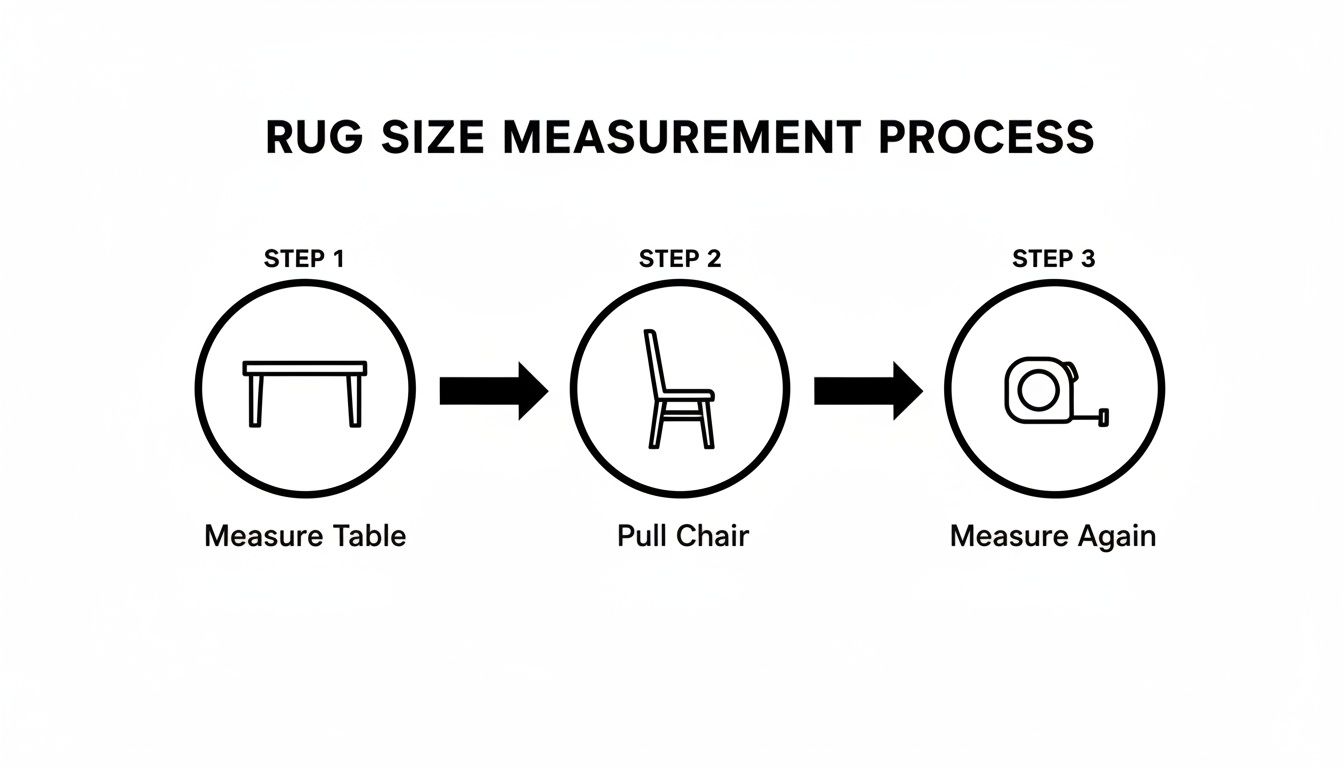
It really is that simple: measure the table, pull out a chair to a comfortable distance, and measure again. That gives you the minimum size you need for a rug that not only looks great but works for everyday life.
For Round and Square Tables
If you have a round or square table, echoing that shape with your rug is a fantastic design move. A round rug under a round table creates a soft, unified feel, while a square rug under a square table enhances a clean, modern look.
Choosing a rug that mirrors your table's shape is one of the easiest ways to create instant visual harmony. It just feels right, drawing your eye to the centerpiece of the room.
To give you a better idea, here are a couple of real-world examples:
- A 48-inch round table (which usually seats 4) looks perfect with an 8-foot round rug.
- A 60-inch round table (built for 6) really needs at least a 9-foot round rug to feel properly scaled.
There's actually a bit of history behind these standard sizes. The way we size dining room rugs today evolved alongside the global carpet industry itself. After the 1950s, design standards became more common, establishing benchmarks like using an 8-foot wide rug for a 48-inch square table. This wasn't arbitrary; it was based on ergonomic studies that found having enough pull-out space prevents 42% of common dining frustrations, like chairs catching on the rug's edge.
To make sure your new rug is a perfect match for your furniture, you can double-check your numbers with a dining table size guide.
Choosing a Rug Material That Fits Your Life
Let's be honest: a dining room rug needs to be a workhorse. It’s not just there to look pretty; it has to survive spilled wine, dropped forks, and the constant shuffle of chairs. When you're choosing a material, you're really choosing how much time and stress you want to dedicate to cleaning it. The right material can handle family dinners and holiday feasts with grace, becoming a piece you love, not one you have to constantly worry about.
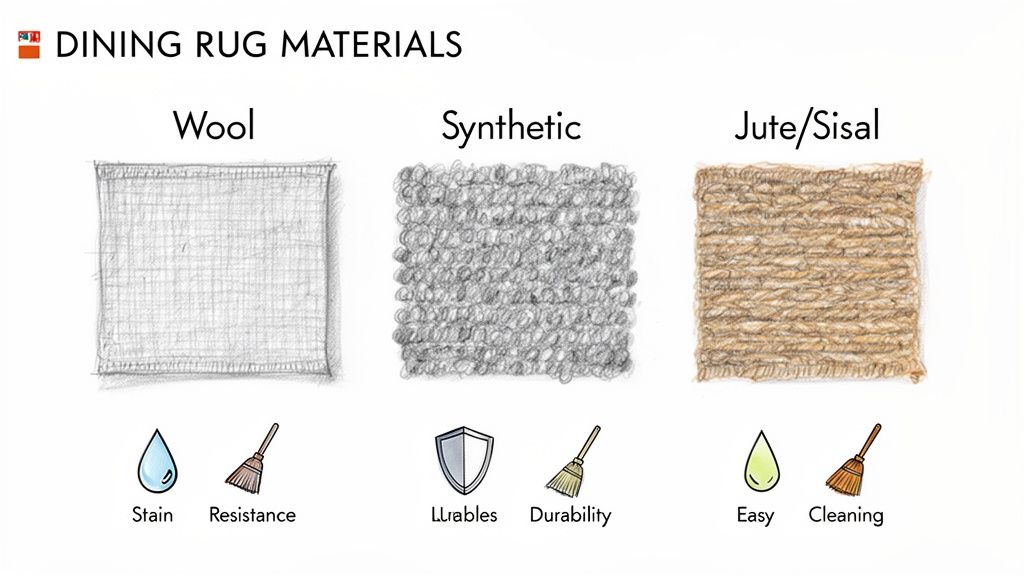
The material you pick is just as crucial as the dining room rugs size under table. For a busy home—especially one with kids or pets—durability and easy cleanup aren't just nice-to-haves; they're essential.
Durable and Forgiving Options
When it comes to a truly resilient dining space, a couple of materials consistently rise to the top. Here’s how you can choose the perfect option that offers that perfect blend of performance and style that modern life demands.
- Wool: This is a classic for a reason. Wool is a fantastic investment because it's naturally stain-resistant, flame-retardant, and incredibly durable. Its fibers have a waxy coating that repels liquids, giving you a precious few moments to blot up spills before they have a chance to set.
- Synthetics (Polypropylene, Nylon): These man-made fibers are practically engineered for high-traffic zones like the dining room. They're often more affordable than wool, ridiculously easy to clean, and available in a massive range of colors and patterns. For a practical yet stylish choice, synthetics are hard to beat.
Your rug material should simplify your life, not complicate it. The goal is to find that perfect balance where you get the look you want without adding cleaning stress to your plate.
The market for area rugs is booming, expected to grow from USD 11.77 billion in 2024 to USD 17.38 billion by 2032. Interestingly, market data reveals that for a standard rectangular 72-inch table, an 8×10-foot rug is the most popular size, accounting for 45% of sales. Getting both size and material right is critical—improper selections are a leading cause of decor regret, contributing to 18% of all returns. You can discover more insights about the growing rug market to see why making an informed choice matters.
Natural Fibers for a Rustic Touch
For those of us in West Texas and Southeastern New Mexico looking to bring in a more organic, rustic vibe, natural fiber rugs are a fantastic choice.
Jute and sisal add incredible texture and an earthy feel to a dining space. They are surprisingly durable and generally more affordable than wool. The main tradeoff? They can be a bit more absorbent, so they're better suited for homes where major spills are a rare event. Their beautiful, neutral tones create a warm, grounding foundation for almost any decor style.
To help simplify the decision, here’s a quick breakdown of the most common materials.
Rug Material Comparison for Dining Rooms
This chart compares common rug materials based on durability, ease of cleaning, and style to help you choose the best option for your home.
| Material | Durability | Stain Resistance | Best For |
|---|---|---|---|
| Wool | High | Excellent (Natural Oils Repel Liquids) | Homes seeking a long-term investment that is both luxurious and resilient. |
| Polypropylene | Very High | High (Non-Porous Fibers) | Busy households with kids and pets; great for high-traffic, spill-prone areas. |
| Nylon | Excellent | Good to High (Often Treated) | High-traffic areas where durability and a wide color selection are key. |
| Jute/Sisal | Moderate-High | Low to Moderate (Absorbent) | Lower-traffic dining rooms aiming for a natural, textured, and rustic look. |
Ultimately, the best material is the one that fits your life. By understanding the real-world pros and cons of each, you can confidently pick a rug that’s ready for whatever happens around your dining table.
When you're ready to find that perfect piece, feel free to browse our curated collection of high-quality dining room rugs designed to suit any lifestyle, like the beautiful and durable Momeni Summit SUM-05 Ivory Rug which offers both style and performance.
Find the Perfect Rug to Complete Your Vision
You've done the heavy lifting. You know the placement rules, you've measured your space, and you have a good handle on which materials can keep up with your family's lifestyle. Now for the fun part: choosing the perfect rug that brings it all together. This is where your dining room goes from just a place to eat to a space that truly reflects your style.
A rug is so much more than something to walk on; it’s the anchor that grounds your dining set and solidifies the room's entire character. Think of it as the tool that creates that truly inviting, finished feel.
Your Local Design Partner
Our collection of dining room rugs is hand-picked with the homes and unique lifestyles of West Texas and Southeastern New Mexico in mind. We look for pieces that speak to our local aesthetic—from modern rustic to timeless traditional—so you can find something that just feels right for your home here.
But a great selection is only half the story. Our team of experienced design professionals is here to act as your guide, helping you take everything you've learned and apply it with confidence.
Finding the right rug is the final brushstroke on your masterpiece. It’s the piece that ties everything together, turning a collection of furniture into a cohesive, welcoming dining room. Let our experts help you make that final choice with confidence.
Think of our designers as your trusted guides. They can help you confirm the perfect dining room rugs size under table for your specific setup, helping you sidestep those common sizing mistakes. Just bring in your measurements, a few photos of your space, and even fabric swatches from your chairs or curtains. Our team will provide the personalized, one-on-one guidance you need to find the ideal rug that not only fits but elevates your whole room.
Experience the Difference Firsthand
We'd love for you to come into one of our showrooms and see our collections for yourself. There’s really no substitute for feeling the texture of a hand-knotted wool rug or seeing the true, vibrant colors of a patterned piece in person. When you visit, you'll find a place where quality, expertise, and a genuine passion for your home all come together.
You can get a head start by exploring our curated collection of high-quality dining room rugs online to gather some inspiration.
Let us help you put the finishing touches on a dining room you’ll love for years to come.
Ready to perfect your space? Visit our showrooms in Lubbock, Hobbs, or Ruidoso Downs today, or schedule a consultation with one of our design experts.
Common Questions About Dining Room Rugs
Even with all the guidelines, a few specific questions always pop up when choosing a dining room rug. Here's how you can solve those last few design puzzles with confidence, armed with the answers to the most common questions we hear from our customers right here in West Texas and Southeastern New Mexico.
Can I Put a Rectangular Rug Under a Round Table?
You absolutely can. While a round rug under a round table creates a beautiful, seamless look, a rectangular rug can work wonders, too. This is especially true if you have a longer dining room or an open-concept space where you need to create a clear, defined zone for dining.
The trick is making sure it's big enough. You still need to follow that 24-inch rule on all sides, ensuring that every chair leg stays on the rug, even when people are getting up from the table. When it's properly sized, a rectangular rug anchors the round table and looks completely intentional, not like an afterthought.
Should the Dining Room Rug Touch Other Furniture?
Ideally, your rug should define the dining area and nothing else. To pull this off, try to leave at least 12 to 18 inches of bare floor between the edge of the rug and the walls. That little bit of visual breathing room makes the whole space feel larger and less cluttered.
What about a buffet or a hutch? For other furniture in the room, it's best to be decisive. Either place the piece so all its legs are completely on the rug or so they're all completely off. Having furniture teetering on the edge just looks awkward and can make it wobbly.
Your dining room rug should define the main event—the table and chairs. By giving it a bit of space from walls and other furniture, you allow it to do its job perfectly, creating a clean and polished look.
What if My Dining Room Is Small?
Getting the rug size right is even more crucial in a smaller dining room. It sounds a little backward, but a rug that’s too small will actually make the room feel more cramped and choppy. Your number one priority should still be that golden rule: have at least 24 inches of rug extending past the table on every side.
This is less about looks and more about function. You need that space for chairs to move without catching on the rug's edge. A rug that correctly fits your dining set—even if it feels a bit large for the room itself—will paradoxically make the space feel more cohesive and thoughtfully put together.
What Is the Best Rug Pile for a Dining Room?
A low-pile rug is almost always the way to go under a dining table. Think flatweaves, wool blends, or other tightly woven options. The reason is simple: practicality. Chairs can slide in and out easily without snagging or getting stuck.
Low-pile rugs are also a lifesaver when it comes to cleaning. Spills and crumbs tend to sit right on top instead of getting buried deep in the fibers. Shag or high-pile rugs might feel cozy in a living room, but they're a real chore to maintain under a dining table. And if you're dealing with existing flooring, our guide can help you figure out if you can put an area rug over carpet.
At Miller Waldrop Furniture & Decor, we know you're the hero of your home's story. We're just here to provide the tools and expertise to help you bring that vision to life. Take a look at our curated collection of high-quality dining room rugs and find the perfect foundation for your space.