


Black Iron Beds: A Buyer’s Guide for Texas & NM Homes

You’re probably standing in a bedroom that doesn’t feel finished yet.
Maybe the walls are painted, the floor is down, and you’ve even found the rug. But the room still lacks a center of gravity. Or maybe your current bed feels too bulky, too trendy, or too flimsy for how you live. A black iron bed often solves that problem because it brings structure, personality, and staying power without forcing the rest of the room into one narrow style.
In West Texas and Southeastern New Mexico, that matters. Bedrooms here need to feel restful, practical, and grounded. They also need furniture that can handle dust, changing humidity, and real day-to-day use. A black iron bed can do all of that while still looking timeless.
The Enduring Allure of Black Iron Beds
A black iron bed doesn’t feel tied to one decade. That’s part of its appeal.
I’ve seen these beds work in adobe-inspired homes, newer builds in Lubbock, ranch houses outside Hobbs, and guest rooms that need a little more character. They bring a sense of permanence. Even when everything else in the room changes, the bed still feels right.
Why this look has lasted
Black iron beds became popular for reasons that still make sense now. The mass production of black iron beds began in England during the 1840s, driven by metallurgical advancements and hygiene concerns. By 1875, Birmingham was producing 6,000 iron bedsteads weekly, with about 50% exported to Europe and America, where they replaced wooden frames that were prone to pests, according to the history of antique iron beds.
That history matters because it explains why these beds never feel like a passing fad. People first wanted them because they were durable, cleaner than porous wood, and dependable. Today, those same qualities still matter to homeowners who want furniture that looks good and earns its place.
A black iron bed has presence without bulk. It can anchor a room without making the room feel heavy.
Why they still work in modern bedrooms
A lot of people hear “iron bed” and picture something overly ornate or antique-shop formal. Sometimes that’s true. But often, black iron beds are much more flexible than people expect.
They can feel:
- Traditional with layered quilts, wood case goods, and framed pictures
- Modern with crisp white bedding and simple lamps
- Rustic when paired with oak, mesquite, or leather
- Collected when mixed with vintage textiles and old family pieces
That versatility is why they’re such a strong foundation piece. You’re not buying a room that only works one way. You’re choosing a frame that can evolve as your style changes.
What makes them emotionally different from upholstered beds
Upholstered beds often create softness. Black iron beds create shape.
That distinction helps when a bedroom feels visually flat. The lines of an iron headboard add definition. The open structure lets wall color, bedding, and art stay visible. In smaller rooms, that openness can make the room feel lighter than a thick, padded silhouette.
If you want your bedroom to feel personal instead of over-decorated, black iron beds give you a strong starting point. They tell a quiet story. They’ve been practical from the beginning, and they still bring that same balance of utility and beauty into homes today.
Decoding Styles and Finishes
Most shoppers know when they like a black iron bed. Fewer know how to describe what they like.
That’s where style language helps. Once you can spot the visual cues, it gets much easier to choose a frame that fits your home instead of just looking good in a product photo.
The main style families
Some black iron beds lean decorative. Others feel almost architectural.
Here’s a simple way to sort them:
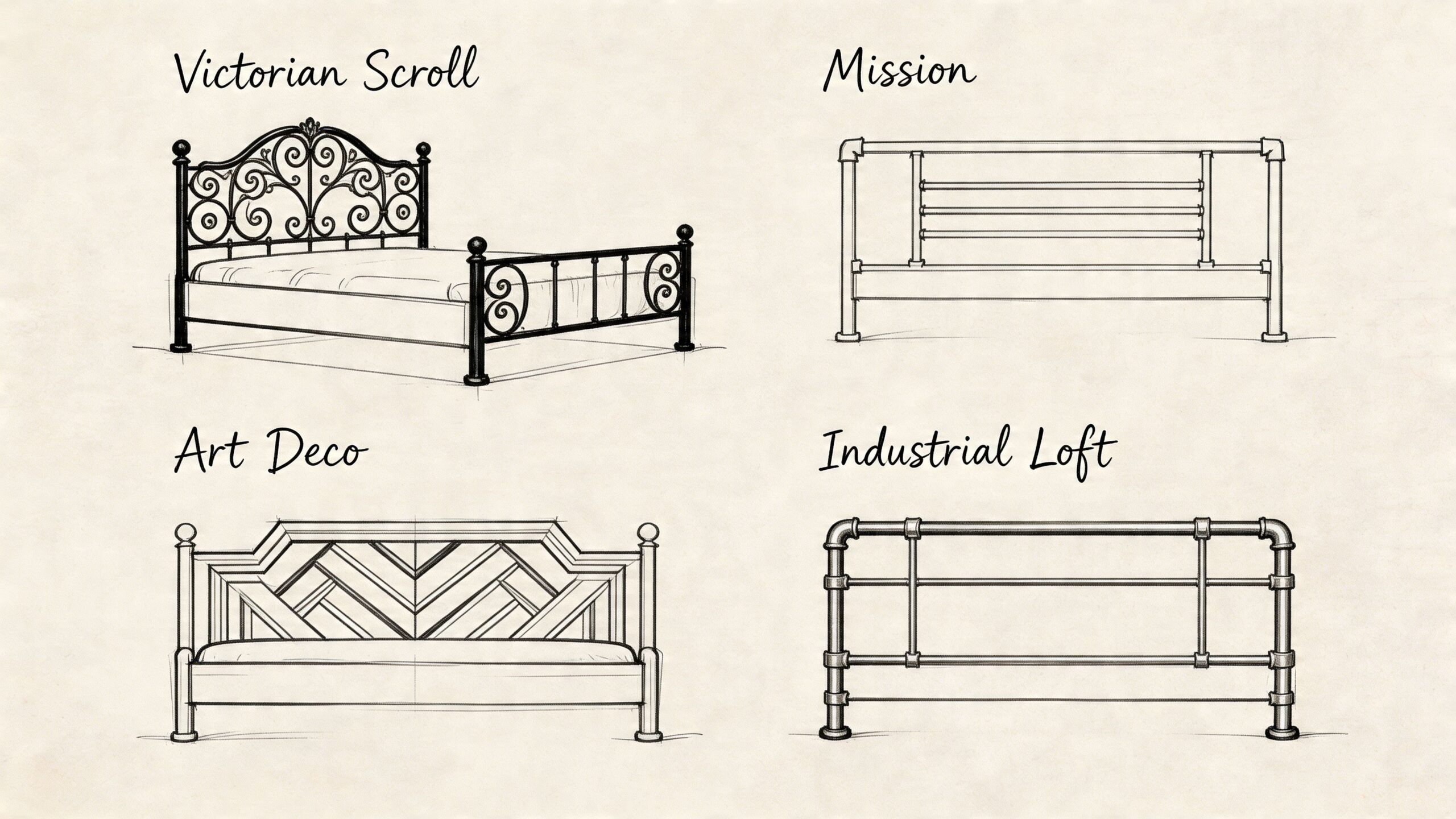
- Victorian-inspired beds have curves, scrolls, taller headboards, and spindle details. These are the frames that feel romantic and layered. They pair well with antique woods, patterned rugs, and softer bedding.
- Mission or farmhouse styles are usually straighter and simpler. You’ll see vertical bars, modest shaping, and a quieter profile. If you like practical, unfussy bedrooms, this style often feels easiest to live with.
- Art Deco influences show up in symmetry and geometry. Think repeating forms, stronger shapes, and a slightly dressier mood without a lot of ornament.
- Industrial frames tend to be spare. They use straight lines, minimal decoration, and a more utilitarian look. These work well in loft-like spaces or bedrooms with concrete, brick, or weathered wood.
How to read the details
Small elements change the mood more than people expect.
A high arch feels more traditional. A low, straight headboard feels cleaner and more current. Closely spaced spindles often read as classic, while wider spacing can feel more modern. Rounded finials add softness. Squared corners feel sharper and more precise.
If you’re unsure where your taste falls, look at the rest of your room. If your nightstands, mirrors, and lamps have curves, you’ll probably like a bed with a little ornament. If your room leans simple and structured, cleaner bars and geometry usually make more sense.
For a broader look at how metal details work across a room, Miller Waldrop’s article on what you should know about metal accents is a helpful companion.
Finishes change the feeling
“Black” isn’t just one look.
A finish can shift a bed from soft and relaxed to crisp and dramatic.
Matte black
Matte black is often the easiest finish to decorate around. It absorbs light rather than reflecting it, so it feels quieter and a little more grounded. This finish usually works well in Southwestern, rustic, and transitional homes.
Gloss black
Gloss black reflects more light and feels dressier. In the right room, it can look polished and elegant. In the wrong room, it can feel too slick if everything else is casual.
Textured or hammered black
This finish adds depth. It can make a frame feel handcrafted or slightly old-world. If your bedroom has natural wood, linen, leather, or woven textures, this kind of black often blends beautifully.
Distressed or antique black
Some finishes soften the darkness with subtle rub-through or patina. That look can be useful if you want character without going fully antique.
Design note: If your room already has a lot of visual texture, a simple matte finish usually creates balance. If the room feels plain, a textured finish can add interest without adding clutter.
When people get stuck, it’s often because they’re only comparing silhouettes. The finish is just as important. It affects how bold the bed feels, how much dust it visually shows, and how easily it connects with the rest of your furniture.
Materials Construction and Lasting Quality
A black iron bed can look sturdy in a photo and still disappoint in real life. The finish chips. The frame shifts. A small squeak turns into a nightly annoyance.
Construction tells you more than styling ever will.
What the frame is really made of
Most quality black iron beds today use steel tube construction rather than old solid iron methods. That’s not automatically a drawback. What matters is how the steel is engineered, joined, and finished.
Quality black iron beds utilize sturdy steel tube construction, typically 16-18 gauge, with a powder-coated finish. These frames are engineered to support a weight capacity of 500-800 lbs, and that finish helps protect against oxidation and rust while extending lifespan to over 10 years, according to this product overview for a black metal bed frame.
That’s the kind of information worth asking for when you shop. “Metal bed” by itself doesn’t tell you enough. You want to know how substantial the frame feels and whether the finish is built for long-term use.
Why powder-coating matters
Shoppers sometimes treat finish as a cosmetic detail. It isn’t.
A powder-coated finish acts like a protective outer layer. It helps shield the steel from oxidation and everyday wear. In our region, where dust settles into everything and humidity can shift with the season, that protection makes a practical difference.
If a frame has a thin or poorly applied finish, you’ll usually notice signs sooner. Scratches become more concerning. Moisture exposure matters more. The bed may still look fine at first, but it won’t age as gracefully.
Practical rule: When you compare two similar black iron beds, pay close attention to the finish quality before you compare decorative details.
What to check in person
When you see a bed on a showroom floor, use your hands and eyes.
Look for:
- Weld quality. Joints should feel clean and intentional, not rough or uneven.
- Frame steadiness. A bed should feel planted, not wobbly.
- Consistent finish. The black color should look even across spindles, corners, and rails.
- Support design. Slat support, center support, and hardware should feel like part of the bed’s structure, not an afterthought.
You can also look at how the design handles weight and movement. The verified construction guidance notes that spindle configurations help distribute vertical loads across the frame. In plain language, thoughtful spacing and support details help the bed stay rigid under real use.
Quality often looks quiet
The best-made black iron beds usually don’t scream for attention. They feel composed.
That can be confusing if you’re comparing a heavily ornamented budget frame with a simpler, better-built one. Decoration can catch your eye first. Stability wins in the long run.
If you want a bed that still feels solid years from now, focus less on how dramatic it looks on day one and more on how well the frame is built. The details behind the finish are what make black iron beds worth owning.
Choosing the Right Black Iron Bed for Your Space
A beautiful bed can still be the wrong bed.
The right choice depends on scale, layout, mattress pairing, and how the frame will live in your room every day. Black iron beds particularly reward a little planning.
Start with room size, not bed size
People often choose the mattress size they want first and only later realize the room feels cramped.
Use the room itself as your starting point. Measure wall length, window placement, door swing, and walking paths. If you need help with the math, this square footage calculator for a room makes the planning step easier.
A black iron bed can visually read lighter than an upholstered bed, but it still occupies real floor space. You need enough room to move around it comfortably.
Bed size and recommended room dimensions
| Bed Size | Average Dimensions (W x L) | Minimum Recommended Room Size |
|---|---|---|
| Twin | Standard twin proportions | Best in smaller bedrooms, guest rooms, or kids' rooms with open circulation around the bed |
| Full | Standard full proportions | Works well in compact primary rooms or guest rooms when other furniture is scaled carefully |
| Queen | Standard queen proportions | Often the easiest fit for most primary bedrooms with space for nightstands |
| King | Standard king proportions | Best in larger rooms where the bed can remain the focal point without crowding pathways |
If you’re wondering why this table doesn’t list exact measurements, it’s because room layout matters as much as bed size. A queen bed can fit beautifully in one room and overwhelm another with the same square footage if windows, closet doors, or dressers compete for space.
Match the bed to your mattress and sleep habits
A frame and a mattress need to work as a pair.
If your mattress is substantial, make sure the bed’s support system can handle the weight and height comfortably. Some black iron beds look better with a lower-profile mattress. Others need more visual heft so the bed doesn’t feel top-heavy.
This is also the point where sleep comfort enters the conversation. If you’re replacing both frame and mattress, it helps to test them together rather than making two separate decisions. Miller Waldrop carries bedroom furniture and mattresses in the same shopping experience, which can make it easier to coordinate frame style and mattress fit. One applicable example is the Lee Queen Black Metal Bed, a black metal option relevant to shoppers considering this look.
Budget for the long term
There’s a difference between a lower upfront price and better value.
For homeowners in West Texas and Southeastern New Mexico, where summer humidity can reach 60% and dust is prevalent, selecting a black iron bed with a high-quality powder-coat finish is essential for preventing rust and corrosion. A properly finished bed can hold its durability and beauty for over a decade, according to this discussion of black metal bed frames and climate durability.
That’s why I usually encourage people to think beyond the first impression. A cheaper frame may look similar online, but if it lacks the finish protection your climate calls for, the savings may not feel like savings later.
Use style to solve a room problem
Black iron beds are especially useful when your bedroom needs one of these fixes:
- Too much visual bulk. An open metal frame can lighten the room.
- Not enough character. A shaped headboard adds structure fast.
- Too many wood tones. Black creates contrast and helps mixed finishes feel intentional.
- A room that feels generic. An iron bed often gives the space a point of view.
If you’re also drawn to older furniture, it’s worth learning a few classic buying habits. These tips for finding and buying the perfect antique furniture are useful because they train your eye to notice craftsmanship, proportion, and authenticity, even when you’re shopping for newer pieces inspired by older forms.
A simple decision filter
When clients feel overwhelmed, I ask them four questions:
- Does the scale fit the room?
- Does the style support the home, not fight it?
- Is the finish strong enough for local conditions?
- Will you still like this frame when the bedding changes?
If the answer is yes to all four, you’re usually close to the right choice.
That’s the goal. Not just a bed that looks good in the moment, but one that still feels right after move-in day, after the first bedding refresh, and after years of use.
Styling Your Iron Bed for a West Texas Aesthetic
A black iron bed shines when the room around it feels warm, layered, and local.
In West Texas and Southeastern New Mexico, that usually means balancing the cool structure of metal with materials that feel sun-washed, earthy, and lived in. The bed gives you line and contrast. The rest of the room brings soul.
Build warmth around the frame
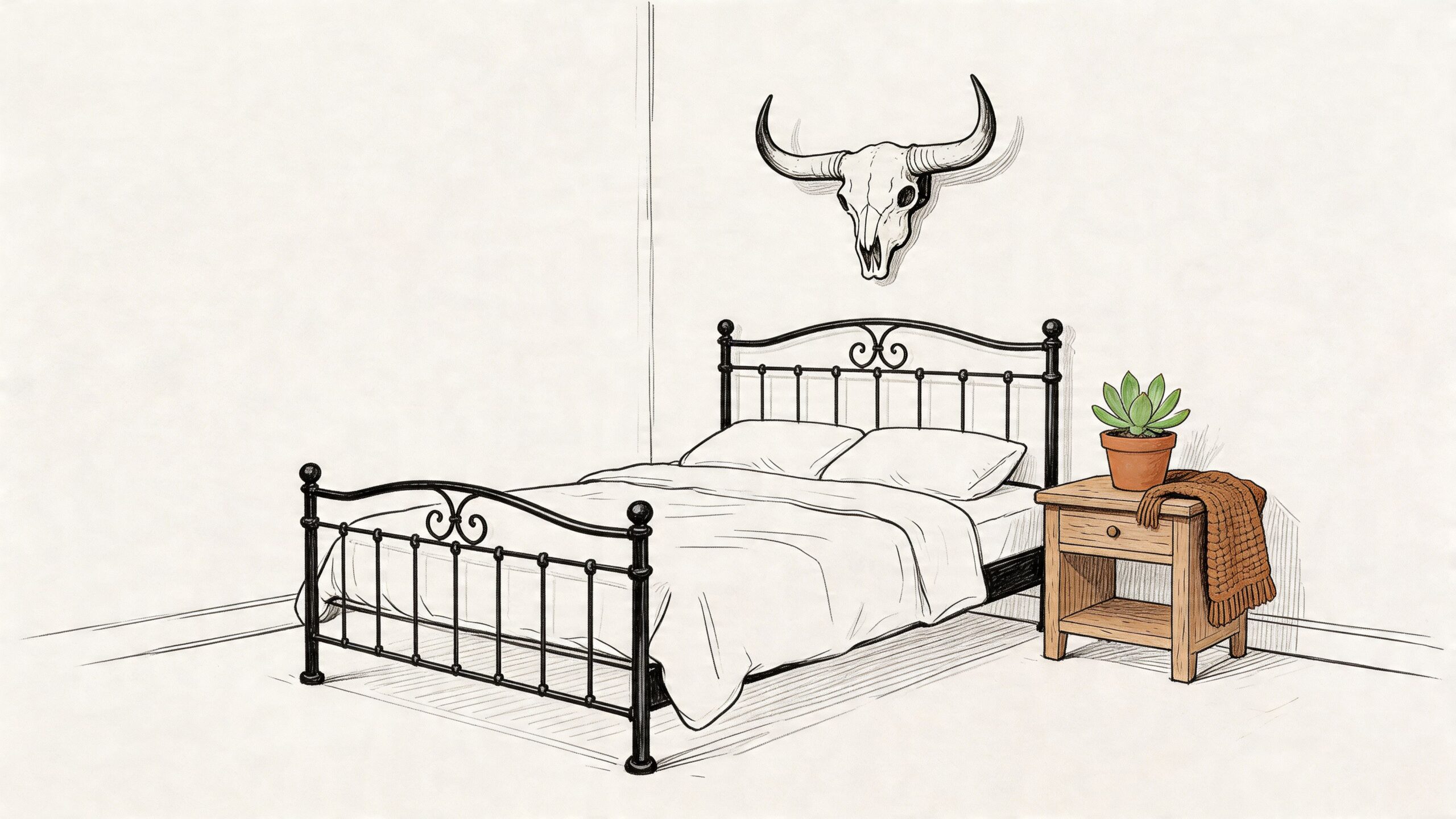
One of my favorite combinations is black iron with rustic wood.
Try a weathered nightstand, a medium-tone dresser, or a bench with visible grain. The contrast keeps the room from feeling flat. The black frame sharpens the space, and the wood softens it.
Leather also works beautifully here. A small leather chair, a stitched bench, or even a leather-trimmed lamp shade can make the room feel rooted and refined at the same time.
Pull colors from the landscape
The high desert gives you a ready-made palette.
Good companions for black iron beds include:
- Terracotta and clay tones for warmth
- Sage and olive for a quieter, natural feel
- Dusty blue for a cooler layer that still feels regional
- Cream, sand, and oatmeal to keep the room open and breathable
Bedding doesn’t need to be complicated. A solid quilt, one patterned lumbar pillow, and a textured throw often look better than a stack of overly coordinated accessories.
Black iron looks strongest when the room around it has texture. Linen, wool, leather, wood, and woven fibers do more work than extra decoration.
Let pattern stay intentional
Southwestern and Navajo-inspired patterns can be striking with an iron bed, but placement matters.
A patterned blanket at the foot of the bed can be enough. So can a vintage-style rug under the lower two-thirds of the frame. If the bed itself has ornate lines, keep the textile pattern more restrained. If the bed is simple, you can let the rug or coverlet speak louder.
For more region-specific inspiration, Miller Waldrop’s guide to Southwestern bedroom design offers ideas that pair naturally with this type of frame.
Finish the wall above the bed carefully
This is one of the most common sticking points.
Because black iron beds have open headboards, the wall behind them stays visible. That makes art selection more important. You don’t want the piece to feel too small, but you also don’t want it to compete with the bars and curves of the frame.
If you want practical visual guidelines, this article on choosing art above your bed is a useful read. It helps you think through scale, placement, and how much breathing room the composition needs.
A room example that works
Think about a bedroom with soft plaster-colored walls, a matte black iron bed, oak nightstands, a woven rug with muted desert tones, and simple white bedding. Add one clay lamp, one striped lumbar pillow, and a scenery print over the headboard. That room feels calm, local, and collected.
That’s the sweet spot for black iron beds in our area. They don’t need a lot of fuss. They just need the right supporting cast.
Your Guide to Assembly Care and Maintenance
A good black iron bed should feel solid from the first night. That usually comes down to careful assembly and simple upkeep.
The biggest mistakes happen early. Hardware isn’t tightened evenly, the floor isn’t level, or the frame gets pushed into place before everything is aligned. Those little shortcuts often cause the movement and noise people blame on the bed itself.
Set it up for stability
When you assemble the frame, tighten connections gradually instead of fully locking one side first. That helps the bed settle evenly.
Check the floor too. If one leg sits slightly off, the frame may rock. A stable setup matters more than people think because movement at the base can travel into the headboard and create squeaks later.
Keep the finish clean
Routine care is simple.
- Dust first with a soft, dry cloth so grit doesn’t scratch the finish.
- Wipe gently with a slightly damp cloth when needed.
- Dry the frame after cleaning, especially around joints and lower rails.
- Watch for chips so you can address small finish damage before it becomes a larger issue.
If your home tends to hold seasonal moisture, a little extra attention goes a long way. In our region, dust and fluctuating conditions mean it’s smart to keep the finish clean rather than letting buildup sit on the frame.
A black iron bed doesn’t need high-maintenance care. It needs consistent care.
Fix small issues early
If the bed starts making noise, don’t assume it’s worn out. Usually, one connection needs attention.
Recheck bolts, slat placement, and center support. Make sure the mattress is sitting evenly and not shifting weight awkwardly onto one area. A quick adjustment often restores that quiet, solid feel.
For longer-term protection, avoid dragging the frame during rearranging. Lift components when possible. That helps protect both the finish and the joints.
A black iron bed earns its reputation when you treat it like a lasting piece instead of a temporary one. The care is straightforward, and the payoff is a frame that keeps its look and stability for years.
Your Questions Answered by Our Design Team
Shoppers usually narrow down black iron beds quickly. The final questions are almost always about fit, finish, and whether the bed will work with the rest of the room.
Will a black iron bed make my bedroom feel too dark
Usually, no.
Because the frame is open, it often feels lighter than a large upholstered or paneled bed. If you’re concerned, pair it with lighter bedding, warm wood, or pale walls so the contrast feels balanced rather than stark.
Can black iron beds work in homes that aren’t traditional
Absolutely.
They work in rustic, transitional, farmhouse, industrial, and even cleaner contemporary bedrooms. The key is choosing the right silhouette. A simple frame with minimal ornament reads very differently from a curved, spindle-heavy design.
What if I want a specific finish or a slightly different look
That’s a smart question to ask before you settle.
Some shoppers want a softer antique black. Others want a cleaner matte finish or a different scale for the headboard. Custom order options can help when you’ve found the right general style but want a better fit for your room.
How do I know which size is best for my room
Bring in your measurements, along with photos if you can.
That gives a design team enough context to help you think through proportions, walkways, and companion furniture. It’s especially helpful if you’re trying to fit nightstands, a dresser, or a bench without crowding the room.
Should I shop for the bed and mattress together
If possible, yes.
That approach helps you think through height, support, and overall comfort as one decision. It also reduces surprises after delivery, especially if you’re replacing an older frame with something taller, lower, or more open.
Is financing available for a bedroom update
Many shoppers prefer to spread out a larger bedroom purchase rather than replacing everything in stages. Flexible financing can make it easier to choose pieces that fit your needs now instead of settling for stopgap furniture that you’ll want to replace later.
If you want help comparing black iron beds, matching one to your mattress, or exploring bedroom styles that fit your home in Lubbock, Hobbs, or Ruidoso Downs, the team at Miller Waldrop Furniture & Decor can help you sort through the options and find a bed that suits your space, your climate, and your style.