

How Much Is a Queen Box Spring? 2026 Price Guide

A quality queen box spring typically costs between $100 and $300. That said, the actual price depends on a few key factors that shape how well it supports a mattress and how long that support lasts.
A lot of shoppers in Lubbock, Hobbs, and across West Texas and Southeastern New Mexico run into the same moment. The mattress is picked out, the comfort feels right, and then the next question lands fast. How much is a queen box spring, and what's worth paying for?
That's where things get muddy. Some foundations look almost identical online, yet their prices can sit far apart. One may be a simple basic support layer. Another may use sturdier materials, a lower profile for a modern bed, or heavier-duty construction that helps the mattress perform better over time.
Now, price starts making more sense. A box spring isn't just a line item on a receipt. It's part of the sleep system under the mattress, and it affects support, height, durability, and how the whole bed feels day after day. Once those pieces are clear, the shopping process gets much easier.
Table of Contents
- Your Guide to Queen Box Spring Pricing
- What a Box Spring Does for Your Mattress
- Breaking Down the Cost of a Queen Box Spring
- Key Factors That Influence Box Spring Prices
- Comparing Box Springs and Modern Alternatives
- Find Your Perfect Foundation in Texas and New Mexico
- Frequently Asked Questions About Queen Box Springs
Your Guide to Queen Box Spring Pricing
Buying a mattress often feels like the hard part. Then the foundation question shows up, and many shoppers realize they're comparing products that look similar but aren't built the same way.
For most households, the useful working range for a queen box spring lands around $100 to $300. That's a realistic expectation for shoppers who want dependable support without drifting into specialized luxury options. In the broader U.S. market, a queen box spring averages about $142, with prices stretching from $9 to $379 depending on construction type, materials, and brand positioning, according to queen box spring pricing data from Lowe's.
That wide spread is exactly why a single price doesn't tell the whole story. A lower tag may fit a guest room or short-term setup. A sturdier foundation can make more sense for a primary bedroom, a heavier mattress, or a family that wants fewer replacement headaches later.
Practical rule: The right question isn't only “how much is a queen box spring.” It's “what kind of support is this price buying?”
A good way to shop is to match the foundation to the bed's real job:
- Primary bedroom use: Look for stronger construction and stable support.
- Guest room use: Simpler options may work fine if the bed sees lighter use.
- Modern lower bed height: Low-profile designs can change both look and cost.
- Heavier mattress setup: More sturdy support matters more than a bargain sticker.
A box spring is one of those pieces that's easy to overlook because it sits under everything else. But it affects the mattress every night. Once that clicks, the price starts to feel less random and more like a quality decision.
What a Box Spring Does for Your Mattress
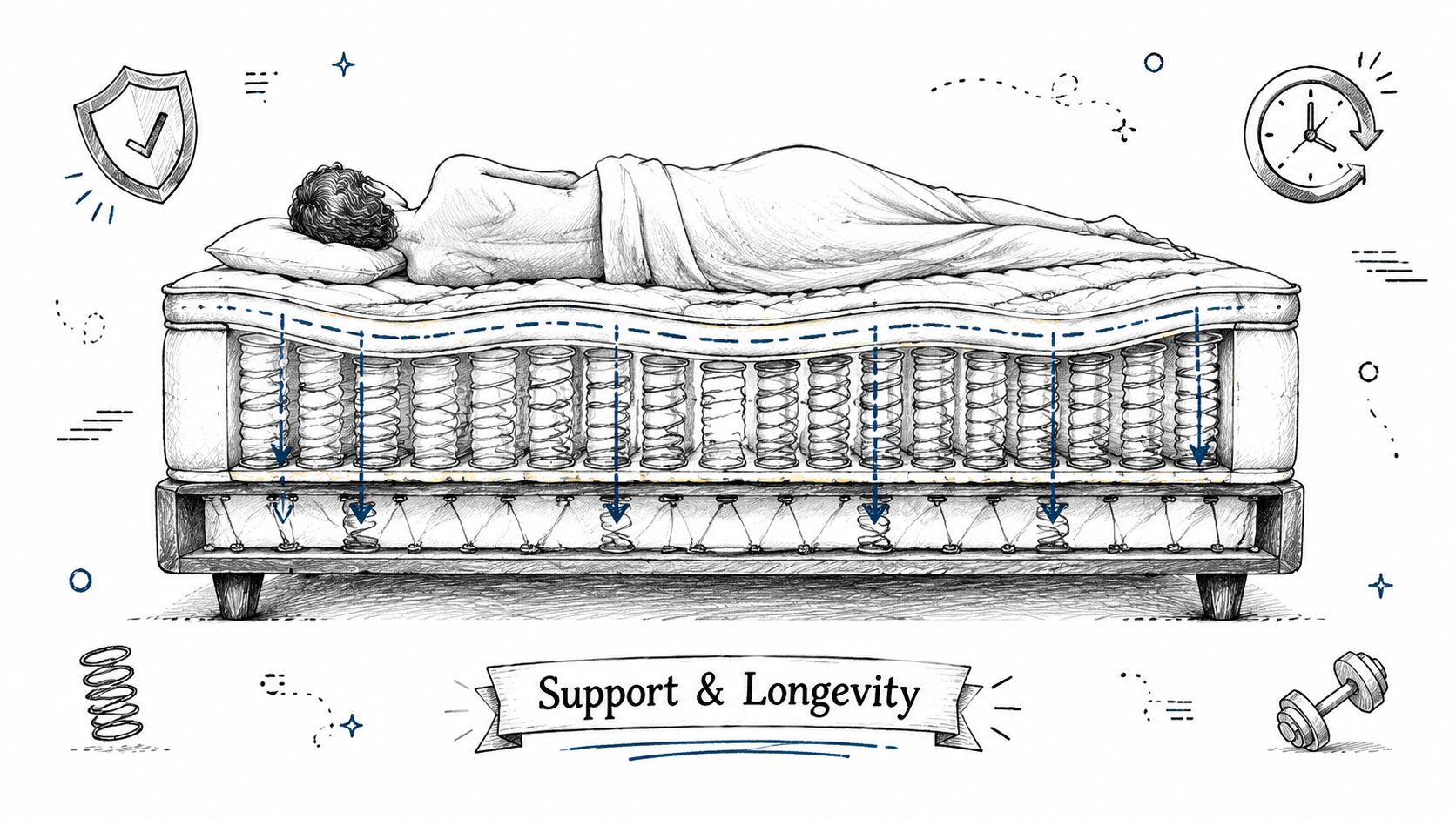
A box spring does more than lift a mattress off the floor. It acts like the support layer that helps the mattress do its own job properly. A simple way to think about it is a house foundation. If the base is uneven or weak, the structure above it pays the price.
The job under the mattress
The first job is support. A foundation helps create a flat, stable surface so the mattress can stay aligned instead of dipping where it shouldn't. That matters for edge support, comfort, and long-term wear.
The second job is height. Some sleepers prefer a bed that's easier to get in and out of, especially in a primary bedroom where comfort matters every day. Box springs can also help a headboard and bed frame sit at a better visual height.
The third job is mattress preservation. A mattress placed on the wrong surface may not wear evenly. Good support reduces unnecessary stress on the mattress build, which helps protect the investment.
A mattress can only perform as well as the surface beneath it.
When a family is moving, setup condition matters too. Before a mattress goes onto a new foundation, it helps to protect your mattress during a move so dust, moisture, and snags don't create problems before the bed is even assembled.
Why size and fit matter
A queen foundation has to match the mattress exactly. A standard Queen Box Spring Foundation measures 60 inches by 80 inches, which gives the correct footprint for a queen mattress and helps maintain alignment and edge support, as shown in this queen box spring dimension reference.
That exact fit matters more than many shoppers expect. If the foundation is off, even slightly, the mattress may not sit evenly across the frame.
Here's where confusion often shows up:
- A box spring isn't just a spacer: It contributes to support.
- Not every mattress needs the same base: Some perform best on a more solid surface.
- Low-profile and standard foundations don't feel the same in a room: Bed height changes the way the whole setup looks and functions.
A strong foundation doesn't usually get credit when a bed feels right. It just does its job, night after night.
Breaking Down the Cost of a Queen Box Spring
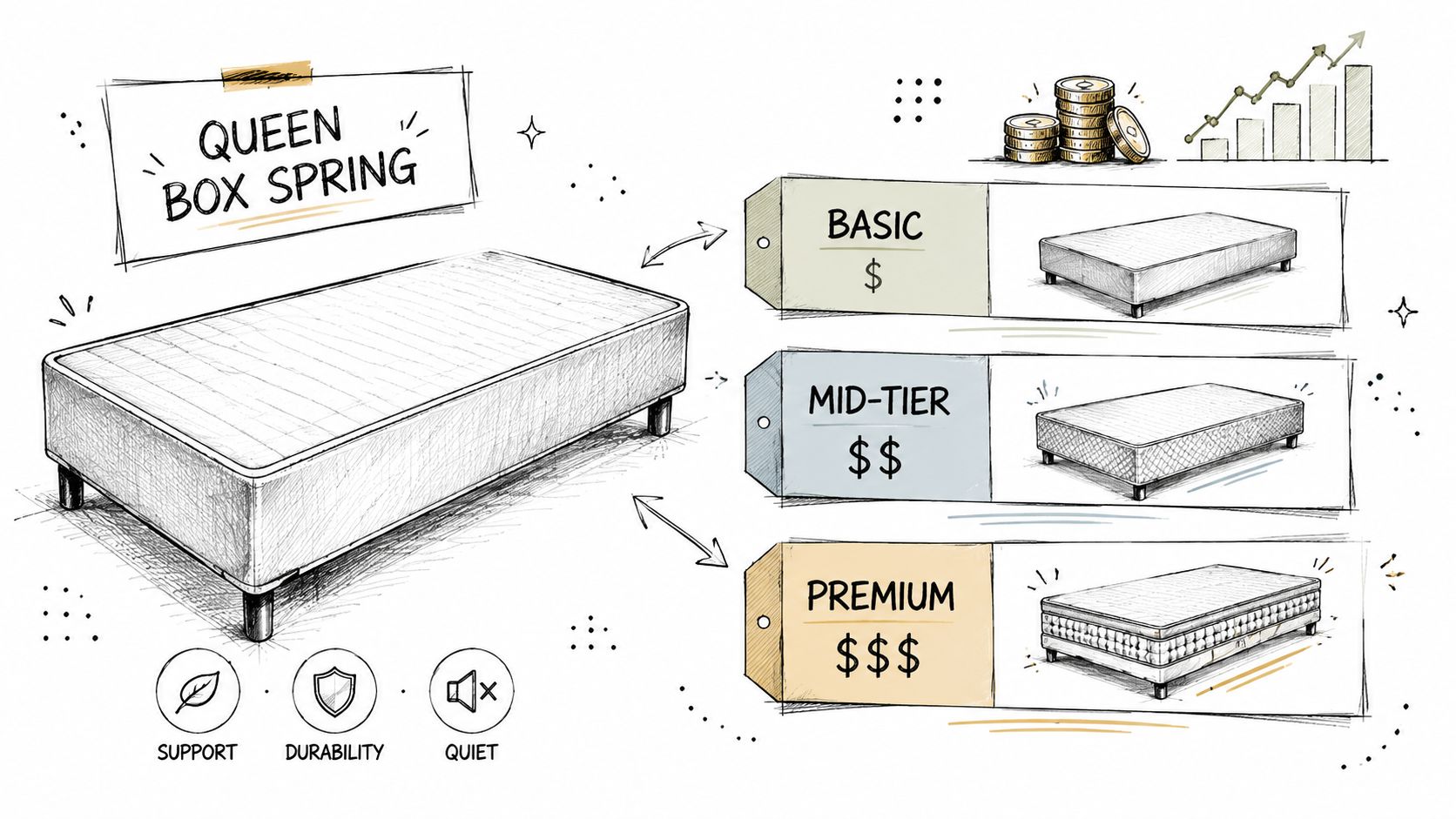
The easiest way to make sense of box spring prices is to stop looking for one number and start looking at price tiers. Most shoppers don't need the cheapest option or the most specialized one. They need the range that matches their mattress, frame, and daily use.
Value range
In the U.S. market, the most common price range for a queen-sized box spring foundation is between $50 and $100, and that range accounts for 62% of the total market assortment, according to this queen box spring market breakdown.
That tells shoppers something important. Basic, value-focused options are everywhere. They're common because many people want an affordable way to support a queen mattress without spending heavily on the foundation.
This range can make sense for:
- Guest rooms
- Starter apartments
- Temporary setups
- Budget-first replacements
Mid-range sweet spot
For many homes, the sweet spot sits around the low hundreds into the mid hundreds. This is often where shoppers find a better balance of support, cleaner construction, and a foundation that feels more dependable under everyday use.
A practical retail example helps. Miller Waldrop's Queen Low Pro Boxspring is listed at $170.00, which places it squarely in the range many shoppers consider reasonable for a queen foundation meant for regular use.
For buyers who want to spread out the cost of a mattress and foundation together, financing options through Miller Waldrop can make the full bedroom setup easier to manage.
Premium range
Premium pricing usually reflects upgraded materials, specialized profiles, heavier-duty builds, or added features tied to a particular sleep setup. In major retail markets, entry-level queen box springs start around $119 and premium in-stock models reach $380, based on this retail pricing overview for mattresses and box springs.
A simple shopping lens helps:
| Tier | What shoppers usually get |
|---|---|
| Value | Basic support, simpler materials, practical for lighter use |
| Mid-range | Better everyday durability, stronger fit for primary bedrooms |
| Premium | Specialized construction, upgraded support, more tailored performance |
The goal isn't to spend more for its own sake. The goal is to match the foundation to the demands placed on it.
Key Factors That Influence Box Spring Prices
Two queen box springs can look similar at a glance and still be priced far apart. The difference usually comes down to what's inside, how it's built, and what kind of bed setup it's meant to support.
Height changes the build
Profile height affects cost more than many shoppers expect. The cost of a queen-sized box spring is heavily tiered by profile height and material composition. Standard 9-inch models range from $150 to $400, while low-profile 4-5 inch or wood foundation alternatives range from $200 to $500 because they require more specialized manufacturing, according to this guide to queen box spring dimensions and types.
That surprises some buyers. A thinner foundation sounds like it should cost less. In practice, a lower profile may need stronger internal reinforcement to stay rigid with less vertical space.
A low-profile foundation often works well for:
- Modern bed styles that sit lower to the floor
- Taller mattresses that already add plenty of bed height
- Rooms where scale matters, especially under larger headboards
By contrast, a standard-height box spring can make getting in and out of bed easier and may suit more traditional bedroom proportions.
Materials and construction quality
Materials shape both cost and performance. Wood and metal options can both work well, but the quality of the frame, joints, supports, and covering makes a real difference.
Shoppers can look for these quality markers:
- Frame strength: A sturdier frame usually resists flexing and shifting better.
- Support consistency: Even support across the surface helps the mattress wear more evenly.
- Covering and finish: A cleaner exterior won't improve sleep by itself, but it can signal a better-finished product.
- Noise control: Better-built foundations tend to stay quieter over time.
One practical clue is profile design. High-quality queen box springs such as the Zinus Quick Lock Smart Box Spring use a 7.5-inch low-profile design that keeps bed height modest while maintaining sturdy support, as noted in this Strategist roundup of box spring options.
Shipping and setup realities
Cost isn't only about materials. It's also about handling, transport, and getting the foundation into the room where it belongs. A queen foundation is bulky, and some are quite heavy depending on what they're made from.
That's one reason local service matters. For households that don't want to wrestle a foundation through a stairwell, hallway, or tight corner, delivery support from Miller Waldrop can remove a lot of the hassle from the process.
The cheapest foundation can stop being cheap fast if it's difficult to move, awkward to assemble, or wrong for the mattress.
Price makes more sense when shoppers evaluate the whole package. Height, materials, construction, and logistics all show up in the final number.
Comparing Box Springs and Modern Alternatives
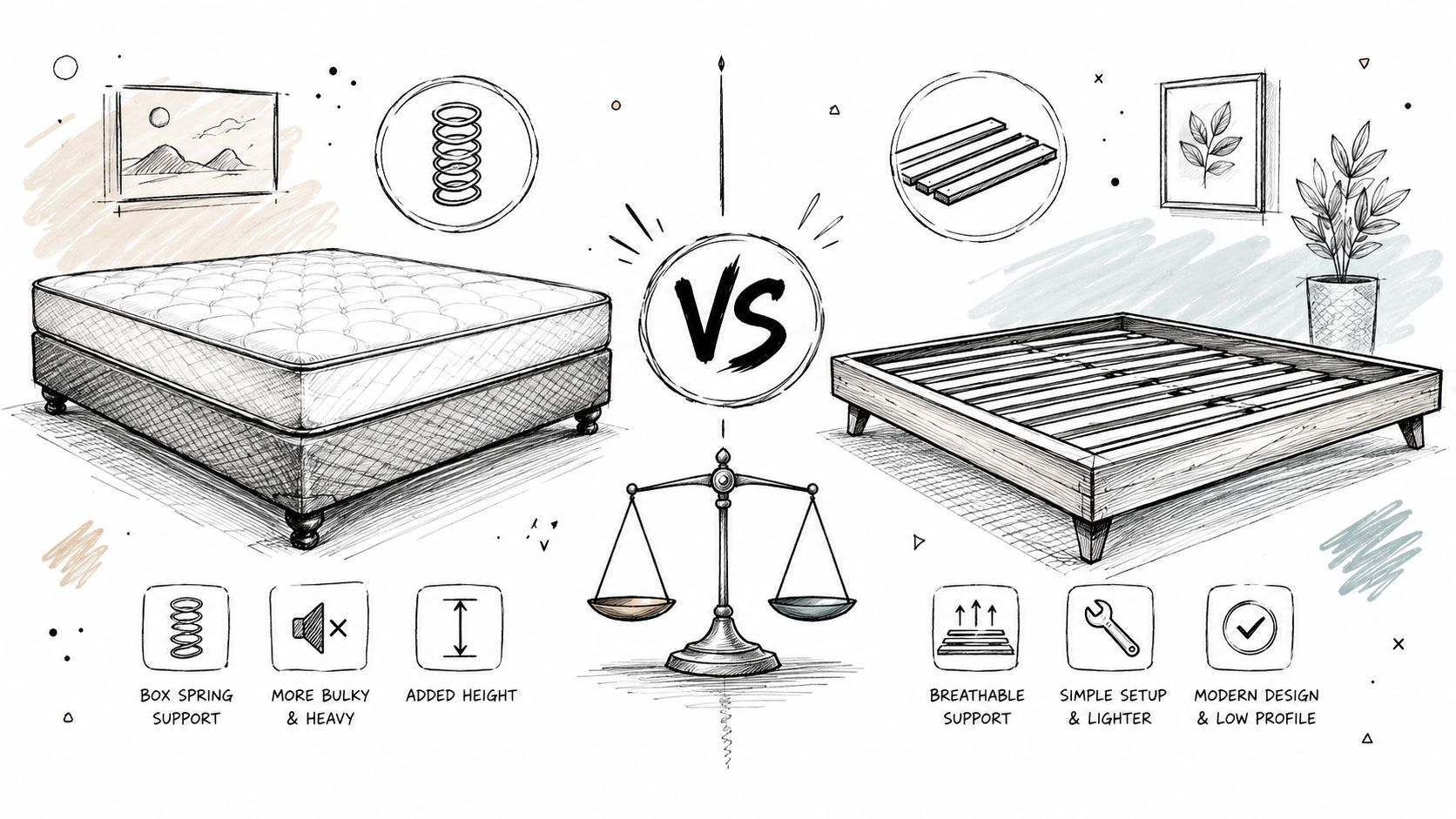
A box spring is one option, not the only option. Many shoppers asking how much a queen box spring costs are really trying to answer a bigger question. What support system fits the mattress and the way the bed will be used?
When a box spring makes sense
A traditional box spring or foundation works well when the bed frame is designed for one, when a sleeper wants more bed height, or when the mattress benefits from that kind of support setup.
It can be a smart fit for:
- Traditional bedroom furniture
- Mattresses paired with matching foundations
- Shoppers who want easier bed entry height
- Homes where the full bed look matters as much as the sleep surface
Some premium models are built for heavier-duty use. Premium queen box spring models such as the Helix Foundation are engineered with a weight capacity of up to 700 pounds, offering stronger support and more even weight distribution, according to this Forbes guide to box springs.
When a platform or adjustable base fits better
Platform beds and adjustable bases solve the same support problem in different ways.
A platform bed gives the mattress a more modern, often lower-profile support structure. It usually appeals to shoppers who want a cleaner look or who have a mattress that performs well on a firmer, more solid surface.
An adjustable base changes the conversation entirely. It's less about raising the mattress to a standard height and more about lifestyle. Reading in bed, elevating the head or legs, and tailoring sleep position become part of the value.
A simple comparison helps:
| Support type | Strong fit for | Main consideration |
|---|---|---|
| Box spring | Traditional setups, matched support, added height | Bed height and compatibility |
| Platform bed | Modern rooms, simpler profile, solid support | Mattress should suit the surface |
| Adjustable base | Position flexibility, comfort customization | Higher complexity and feature set |
Some mattresses work beautifully on a box spring. Others are better matched to a platform or adjustable base. The bed frame, mattress design, and sleeper habits all need to agree.
The smartest choice usually isn't the most familiar one. It's the support system that matches the mattress and the household's daily routine.
Find Your Perfect Foundation in Texas and New Mexico

For shoppers in Lubbock, Hobbs, and Ruidoso Downs, the biggest advantage isn't just seeing a price tag. It's being able to match a foundation to a real mattress, a real frame, and a real bedroom.
How local shoppers can narrow the choice
A helpful way to shop is to walk through three questions:
Is the mattress tall or low-profile already?
That often points toward either a standard or lower foundation height.Will the bed be used every night or occasionally?
Primary bedrooms usually justify stronger support.Does the sleeper want a traditional setup or a more modern feel?
That answer often decides between a box spring, platform support, or an adjustable base.
Local showroom visits help because support systems are easier to understand in person than on a product grid. Height is easier to judge. Stability is easier to feel. Compatibility questions get answered faster.
A practical next step
Miller Waldrop has served West Texas and Southeastern New Mexico since 1952, and that kind of long-term local experience is useful when a shopper wants help sorting through mattress support choices without adding more confusion. The stores also carry trusted mattress brands and dedicated sleep products that can be matched to different sleep needs and room styles.
For anyone who wants to compare options in person, Miller Waldrop showroom locations make it easy to find a nearby stop in Lubbock, Hobbs, or Ruidoso Downs.
The right foundation should make the mattress work better, fit the room properly, and feel like a smart purchase a year from now, not just a fast one today.
Frequently Asked Questions About Queen Box Springs
Can a new mattress go on an old box spring
Sometimes, but it depends on condition and compatibility. If the old foundation sags, creaks, bows, or no longer feels level, it can undermine the new mattress from day one.
Why do some box springs get noisy
Noise usually comes from movement at connection points, shifting materials, or wear over time. A stable frame, level floor, and correctly assembled support system often solve the problem.
How can a shopper tell when it's time to replace one
Visible sagging, uneven support, wobbling, fabric damage, or new squeaks are common signs. If the mattress no longer feels evenly supported, the foundation deserves a close look.
Is low-profile always better
Not always. Low-profile foundations fit certain room styles and mattress heights well, but standard-height models may be better for traditional furniture or for sleepers who prefer a taller bed.
A better night's sleep starts with the right support under the mattress. Miller Waldrop Furniture & Decor helps shoppers in West Texas and Southeastern New Mexico compare foundations, mattresses, and bedroom setups with practical guidance, trusted brands, and local showroom support so each family can choose what fits their home and sleep needs with confidence.