


Organize Your Space: Bedroom Sets with Storage 2026

A bedroom often becomes the landing zone for real life. Clean laundry waits on a chair, extra blankets fill the corner, the nightstand starts holding everything from chargers to paperwork, and suddenly the room meant for rest feels like another storage problem to solve.
That's why bedroom sets with storage resonate with so many households. They don't just add furniture. They give everyday items a home, reduce visual clutter, and help a bedroom work harder without feeling improvised. That shift matters because the category itself is moving in that direction. The global bedroom furniture market was valued at USD 126.80 billion in 2025 and is projected to reach USD 165.07 billion by 2031 at a 4.49% CAGR, with beds leading revenue and dressers and storage units growing quickly within the category, according to Mordor Intelligence's bedroom furniture market report.
The right set can make a room feel calmer. The wrong set can crowd the bed, block drawers, and create new frustrations. That's where careful planning pays off. Buyers who also need a reset before new furniture arrives may find these tips for decluttering bedrooms useful, because furniture works best when it solves the right problem instead of covering up an undefined one.
Table of Contents
- Reclaim Your Sanctuary from Clutter
- Decoding the Types of Storage Bedroom Sets
- Measure Twice How to Choose the Right Set for Your Room
- Beyond Looks Materials Durability and Safety
- Creating a Cohesive Look Style and Mattress Compatibility
- Your Partner in Design: How Miller Waldrop Guides Your Choice
- Build Your Dream Bedroom Sanctuary Today
Reclaim Your Sanctuary from Clutter
A cluttered bedroom rarely starts with one bad decision. It usually builds piece by piece. One dresser isn't big enough, so baskets appear. The bed has no storage, so off-season clothes move into plastic bins. Nightstands get overloaded because they're doing the job of a desk, a charging station, and a catch-all.
Bedroom sets with storage solve that problem best when they're treated like a layout strategy, not just a style choice. A bed with built-in drawers can take pressure off a closet. A matching chest can reduce the need for overflow bins. Coordinated pieces also help the room feel settled because storage is distributed where it's needed.
A peaceful bedroom usually isn't the one with the most furniture. It's the one where every item has a clear place to go.
That's the practical appeal. A storage set can replace scattered, mismatched fixes with a system that feels intentional. For many households, that means fewer piles on the floor, fewer overstuffed corners, and less frustration during the normal rhythms of getting dressed, making the bed, and putting things away.
Why this purchase feels bigger than furniture
A bedroom isn't only a place to sleep. It's where people start the day, wind down, store personal items, and look for a sense of order. When the room feels crowded, the stress shows up in small ways. Drawers stick because they're overfilled. Laundry has nowhere to land. Walking around the bed becomes a shuffle instead of a smooth path.
Storage furniture helps most when it restores flow. That's the goal. Not more pieces for the sake of more pieces, but a room that supports rest, routine, and organization all at once.
Decoding the Types of Storage Bedroom Sets
A good storage bedroom set should match the way the room is used. Some sets put most of the storage in the bed. Others spread it across a dresser, chest, nightstands, and headboard. The best choice depends on what you need to put away every day, what can live farther out of reach, and how much visual weight the room can handle without feeling crowded.
What belongs in a storage set
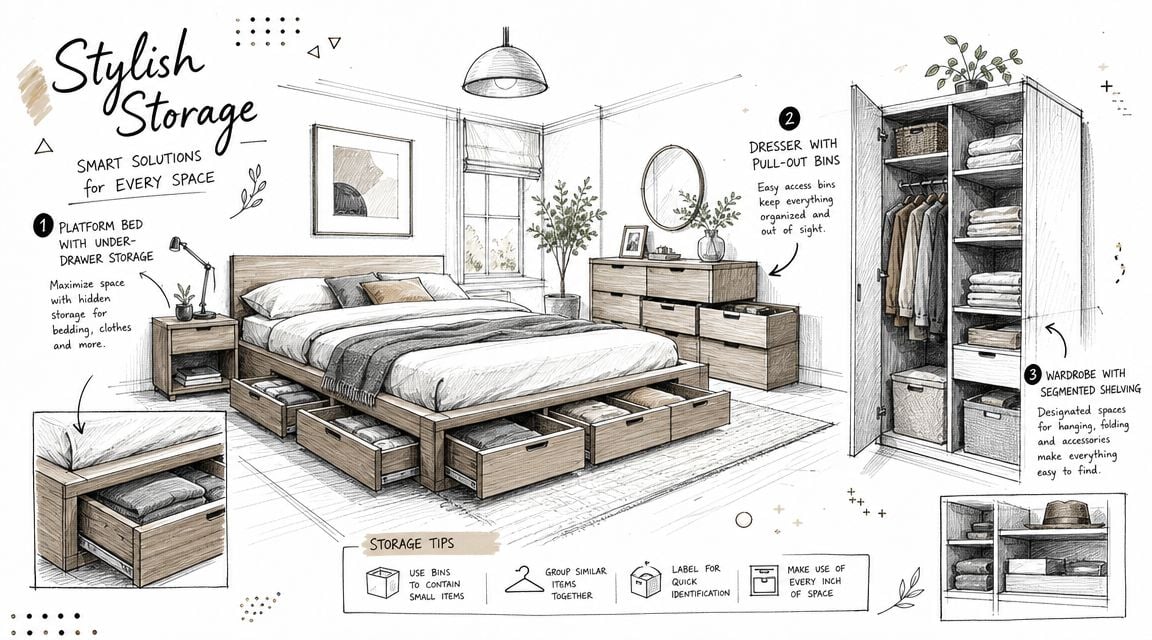
The most common setup is a platform storage bed paired with one or two matching case pieces. That arrangement works well because it divides the load. Bedding or off-season clothing can go under the bed, while everyday folded items stay in a dresser or chest where they are easier to access.
A captain's bed puts more of the burden on the bed frame itself. It usually includes multiple drawers in the base, which makes sense in smaller bedrooms, guest rooms, and kids' spaces where each piece needs to serve more than one purpose. The trade-off is straightforward. If one side of the bed sits against a wall or too close to another piece, part of that storage becomes awkward to use.
A storage headboard adds a different kind of function. It helps with the small items that usually clutter nightstands, such as books, glasses, chargers, and remotes. Shoppers who want bedside organization without adding wider nightstands often start with a bed with shelves for built-in headboard storage.
Matching dressers and chests still do important work. Under-bed storage is useful, but it is not always the right place for daily basics. In practice, the sets that age well are usually the ones that combine low concealed storage with one taller piece that takes advantage of vertical space.
Storage Bedroom Set Types at a Glance
| Set Type | Storage Style | Best For | Considerations |
|---|---|---|---|
| Platform bed with drawers | Under-bed drawer storage | Primary bedrooms that need hidden storage without adding extra bins | Needs drawer pull-out space on one or both sides |
| Captain's bed | Multiple built-in drawers in the bed base | Smaller rooms, guest rooms, kids' rooms, compact layouts | Can feel bulky if paired with too many additional case pieces |
| Bed with storage headboard | Open shelving or cubbies at the headboard | Readers, device charging, tight bedside zones | Doesn't replace clothing storage |
| Bed plus dresser and chest set | Bed storage combined with freestanding drawer units | Households with varied storage needs and shared rooms | Requires careful wall planning so the room doesn't feel crowded |
| Bed plus wardrobe-focused set | Larger enclosed storage pieces with a matching bed | Rooms short on closet space | Tall case goods can visually dominate a small bedroom |
Practical rule: The best set stores the items you reach for most often and still leaves the room easy to move through.
What works and what often doesn't
The strongest layouts match the storage type to the storage habit. Under-bed drawers are useful for folded clothes, extra sheets, and backup blankets. Headboard shelves help with everyday bedside items. A tall chest handles categories that need vertical separation, especially in shared bedrooms where people want their own dedicated drawers.
Problems usually start when every storage feature gets added at once.
A large drawer bed, wide nightstands, a long dresser, and an extra chest can overload a room fast. On the sales floor, that combination can look complete. In daily life, it can make the bedroom harder to clean, tighter to walk through, and more frustrating to use. A better set feels calm after six months of ownership, not just polished on delivery day.
Measure Twice How to Choose the Right Set for Your Room
The fastest way to regret a bedroom purchase is to measure only the mattress size and stop there. Bedroom sets with storage need room not just to fit, but to function. Drawers have to open. Walkways have to remain usable. Doors and windows still need to do their jobs.
Start with the bed footprint
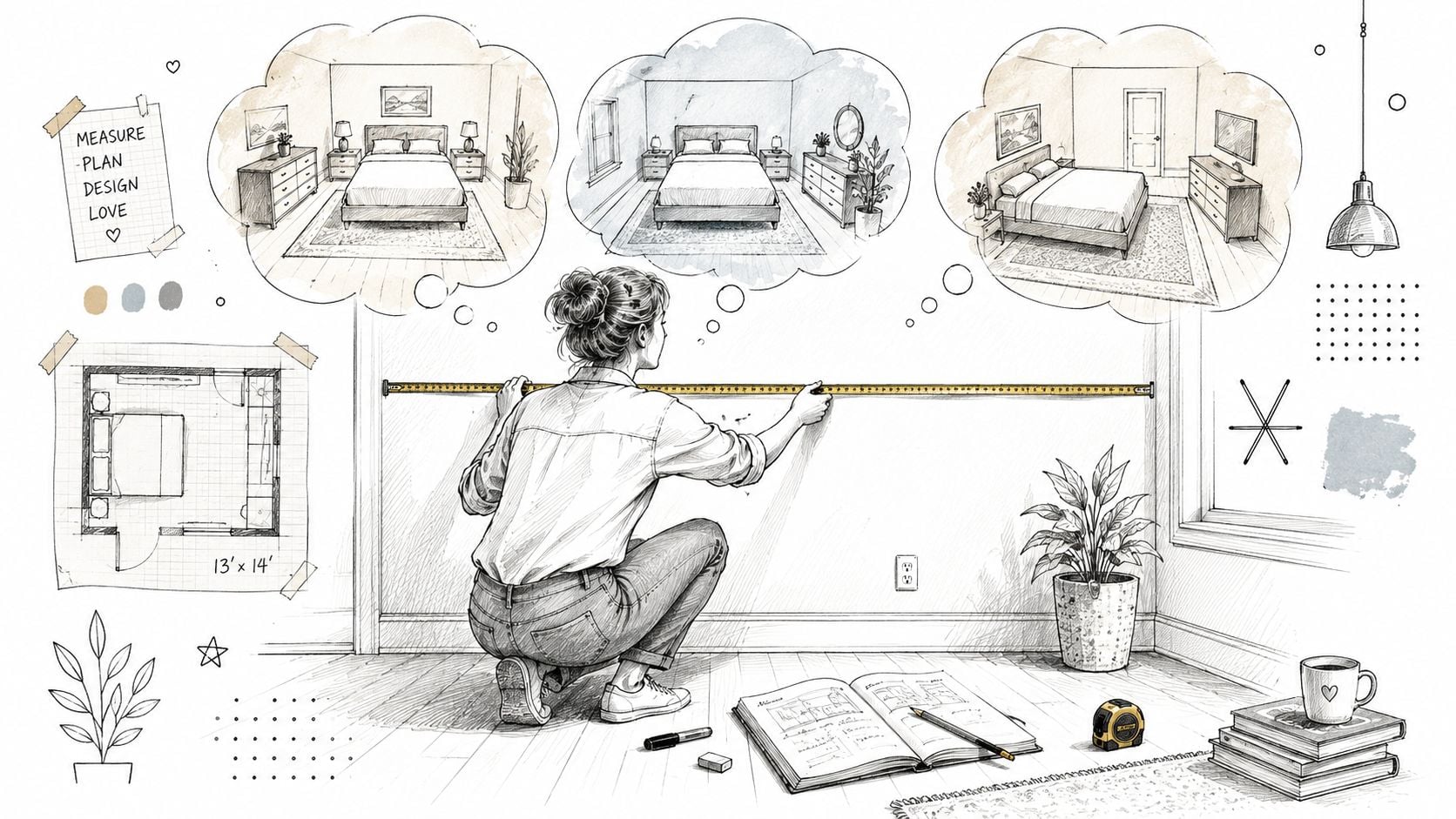
Example dimensions show how deceptive storage beds can be. A full-size storage platform bed can measure about 55.75 inches wide, 75.5 inches deep, and 13.75 inches high, while still keeping the basic mattress footprint familiar. The hidden issue is operation. Those drawers also need about 18 to 24 inches of clearance to open comfortably, as shown in this storage platform bed dimension example.
That means measuring in layers:
Wall-to-wall room size
Measure the room itself first, but don't stop there.Furniture footprint
Mark where the bed frame, dresser, chest, and nightstands would physically sit.Operating space
Add the swing or pull-out zone for drawers, closet doors, and room entry.Walking path
Check whether people can move naturally around the bed once all the furniture is in use.
A paper sketch helps. Painter's tape on the floor helps even more. It turns a guessed layout into something visible before delivery day.
Check the room's real obstacles
Many bedrooms aren't simple rectangles. They have angled walls, tight corners, low windows, nearby bathroom doors, or closets that compete with the ideal bed wall. In those rooms, the smartest choice is often not the set with the most pieces. It's the set with the cleanest traffic pattern.
Consider these common trouble spots:
Closet conflict
A dresser may fit on paper but block closet access once drawers open.Corner compression
Beds with side drawers can lose usefulness if one side sits too close to a wall.Window placement
A tall headboard or chest may interrupt natural light or cover part of a window.Angled walls
Non-standard architecture often favors fewer, better-placed pieces rather than a full suite.
In a small or awkward room, circulation space is part of the furniture plan. If people have to sidestep around open drawers, the layout isn't finished.
A good measuring process also includes delivery access. Hallways, stair turns, entry doors, and tight corners can affect whether a large headboard, chest, or fully assembled case piece can reach the bedroom. Buyers who want a more detailed checklist can use this guide on how to measure furniture before narrowing their options.
Beyond Looks Materials Durability and Safety
Storage furniture gets judged first by appearance and later by performance. The second part matters more over time. Drawers open and close every day. Hardware loosens. Panels take stress. A set that looks polished in the showroom can become frustrating quickly if the construction behind the finish isn't up to the task.
Where storage furniture wears out first
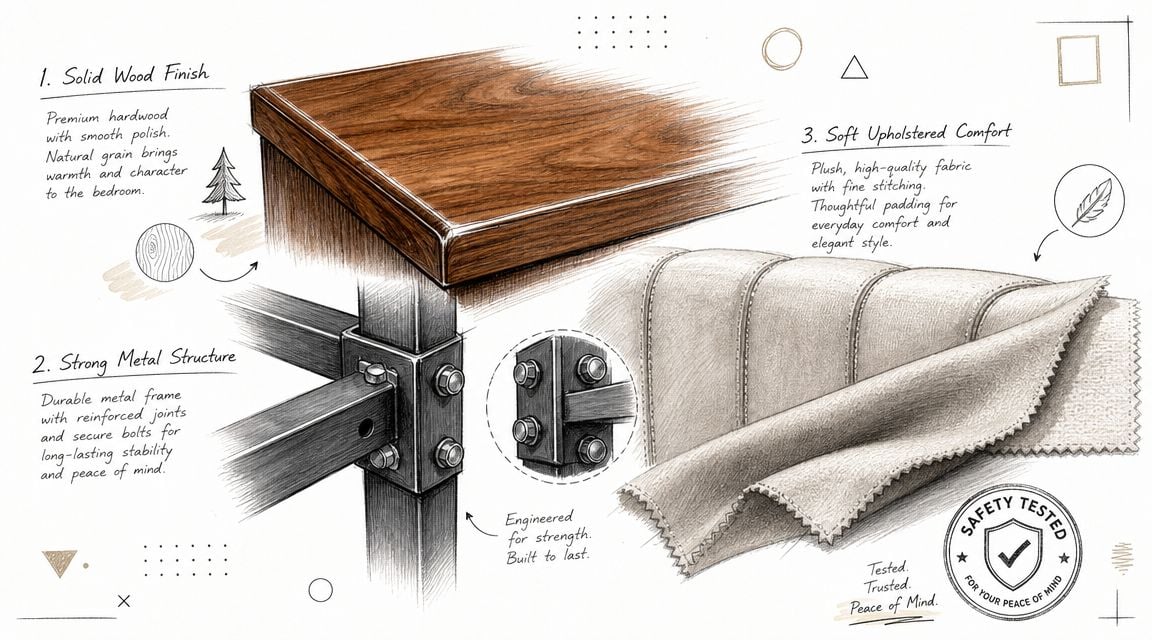
Most long-term problems in bedroom sets with storage don't start with the visible surfaces. They start in the moving parts. Drawer glides, fasteners, support rails, and lift hardware take the daily load. If those parts feel flimsy at the beginning, they usually won't improve with use.
When evaluating a set, these checkpoints matter:
Drawer action
Open drawers fully. They should move smoothly, feel aligned, and close without racking side to side.Interior build
Look inside the drawer box, not just at the front. Quality often reveals itself there.Bed support
A storage bed should feel solid through the center and along the rails, especially if it replaces a traditional box spring setup.Hardware access
Ask whether replacement parts and service support are available if a glide or pull fails later.
Material choice matters too, but it's best judged in context. Solid wood, veneers, and engineered wood all appear in bedroom furniture. None should be treated as an automatic yes or no. The better question is whether the material and construction match the job. A well-built engineered panel in the right place can outperform a poorly built solid-wood assembly. Buyers who like understanding construction logic in other furniture categories may also enjoy this explanation of Benefits of 8-Way Hand-Tied Furniture, because it shows how hidden structure often determines long-term comfort and value.
What safety standards mean for dressers and chests
Safety deserves the same attention as style. In the United States, the CPSC STURDY rule applies to certain clothing storage units. A freestanding unit intended for clothing storage falls under the standard if it is at least 27 inches tall, weighs at least 30 pounds, and provides at least 3.2 cubic feet of enclosed storage volume. The rule applies to units manufactured after September 1, 2023, and requires anti-tip hardware to be included, according to the CPSC guidance on clothing storage units.
That matters because many coordinated bedroom sets include a dresser or chest. Safety isn't only about whether a piece feels heavy. The risk comes from tip-over under real-world conditions such as drawer loading and horizontal force.
A stable dresser should still be anchored. Included anti-tip hardware isn't an optional extra. It's part of responsible ownership.
Durability also includes lifespan expectations. Storage mechanisms add convenience, but they also add wear points. Buyers sorting through those trade-offs may find this article on how long furniture should last useful when comparing short-term appeal against long-term ownership.
Creating a Cohesive Look Style and Mattress Compatibility
You notice style problems fastest at night. The room is finally quiet, but the bed feels too bulky for the space, the nightstands look unrelated to the dresser, and the mattress sits higher or lower than expected because the storage bed was not matched to the right support. Those are the details that turn a good-looking purchase into an awkward one to live with.
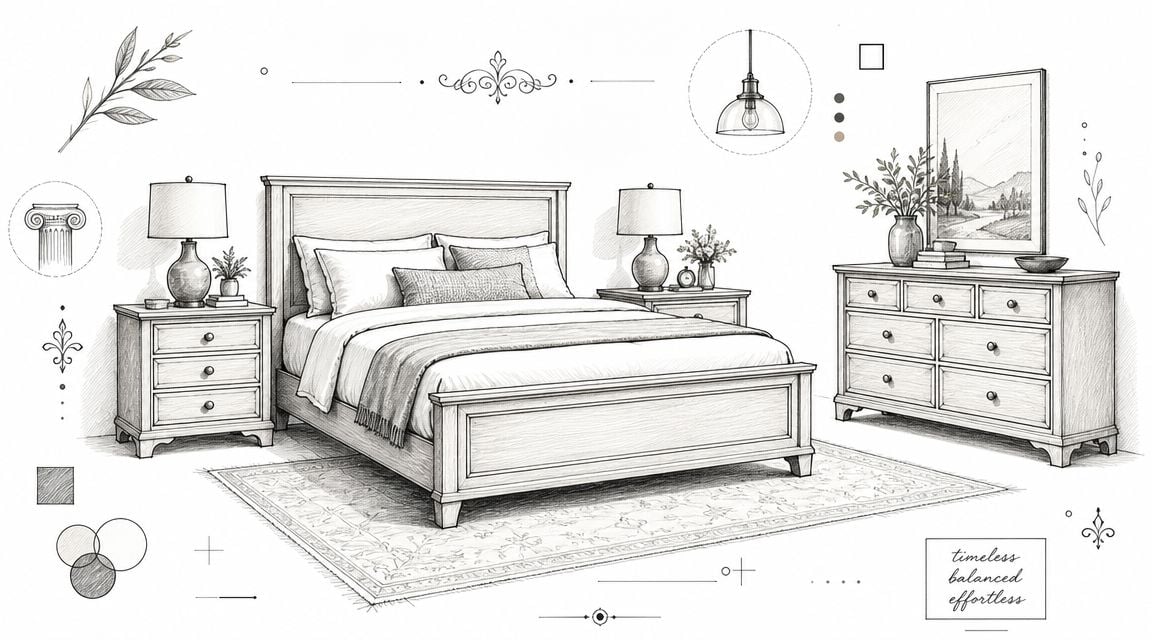
Match the set to the room's language
A cohesive bedroom usually depends on three things working together: finish, scale, and shape. The goal is not perfect matching. The goal is a room where the bed, case pieces, and existing decor look like they belong to the same plan.
Scale is where buyers get into trouble. A storage bed adds visual mass, especially with drawer bases, footboard storage, or a bookcase headboard. In a smaller room, that extra bulk can make the space feel crowded even if every piece clears the walls on paper. Lower profiles, simpler side rails, and cleaner drawer fronts often keep the room calmer.
A few habits help keep the look consistent:
Match visual weight
Wide rails, thick posts, and oversized headboards need enough open space around them.Stay within one finish family
Similar wood tones or painted finishes help mixed pieces feel intentional instead of pieced together over time.Check hardware and line detail
Sleek bar pulls, framed drawer fronts, curved molding, and panel profiles should support the same style direction.Use the headboard as the anchor
It sets the room's tone first, so the rest of the set should support its scale and character.
Make sure the mattress setup works
Storage beds require more homework than a standard frame because the mattress and bed base have to work as one system. Some designs support a mattress directly on slats or panels. Others need a foundation, a bunkie board, or a mattress with a specific profile to keep the sleep surface at the right height.
Height matters more than many shoppers expect.
If the mattress sits too high, the headboard can look undersized and getting in and out of bed may feel awkward. If it sits too low, the proportions look off and bedside surfaces stop lining up comfortably. I always tell clients to look at the full stack-up before they buy: bed base, required support, mattress thickness, and final sitting height.
Airflow and access also deserve attention. Storage built under the bed reduces open space, so it makes sense to ask how the platform is ventilated and how easy the drawers are to use once bedding is in place. A beautiful bed loses value fast if the drawers are blocked by nightstands, the mattress overhangs the frame, or the support system limits future mattress replacements.
A storage bed should look right on day one and still work well after years of mattress rotations, sheet changes, and everyday use.
That is the long-term test. Style gets the room started. Good compatibility keeps the room comfortable and functional.
Your Partner in Design: How Miller Waldrop Guides Your Choice
A storage bedroom set can solve clutter for years, or create a new set of daily frustrations. The difference usually comes down to how well the pieces match the room, the household, and the way the furniture will be used after the delivery team leaves.
That is where good showroom guidance earns its keep.
Miller Waldrop has worked with homes in Lubbock, Hobbs, and Ruidoso Downs for decades, and that local experience matters because real bedrooms rarely behave like showroom floors. Some rooms need better clearance at the foot of the bed. Some need more closed storage because closet space is tight. Some need a set that looks substantial enough for a large primary suite without making the room feel crowded. The right answer changes from house to house.
According to the company's About Us page, Miller Waldrop has served those communities for over 70 years. For a buyer, that matters less as a slogan and more as a sign that the staff has seen the common problems before and can help sort through them with a practical eye.
A productive showroom visit starts before you walk in. Bring a simple room sketch with wall dimensions, door swings, windows, and closet locations. Bring photos too. They help identify obstacles that measurements alone can miss, such as tight walkways, low window trim, or a dresser wall that already feels busy.
Then get specific about what needs to be stored.
Extra sheets and blankets call for different storage than everyday clothing, kids' overflow, or the books and chargers that tend to collect around the bed. Once that need is clear, it becomes easier to judge whether a set is solving the right problem or just adding more furniture.
In person, pay attention to the details that affect ownership over time:
- Open every drawer fully and check whether it moves smoothly under load.
- Look at the interior depth, not just the outside size.
- Check how much floor clearance the drawers need.
- Ask what parts take the most wear and how they are built.
- Confirm what setup or delivery limitations might affect tight stairways, corners, or smaller rooms.
That process helps buyers make a calmer decision. It also helps prevent a common mistake I see often. Choosing a set that looks organized in the store but creates pinch points, blocked drawers, or wasted storage once it is placed at home.
The best design help is practical. It should leave you with a bedroom that works better every morning and every night, not just one that photographs well on day one.
Build Your Dream Bedroom Sanctuary Today
A better bedroom usually starts with a simple decision: stop asking one room to do everything without the right tools. Bedroom sets with storage can bring order back to the space, but only when the choice matches the room, the household's habits, and the level of durability needed for daily life.
The strongest results come from working through the purchase in the right order. Identify what needs storing. Choose the storage type that fits that need. Measure for use, not just placement. Inspect the parts that will take the most wear. Then make sure the style and mattress setup support the way the room is used.
That process gives buyers confidence. It turns a major purchase into a practical upgrade that supports better routines, less clutter, and a bedroom that feels restful again.
For shoppers ready to take the next step, Miller Waldrop Furniture & Decor offers a practical place to compare bedroom sets with storage, talk through room measurements, and get help choosing pieces that fit the way a home really functions. A visit to a showroom in Lubbock, Hobbs, or Ruidoso Downs, or a look through the online selection, can turn a vague idea into a clear plan for a more organized bedroom.