

Bohemian Style Furniture: Create a Unique Home

A lot of homes reach the same frustrating stage. The sofa works, the bed fits, the dining set does its job, and yet the rooms still feel flat. Everything is nice enough, but nothing feels like you.
That’s usually the moment people start looking for a style with more personality. Bohemian style furniture works so well because it doesn’t ask you to match everything or follow one rigid formula. It gives you permission to build a room that feels layered, welcoming, and lived in, while still making smart choices for daily life in West Texas and Southeastern New Mexico.
The Allure of a Collected Home
A collected home feels different the second you walk in. Maybe there’s a carved wood chair that looks like it came from another era, a soft woven throw tossed over a deep seat, and a table that doesn’t match the bookcase exactly but somehow belongs with it. The room feels relaxed because it wasn’t built to look perfect. It was built to feel personal.
That’s why so many people are drawn to bohemian style furniture when their home feels too polished or too generic. A boho room tells a story. It leaves space for family pieces, travel finds, handmade accents, and practical furniture that still has character.
When a room feels finished but not lived in
This happens all the time. A family moves into a new place in Lubbock or Hobbs, buys the basics first, then realizes the room looks like a furniture lineup instead of a home. The fix usually isn’t replacing everything. It’s adding depth.
Boho style helps because it welcomes variety:
- Old and new together so a newer sofa can sit beside a vintage-looking accent table
- Texture over perfection so a woven basket, carved cabinet, or tasseled pillow adds warmth fast
- Meaningful pieces so the room reflects your life instead of a showroom set
A beautiful room doesn’t need to look expensive or formal. It needs to look like someone thoughtful lives there.
For many homes in this region, that collected feeling also pairs well with the natural environment. Earthy colors, natural materials, and layered comfort don’t fight the light, dust, or casual rhythm of everyday life. They settle right in.
If you want that relaxed, lived-in look without making your home feel cluttered, greenery can help bridge the gap between furniture and decor. These trendy houseplants to complement new furniture are a simple place to start.
What Bohemian Style Really Means
Bohemian style isn’t just “lots of pillows” or “mixing patterns.” Its roots are much deeper than that. The look began as a way of living before it became a decorating style.
The style emerged in 19th-century France as a countercultural movement among artists rejecting bourgeois norms, drawing inspiration from nomadic Romani communities. Its popularity later grew through the 1960s and 1970s hippie era, when travel to India and Morocco led to a 300% estimated increase in the import of textiles and low-slung furniture that became hallmarks of the style, as noted in this history of bohemian style.

The idea behind the look
Boho style values freedom, artistry, comfort, and individuality. That’s why the furniture often feels eclectic. It isn’t supposed to look as though it all arrived in one shipment on the same day.
A true boho space usually includes:
- A sense of history, whether that comes from carved wood, aged finishes, or shapes with older influences
- Global inspiration, often through textiles, woven materials, and handcrafted details
- Personal expression, where your choices matter more than strict matching rules
That philosophy helps people avoid one of the biggest mistakes with boho interiors. They think they need to buy “boho stuff.” Usually, they don’t. They need to choose pieces with soul, then layer them in a way that feels intentional.
Why people often get confused
Some rooms labeled boho are really just cluttered. Others are so minimal they lose the softness that makes the style inviting. The middle ground is where the style shines.
Here's a simple approach:
| Approach | What it feels like |
|---|---|
| Theme decorating | A room built around a costume version of boho |
| Collected decorating | A room built around comfort, texture, and personal meaning |
Practical rule: If every piece is shouting for attention, the room feels busy. If a few pieces carry the story and the rest support them, the room feels calm.
That’s the beauty of bohemian style furniture. It’s flexible. You can lean earthy and quiet, colorful and artistic, or somewhere in between.
The Defining Characteristics of Boho Furniture
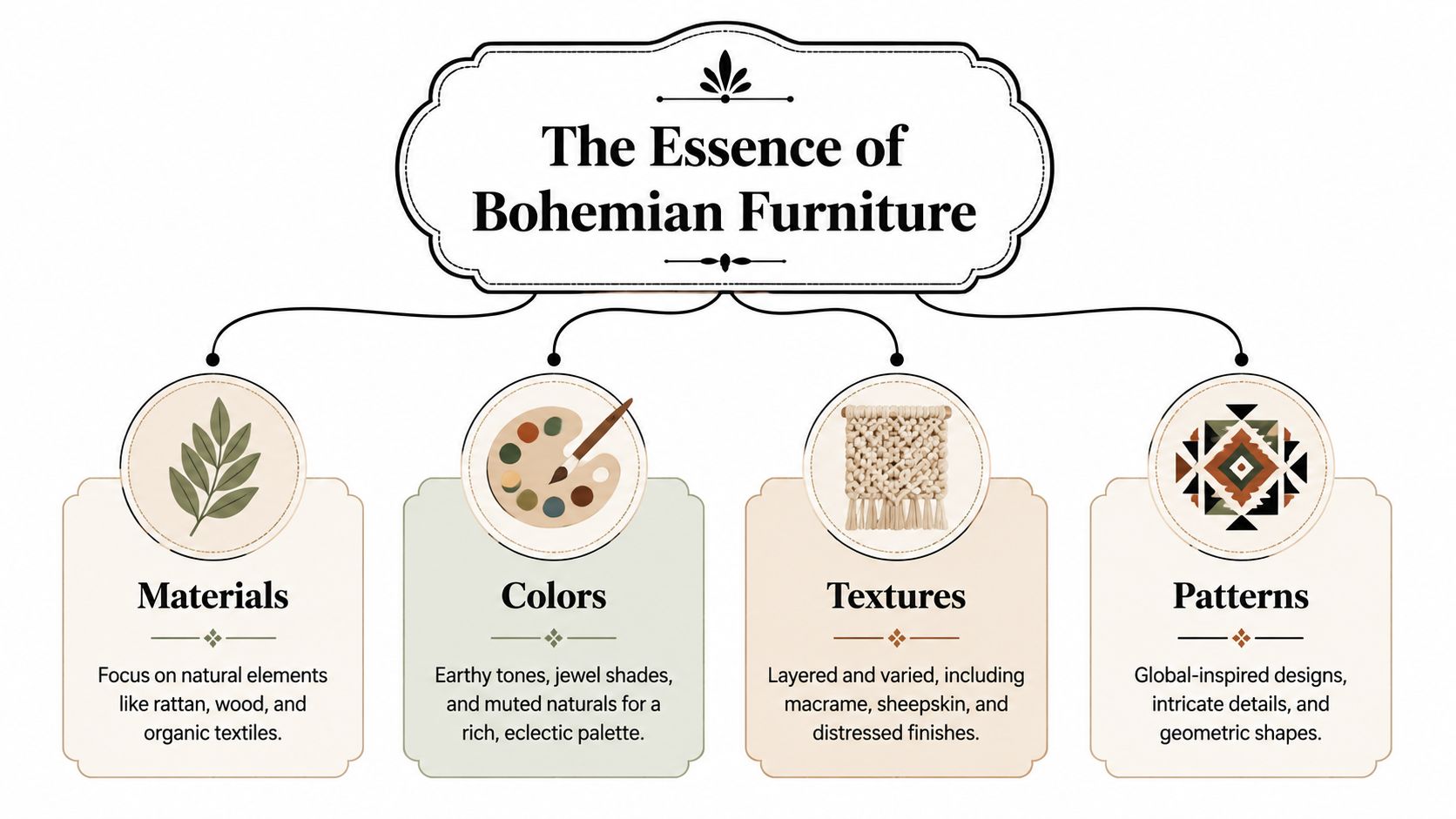
If you’ve ever looked at a piece and thought, “I like it, but I’m not sure if it’s boho,” this is the easiest way to judge it. Most bohemian style furniture comes down to four things: materials, colors, textures, and patterns.
Materials that feel grounded
Natural materials do a lot of the heavy lifting in a boho room. Think rattan, wood, jute, linen, cotton, leather, and stone. These finishes make a room feel easier and warmer than glossy, overly perfect surfaces.
Wood matters because it adds weight and history. Woven materials matter because they soften that weight. A carved wood bed, for example, feels richer when paired with a woven bench or basket.
If you want a smaller accent that still carries that organic, collected feel, a stone piece can anchor the room beautifully. Something like this sodalite stone accent table works because it introduces a natural material with visual depth, without forcing the whole room into one theme.
Colors that feel layered
Boho color isn’t random. It usually starts with grounded tones, then adds personality in smaller doses.
A simple boho palette often includes:
- Earthy base colors like sand, clay, rust, olive, or warm brown
- Soft neutrals that keep the room from feeling heavy
- Jewel-toned accents such as deep blue, amber, or berry for energy
You don’t need all of them at once. In fact, most real homes feel better when one family of tones leads and the others support.
Texture that creates comfort
Texture is what keeps bohemian style furniture from looking flat. This shows up in woven seats, raised grain, tufting, carvings, fringe, embroidery, and layered textiles.
Bohemian furniture’s comfort is also tied to the way it’s designed. Low-profile seating often falls in the 12 to 18 inch range, which encourages lounging, and carved wood mandala patterns can increase surface friction by 15 to 20%, helping decorative pillows stay in place, according to this boho bed product specification.
That might sound technical, but the result is simple. The furniture feels made for settling in.
In a boho room, texture does the job that matching furniture sets used to do. It creates cohesion without making the space feel stiff.
Patterns that add story
Pattern is where many people either freeze up or go too far. The easiest path is to mix scales. One larger pattern, one tighter pattern, and a few solids usually feel balanced.
Look for:
- geometric motifs
- block-print inspired fabrics
- tribal or global patterns
- floral details used sparingly
- carved or inlaid pattern in the furniture itself
When these four elements work together, boho furniture feels expressive instead of chaotic.
Styling Your Home with Bohemian Pieces
Not everyone needs a full redesign. They need one strong starting piece in each room, then a few supporting layers that make the space feel complete. That’s where bohemian style furniture becomes practical instead of intimidating.

The living room
Start with a sofa that invites people to stay awhile. In a boho-inspired living room, the hero piece should feel soft, approachable, and easy to layer around. A clean-lined upholstered sofa works well because it gives you room to bring in patterned pillows, a woven chair, a textured rug, and a wood or stone accent table.
Color can make this easier. If you’re unsure whether to go warm, earthy, or moody, this Striped Circle guide to home colours is useful for understanding how different tones shape the mood of a room.
A simple formula helps:
- Anchor with upholstery in a grounded neutral or muted color
- Add one woven element such as a rattan chair or basket
- Bring in height with plants, floor lamps, or tall branches
- Use textiles generously through throws, pillows, and a patterned rug
The bedroom
Boho bedrooms work best when the bed carries the visual weight. A wood bed with carving, visible grain, or a slightly handcrafted look creates an instant focal point. Then keep the bedding relaxed. Layer quilts, a lightweight throw, and a few pillows with different textures instead of buying a perfectly matched set.
A bench at the foot of the bed helps too. It can be upholstered, woven, or wood. What matters is contrast. If the bed is visually heavy, the bench should feel lighter.
The bedroom doesn’t need dozens of boho signals. A character-rich bed, soft textiles, and one or two natural accents can do the whole job.
The dining room
Boho dining rooms often get overlooked, but they may be the easiest space to style. Start with a dining table that feels substantial. Then loosen the formality around it.
That can mean mixing chair styles, adding a patterned runner, or choosing lighting with a handmade or global feel. If you’re nervous about mixing pieces from different eras, this guide on how to mix furniture styles gives a helpful framework for keeping the room intentional.
A quick comparison makes the goal clearer:
| Room | Hero piece | Supporting layers |
|---|---|---|
| Living room | Upholstered sofa | Woven seating, textured rug, plants |
| Bedroom | Wood or carved bed | Layered bedding, bench, soft lighting |
| Dining room | Solid table | Mixed chairs, runner, statement light |
The common thread is comfort with personality. Every room needs one piece that grounds it, then details that make it feel collected.
How to Shop for Bohemian Furniture That Lasts
A boho room has to survive more than a photo. In West Texas and Southeastern New Mexico, furniture deals with dust, dry air, strong sun, kids dropping backpacks, pets claiming corners, and people using the space every day. If a piece only looks interesting but wears out fast, it is not a good value.

Start with the materials
Materials set the ceiling for how long a piece can last. Bohemian style often uses natural textures, but natural does not automatically mean durable. A woven chair, for example, can either become a family favorite for years or start loosening after one season of hard use.
Rattan is a good example. It often gets treated like a delicate accent, yet well-made rattan furniture can hold up beautifully over time. According to this overview of rattan furniture materials, rattan has strong tensile strength and holds its structure well with long-term use. That matters if you love the airy, relaxed boho look but worry woven furniture will feel flimsy.
As you inspect a piece, slow down and use your hands as much as your eyes. Shopping for boho furniture works a lot like buying boots for ranch country. The finish matters, but the build matters more.
Check for:
- Tight, even weaving with no splits, loose ends, or sagging sections
- Smooth, sealed surfaces on wood and rattan, especially on arms, edges, and corners
- A stable frame that stays level when you sit, press, or gently rock it
- Upholstery that matches real life, not just the color palette you had in mind
Fabric choice deserves extra attention in family homes. A nubby cream textile may look perfect under showroom lighting, but it can become a headache fast in a busy house. If you want help comparing texture, cleanability, and wear, this guide on choosing upholstery fabric for everyday use gives a practical way to sort through the options.
Look past the trend version
A lot of lower-quality boho furniture depends on surface charm. You might see carved detail, cane panels, or a beautiful washed finish, but the frame underneath can still be weak. That is where shoppers often get disappointed. The piece feels special at first, then starts wobbling, scratching, or fraying sooner than expected.
The safer approach is to invest in the item that takes the most daily wear first. Start with the sofa, dining table, bed, or accent chair your family will use constantly. Then bring in the lighter boho layers through pillows, throws, art, baskets, and rugs. Those pieces are easier to swap later if your taste changes.
This quick check can help:
| If you’re considering | Ask yourself |
|---|---|
| A woven accent chair | Does it feel firm and supportive, or decorative only? |
| A carved wood piece | Is the piece solid and well-built before you even notice the carving? |
| An upholstered sofa | Will the fabric still make sense after spills, pets, and heavy weekend use? |
Think in years, not moments
The best boho homes usually come together piece by piece. That is good news for real families, because it gives you room to spend wisely. You do not need to buy every interesting item at once. You need a few dependable pieces with character, then time to layer the room around them.
That often means choosing one anchor piece with staying power, then building from there. A sturdy sofa with a washable fabric. A solid wood dining table that can take daily meals and holiday overflow. A well-made woven chair that adds shape and texture without feeling precious.
For shoppers who want to compare styles, fabrics, and construction in person, Miller Waldrop Furniture & Decor offers curated furniture lines and custom-order options for living rooms, bedrooms, and dining spaces.
Buy for structure first, personality second. In bohemian design, the smartest rooms do both. They just do it in that order.
That order gives you something many boho guides skip. A home that feels creative, relaxed, and personal, while still holding up to family life in a dry, hard-working part of the country.
Your Partner in Creating a Personal Bohemian Escape
The most successful boho interiors aren’t random. They blend history, comfort, texture, and personality in a way that still works for daily life. That balance matters even more in homes where furniture needs to be family-friendly, comfortable, and able to handle the local climate and pace of life.
Modern boho often draws from older influences. Victorian-era furniture from 1837 to 1901 used dark woods like mahogany and intricate carving, and those details still show up today when designers mix revival-style pieces with global textiles and natural fibers, as noted in this guide to furniture periods and styles. That’s part of what makes bohemian style furniture feel rich rather than trendy. It borrows from history, then softens it for real homes.
What helps a room feel personal
A home with boho character usually includes a few things:
- One or two anchor pieces with shape, texture, or carving that give the room identity
- Comfort-first layering through rugs, throws, and seating for everyday use
- A mix of finishes so the room feels collected instead of overly coordinated
You don’t have to figure all of that out alone. Sometimes the hardest part isn’t knowing what boho looks like. It’s knowing which pieces belong together, which ones will last, and how to shape the room around your actual life.
A practical starting point is an accent chair, upholstered bed, or dining table with visible character. From there, you can add softer layers over time without losing the room’s foundation.
If you’re building a home that feels more personal and less formulaic, the goal isn’t to copy a trend. It’s to choose pieces with warmth, history, and staying power, then arrange them in a way that feels like home.
If you're ready to build a room with more story and more staying power, Miller Waldrop Furniture & Decor can help you find pieces that fit your style, your space, and the way your family lives. Browse options like their living room furniture to find a practical starting point, or visit a showroom in Lubbock, Hobbs, or Ruidoso Downs to compare textures, finishes, and comfort in person.