


Get Designer Look Furniture: Style Your Home in 2026

A lot of homes reach the same frustrating middle ground. The sofa is fine, the rug is fine, the lamps are fine, but the room still doesn't feel finished. It looks furnished, not curated.
That gap is usually what people mean when they say they want a designer look. They're not asking for a house that feels formal or untouchable. They want rooms that feel intentional, comfortable, and pulled together enough that every piece looks like it belongs. That kind of polish isn't reserved for unlimited budgets or custom-built homes. It comes from making a few decisions in the right order and knowing where quality matters most.
Interest in refined, design-forward interiors keeps growing. The global luxury furniture market was valued at USD 31.06 billion in 2024 and is projected to reach USD 39.79 billion by 2030, according to Grand View Research's luxury furniture market analysis. That doesn't mean every home needs luxury pricing. It does show that more buyers are paying attention to furniture with stronger aesthetics, better materials, and a more considered point of view.
A lasting designer look comes from restraint as much as style. It means choosing pieces that work hard, age well, and keep the room from feeling dated two years later. For readers refining accessories after the main furniture is in place, it also helps to find your ideal sculpture so decorative accents feel scaled and intentional rather than random.
Table of Contents
- Your Guide to a Curated Home
- The Foundation Your Designer Look Is Built On
- Mastering the Art of Layering
- Accessorizing and Lighting as a Finishing Touch
- Sourcing Smart and Investing in Quality
- Your Home Beautifully Designed by You
Your Guide to a Curated Home
A curated home doesn't happen because every item is expensive. It happens because the room has a clear point of view. The furniture establishes the mood, the supporting pieces reinforce it, and the finishing layers keep the space from feeling flat.
That's why designer look furniture works best when it solves two problems at once. It has to look elevated, and it has to support daily life. In Texas and New Mexico homes, that often means balancing visual presence with livability. Rooms need scale, comfort, and durability, especially in family spaces that see regular use.
Start with intention, not trend
A common mistake is shopping by category instead of by composition. People buy a coffee table because they need a coffee table, then a console because the wall looks empty, then accent chairs because the room still feels unfinished. The result is a room full of individual purchases that never become a complete design.
A stronger approach is to decide what the room should feel like before buying anything else. Calm and architectural. Warm and collected. Refined and relaxed. Once that's clear, each piece can support the same direction.
A designer look isn't about adding more. It's about removing visual conflict.
That principle also makes decision-making easier. If a piece is attractive but doesn't support the room's direction, it's probably the wrong purchase.
Think in layers of permanence
Some choices are hard to change later. Sofas, beds, dining tables, and large storage pieces shape the room for years. Smaller accents, lighting, pillows, and art are far easier to adjust.
That's why timeless rooms are usually built in this order:
- Anchor the room first with a major furniture piece.
- Create structure through scale, layout, and supporting forms.
- Add character with textiles, lighting, and objects.
- Edit the finish until the room feels settled, not crowded.
A home that feels polished today and still relevant later usually follows that sequence. It doesn't chase every trend. It makes thoughtful decisions once, then layers personality around them.
The Foundation Your Designer Look Is Built On
Furniture carries the biggest visual weight in a room. It also carries the biggest budget weight. According to interior design spending data summarized by First Chair, furniture accounts for approximately 35% of total interior design spending, ahead of furnishings at 25%, lighting at 22%, and flooring at 18%. That's why the anchor piece isn't a minor decision. It's usually the move that defines the room.
Start with the anchor piece
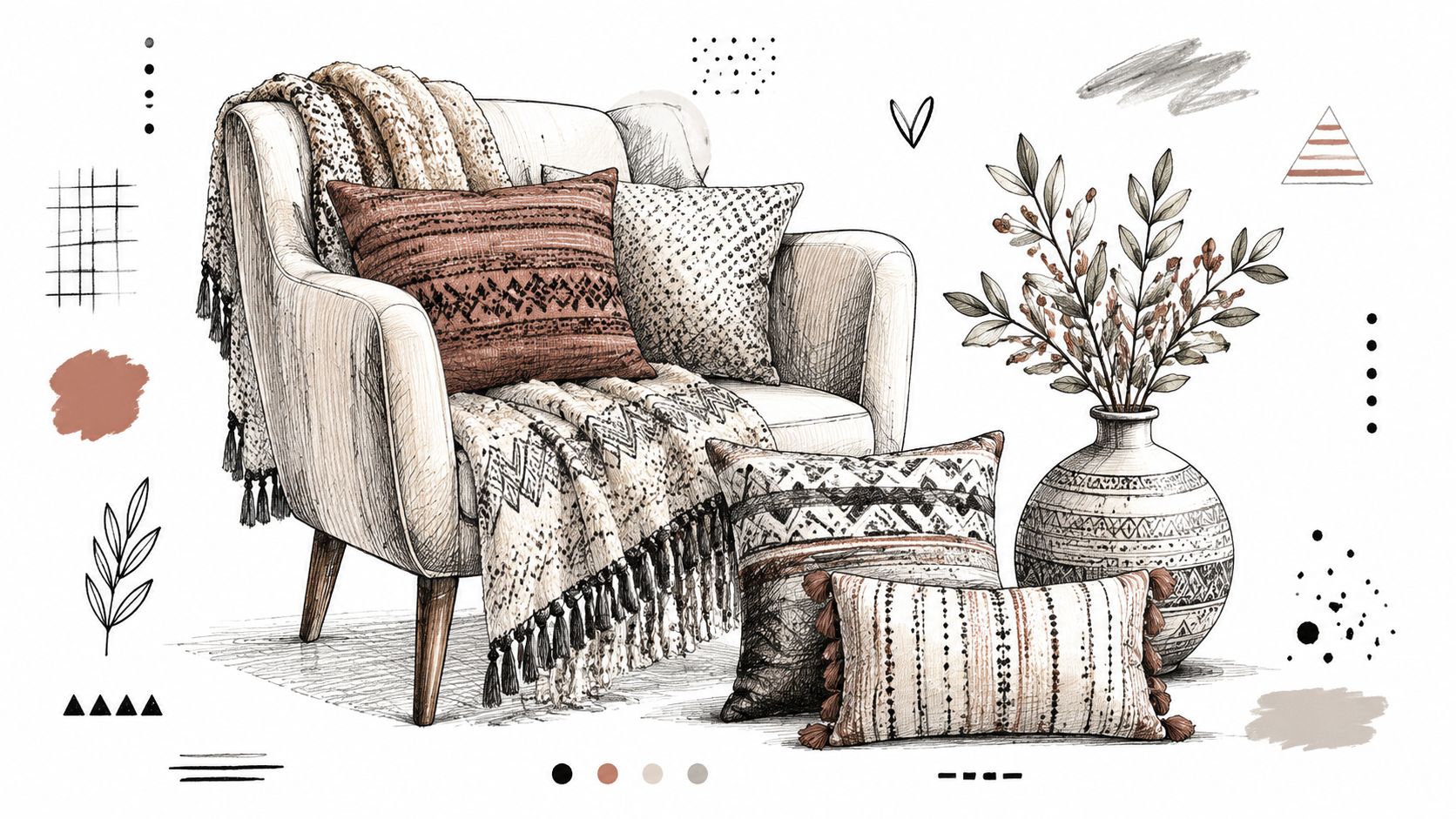
In most living rooms, the anchor is the sofa or sectional. In bedrooms, it's the bed. In dining rooms, it's the table. That piece sets the silhouette, the scale, and often the tone of the entire space.
When the anchor is right, the rest of the room becomes easier to build. When it's wrong, every supporting item starts compensating for it.
Use these decision filters before buying the anchor piece:
- Check the room's role: A family room needs different upholstery, depth, and posture than a formal sitting area.
- Choose the dominant silhouette: Clean-lined pieces create a different effect than rolled arms, exposed wood frames, or sculptural curves.
- Decide the visual weight: A low-profile sofa can make a room feel wider. A taller headboard can make a bedroom feel more established.
- Look at the base and legs: Pieces that sit visibly off the floor usually feel lighter. Fully skirted or block-based pieces feel heavier and more grounded.
Use proportion before style details
Many rooms fail on scale long before they fail on color. A designer look depends on proportion. The major furniture needs enough presence to anchor the space, but it can't choke circulation or make every secondary piece feel miniature.
A helpful way to judge proportion is to compare the room in three levels: large anchors, medium support pieces, and small accents. If everything is the same height, mass, or visual strength, the room looks flat. If one item dominates too aggressively, the room feels unbalanced.
A quick planning grid helps:
| Furniture role | What it should do | Common mistake |
|---|---|---|
| Anchor piece | Establish the room's identity | Buying too small to feel substantial |
| Support pieces | Reinforce function and balance | Matching them too closely to the anchor |
| Accents | Add rhythm and personality | Using too many unrelated shapes |
Practical rule: If the largest piece doesn't feel settled in the room, don't try to fix the problem with accessories.
This is also where traffic flow matters. Leave enough space to move naturally around the furniture. A room never feels high-end when people have to squeeze past corners, angle around tables, or shift chairs every time they sit down.
Fix awkward rooms with shape
Some of the most difficult rooms are small, narrow, angled, or interrupted by unusual walls. Those spaces often push people toward boxy furniture because they assume straight lines will fit more efficiently. In practice, that can make a room feel tighter and more chaotic.
Curved, round, and oval pieces often perform better in awkward layouts because they soften visual tension and improve movement. A round coffee table can calm a room full of sharp corners. An oval dining table can handle circulation more gracefully in a compact area. A curved chair can keep a corner from looking cramped.
That doesn't mean every piece should be soft-edged. The room still needs contrast. One curved form often works best when paired with cleaner supporting lines.
For homeowners working through difficult room layouts, the shape of the furniture matters as much as the style. The goal isn't just to fit the room. It's to make the room feel intentional.
Mastering the Art of Layering
Once the main furniture is in place, the room needs depth. At this stage, many spaces either come alive or start to look overworked. The difference usually comes down to one principle. Layering should create variety without creating noise.
Professional design guidance points to proportion, contrast, and material consistency as the key variables behind a high-end look, with repeated but distributed accents and deliberate contrast in color, shape, and texture, as outlined in this interior design guidance on layering and composition.
Repeat materials instead of matching sets
Matching everything is the fastest way to make a room feel generic. A designer look furniture plan usually relies on repetition, not duplication.
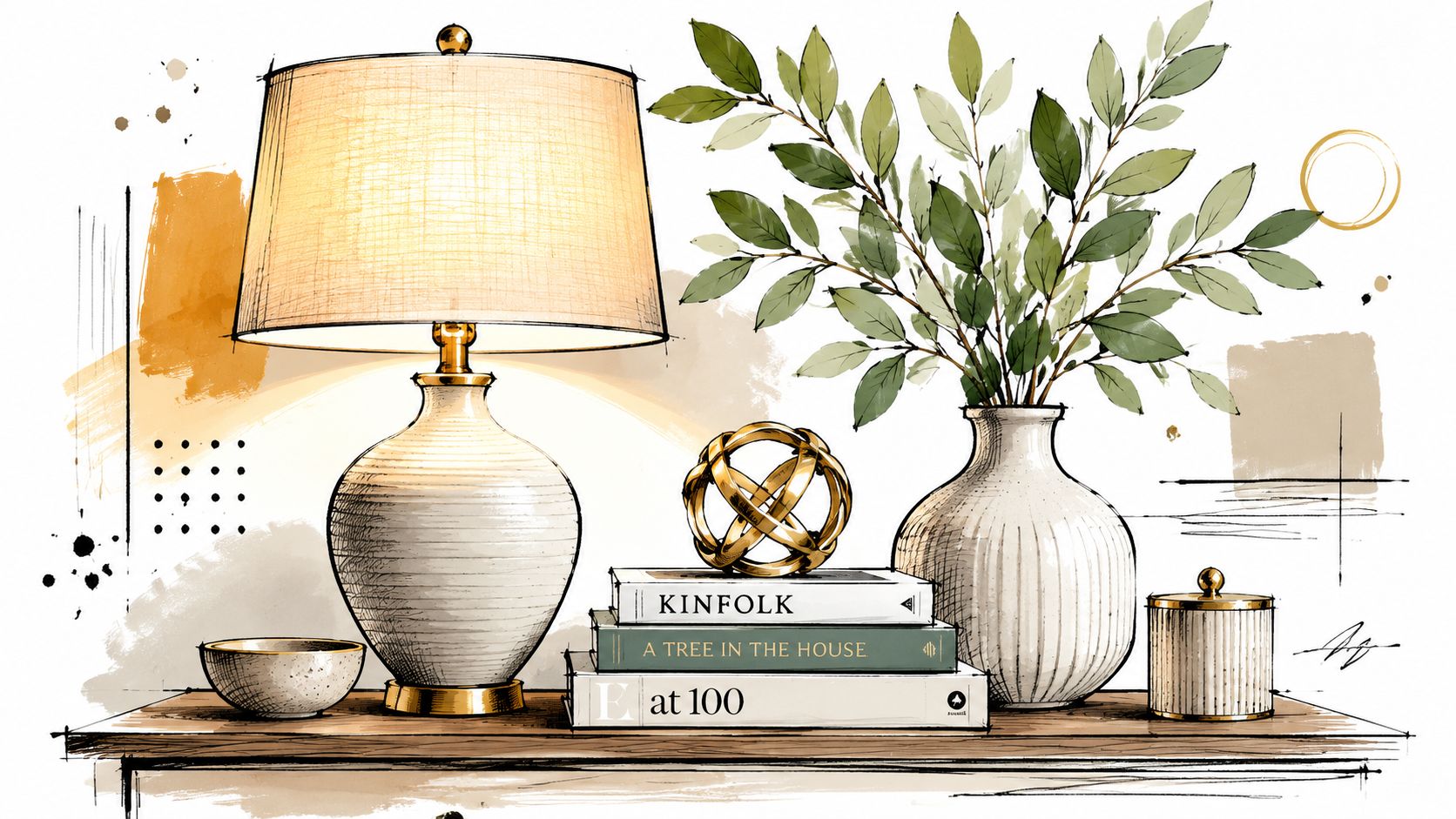
That means a wood tone might appear in a dining table, then again in a frame, then subtly in a lamp base or side chair. A metal finish might show up in more than one place, but not in one tight cluster. Repetition tells the eye the room is connected. Exact matching often makes it feel staged.
A better way to think about material layering:
- Wood adds warmth: It grounds rooms that have a lot of upholstery, painted surfaces, or glass.
- Metal sharpens the composition: It gives the eye definition, especially in lighting and smaller accents.
- Stone, ceramic, and woven elements soften formality: They keep polished furniture from feeling cold.
Readers who want a deeper look at combining old and new forms can use this guide on how to mix furniture styles to avoid a room that feels too uniform.
Build texture in quiet layers
Texture is one of the main reasons professionally designed rooms feel richer than copied showroom vignettes. It creates a tactile quality even before anyone sits down.
A room with only smooth surfaces tends to feel unfinished. A room with too many aggressive textures feels busy. The balance usually comes from pairing a few opposites:
- Soft against structured: linen with leather, velvet with wood, boucle with metal
- Matte against reflective: washed wood with polished hardware, textured ceramic with glass
- Natural against refined: woven baskets, wool rugs, or hide accents beside cleaner-lined upholstery
For bedrooms especially, controlled softness can make the room feel more complete. Anyone exploring bolder tactile layers can browse Pandemonium faux fur bedroom ideas and adapt the concept in smaller doses through throws, benches, or accent seating.
Texture should show up in more than textiles. A room feels layered when surfaces vary, not just fabrics.
Use contrast to keep the room alive
Contrast is what prevents timeless design from becoming bland. It can happen through color, shape, scale, or finish. A curving chair beside a rectilinear sofa. A dark table under a lighter rug. A sculptural lamp on a clean-lined console.
What doesn't work is concentrating all the contrast in one area. If all the dark finishes sit on one wall and all the softness sits on another, the room feels lopsided. Spread accents out so the room reads as a complete composition.
A simple contrast check can help:
| If the room feels… | Add… | Avoid… |
|---|---|---|
| Too flat | One sculptural shape or stronger texture | Buying more of the same profile |
| Too busy | Repetition in one or two materials | Introducing another accent finish |
| Too formal | A relaxed textile or organic object | Perfectly matched accessories |
Good layering doesn't ask every piece to stand out. It lets a few elements lead and gives the rest a supporting role.
Accessorizing and Lighting as a Finishing Touch
The final stage is where a room starts feeling personal. Accessories and lighting aren't decoration added after the main design is done. They're what turn a sound furniture plan into a space that feels lived in, expressive, and complete.
Style surfaces with intention
Accessories work best in groups, not as isolated objects scattered around a room. A single vase on a large console often looks accidental. A composed grouping feels purposeful.
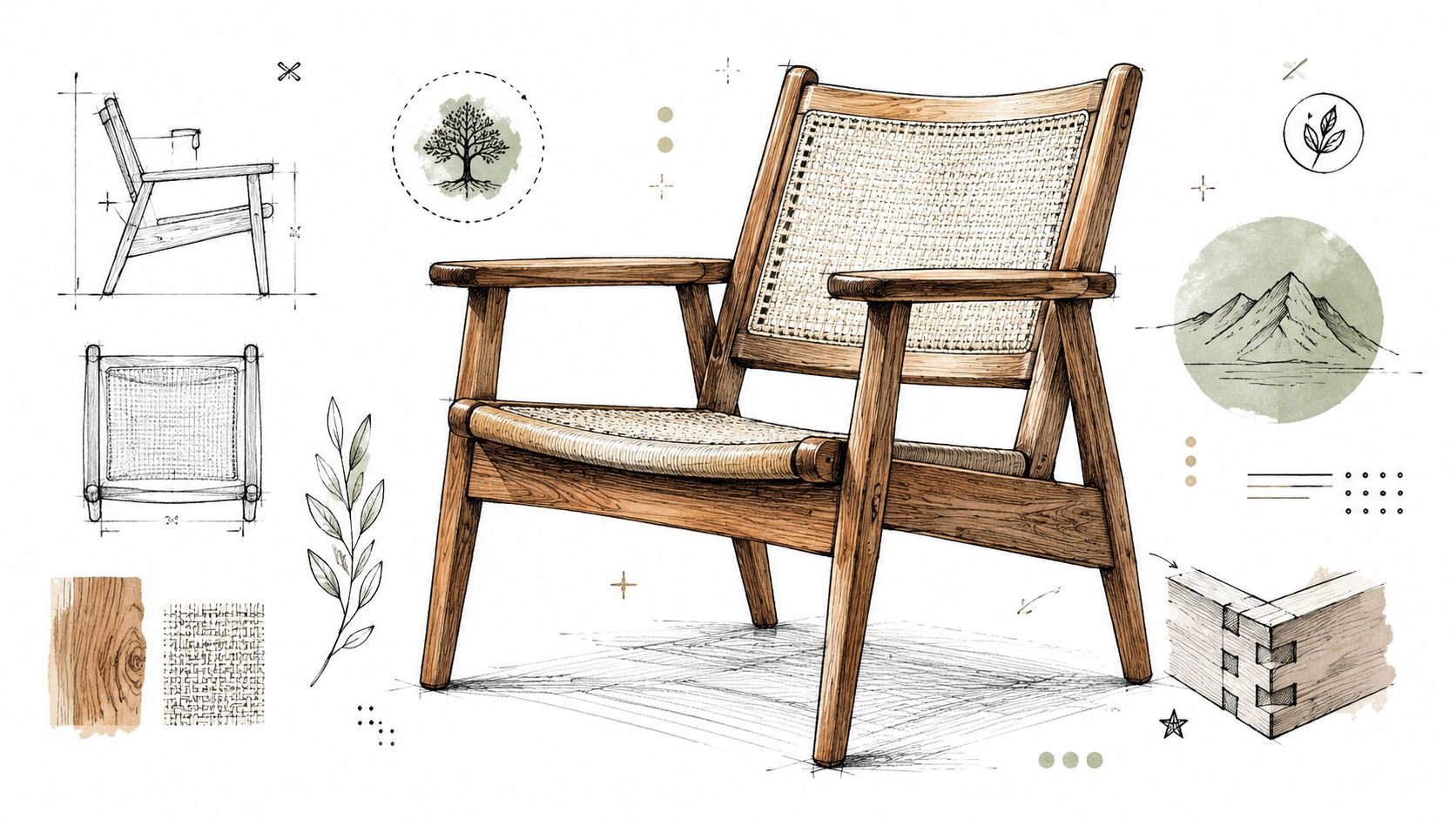
Use a mix of heights, shapes, and negative space. That might mean a stack of books, a low bowl, and a taller lamp. Or framed art behind a ceramic object and a small natural element. The mix matters more than the exact objects.
Three habits improve styling quickly:
- Group by relationship: Put items together that share a tone, finish, or shape language.
- Vary height: Rooms look more designed when the eye moves up and down across a surface.
- Leave breathing room: Empty space is part of the composition. Crowding kills impact.
Artwork should support the room's scale and mood. If the furniture has strong presence, quieter art can be the right move. If the room is restrained, artwork can carry more personality.
Light the room in layers
Lighting changes everything. A well-furnished room can still feel cold or unfinished if the lighting is harsh, flat, or limited to one overhead fixture.
The most reliable method is to use three layers of light:
- Ambient light for overall visibility. This is often ceiling-based.
- Task light for reading, working, or bedside use.
- Accent light for mood, depth, and highlighting details.
A room with all three feels more dimensional at every time of day. Ceiling lighting can establish clarity, table lamps create intimacy, and accent lighting adds drama without demanding attention. For readers comparing ceiling options that keep the look clean, this overview of flush mount ceiling lighting is a useful starting point.
The room shouldn't rely on one switch. A designer look depends on having lighting options.
Rugs also belong in this finishing category because they help define visual zones. A good rug ties furniture together, softens acoustics, and keeps a seating arrangement from floating. The right size matters more than a bold pattern. If the rug is too small, even expensive furniture can look disconnected.
Sourcing Smart and Investing in Quality
A sofa that looks polished in the showroom but sags, pills, or dates itself within two years is rarely a smart buy. The designer look that lasts comes from choosing pieces that can handle daily life, hold their shape, and still make sense as your style matures.
That is the standard we use with clients across Texas and New Mexico. Beautiful rooms need to live well first.

Know where to spend
Some categories earn a larger share of the budget because they carry more visual and practical weight. Upholstered seating, beds, dining tables, and storage pieces do the hardest work in a home. If those items are well made, the room feels settled. If they are flimsy, no amount of styling will hide it for long.
Priority usually belongs to these pieces:
- Sofas and sectionals: They see constant use and set the tone for the room.
- Beds and dining tables: They anchor major spaces and need stable construction.
- Case goods with storage value: Dressers, buffets, and media cabinets should function well and age gracefully.
Smaller items give you more flexibility. Lamps, accent tables, pillows, and decorative objects can shift over time without forcing a full redesign. That is usually the safer place to test a new finish, shape, or color.
For shoppers comparing quality levels and construction across categories, Miller Waldrop's selection of home furnishings brands is a useful starting point. It helps narrow choices by comfort, material, and overall character, which matters more than chasing a look for one season.
Separate timeless from temporary
Timeless furniture is not plain. It is disciplined. Good proportions, durable materials, and restrained detailing give a piece staying power. Trend-driven shapes, novelty finishes, and overly specific fabrics often feel dated faster than expected.
A quick filter helps:
| Better long-term bets | More likely to date quickly |
|---|---|
| Balanced proportions | Extreme shapes with little flexibility |
| Quality upholstery in versatile tones | Trend-heavy fabrics that dominate the room |
| Classic wood and metal finishes | Novelty finishes used on major pieces |
| Statement used selectively | Statement applied to everything |
Restraint usually gives a room a longer life. One memorable piece can carry personality for the whole space. Five statement pieces usually compete with each other and shorten the room's shelf life.
Material choices matter too, especially in homes where air quality and everyday durability both count. Readers reviewing lower-emission options can use Ocodile's healthy home guide as a practical reference when comparing specifications.
Use customization carefully
Customization works best when it solves a clear problem. Maybe the standard sofa is too deep for the room. Maybe the finish needs to relate to existing flooring. Maybe the household needs a fabric that can stand up to kids, pets, or strong sun exposure.
Those are smart reasons to customize.
Customizing for novelty alone is riskier. A very specific fabric, an unusual trim, or an aggressive finish can feel exciting in the moment and limiting a year later. The better approach is to adjust what affects fit, function, and longevity most.
Focus on one or two decisions that improve the piece:
- Adjust scale so the furniture fits the room correctly.
- Select a durable fabric based on how the home is used.
- Refine the finish so it relates to the architecture and nearby materials.
Miller Waldrop Furniture & Decor offers custom order options for fabrics, finishes, and configurations. Used with discipline, customization helps a room feel resolved and personal, not louder.
Your Home Beautifully Designed by You
A lasting designer look comes down to a few disciplined choices. Start with an anchor piece that gives the room direction. Build around it with proportion that feels settled. Layer materials and textures so the room has depth without clutter. Finish with lighting and accessories that support the mood instead of distracting from it. Buy quality where daily life demands it.
That approach works because it respects both style and reality. Homes in West Texas and Southeastern New Mexico need rooms that can handle real routines, changing seasons, family traffic, and the occasional redesign urge without starting over from scratch. Designer look furniture should make a home more usable, not more fragile.
There's also freedom in knowing that a polished room doesn't require perfect matching, endless shopping, or trend chasing. It requires judgment. A few well-scaled pieces. Repeated materials. Clear contrast. Better editing.
Good design feels calm because each choice has a job.
For families, new movers, and homeowners refining one room at a time, that's encouraging. A home doesn't need to be finished all at once to feel elevated. One strong sofa, a better layout, a more thoughtful light plan, and a handful of meaningful layers can shift the entire experience of a space.
The homes that feel the most memorable usually aren't the ones with the most stuff. They're the ones where each piece supports the next, and the room reflects the people living in it. That's what gives a home staying power. It looks beautiful now because it was built on choices that still make sense later.
If a room in your home feels close but not quite resolved, Miller Waldrop Furniture & Decor can help turn ideas into a practical plan. Visit a showroom in Lubbock, Hobbs, or Ruidoso Downs to explore furniture, lighting, and custom options, or work with the design team to choose pieces that fit your space, your routine, and the look you want to live with for years.