

Find Your Best Trundle Bed: 2026 Buying Guide

A lot of households reach the same point at the same time. Kids want a friend to stay over, relatives are coming for a holiday weekend, or a home office suddenly has to do double duty as a guest room. The room needs another bed, but it doesn't have room for another bed full time.
That's where a trundle earns its keep. A trundle bed stores a second mattress under the main bed, giving a household two sleeping surfaces in one footprint, a setup that current product guidance consistently ties to small rooms, kids' rooms, and guest sleeping in tighter spaces, as noted in this overview of what a trundle bed is. The challenge is that the best trundle bed usually isn't the one that looks best in a catalog photo. It's the one that fits the room, clears the floor, rolls smoothly, and matches the people who will sleep on it.
Many shoppers also need help beyond the bed itself. If mobility needs are part of the household plan, it can help to find DME Superstore locations for other in-home equipment that supports a safer, more flexible living space.
Table of Contents
- The Smart Solution for Flexible Space
- Decoding Trundle Bed Types
- Built to Last With Quality Materials and Construction
- The Perfect Mattress Match for Comfort and Clearance
- More Than a Bed With Storage and Versatility
- Planning Your Space and Ensuring Safety
- Find Your Perfect Trundle Bed in Texas and New Mexico
The Smart Solution for Flexible Space
A trundle bed has lasted for centuries because the problem it solves hasn't changed much. Homes still need flexible sleeping space, and many rooms still have to do more than one job. Historically, the trundle dates back to the 17th century and was originally called a truckle bed, a name connected to the old English word “tryndel,” meaning wheel, according to this history of the trundle bed.
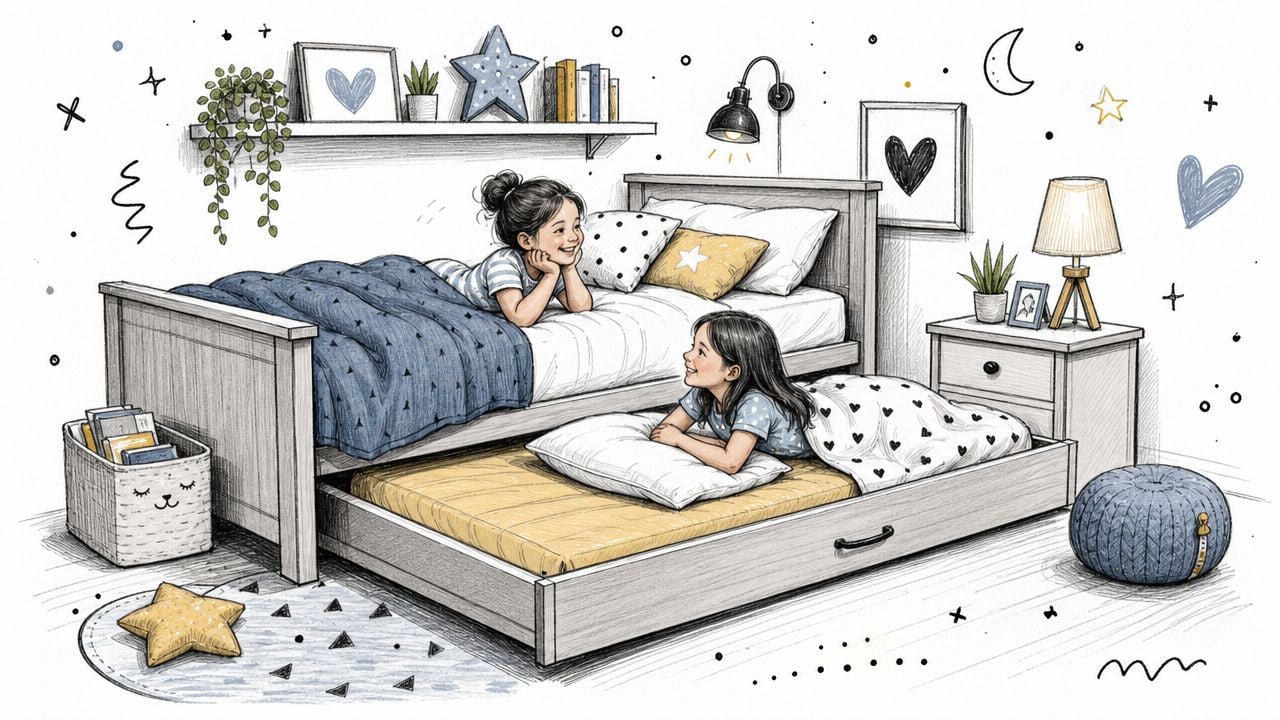
That long history still shows up in modern homes. A child's bedroom can stay open for play during the day, then make room for a cousin at night. A guest room can avoid the bulk of two full bed setups. A den can function as seating most of the week and sleeping space when family visits.
The part many shoppers miss is that space-saving alone doesn't make something the best trundle bed. Many guides focus on looks and footprint, but many trundle frames only fit twin mattresses up to about 8 inches thick, which can limit comfort for adult guests, as discussed in this buying guide on trundle bed selection. A compact bed that only works on paper isn't a good fit for real life.
A good trundle should solve the sleeping problem, not just the storage problem.
The stronger choice usually balances three things at once. It needs enough under-bed clearance, a mattress that fits without scraping, and a frame sturdy enough for the people who'll use it. That's what turns a clever idea into a dependable piece of furniture.
Decoding Trundle Bed Types
The phrase “trundle bed” sounds simple, but it covers a few very different designs. That matters because format choice materially changes real-world usability, especially if the room serves both everyday living and occasional overnight guests. Current guidance distinguishes drawer-style and pop-up styles for exactly that reason in this comparison of trundle bed formats.
Trundle Bed Types at a Glance
| Trundle Type | Best For | Final Bed Height | Typical Mattress Thickness |
|---|---|---|---|
| Pop-Up | Adult guests, paired sleeping surfaces, rooms where comfort matters most | Raises closer to the height of the main bed | Often low-profile to fit storage clearance |
| Roll-Out Drawer | Kids' rooms, sleepovers, rooms with tight under-bed clearance | Stays low to the floor | Often low-profile to fit under the bed |
| Daybed With Trundle | Offices, guest rooms, dens, multi-use spaces | Main bed functions like seating, lower bed depends on trundle style | Depends on frame clearance and design |
Pop-up trundles for better guest comfort
A pop-up trundle is the most useful choice when the lower bed needs to feel less like an afterthought. The lower frame rolls out, then lifts the mattress closer to the height of the main bed. That creates a cleaner sleeping setup for guests and reduces the awkward feeling of one sleeper being much lower than the other.
This style often works best in a guest room, a flex room, or any space where adults may sleep on the lower bed. It's also easier to make the room feel intentional instead of improvised. A household that hosts parents, older teens, or friends for more than a single night often appreciates that difference right away.
There's a trade-off, though. Pop-up hardware adds moving parts. That means the lift mechanism, frame alignment, and locking action need to be checked carefully before purchase.
Roll-out trundles for simple everyday use
A roll-out, or drawer-style, trundle is the straightforward option. It stores low, pulls out fast, and usually has fewer mechanical components than a pop-up frame. In a child's room, that simplicity is often a strength.
For sleepovers, this design works well because it keeps daytime floor space clear and doesn't ask much of the user. Pull it out, make the bed, and it's ready. If vertical clearance under the main bed is limited, drawer-style designs usually make the most sense because they're built around that low storage profile.
Practical rule: If the priority is guest comfort and a more level sleeping surface, lean toward a pop-up. If the priority is simple storage and limited clearance, a drawer trundle usually works better.
The downside is final sleeping height. The lower bed stays close to the floor, which some guests don't mind and others notice immediately.
Daybeds with trundles for multi-use rooms
A daybed with a trundle solves a different problem. It isn't just about adding one more sleeper. It lets the room work as seating, reading space, or office overflow during the day. In a small home, that kind of versatility often matters more than a formal bedroom look.
This format is a smart fit for:
- Home office guest rooms where the bed shouldn't dominate the room every day
- Bonus rooms that need seating before they need sleeping space
- Teen rooms where a sofa-like setup feels more natural than a traditional bed
- Apartments or smaller homes where every piece needs more than one job
A daybed can be a very good answer, but it's important to remember the practical limit noted in current guidance. Most trundle beds have a 250-pound weight limit, while a standard daybed is around 400 pounds, according to this trundle bed overview. That doesn't make a daybed trundle a bad choice. It just means the lower bed still needs to be selected with realistic expectations.
Built to Last With Quality Materials and Construction
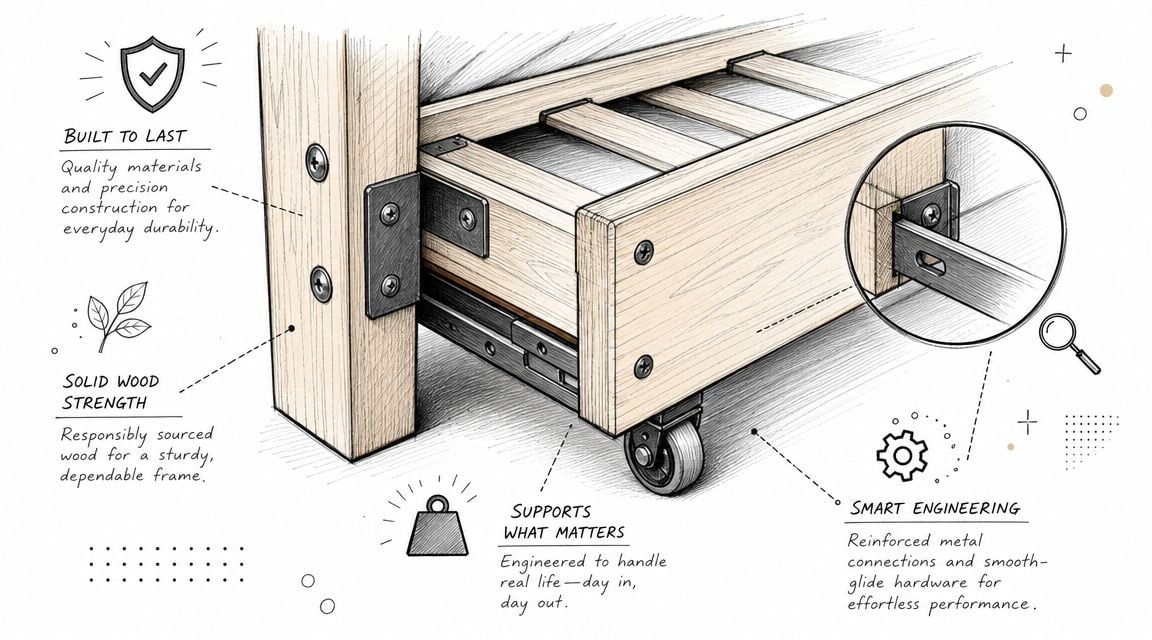
A trundle bed works harder than a standard bed frame. The lower unit rolls in and out, carries weight on a moving platform, and depends on hardware that has to stay aligned over time. That's why construction quality is the strongest predictor of trundle-bed longevity, and current buying guidance points shoppers toward solid wood and durable metal instead of MDF or particle board in this trundle bed frame guide.
What holds up over time
Solid wood and well-built metal frames usually perform better because they resist flex. When a frame twists, even slightly, the trundle can become harder to pull out, harder to push back in, and more likely to wobble under load. Composite materials can look fine on the sales floor but often show wear sooner in a piece that moves this much.
That doesn't mean every engineered panel bed should be dismissed. It means shoppers should be tougher on hidden structure than on visible finish. A pretty headboard doesn't help much if the lower frame racks out of square after regular use.
The parts that deserve a closer look
The smartest inspection happens at the stress points:
- Casters and wheel action should move without dragging or skidding. A trundle that binds in the store won't improve at home.
- Slat support should feel rigid enough to support the mattress evenly. Thin or widely spaced slats can contribute to a flimsy feel.
- Frame joints should look tight and intentional. Loose fasteners and light-duty corner connections are warning signs.
- Side rails need enough substance to handle repeated pull-out motion without loosening over time.
The best trundle bed isn't defined by the headboard. It's defined by what happens at the wheels, rails, and joints after repeated use.
Flooring matters too. Carpet, rugs, and hard surfaces all affect how a trundle moves. A household with active daily use should pay close attention to wheel quality and how the frame tracks under pressure. If the lower bed rolls crooked, catches, or feels noisy, that issue usually gets worse rather than better.
The Perfect Mattress Match for Comfort and Clearance
A trundle often disappoints for one simple reason. The mattress is wrong for the frame.
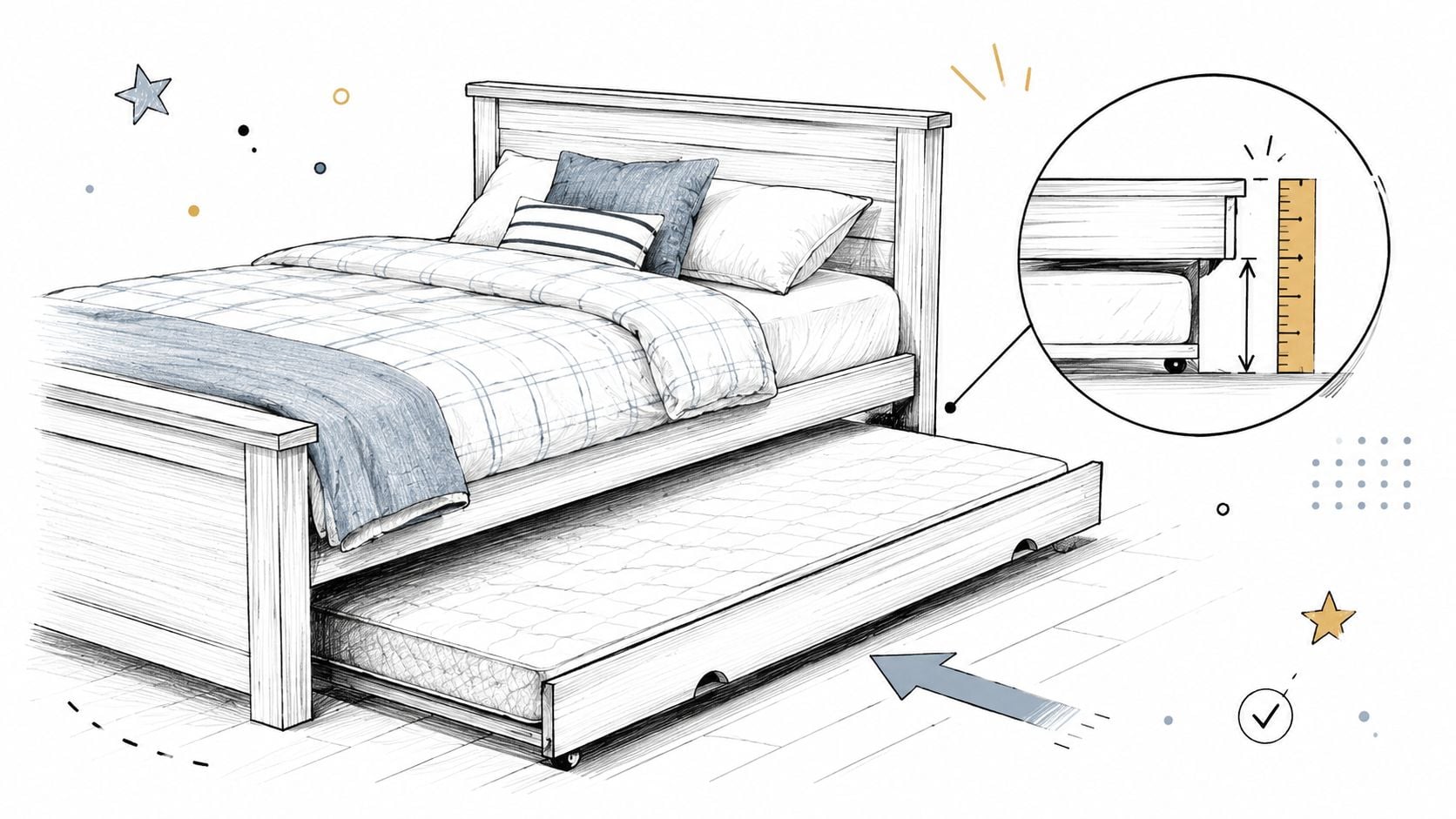
After decades of helping families furnish guest rooms, kids' rooms, and shared spaces, I can tell you this is where many otherwise solid purchases go off track. A trundle mattress has to clear the upper bed, roll in and out without rubbing, and still give real support to the person using it. A mattress that feels great on a showroom stand can be a poor choice once it has to live under another bed.
Start with clearance before comfort
Measure the inside height of the trundle space before you shop for feel. That one step prevents most of the fit problems people run into later.
A mattress that is too tall can scrape the slats, catch on side rails, or keep the trundle from closing fully. A mattress that barely fits can still be a problem if the bedding bunches up or the frame sits a little unevenly on your floor. I usually advise leaving some breathing room so the lower bed rolls easily instead of dragging every time it is used.
A practical buying order looks like this:
- Measure the available trundle height from the support deck to the underside of the main bed.
- Check the manufacturer's mattress height limit for that specific frame.
- Allow room for sheets and normal movement so the trundle does not jam during daily use.
- Choose comfort based on the sleeper only after fit is confirmed.
If you want help sorting out firmness, support, and mattress types after you know your height limit, this guide to finding the right mattress covers the basics clearly.
Choose for the person who will actually sleep there
A trundle used for a seven-year-old's sleepover does not need the same mattress as one that holds grandparents for a holiday weekend. That sounds straightforward, but plenty of shoppers still buy the thinnest mattress that will slide underneath and assume the job is done.
That works for light, occasional use. It usually falls short for teens, adults, or frequent guests.
The frame matters here too, because trundles usually carry less weight than a standard bed. Earlier in this guide, we covered why weight limits and lower-frame design deserve close attention. The mattress should match that reality. A heavier mattress adds load, changes how the trundle rolls, and can make lifting or making the bed more awkward than people expect.
Here is the practical trade-off:
- Occasional child use can work well with a modest-profile mattress that is easy to store and easy to handle.
- Teen or adult guests usually need better support, even if that means being more selective about mattress thickness.
- Frequent use justifies spending more on comfort, because the trundle is functioning as a real bed, not a backup surface.
The right trundle mattress does two things well. It clears the frame without a fight, and it supports the sleeper well enough that nobody wakes up counting the hours until morning.
In the store, I tell shoppers to test this decision with a real-life question. Who is going to sleep there most often, and how often will they use it? Answer that realistically, then choose the thinnest mattress that still gives that person proper support. That approach usually leads to a trundle bed that works better in everyday life and lasts longer without unnecessary strain on the lower frame.
More Than a Bed With Storage and Versatility
A trundle can solve more than one room problem when the design is chosen carefully. Some shoppers need extra sleeping space. Others really need better storage and only occasional guest use. Those are not the same purchase.
When storage matters more than bed height
In a child's room, a smaller guest room, or a home office that stores linens, blankets, or extra clothing, the lower portion of the bed often competes with other storage needs. That's why some households are better served by a design that emphasizes drawer access or paired storage nearby rather than the most elaborate trundle mechanism.
A room usually functions better when the furniture matches daily habits:
- Toy and clothing overflow often points toward more drawer storage.
- Seasonal guest use may not justify a comfort-first pop-up design.
- Shared rooms benefit when bedding and personal items stay organized close to the bed.
A shopper comparing options in this category may also want to browse bedroom sets with storage if the room needs more than an extra sleep surface.
When sleeping function should win
If guests stay often, storage shouldn't crowd out the bed's main purpose. A trundle that stores neatly but feels awkward every time it's used can become dead space under the bed. In those cases, a simpler layout with fewer built-in extras often works better.
The best trundle bed for a multi-use room usually comes from a clear choice between two priorities. If the room needs hidden organization first, storage-driven designs make sense. If the room needs dependable sleeping comfort first, the trundle mechanism and mattress compatibility should lead the decision.
Planning Your Space and Ensuring Safety
A trundle may fit the wall on paper and still fail in the room. The lower bed has to open fully, allow safe movement around it, and avoid creating a tight passage at night. That's why room planning should focus on the bed in use, not just the bed stored away.
Measure the open room not just the wall
The simplest mistake is measuring only the footprint of the main frame. A trundle adds another active zone in front of the bed, and that open position affects traffic flow, nightstands, rugs, and closet access.
A practical room check should include:
- Pull-out depth so the trundle can open completely without hitting other furniture
- Walking space around the extended bed for guests and family members
- Door swing and drawer clearance nearby
- Rug thickness and floor transitions that could interfere with smooth rolling
A room with tight clearance can still work well with a trundle. It just has to be planned carefully.
Safety checks that matter in real homes
Durability and safety go together in this category. The lower unit has to roll, lock, and hold alignment in a constrained footprint, especially in homes with children, as emphasized in this discussion of trundle durability and safety.
The strongest safety habits are simple:
- Check for stable extension so the lower bed doesn't drift once it's in place.
- Watch for pinch points around lifting or folding hardware.
- Test how the unit rolls on the actual floor type expected in the room.
- Pay attention to wobble because looseness today often becomes a bigger safety concern later.
A trundle that feels solid when opened is usually easier to trust every time it's used.
In family homes, the best trundle bed is rarely the flashiest one. It's the one that opens predictably, stores cleanly, and stays sturdy through repeated use.
Find Your Perfect Trundle Bed in Texas and New Mexico
A family usually reaches this point after doing the hard part. They have measured the room, compared frame styles, and figured out whether the lower bed is for a child, a grandparent, or occasional guests. What still matters is simple. Does the bed feel solid when you put your hands on it?

What to test in the showroom
After seven decades in furniture retail, I can say this with confidence. A trundle bed should be tested like a working piece of equipment, not admired like a display item.
Pull the lower bed all the way out. Push it back in. Do it more than once. Watch whether it tracks straight, whether the front panel stays aligned, and whether the frame feels planted or shaky as it moves. If the trundle drags, twists, or feels light in the wrong places on a showroom floor, those problems usually get worse at home.
Pay attention to a few details that tell you a lot, fast:
- How much effort it takes to pull the trundle out
- Whether the lower bed stays square and level when open
- Whether the side rails and cross supports feel firm under pressure
- Whether the bed height works for the person using it most
- Whether the planned mattress leaves proper clearance to close the unit fully
Those checks separate a guest bed that gets used for years from one that becomes frustrating after a season of sleepovers.
Why local guidance helps
Homes across West Texas and Southeastern New Mexico have their own practical demands. Some rooms need open floor space during the day. Some need a dependable second bed every weekend. Some need a trundle that will hold up under regular use, not occasional company at the holidays.
That is where local showroom guidance helps in a real way. Staff can point out the difference between a trundle built for light use and one with sturdier joinery, better support, and hardware that holds alignment over time. They can also help catch common fit problems before delivery, especially with mattress height, bed clearance, and room size.
Miller Waldrop Furniture & Decor serves shoppers in Lubbock, Hobbs, and Ruidoso Downs who want to see construction in person before they commit. That matters with trundle beds. Photos can show the finish. They do not show how the unit rolls, how the frame reacts under load, or whether the lower bed feels dependable once it is fully extended.
The final decision usually comes down to a few honest questions. Who will use the trundle most often? How often will it be opened? Does the room need extra storage, extra sleeping space, or both? Will the frame, support system, and mattress choice handle that routine without becoming a nuisance?
A good trundle bed earns its place by working well in daily life. It stores neatly, opens smoothly, and holds up to the kind of use your household will actually give it.